



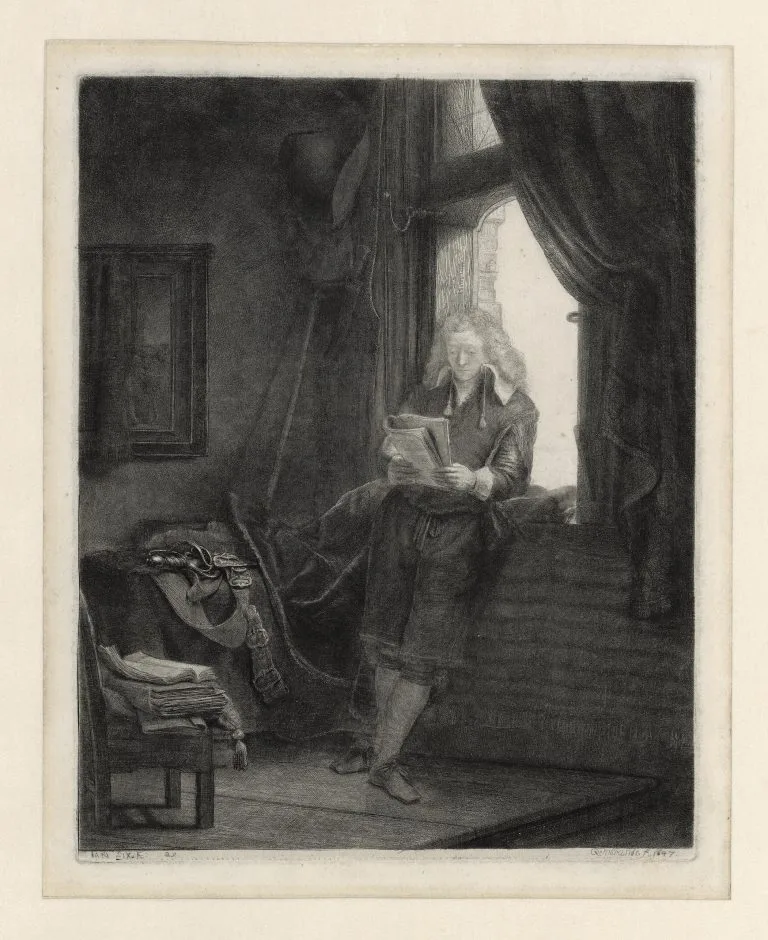
In 1647, Rembrandt made one of the most intimate portraits of his entire career: an etching of his friend Jan Six, reading casually by the window. This is the story of that etching, of the friendship between two seventeenth-century Amsterdammers, and of the house on the Kloveniersburgwal where Jan Six grew up, within walking distance of Rembrandt’s own house on the Jodenbreestraat.
This Jan Six (1618-1700) is the founder of the well-known Amsterdam Six family. Not to be confused with his later namesake and descendant, the contemporary art dealer Jan Six XI.
Check the ticket prices and opening hours before your visit.
the year Rembrandt made the etching of Jan Six
where Jan Six grew up, close to Rembrandt House Museum
that never stopped the Six family from treasuring the etching
Jan Six leans casually on the window-ledge, reading a magazine in the light from the window. In this etching, Rembrandt captures not only the portrait of a friend, but also his own mastery at the height of his powers. Could it perhaps have been Jan’s own house, with Rembrandt paying a visit?
The 1647 etching captures the atmosphere and character of the moment in fine detail, at the same time evoking a seventeenth-century world that, through that intimacy, still feels remarkably close. The etching’s extraordinary character comes not only from its composition, but also from the various preliminary studies, states and the etching plate that Rembrandt made.
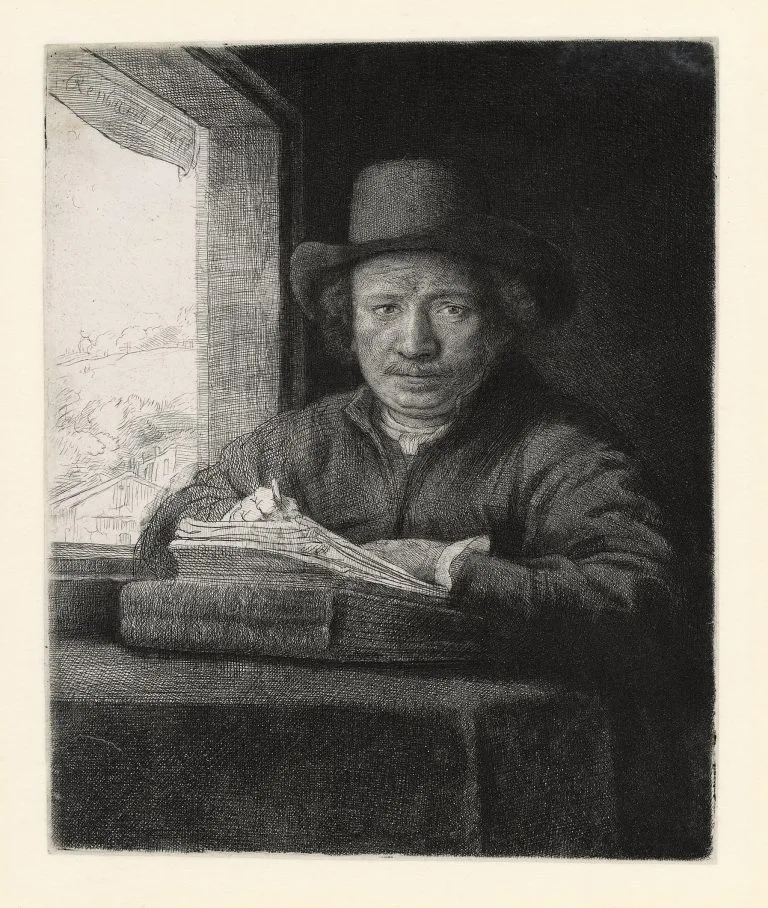
This was not the only time Rembrandt worked for Jan Six: he also made illustrations for Jan Six’s friends’ book and his stage play, but the etched portrait remained the finest example of their friendship.
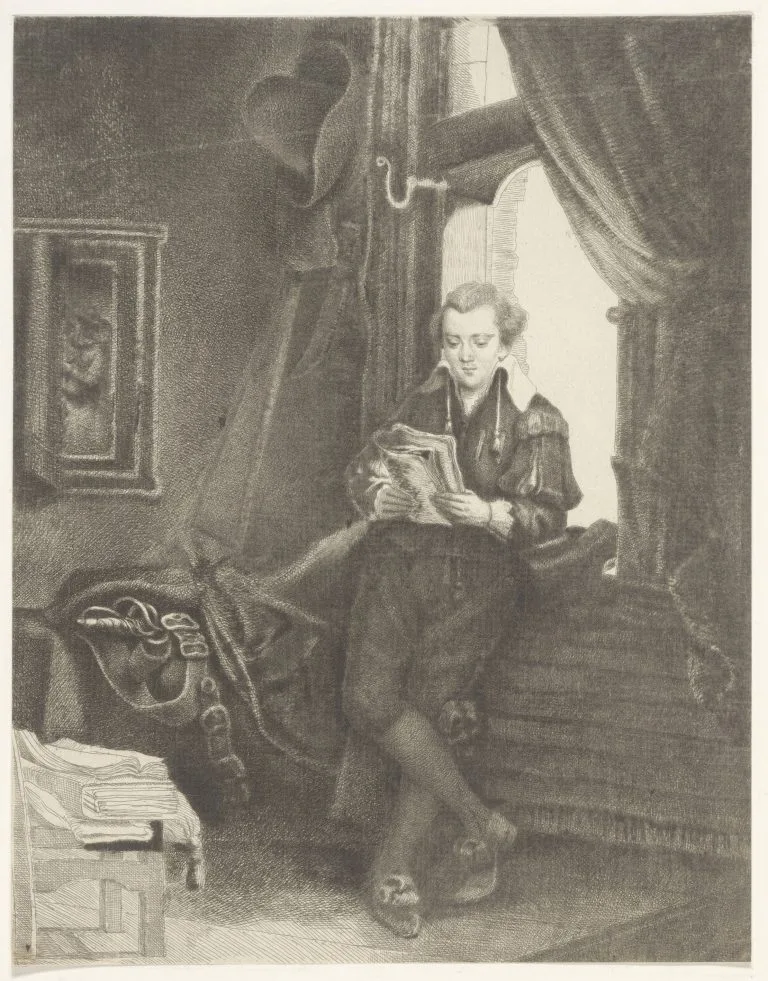
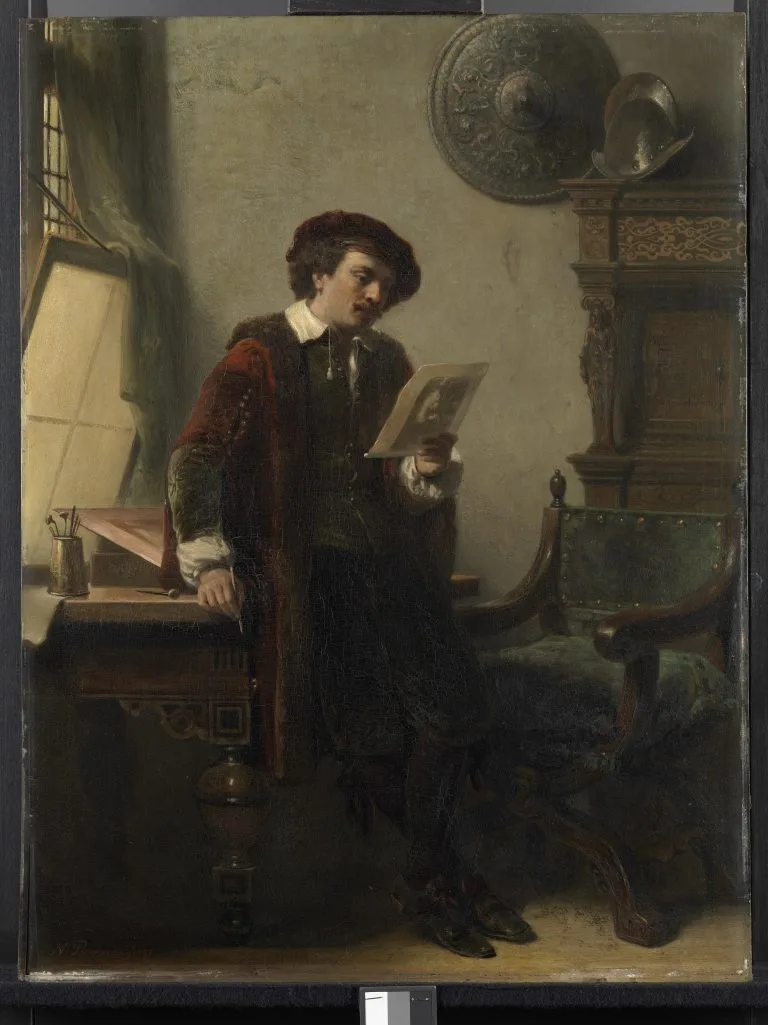
Jan Six died in 1700, leaving a legacy that reflected both his artistic and his administrative qualities: as a writer and as burgomaster of Amsterdam. From that moment on, artists and collectors became fascinated by the image of the nonchalant young man by the window, and felt a growing urge to romanticise Rembrandt and Jan Six together in paintings.
One curious result is this 1762 portrait of Edward Astley: the English nobleman had himself painted in the same pose as Jan Six in Rembrandt’s etching, more than a century after the original.
Jan Six came from a prominent Amsterdam regent family. His mother, Anna Wijmer, bought the house on the Kloveniersburgwal in 1632, when Jan was only thirteen. He grew up there, in a family that admired Rembrandt. Besides the 1647 etching, Rembrandt also painted Jan’s portrait in 1654, in an almost impressionistic manner: seen up close, the gold braid on his red cloak turns out to be no more than a few quick brushstrokes.
A year earlier, in 1653, Rembrandt had borrowed 1,000 guilders from the Six family. When it became clear he could not repay it, the friendship cooled. Yet the family’s admiration for Rembrandt’s craftsmanship never disappeared: the painted portrait and the original copper etching plate are still owned by the Six family today.
Discover the spot in the city where Jan Six grew up, on the free Rembrandt in Amsterdam walking tour.
Walk past the Kloveniersburgwal and other places from this story, on the free walking tour.
View the walking tour →Discover the Jewish Quarter and Waterlooplein, the neighbourhood where Rembrandt once lived and worked.
Explore the area →Find more paintings and etchings from this period in the museum's collection.
View the collection →Visit Rembrandt House Museum, the house where this etching was made, in 45 minutes through the house. Combine it with a walk past the places from Jan Six’s Amsterdam.