The Rembrandt House Museum in Amsterdam holds one of the largest collections of Rembrandt’s graphic work in the world: drawings, almost all of his etchings and four original copper plates.
The Rembrandt House Museum has built up a large collection of artworks of not only paintings and drawings, but also almost all of Rembrandt’s etchings. The works are regularly shown in the museum, but below you can now view the collection of etchings, etching plates and drawings throughout the year.
Rembrandt, Self-portrait with Saskia, 1636. Etching. Rembrandt House Museum, Amsterdam.
Nearly all his etchings
260 etchings by Rembrandt in the collection
His own copper plates
4 original copper etching plates by Rembrandt
Live demonstrations
Daily paint or etching demonstrations in the atelier
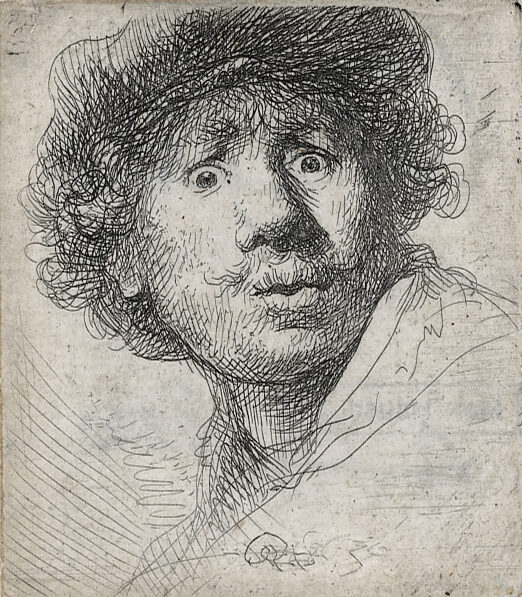
Rembrandt, Self-portrait with a surprised expression, 1630. Etching and drypoint. Rembrandt House Museum, Amsterdam.
What the collection holds
Rembrandt is counted among the greatest etchers of all time. Collectors across Europe already wanted his etchings during his own lifetime.
His free line, the deep blacks of many of his prints and his masterly use of drypoint made his name. The Rembrandt collection gives an almost complete overview of that graphic oeuvre, and you can search it in the museum’s own online collection.
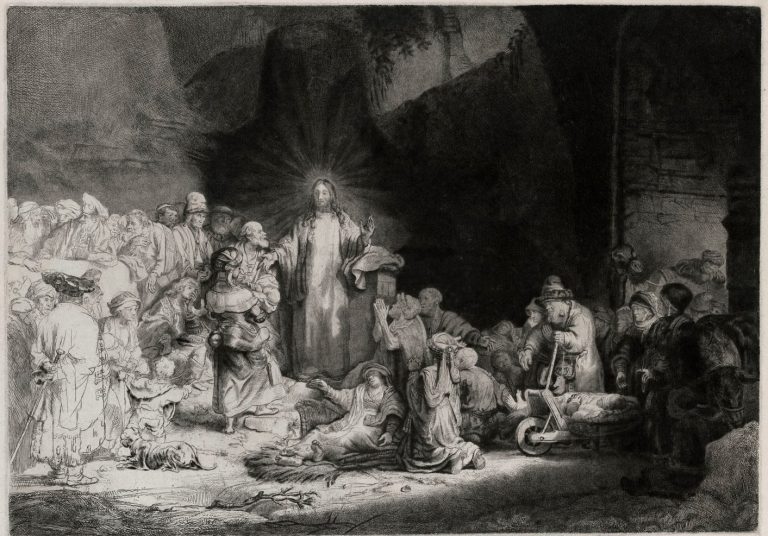
Rembrandt, The Hundred Guilder Print, circa 1648. Etching, drypoint and burin. Rembrandt House Museum, Amsterdam.
In focus
The Hundred Guilder Print
Made around 1648, the Hundred Guilder Print was already the most admired of Rembrandt’s prints in the 17th century. A hundred guilders was paid for it more than once during his own lifetime, an exceptional sum that gave the print its nickname. The intimate Self-portrait with Saskia of 1636 is part of the collection as well.
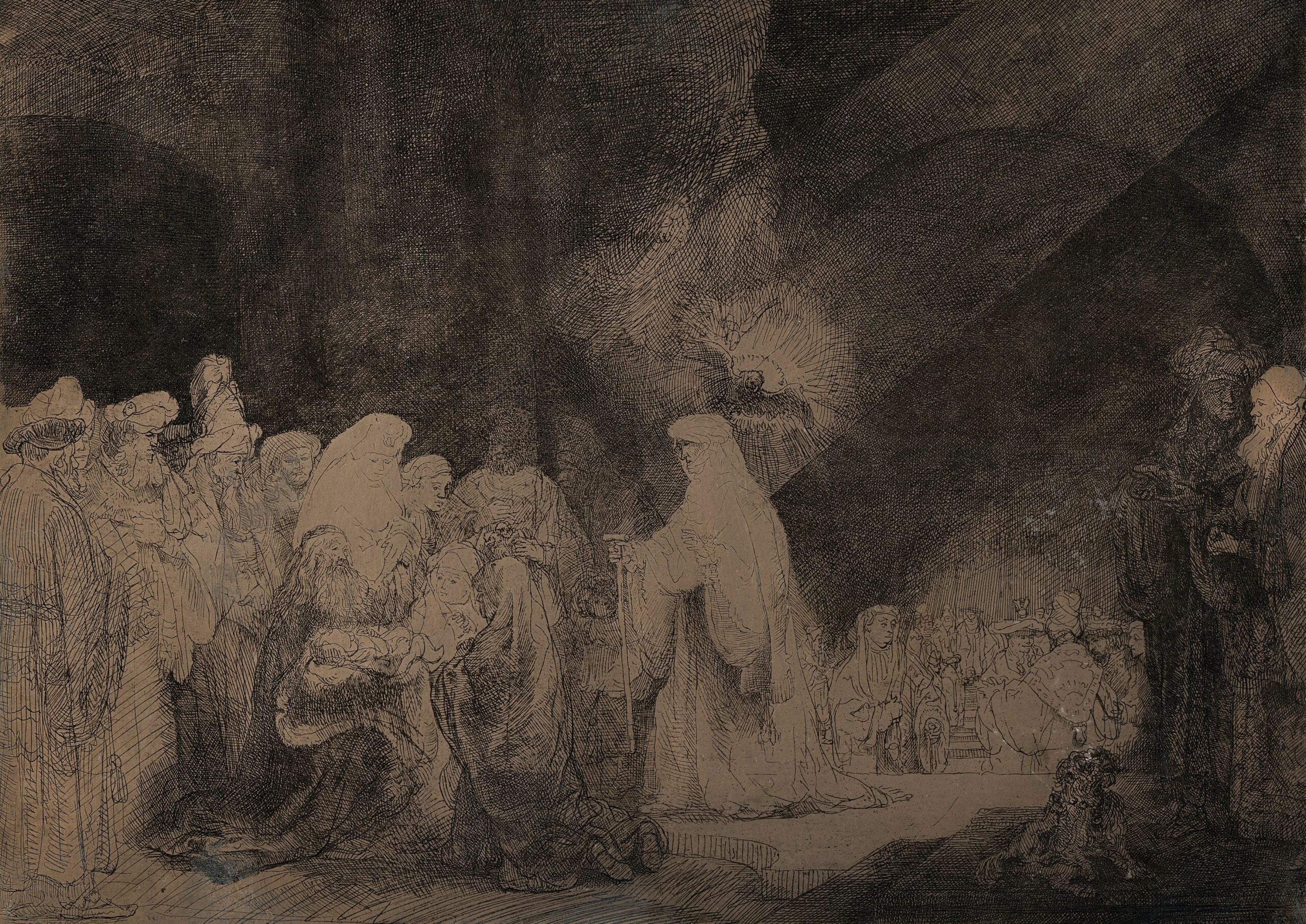
The copper plates
An etching starts with the plate: a sheet of copper in which Rembrandt scratched his image. Because a print from a copper plate always comes out in mirror image, he usually put his signature and his date on the plate the other way round. The four original plates in the collection show how Rembrandt worked, which makes them a rare window on his working method.
Rembrandt, Etching plate for The Song of Simeon, circa 1639. Copper. Rembrandt House Museum, Amsterdam.
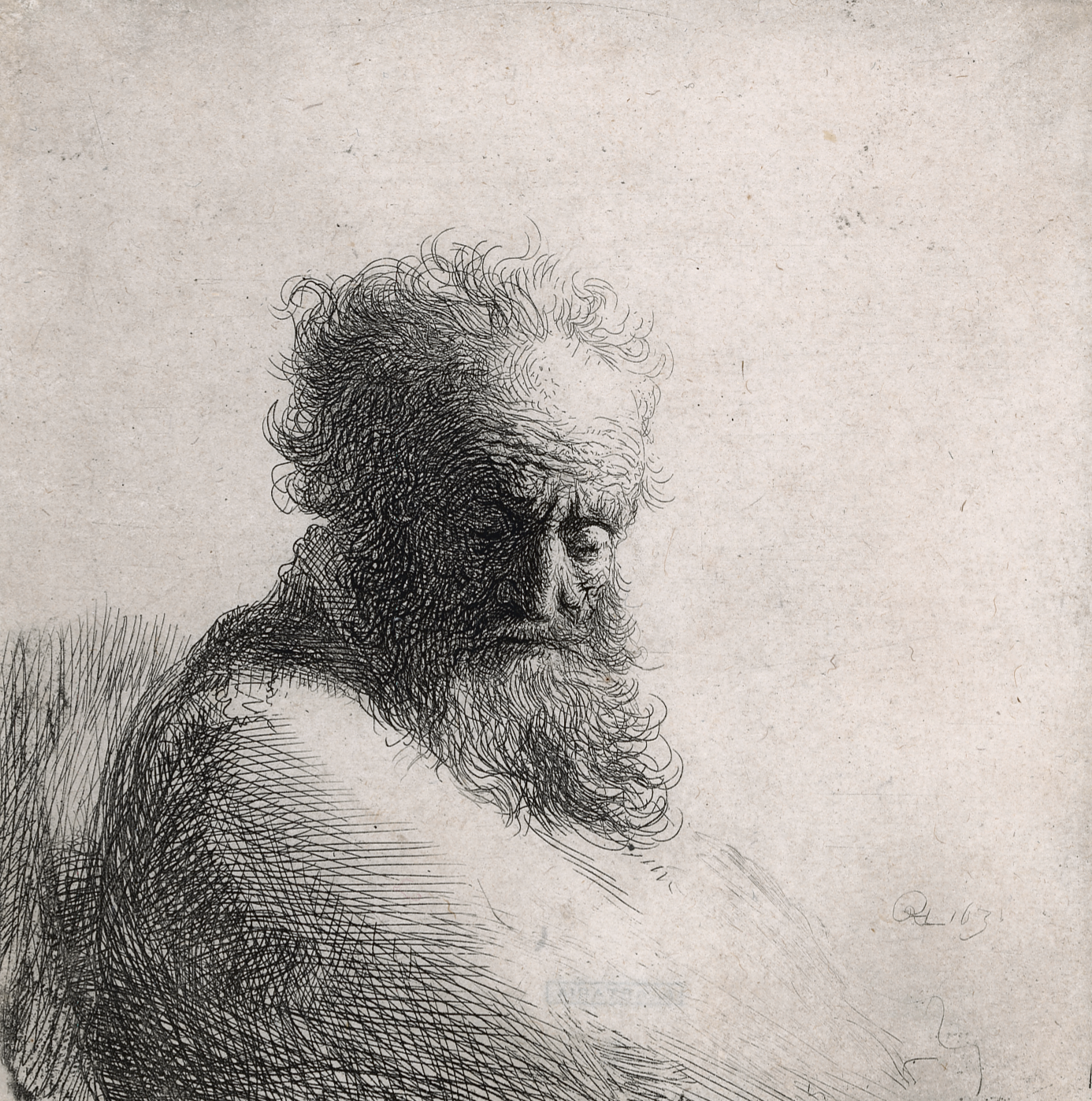
Rembrandt, Old man looking down, 1631. Etching. Rembrandt House Museum, Amsterdam.
Your visit
See how paint and etchings are made
In the 17th-century house where Rembrandt made his masterpieces, our museum educators show you live every day how Rembrandt made his own paint or how an etching comes about, from copper plate to print.