Visiting Rembrandt, c. 1656: Abraham van Dijck, Nicolaes Maes, and Samuel van Hoogstraten

Arnold Houbrakenโ€™s remark, that in his later years Rembrandt limited his social contacts to โ€˜common types, and those having to do with artโ€™, has many implications.1 This process appears to have started already in the 1640s, after the Night Watch (1642),2 but perhaps more significantly also in the wake of the death in the same year of his wife Saskia Uylenburgh, who as the daughter of a burgomaster likely drove his social ambitions during their years together.3 Some of the people Rembrandt did welcome at his house on the Sint Antoniesbreestraat in Amsterdam were former pupils of his, who had maintained contact with him, or even become his friends. Houbraken specifically said of Gerbrand van den Eeckhout that he had been a pupil of Rembrandt, but also that he was a โ€˜great friendโ€™ of his.4 In the 2019 exhibition Rembrandtโ€™s Social Network, the Rembrandt House Museum devoted special attention to his artistic contacts, including the artists Van den Eeckhout and Roeland Roghman, and connoisseurs such as Jan Six and Constantijn Huygens.5 In Huygensโ€™s case it continued into the following generation: his sons evidently had contact with the artist as well, as collectors of drawings.6 More recently, research by the author on the late pupil Abraham van Dijck unearthed clues that pointed to a return visit to Rembrandt, years after his period of study with him.7 Further research on this artist, and on Samuel van Hoogstraten and Nicolaes Maes, suggests this was part of a more substantial interaction with Rembrandt, taking place in or around 1656.
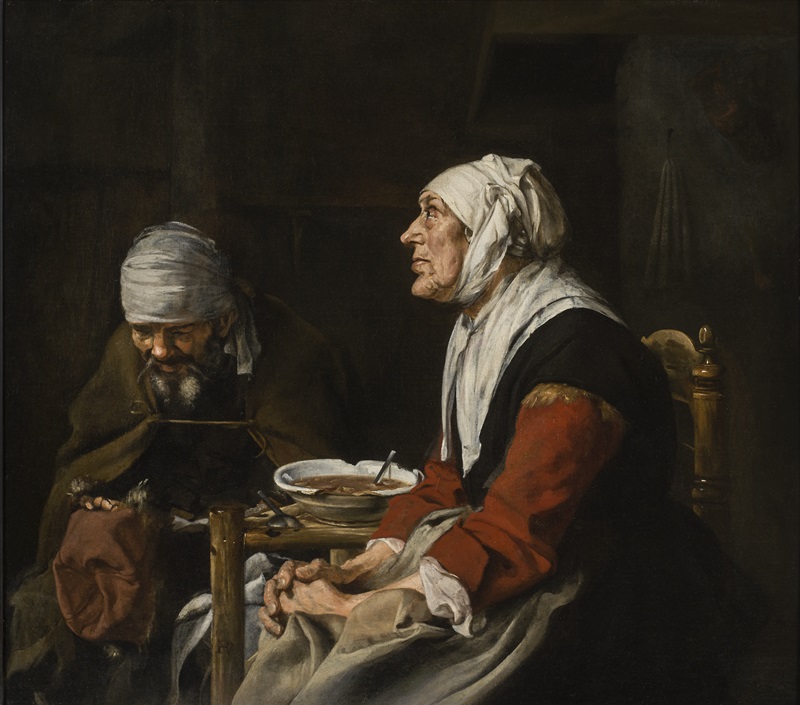
Fig 1. Abraham van Dijck, Old Couple Saying Grace, c. 1656. Oil on canvas, 67.9 x 75.5 cm. New York, collection of OttoNaumann.

By May of that year, Abraham van Dijck, Nicolaes Maes, and Samuel van Hoogstraten, were together again in Dordrecht. Maes had already returned to his native city in 1653, from study under Rembrandt in Amsterdam,8 and Van Hoogstraten in 1656, from his extensive travels to Germany, Austria, and Italy.9ย Abraham van Dijck returned in 1654, after studying around three years under Rembrandt. He had been there as aย discipel, or advanced pupil, afterย initialย study under Van Hoogstraten. In a 2020 monographic study on this pupil, the author traced a logical turn in his work toward moralizing genre themes, after settling in Dordrecht, directly influenced by Maes, his former fellow Rembrandt pupil, friend, and neighbour on theย Steegoversloot.10 Accordingly, he also adopted a smoother manner, already seen in hisย Widow of Zarephath and her Sonย and hisย Portrait of a Woman, both in the Bader Collection, of or around 1655.11ย This is especially evident in the smooth, roundedย forms of hisย Old Man Asleepย in Theย Mauritshuis, which bears a date of 1656, and includes a half-empty bottle to the left, so warning against the vice of drunkenness (fig.ย 1).12

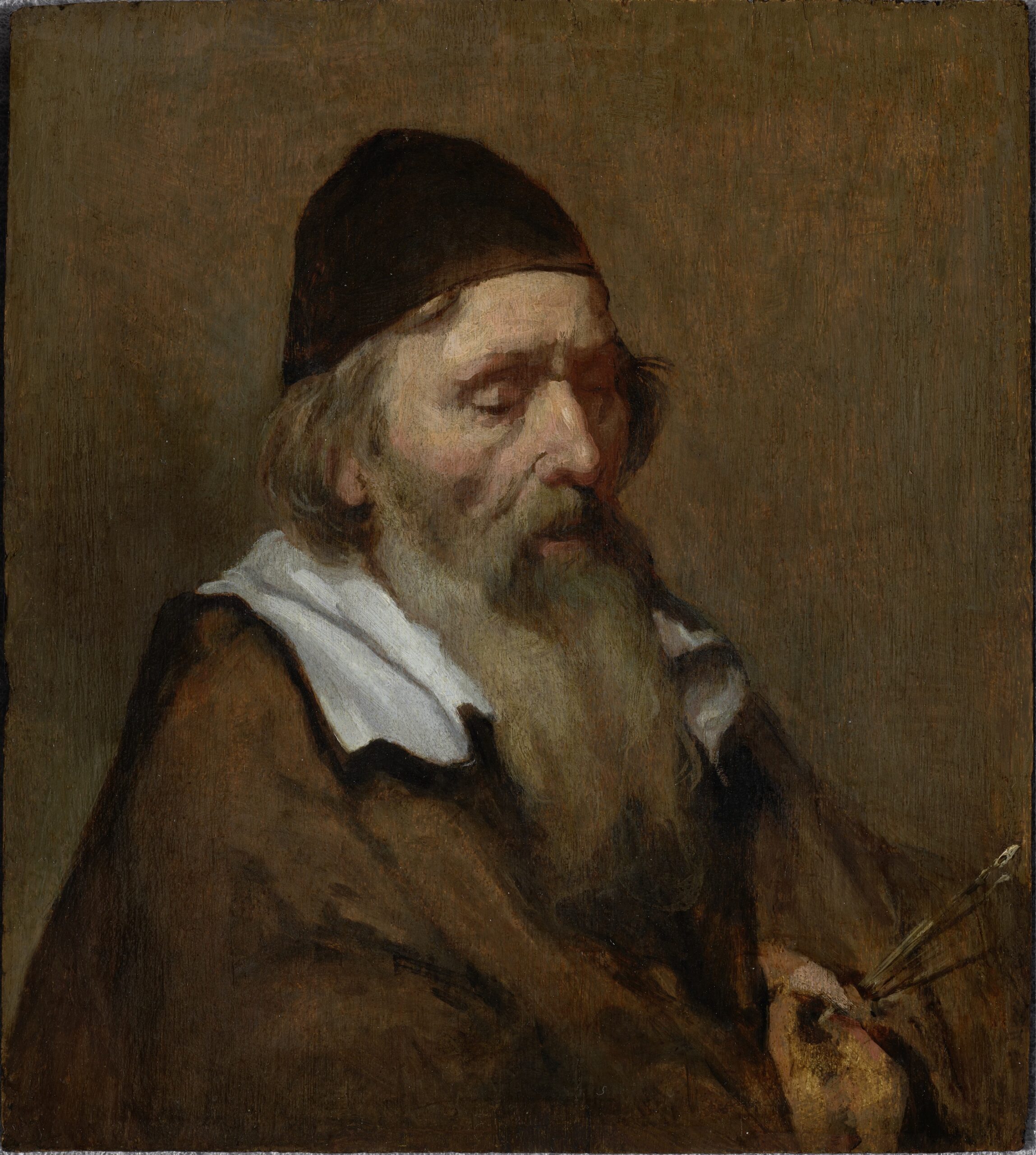
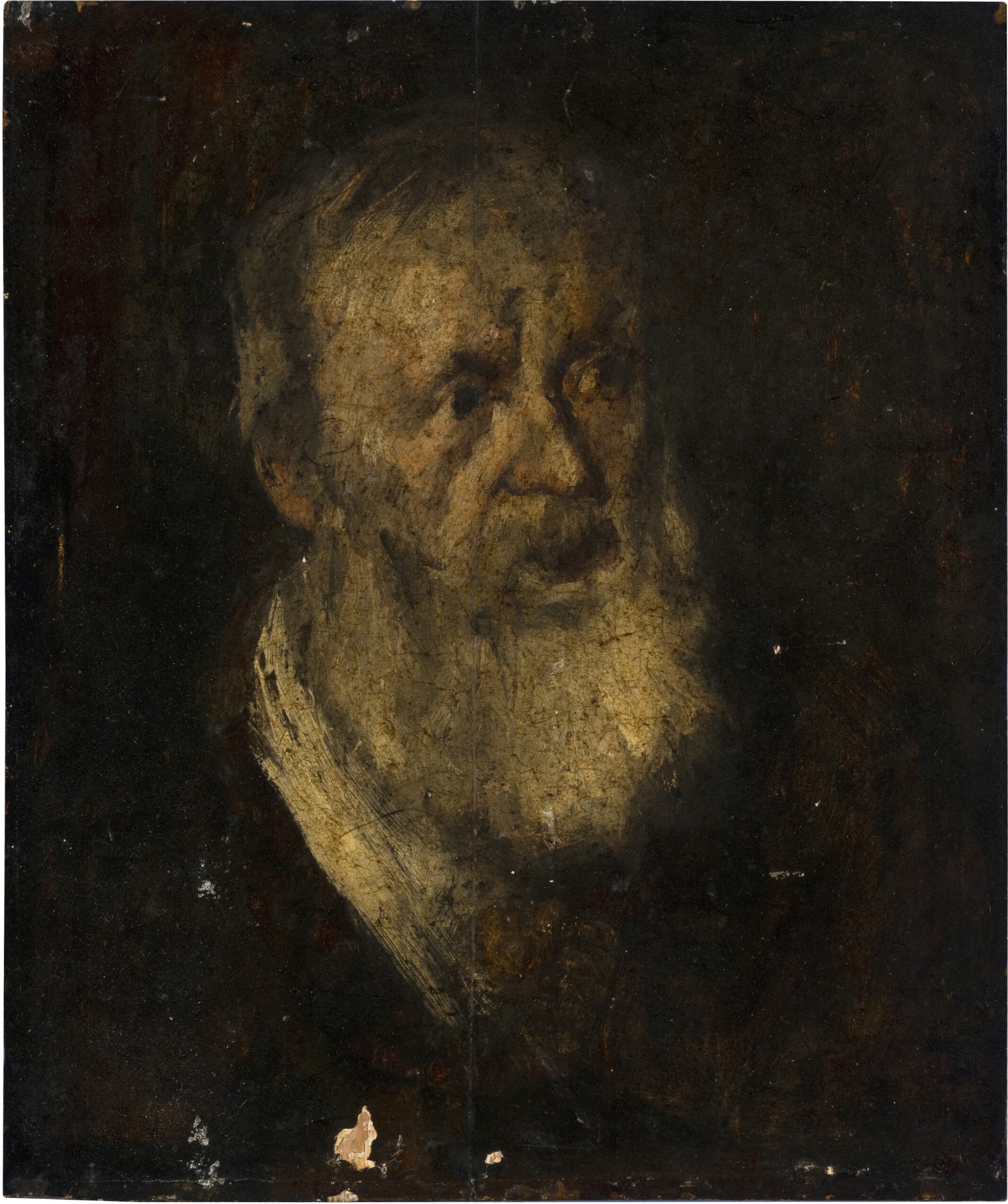
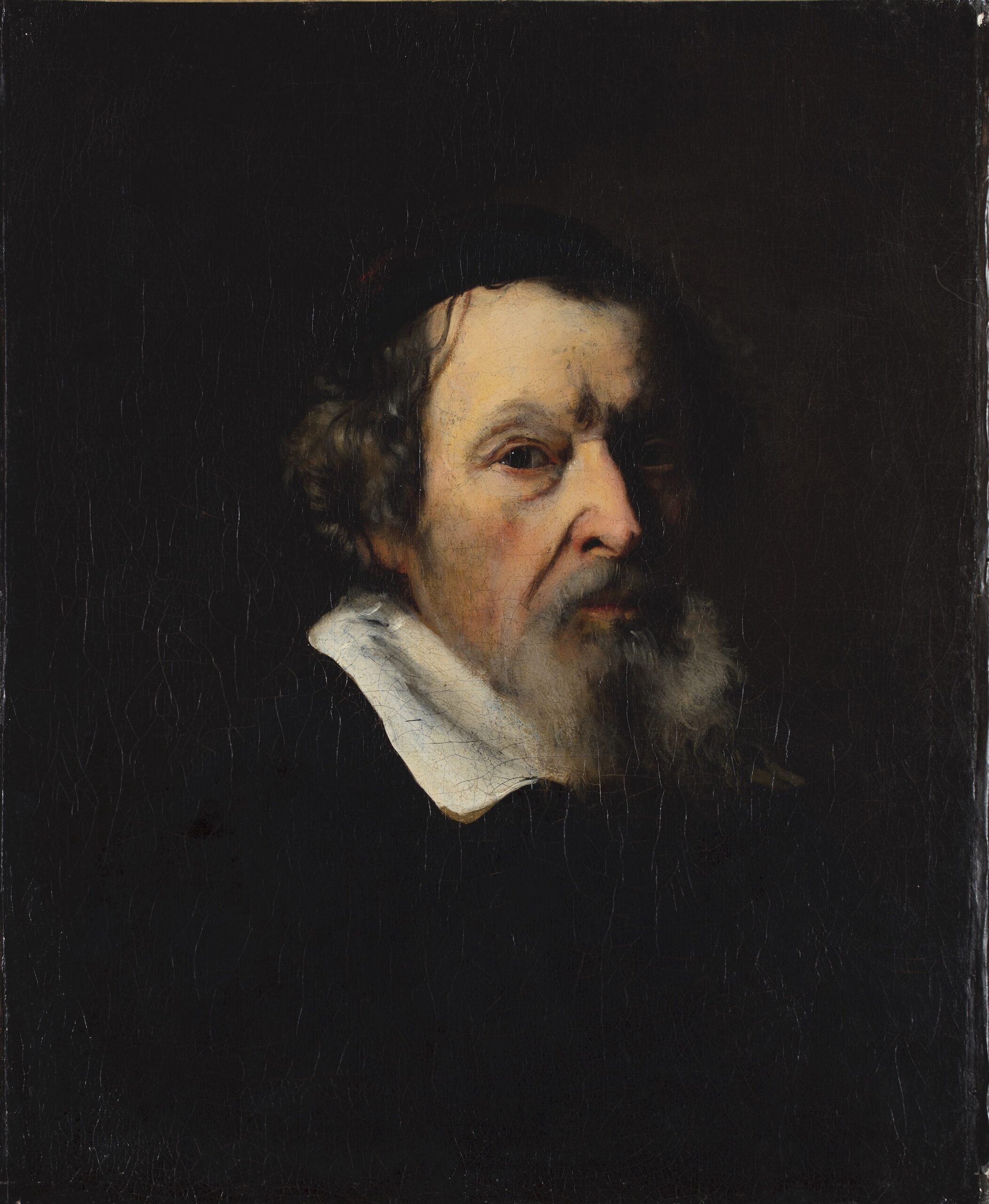
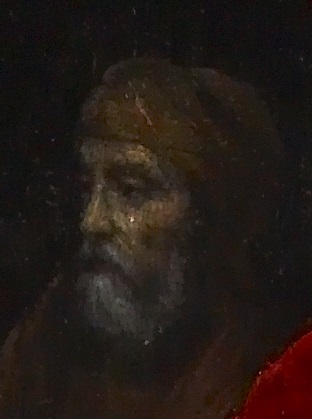
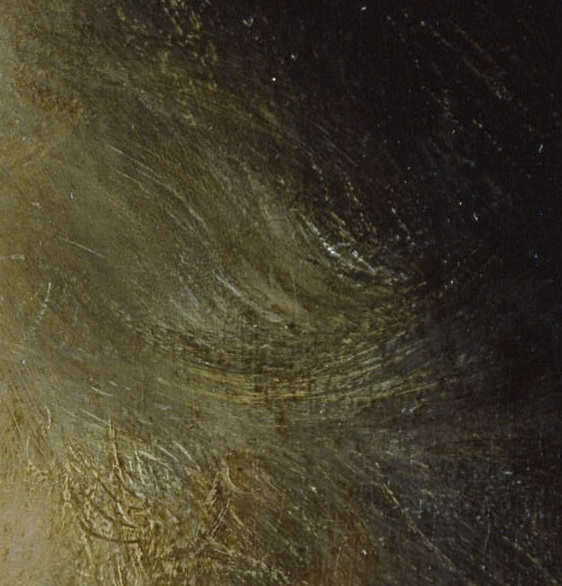
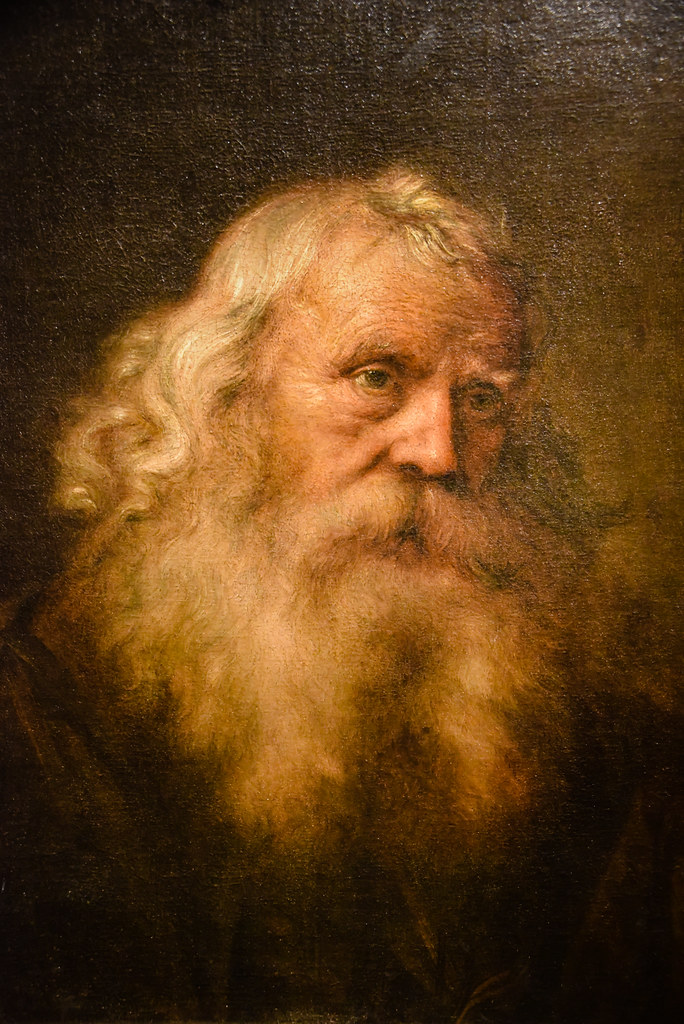
The author additionally posited that a few years after his departure from Rembrandt, Van Dijck returned for a visit. This hypothesis was based purely on stylistic evidence,ย in particularย the broad, flamboyant brushwork in his remarkable canvas ofย An Old Couple Saying Graceย from c. 1656 in a private collection in New York (fig.ย 2). It appears that soon after theย Mauritshuisย Old Man, Van Dijck received an impulse to experiment again with the bold, open brushwork, that he had already seenย Rembrandt developingย in the early 1650s. But now he went much further than when he initially studied under the master, there and in a number of other paintings, including his striking depiction ofย The Old Painter, recently acquired by The Rembrandt House Museum (fig. 3).13 An evocative head study that recently resurfaced in Milan (fig. 4) belongs to the same moment in Van Dijckโ€™s oeuvre, with a freer, sketchier technique.14 By contrast, another depiction of a humble and pious old couple, dated 1657, shows Van Dijck retreating again from Rembrandt and toward the smoother handling and smaller figure scale of his later work.15ย This gives us a brief window of 1656, or perhaps 1657 for the creation of these and other similar paintings.
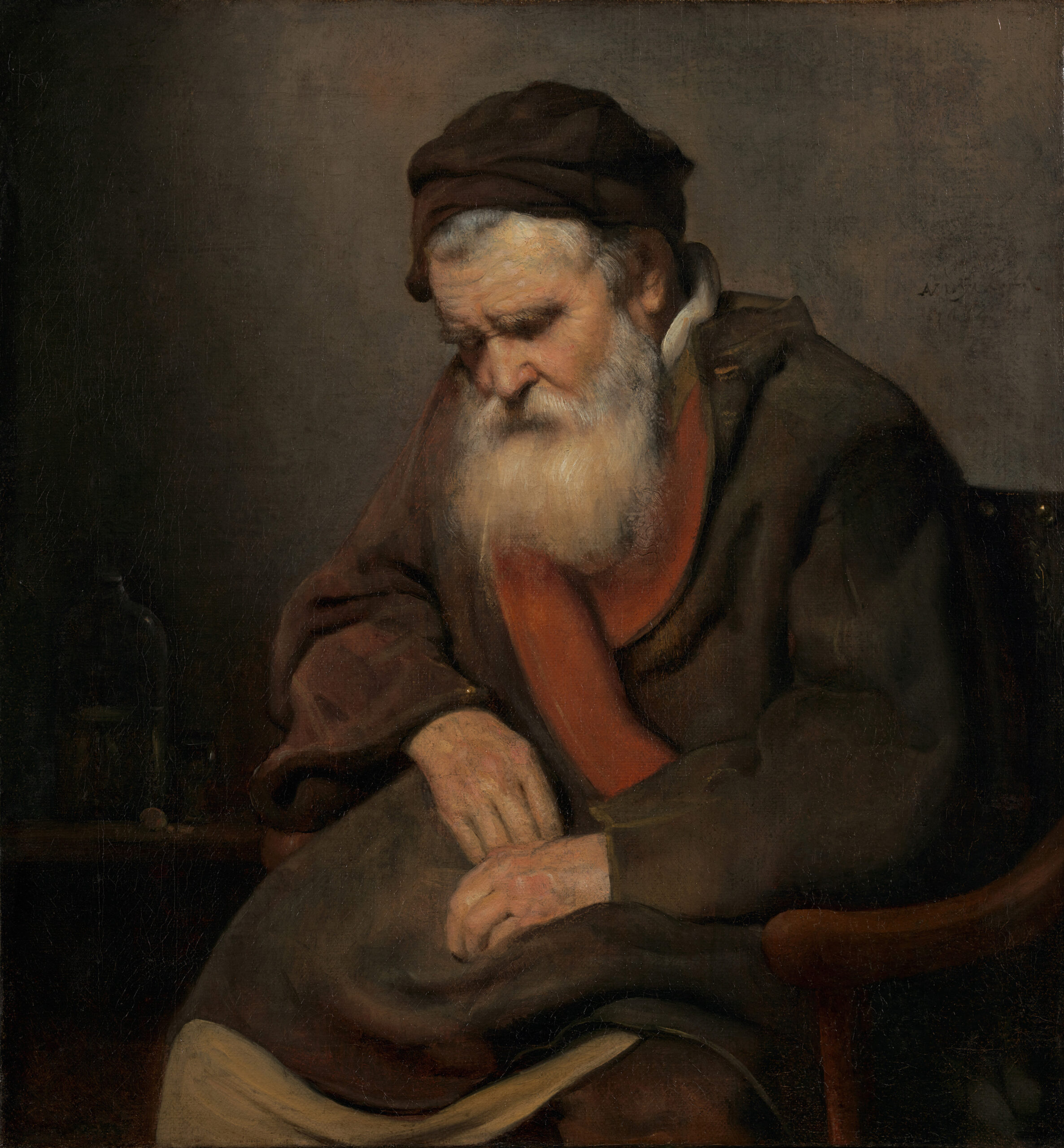
Fig 2. Abraham van Dijck, Old Man Asleep, 1656. Oil on canvas, 50.8 x 47 cm. The Hague, Mauritshuis, inv. no. 791.ย 
Fig 3. Abraham van Dijck, The Old Painter, c. 1656/1657. Oil on panel, 24.5 x 21.5 cm. Amsterdam, The Rembrandt House Museum, inv. no. 4793.ย 
Fig 4. Here attributed to Abraham van Dijck, Head Study of a Bearded Old Man, Speaking, c. 1656. Oil on panel, 35 x 29 cm, present location unknown.ย 

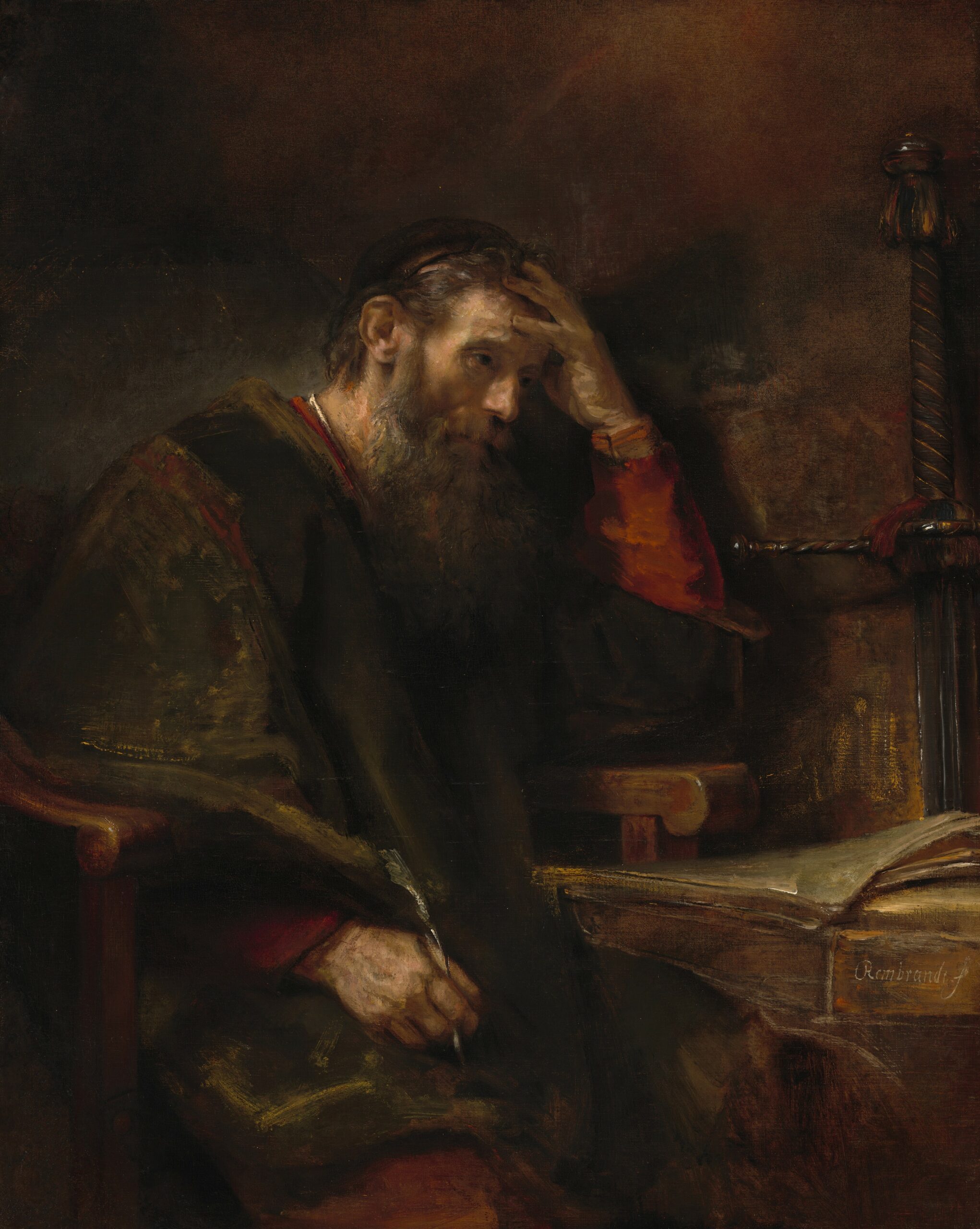
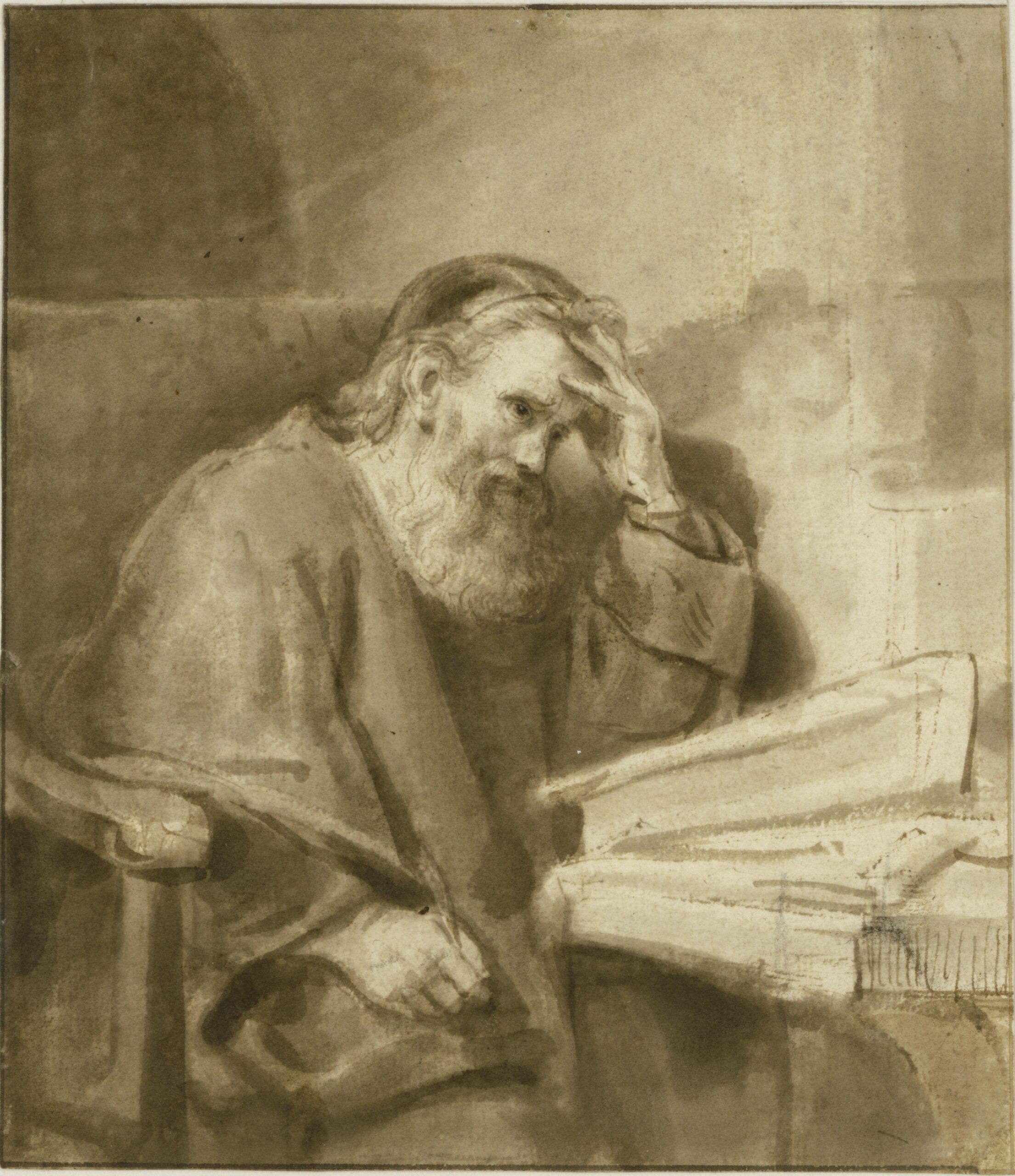
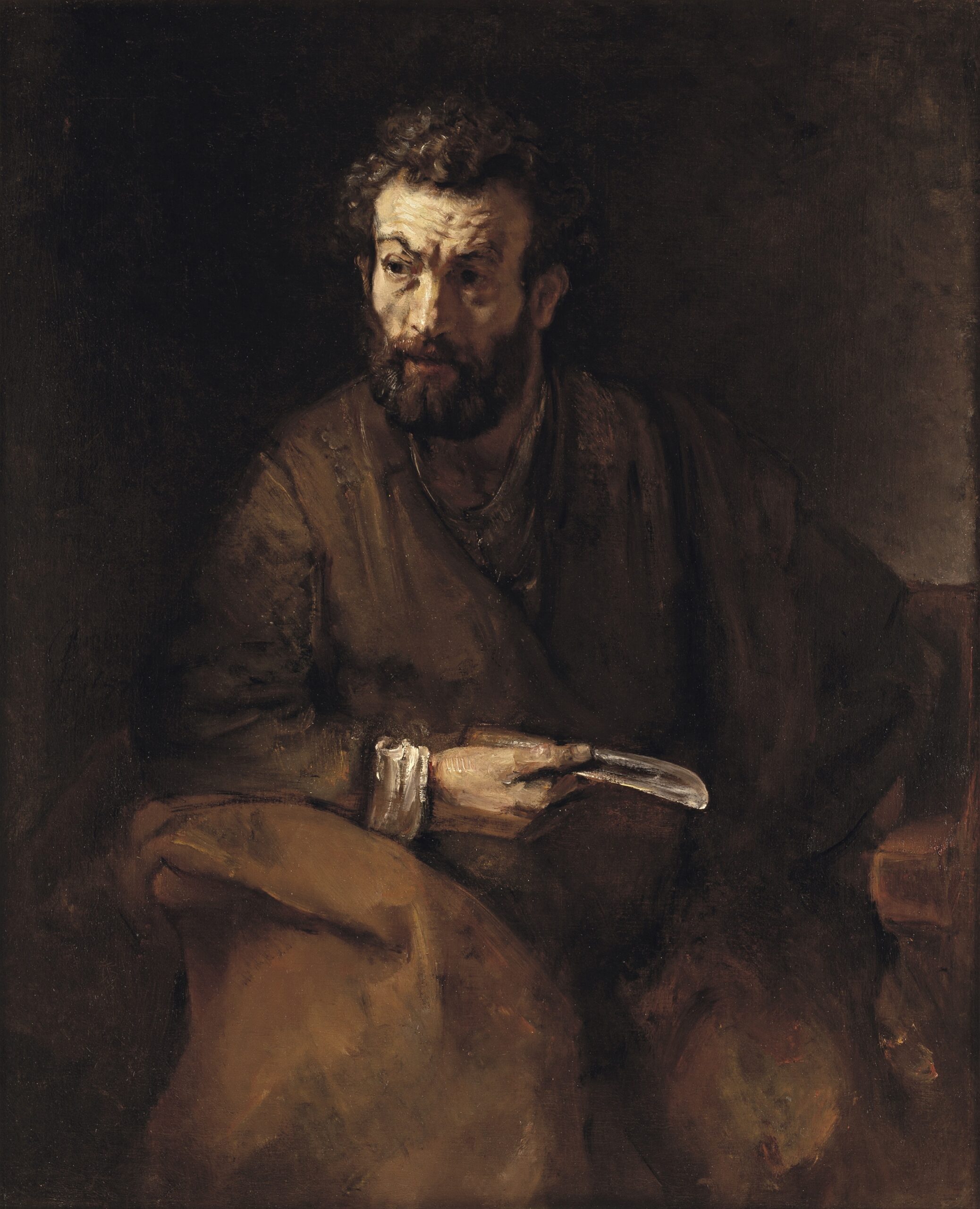
More recently, the proposed scenario of such a return visit to Rembrandt received support from striking new evidence. A research team consisting of John K. Delaney, Kathryn A. Dooley, and Marjorie Wieseman carried out a program of technical research on the painting ofย St. Paul in the National Gallery of Art in Washington, long attributed to Rembrandt (fig. 5), convincingly clarifying an interim state of the painting using X-ray fluorescence imaging spectroscopy (macro-XRF or XRF-IS) and visible and infrared (400 to 2500 nm) reflectance imaging spectroscopy (RIS).16 In consultation, this author drew attention to the significance of a drawing in Berlin (fig. 6).17ย The sheet had been taken up by Wernerย Sumowskiย in the manuscript volume of anonymous drawings left behind on his death in 2015, as a presumed record of this interim state: it corresponds extensively to the findings of the Washington team. On stylistic grounds,ย in particularย the tonal washes, fine hatching, and dry dragged lines, the author could attribute it to Abraham van Dijck. It can comfortably be dated to around 1656, as the rendering of the hand, as well as the bent-over pose of the figure, do still align closely with that seen in theย Mauritshuisย painting.

Fig 5. Rembrandt and anonymous artist, St. Paul, 1656-1657. Oil on canvas, 131.5 x 104.4 cm. Washington DC, National Gallery of Art, inv. no. 1942.9.59.ย 
Fig 6. Abraham van Dijck, after Rembrandt, A Scholar at his Desk, c. 1656. Pen and brush in brown, 153 x 135 mm, Berlin, Kupferstichkabinett, Staatliche Museen zu Berlin, inv. no. KdZ 2872 (photo: Dietmar Katz).

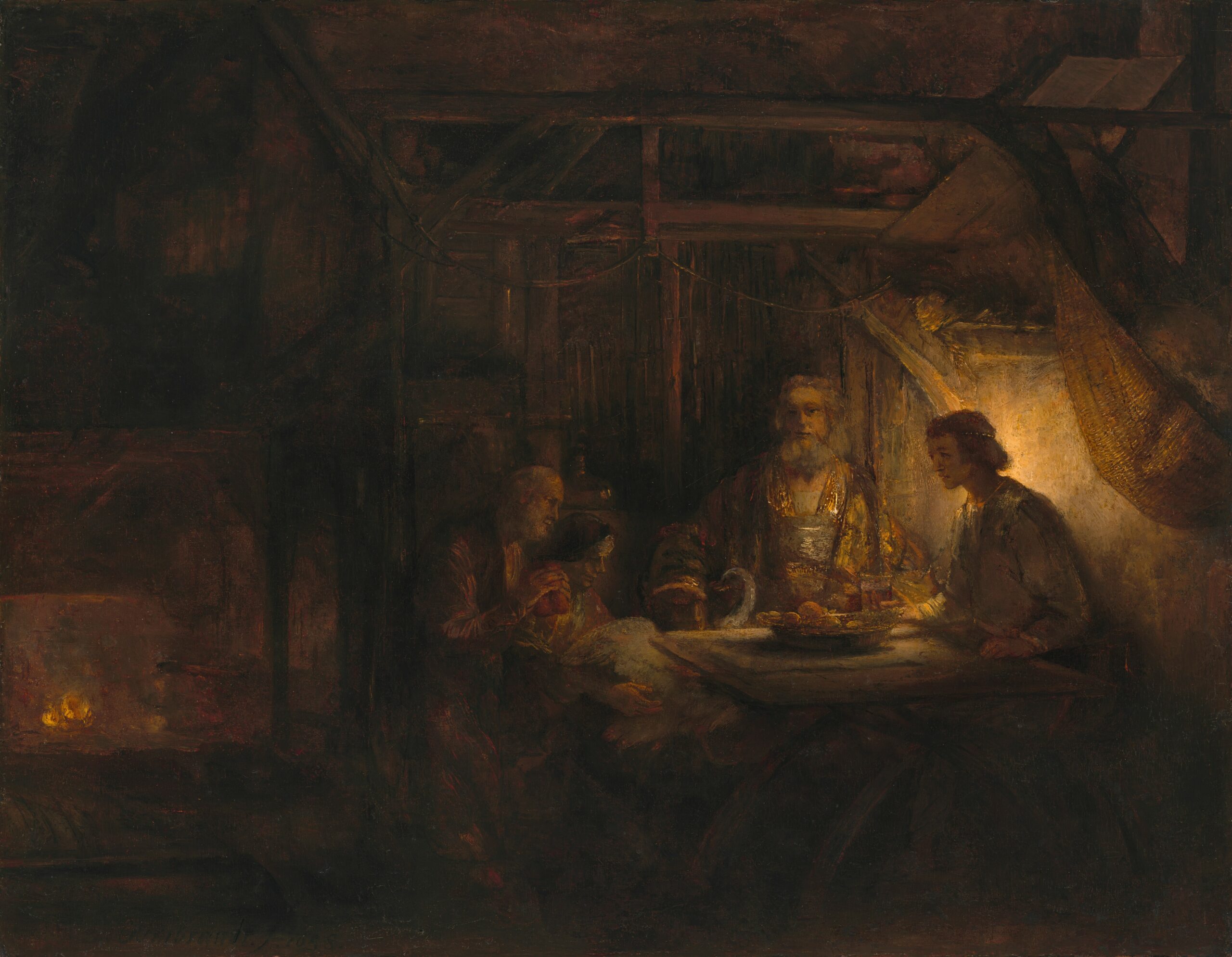
It was in the same year that Van Dijckโ€™s first teacher Samuel van Hoogstraten returned to Dordrecht, from his trip to Germany, Austria, and Italy, begun five years earlier. Already in his 1981 volume ofย Drawings of the Rembrandt School, in the section on Van Hoogstraten,ย Sumowskiย had posited a subsequent visit by Van Hoogstraten to Rembrandt, based solely on the evidence of a single drawing, ofย Jupiter and Mercury in the House of Philemon and Baucis in the Rijksmuseum (fig. 7).18 It is an adaptation of the painting of the same theme, again in the National Gallery of Art in Washington, D.C., produced in Rembrandtโ€™s workshop, in part by Rembrandt himself, according to Ernst van de Wetering (fig. 8).19ย Van Hoogstraten will have seen it taking shape on the easel sometime between 1656 and 1658, the date it bears. This serves as a chronological anchor for a whole group of related drawings given byย Sumowski to Van Hoogstraten. These show the introduction of broad, open brush strokes in ink for contour lines, which at the same time evoke mass and solidity of form.20ย This very striking element furthermore had no source in the draughtsmanship of another artist Van Hoogstraten could have studied. He wasย most likely inspiredย by the open brushwork of Rembrandtโ€™s late paintings (including his direct model, theย Jupiter and Mercuryย in Washington) in the free medium of drawings made for exercise and sharing with friends,ย connoisseursย and pupils. In his drawings, Van Hoogstratenย soughtย to study, explore, andย perhaps evenย compete with this remarkable development in Rembrandtโ€™s art, which could not have escaped his notice, as it had not that of Abraham van Dijck.
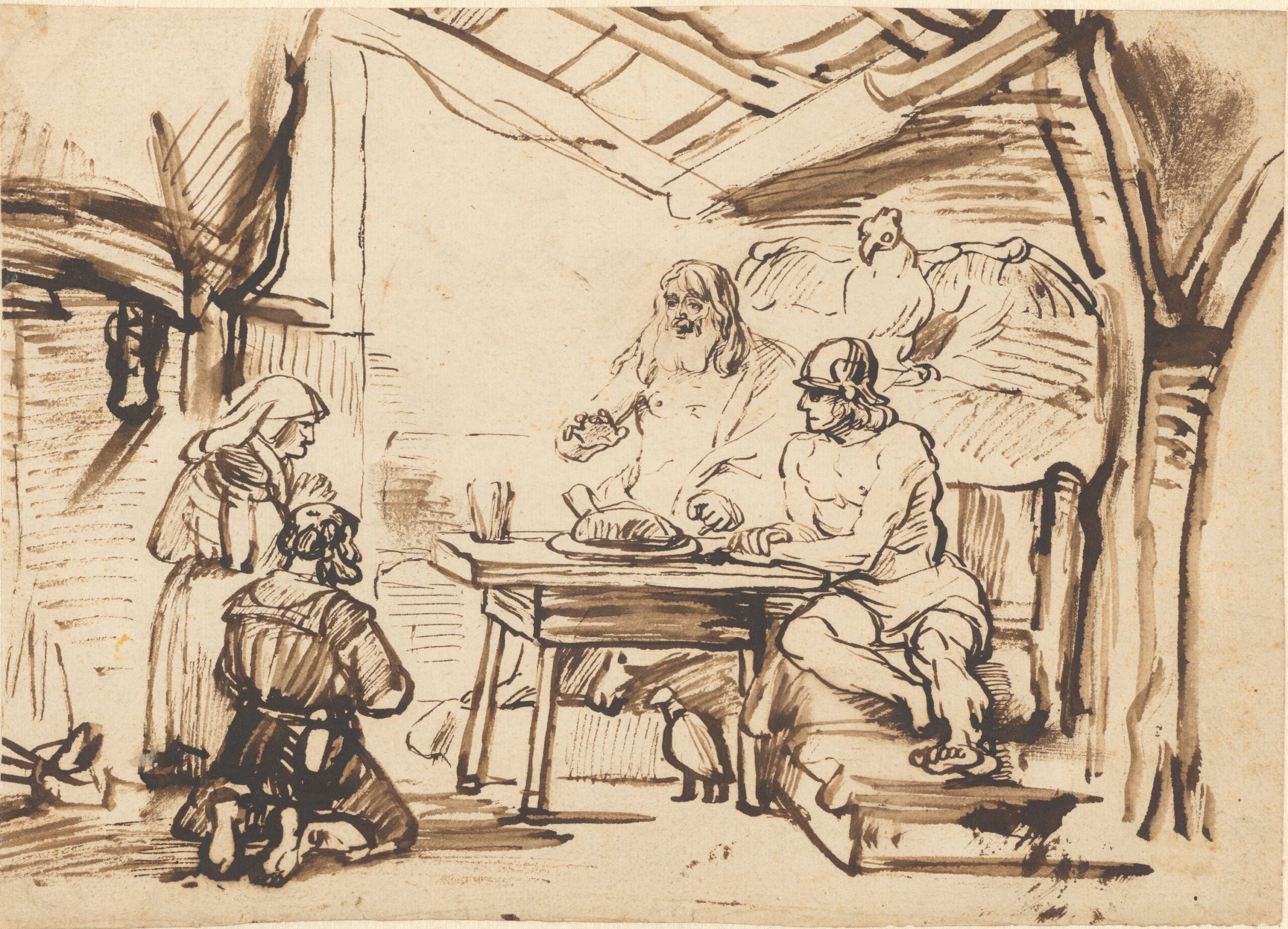
Fig 7. Samuel van Hoogstraten, freely after Rembrandt and workshop, Jupiter and Mercury in the House of Philemon and Baucis, c. 1656/7. Pen and brush in brown, 185 x 258 mm. Amsterdam, Rijksmuseum, inv. no. RP-T-00-223.
Fig 8. Rembrandt and Workshop, Jupiter and Mercury in the House of Philemon and Baucis, signed and dated 1658 (in a later hand). Oil on panel, transferred to a new panel, 54.5 x 68.5 cm. Washington DC, National Gallery of Art, inv. no. 1942.9.65.

In his paintings, Van Hoogstratenย generally adheredย to the very controlled and measured facture he hadย established, also for textural effects. It is however possible that some aspects of Rembrandtโ€™s late manner also rubbed off there as well,ย in particular theย use of a larger figure scale for concentration and monumental effect. In 1657, Van Hoogstraten painted anย Ecce Homo now in Munich, largely in muted brownish hues (fig. 9).21ย Although the surfaces are rendered smoothly, the figure is presented with an imposing monumentality, the bulky figure filling the frame, isolated against the background, the single hatted tormenter pushed off into the shadows. This could be dismissed as a one-off experiment, except that Van Hoogstraten applied this effect in an undatedย Madonna and Child, again with looming figures, and a limited palette of muted hues, punctuated by accents of red in the flowers, which can be placed in the same period.22
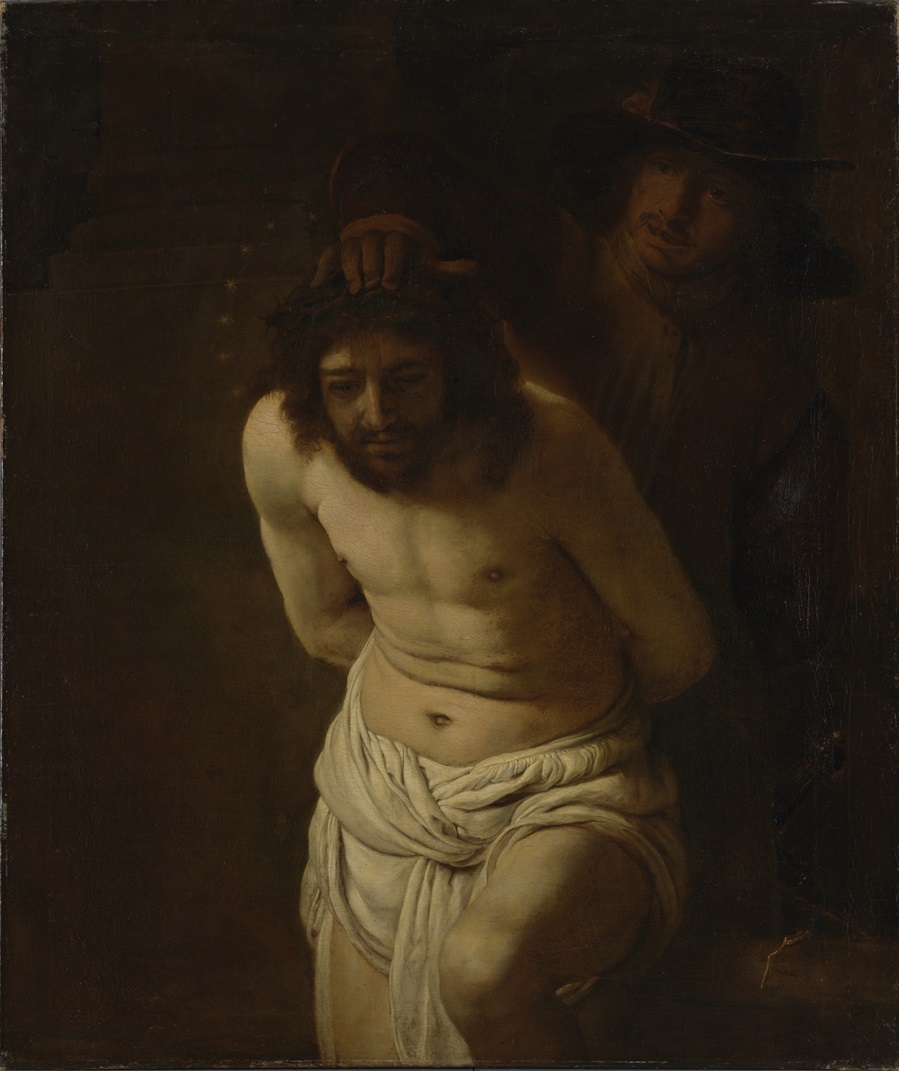
Fig 9. Samuel van Hoogstraten, The Crowning with Thorns, 1657. Oil on canvas, 105.5 x 89 cm. Munich, Alte Pinakothek, inv. no. 1232.
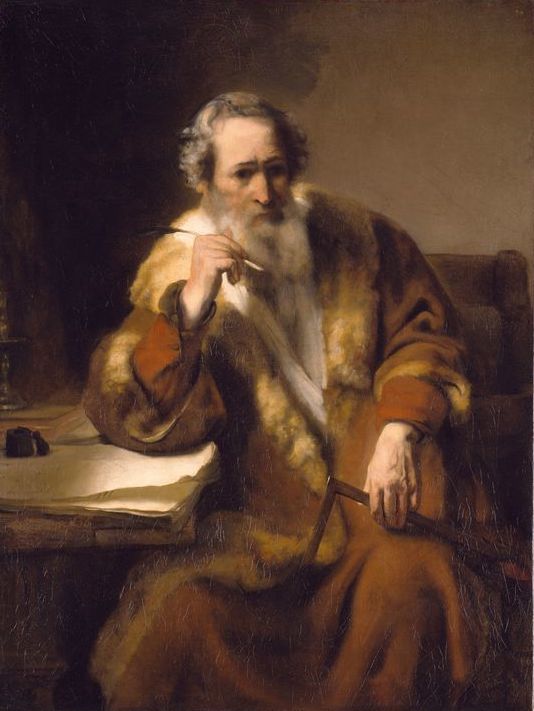
Fig 10. Nicolaes Maes, St. Thomas as Architect, 1656. Oil on canvas, 120 x 90.3 cm. Kassel, Gemรคldegalerie Alte Meister, Museum Landschaft Hessen Kassel, inv. no. GK 246.ย 
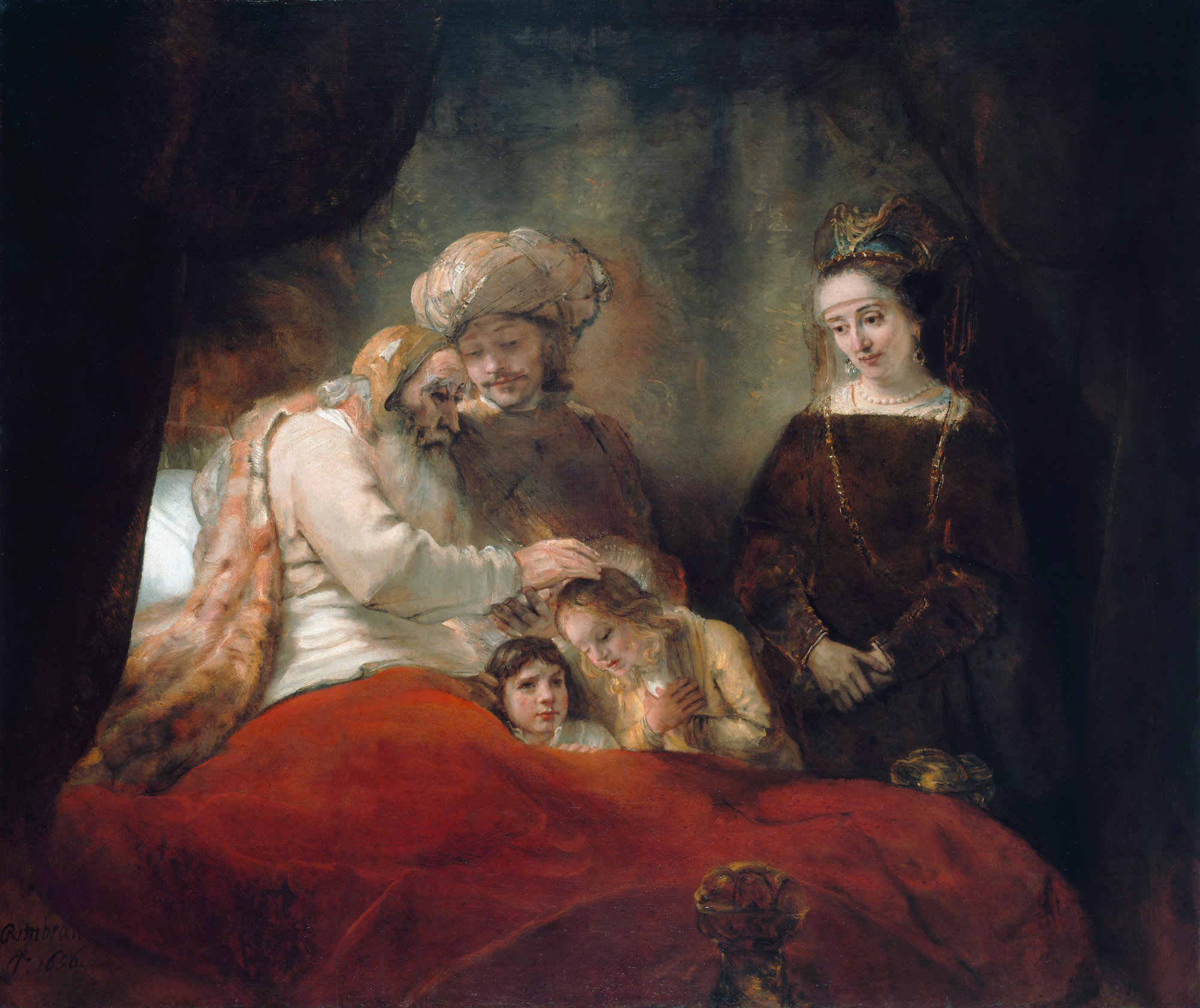
Fig 11. Rembrandt, Jacob Blessing Ephraim and Mennaseh, 1656. Oil on canvas, 172 x 209 cm. Kassel, Gemรคldegalerie Alte Meister, Museum Landschaft Hessen Kassel, inv. no. GK 249.

There are also echoes of Rembrandt c. 1656 in the work of Nicolaes Maes.23ย When this pupil at first established himself as an independent artist in Dordrecht, he applied himself to history painting, one of his best-known examples being theย Dismissal of Hagar in the Metropolitan Museum, signed and dated 1653.24ย Its concentration and powerful effect of grazing light already demonstrate Rembrandtโ€™s late style, but less so its brushwork. Maes quickly turned however towards moralizing genre scenes featuring pious old women and young women in various roles, both negative and positive. While firmly entrenched in Dordrecht, he nonetheless appears to have visited Rembrandt in Amsterdam, in 1656. This is the date of a painting ofย St. Thomas as an Architectย in Kassel, accompanied by a Rembrandt signature, and related to the Apostle paintings Rembrandt had recently started painting around that time (fig. 10). The inscription was taken as proof of authorship, until in 1987ย Sumowski astutely reattributed the painting to Nicolaes Maes.25ย The modelling of the head and hands indeed aligns with Maesโ€™s genre depictions of old women, with the stark lighting yielding flattened surfaces, and casting harsh shadows (in particular at the vein in Thomasโ€™s lowered hand), and also in the use of relatively smooth brush work built up in layers to conjure aged flesh. However, the compositional alternation of light and dark patches, and also the prominent display of the texture of fur in fantasy antique costume, echo a painting of the same year by Rembrandt, notably in the same museum, hisย Jacob Blessing Ephraim and Menasseh (fig. 11).26ย Even more specifically, Thomasโ€™s distinctive sharply pointed nose resembles that of the aged Jacob. In some passages, such as a highlighted ridge in Thomasโ€™s sleeve to the left, and in his white chemise, Maes incorporates some bolder, thicker strokes of paint, possibly prompted by Rembrandtโ€™s painterly performance in the white coat of Jacob, much like Van Hoogstraten and Van Dijck experimented with bolder brushwork around the same time, likely on the same occasion. It appears Maes, like Abraham van Dijck, was caught up by Rembrandtโ€™s Apostle paintings.

Fig 12. Attributed to Abraham van Dijck, Portrait of a Man (likely the artistโ€™s father, Leendert van Dijck), c. 1657. Oil on canvas, 55.7 x 45.6 cm. Kortrijk, Belgium, private collection.
Fig 13. Abraham van Dijck, Esther before Ahasuerus, c. 1651. Oil on canvas, 62.3 x 86.2 cm. Baltimore, Walters Art Gallery, inv. no. 37,2013 (detail: head of an old man standing behind Esther, likely the artistโ€™s father, Leendert van Dijck).
Fig 14. Rembrandt, St. Bartholomew, 1657. Oil on canvas, 112.7 x 99.7 cm. San Diego, Putnam Foundation, Timken Museum of Art, inv. no. 1952.001.ย 

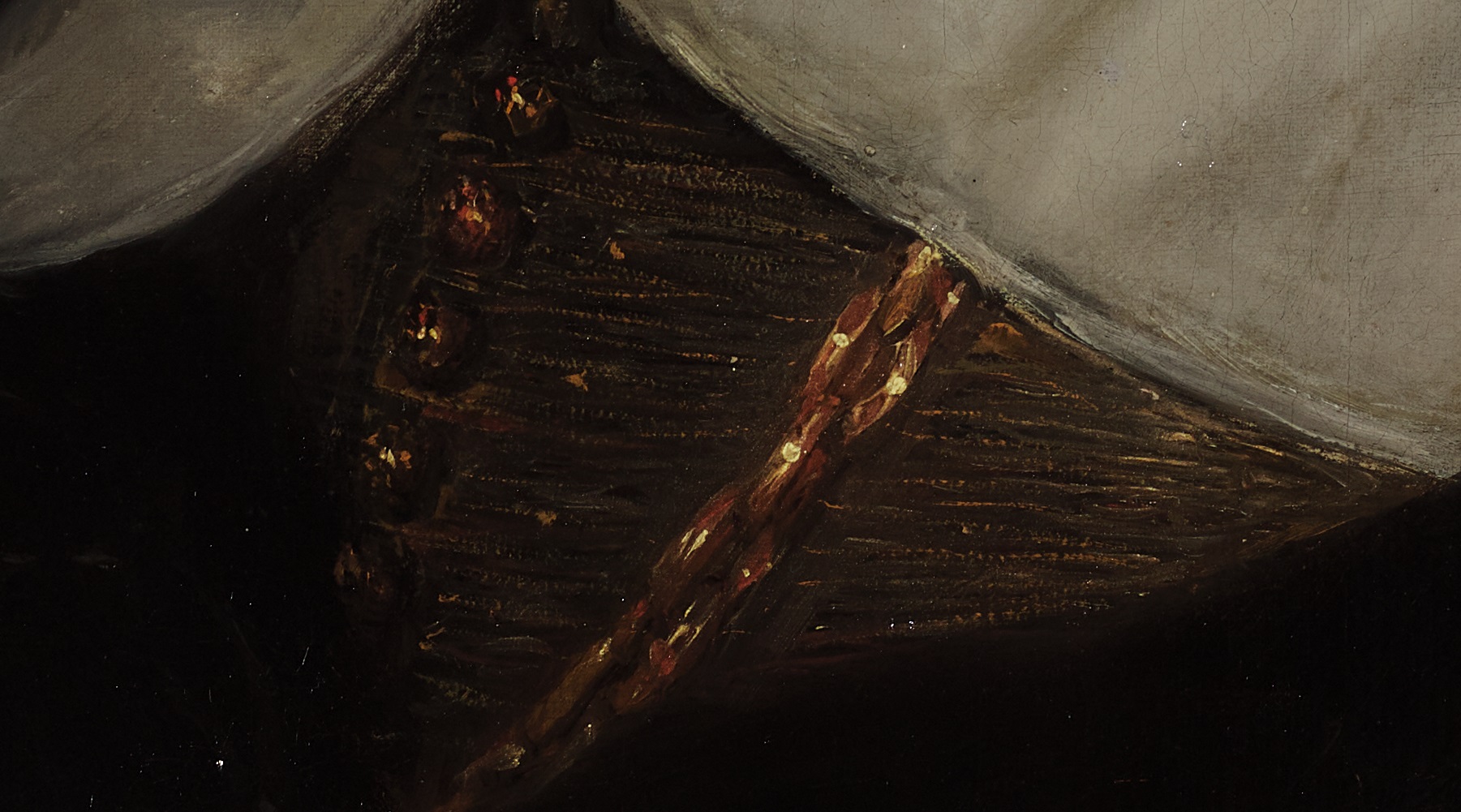
It is in this illustrious company that at least one other work now takes its place: aย Portrait of a Bearded Man, currently in a Belgian private collection (fig. 12). The presentation of the face, with strong lighting from the side, is so close to theย Thomasย that it was first thought to be by Maes. Further analysis of the manner,ย in particularย the use of open brush strokes, especially the long, thin whitish strokes in the collar, beard, and hair, made it clear that the artist was Maesโ€™s friend and neighbour, Abraham van Dijck. It even appears possible that the sitter wasย his father Leendert van Dijck, whom we know from an earlyย portraitย historiรฉ of the family, of 1651 (fig. 13).27ย Van Dijck adopted Maesโ€™s framework of pose and lighting of Thomasโ€™s head, to create one of the more severe presentations of a sitter in seventeenth century Dutch art. In this respect he may have been prompted by another Apostle Rembrandt was painting at the time, in his studio, theย St. Bartholomew in San Diego (fig. 14).

Samuel van Hoogstraten, Nicolaes Maes, and Abraham van Dijck each made works of art thatย indicateย that they visited their former teacher in his workshop in or around 1656 or 1657. This appears to have been the product of heightened interactions between these artists and Rembrandt, and it is tempting toย speculateย that they may even have gone to Amsterdam together. At any rate, such meetings would have taken place in Rembrandtโ€™s house on the Sintย Antoniesbreestraat, which he occupied until 1658. The visitors will undoubtedly have noticed that the process of Rembrandtโ€™s insolvency was underway, triggered by his application forย cessioย bonorum on 14 July 1656, but it did not leave evident traces in their art.28 The impulse for such interactions most likely came from Van Hoogstraten, looking to catch up on new developments that had taken place in his absence. He likewise quickly caught up with the perspective experiments that Carel Fabritius had made in the years before his untimely death, and also the rapid development of the elegant interior scene in the work of Gerard Ter Borch, and responded with works of his own.29 As a major exhibition in Paris and Dublin demonstrated, Dutch genre painters were by then already accustomed to travelling around regularly to study each otherโ€™s works, making use of an efficient transportation system, especially passenger barges on special waterways.30 Van Hoogstraten, the intrepid world traveller, was famously eager to keep up with innovations in the work of other artists.31 Undoubtedly having heard about new developments, Rembrandt was evidently high on his list.

  1. Arnold Houbraken, De groote schouburgh der Nederlantsche konstschilders en schilderessen vol. 2, Amsterdam 1719, p. 272: โ€œHy verkeerde in den herfst van zyn leven wel meest met gemeene luiden, en zulke die de Konst hanteerden.โ€
  2. Ernst van de Wetering, A Corpus of Rembrandt Paintings V: The Small-Scale History Paintings, Dordrecht 2011, pp. 3-6; vol. 6, pp. 296-297; and: Eric Jan Sluijter, in Govert Flinck: Reflecting History, Cleves 2015, pp. 68-69.
  3. Ben Broos, โ€œSaskia, Rembrandtโ€™s Frisian Brideโ€, in: Marlies Stoter (ed.), Rembrandt & Saskia: love and marriage in the Dutch Golden Age, Zwolle, 2018, pp. 23-24.
  4. Houbraken, Schouburgh (see note 1), pp. 100, 174.
  5. Epco Runia, David de Witt, Rembrandtโ€™s Social Network: family, friends, and acquaintances, Amsterdam: The Rembrandt House Museum, 2019.
  6. http://remdoc.huygens.knaw.nl/#/document/remdoc/e12959, with reference to a letter from Constantijn Huygens Jr. to his brother Christiaen, of 6 December 1663, in the Leiden University Library; see Hendrick E. van Gelder, โ€œDe jonge Huygensen en Rembrandtโ€, Oud Holland 73 (1958), pp. 238-241, identifying the drawings, currently: River Scene with Boats and Figures Bathing, c. 1590/1595. Pen in brown, 111 x 205 mm. Formerly Chatsworth, Duke of Devonshire Collection; most recently, Alfred Taubman sale, New York, (Sothebyโ€™s), 27 January 2016, lot 33 (as the original, but without noting the Rembrandt provenance); and the copy with Everhard Jabach in Paris: pen in brown, 112 x 186 mm. Washington, National Gallery of Art, inv. no. NGA 72075 (as also as the original).
  7. David de Witt, Abraham van Dijck (1635-1680): Life and Work of a Late Rembrandt Pupil, Zwolle 2020, p. 32.
  8. Werner Sumowski,ย Gemรคlde der Rembrandtschรผlerย vol.ย 2, Landau 1987, p. 1951.
  9. Michiel Roscam Abbing,ย Eigentijdse bronnen & oeuvre van gesigneerde schilderijen, Leiden 1993, pp. 42-49.ย 
  10. De Witt,ย Van Dijckย (see note 7), pp. 12-13.
  11. Abraham van Dijck,ย The Widow of Zarephath and her Son, signed, c. 1655, oil on canvas, 115.6 x 95.9 cm.;ย Portrait of a Fifty-Year-Old Woman, signed and dated 1655, oil on panel, 75 x 62 cm, both Kingston ON, Agnes Etherington Art Centre, acc. nos. 60-001 and 56-003.10; see: De Witt,ย Van Dijckย (see note 7), pp. 98-101, nos. P22, P23.
  12. First spotted by Sabrina Meloni, after cleaning in 2014.ย 
  13. De Witt,ย Van Dijckย (see note 7), p. 126, no. P35.
  14. Sale, Milan (Lucas Casa dโ€™Arte), 21 May 2025, lot 220.
  15. Monogrammed and dated 1657, oil on panel, 35 x 29.5 cm, The Hague, with S. Nijstad, in 1983; De Witt,ย Van Dijck (see note 7), p. 118, no. P31.
  16. The idea that the Washington painting had been altered from a generic scholar into a St. Paul was already proposed by Arthur K. Wheelock, in: Arthur K. Wheelock,ย Rembrandtโ€™s Late Religious Portraits, Washington: National Gallery of Art; Los Angeles: Getty Museum, 2005, pp. 141-157; followed by Van de Wetering: Ernst van de Wetering,ย Rembrandtโ€™s Paintings Revisited: a complete survey II, Dordrecht 2017, 2017, cat. 254, p. 640 (as c. 1655). The new study brings conclusive evidence in support of this scenario, based on an extensive technical research: Marjorie Wieseman, John K. Delaney and Kathryn A. Dooley, โ€œCompositional Changes in Rembrandtโ€™s The Apostle Paul: New Technical Findingsโ€,ย Rembrandt as a Painter: New Technical Research. ArtMatters. International Journal for Technical Art History. Special Issue #2, 2025, pp. 80-92.ย https://doi.org/10.64655/AM.si25r.b1963ย (accessed 16 December 2025).ย 
  17. The connection with an interim state of the painting was already surmised by Werner Sumowski, in:ย Drawings of the Rembrandt School, vol. 11:ย Anonymous Drawingsย (manuscript left unpublished on his death in 2015; forthcoming in an edition translated and edited by the author, with Brill).
  18. Werner Sumowski,ย Drawings of the Rembrandt Schoolย vol. 5, New York, 1981, p. 2712, no. 1224x:ย https://rkd.nl/images/311330.
  19. Van de Wetering,ย Rembrandtโ€™sย (see note 16), p. 650-651, no. 265:ย https://rkd.nl/images/54379.
  20. David de Witt, โ€œA New and Individual Approach to Contour: 1653, 1658 and Beyondโ€, in:ย Samuel van Hoogstraten (1627-1678): Catalogue Raisonnรฉ: https://vanhoogstraten.rkdstudies.nl/samuel-van-hoogstratens-drawings-history-life-universality/a-new-and-individual-approach-to-contour-1653-1658-and-beyond/ย (accessed 25 May 2025).
  21. https://rkd.nl/images/289005.
  22. Samuel van Hoogstraten,ย Madonna and Child, c. 1660, oil on canvas, 92 x 71.2 cm, Amsterdam (Christieโ€™s), 25 May 2016, lot 74:ย https://rkd.nl/images/314055.
  23. David de Witt, โ€œRembrandtโ€™s Late Pupils: Studying under a Geniusโ€,ย Rembrandtโ€™s Late Pupils: Studying Under a Genius, exh. cat. Amsterdam: The Rembrandt House Museum, 2015, p. 85, with reference to:ย  Sumowski, Gemรคlde (see note 8), vol. 3 (1987), p. 1951; also posited in Roscam Abbing,ย Schilderย (see note 9), p. 40. It is true that Maes consulted drawings by Van Hoogstraten for his early painting ofย Christ Blessing the Childrenย in London, but this is very likely because he had access to Van Hoogstratenโ€™s drawings left behind in his studio when he left for Vienna and Italy in 1651: they were moreover older drawings, from c. 1646-1648; see: David de Witt, โ€œSamuel van Hoogstratenโ€™s Drawings: History, Life, Universalityโ€ in:ย Samuel van Hoogstraten (1627-1678): Catalogue Raisonnรฉ:ย https://vanhoogstraten.rkdstudies.nl/samuel-van-hoogstratens-drawings-history-life-universality/the-core-group-from-pictorial-technique-to-innovative-contour/ (accessed 25 May 2025).
  24. https://rkd.nl/images/285887.
  25. Sumowski,ย Gemรคldeย (see note 8), vol. 3 (1987), p. 2009, no. 1324:ย https://rkd.nl/images/251100.
  26. My thanks to curator Justus de Lang for sharing his thoughts on the connection, reflected in part in the hanging of both works near each other in the gallery.
  27. De Witt,ย Vanย Dijckย (see note 7), pp. 52-53, no. P1.
  28. http://remdoc.huygens.knaw.nl/#/document/remdoc/e4704.
  29. David de Witt, โ€œFrom Rembrandtโ€™s Nae โ€˜t leven to Van Hoogstratenโ€™s Zichtbaere Wereltโ€, in: David de Wittย andย Leonore van Sloten,ย Samuel van Hoogstraten.ย The Illusionist, Amsterdam: The Rembrandt House Museum, 2025, pp. 74-79.
  30. Adriaen Waiboer,ย Vermeer and the Masters of Genre Painting: Inspiration and Rivalry, Dublin: National Gallery of Ireland; Washington: National Gallery of Art; Paris: Musรฉe du Louvre, 2017-2018, and specifically on travel: Blaise Ducos, โ€œThe โ€œTour of Hollandโ€: Visitors from Abroad in the United Provincesโ€, pp. 101-111.
  31. Houbraken,ย Schouburghย (see note 1), p. 157.
The Hour of Death by Ferdinand Bol: A Reconsideration of a Mis-Named Print

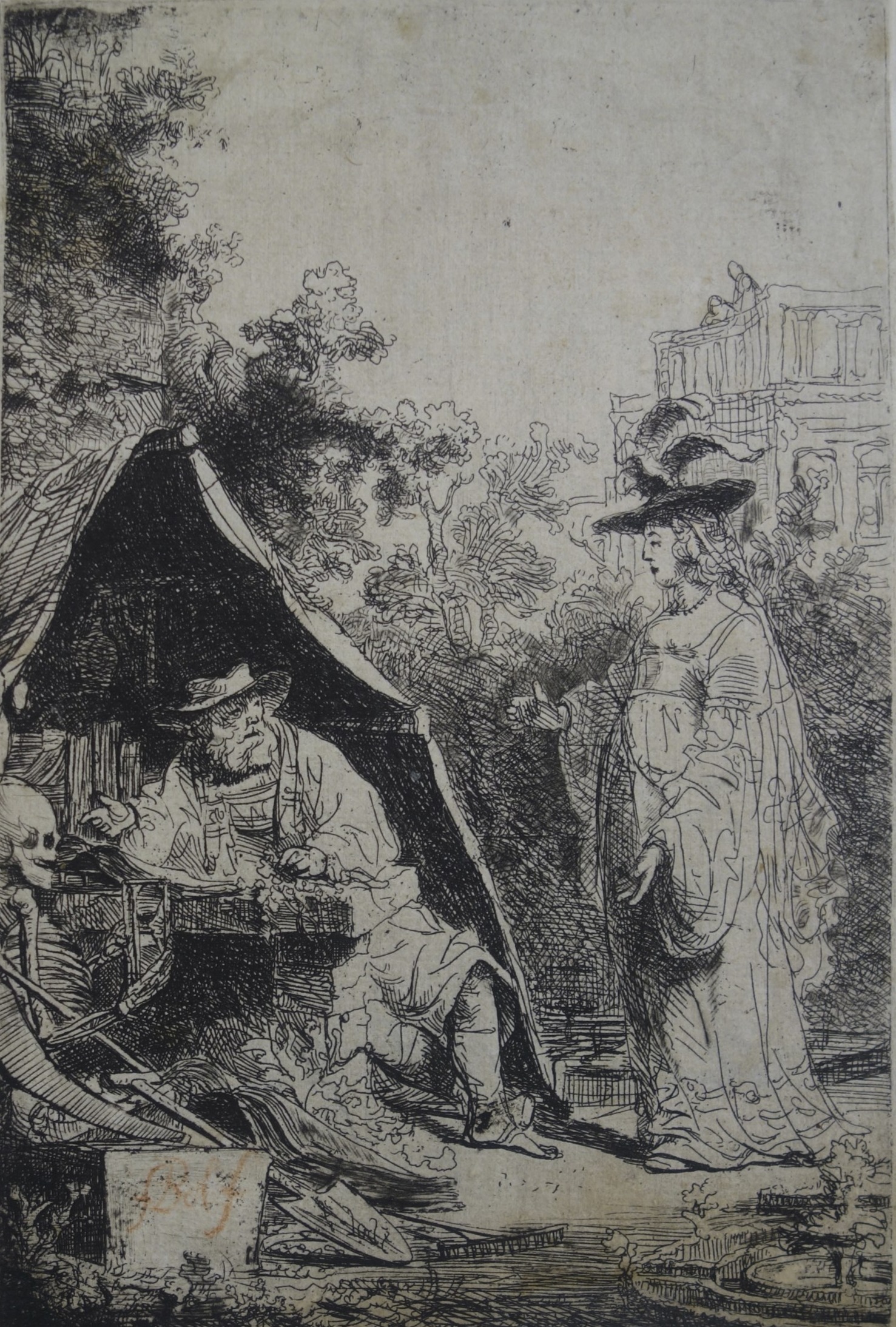
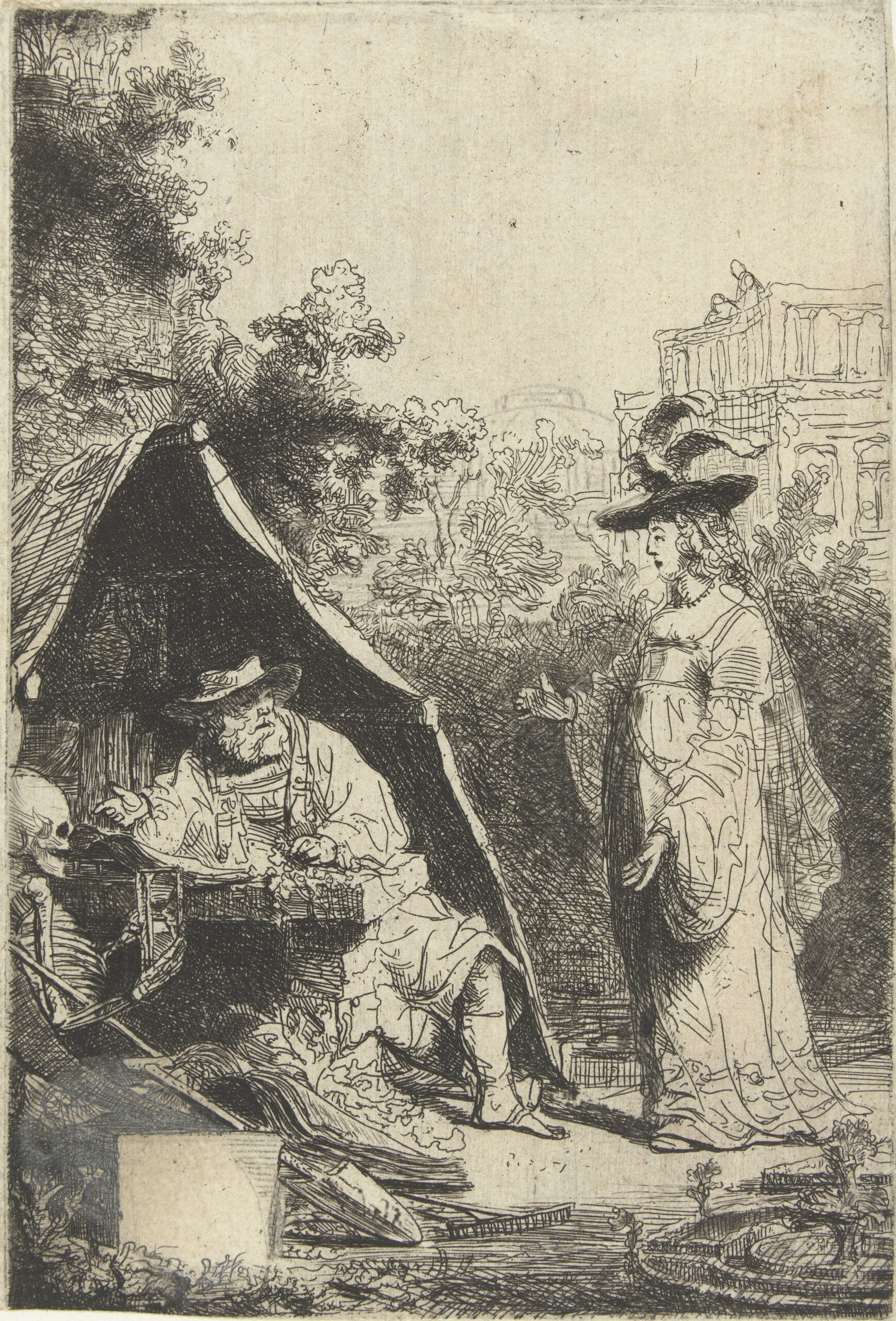
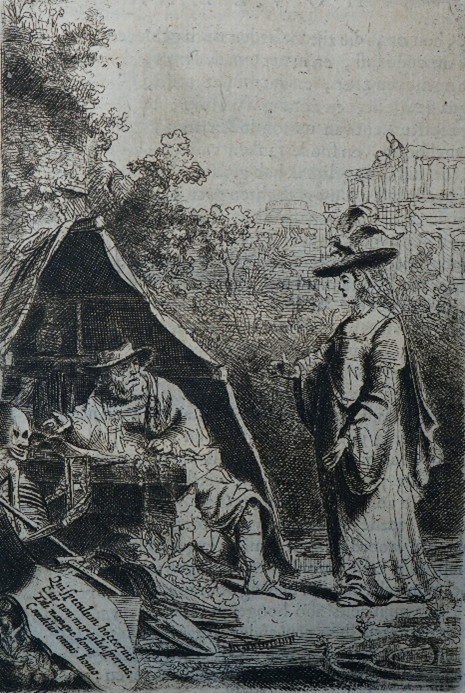
Fig 1. F. Bol, The Hour of Death, H.18, etching, state i/6,133 x 89 mm, The Albertina, Vienna, inv. no. DG 72373.

The Rembrandt pupil Ferdinand Bol is known primarily for his paintings, being one of the most sought-after portraitists in Amsterdam from the mid-1650s through the 1660s, who also received extremely prestigious public commissions from the City of Amsterdam and The Admiralty through the 1660s.32ย Print scholars and enthusiasts know him as one of only a few of Rembrandt’s pupils who also etched, leaving us with approximately 20 prints. One of his earliest efforts in the medium is the etching known as The Hour of Death (fig. 1). New research into its publication as a book illustration changes its place in Bolโ€™s earliest period as a printmaker, and its relationship to his early paintings as well.33

It has been commonly thought that Bol made this etching as an illustration for Jan Krul’s (1601/2 – 1646) Pampiere Wereld, first published in 1644.34 This book was a compilation of some of Krul’s writings. Bolโ€™s etching was added to one of the texts in the book, a moral dialogue called Den Christelyken Hovelingh.35However, this was not the earliest publication of this text. It had already appeared separately in Amsterdam, in 1642, with Bol’s etching included after the title page.36 It was in its fourth state, and was subsequently modified again for inclusion in the Pampiere Wereld.

The new terminus ante quem of 1642 places The Hour of Death among the group of Bol’s earliest datable prints. These include the Old Man with Flowing Beard and Velvet Cap (H.9), and Portrait of an Officer (H.12), both of 1642. The majority of Bol’s prints (approximately thirteen or fourteen of approximately twenty) seems to have been made in the years 1641/2-1645, evidently a period of substantial interest in the medium in the years immediately after Bol had left Rembrandt’s studio.37 His departure is marked by his earliest signed and dated painting, Gideon’s Sacrifice (Museum Catharijneconvent, Utrecht), of 1640.38ย 

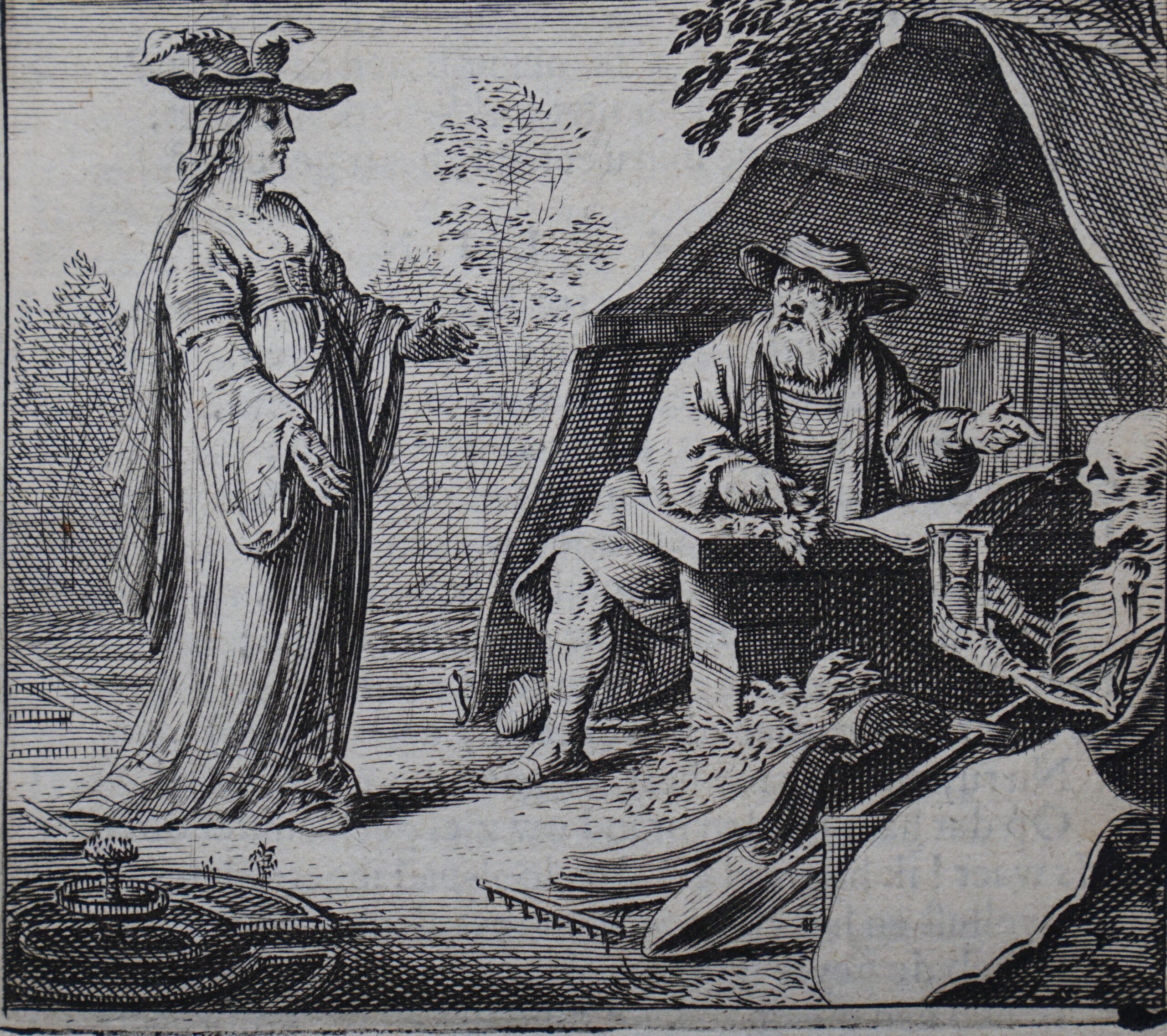
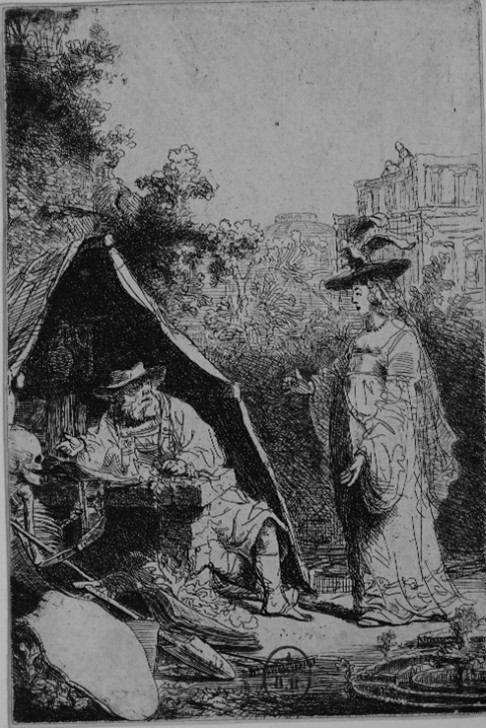
Fig 2. Unknown artist, The Hour of Death, 1644/45. Etching,145 x 85 mm, in: Jan Harmensz Krul, Pampiere Wereld, Amsterdam, 1644/45, private collection.

Copies of this first edition of Krul’s Den Christelyken Hovelingh of 1642, incorporating Bol’s print as the frontispiece, are extremely rare. It is likely that it was published in a very limited edition by the author himself.39 Krul himself also likely published the Pampiere Wereld in 1644, in a lavish folio edition.40 Around the same time he also published an octavo edition, but without giving the publisher, location, or date. The date of 1644 does however appear with an excerpt of the privilege inside, and on the title page of the play Theodorus and Dianira (on p. 297).41 The same printer, Jan Jacobsz Schipper, produced both editions, but did not include Bolโ€™s etching in the smaller format, instead replacing it with an anonymous copy, one which has not been described previously (fig. 2).42 Only seven of the 94 illustration plates of the folio edition of 1644 were of a size such that they would fit in the smaller octavo edition (16.9 x 10.4 cm) of 1644-1645. Of these seven, all appeared in the latter volume except for Bolโ€™s etching, although it would have been small enough (13.3 x 9.0 cm), likely because the lower price of the edition would not have justified the wear of the fine etching plate. It was likely a financial calculation in what were difficult economic times for Krul.43 Krul’s text appeared in yet another volume of his works, in 1650, again without Bol’s print. Other earlier and later editions of that volume contain neither Krul’s Den Christelyken Hovelingh, nor Bol’s print.44 A later edition of the 1644 anthology, containing a previously unidentified later state of the original Hour of Death, appeared in Amsterdam in 1681, this time in quarto format.45

Fig 3. F. Bol, The Hour of Death, H.18, etching, state ii/6, 133 x 90 mm, Rijksmuseum, Amsterdam (RP-P-OB-189).

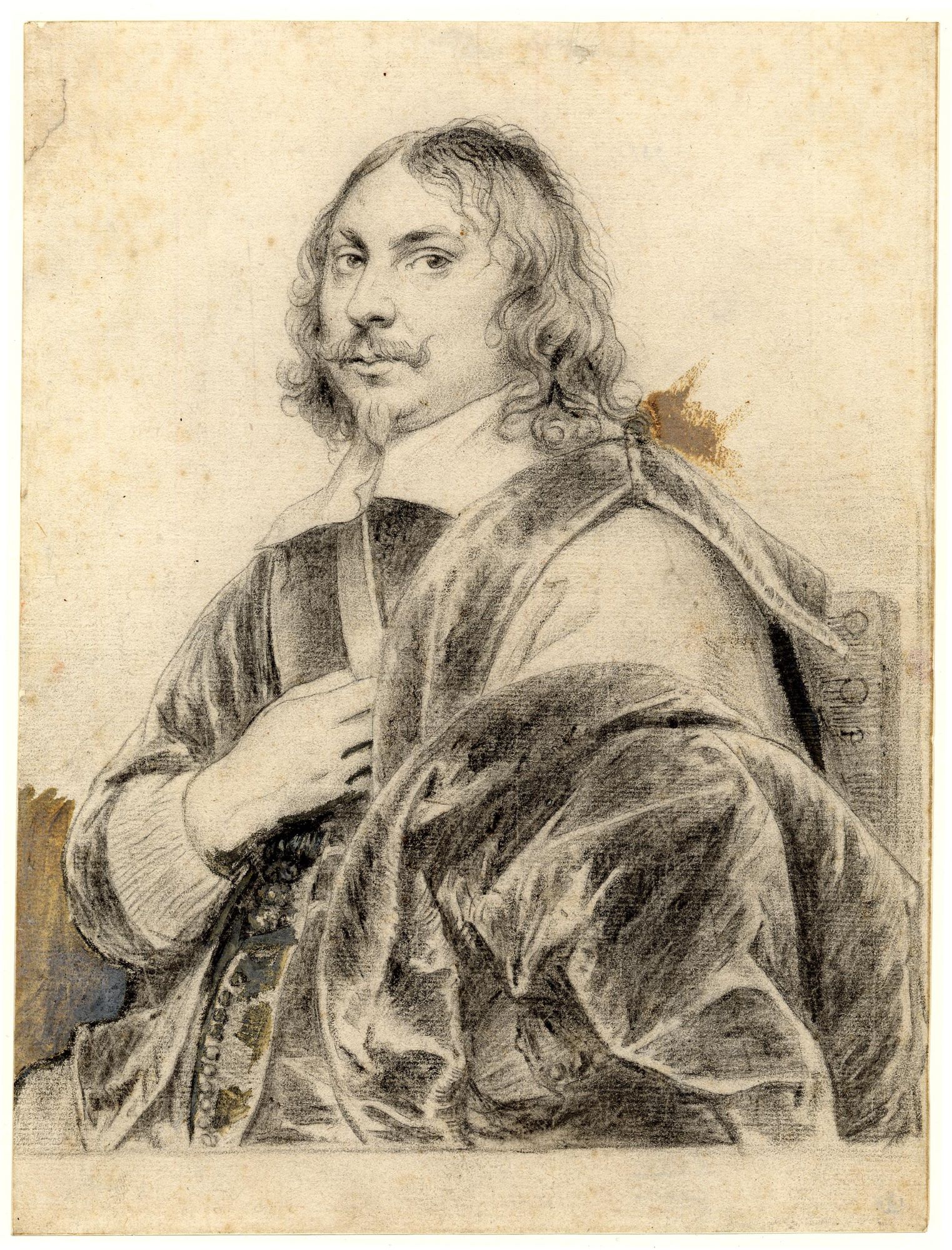
In the process of arriving at the frontispiece for Den Christelyken Hovelingh, Bol went through at least three known proof states of the plate, printed in very low numbers and remaining extremely rare. The composition was already largely laid out in the first state, known only from an impression in the Albertina (DG 72373) (fig 1.). It is a touched proof, with Bol’s name added in red chalk to the blank square that appears to be the end of a coffin, to the lower left (fig. 3). Bol’s signature can be seen etched on the blade of the spade, in reverse, so this appears to have been a proposal for a change. His signature on the end of the coffin was not however included in the second state, even though in the second state his name on the spade is partially erased. The second state has substantial changes to the plate.46 The need arose to include a Latin text, for which the space at the end of the coffin was too small (see below). ย An outline of a cartouche is visible in retouching in white body colour, of the unique impression of the second state (Rijksmuseum, Amsterdam [RP-P-OB-189]), stretching out beyond the small confines of this space.

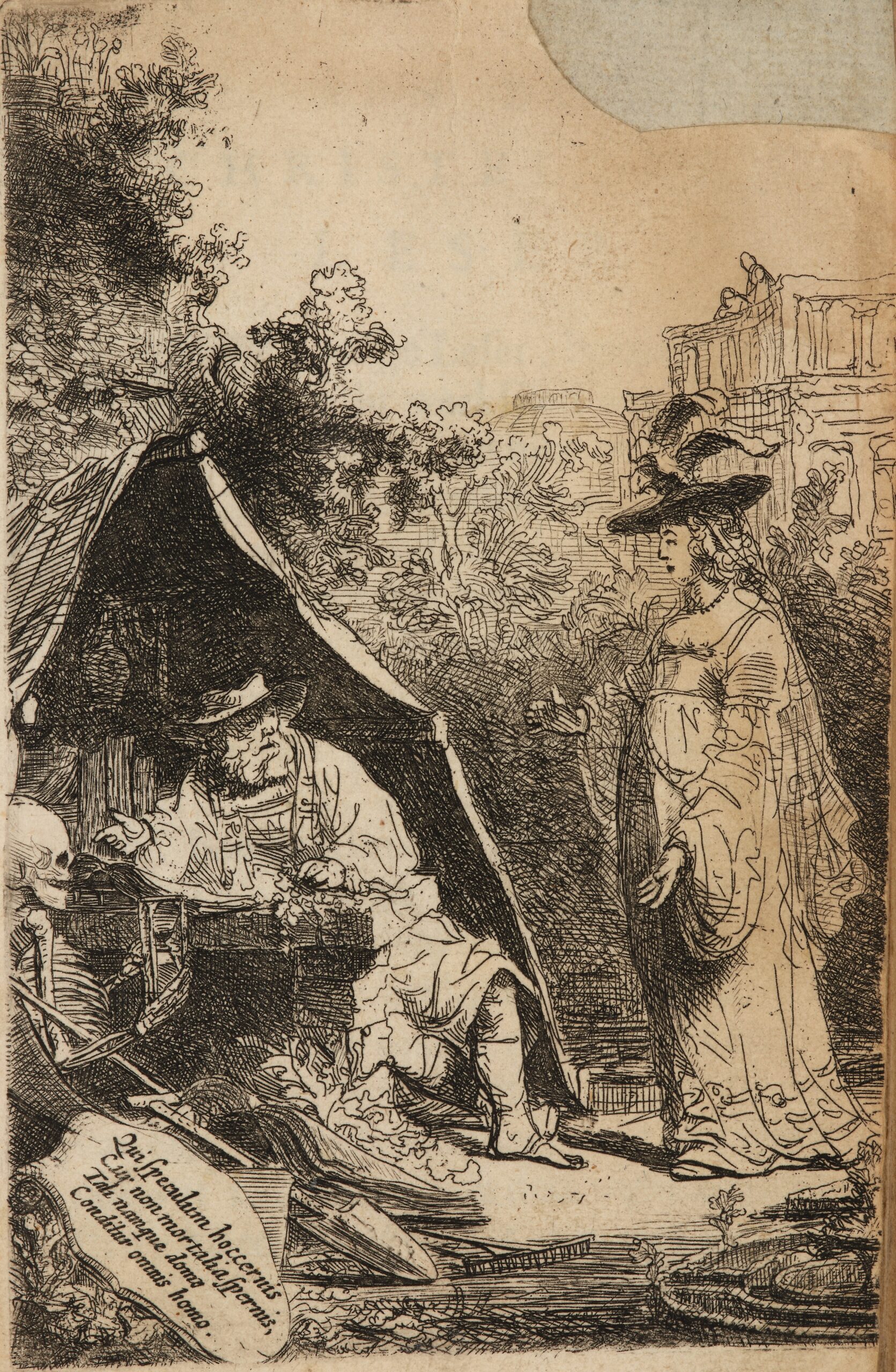
Bol proceeded to plan further changes in this proof, which appear in the third state, of which only two impressions are known (Paris [Reserve Cb-13(A, 37)-Boite Ecu]; and Munich [1921-16]; fig. 4). He incorporated the cartouche for the Latin inscription, but left the lettering to be added, likely by a specialized letter engraver.47 This occurred in the fourth state, which was used for the initial publication of Den Christelyken Hovelingh in 1642 (fig. 5).

Fig 4. F. Bol, The Hour of Death, H.18, etching, state iii/6, 133 x 90 mm, Bibliothรจque Nationale de France, Paris (Rรฉserve Cb-13 (A,37)-Boite ECU).ย 
Fig 5. F. Bol, The Hour of Death, H.18, etching, state iv/6, 133 x 90 mm, in Jan Harmensz. Krul: Den Christelyken Hovelingh, 1642; Allard Pierson, University of Amsterdam (O 60-4669).

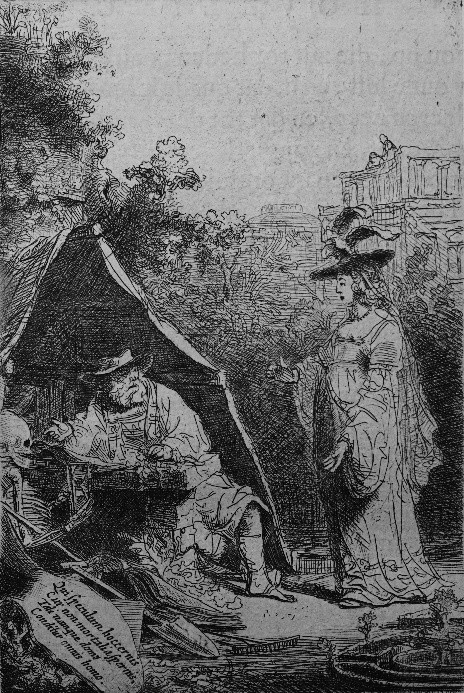
With each of the following publications of the print, the plate was altered. The fifth state incorporates changes to the background, addition of details, and reworking, and was included in the 1644 edition of Krul’s book (fig. 6).48 A critical review of the hand suggests that, contrary to previous assumptions, Bol was no longer involved. This very obviously applies to the crude reworkings of the sixth state, included in the 1681 volume (fig. 7).49 The print was undoubtedly commissioned by Krul, who may have known Rembrandt.50 Krul may have been aware, as well, of Rembrandt’s etching known as The Ship of Fortune, of 1633 [B. 111, NH 123] as it had appeared one year later in the publication of Elias Herckmansโ€™s narrative poem: Der Zee-Vaert lof Handelende vande gedenckwaerdighste Zee [โ€˜In Praise of Sea-Faringโ€™], (Amsterdam, 1634). By the early 1640s, Bol had also developed literary connections. Van Sloten has recently convincingly proposed51 that a Bol painting in the Rembrandthuis Museum, Amsterdam, Shepherdess in a Landscape, which she dates to 1640, is associated with a play by Soet (1610-1674), Clorinde en Dambise.52 The play was both published and performed (in May and June) in Amsterdam in 1640.53 It seems likely that Krul would have known of the play and perhaps the painting.

Fig 6. F. Bol, The Hour of Death, H.18, etching, state v/6, 133 x 89 mm, in Jan Harmensz. Krul: Pampiere Wereld, Amsterdam, 1644, private collection.
Fig 7. F. Bol, The Hour of Death, H.18, etching and burin, vi/6, 133 x 89 mm, in Jan Harmensz. Krul: Pampiere Wereld, Amsterdam, 1681, private collection.ย 

Krul was asking Bol to illustrate a text that he had not yet published, and which he had to share with him. In its introduction, Krul described it as an allegory; it is about a wise courtier (the man in the tent, who has left the Court) who is a reformed sinner and sought to reform the ways of the courtly courtesan sinner (the woman, Florentina). Wijngaards54 concluded that for the portrayal of Florentina, Krul referred to the 1539 treatise decrying court life,55 by the Spanish bishop and writer Antonio de Guevara (c. 1480-1545), which was well-known in The Netherlands at that time. Bol echoed the general composition of one of Rembrandtโ€™s recent etchings, Death Appearing to the Wedded Couple, 1639 (B.109, NH 174), also with a moral message, which he saw take shape during his time in the studio. This was much the same as Bol did with other prints from this period, for instance his Holy Family in a Dark Room of 1643, (H.4) emulating Saint Jerome in a Dark Chamber, 1642, (NH 212) and Bol’s self-portrait, Portrait of an Officer (H.12). In following his master, Bol was wisely cautious in rendering restrained emotions and expressing the action mainly through gestures: the man’s pointing is the theme of Krul’s work, and the woman stretching out her arms suggests that she responds to the man’s urgings.

In Krulโ€™s text, the โ€œChristian Courtierโ€, stresses to Florentina (and the reader) that one should reject sin now, while the opportunity exists, before death intervenes. Bol places his skeleton off to the edge of the print, not centrally, and depicts it only partially. The hourglass, the scythe, the coffin, and the spade complete the Vanitas reference.56 However, it may not have been clear enough for Krul. Bol modified his design of the first state, very likely at his request, by including a cartouche for the addition of a written note in the Latin text in the fourth state, that expressed Krul’s theme specifically and explicitly: translated as โ€œYou who see this image, why do you not reject mortal things, For in such a home every man is buriedโ€.57ย 

Bol’s etching known as The Hour of Death would be his only commissioned print. It was created several years earlier than thought, in 1642 or perhaps even 1641.58 Six states can be identified, the first three ascribed to Bol; in addition, four copy prints are known now. With the alterations from state to state, at the behest of the patron, Bol demonstrated the pliability that later served him well as a painter. Bol effectively graphically represented Krul’s written theme that sin should be rejected now.

Acknowledgements

This article is dedicated to Ger Luijten. The author is grateful to him for his suggestion and encouragement for writing this article. The author gives special thanks to David de Witt, who provided an extraordinary quality and quantity of editorial assistance; to Jaco Rutgers for his expert review of early drafts of the manuscript, and for his numerous contributions and advice; and to Leonore van Sloten for her review of the manuscript and comments. The author also expresses his appreciation to the many curators and their staffs at numerous museums and collections for their invaluable, kind assistance.

  1. Arnold Houbraken, De groote schouburgh der Nederlantsche konstschilders en schilderessen vol. 2, Amsterdam 1719, p. 272: โ€œHy verkeerde in den herfst van zyn leven wel meest met gemeene luiden, en zulke die de Konst hanteerden.โ€
  2. Ernst van de Wetering, A Corpus of Rembrandt Paintings V: The Small-Scale History Paintings, Dordrecht 2011, pp. 3-6; vol. 6, pp. 296-297; and: Eric Jan Sluijter, in Govert Flinck: Reflecting History, Cleves 2015, pp. 68-69.
  3. Ben Broos, โ€œSaskia, Rembrandtโ€™s Frisian Brideโ€, in: Marlies Stoter (ed.), Rembrandt & Saskia: love and marriage in the Dutch Golden Age, Zwolle, 2018, pp. 23-24.
  4. Houbraken, Schouburgh (see note 1), pp. 100, 174.
  5. Epco Runia, David de Witt, Rembrandtโ€™s Social Network: family, friends, and acquaintances, Amsterdam: The Rembrandt House Museum, 2019.
  6. http://remdoc.huygens.knaw.nl/#/document/remdoc/e12959, with reference to a letter from Constantijn Huygens Jr. to his brother Christiaen, of 6 December 1663, in the Leiden University Library; see Hendrick E. van Gelder, โ€œDe jonge Huygensen en Rembrandtโ€, Oud Holland 73 (1958), pp. 238-241, identifying the drawings, currently: River Scene with Boats and Figures Bathing, c. 1590/1595. Pen in brown, 111 x 205 mm. Formerly Chatsworth, Duke of Devonshire Collection; most recently, Alfred Taubman sale, New York, (Sothebyโ€™s), 27 January 2016, lot 33 (as the original, but without noting the Rembrandt provenance); and the copy with Everhard Jabach in Paris: pen in brown, 112 x 186 mm. Washington, National Gallery of Art, inv. no. NGA 72075 (as also as the original).
  7. David de Witt, Abraham van Dijck (1635-1680): Life and Work of a Late Rembrandt Pupil, Zwolle 2020, p. 32.
  8. Werner Sumowski,ย Gemรคlde der Rembrandtschรผlerย vol.ย 2, Landau 1987, p. 1951.
  9. Michiel Roscam Abbing,ย Eigentijdse bronnen & oeuvre van gesigneerde schilderijen, Leiden 1993, pp. 42-49.ย 
  10. De Witt,ย Van Dijckย (see note 7), pp. 12-13.
  11. Abraham van Dijck,ย The Widow of Zarephath and her Son, signed, c. 1655, oil on canvas, 115.6 x 95.9 cm.;ย Portrait of a Fifty-Year-Old Woman, signed and dated 1655, oil on panel, 75 x 62 cm, both Kingston ON, Agnes Etherington Art Centre, acc. nos. 60-001 and 56-003.10; see: De Witt,ย Van Dijckย (see note 7), pp. 98-101, nos. P22, P23.
  12. First spotted by Sabrina Meloni, after cleaning in 2014.ย 
  13. De Witt,ย Van Dijckย (see note 7), p. 126, no. P35.
  14. Sale, Milan (Lucas Casa dโ€™Arte), 21 May 2025, lot 220.
  15. Monogrammed and dated 1657, oil on panel, 35 x 29.5 cm, The Hague, with S. Nijstad, in 1983; De Witt,ย Van Dijck (see note 7), p. 118, no. P31.
  16. The idea that the Washington painting had been altered from a generic scholar into a St. Paul was already proposed by Arthur K. Wheelock, in: Arthur K. Wheelock,ย Rembrandtโ€™s Late Religious Portraits, Washington: National Gallery of Art; Los Angeles: Getty Museum, 2005, pp. 141-157; followed by Van de Wetering: Ernst van de Wetering,ย Rembrandtโ€™s Paintings Revisited: a complete survey II, Dordrecht 2017, 2017, cat. 254, p. 640 (as c. 1655). The new study brings conclusive evidence in support of this scenario, based on an extensive technical research: Marjorie Wieseman, John K. Delaney and Kathryn A. Dooley, โ€œCompositional Changes in Rembrandtโ€™s The Apostle Paul: New Technical Findingsโ€,ย Rembrandt as a Painter: New Technical Research. ArtMatters. International Journal for Technical Art History. Special Issue #2, 2025, pp. 80-92.ย https://doi.org/10.64655/AM.si25r.b1963ย (accessed 16 December 2025).ย 
  17. The connection with an interim state of the painting was already surmised by Werner Sumowski, in:ย Drawings of the Rembrandt School, vol. 11:ย Anonymous Drawingsย (manuscript left unpublished on his death in 2015; forthcoming in an edition translated and edited by the author, with Brill).
  18. Werner Sumowski,ย Drawings of the Rembrandt Schoolย vol. 5, New York, 1981, p. 2712, no. 1224x:ย https://rkd.nl/images/311330.
  19. Van de Wetering,ย Rembrandtโ€™sย (see note 16), p. 650-651, no. 265:ย https://rkd.nl/images/54379.
  20. David de Witt, โ€œA New and Individual Approach to Contour: 1653, 1658 and Beyondโ€, in:ย Samuel van Hoogstraten (1627-1678): Catalogue Raisonnรฉ: https://vanhoogstraten.rkdstudies.nl/samuel-van-hoogstratens-drawings-history-life-universality/a-new-and-individual-approach-to-contour-1653-1658-and-beyond/ย (accessed 25 May 2025).
  21. https://rkd.nl/images/289005.
  22. Samuel van Hoogstraten,ย Madonna and Child, c. 1660, oil on canvas, 92 x 71.2 cm, Amsterdam (Christieโ€™s), 25 May 2016, lot 74:ย https://rkd.nl/images/314055.
  23. David de Witt, โ€œRembrandtโ€™s Late Pupils: Studying under a Geniusโ€,ย Rembrandtโ€™s Late Pupils: Studying Under a Genius, exh. cat. Amsterdam: The Rembrandt House Museum, 2015, p. 85, with reference to:ย  Sumowski, Gemรคlde (see note 8), vol. 3 (1987), p. 1951; also posited in Roscam Abbing,ย Schilderย (see note 9), p. 40. It is true that Maes consulted drawings by Van Hoogstraten for his early painting ofย Christ Blessing the Childrenย in London, but this is very likely because he had access to Van Hoogstratenโ€™s drawings left behind in his studio when he left for Vienna and Italy in 1651: they were moreover older drawings, from c. 1646-1648; see: David de Witt, โ€œSamuel van Hoogstratenโ€™s Drawings: History, Life, Universalityโ€ in:ย Samuel van Hoogstraten (1627-1678): Catalogue Raisonnรฉ:ย https://vanhoogstraten.rkdstudies.nl/samuel-van-hoogstratens-drawings-history-life-universality/the-core-group-from-pictorial-technique-to-innovative-contour/ (accessed 25 May 2025).
  24. https://rkd.nl/images/285887.
  25. Sumowski,ย Gemรคldeย (see note 8), vol. 3 (1987), p. 2009, no. 1324:ย https://rkd.nl/images/251100.
  26. My thanks to curator Justus de Lang for sharing his thoughts on the connection, reflected in part in the hanging of both works near each other in the gallery.
  27. De Witt,ย Vanย Dijckย (see note 7), pp. 52-53, no. P1.
  28. http://remdoc.huygens.knaw.nl/#/document/remdoc/e4704.
  29. David de Witt, โ€œFrom Rembrandtโ€™s Nae โ€˜t leven to Van Hoogstratenโ€™s Zichtbaere Wereltโ€, in: David de Wittย andย Leonore van Sloten,ย Samuel van Hoogstraten.ย The Illusionist, Amsterdam: The Rembrandt House Museum, 2025, pp. 74-79.
  30. Adriaen Waiboer,ย Vermeer and the Masters of Genre Painting: Inspiration and Rivalry, Dublin: National Gallery of Ireland; Washington: National Gallery of Art; Paris: Musรฉe du Louvre, 2017-2018, and specifically on travel: Blaise Ducos, โ€œThe โ€œTour of Hollandโ€: Visitors from Abroad in the United Provincesโ€, pp. 101-111.
  31. Houbraken,ย Schouburghย (see note 1), p. 157.
  32. Rudi Ekkart, โ€˜Govert Flinck and Ferdinand Bol: The Portraitsโ€™, in: Ferdinand Bol and Govert Flinck: Rembrandt’s Master Pupils, Zwolle, 2018, p. 158; Eric Jan Sluijter, โ€˜Out of Rembrandt’s Shadow: Govert Flinck and Ferdinand Bol as History Paintersโ€™, pp. 129-131.
  33. The etchings by Ferdinand Bol in this article are cited by the Hollstein number, in: F.W.H. Hollstein: Dutch and Flemish Etchings Engravings and Woodcuts, Amsterdam 1950, Vol. 3. pp. 15-35. However, the states noted here are updated, as anticipated in the forthcoming New Hollstein volume.
  34. The first one to point this out was Pierre Yver: Supplement au catalogue raisonneฬ de M. M. Gersaint, Helle & Glomy: de toutes les pieces qui forment l’oeuvre de Rembrandt. Amsterdam 1756, pp. 39-40, no.108, although he referred to the third, 1681 edition of the book. The etching is already present in the first, 1644 edition, published in Amsterdam.
  35. Den Christelyken Hovelingh has been commonly described as a play, but it is written as a poetic dialogue. If it was meant to be a play and/or if it was ever staged is not known to me. It is not listed as having been staged from 1637 to 1772: see Creative Amsterdam. An E-Humanities Perspective. Onstage. Online Datasystem of Theatre in Amsterdam from the Golden Age to the present: https://www.vondel.humanities.uva.nl/onstage/plays (accessed 7 July 2024). The title page of the 1642 volume indicates โ€˜Den Christelyk Hovelinghโ€™. However, the headers on all pages of that volume use the spelling โ€˜Christelykenโ€™, as do subsequent authors and libraries. See Jan Harmensz. Krul: Den Christelyk Hovelingh, Amsterdam 1642.
  36. This appears to have been first noted in N.C.H. Wijngaards.: Jan Harmens Krul: zijn leven, zijn werk en zijn betekenis, Zwolle, 1964, and is also described in: H.C. van Bemmel: Bibliografie van de werken van Jan Hermans Krul, Amsterdam, 1984.
  37. David de Witt and Leonore van Sloten, โ€˜Ferdinand Bol: Rembrandtโ€™s Discipleโ€™ in: Bol and Flinck (note 1), p. 48; and: Leonore van Sloten, โ€˜Ferdinand Bol, the Etcherโ€™, in: Bol and Flinck (note 1), p. 207; and Sophia Thomassen, โ€˜Timelineโ€™, in: Bol and Flinck, 2018 (note 1), p. 11.
  38. De Witt and Van Sloten, Bol, 2018 (note 6); Robert Schillemans: Bijbelschilderkunst rond Rembrandt, Utrecht 1989, pp. 31-34.
  39. Wijngaards, Krul, 1964 (note 5); Van Bemmel, Bibliographie, 1984 (note 5). I have been able to trace only thee copies: Library of the University of Amsterdam (2780 C 51), Royal Library, Den Haag, (KB: 3 C 20:10), and Noord-Hollands Archief, Haarlem (Oude Boekerij: 88 A 16). The copy in Den Haag lacks the page (A2) with Bol’s print.
  40. Wijngaards, Krul, 1964 (note 5); Van Bemmel, Bibliographie, 1984 (note 5).
  41. The 1644 edition (J.H. Krul: Pampiere Wereld, First edition. Amsterdam1644) is a folio edition measuring 302 x 190 mm; the 1681 edition (J.H. Krul: Pampiere Wereld, 3rd edition. Amsterdam, the widow of van Jan Jacobsz Schipper) is in quarto, measuring 216 mm x 170 mm. and the 1644-45 edition (J.H. Krul: Pampiere Wereld, 2nd edition, Amsterdam) is in octavo, measuring 169 x 104 mm. Book and library catalogues commonly ascribe c.1650 as the date for the latter, but the source of this attribution is not clear, and it is in error. See also Van Bemmel, Bibliographie (note 5).
  42. Van Bemmel, Bibliographie (note 5); The anonymous copy is in reverse, by an unknown hand, is neither signed nor dated, measures 85 x 74.5 mm, is of the same theme and general composition, but is artistically distinctly different. The shield is blank in this copy of Bol’s etching. I have not found any impressions of this copy that were not part of the printed book. I have identified three other distinct copies after Bol’s print, for a total of four, rather than the single copy identified by Hollstein (note 2).
  43. In 1644 and again in 1645 Krul obtained two successive loans, with the second providing funds to pay off the first, to permit him to publish the first two editions of Pampiere Wereld. Krul gave successively each lender volumes of the work, the patent rights and โ€˜someโ€™ copper plates for the period of the loan. It is not clear if the plates included Bol’s etching. See Wijngaards, Krul, 1964 (note 5); Van Bemmel, Bibliographie, 1984 (note 5).
  44. Jan Harmensz. Krul: Minne-Spiegel ter Deughden, Amsterdam 1650-51, J. H. Krul: Minne-Spiegel ter Deughden, Amsterdam; J. H. Krul: Minne-Spiegel ter Deughden, Joost Hartgers, Amsterdam, 1640; J. H. Krul: Minne-Spiegel ter Deughden, Michiel de Groot, Amsterdam, 1662; Jan Harmensz. Krul: Minne-Spiegel ter Deughden, Amsterdam, 1669-72.
  45. Hollstein gives only four states; more recently, George C. Kenney lists five, albeit described differently than the six here. See George C. Kenney: The Illustrated Bartsch, vol. 51. Supplement: Netherlandish Artists. Ferdinand Bol. New York 2017, p. 73, no. 18.
  46. In addition to the partial burnishing out of Bol’s name on the blade of the spade in the second state, lines are added partially obscuring the remaining portion of the signature; additional background work is added in several places; there is some work added on the scythe, table, book and the skull of the skeleton; and some additional work on the woman’s headdress/cape (fig. 2). The unique impression of this state is touched with black chalk and lead white, including the addition of a domed building in the distant background, horizontal lines below and to the left of the domed building, and the outline of a blank shield (or cartouche) covering the left part of the end of the coffin. Kenney also mentioned this state, but mistakenly describes the building in the background as a state difference. See: Kenney, Bol, 2017 (note 14). Only two other Bol prints have retouchings by the artist that appeared in the subsequent state: The Philosopher, H.6ii, 1643 (Amsterdam, RP-P-BI-1994); and The Young man Wearing a Plumed Cap, H.14i, 1642 (London, 1921,1008.21; and Dresden, A41073). The retouchings for H.6ii and H.14i appear in the plates for the next state of their respective prints. It is interesting to note that all retouched impressions were done in approximately the same period, and that the retouchings for H.6 and H.14 are very small in comparison to the significant retouchings for H.18. It is possible that this is a reflection of Bol’s satisfying his client’s wishes. Retouchings of impressions of other Bol prints are not judged to have been by his hand.
  47. My thanks to Jaco Rutgers for this suggestion
  48. The fifth state has added substantial additional background work and some work to the woman’s dress, and a bit on the shield, and the skull of the skeleton.
  49. The sixth, and final, state has added rather crude extensive reworking consisting of regular patterns of cross-hatching using the burin, for instance on the back of the skull, the inside of the tent, and the clothes of the female courtier. See fig 6.
  50. It had long been thought that Rembrandt painted his portrait in 1633. However, more recently, this has been called into question by Ernst van de Watering, A Corpus of Rembrandt Paintings, vol. 6: Rembrandtโ€™s Paintings Revisited, Dordrecht 2017, p. 526, no. 91. There were also family connections; see M. Louttit: โ€˜The Romantic Dress of Saskia van Ulenborch: Its Pastoral and Theatrical Associationsโ€™, The Burlington Magazine 115 (1973), pp. 317-326.
  51. Leonore van Sloten, โ€˜Ferdinand Bol in de voetsporen van Rembrandt: Twee herontdekte schilderijenโ€™, in: Rudie van Leeuwen, Lilian Ruhe, and David de Witt, eds, Not Always Rembrandt; 37 studies in Baroque art. Turnhout, Belgium 2023, pp. 20-31.
  52. Jan Soet, Soets Clorinde en Dambise, Amsterdam 1640.
  53. University of Amsterdam: Creative Amsterdam. An E-Humanities Perspective. Onstage. Online Datasystem of Theatre in Amsterdam from the Golden Age to the present. https://www.vondel.humanities.uva.nl/onstage/plays/359 (accessed 7 July 2024).
  54. N.C.H. Wijngaards, (note 5).
  55. Antonio de Guevara: Menosprecio de corte y alabanza de aldea. Valladolid 1539.
  56. See: S. Oosterwijk, โ€˜Morbid morality. The Danse macabre motif in Dutch art of the Golden Ageโ€™, in: Ilona Hans-Collas et al. (eds.), Mort n’espargne ne petit ne grant [Texte imprimรฉ] : รฉtudes autour de la mort et de ses reprรฉsentations : actes du XVIIIe Congrรจs international de l’association Danses macabres d’Europe, Paris, 19-23 mars 2019, Paris 2019, pp. 174-195.
  57. Translation: Linda Stone-Ferrier: โ€˜Ferdinand Bol: The Hour of Deathโ€™, in: Dutch Prints of Daily Life: Mirrors of Life or Masks of Morals? Lawrence, Kansas: The Spencer Museum of Art of The University of Kansas, 1983, pp. 144-146, credits Oliver C. Phillips, Classics Department, University Of Kansas, for the translation.
  58. There is no Bol print dated earlier than H.18, although he may have created one, Abraham’s Sacrifice (H.1), when working in Rembrandt’s studio; however, this is uncertain, as it is not dated.

He Too: Lievens, like Rembrandt, before the Chamber of Marital Affairs

Extramarital relationships, whether or not unequal in nature or not, were a common matter in early modern Amsterdam. Not infrequently these led to (unwanted) pregnancies. Sex outside marriage was not permitted. In Amsterdam, matters of love, sex, and adultery fell under the commissioners of Marital Affairs. That Rembrandt had to appear there in 1649 is well known; that his colleague and (youthful) friend Jan Lievens had already been obliged to account for an extramarital relationship in the same chamber three years earlier has not previously been noted.

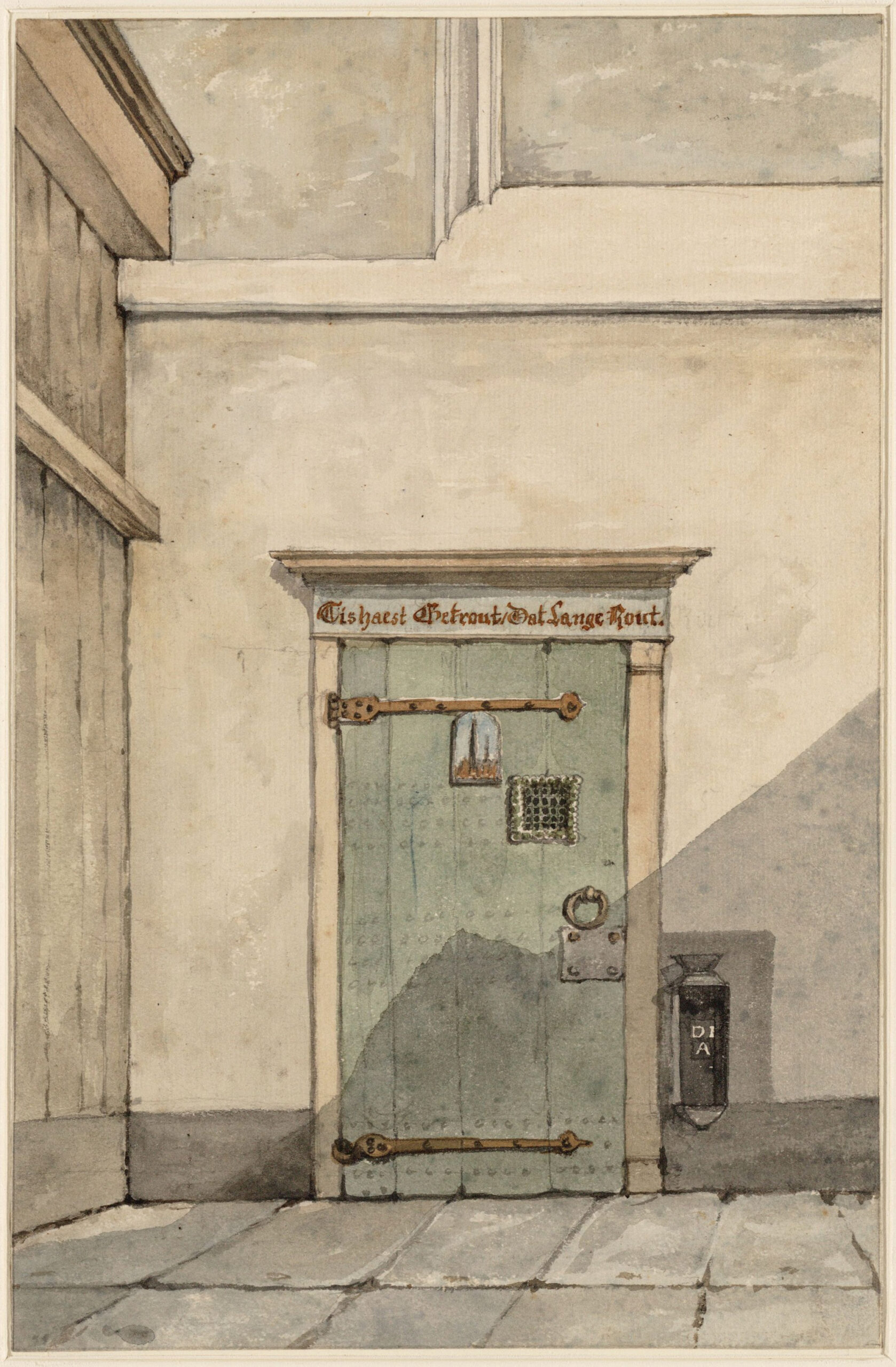
Fig 1. Gerrit Lamberts, The Red Door in the Old Church, 1811. Watercolour, 250 x 185 mm. Amsterdam, Stadsarchief Amsterdam, inv. No. 010097001171

Dispute registers of the Chamber of Marital Affairs
In the seventeenth century, attempts were made to regulate sex and marriage. In Amsterdam, the Chamber of Marital Affairs was established for this purpose. Every year in February, five commissioners were appointed. The commission met weekly on Saturdays.59 They also kept the registers of marriage banns: the names, origins, ages, and addresses of all those wishing to marry in the city were recorded. Disputes of (extra)marital nature were taken before the Chamber of Marital Affairs and recorded in the Krakeelregister (dispute register). Initially, all of this took place in the Spiegelkamer (Mirror Room) behind the Roodeur (Red Door) of the Oude Kerk (fig 1); after 28 October 1656 in the Chamber of Marital Affairs in the New Town Hall on the Dam.60

It is a well-known episode in Rembrandtโ€™s life. After Saskia Uylenburgh died in the summer of 1642, Rembrandt entered into a relationship with Geertje Dircx of Edam (c. 1610โ€“in or after 1656). Geertje had come to live in the house on the Jodenbreestraat as dry nurse to the infant Titus. Rembrandt and Geertje entered into a sexual relationship, which would lead to a complicated affair, in the course of which Geertje ultimately ended up in the spinhuis (womenโ€™s house of correction) of Gouda. In 1649, Geertje attempted to force Rembrandt to marry her by summoning him before the Chamber of Marital Affairs. The case was eventually settled. Alongside several other agreements, it was stipulated that Rembrandt would pay Geertje annual maintenance, on the condition that Titus would be and remain her universal heir.61ย As in so many matters, Jan Lievens also preceded his old friend and colleague Rembrandt in the hallway leading to the dispute chamber. This emerges from a previously unpublished document in the Amsterdam City Archives.

Between Amsterdam and Antwerp
Although Lievens was much more eager to travel than his fellow townsman Rembrandt, both spent a significant part of their careers in Amsterdam. This began in the workshop of Pieter Lastman on the Sint Antoniesbreestraat, where Lievens began advanced training in 1617. In 1618 he returned to his native city. After working in Leiden for a period, he travelled first to London and subsequently stayed in Antwerp from 1635 onwards. In December 1638 the painter married Susanna Colijns de Nole (c. 1615โ€“c. 1646), the daughter of a sculptor,62 in that city. The couple had at least two children, the first son died young. In January 1644 another boy was born: Jan Andrea (1644โ€“1680), who would later also become a painter. Shortly after Jan Andreaโ€™s baptism in Antwerp, the family moved to Amsterdam. A notarial deed shows that at the beginning of 1644 they were living in the household of the painter couple Judith Leyster and Jan Miense Molenaer, or at least that Lievens shared a studio with them.63 In the course of that year he must have opened his own studio on the Rozengracht.

These were difficult years for Lievens. Financially, things were not going well: in 1643 he was forced to transfer his possessions to creditors in Antwerp.64 On a personal level, too, Lievens went through a low point: after the move to Amsterdam, Susanna died. Precisely when and where she was buried is unknown. Lievens thus found himself alone with his young son Jan Andrea. In spite of his financial situation, he is likely to have sought a nursemaid to help raise and care for the child, just as Rembrandt had done a year earlier.

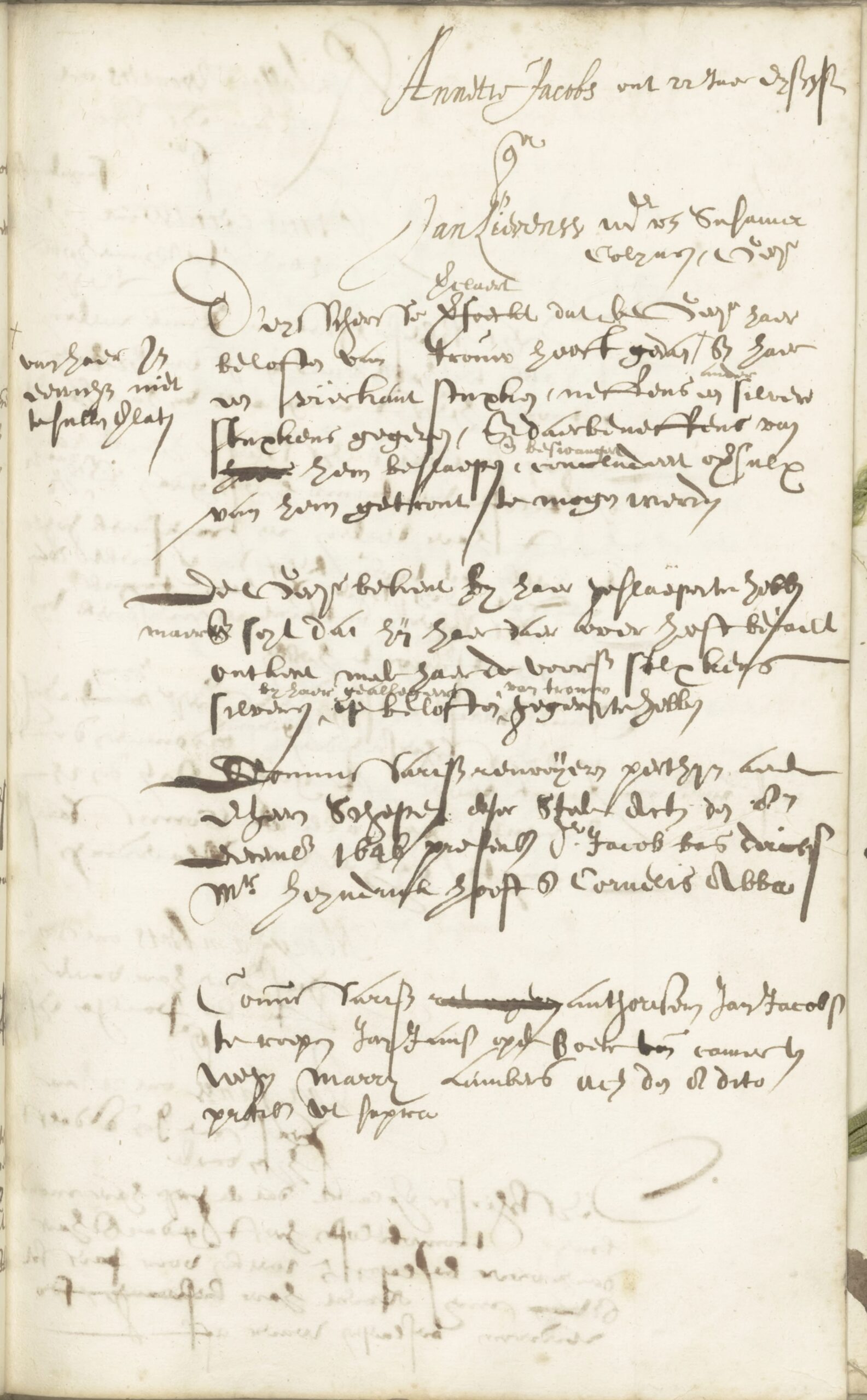
Fig 2. Jan Lievensโ€™s Appearance before the Chamber of Marital Affairs, SAA, 5061, 3063 Huwelijkskrakeelregisters, 8-12-1646

Lievens vs Jacobs
Just as Rembrandt did, Lievens also entered into a sexual relationship with an employee following the death of his wife, although it remains unclear what exactly her role was within the household. On Saturday, 8 December 1646, Lievens was required to give account before the commissioners of Marital Affairs, present being the commissioners Jacob Bas Dircksz, Hendrick Hooft and Cornelis Abba (fig. 2).65 Lievensโ€™s 22-year-old pregnant maidservant, Annetje Jacobs, tried to compel him to marry her. Annetje had previously lived in Lievensโ€™s house, where she had supervised the household. This appears from a notarial statement given by Belitje Jacobs the day before the hearing in the Chamber of Marital Affairs.66 Belitje too worked in Lievensโ€™s household. A month earlier, Annetje had taken a considerable quantity of butter from Lievensโ€™s stores. Belitje had not dared refuse her โ€œbecause she had previously lived as her superior in the service of the petitioner [Lievens]โ€.67ย 

Annetje must therefore have left the painterโ€™s household at the beginning of November. But she did not intend to stay away; on the contrary. Before the commissioners of Marital Affairs, Annetje declared that the painter โ€œhad given her promises of fidelity, not ever to abandon her, and had given her a square piece, together with another small silver piece, and that, moreover, he had lain with her and impregnated herโ€.68 She was of the opinion that she therefore ought to be married by him. Lievens stated that he had indeed shared the bed with Annetje, but that he had paid her for this with the coins, and certainly had not promised to marry her. In other words, in Lievensโ€™s view the coins were not a marriage token, but a payment as if she were a sex worker.

Rembrandt (after Lievens)
The accusation corresponds closely to that brought against Rembrandt two years later. Geertje Dircx likewise declared that she had received a verbal promise of marriage from Rembrandt; in her case, this was said to have been sealed with a golden ring. She stated that they had shared a bed on several occasions (โ€œdiverse reyzenโ€).69 She was probably never pregnant โ€“ in contrast to Annetje Jacobs โ€“ for otherwise she would certainly have used this against Rembrandt as well. Rembrandt was not even willing to acknowledge that he had so much as slept with Geertje. In this case the commissioners acted as mediators, resulting in an annual maintenance payment.

What the outcome was of this hitherto undescribed case of Annetje Jacobs against Jan Lievens is not clear. The case was referred to the municipal court. Unfortunately, the archives for this early period have not survived. Nor is it clear whether a child resulted from the affair,70 and we do not know whether compensation was paid, either as a settlement or for the upkeep of the possible child.71 Nor, therefore, whether he was pushed further into financial difficulties as a result. A marriage to his maidservant certainly did not follow, just as it did not in Rembrandtโ€™s case.

Lievens eventual second marriage
In contrast to Rembrandt, the widower Jan Lievens would indeed enter into a second marriage. On 23 April 1648, Jan Lievens appeared once more in the Spiegelkamer of the Old Church, this time together with the 20-year-old Cornelia de Braij, in order to have their intended marriage registered. Her father, the lawyer Jan de Braij, acted as witness. The marriage was registered by Jacob Hinlopen and Cornelis Abba. Abba had also been present at the matter concerning Annetje Jacobs. Would Abba have reminded Lievens one more time of the affair with his maidservant? The announcement of this marriage did not proceed entirely smoothly. The โ€˜first noticeโ€™ โ€“ the announcement in church โ€“ was blocked, but this had to do with the inheritance of Jan Andrea. After he had accounted for the inheritance of his child to the Orphans’ Chamber on 26 July 1648, Lievens was able to marry a second time on 2 August 1648 โ€“ three and a half months after the betrothal โ€“ to enter into marriage for the second time. The marriage was solemnised in Ouderkerk aan de Amstel.

  1. Arnold Houbraken, De groote schouburgh der Nederlantsche konstschilders en schilderessen vol. 2, Amsterdam 1719, p. 272: โ€œHy verkeerde in den herfst van zyn leven wel meest met gemeene luiden, en zulke die de Konst hanteerden.โ€
  2. Ernst van de Wetering, A Corpus of Rembrandt Paintings V: The Small-Scale History Paintings, Dordrecht 2011, pp. 3-6; vol. 6, pp. 296-297; and: Eric Jan Sluijter, in Govert Flinck: Reflecting History, Cleves 2015, pp. 68-69.
  3. Ben Broos, โ€œSaskia, Rembrandtโ€™s Frisian Brideโ€, in: Marlies Stoter (ed.), Rembrandt & Saskia: love and marriage in the Dutch Golden Age, Zwolle, 2018, pp. 23-24.
  4. Houbraken, Schouburgh (see note 1), pp. 100, 174.
  5. Epco Runia, David de Witt, Rembrandtโ€™s Social Network: family, friends, and acquaintances, Amsterdam: The Rembrandt House Museum, 2019.
  6. http://remdoc.huygens.knaw.nl/#/document/remdoc/e12959, with reference to a letter from Constantijn Huygens Jr. to his brother Christiaen, of 6 December 1663, in the Leiden University Library; see Hendrick E. van Gelder, โ€œDe jonge Huygensen en Rembrandtโ€, Oud Holland 73 (1958), pp. 238-241, identifying the drawings, currently: River Scene with Boats and Figures Bathing, c. 1590/1595. Pen in brown, 111 x 205 mm. Formerly Chatsworth, Duke of Devonshire Collection; most recently, Alfred Taubman sale, New York, (Sothebyโ€™s), 27 January 2016, lot 33 (as the original, but without noting the Rembrandt provenance); and the copy with Everhard Jabach in Paris: pen in brown, 112 x 186 mm. Washington, National Gallery of Art, inv. no. NGA 72075 (as also as the original).
  7. David de Witt, Abraham van Dijck (1635-1680): Life and Work of a Late Rembrandt Pupil, Zwolle 2020, p. 32.
  8. Werner Sumowski,ย Gemรคlde der Rembrandtschรผlerย vol.ย 2, Landau 1987, p. 1951.
  9. Michiel Roscam Abbing,ย Eigentijdse bronnen & oeuvre van gesigneerde schilderijen, Leiden 1993, pp. 42-49.ย 
  10. De Witt,ย Van Dijckย (see note 7), pp. 12-13.
  11. Abraham van Dijck,ย The Widow of Zarephath and her Son, signed, c. 1655, oil on canvas, 115.6 x 95.9 cm.;ย Portrait of a Fifty-Year-Old Woman, signed and dated 1655, oil on panel, 75 x 62 cm, both Kingston ON, Agnes Etherington Art Centre, acc. nos. 60-001 and 56-003.10; see: De Witt,ย Van Dijckย (see note 7), pp. 98-101, nos. P22, P23.
  12. First spotted by Sabrina Meloni, after cleaning in 2014.ย 
  13. De Witt,ย Van Dijckย (see note 7), p. 126, no. P35.
  14. Sale, Milan (Lucas Casa dโ€™Arte), 21 May 2025, lot 220.
  15. Monogrammed and dated 1657, oil on panel, 35 x 29.5 cm, The Hague, with S. Nijstad, in 1983; De Witt,ย Van Dijck (see note 7), p. 118, no. P31.
  16. The idea that the Washington painting had been altered from a generic scholar into a St. Paul was already proposed by Arthur K. Wheelock, in: Arthur K. Wheelock,ย Rembrandtโ€™s Late Religious Portraits, Washington: National Gallery of Art; Los Angeles: Getty Museum, 2005, pp. 141-157; followed by Van de Wetering: Ernst van de Wetering,ย Rembrandtโ€™s Paintings Revisited: a complete survey II, Dordrecht 2017, 2017, cat. 254, p. 640 (as c. 1655). The new study brings conclusive evidence in support of this scenario, based on an extensive technical research: Marjorie Wieseman, John K. Delaney and Kathryn A. Dooley, โ€œCompositional Changes in Rembrandtโ€™s The Apostle Paul: New Technical Findingsโ€,ย Rembrandt as a Painter: New Technical Research. ArtMatters. International Journal for Technical Art History. Special Issue #2, 2025, pp. 80-92.ย https://doi.org/10.64655/AM.si25r.b1963ย (accessed 16 December 2025).ย 
  17. The connection with an interim state of the painting was already surmised by Werner Sumowski, in:ย Drawings of the Rembrandt School, vol. 11:ย Anonymous Drawingsย (manuscript left unpublished on his death in 2015; forthcoming in an edition translated and edited by the author, with Brill).
  18. Werner Sumowski,ย Drawings of the Rembrandt Schoolย vol. 5, New York, 1981, p. 2712, no. 1224x:ย https://rkd.nl/images/311330.
  19. Van de Wetering,ย Rembrandtโ€™sย (see note 16), p. 650-651, no. 265:ย https://rkd.nl/images/54379.
  20. David de Witt, โ€œA New and Individual Approach to Contour: 1653, 1658 and Beyondโ€, in:ย Samuel van Hoogstraten (1627-1678): Catalogue Raisonnรฉ: https://vanhoogstraten.rkdstudies.nl/samuel-van-hoogstratens-drawings-history-life-universality/a-new-and-individual-approach-to-contour-1653-1658-and-beyond/ย (accessed 25 May 2025).
  21. https://rkd.nl/images/289005.
  22. Samuel van Hoogstraten,ย Madonna and Child, c. 1660, oil on canvas, 92 x 71.2 cm, Amsterdam (Christieโ€™s), 25 May 2016, lot 74:ย https://rkd.nl/images/314055.
  23. David de Witt, โ€œRembrandtโ€™s Late Pupils: Studying under a Geniusโ€,ย Rembrandtโ€™s Late Pupils: Studying Under a Genius, exh. cat. Amsterdam: The Rembrandt House Museum, 2015, p. 85, with reference to:ย  Sumowski, Gemรคlde (see note 8), vol. 3 (1987), p. 1951; also posited in Roscam Abbing,ย Schilderย (see note 9), p. 40. It is true that Maes consulted drawings by Van Hoogstraten for his early painting ofย Christ Blessing the Childrenย in London, but this is very likely because he had access to Van Hoogstratenโ€™s drawings left behind in his studio when he left for Vienna and Italy in 1651: they were moreover older drawings, from c. 1646-1648; see: David de Witt, โ€œSamuel van Hoogstratenโ€™s Drawings: History, Life, Universalityโ€ in:ย Samuel van Hoogstraten (1627-1678): Catalogue Raisonnรฉ:ย https://vanhoogstraten.rkdstudies.nl/samuel-van-hoogstratens-drawings-history-life-universality/the-core-group-from-pictorial-technique-to-innovative-contour/ (accessed 25 May 2025).
  24. https://rkd.nl/images/285887.
  25. Sumowski,ย Gemรคldeย (see note 8), vol. 3 (1987), p. 2009, no. 1324:ย https://rkd.nl/images/251100.
  26. My thanks to curator Justus de Lang for sharing his thoughts on the connection, reflected in part in the hanging of both works near each other in the gallery.
  27. De Witt,ย Vanย Dijckย (see note 7), pp. 52-53, no. P1.
  28. http://remdoc.huygens.knaw.nl/#/document/remdoc/e4704.
  29. David de Witt, โ€œFrom Rembrandtโ€™s Nae โ€˜t leven to Van Hoogstratenโ€™s Zichtbaere Wereltโ€, in: David de Wittย andย Leonore van Sloten,ย Samuel van Hoogstraten.ย The Illusionist, Amsterdam: The Rembrandt House Museum, 2025, pp. 74-79.
  30. Adriaen Waiboer,ย Vermeer and the Masters of Genre Painting: Inspiration and Rivalry, Dublin: National Gallery of Ireland; Washington: National Gallery of Art; Paris: Musรฉe du Louvre, 2017-2018, and specifically on travel: Blaise Ducos, โ€œThe โ€œTour of Hollandโ€: Visitors from Abroad in the United Provincesโ€, pp. 101-111.
  31. Houbraken,ย Schouburghย (see note 1), p. 157.
  32. Rudi Ekkart, โ€˜Govert Flinck and Ferdinand Bol: The Portraitsโ€™, in: Ferdinand Bol and Govert Flinck: Rembrandt’s Master Pupils, Zwolle, 2018, p. 158; Eric Jan Sluijter, โ€˜Out of Rembrandt’s Shadow: Govert Flinck and Ferdinand Bol as History Paintersโ€™, pp. 129-131.
  33. The etchings by Ferdinand Bol in this article are cited by the Hollstein number, in: F.W.H. Hollstein: Dutch and Flemish Etchings Engravings and Woodcuts, Amsterdam 1950, Vol. 3. pp. 15-35. However, the states noted here are updated, as anticipated in the forthcoming New Hollstein volume.
  34. The first one to point this out was Pierre Yver: Supplement au catalogue raisonneฬ de M. M. Gersaint, Helle & Glomy: de toutes les pieces qui forment l’oeuvre de Rembrandt. Amsterdam 1756, pp. 39-40, no.108, although he referred to the third, 1681 edition of the book. The etching is already present in the first, 1644 edition, published in Amsterdam.
  35. Den Christelyken Hovelingh has been commonly described as a play, but it is written as a poetic dialogue. If it was meant to be a play and/or if it was ever staged is not known to me. It is not listed as having been staged from 1637 to 1772: see Creative Amsterdam. An E-Humanities Perspective. Onstage. Online Datasystem of Theatre in Amsterdam from the Golden Age to the present: https://www.vondel.humanities.uva.nl/onstage/plays (accessed 7 July 2024). The title page of the 1642 volume indicates โ€˜Den Christelyk Hovelinghโ€™. However, the headers on all pages of that volume use the spelling โ€˜Christelykenโ€™, as do subsequent authors and libraries. See Jan Harmensz. Krul: Den Christelyk Hovelingh, Amsterdam 1642.
  36. This appears to have been first noted in N.C.H. Wijngaards.: Jan Harmens Krul: zijn leven, zijn werk en zijn betekenis, Zwolle, 1964, and is also described in: H.C. van Bemmel: Bibliografie van de werken van Jan Hermans Krul, Amsterdam, 1984.
  37. David de Witt and Leonore van Sloten, โ€˜Ferdinand Bol: Rembrandtโ€™s Discipleโ€™ in: Bol and Flinck (note 1), p. 48; and: Leonore van Sloten, โ€˜Ferdinand Bol, the Etcherโ€™, in: Bol and Flinck (note 1), p. 207; and Sophia Thomassen, โ€˜Timelineโ€™, in: Bol and Flinck, 2018 (note 1), p. 11.
  38. De Witt and Van Sloten, Bol, 2018 (note 6); Robert Schillemans: Bijbelschilderkunst rond Rembrandt, Utrecht 1989, pp. 31-34.
  39. Wijngaards, Krul, 1964 (note 5); Van Bemmel, Bibliographie, 1984 (note 5). I have been able to trace only thee copies: Library of the University of Amsterdam (2780 C 51), Royal Library, Den Haag, (KB: 3 C 20:10), and Noord-Hollands Archief, Haarlem (Oude Boekerij: 88 A 16). The copy in Den Haag lacks the page (A2) with Bol’s print.
  40. Wijngaards, Krul, 1964 (note 5); Van Bemmel, Bibliographie, 1984 (note 5).
  41. The 1644 edition (J.H. Krul: Pampiere Wereld, First edition. Amsterdam1644) is a folio edition measuring 302 x 190 mm; the 1681 edition (J.H. Krul: Pampiere Wereld, 3rd edition. Amsterdam, the widow of van Jan Jacobsz Schipper) is in quarto, measuring 216 mm x 170 mm. and the 1644-45 edition (J.H. Krul: Pampiere Wereld, 2nd edition, Amsterdam) is in octavo, measuring 169 x 104 mm. Book and library catalogues commonly ascribe c.1650 as the date for the latter, but the source of this attribution is not clear, and it is in error. See also Van Bemmel, Bibliographie (note 5).
  42. Van Bemmel, Bibliographie (note 5); The anonymous copy is in reverse, by an unknown hand, is neither signed nor dated, measures 85 x 74.5 mm, is of the same theme and general composition, but is artistically distinctly different. The shield is blank in this copy of Bol’s etching. I have not found any impressions of this copy that were not part of the printed book. I have identified three other distinct copies after Bol’s print, for a total of four, rather than the single copy identified by Hollstein (note 2).
  43. In 1644 and again in 1645 Krul obtained two successive loans, with the second providing funds to pay off the first, to permit him to publish the first two editions of Pampiere Wereld. Krul gave successively each lender volumes of the work, the patent rights and โ€˜someโ€™ copper plates for the period of the loan. It is not clear if the plates included Bol’s etching. See Wijngaards, Krul, 1964 (note 5); Van Bemmel, Bibliographie, 1984 (note 5).
  44. Jan Harmensz. Krul: Minne-Spiegel ter Deughden, Amsterdam 1650-51, J. H. Krul: Minne-Spiegel ter Deughden, Amsterdam; J. H. Krul: Minne-Spiegel ter Deughden, Joost Hartgers, Amsterdam, 1640; J. H. Krul: Minne-Spiegel ter Deughden, Michiel de Groot, Amsterdam, 1662; Jan Harmensz. Krul: Minne-Spiegel ter Deughden, Amsterdam, 1669-72.
  45. Hollstein gives only four states; more recently, George C. Kenney lists five, albeit described differently than the six here. See George C. Kenney: The Illustrated Bartsch, vol. 51. Supplement: Netherlandish Artists. Ferdinand Bol. New York 2017, p. 73, no. 18.
  46. In addition to the partial burnishing out of Bol’s name on the blade of the spade in the second state, lines are added partially obscuring the remaining portion of the signature; additional background work is added in several places; there is some work added on the scythe, table, book and the skull of the skeleton; and some additional work on the woman’s headdress/cape (fig. 2). The unique impression of this state is touched with black chalk and lead white, including the addition of a domed building in the distant background, horizontal lines below and to the left of the domed building, and the outline of a blank shield (or cartouche) covering the left part of the end of the coffin. Kenney also mentioned this state, but mistakenly describes the building in the background as a state difference. See: Kenney, Bol, 2017 (note 14). Only two other Bol prints have retouchings by the artist that appeared in the subsequent state: The Philosopher, H.6ii, 1643 (Amsterdam, RP-P-BI-1994); and The Young man Wearing a Plumed Cap, H.14i, 1642 (London, 1921,1008.21; and Dresden, A41073). The retouchings for H.6ii and H.14i appear in the plates for the next state of their respective prints. It is interesting to note that all retouched impressions were done in approximately the same period, and that the retouchings for H.6 and H.14 are very small in comparison to the significant retouchings for H.18. It is possible that this is a reflection of Bol’s satisfying his client’s wishes. Retouchings of impressions of other Bol prints are not judged to have been by his hand.
  47. My thanks to Jaco Rutgers for this suggestion
  48. The fifth state has added substantial additional background work and some work to the woman’s dress, and a bit on the shield, and the skull of the skeleton.
  49. The sixth, and final, state has added rather crude extensive reworking consisting of regular patterns of cross-hatching using the burin, for instance on the back of the skull, the inside of the tent, and the clothes of the female courtier. See fig 6.
  50. It had long been thought that Rembrandt painted his portrait in 1633. However, more recently, this has been called into question by Ernst van de Watering, A Corpus of Rembrandt Paintings, vol. 6: Rembrandtโ€™s Paintings Revisited, Dordrecht 2017, p. 526, no. 91. There were also family connections; see M. Louttit: โ€˜The Romantic Dress of Saskia van Ulenborch: Its Pastoral and Theatrical Associationsโ€™, The Burlington Magazine 115 (1973), pp. 317-326.
  51. Leonore van Sloten, โ€˜Ferdinand Bol in de voetsporen van Rembrandt: Twee herontdekte schilderijenโ€™, in: Rudie van Leeuwen, Lilian Ruhe, and David de Witt, eds, Not Always Rembrandt; 37 studies in Baroque art. Turnhout, Belgium 2023, pp. 20-31.
  52. Jan Soet, Soets Clorinde en Dambise, Amsterdam 1640.
  53. University of Amsterdam: Creative Amsterdam. An E-Humanities Perspective. Onstage. Online Datasystem of Theatre in Amsterdam from the Golden Age to the present. https://www.vondel.humanities.uva.nl/onstage/plays/359 (accessed 7 July 2024).
  54. N.C.H. Wijngaards, (note 5).
  55. Antonio de Guevara: Menosprecio de corte y alabanza de aldea. Valladolid 1539.
  56. See: S. Oosterwijk, โ€˜Morbid morality. The Danse macabre motif in Dutch art of the Golden Ageโ€™, in: Ilona Hans-Collas et al. (eds.), Mort n’espargne ne petit ne grant [Texte imprimรฉ] : รฉtudes autour de la mort et de ses reprรฉsentations : actes du XVIIIe Congrรจs international de l’association Danses macabres d’Europe, Paris, 19-23 mars 2019, Paris 2019, pp. 174-195.
  57. Translation: Linda Stone-Ferrier: โ€˜Ferdinand Bol: The Hour of Deathโ€™, in: Dutch Prints of Daily Life: Mirrors of Life or Masks of Morals? Lawrence, Kansas: The Spencer Museum of Art of The University of Kansas, 1983, pp. 144-146, credits Oliver C. Phillips, Classics Department, University Of Kansas, for the translation.
  58. There is no Bol print dated earlier than H.18, although he may have created one, Abraham’s Sacrifice (H.1), when working in Rembrandt’s studio; however, this is uncertain, as it is not dated.
  59. Gerard Roosenboom, Recueil van verscheyde keuren, en costumen. Midtsgaders maniere van procederen binnen de stadt Amsterdam. Eerst gecollecteert en beschreven, door Gerard Rooseboom, Amsterdam, 1656, pp. 120-131.
  60. Stadsarchief Amsterdam (hereafter SAA), 5061, 3051 Memorieboek, p. 29.
  61. http://remdoc.huygens.knaw.nl/#/document/remdoc/e4581 (accessed 3 December 2025).
  62. Arthur K. Wheelock jr., โ€œJan Lievens: Bringing new light to an old masterโ€, in: Wheelock Jr. ed, Jan Lievens. A Dutch master rediscovered, exh. cat. Washington: National Gallery of Art; Milwaukee: Milwaukee Art Museum; Amsterdam: Rembrandt House Museum, 2008-2009, pp. 6-7.
  63. SAA, 5075, 1745 not. Jan Quirijnen Spithof, pp. 124-125, 1-3-1644; Abraham Bedius, โ€œHet verblijf van Jan Miense Molenaer te Amsterdam, in documentenโ€, in: Frederik D.O. Obreen, Archief voor Nederlandsche Kunstgeschiedenis, vol. 7, Rotterdam 1888-1890, p. 293.
  64. Arthur K. Wheelock jr., in: exh. cat. Amsterdam 2009 (see note 4), pp. 17-18.
  65. SAA, 5061, 3063 Huwelijkskrakeelregisters, 8-12-1646.
  66. SAA, 5075, 1080, not. Joost van de Ven, ff. 203r-203v, 7-12-1646.
  67. โ€œter saecke sij als haar regeerster bij den req[uiran]t gewoont haddeโ€ (see note 8).
  68. โ€œhaer beloften van trouw heeft gedaan, van haer in eeuwig niet te sullen verlate & haer een vierkant stucken, neefens een ander silvere stuxkens gegeven & daarbeneffens van hem beslaepen & beswangertโ€ (see note 7). The mentioned silver square piece was a klip, an emergency coinage at that time struck mainly in West Friesland, or a medal/jeton.
  69. SAA, 5061, 3064, Huwelijkskrakeelregisters, 14-10-1649.
  70. The name Anna or Annetje Jacobs was fairly common; in 1647, eleven children were baptised in Amsterdam whose mother bore a variant of this name.
  71. The notarial archives contain many examples of such payments, both as compensation for the woman and as maintenance costs for any illegitimate children. For instance, Jan van de Velde agreed to the payments of two guilders per week in maintenance for the child he had conceived out of wedlock with Trijn Jans in 1636 (SAA, 5075, 601 not. Laurens Lamberti, p. 456, 17-07-1642). Whether this concerns the painter Jan van de Velde (III) from Haarlem, active in Amsterdam, is not clear. In 1661 David Abraham Cardozo paid no less than 1,000 guilders for โ€œdeflorationโ€ and the maintenance of two children resulting from his extramarital relationship with Dorothea Jans Bentem (SAA, 5075, 2210 not. Adriaen Lock, pp. 1107-1108, 27-05-1661).

Jรผrgen Ovensโ€™s (1623-1678) resurfaced Pentecost: an early case of Rembrandtโ€™s reception in Germany

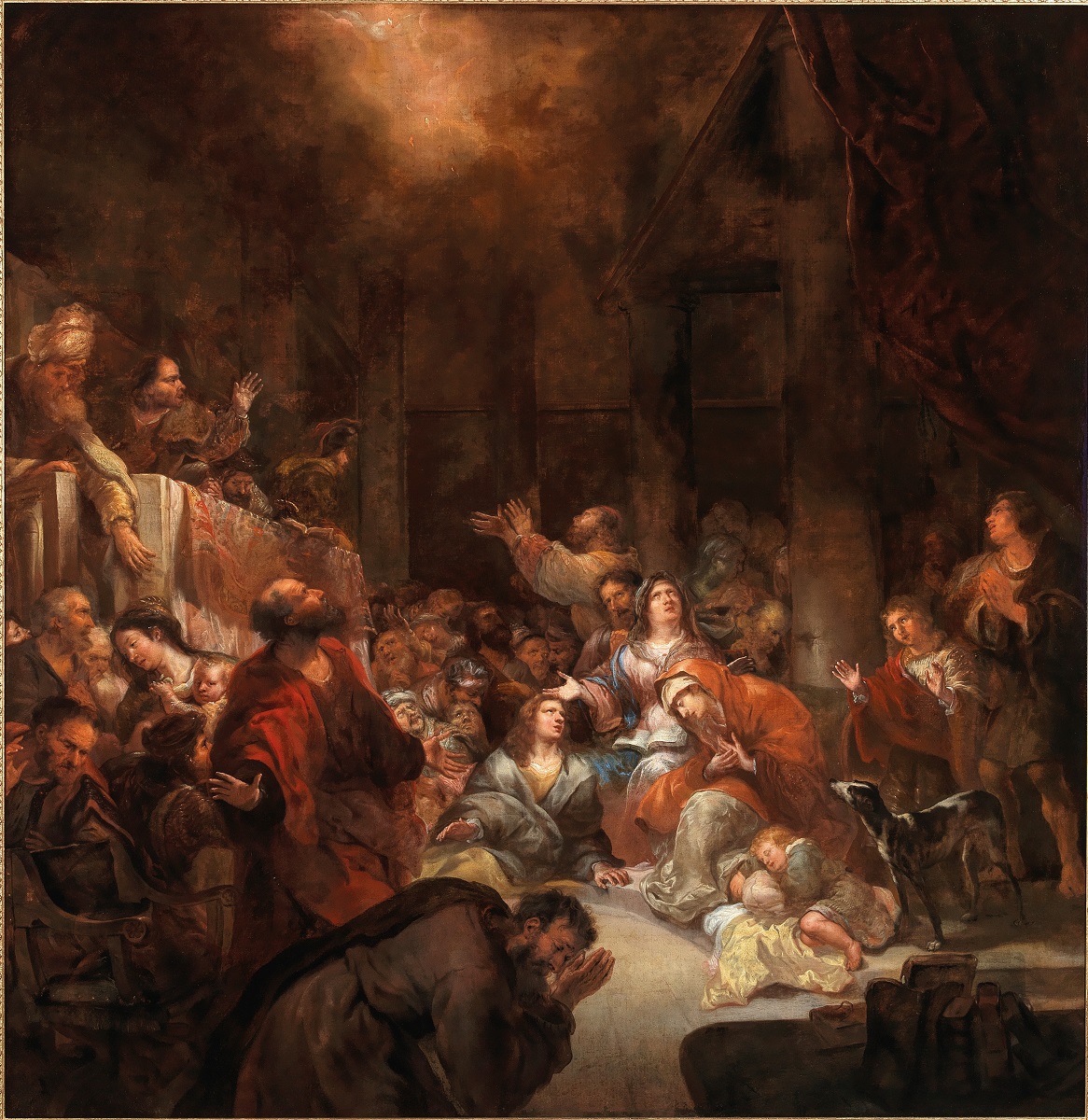
Fig 1. Jรผrgen Ovens, Pentecost, c. 1650. Oil on canvas, 189.4 x 184.8 cm. Private collection.

Recently, an impressive, large seventeenth-century painting featuring the Christian New Testament feast of Pentecost appeared on the market (fig. 1). The unsigned and undated work was published for the first time in an auction catalogue in December 2020 as: โ€œDutch School, circa 1650โ€.72ย No provenance was offered, other than that it came from an English private collection. There are, however, strong indications to believe this work was executed by the German-Dutch artist Jรผrgen Ovens. According to Arnold Houbraken (1660-1719), Ovens was a pupil of Rembrandt (1606-1669).73 Although this is uncertain, the painting clearly demonstrates that Ovens was influenced by several of Rembrandtโ€™s religious etchings.

An invoice and old collection catalogues
After having worked in Amsterdam in the 1640s, Ovens set up a studio in Friedrichstadt in his native Schleswig-Holstein in 1651, where he became the preferred painter of Duke Frederick III (1597-1659) the next year.74ย In 1654, Ovens addressed a handwritten invoice of 500ย Reichstaler to the Duke for โ€œthe Pentecost of your royal Highnessโ€.75ย The opening words, โ€œWhat painting[s] I have submissively made for you [โ€ฆ]โ€, make it clear that the work was commissioned by the Duke.76ย Thisย Pentecostย could very well be the painting being discussed here: the fairly high price indicates that Ovens delivered a sizeable work. Fortunately, this painting can be traced over the next 150 years in collection catalogues of Schloss Gottorf, the main residence of the Dukes of Schleswig-Holstein-Gottorf, and Schlossย Salzdahlumย near Braunschweig, but after about 1815 it seems lost.

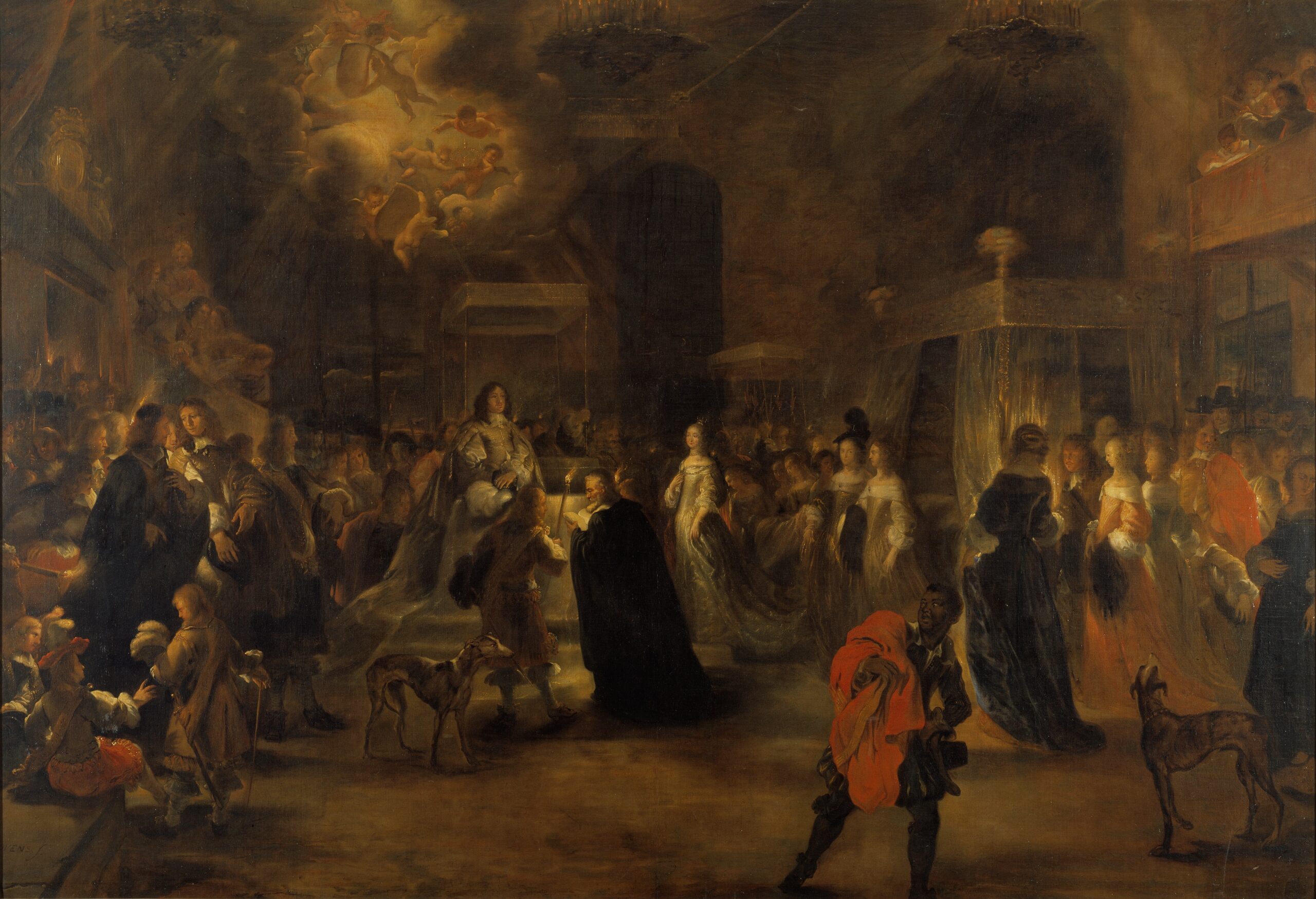
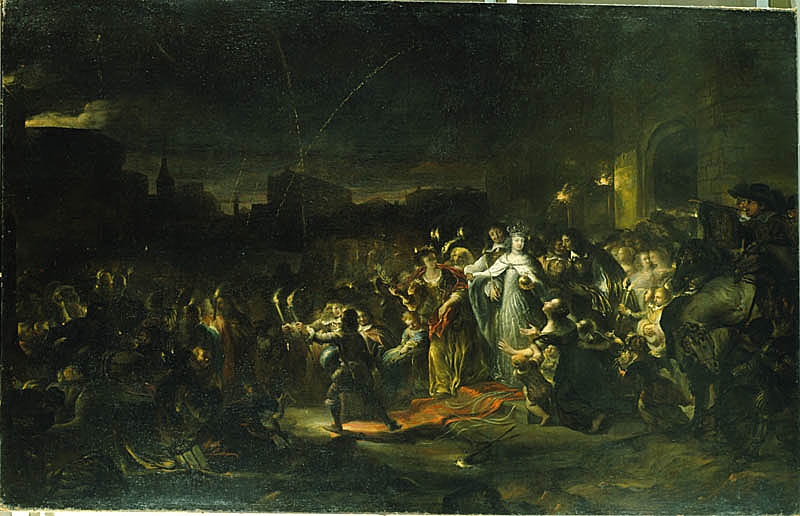
The depicted scene is set in a large room, whereย the Holy Spirit descends upon the apostles and other followers of Jesus Christ while they are in Jerusalem celebrating the Feast of Weeks, as described in theย acts of the apostles (Acts 2:1-13): โ€œWhen the day of Pentecost came, they were all together in one place. Suddenly a sound like the blowing of a violentย wind came from heaven and filled the whole house where they were sitting. They sawย what seemed to be tongues of fireย that came down to rest on each of them.โ€.ย Looking at theย manner in whichย the work is painted, it can be placed mid-century, as it reflects the developments in Amsterdam around this time in the oeuvre ofย Govertโ€ฏFlinckโ€ฏ(1615-1660)ย and his circle.ย Theย fluid, characteristic brushwork in a large part ofย Pentecost, the depiction of forms, the use of colours, the distribution of light and dark, the handling of space and the compositional scheme recall the style of Flinckโ€™s pupilย Ovens. These aspectsย compare well with hisย Marriage of Princess Hedwig Eleonora of Schleswig-Holstein-Gottorf with King Charles X of Sweden on the 24th of October 1654, which is signed and has never been questioned (fig. 2).77ย The whippet dog in theย Pentecostย corresponds to the one in this painting, whereas the sleeping boy echoes the small child in the centre of Ovensโ€™s painting ofย The Procession of the Swedish Queen Hedwig Eleonora of Schleswig-Holstein-Gottorfย (fig. 3).78ย Furthermore, the boy and dog in the twoย Eleonoraย paintings are executed in the same style as those inย Pentecost.

Fig 2. Jรผrgen Ovens, The Marriage of Princess Hedwig Eleonora of Schleswig-Holstein-Gottorf with King Charles X of Sweden on the 24th of October 1654, c. 1655/57. Oil on canvas, 192 x 298 cm. Stockholm, Nationalmuseum (NMDrh 532).
Fig 3. Jรผrgen Ovens, The Procession of the Swedish Queen Hedwig Eleonora of Schleswig-Holstein-Gottorf, c. 1655/57. Oil on canvas, 212 x 306 cm. Stockholm, Nationalmuseum (NM 908).
Fig 4. Rembrandt, The Triumph of Mordecai (Esther 6:5-12, c. 1641) (B. 40). Etching and drypoint, only state, 174 x 215 mm. Amsterdam, Rembrandt House Museum.

The odds that this painting is the work in the abovementioned invoice and catalogues are increased by the rarity of the theme of Pentecost in Northern Baroque art, and the absence of any archival reference to another example by the artist. At the end of the nineteenth century,ย Pentecostย was very likely owned by the American beer brewerย John William Brown (1844-1903), in whose memory it wasย donated to the Brooklyn Institute of Arts and Sciences in 1906.79ย In the course of the twentieth century weย lose track of the painting until it resurfaces at the 2020 auction.

We canย exclude the possibility that this is the painting appearing in the 1691 estate of Jรผrgenโ€™s widow Maria Ovens. A โ€œlarge piece of the sending of the Holy Spirit […]โ€ is mentioned under the section โ€œcopies of paintingsโ€.80ย It is visible to the naked eye that Ovens made several corrections during the creative process, such as the overpainted book at the bottom right, the face of the turbaned man on the balcony and the raised left hand of his brown-haired neighbour, which was originallyย extended.ย In all probabilityย the painting with Maria Ovens was a copy after ourย Pentecost. Unfortunately, all traces of this work are lost.

Ovens looks to Rembrandt
It is most interesting to note that Ovens composed parts of this work by borrowing from no less than seven of Rembrandtโ€™s religious prints. Most obviously, he was inspired by the etching ofย Theย Triumph of Mordecaiย (c. 1641) for theย low, draped balcony,ย in mirror-image, as well as by the motif of the carpet thrown over a white sheet, and even its pattern of wavy lines, rendered in red (fig. 4).81

The mother under the painted balcony, carrying her son on her left arm, calls to mind the woman with child on the far right in the etching. They are both positioned at more or less theย same location in the composition. An old, bearded man standing close to her and raising his hand to his chest is taken over by Ovens for the figure to the far left. His face in turn resembles that of the apostle Saint Peter in Rembrandtโ€™sย Hundred Guilder Printย from circa 1648 (fig. 5).82

Fig 5. Rembrandt, Christ Preaching (The Hundred Guilder Print) c. 1648, (B. 74). Etching, drypoint and burin, state II (2), 278 x 388mm. Amsterdam, Rembrandt House Museum.

The kneeling, helmeted soldier in the left foreground of theย Mordecaiย etching could very well have been the prototype for Ovensโ€™s apostle โ€“ dressed in a brown tunic and wearing a scapular over his left shoulder โ€“ who functions as aย repoussoir. His hands, folded in prayer near his face, echo those of the kneeling, lightly sketched man to the right in the print.ย Rembrandtโ€™s small barking dogsย likely inspired Ovens to add a whippet to his scene.

Significantly, Ovensโ€™s balcony is the first known (partial) borrowing from Rembrandtโ€™sย Mordecaiย print in the German-speaking areas. Up till now, an engraved copy in mirror-image in the print bible of the German artistย Melchiorโ€ฏKรผselโ€ฏ(possiblyโ€ฏ1622-1681/83), published in Augsburg in 1679, was considered the earliest following of Rembrandtโ€™s etching.83

The balding man withย outstretched arms inย a red robe to the left in Ovensโ€™s painting has stepped out of theย Hundred Guilder Print, where he kneels behind Christ. In the etching he turns his eyes to the Saviour, but in theย paintingย he looks up to the Holy Spirit. Ovens granted this figure a more prominent role, uniting the foreground with the middle ground, thereby drawing the viewer into the picture.84ย Ovens would return to theย Hundred Guilder Printย a decade later in two drawings ofย โ€ฏThe Raising of Lazarusโ€ฏ(John 11:1-44)โ€ฏ, in which he adapts Christ and the surrounding figures.85ย These sheets testify toย his enduring admiration for this masterpiece etching.

From another etching by Rembrandt, his 1639ย Death of the Virginย (fig. 6), Ovens borrowed the wooden chair with a low rectangular back and decorated arms in the right foreground.86ย He turned the chair to the rightย in order toย suggest that the kneeling apostle has just stood up from it.ย Perhaps the slightly elevated platform in the middle plan of the painting was also taken over from Rembrandtโ€™s print. The upward looking Virgin, wearing a blue veil and seated with an open booklet on her lap, could go back to the etched mourner near the foot of Maryโ€™s deathbed.87ย The boy with a red cloth over his arm might have been partly modelled after the apostle with outstretched arms standing somewhat separately on the right inย The Death of the Virgin, though one, of course, should give Ovens some room for inventions of his own.

Fig 6. Rembrandt, The Death of the Virgin, 1639 (B. 99). Etching and drypoint, state II (4), 409 x 315 mm. Amsterdam, Rembrandt House Museum.
Fig 7. Rembrandt and Johannes Gillisz. van Vliet, The Descent from the Cross: Second Plate, 1633 (B. 81). Etching and burin, state IV or V (7), trimmed down to 515 x 400 mm. Amsterdam, Rembrandt House Museum.

Ovens also drew inspiration from slightly older Rembrandt etchings. The prototype forย the woman in the orange cloak, presumably Mary Magdalene, was the hooded Virginย who gazes down toward the ground at the bottom right of the large print ofย The Descent from the Cross: Second Plateย that Rembrandt madeย (together with Johannesโ€ฏGillisz.โ€ฏvan Vliet [1600/10-1668])ย in 1633 (fig. 7).88ย The mourning, bearded man standing behind her recalls the brown-haired figure between the apostle with raised arms in the centre of Ovensโ€™s painting (probably Saint Peter) and the Virgin. The brown-bearded man turning away from the light, next to the column in the background, echoes (in mirror image) the onlooker to the right in Rembrandtโ€™s etchingย Theย Circumcision: Small Plateย (fig. 8) of circa 1630, and the figure to the left inย The Tribute Moneyย (fig. 9), created some five years later.89ย The man with a book on Ovensโ€™s balcony might even be a free variant of the reader to the far left in this etching. And lastly, the large red curtain to the right recalls the similar element in Rembrandtโ€™s printย Medea: or the Marriage of Jason and Creusaย from 1648 (fig. 10).90

Fig 8. Rembrandt, The Circumcision (Small Plate), c. 1630 (B. 48). Etching and drypoint, state I (2), 88 x 64 mm. Amsterdam, Rembrandt House Museum.
Fig 9. Rembrandt, The Tribute Money, c. 1634 (B. 68). Etching, state II (2), 73 x 103 mm. Amsterdam, Rembrandt House Museum.
Fig 10. Rembrandt, Medea, or the Marriage of Jason and Creusa, 1648 (B. 112). Etching and drypoint, state IV (5), 240 x 176 mm. Amsterdam, Rembrandt House Museum.ย 

A homage to Rembrandt?
Ovensโ€™s extensive use of figures and motives from Rembrandtโ€™s prints in one single painting is especially striking when we consider that โ€“ as far as is known โ€“ there are no other such borrowings in any of his paintings.91ย Weย may assume him to be familiar with the remark byย Karel van Mander (1548-1606)ย that โ€œwell-cooked turnipsย [โ€œrapenโ€, a pun which also refers to gleanings] make a good soupโ€, which means that an artist who borrows elements from the works of other masters should do so in such a subtle way that it escapes notice.92ย Ovens subtly combined figures fromย several of Rembrandtโ€™s most ambitious, important and technically complicated religious prints, altered their poses and reinterpreted their roles. Thus, he adhered to the contemporary Dutch art-theoretical notion ofย imitatio: a respectful transformation by the artist of his models.93ย Ovens might have wanted to measureย up, andย pay homage to hisย possible teacher. He surely will have admired Rembrandtโ€™s mastery of the etching technique. Ovens produced several (history) prints himself, in which the manner of applying etched lines recalls Rembrandtโ€™s graphic work.94

Already in the 1630s, several former Rembrandt pupils drew on his prints for their paintings, for instance Flinckโ€™sย Annunciation to the Shepherdsย of 1639, whichย goes back to the 1634 etchingโ€ฏof the same theme.95ย Such examples may have provided an impetus for Ovens to baseย Pentecostย in part on Rembrandt etchings.ย Aertโ€ฏde Gelder (1645-1727), Rembrandtโ€™s last known pupil, drew extensively on his masterโ€™s prints when realising history paintings such as hisย Passion Series, dating from as late as circa 1715.96ย And, for example, most of the figures in De Gelderโ€™s 1684 paintingย The Presentation in the Temple are taken from Rembrandtโ€™s etching of circa 1640.97ย In around 1651,ย Heinrich Jansen (1625-1667)ย from Flensburg, who studied with Rembrandt in Amsterdam between 1645 and 1648, painted a copy of his 1636 print ofย Christ before Pilate: Large Plate, made in collaboration with Van Vliet, for an epitaph in the church of Mary in Husum, not far from Friedrichstadt.98ย Perhaps Ovens had already met Jansen during his apprenticeship in Amsterdam. Ovens and Frederick III could certainly have known Jansenโ€™s painting in Husum, which is, just likeย Pentecost, almost square-shaped. It might have (further) triggered their desire to have a large painting produced after Rembrandtโ€™s graphic works.

Maria Ovensโ€™s 1691 estate inventory does not list any Rembrandt etchings, but her well-to-do husband could have acquired and studied them in Amsterdam. Although Ovens might not have been taught directly by Rembrandt, he certainly moved in his circle. Next to being an artist, Ovens was a collector and an art dealer as well. In November 1652, shortly after the painter returned to Schleswig-Holstein, Frederick III paid him for a copper plate that had been engraved in Amsterdam, evidently a commission from the Duke.99ย Ovens might also have sold graphic work by Rembrandt in Northern Germany.100ย However, no information is available about possible ownership of Rembrandt prints by Frederick III.101

The idea that Ovens studied under Rembrandt is not borne out by his painting ofย Pentecost. The dynamic, colourful canvas bears little stylistic resemblance to the painted oeuvre of the famous artist. However, by way of his prints, the great Dutch master occupied Jรผrgen more than was hitherto known.

  1. Arnold Houbraken, De groote schouburgh der Nederlantsche konstschilders en schilderessen vol. 2, Amsterdam 1719, p. 272: โ€œHy verkeerde in den herfst van zyn leven wel meest met gemeene luiden, en zulke die de Konst hanteerden.โ€
  2. Ernst van de Wetering, A Corpus of Rembrandt Paintings V: The Small-Scale History Paintings, Dordrecht 2011, pp. 3-6; vol. 6, pp. 296-297; and: Eric Jan Sluijter, in Govert Flinck: Reflecting History, Cleves 2015, pp. 68-69.
  3. Ben Broos, โ€œSaskia, Rembrandtโ€™s Frisian Brideโ€, in: Marlies Stoter (ed.), Rembrandt & Saskia: love and marriage in the Dutch Golden Age, Zwolle, 2018, pp. 23-24.
  4. Houbraken, Schouburgh (see note 1), pp. 100, 174.
  5. Epco Runia, David de Witt, Rembrandtโ€™s Social Network: family, friends, and acquaintances, Amsterdam: The Rembrandt House Museum, 2019.
  6. http://remdoc.huygens.knaw.nl/#/document/remdoc/e12959, with reference to a letter from Constantijn Huygens Jr. to his brother Christiaen, of 6 December 1663, in the Leiden University Library; see Hendrick E. van Gelder, โ€œDe jonge Huygensen en Rembrandtโ€, Oud Holland 73 (1958), pp. 238-241, identifying the drawings, currently: River Scene with Boats and Figures Bathing, c. 1590/1595. Pen in brown, 111 x 205 mm. Formerly Chatsworth, Duke of Devonshire Collection; most recently, Alfred Taubman sale, New York, (Sothebyโ€™s), 27 January 2016, lot 33 (as the original, but without noting the Rembrandt provenance); and the copy with Everhard Jabach in Paris: pen in brown, 112 x 186 mm. Washington, National Gallery of Art, inv. no. NGA 72075 (as also as the original).
  7. David de Witt, Abraham van Dijck (1635-1680): Life and Work of a Late Rembrandt Pupil, Zwolle 2020, p. 32.
  8. Werner Sumowski,ย Gemรคlde der Rembrandtschรผlerย vol.ย 2, Landau 1987, p. 1951.
  9. Michiel Roscam Abbing,ย Eigentijdse bronnen & oeuvre van gesigneerde schilderijen, Leiden 1993, pp. 42-49.ย 
  10. De Witt,ย Van Dijckย (see note 7), pp. 12-13.
  11. Abraham van Dijck,ย The Widow of Zarephath and her Son, signed, c. 1655, oil on canvas, 115.6 x 95.9 cm.;ย Portrait of a Fifty-Year-Old Woman, signed and dated 1655, oil on panel, 75 x 62 cm, both Kingston ON, Agnes Etherington Art Centre, acc. nos. 60-001 and 56-003.10; see: De Witt,ย Van Dijckย (see note 7), pp. 98-101, nos. P22, P23.
  12. First spotted by Sabrina Meloni, after cleaning in 2014.ย 
  13. De Witt,ย Van Dijckย (see note 7), p. 126, no. P35.
  14. Sale, Milan (Lucas Casa dโ€™Arte), 21 May 2025, lot 220.
  15. Monogrammed and dated 1657, oil on panel, 35 x 29.5 cm, The Hague, with S. Nijstad, in 1983; De Witt,ย Van Dijck (see note 7), p. 118, no. P31.
  16. The idea that the Washington painting had been altered from a generic scholar into a St. Paul was already proposed by Arthur K. Wheelock, in: Arthur K. Wheelock,ย Rembrandtโ€™s Late Religious Portraits, Washington: National Gallery of Art; Los Angeles: Getty Museum, 2005, pp. 141-157; followed by Van de Wetering: Ernst van de Wetering,ย Rembrandtโ€™s Paintings Revisited: a complete survey II, Dordrecht 2017, 2017, cat. 254, p. 640 (as c. 1655). The new study brings conclusive evidence in support of this scenario, based on an extensive technical research: Marjorie Wieseman, John K. Delaney and Kathryn A. Dooley, โ€œCompositional Changes in Rembrandtโ€™s The Apostle Paul: New Technical Findingsโ€,ย Rembrandt as a Painter: New Technical Research. ArtMatters. International Journal for Technical Art History. Special Issue #2, 2025, pp. 80-92.ย https://doi.org/10.64655/AM.si25r.b1963ย (accessed 16 December 2025).ย 
  17. The connection with an interim state of the painting was already surmised by Werner Sumowski, in:ย Drawings of the Rembrandt School, vol. 11:ย Anonymous Drawingsย (manuscript left unpublished on his death in 2015; forthcoming in an edition translated and edited by the author, with Brill).
  18. Werner Sumowski,ย Drawings of the Rembrandt Schoolย vol. 5, New York, 1981, p. 2712, no. 1224x:ย https://rkd.nl/images/311330.
  19. Van de Wetering,ย Rembrandtโ€™sย (see note 16), p. 650-651, no. 265:ย https://rkd.nl/images/54379.
  20. David de Witt, โ€œA New and Individual Approach to Contour: 1653, 1658 and Beyondโ€, in:ย Samuel van Hoogstraten (1627-1678): Catalogue Raisonnรฉ: https://vanhoogstraten.rkdstudies.nl/samuel-van-hoogstratens-drawings-history-life-universality/a-new-and-individual-approach-to-contour-1653-1658-and-beyond/ย (accessed 25 May 2025).
  21. https://rkd.nl/images/289005.
  22. Samuel van Hoogstraten,ย Madonna and Child, c. 1660, oil on canvas, 92 x 71.2 cm, Amsterdam (Christieโ€™s), 25 May 2016, lot 74:ย https://rkd.nl/images/314055.
  23. David de Witt, โ€œRembrandtโ€™s Late Pupils: Studying under a Geniusโ€,ย Rembrandtโ€™s Late Pupils: Studying Under a Genius, exh. cat. Amsterdam: The Rembrandt House Museum, 2015, p. 85, with reference to:ย  Sumowski, Gemรคlde (see note 8), vol. 3 (1987), p. 1951; also posited in Roscam Abbing,ย Schilderย (see note 9), p. 40. It is true that Maes consulted drawings by Van Hoogstraten for his early painting ofย Christ Blessing the Childrenย in London, but this is very likely because he had access to Van Hoogstratenโ€™s drawings left behind in his studio when he left for Vienna and Italy in 1651: they were moreover older drawings, from c. 1646-1648; see: David de Witt, โ€œSamuel van Hoogstratenโ€™s Drawings: History, Life, Universalityโ€ in:ย Samuel van Hoogstraten (1627-1678): Catalogue Raisonnรฉ:ย https://vanhoogstraten.rkdstudies.nl/samuel-van-hoogstratens-drawings-history-life-universality/the-core-group-from-pictorial-technique-to-innovative-contour/ (accessed 25 May 2025).
  24. https://rkd.nl/images/285887.
  25. Sumowski,ย Gemรคldeย (see note 8), vol. 3 (1987), p. 2009, no. 1324:ย https://rkd.nl/images/251100.
  26. My thanks to curator Justus de Lang for sharing his thoughts on the connection, reflected in part in the hanging of both works near each other in the gallery.
  27. De Witt,ย Vanย Dijckย (see note 7), pp. 52-53, no. P1.
  28. http://remdoc.huygens.knaw.nl/#/document/remdoc/e4704.
  29. David de Witt, โ€œFrom Rembrandtโ€™s Nae โ€˜t leven to Van Hoogstratenโ€™s Zichtbaere Wereltโ€, in: David de Wittย andย Leonore van Sloten,ย Samuel van Hoogstraten.ย The Illusionist, Amsterdam: The Rembrandt House Museum, 2025, pp. 74-79.
  30. Adriaen Waiboer,ย Vermeer and the Masters of Genre Painting: Inspiration and Rivalry, Dublin: National Gallery of Ireland; Washington: National Gallery of Art; Paris: Musรฉe du Louvre, 2017-2018, and specifically on travel: Blaise Ducos, โ€œThe โ€œTour of Hollandโ€: Visitors from Abroad in the United Provincesโ€, pp. 101-111.
  31. Houbraken,ย Schouburghย (see note 1), p. 157.
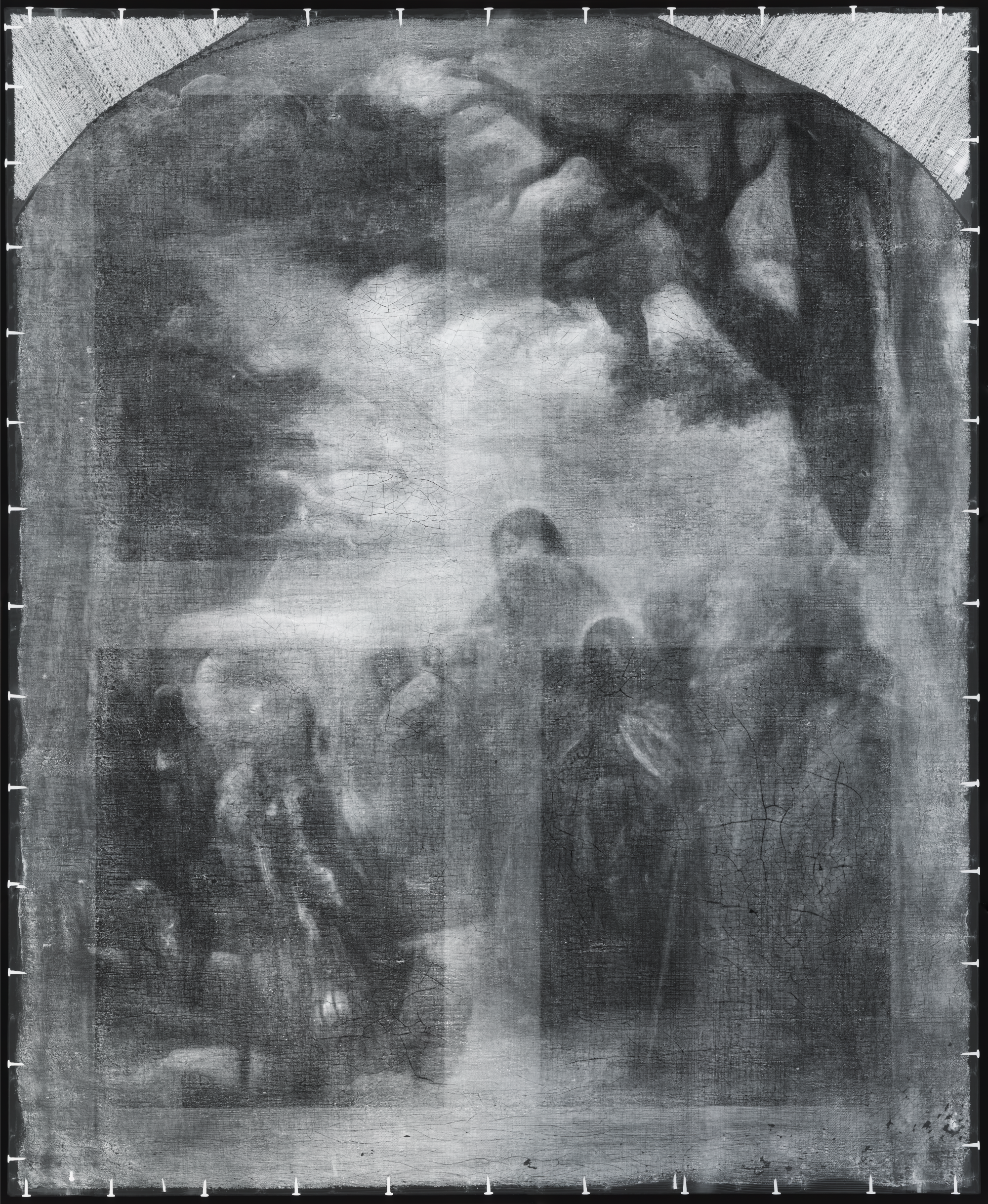
  32. Rudi Ekkart, โ€˜Govert Flinck and Ferdinand Bol: The Portraitsโ€™, in: Ferdinand Bol and Govert Flinck: Rembrandt’s Master Pupils, Zwolle, 2018, p. 158; Eric Jan Sluijter, โ€˜Out of Rembrandt’s Shadow: Govert Flinck and Ferdinand Bol as History Paintersโ€™, pp. 129-131.
  33. The etchings by Ferdinand Bol in this article are cited by the Hollstein number, in: F.W.H. Hollstein: Dutch and Flemish Etchings Engravings and Woodcuts, Amsterdam 1950, Vol. 3. pp. 15-35. However, the states noted here are updated, as anticipated in the forthcoming New Hollstein volume.
  34. The first one to point this out was Pierre Yver: Supplement au catalogue raisonneฬ de M. M. Gersaint, Helle & Glomy: de toutes les pieces qui forment l’oeuvre de Rembrandt. Amsterdam 1756, pp. 39-40, no.108, although he referred to the third, 1681 edition of the book. The etching is already present in the first, 1644 edition, published in Amsterdam.
  35. Den Christelyken Hovelingh has been commonly described as a play, but it is written as a poetic dialogue. If it was meant to be a play and/or if it was ever staged is not known to me. It is not listed as having been staged from 1637 to 1772: see Creative Amsterdam. An E-Humanities Perspective. Onstage. Online Datasystem of Theatre in Amsterdam from the Golden Age to the present: https://www.vondel.humanities.uva.nl/onstage/plays (accessed 7 July 2024). The title page of the 1642 volume indicates โ€˜Den Christelyk Hovelinghโ€™. However, the headers on all pages of that volume use the spelling โ€˜Christelykenโ€™, as do subsequent authors and libraries. See Jan Harmensz. Krul: Den Christelyk Hovelingh, Amsterdam 1642.
  36. This appears to have been first noted in N.C.H. Wijngaards.: Jan Harmens Krul: zijn leven, zijn werk en zijn betekenis, Zwolle, 1964, and is also described in: H.C. van Bemmel: Bibliografie van de werken van Jan Hermans Krul, Amsterdam, 1984.
  37. David de Witt and Leonore van Sloten, โ€˜Ferdinand Bol: Rembrandtโ€™s Discipleโ€™ in: Bol and Flinck (note 1), p. 48; and: Leonore van Sloten, โ€˜Ferdinand Bol, the Etcherโ€™, in: Bol and Flinck (note 1), p. 207; and Sophia Thomassen, โ€˜Timelineโ€™, in: Bol and Flinck, 2018 (note 1), p. 11.
  38. De Witt and Van Sloten, Bol, 2018 (note 6); Robert Schillemans: Bijbelschilderkunst rond Rembrandt, Utrecht 1989, pp. 31-34.
  39. Wijngaards, Krul, 1964 (note 5); Van Bemmel, Bibliographie, 1984 (note 5). I have been able to trace only thee copies: Library of the University of Amsterdam (2780 C 51), Royal Library, Den Haag, (KB: 3 C 20:10), and Noord-Hollands Archief, Haarlem (Oude Boekerij: 88 A 16). The copy in Den Haag lacks the page (A2) with Bol’s print.
  40. Wijngaards, Krul, 1964 (note 5); Van Bemmel, Bibliographie, 1984 (note 5).
  41. The 1644 edition (J.H. Krul: Pampiere Wereld, First edition. Amsterdam1644) is a folio edition measuring 302 x 190 mm; the 1681 edition (J.H. Krul: Pampiere Wereld, 3rd edition. Amsterdam, the widow of van Jan Jacobsz Schipper) is in quarto, measuring 216 mm x 170 mm. and the 1644-45 edition (J.H. Krul: Pampiere Wereld, 2nd edition, Amsterdam) is in octavo, measuring 169 x 104 mm. Book and library catalogues commonly ascribe c.1650 as the date for the latter, but the source of this attribution is not clear, and it is in error. See also Van Bemmel, Bibliographie (note 5).
  42. Van Bemmel, Bibliographie (note 5); The anonymous copy is in reverse, by an unknown hand, is neither signed nor dated, measures 85 x 74.5 mm, is of the same theme and general composition, but is artistically distinctly different. The shield is blank in this copy of Bol’s etching. I have not found any impressions of this copy that were not part of the printed book. I have identified three other distinct copies after Bol’s print, for a total of four, rather than the single copy identified by Hollstein (note 2).
  43. In 1644 and again in 1645 Krul obtained two successive loans, with the second providing funds to pay off the first, to permit him to publish the first two editions of Pampiere Wereld. Krul gave successively each lender volumes of the work, the patent rights and โ€˜someโ€™ copper plates for the period of the loan. It is not clear if the plates included Bol’s etching. See Wijngaards, Krul, 1964 (note 5); Van Bemmel, Bibliographie, 1984 (note 5).
  44. Jan Harmensz. Krul: Minne-Spiegel ter Deughden, Amsterdam 1650-51, J. H. Krul: Minne-Spiegel ter Deughden, Amsterdam; J. H. Krul: Minne-Spiegel ter Deughden, Joost Hartgers, Amsterdam, 1640; J. H. Krul: Minne-Spiegel ter Deughden, Michiel de Groot, Amsterdam, 1662; Jan Harmensz. Krul: Minne-Spiegel ter Deughden, Amsterdam, 1669-72.
  45. Hollstein gives only four states; more recently, George C. Kenney lists five, albeit described differently than the six here. See George C. Kenney: The Illustrated Bartsch, vol. 51. Supplement: Netherlandish Artists. Ferdinand Bol. New York 2017, p. 73, no. 18.
  46. In addition to the partial burnishing out of Bol’s name on the blade of the spade in the second state, lines are added partially obscuring the remaining portion of the signature; additional background work is added in several places; there is some work added on the scythe, table, book and the skull of the skeleton; and some additional work on the woman’s headdress/cape (fig. 2). The unique impression of this state is touched with black chalk and lead white, including the addition of a domed building in the distant background, horizontal lines below and to the left of the domed building, and the outline of a blank shield (or cartouche) covering the left part of the end of the coffin. Kenney also mentioned this state, but mistakenly describes the building in the background as a state difference. See: Kenney, Bol, 2017 (note 14). Only two other Bol prints have retouchings by the artist that appeared in the subsequent state: The Philosopher, H.6ii, 1643 (Amsterdam, RP-P-BI-1994); and The Young man Wearing a Plumed Cap, H.14i, 1642 (London, 1921,1008.21; and Dresden, A41073). The retouchings for H.6ii and H.14i appear in the plates for the next state of their respective prints. It is interesting to note that all retouched impressions were done in approximately the same period, and that the retouchings for H.6 and H.14 are very small in comparison to the significant retouchings for H.18. It is possible that this is a reflection of Bol’s satisfying his client’s wishes. Retouchings of impressions of other Bol prints are not judged to have been by his hand.
  47. My thanks to Jaco Rutgers for this suggestion
  48. The fifth state has added substantial additional background work and some work to the woman’s dress, and a bit on the shield, and the skull of the skeleton.
  49. The sixth, and final, state has added rather crude extensive reworking consisting of regular patterns of cross-hatching using the burin, for instance on the back of the skull, the inside of the tent, and the clothes of the female courtier. See fig 6.
  50. It had long been thought that Rembrandt painted his portrait in 1633. However, more recently, this has been called into question by Ernst van de Watering, A Corpus of Rembrandt Paintings, vol. 6: Rembrandtโ€™s Paintings Revisited, Dordrecht 2017, p. 526, no. 91. There were also family connections; see M. Louttit: โ€˜The Romantic Dress of Saskia van Ulenborch: Its Pastoral and Theatrical Associationsโ€™, The Burlington Magazine 115 (1973), pp. 317-326.
  51. Leonore van Sloten, โ€˜Ferdinand Bol in de voetsporen van Rembrandt: Twee herontdekte schilderijenโ€™, in: Rudie van Leeuwen, Lilian Ruhe, and David de Witt, eds, Not Always Rembrandt; 37 studies in Baroque art. Turnhout, Belgium 2023, pp. 20-31.
  52. Jan Soet, Soets Clorinde en Dambise, Amsterdam 1640.
  53. University of Amsterdam: Creative Amsterdam. An E-Humanities Perspective. Onstage. Online Datasystem of Theatre in Amsterdam from the Golden Age to the present. https://www.vondel.humanities.uva.nl/onstage/plays/359 (accessed 7 July 2024).
  54. N.C.H. Wijngaards, (note 5).
  55. Antonio de Guevara: Menosprecio de corte y alabanza de aldea. Valladolid 1539.
  56. See: S. Oosterwijk, โ€˜Morbid morality. The Danse macabre motif in Dutch art of the Golden Ageโ€™, in: Ilona Hans-Collas et al. (eds.), Mort n’espargne ne petit ne grant [Texte imprimรฉ] : รฉtudes autour de la mort et de ses reprรฉsentations : actes du XVIIIe Congrรจs international de l’association Danses macabres d’Europe, Paris, 19-23 mars 2019, Paris 2019, pp. 174-195.
  57. Translation: Linda Stone-Ferrier: โ€˜Ferdinand Bol: The Hour of Deathโ€™, in: Dutch Prints of Daily Life: Mirrors of Life or Masks of Morals? Lawrence, Kansas: The Spencer Museum of Art of The University of Kansas, 1983, pp. 144-146, credits Oliver C. Phillips, Classics Department, University Of Kansas, for the translation.
  58. There is no Bol print dated earlier than H.18, although he may have created one, Abraham’s Sacrifice (H.1), when working in Rembrandt’s studio; however, this is uncertain, as it is not dated.
  59. Gerard Roosenboom, Recueil van verscheyde keuren, en costumen. Midtsgaders maniere van procederen binnen de stadt Amsterdam. Eerst gecollecteert en beschreven, door Gerard Rooseboom, Amsterdam, 1656, pp. 120-131.
  60. Stadsarchief Amsterdam (hereafter SAA), 5061, 3051 Memorieboek, p. 29.
  61. http://remdoc.huygens.knaw.nl/#/document/remdoc/e4581 (accessed 3 December 2025).
  62. Arthur K. Wheelock jr., โ€œJan Lievens: Bringing new light to an old masterโ€, in: Wheelock Jr. ed, Jan Lievens. A Dutch master rediscovered, exh. cat. Washington: National Gallery of Art; Milwaukee: Milwaukee Art Museum; Amsterdam: Rembrandt House Museum, 2008-2009, pp. 6-7.
  63. SAA, 5075, 1745 not. Jan Quirijnen Spithof, pp. 124-125, 1-3-1644; Abraham Bedius, โ€œHet verblijf van Jan Miense Molenaer te Amsterdam, in documentenโ€, in: Frederik D.O. Obreen, Archief voor Nederlandsche Kunstgeschiedenis, vol. 7, Rotterdam 1888-1890, p. 293.
  64. Arthur K. Wheelock jr., in: exh. cat. Amsterdam 2009 (see note 4), pp. 17-18.
  65. SAA, 5061, 3063 Huwelijkskrakeelregisters, 8-12-1646.
  66. SAA, 5075, 1080, not. Joost van de Ven, ff. 203r-203v, 7-12-1646.
  67. โ€œter saecke sij als haar regeerster bij den req[uiran]t gewoont haddeโ€ (see note 8).
  68. โ€œhaer beloften van trouw heeft gedaan, van haer in eeuwig niet te sullen verlate & haer een vierkant stucken, neefens een ander silvere stuxkens gegeven & daarbeneffens van hem beslaepen & beswangertโ€ (see note 7). The mentioned silver square piece was a klip, an emergency coinage at that time struck mainly in West Friesland, or a medal/jeton.
  69. SAA, 5061, 3064, Huwelijkskrakeelregisters, 14-10-1649.
  70. The name Anna or Annetje Jacobs was fairly common; in 1647, eleven children were baptised in Amsterdam whose mother bore a variant of this name.
  71. The notarial archives contain many examples of such payments, both as compensation for the woman and as maintenance costs for any illegitimate children. For instance, Jan van de Velde agreed to the payments of two guilders per week in maintenance for the child he had conceived out of wedlock with Trijn Jans in 1636 (SAA, 5075, 601 not. Laurens Lamberti, p. 456, 17-07-1642). Whether this concerns the painter Jan van de Velde (III) from Haarlem, active in Amsterdam, is not clear. In 1661 David Abraham Cardozo paid no less than 1,000 guilders for โ€œdeflorationโ€ and the maintenance of two children resulting from his extramarital relationship with Dorothea Jans Bentem (SAA, 5075, 2210 not. Adriaen Lock, pp. 1107-1108, 27-05-1661).
  72. London (Christieโ€™s), 17 December 2020 (online auction 18877), lot 231 (inaccurately described as 185.4 x 195.5 cm); Old Master Paintings, Vienna (Dorotheum), 10 November 2021, lot 82 (as Jรผrgen Ovens, Pentecost).
  73. Arnold Houbraken, De groote schouburgh der Nederlantsche konstschilders en schilderessen I, Amsterdam 1718, p. 273.
  74. Constanze Kรถster,ย Jรผrgen Ovens (1623-1678). Maler in Schleswig-Holstein und Amsterdam, Petersberg 2017,ย p. 53; pp. 327-328, Qu. II.A.7.
  75. Archiveย ofย Schleswig-Holsteinย (LAS),ย Abt. 7, no. 6504, f. 1r; Kรถster 2017 (seeย noteย 3), pp. 37-38;ย p.ย 326, Qu. II.A.2.
  76. Kรถster 2017 (seeย noteย 3), p. 38.
  77. Kรถster 2017 (seeย noteย 3), p. 389, G145.
  78. Kรถster 2017 (see note 3), p. 390, G147.
  79. The Eighteenthโ€ฏYear Bookโ€ฏof the Brooklyn Institute of Arts and Sciences, 1905-1906, pp. 70, 124,โ€ฏ224;ย โ€œDepartment of Fine Artsโ€,ย The Museum News (Brooklyn Institute of Arts and Sciences)ย 1 (1906) no. 10, p. 144.
  80. Handwritten list of Maria Ovensโ€™s estate (private collection, location unknown), cited after Harry Schmidt, โ€œDasย Nachlass-Inventarย desย Malersย Jรผrgen Ovensโ€,ย Oud-Hollandย 32 (1914),ย p. 44, no. 16, note 7;ย Harry Schmidt,ย Jรผrgen Ovens.ย Sein Leben und seine Werke. Ein Beitrag zur Geschichte der niederlรคndischen Malerei im XVII.ย Jahrhundert, Kiel 1922,ย p. 150,ย underย no. 59a, p. 271, note 26 (as probably a copy after an original by Ovens);ย Kรถster 2017 (see note 3),ย p. 39;โ€ฏp. 325,โ€ฏQu. I.4.c.
  81. Erik Hinterding, Jaco Rutgers,ย The New Hollstein, Dutch & Flemish etchings, engravings and woodcuts, 1450-1700. Rembrandt,ย Ouderkerkย aanย denย IJsselย 2013, text 2, pp. 59-60, no. 185.
  82. Hinterding, Rutgers 2013 (see note 10), text 2, pp. 151-154, no. 239.
  83. Melchiorย Kรผsel,ย Iconesย Biblicaeย Veterisย et Noviย Testamenti.ย Figurenย biblischerย Historienย altenย undย neuenย Testaments, Augsburg 1679, โ€˜Bookย of Esther,ย Chapterย 6โ€™, fig. 20;ย reprintย Hildesheim 1968.ย Seeโ€ฏalso:โ€ฏPeter van derโ€ฏCoelen, โ€˜Rembrandt in Duitsland โ€“ Iconografie en verspreiding van zijn etsen in de zeventiende eeuwโ€™,ย Kroniek van het Rembrandthuisโ€ฏ2004, no. 1-2,ย p. 3, fig. 2.
  84. or a mirror-image of this man in theย Hundred Guilder Print, see: Ernst van de Wetering et al.,ย A Corpus of Rembrandt Paintings V. Small-scale history paintings, Dordrechtย 2011, p. 144, fig. 4.
  85. Kรถster 2017 (see note 3), p. 397, Z12-13.
  86. Hinterding, Rutgers 2013 (see note 10), pp. 39-41, no. 173.
  87. The presence of Mary or of other women at Pentecost, such as Mary Magdalene, is usually inferred from Acts 1:14: โ€œThey all joined together constantly in prayer, along with the women and Mary, the mother of Jesus [โ€ฆ]โ€.
  88. Hinterding, Rutgers 2013 (see note 10), text 1, pp. 189-191, no. 119.
  89. Hinterding, Rutgers 2013 (see note 10), text 1, p. 84, no. 55; pp. 220-221, no. 138.
  90. Hinterding, Rutgers 2013 (see note 10), text 2, pp. 158-159, no. 241.
  91. The only possible exception in this respect is Ovensโ€™s painted self-portrait from c. 1652 in the Hamburger Kunsthalle (inv. no. HK-26), which seems to go back to Rembrandtโ€™s famous 1639 etchingย Self-Portrait leaning on aย Stoneย Sill. See:ย Patrick Larsen, โ€œThe relationship between Govert Flinck and Jรผrgen Ovensโ€, in: Stephanie S. Dickeyย (ed.),ย Ferdinand Bol and Govert Flinck. New research, Zwolle 2017, p. 182, fig. 12.2, p. 184;ย Hinterding, Rutgers 2013ย (seeโ€ฏnoteโ€ฏ10),โ€ฏtextโ€ฏ2,โ€ฏpp. 33-35, no. 171.
  92. Karel van Mander,ย Het schilder-boeck, Haarlem 1604, fol. 5r; Philips Angel,ย Lof der schilder-konst, Leiden 1642, pp. 36-37.
  93. For Ovensโ€™s artistic appropriations of figures and motives from seventeenth-century art of the Low Countries during his Northern German periods, see:ย Patrick Larsen, โ€œThe Imitation of Dutch and Flemish Art in Jรผrgen Ovensโ€™ (1623-1678) Paintings in Schleswig-Holsteinโ€, in:ย Rieke van Leeuwen, Juliette Rodingย (eds.),ย Masters of Mobility. Cultural exchange between the Netherlands and the German lands in the long 17th centuryย (Gerson Digital VI), The Hague: RKD, 2020,ย https://masters-of-mobility.rkdstudies.nl/13-the-imitation-of-dutch-and-flemish-art-in-j%C3%BCrgen-ovens-1623-1678-paintings-in-schleswig-holstein/.
  94. ย Nadineย M. Orenstein, โ€œPrintmaking among artists of the Rembrandt Schoolโ€, in: Stephanie S. Dickeyย (ed.),ย Rembrandt and his circle. Insights and discoveries, Amsterdam 2017, p. 308, fig. 16.3. For Ovensโ€™s prints, see: Tilman Falk, Robert Zijlma, โ€œJรผrgen Ovensโ€, in:ย Hollsteinโ€™s German engravings, etchings and woodcuts,ย 1400-1700, vol.ย XXXI,ย Amsterdam 1991, pp. 61-74, nos. 1-10b; Kรถster 2017 (see note 3), pp. 415-416, R1-R7.
  95. Werner Sumowski,ย Gemรคldeย der Rembrandt-Schรผlerย II, Landau/Pfalz 1983, p. 1020, no. 615;ย Hinterding, Rutgers (see note 10), text 1, pp.ย 201-202, no. 125.
  96. Guus Sluiter,ย โ€œโ€˜De Passie, anders de Historie van denย lydendenย Christusโ€™.ย Arent de Gelders Passieserieโ€, in: Peter Schoon et al.,ย Arent de Gelder (1645-1727). Rembrandts laatste leerling,ย exh.ย cat. Dordrecht: Dordrechts Museum; Cologne:ย Wallraf–Richartz-Museum, 1998, pp. 73-75,ย figs. 2-13;ย pp. 78-80, 85; Guus Sluiter, โ€œDe fascinatie van Arent de Gelder voor Rembrandts etsenโ€,ย Bulletin Dordrechts Museum 22 (1998), pp. 35-45.
  97. Sumowskiย 1983 (see note 24), p. 1163, no. 738;ย Hinterding, Rutgers 2013ย (see noteย 10),ย text 2,ย pp. 57-58, no. 184.
  98. Sumowskiย 1983 (see note 24), p. 1421, no. 935;ย Hinterding, Rutgers 2013ย (see noteย 10),ย text 1,ย pp. 251-253, no. 155.
  99. LAS,โ€ฏAbt. 7, no.โ€ฏ2311, fol. 90r; Kรถsterย 2017 (see note 3),ย p. 304,โ€ฏnoteโ€ฏ195;โ€ฏp. 332,โ€ฏQu. II.B.1.1652.ย Also see:ย Patrick Larsen, โ€œJรผrgen Ovens (1623-1678) as an Art Agent for the Dukes of Gottorfโ€, in:ย Rieke van Leeuwen et al.,ย The Big Picture. Collecting Dutch and Flemish Art in Germany 1600-1850ย (Gerson Digital VIII), The Hague: RKD, 2022,ย https://the-big-picture.rkdstudies.nl/2-jรผrgen-ovens-16231678-as-an-art-agent-for-the-dukes-of-gottorf/.
  100. Rembrandt prints were offered for sale in the German-speaking lands fairly early.ย See Van derย Coelenย 2004ย (seeย noteย 12), pp. 5-15; Jaco Rutgers, โ€œRembrandt op papier. De rol van prenten bij het vestigen van Rembrandts reputatie als schilderโ€, in: Jaco Rutgers, Mieke Rijnders (eds.),ย Rembrandt in perspectief. De veranderende visie op de meester en zijn werk, Zwolle 2014, p. 122.
  101. Neither the so-called Gottorf account books nor the 1694, 1710 and 1743 inventories of Gottorf castle mention works on paper by Rembrandt.

Jan Lievens, Christ and the Centurion revisited

Fig 1. Jan Lievens, Christ and the Centurion, with Julius Civilis, 1657. Canvas, 86 x 69 cm. Private collection (image courtesy of the Hoogsteder Museum Foundation, The Hague).

In 1992 a newly-discovered painting was presented in the exhibition Rembrandtโ€™s Academy at Hoogsteder & Hoogsteder in The Hague. Werner Sumowski and Paul Huys Janssen wrote extensively in the accompanying exhibition catalogue about the new addition to Jan Lievensโ€™s oeuvre: Christ and the Centurion, monogrammed and dated I.L. 1657 (fig. 1).102 The painting has remained in a private collection since then. After Rembrandtโ€™s Academy it has been exhibited four times, and has been written about on various occasions.103 In the Spring of 2025 the painting was displayed in the Rembrandt House Museum. It was the second time that it could be seen in this museum. In contrast with the first time, in 2009, the painting was freed of retouchings and overpaintings. Without these accretions, it became evident that this painting was an oil sketch, as Lloyd DeWitt had already suggested in his dissertation of 2006.104 This gave occasion to study the place of this work in the oeuvre of Lievens, and to reexamine the interpretation of the theme. This paper presents the resulting new insights.

Unnoticed until 1991
The early provenance of Christ and the Centurion remains unknown. It could be one of those history paintings by Lievens that appear in various estate inventories and auction catalogue without mention of dimensions or further description.105ย Around the middle of the nineteenth century it was acquired by Gaston Gaudinot, out of whose estate it was auctioned in 1869. This French docteur appears to have been the personal physician of the Duc dโ€™Orleans.106 His paintings collection, which was known in French art circles by around 1840, consisted mainly of French, Dutch, Flemish and Spanish works, of which 125 were auctioned after his death.107 In the Rembrandtโ€™s Academy catalogue it was already noted that the lots in this auction were published in Hippolyte Mireurโ€™s Dictionaire des ventes dโ€™art faites en France et ร  lโ€™รฉtranger, but that the Lievens painting was not named in it.108 For this reason it did not enter the art historical literature. Because this painting โ€“ according to verbal account โ€“ remained in family possession after the Gaudinot sale (or shortly thereafter), the work remained out of sight for art historians until an auction in 1991.109

Miraculous Healing
In the middle of the painting stand Christ and the Roman army commander, the centurion. On Christโ€™s left-hand side there is a figure who can easily be identified. It is the Apostle Matthew, recognizable from the book he carries. The depiction of the miraculous healing of the servant of the centurion in this painting follows his Gospel account (Matthew 8).110 The story takes place after the Sermon on the Mount, when Christ, followed by a crowd as seen in the painting, heads on to Capernaum. When he entered the town, a centurion approached him. The commander asked Jesus to heal his ailing servant. Christ replied that he would go with him in order to do this, whereupon the centurion protested that he was unworthy of a visit from him, โ€œbut just say the word, and my servant will be healed.โ€ (Matt. 8:8) Jesus was astonished by such great faith, and replied: โ€œโ€˜Go! Let it be done just as you believed it would.โ€™ And his servant was healed at that moment.โ€ (Matthew 8:13).

Astonished Spectators
Besides the figures that can be identified from the Bible text, the painting shows two further groups. One stands in the background to the left. It consists of three white and one black man. They wear different dress than Christ and his followers and all four of them wear a turban. They are not literally mentioned in the Bible text, and cannot be straightforwardly related to other passages from the life of Christ.111 It is tempting to see them simply as staffage, filling out the scene. Between the men in turbans and the followers of Christ stands another group, centred around a mounted rider. He is the only figure in the painting to look straight out to the viewer. His baton indicates a position as a military commander, confirmed by the men behind him carrying partisans. Together with his soldiers, he rides into the main scene. The only ones who notice him are the men in turbans in the background to the left, and the dog in the middle ground.

The initial composition
Because the rider does not appear in the Bible text, he and his army could be seen as staffage. Technical research in the preparations for the exhibition of 1992 and the accompanying catalogue demonstrated however that Lievens fundamentally changed the composition of the scene, precisely in order to add this group of figures. In addition, visual analysis of the painting shows that Lievens moreover gave them a central place in the composition.

Fig 2. X-ray of: Jan Lievens, Christ and the Centurion, with Julius Civilis, 1657.

The impulse for the technical research at the time was the observation with the naked eye of pentimenti that indicate that the composition was radically changed. For this reason infrared reflectograms and x-ray images were made. The infrared images revealed that no underdrawing is present, meaning that Lievens went directly to work in oil paint.112 The x-ray photograph shows that the two central figures were initially considerably larger, establishing a pyramidal composition (fig. 2). The standing figureโ€™s head reached to two-thirds of the height of the canvas, the kneeling man came to approximately the middle of the painting with the plume of his helmet. The scene was originally enclosed with two deciduous forests left and right. A lighter area in the foliage left, visible in the x-ray, suggests that there was diagonal opening โ€“ or a light beam โ€“ starting at the top left, accentuating the initial large figure in the middle.

Space for the rider
Presumably Lievens introduced the changes shortly after laying out the initial conception. Rough craquelure in certain spots in the painting indicate that underlying paint layers were not entirely dry when Lievens made his changes. He replaced the deciduous forest on the left with an evergreen one, thereby establishing a phytological contrast between the two sides of the composition. The forest on the right contains a striking pentimento: whereas the tree behind Christ originally rose to the upper edge of the painting, the artist ultimately chose to break it off, further accentuating the dichotomy: fractured, winding deciduous trees against rigid, upright coniferous trees.

But more prominently, Lievens changed the composition to a more horizontal arrangement by reducing the two principal figures, giving room to fill the background.113 Lievens used the space to add the mounted rider. Pentimenti around the horseโ€™s head and the riderโ€™s baton show Lievens searching for the optimal location for this figure. Lievens integrated the rider in the principal group of the composition by distributing colour and lines. The white colours of the centurion are echoed in the rider and his horse, the red colours in Christโ€™s cloak in the riderโ€™s dress. Together these points form two diagonal lines: one from the centurion to the rider, the other from Christ to the rider. The resulting asymmetrical triangle is strengthened by parallel diagonals elsewhere in the compositions. Another prominent line in the composition is the zigzagging contours of the trees left and right, (probably again) making use of the foliage as a leading line. Via the rider, this is continued in the meandering path leading to the foreground.

Hidden in plain sight
These observations make clear that Lievens adjusted his painting in order to add the rider. He placed him at the convergence of the diagonals, and at the midpoint of the vertical axis. He also used colour to link him to the two main figures. In this way he made him part of the main compositional group. He is evidently not a secondary figure, but a principle figure. This raises the question of who the rider is and what inspired the artist to include him.

An important indication of the answer to this question surfaced with the removal of overpaint in 2013. It became evident that the pupil of the riderโ€™s right eye was originally absent, and was painted in during a subsequent restoration.114 The man for whom Lievens created space in the main compositional group thus had one eye. In the context of a Roman military figure, this detail instantly evokes the identification of the figure as a character from the ancient history of the Netherlands, celebrated in Lievensโ€™s time. This can only be Julius Civilis: the famous, one-eyed Batavian commander, who was in the seventeenth century known as Claudius Civilis.

Fig 3. Antonio Tempesta (after Otto van Veen), The Roman Soldiers Beg Civilis for Mercy, No. 19 in the series (โ€ฆ) De Batavische oft oude Hollandtsche oorloghe teghen de Romeynen (The Batavian or Old Dutch War against the Romans), 1612. Etching, 162 x 209 mm. Amsterdam, Rijksmuseum, inv. no. RP-P-OB-77.926.

The Inspiration for the Scene
In creating this painting Lievens undoubtedly looked at the main examples in previous art in which Jesus appears together with a Roman. On these he modelled the heavy cloaks and full beards of Jesus and his followers and the cuirass and the white-plumed helmet of the centurion.115 Lievens will also have consulted existing representations of Christโ€™s meeting with the centurion. He will not have had much other guidance, owing to the rarity of the theme.116

For the addition of the famous Batavian there is however a specific print series which could have inspired Lievens: the print series by Antonio Tempesta (1555-1630) of the Batavian Revolt after Otto van Veen (1556-1629), from 1612. That Lievens knew the print series, and that it inspired other artists occupied with the history of the Batavians, was demonstrated by Henri van de Waal and further addressed by Elmer Kolfin in his publication on the Amsterdam Town Hall.117 Print nineteen from the series shows how the leader of the exhausted Roman army begs Julius Civilis for their lives (fig. 3). The inscription explains that Civilis grants mercy to them, on condition that they swear allegiance to the (anachronistic) โ€œNetherlandsโ€. The Roman leader kneels before the mounted Civilis, who wears a cuirass and a short cloak, and a plumed hat, and is surrounded by his army carrying spears.

There is no direct correspondence between the print and Lievensโ€™s oil sketch, but as occurs more often with Lievens, there are various elements of the print that are echoed in the painting. The kneeling man was adapted by Lievens with some adjustment to the pose. The same applies to Civilis on his horse with the spear-bearing soldiers behind him. The two centurions have a similarly solicitous role in both the print and the painting, only in the painting Lievens elevated Christ to principal figure and relegated Civilis more to the background. The baton that he holds in his hand in the painting is admittedly absent in this particular print, but can be found in print eight in the series.118

Lievens in Amsterdam Circles
Christ and the Centurionย hasย since its rediscovery always been seen as intended for an architectural setting, due to the rounded upper corners. However, the painting could not be linked to anyย particular building. Now that it has been determined that the painting casts a reference to Julius Civilis, it appears worthwhile to make a new attempt.

Christ and the Centurion originatesย in the period in which Lievens lived in The Hague. He was involved in various commissions in the city andย participatedย in the establishment of the painterโ€™s association Confrerie Pictura in 1656.119 In the same period he also worked in Amsterdam. In 1656 Lievens paintedย Quintus Fabius Maximus Dismounts on Orders from hisย Sonย for the Small Burgomasters Chamber in the Amsterdam Town Hall (fig. 4). In the followingย year โ€“ย the same year that he madeย Christ and the Centurion โ€“ Lievens drew the portrait of one of the burgomasters Andries de Graeff (fig. 5).120

Fig 4. Jan Lievens, Quintus Fabius Maximus Dismounts on Orders of his Son, 1656. Oil on canvas, 203 x 175 cm. Amsterdam, Royal Palace (photography: Tom Haartsen).
Fig 5. Jan Lievens, Portrait of Andries de Graeff, 1657. Black charcoal, 42.1 x 31.3 cm. Haarlem, Teylers Museum, inv. no. P. 006.

Van de Waal andย Kolfinย relate how this Andries and his brother Cornelis de Graeff played a decisive role in the commission for the decoration program in the new Town Hall. This included the eight large paintings with rounded upper corners in the grand gallery surrounding theย Burgerzaalย (Citizensโ€™ Hall), the Batavian Series.121 Lievensโ€™ drawn De Graeff portrait proves that he had attracted the interest of one of these prominent figures, in the period in which their ideas for the decoration program came into fruition. In this context, now that Civilisย evidently playsย a role in this painting with rounded upper corners, it is tempting to study this work in connection with the Amsterdam Town Hall.

The New Testament Linked to Dutch National History
Lievens added Civilis to a Biblicalย scene, andย combined a story from the New Testament with one from the ancient history of the Netherlands. In doing so he linked the theme of steadfastness in faith (Christ and the Centurion) with that of loyalty towards the Dutch nation (Julius Civilis and the Centurion), the core of contemporary songs (like the Wilhelmus),ย textsย and other cultural expressions.ย ย In this manner Lievens imbued divine legitimacy to Dutch national history. In painting, such a direct combination of a Batavian scene with one from the New Testament is a rarity,ย perhaps evenย unique. It does however fit well in the broader history of seventeenth-century culture, as Van de Waal wrote: โ€œThis divine link [between the Old and New Testament] could if desired also be drawn between other periods than that of the Old and New Testament; it became one of the ways, in which one sought to reconcile the culture of classical antiquity with the Christian faith.โ€122

Fig 6. Rembrandt, The Conspiracy of Claudius Civilis, c. 1661. Pen in brown, brown wash, corrections in white, 19.6 x 18.0 cm. Munich, Staatliche Graphische Sammlung Mรผnchen, inv. no. 1451.

Perhaps Jan Lievensย submittedย this complex painting as a proposal to the De Graeff brothers,ย in an effort toย secure the commission for the Batavian Series in the grand gallery of the Amsterdam Town Hall, even before it went to Govert Flinck in 1659.ย Be that as it may, he did not receive the assignment for the whole series. After Flinckโ€™s death in 1660 though,ย Lievens completed one of the lunettes in his stead:ย Brinio Raised on the Shieldย (fig. 4), depicting the Batavian victory over the Romans led by the chieftain today referred to asย Brinno. Since Lievens was contracted for one of these gallery paintings, it is also possible that Lievens used the painting in its current, reworked form years later as presentation piece for a one of the lunettes in the gallery that had not been filled (and still arenโ€™t) for which the themes are not known.123ย It is noteworthy thatย Lievensโ€™ย Christ and the Centurionย even roughly matches the original aspect ratio of Rembrandtโ€™s sketch forย The Conspiracy of Claudius Civilisย (c. 1661โ€“1662)ย (fig. 6), and Jurgen Ovensโ€™s ofย Claudius Civilis leaving the Women and Children to fight at Xanten (1662), both for the Batavian Series.124

โ€œCivilisย inde ovalenย opdeย Galderijeโ€
The Amsterdam accounts clerk noted on 13 January 1661: โ€œThe officials of accounts announced to me, that the esteemed burgomasters have agreed with Jan Lievens and Jacques Jordaens that they each will make a piece with Claudius Civilis in the ovals in the gallery, for the sum of twelve hundred guilders each, without seeking any increase or honorarium or any other premise they may come up with.โ€ 125 The payment to Lievens subsequently took place on 23 March, only two months and one week after the note about the commission โ€œfor the piece of Brinio in the oval [the lunette] in the galleryโ€.126 As explanation for the short period between the two archival documents De Waal suggested that the clerkโ€™s note in January was only made when the payment to Lievens was approaching, while the decision had already been made earlier, in order to avoid criticism of the public expenditure.127

Notably, the first source refers to โ€œClaudius Civilisโ€,ย while Lievens was paid for โ€œBrinioโ€.ย Howeverย tempting it is to see a connection between the words of the accounts clerk and the currently proposed Civilis inย Christ and the Centurion, the explanation offered by Van de Waal is sufficiently plausible to relate the decision of the treasurers to link the payment toย Brinio Raised on the Shield. Moreover, Jordaens did deliver a scene with Civilis. Perhaps the clerk used โ€œClaudius Civilisโ€ as a general reference to a Batavian scene, much like later descriptions also confuse names.

Forย Brinio Raised on the Shield there are two known oil sketches that have been preserved (figs. 7 and 8). The version in the Amsterdam Museum, painted on paper, isย generally seenย as the presentationย piece. Gregor Weber argues that the other piece, on canvas, served this function.128ย Similarities in paint handling, colour, and buildup, withย Quintus Fabius Maximus,ย Christ and the Centurion, andย Brinio Raised on the Shield, were already described inย Rembrandtโ€™s Academy and De Wittโ€™s dissertation.129 Kolfin also addresses the correspondences in motifs with the Quintus Fabius Maximus and Brinio paintings.130ย These are partially applicable also toย Christ and the Centurion, which falls between them in terms of date. The paint handling in the various oil sketches is similar, although theย somewhat largerย Christ and the Centurionย does show greater detail.

Fig 7. Jan Lievens, Brinio Raised on the Shield, 1661. Oil on canvas, 546 x 538 cm. Amsterdam, Royal Palace Amsterdam (photography: E&P Hesmerg).
Fig 8. Jan Lievens, Brinio Raised on the Shield, c. 1660. Oil on paper, 60.5 x 59 cm. Amsterdam, Amsterdam Museum, inv. no. SA 790.ย 

The Stadholders of Orange as Batavians
An interesting question is whether the references to the stadholders of the House of Orange, asย Kolfinย points out in theย Brinio, can also be observed inย Christ and the Centurion.131ย As Van de Waal explains, the Dutch were freed from the Spanish yoke by the State army under the supreme command of the stadholder, just as their ancestors were freed from the Romans by the Batavian army under the leadership of Julius Civilis andย Brinno.132 In addition to this, theย  Batavian chiefs were elected leaders of the army, just like the stadholders.133ย For this reason the most important commission from the Oranges in the same period, the decorations of theย Oranjezaal, is bursting with references to the Batavians.134ย Lievens, who also painted for this commission, was of course familiar with these. On the relationship between the stadholders and the decoration of the new Amsterdam Town Hallย Kolfinย states: โ€œ[โ€ฆ] that the stadholders were in fact servants of the States General and the appointed supreme commanders of the duration of the conflict.ย It appears that thisย was precisely the message of the Batavian Series.โ€ 135

Faith in Christ and Loyalty to Nation
In Jan Lievensโ€™sย Christ and the Centurion from 1657, the central rider mounted on the horse was added at a later stage to the scene by the artist. For this, the painting had to undergo a substantial change. The relevance of the rider in the painting was additionally emphasized by the artist through its composition integration and colour referencing. Moreover, the rider addresses the viewer with his gaze, underscoring his primary role. A recent restoration made clear that the figure initially only had one eye, leading to the identification of him as the Batavian chieftain Julius (or Claudius) Civilis, one of the โ€œDutchโ€ protagonists in the Batavian Revolt against the Romans.136

It can be concluded that Lievens here shows how he arrived at an intriguing iconography through a masterful composition. In it he combined the symbolism of the Biblical story with the symbolism of the story from the Dutch national history of Julius Civilis sparing the lives of the Romans, on condition that they pledge allegiance to the Netherlands. The painting can now be titledย Christ and the Centurion, with Julius Civilis, a combination of loyalty to the Christian faith and loyalty to the Netherlands, a familiar trope in Dutch seventeenth century culture.

In 1657, a painting with such a subject would not have been out of place in the newly completed Amsterdam Town Hall. The decorative program in the grand gallery enclosing the Citizensโ€™ Hall eventually would depict scenes from the Batavian Revolt. Lievensโ€™s work appears to be an oil sketch from the period when he was working for the Town Hall and for Andries de Graeff, a burgomaster who presided over the decoration program. The fact that the decisionย regardingย which painter would receive the commission for the Batavian Series had not yet been made evokes the idea that Lievensโ€™s painting has a place in the early genesis of this famous decorative program.

  1. Arnold Houbraken, De groote schouburgh der Nederlantsche konstschilders en schilderessen vol. 2, Amsterdam 1719, p. 272: โ€œHy verkeerde in den herfst van zyn leven wel meest met gemeene luiden, en zulke die de Konst hanteerden.โ€
  2. Ernst van de Wetering, A Corpus of Rembrandt Paintings V: The Small-Scale History Paintings, Dordrecht 2011, pp. 3-6; vol. 6, pp. 296-297; and: Eric Jan Sluijter, in Govert Flinck: Reflecting History, Cleves 2015, pp. 68-69.
  3. Ben Broos, โ€œSaskia, Rembrandtโ€™s Frisian Brideโ€, in: Marlies Stoter (ed.), Rembrandt & Saskia: love and marriage in the Dutch Golden Age, Zwolle, 2018, pp. 23-24.
  4. Houbraken, Schouburgh (see note 1), pp. 100, 174.
  5. Epco Runia, David de Witt, Rembrandtโ€™s Social Network: family, friends, and acquaintances, Amsterdam: The Rembrandt House Museum, 2019.
  6. http://remdoc.huygens.knaw.nl/#/document/remdoc/e12959, with reference to a letter from Constantijn Huygens Jr. to his brother Christiaen, of 6 December 1663, in the Leiden University Library; see Hendrick E. van Gelder, โ€œDe jonge Huygensen en Rembrandtโ€, Oud Holland 73 (1958), pp. 238-241, identifying the drawings, currently: River Scene with Boats and Figures Bathing, c. 1590/1595. Pen in brown, 111 x 205 mm. Formerly Chatsworth, Duke of Devonshire Collection; most recently, Alfred Taubman sale, New York, (Sothebyโ€™s), 27 January 2016, lot 33 (as the original, but without noting the Rembrandt provenance); and the copy with Everhard Jabach in Paris: pen in brown, 112 x 186 mm. Washington, National Gallery of Art, inv. no. NGA 72075 (as also as the original).
  7. David de Witt, Abraham van Dijck (1635-1680): Life and Work of a Late Rembrandt Pupil, Zwolle 2020, p. 32.
  8. Werner Sumowski,ย Gemรคlde der Rembrandtschรผlerย vol.ย 2, Landau 1987, p. 1951.
  9. Michiel Roscam Abbing,ย Eigentijdse bronnen & oeuvre van gesigneerde schilderijen, Leiden 1993, pp. 42-49.ย 
  10. De Witt,ย Van Dijckย (see note 7), pp. 12-13.
  11. Abraham van Dijck,ย The Widow of Zarephath and her Son, signed, c. 1655, oil on canvas, 115.6 x 95.9 cm.;ย Portrait of a Fifty-Year-Old Woman, signed and dated 1655, oil on panel, 75 x 62 cm, both Kingston ON, Agnes Etherington Art Centre, acc. nos. 60-001 and 56-003.10; see: De Witt,ย Van Dijckย (see note 7), pp. 98-101, nos. P22, P23.
  12. First spotted by Sabrina Meloni, after cleaning in 2014.ย 
  13. De Witt,ย Van Dijckย (see note 7), p. 126, no. P35.
  14. Sale, Milan (Lucas Casa dโ€™Arte), 21 May 2025, lot 220.
  15. Monogrammed and dated 1657, oil on panel, 35 x 29.5 cm, The Hague, with S. Nijstad, in 1983; De Witt,ย Van Dijck (see note 7), p. 118, no. P31.
  16. The idea that the Washington painting had been altered from a generic scholar into a St. Paul was already proposed by Arthur K. Wheelock, in: Arthur K. Wheelock,ย Rembrandtโ€™s Late Religious Portraits, Washington: National Gallery of Art; Los Angeles: Getty Museum, 2005, pp. 141-157; followed by Van de Wetering: Ernst van de Wetering,ย Rembrandtโ€™s Paintings Revisited: a complete survey II, Dordrecht 2017, 2017, cat. 254, p. 640 (as c. 1655). The new study brings conclusive evidence in support of this scenario, based on an extensive technical research: Marjorie Wieseman, John K. Delaney and Kathryn A. Dooley, โ€œCompositional Changes in Rembrandtโ€™s The Apostle Paul: New Technical Findingsโ€,ย Rembrandt as a Painter: New Technical Research. ArtMatters. International Journal for Technical Art History. Special Issue #2, 2025, pp. 80-92.ย https://doi.org/10.64655/AM.si25r.b1963ย (accessed 16 December 2025).ย 
  17. The connection with an interim state of the painting was already surmised by Werner Sumowski, in:ย Drawings of the Rembrandt School, vol. 11:ย Anonymous Drawingsย (manuscript left unpublished on his death in 2015; forthcoming in an edition translated and edited by the author, with Brill).
  18. Werner Sumowski,ย Drawings of the Rembrandt Schoolย vol. 5, New York, 1981, p. 2712, no. 1224x:ย https://rkd.nl/images/311330.
  19. Van de Wetering,ย Rembrandtโ€™sย (see note 16), p. 650-651, no. 265:ย https://rkd.nl/images/54379.
  20. David de Witt, โ€œA New and Individual Approach to Contour: 1653, 1658 and Beyondโ€, in:ย Samuel van Hoogstraten (1627-1678): Catalogue Raisonnรฉ: https://vanhoogstraten.rkdstudies.nl/samuel-van-hoogstratens-drawings-history-life-universality/a-new-and-individual-approach-to-contour-1653-1658-and-beyond/ย (accessed 25 May 2025).
  21. https://rkd.nl/images/289005.
  22. Samuel van Hoogstraten,ย Madonna and Child, c. 1660, oil on canvas, 92 x 71.2 cm, Amsterdam (Christieโ€™s), 25 May 2016, lot 74:ย https://rkd.nl/images/314055.
  23. David de Witt, โ€œRembrandtโ€™s Late Pupils: Studying under a Geniusโ€,ย Rembrandtโ€™s Late Pupils: Studying Under a Genius, exh. cat. Amsterdam: The Rembrandt House Museum, 2015, p. 85, with reference to:ย  Sumowski, Gemรคlde (see note 8), vol. 3 (1987), p. 1951; also posited in Roscam Abbing,ย Schilderย (see note 9), p. 40. It is true that Maes consulted drawings by Van Hoogstraten for his early painting ofย Christ Blessing the Childrenย in London, but this is very likely because he had access to Van Hoogstratenโ€™s drawings left behind in his studio when he left for Vienna and Italy in 1651: they were moreover older drawings, from c. 1646-1648; see: David de Witt, โ€œSamuel van Hoogstratenโ€™s Drawings: History, Life, Universalityโ€ in:ย Samuel van Hoogstraten (1627-1678): Catalogue Raisonnรฉ:ย https://vanhoogstraten.rkdstudies.nl/samuel-van-hoogstratens-drawings-history-life-universality/the-core-group-from-pictorial-technique-to-innovative-contour/ (accessed 25 May 2025).
  24. https://rkd.nl/images/285887.
  25. Sumowski,ย Gemรคldeย (see note 8), vol. 3 (1987), p. 2009, no. 1324:ย https://rkd.nl/images/251100.
  26. My thanks to curator Justus de Lang for sharing his thoughts on the connection, reflected in part in the hanging of both works near each other in the gallery.
  27. De Witt,ย Vanย Dijckย (see note 7), pp. 52-53, no. P1.
  28. http://remdoc.huygens.knaw.nl/#/document/remdoc/e4704.
  29. David de Witt, โ€œFrom Rembrandtโ€™s Nae โ€˜t leven to Van Hoogstratenโ€™s Zichtbaere Wereltโ€, in: David de Wittย andย Leonore van Sloten,ย Samuel van Hoogstraten.ย The Illusionist, Amsterdam: The Rembrandt House Museum, 2025, pp. 74-79.
  30. Adriaen Waiboer,ย Vermeer and the Masters of Genre Painting: Inspiration and Rivalry, Dublin: National Gallery of Ireland; Washington: National Gallery of Art; Paris: Musรฉe du Louvre, 2017-2018, and specifically on travel: Blaise Ducos, โ€œThe โ€œTour of Hollandโ€: Visitors from Abroad in the United Provincesโ€, pp. 101-111.
  31. Houbraken,ย Schouburghย (see note 1), p. 157.
  32. Rudi Ekkart, โ€˜Govert Flinck and Ferdinand Bol: The Portraitsโ€™, in: Ferdinand Bol and Govert Flinck: Rembrandt’s Master Pupils, Zwolle, 2018, p. 158; Eric Jan Sluijter, โ€˜Out of Rembrandt’s Shadow: Govert Flinck and Ferdinand Bol as History Paintersโ€™, pp. 129-131.
  33. The etchings by Ferdinand Bol in this article are cited by the Hollstein number, in: F.W.H. Hollstein: Dutch and Flemish Etchings Engravings and Woodcuts, Amsterdam 1950, Vol. 3. pp. 15-35. However, the states noted here are updated, as anticipated in the forthcoming New Hollstein volume.
  34. The first one to point this out was Pierre Yver: Supplement au catalogue raisonneฬ de M. M. Gersaint, Helle & Glomy: de toutes les pieces qui forment l’oeuvre de Rembrandt. Amsterdam 1756, pp. 39-40, no.108, although he referred to the third, 1681 edition of the book. The etching is already present in the first, 1644 edition, published in Amsterdam.
  35. Den Christelyken Hovelingh has been commonly described as a play, but it is written as a poetic dialogue. If it was meant to be a play and/or if it was ever staged is not known to me. It is not listed as having been staged from 1637 to 1772: see Creative Amsterdam. An E-Humanities Perspective. Onstage. Online Datasystem of Theatre in Amsterdam from the Golden Age to the present: https://www.vondel.humanities.uva.nl/onstage/plays (accessed 7 July 2024). The title page of the 1642 volume indicates โ€˜Den Christelyk Hovelinghโ€™. However, the headers on all pages of that volume use the spelling โ€˜Christelykenโ€™, as do subsequent authors and libraries. See Jan Harmensz. Krul: Den Christelyk Hovelingh, Amsterdam 1642.
  36. This appears to have been first noted in N.C.H. Wijngaards.: Jan Harmens Krul: zijn leven, zijn werk en zijn betekenis, Zwolle, 1964, and is also described in: H.C. van Bemmel: Bibliografie van de werken van Jan Hermans Krul, Amsterdam, 1984.
  37. David de Witt and Leonore van Sloten, โ€˜Ferdinand Bol: Rembrandtโ€™s Discipleโ€™ in: Bol and Flinck (note 1), p. 48; and: Leonore van Sloten, โ€˜Ferdinand Bol, the Etcherโ€™, in: Bol and Flinck (note 1), p. 207; and Sophia Thomassen, โ€˜Timelineโ€™, in: Bol and Flinck, 2018 (note 1), p. 11.
  38. De Witt and Van Sloten, Bol, 2018 (note 6); Robert Schillemans: Bijbelschilderkunst rond Rembrandt, Utrecht 1989, pp. 31-34.
  39. Wijngaards, Krul, 1964 (note 5); Van Bemmel, Bibliographie, 1984 (note 5). I have been able to trace only thee copies: Library of the University of Amsterdam (2780 C 51), Royal Library, Den Haag, (KB: 3 C 20:10), and Noord-Hollands Archief, Haarlem (Oude Boekerij: 88 A 16). The copy in Den Haag lacks the page (A2) with Bol’s print.
  40. Wijngaards, Krul, 1964 (note 5); Van Bemmel, Bibliographie, 1984 (note 5).
  41. The 1644 edition (J.H. Krul: Pampiere Wereld, First edition. Amsterdam1644) is a folio edition measuring 302 x 190 mm; the 1681 edition (J.H. Krul: Pampiere Wereld, 3rd edition. Amsterdam, the widow of van Jan Jacobsz Schipper) is in quarto, measuring 216 mm x 170 mm. and the 1644-45 edition (J.H. Krul: Pampiere Wereld, 2nd edition, Amsterdam) is in octavo, measuring 169 x 104 mm. Book and library catalogues commonly ascribe c.1650 as the date for the latter, but the source of this attribution is not clear, and it is in error. See also Van Bemmel, Bibliographie (note 5).
  42. Van Bemmel, Bibliographie (note 5); The anonymous copy is in reverse, by an unknown hand, is neither signed nor dated, measures 85 x 74.5 mm, is of the same theme and general composition, but is artistically distinctly different. The shield is blank in this copy of Bol’s etching. I have not found any impressions of this copy that were not part of the printed book. I have identified three other distinct copies after Bol’s print, for a total of four, rather than the single copy identified by Hollstein (note 2).
  43. In 1644 and again in 1645 Krul obtained two successive loans, with the second providing funds to pay off the first, to permit him to publish the first two editions of Pampiere Wereld. Krul gave successively each lender volumes of the work, the patent rights and โ€˜someโ€™ copper plates for the period of the loan. It is not clear if the plates included Bol’s etching. See Wijngaards, Krul, 1964 (note 5); Van Bemmel, Bibliographie, 1984 (note 5).
  44. Jan Harmensz. Krul: Minne-Spiegel ter Deughden, Amsterdam 1650-51, J. H. Krul: Minne-Spiegel ter Deughden, Amsterdam; J. H. Krul: Minne-Spiegel ter Deughden, Joost Hartgers, Amsterdam, 1640; J. H. Krul: Minne-Spiegel ter Deughden, Michiel de Groot, Amsterdam, 1662; Jan Harmensz. Krul: Minne-Spiegel ter Deughden, Amsterdam, 1669-72.
  45. Hollstein gives only four states; more recently, George C. Kenney lists five, albeit described differently than the six here. See George C. Kenney: The Illustrated Bartsch, vol. 51. Supplement: Netherlandish Artists. Ferdinand Bol. New York 2017, p. 73, no. 18.
  46. In addition to the partial burnishing out of Bol’s name on the blade of the spade in the second state, lines are added partially obscuring the remaining portion of the signature; additional background work is added in several places; there is some work added on the scythe, table, book and the skull of the skeleton; and some additional work on the woman’s headdress/cape (fig. 2). The unique impression of this state is touched with black chalk and lead white, including the addition of a domed building in the distant background, horizontal lines below and to the left of the domed building, and the outline of a blank shield (or cartouche) covering the left part of the end of the coffin. Kenney also mentioned this state, but mistakenly describes the building in the background as a state difference. See: Kenney, Bol, 2017 (note 14). Only two other Bol prints have retouchings by the artist that appeared in the subsequent state: The Philosopher, H.6ii, 1643 (Amsterdam, RP-P-BI-1994); and The Young man Wearing a Plumed Cap, H.14i, 1642 (London, 1921,1008.21; and Dresden, A41073). The retouchings for H.6ii and H.14i appear in the plates for the next state of their respective prints. It is interesting to note that all retouched impressions were done in approximately the same period, and that the retouchings for H.6 and H.14 are very small in comparison to the significant retouchings for H.18. It is possible that this is a reflection of Bol’s satisfying his client’s wishes. Retouchings of impressions of other Bol prints are not judged to have been by his hand.
  47. My thanks to Jaco Rutgers for this suggestion
  48. The fifth state has added substantial additional background work and some work to the woman’s dress, and a bit on the shield, and the skull of the skeleton.
  49. The sixth, and final, state has added rather crude extensive reworking consisting of regular patterns of cross-hatching using the burin, for instance on the back of the skull, the inside of the tent, and the clothes of the female courtier. See fig 6.
  50. It had long been thought that Rembrandt painted his portrait in 1633. However, more recently, this has been called into question by Ernst van de Watering, A Corpus of Rembrandt Paintings, vol. 6: Rembrandtโ€™s Paintings Revisited, Dordrecht 2017, p. 526, no. 91. There were also family connections; see M. Louttit: โ€˜The Romantic Dress of Saskia van Ulenborch: Its Pastoral and Theatrical Associationsโ€™, The Burlington Magazine 115 (1973), pp. 317-326.
  51. Leonore van Sloten, โ€˜Ferdinand Bol in de voetsporen van Rembrandt: Twee herontdekte schilderijenโ€™, in: Rudie van Leeuwen, Lilian Ruhe, and David de Witt, eds, Not Always Rembrandt; 37 studies in Baroque art. Turnhout, Belgium 2023, pp. 20-31.
  52. Jan Soet, Soets Clorinde en Dambise, Amsterdam 1640.
  53. University of Amsterdam: Creative Amsterdam. An E-Humanities Perspective. Onstage. Online Datasystem of Theatre in Amsterdam from the Golden Age to the present. https://www.vondel.humanities.uva.nl/onstage/plays/359 (accessed 7 July 2024).
  54. N.C.H. Wijngaards, (note 5).
  55. Antonio de Guevara: Menosprecio de corte y alabanza de aldea. Valladolid 1539.
  56. See: S. Oosterwijk, โ€˜Morbid morality. The Danse macabre motif in Dutch art of the Golden Ageโ€™, in: Ilona Hans-Collas et al. (eds.), Mort n’espargne ne petit ne grant [Texte imprimรฉ] : รฉtudes autour de la mort et de ses reprรฉsentations : actes du XVIIIe Congrรจs international de l’association Danses macabres d’Europe, Paris, 19-23 mars 2019, Paris 2019, pp. 174-195.
  57. Translation: Linda Stone-Ferrier: โ€˜Ferdinand Bol: The Hour of Deathโ€™, in: Dutch Prints of Daily Life: Mirrors of Life or Masks of Morals? Lawrence, Kansas: The Spencer Museum of Art of The University of Kansas, 1983, pp. 144-146, credits Oliver C. Phillips, Classics Department, University Of Kansas, for the translation.
  58. There is no Bol print dated earlier than H.18, although he may have created one, Abraham’s Sacrifice (H.1), when working in Rembrandt’s studio; however, this is uncertain, as it is not dated.
  59. Gerard Roosenboom, Recueil van verscheyde keuren, en costumen. Midtsgaders maniere van procederen binnen de stadt Amsterdam. Eerst gecollecteert en beschreven, door Gerard Rooseboom, Amsterdam, 1656, pp. 120-131.
  60. Stadsarchief Amsterdam (hereafter SAA), 5061, 3051 Memorieboek, p. 29.
  61. http://remdoc.huygens.knaw.nl/#/document/remdoc/e4581 (accessed 3 December 2025).
  62. Arthur K. Wheelock jr., โ€œJan Lievens: Bringing new light to an old masterโ€, in: Wheelock Jr. ed, Jan Lievens. A Dutch master rediscovered, exh. cat. Washington: National Gallery of Art; Milwaukee: Milwaukee Art Museum; Amsterdam: Rembrandt House Museum, 2008-2009, pp. 6-7.
  63. SAA, 5075, 1745 not. Jan Quirijnen Spithof, pp. 124-125, 1-3-1644; Abraham Bedius, โ€œHet verblijf van Jan Miense Molenaer te Amsterdam, in documentenโ€, in: Frederik D.O. Obreen, Archief voor Nederlandsche Kunstgeschiedenis, vol. 7, Rotterdam 1888-1890, p. 293.
  64. Arthur K. Wheelock jr., in: exh. cat. Amsterdam 2009 (see note 4), pp. 17-18.
  65. SAA, 5061, 3063 Huwelijkskrakeelregisters, 8-12-1646.
  66. SAA, 5075, 1080, not. Joost van de Ven, ff. 203r-203v, 7-12-1646.
  67. โ€œter saecke sij als haar regeerster bij den req[uiran]t gewoont haddeโ€ (see note 8).
  68. โ€œhaer beloften van trouw heeft gedaan, van haer in eeuwig niet te sullen verlate & haer een vierkant stucken, neefens een ander silvere stuxkens gegeven & daarbeneffens van hem beslaepen & beswangertโ€ (see note 7). The mentioned silver square piece was a klip, an emergency coinage at that time struck mainly in West Friesland, or a medal/jeton.
  69. SAA, 5061, 3064, Huwelijkskrakeelregisters, 14-10-1649.
  70. The name Anna or Annetje Jacobs was fairly common; in 1647, eleven children were baptised in Amsterdam whose mother bore a variant of this name.
  71. The notarial archives contain many examples of such payments, both as compensation for the woman and as maintenance costs for any illegitimate children. For instance, Jan van de Velde agreed to the payments of two guilders per week in maintenance for the child he had conceived out of wedlock with Trijn Jans in 1636 (SAA, 5075, 601 not. Laurens Lamberti, p. 456, 17-07-1642). Whether this concerns the painter Jan van de Velde (III) from Haarlem, active in Amsterdam, is not clear. In 1661 David Abraham Cardozo paid no less than 1,000 guilders for โ€œdeflorationโ€ and the maintenance of two children resulting from his extramarital relationship with Dorothea Jans Bentem (SAA, 5075, 2210 not. Adriaen Lock, pp. 1107-1108, 27-05-1661).
  72. London (Christieโ€™s), 17 December 2020 (online auction 18877), lot 231 (inaccurately described as 185.4 x 195.5 cm); Old Master Paintings, Vienna (Dorotheum), 10 November 2021, lot 82 (as Jรผrgen Ovens, Pentecost).
  73. Arnold Houbraken, De groote schouburgh der Nederlantsche konstschilders en schilderessen I, Amsterdam 1718, p. 273.
  74. Constanze Kรถster,ย Jรผrgen Ovens (1623-1678). Maler in Schleswig-Holstein und Amsterdam, Petersberg 2017,ย p. 53; pp. 327-328, Qu. II.A.7.
  75. Archiveย ofย Schleswig-Holsteinย (LAS),ย Abt. 7, no. 6504, f. 1r; Kรถster 2017 (seeย noteย 3), pp. 37-38;ย p.ย 326, Qu. II.A.2.
  76. Kรถster 2017 (seeย noteย 3), p. 38.
  77. Kรถster 2017 (seeย noteย 3), p. 389, G145.
  78. Kรถster 2017 (see note 3), p. 390, G147.
  79. The Eighteenthโ€ฏYear Bookโ€ฏof the Brooklyn Institute of Arts and Sciences, 1905-1906, pp. 70, 124,โ€ฏ224;ย โ€œDepartment of Fine Artsโ€,ย The Museum News (Brooklyn Institute of Arts and Sciences)ย 1 (1906) no. 10, p. 144.
  80. Handwritten list of Maria Ovensโ€™s estate (private collection, location unknown), cited after Harry Schmidt, โ€œDasย Nachlass-Inventarย desย Malersย Jรผrgen Ovensโ€,ย Oud-Hollandย 32 (1914),ย p. 44, no. 16, note 7;ย Harry Schmidt,ย Jรผrgen Ovens.ย Sein Leben und seine Werke. Ein Beitrag zur Geschichte der niederlรคndischen Malerei im XVII.ย Jahrhundert, Kiel 1922,ย p. 150,ย underย no. 59a, p. 271, note 26 (as probably a copy after an original by Ovens);ย Kรถster 2017 (see note 3),ย p. 39;โ€ฏp. 325,โ€ฏQu. I.4.c.
  81. Erik Hinterding, Jaco Rutgers,ย The New Hollstein, Dutch & Flemish etchings, engravings and woodcuts, 1450-1700. Rembrandt,ย Ouderkerkย aanย denย IJsselย 2013, text 2, pp. 59-60, no. 185.
  82. Hinterding, Rutgers 2013 (see note 10), text 2, pp. 151-154, no. 239.
  83. Melchiorย Kรผsel,ย Iconesย Biblicaeย Veterisย et Noviย Testamenti.ย Figurenย biblischerย Historienย altenย undย neuenย Testaments, Augsburg 1679, โ€˜Bookย of Esther,ย Chapterย 6โ€™, fig. 20;ย reprintย Hildesheim 1968.ย Seeโ€ฏalso:โ€ฏPeter van derโ€ฏCoelen, โ€˜Rembrandt in Duitsland โ€“ Iconografie en verspreiding van zijn etsen in de zeventiende eeuwโ€™,ย Kroniek van het Rembrandthuisโ€ฏ2004, no. 1-2,ย p. 3, fig. 2.
  84. or a mirror-image of this man in theย Hundred Guilder Print, see: Ernst van de Wetering et al.,ย A Corpus of Rembrandt Paintings V. Small-scale history paintings, Dordrechtย 2011, p. 144, fig. 4.
  85. Kรถster 2017 (see note 3), p. 397, Z12-13.
  86. Hinterding, Rutgers 2013 (see note 10), pp. 39-41, no. 173.
  87. The presence of Mary or of other women at Pentecost, such as Mary Magdalene, is usually inferred from Acts 1:14: โ€œThey all joined together constantly in prayer, along with the women and Mary, the mother of Jesus [โ€ฆ]โ€.
  88. Hinterding, Rutgers 2013 (see note 10), text 1, pp. 189-191, no. 119.
  89. Hinterding, Rutgers 2013 (see note 10), text 1, p. 84, no. 55; pp. 220-221, no. 138.
  90. Hinterding, Rutgers 2013 (see note 10), text 2, pp. 158-159, no. 241.
  91. The only possible exception in this respect is Ovensโ€™s painted self-portrait from c. 1652 in the Hamburger Kunsthalle (inv. no. HK-26), which seems to go back to Rembrandtโ€™s famous 1639 etchingย Self-Portrait leaning on aย Stoneย Sill. See:ย Patrick Larsen, โ€œThe relationship between Govert Flinck and Jรผrgen Ovensโ€, in: Stephanie S. Dickeyย (ed.),ย Ferdinand Bol and Govert Flinck. New research, Zwolle 2017, p. 182, fig. 12.2, p. 184;ย Hinterding, Rutgers 2013ย (seeโ€ฏnoteโ€ฏ10),โ€ฏtextโ€ฏ2,โ€ฏpp. 33-35, no. 171.
  92. Karel van Mander,ย Het schilder-boeck, Haarlem 1604, fol. 5r; Philips Angel,ย Lof der schilder-konst, Leiden 1642, pp. 36-37.
  93. For Ovensโ€™s artistic appropriations of figures and motives from seventeenth-century art of the Low Countries during his Northern German periods, see:ย Patrick Larsen, โ€œThe Imitation of Dutch and Flemish Art in Jรผrgen Ovensโ€™ (1623-1678) Paintings in Schleswig-Holsteinโ€, in:ย Rieke van Leeuwen, Juliette Rodingย (eds.),ย Masters of Mobility. Cultural exchange between the Netherlands and the German lands in the long 17th centuryย (Gerson Digital VI), The Hague: RKD, 2020,ย https://masters-of-mobility.rkdstudies.nl/13-the-imitation-of-dutch-and-flemish-art-in-j%C3%BCrgen-ovens-1623-1678-paintings-in-schleswig-holstein/.
  94. ย Nadineย M. Orenstein, โ€œPrintmaking among artists of the Rembrandt Schoolโ€, in: Stephanie S. Dickeyย (ed.),ย Rembrandt and his circle. Insights and discoveries, Amsterdam 2017, p. 308, fig. 16.3. For Ovensโ€™s prints, see: Tilman Falk, Robert Zijlma, โ€œJรผrgen Ovensโ€, in:ย Hollsteinโ€™s German engravings, etchings and woodcuts,ย 1400-1700, vol.ย XXXI,ย Amsterdam 1991, pp. 61-74, nos. 1-10b; Kรถster 2017 (see note 3), pp. 415-416, R1-R7.
  95. Werner Sumowski,ย Gemรคldeย der Rembrandt-Schรผlerย II, Landau/Pfalz 1983, p. 1020, no. 615;ย Hinterding, Rutgers (see note 10), text 1, pp.ย 201-202, no. 125.
  96. Guus Sluiter,ย โ€œโ€˜De Passie, anders de Historie van denย lydendenย Christusโ€™.ย Arent de Gelders Passieserieโ€, in: Peter Schoon et al.,ย Arent de Gelder (1645-1727). Rembrandts laatste leerling,ย exh.ย cat. Dordrecht: Dordrechts Museum; Cologne:ย Wallraf–Richartz-Museum, 1998, pp. 73-75,ย figs. 2-13;ย pp. 78-80, 85; Guus Sluiter, โ€œDe fascinatie van Arent de Gelder voor Rembrandts etsenโ€,ย Bulletin Dordrechts Museum 22 (1998), pp. 35-45.
  97. Sumowskiย 1983 (see note 24), p. 1163, no. 738;ย Hinterding, Rutgers 2013ย (see noteย 10),ย text 2,ย pp. 57-58, no. 184.
  98. Sumowskiย 1983 (see note 24), p. 1421, no. 935;ย Hinterding, Rutgers 2013ย (see noteย 10),ย text 1,ย pp. 251-253, no. 155.
  99. LAS,โ€ฏAbt. 7, no.โ€ฏ2311, fol. 90r; Kรถsterย 2017 (see note 3),ย p. 304,โ€ฏnoteโ€ฏ195;โ€ฏp. 332,โ€ฏQu. II.B.1.1652.ย Also see:ย Patrick Larsen, โ€œJรผrgen Ovens (1623-1678) as an Art Agent for the Dukes of Gottorfโ€, in:ย Rieke van Leeuwen et al.,ย The Big Picture. Collecting Dutch and Flemish Art in Germany 1600-1850ย (Gerson Digital VIII), The Hague: RKD, 2022,ย https://the-big-picture.rkdstudies.nl/2-jรผrgen-ovens-16231678-as-an-art-agent-for-the-dukes-of-gottorf/.
  100. Rembrandt prints were offered for sale in the German-speaking lands fairly early.ย See Van derย Coelenย 2004ย (seeย noteย 12), pp. 5-15; Jaco Rutgers, โ€œRembrandt op papier. De rol van prenten bij het vestigen van Rembrandts reputatie als schilderโ€, in: Jaco Rutgers, Mieke Rijnders (eds.),ย Rembrandt in perspectief. De veranderende visie op de meester en zijn werk, Zwolle 2014, p. 122.
  101. Neither the so-called Gottorf account books nor the 1694, 1710 and 1743 inventories of Gottorf castle mention works on paper by Rembrandt.
  102. Werner Sumowski, Paul Huys Janssen, The Hoogsteder Exhibition of Rembrandtโ€™s Academy, exh. cat. The Hague: Hoogsteder & Hoogsteder, 1992, cat. no. 28.
  103. Exhibition catalogues: Albert Blanckert, Jezus in de Gouden Eeuw, exh. cat. Rotterdam: Kunsthal, 2000โ€“2001; Akira Kofuku, Rembrandt and the Rembrandt School. The Bible, mythology and ancient history, exh. cat. Tokyo: Museum of Western Art, 2003; Arthur K. Wheelock et al., Jan Lievens. A Dutch Master Rediscovered, exh. cat. Washington: National Gallery of Art; Milwaukee: Milwaukee Art Museum; Amsterdam: Rembrandt House Museum, 2008-2009, cat.no. 52; Louis van Tilborgh, Constantijn Huygens. Kunstkenner en verzamelaar, exh. cat. The Hague: Museum Bredius, 2013, cat. no. 14. Other literature: Werner Sumowski, Gemรคlde der Rembrandtschรผler, vol. 4, Landau, 1983, p. 3726, no. 2356, fig. 3964; Helga Gutbrod, Lievens und Rembrandt : Studien zum Verhaฬˆltnis ihrer Kunst, Frankfurt am Main, 1996, p. 299; Edwin Buijssen (ed.), Haagse schilders in de Gouden Eeuw, Het Hoogsteder lexicon van alle schilders werkzaam in Den Haag 1600-1700, The Hague, 1998, p. 191; Lloyd DeWitt, Evolution and Ambition in the career of Jan Lievens, 1607-1674, Phd. Diss. University of Maryland, College Park, 2006, p. 228.
  104. DeWitt, Evolution (see note 2), p. 228.
  105. For example those mentioned in the Montias Database of 17th Century Dutch Art Inventories and the Getty Provenance Research Index.
  106. Sumowski, Huys Janssen, Academy (see note 1), p. 220.
  107. Dr Gaston Gaudinot sale, Paris (Drouot), 13-14 February 1869.
  108. Sumowski, Huys Janssen, Academy (see note 1), p. 220.
  109. Ibid.
  110. Sumowski, Huys Janssen, Academy (see note 1), p. 226. Huys Janssen explains that the miracle as described in Luke and John differs from the version told by Matthew.
  111. After listening to the centurion, and before addressing him directly, Jesus speaks to his followers: โ€œI tell you, many will come from east and west and sit at table with Abraham, Isaac, and Jacob in the kingdom of heaven.โ€ (Matthew 8:11) Perhaps Lievens incorporated this part of the text and explicitly included people coming from the east (from the standpoint of his Dutch audience). A second possibility is that they are Pharisees. This group plays the role elsewhere in Matthew of disbelieving critics, and here they may serve to accentuate the belief of the centurion in the Christian faith. In early prints (Sebald Beham, Israhel van Meckenem, Hans Schaรผfelein and Cornelis Massijs) and several Italian prints from Lievensโ€™s time (seventeenth century prints after Paolo Veronese), Pharisees wear such headdresses. A parallel between blacks and overseas regions, such as in Lievensโ€™s Brinio, is convincingly outlined by Elmer Kolfin (in: Elmer Kolfin, De kunst van de macht, Jordaens, Lievens en Rembrandt in het Paleis op de Dam, Zwolle, 2023, p. 67), does not seem to apply here.
  112. Sumowski, Huys Janssen, Academy (see note 1), p. 223.
  113. Sumowski, Huys Janssen, Academy (see note 1), pp. 223, 226.
  114. The right eye from the perspective of the viewer. There, a pupil was painted in, in a later restoration. Because of the sketchy manner it is difficult to ascertain whether or not both eyes are present, but in the left the lower eyelid is visible, while it is undefined in the right eye.
  115. For example: Jacobus Neeffs (after Jacob Jordaens), Judgement of Christ, etching, c. 1630-1645; Marinus van der Goes (after Jacques Jordaens), Judgement of Christ, engraving, c. 1614-1639; Willem Panneels (after Peter Paul Rubens), Adoration of the kings, etching, 1630; Nicolaes Lauwers (after Peter Paul Rubens), Ecce Homo, engraving, c. 1619-1652; and many more. Generally, for examples of inspiration drawn from prints by Lievens, see De
    Witt, Evolution (see note 2).
  116. Sumowski, Huys Janssen, Academy (see note 1), p. 226. Huys Janssen refers to examples by Nicolaes Moeyaert (Herentals, St. Waltrudis church) and Adam Camerarius (Amsterdam, Rijksmuseum, inv. no. SK-A-733). DeWitt refers to a painting by Bartholomeus Breenbergh (Karlsruhe, Staatliche Kunsthalle Karlsruhe, inv. no. 228) and the Moeyaert in Herentals (DeWitt, Evolution (see note 2), p. 227). But also see a woodcut with this subject by Cornelis van Sichem II in Der zielen lusthof (1629). Also of interest: Claes Moeyeart, Christ and the Centurion, 1632 (Minneapolis, Minneapolis Institute of Art, inv. no. 2012.84.5). Although the painting is known under this subject, it may in fact depict Cornelius kneeling before Peter, since more than one figure is shown kneeling and the composition closely resembles prints of this subject.
  117. Henri van de Waal, โ€œโ€™s Lands oudste verleden in de voorstelling van Vondel en zijn tijdgenootenโ€, Elsevierโ€™s Maandschrift 47 (1937); Henri van de Waal, โ€œTempesta en de historieschilderingen op het Amsterdamse stadhuisโ€, Oud Holland 56 (1939); Henri van de Waal, Drie eeuwen vaderlandsche geschied-uitbeelding 1500-1800, een iconologische studie, The Hague, 1952; Kolfin, Kunst (see note 10).
  118. Antonio Tempesta (after Otto van Veen), Print 8 in (โ€ฆ)De Batavische oft oude Hollandtsche oorloghe teghen de Romeynen, 1612. Etching, 167 x 210 mm. Rijksmuseum, Amsterdam, inv. no. RP-P-OB-37.614. Jรผrgen Ovens based his drawing for the Batavian Series depicting Claudius Civilis leaving the Women and Children to fight at Xanten (Hamburg, Hamburger Kunsthalle, inv. no. 22342) on this print.
  119. On the period in The Hague:ย Buijssenย Haagseย (see note 2), pp.191-193.
  120. Haarlem,ย Teylersย Museum, inv. no. P 006. For the identification and context, see: Gregor Weber, โ€œDusย leeftย deย dappreย Graaf: Zuย einemย Bildnisย Andries deย Graeffsย von Jan Lievens (1607-1674)โ€,ย Oud Hollandย 99 (1985), pp. 44-56.
  121. Van de Waal,ย Eeuwenย (seeย noteย 16), p. 230;ย Kolfin,ย De kunst van de machtย (seeย noteย 10), pp. 19-20.
  122. Van de Waal, โ€œโ€™s Landsโ€ย (seeย noteย 16), p. 301-302.
  123. ย Kolfin,ย Kunstย (seeย noteย 10), p. 41.ย Four Batavian scenes were never completed. For two the themes are known, for the other two are not known.
  124. Munich,ย Staatlicheย Graphischeย Sammlungย Mรผnchen, inv. no. 1451; Hamburg, Hamburger Kunsthalle, Kupferstichkabinett,ย inv. no. 22342.ย A lesser-known drawing of Rembrandtโ€™sย Conspiracy of Claudius Civilisย (Edinburgh, National Galleries of Scotland, inv. no. D 23862) shows โ€“ when compared to the drawing in Munich โ€“ that the lower section of the painting is covered by a frieze and that portions of the left and right sides are obscured. This may indicate that an alternative conception of the framing of the lunettes was considered before the one ultimately implemented. It is possible that this earlier framing was already envisioned when Lievens produced his oil sketchย Christ and the Centurion.
  125. Van de Waal,ย Eeuwenย (see note 16), p. 225, referring to SAA, 5039, 2ย resolutieboek, f. 66r.
  126. Ibid., referring to SAA, 5039, 153ย rapiamusย 1661, f.195v.
  127. Van de Waal,ย Eeuwenย (seeย note 16), p. 225.
  128. Gregor Weber, โ€œJan Lievensโ€™s โ€˜The Shield-raising of Brinioโ€™ a Second Oil Sketchโ€,ย Hoogsteder-Naumann Mercuryย 12/13 (1992), nt. 8.
  129. Dewitt,ย Evolutionย (see note 2), p. 221.
  130. Kolfin,ย Kunstย (seeย noteย 10), p.67.
  131. Kolfin,ย Kunstย (seeย noteย 10), p. 44.
  132. For, among other things, contemporary poetry in which Civilis and others are compared to the members of the House of Orange: Van de Waal,ย Eeuwenย (see note 16), pp. 220-221, 223.
  133. Kolfin,ย Kunstย (seeย noteย 10), p. 47.
  134. Margriet van Eikema Hommes, Elmerย Kolfin,ย De Oranjezaal in Huis ten Bosch, Een zaal uit loutere liefde, Zwolle, 2013, p. 77.
  135. Kolfin,ย Kunstย (seeย noteย 10), pp. 41-47, 77.
  136. One may ask,ย in light ofย points discussed in this article, whether the โ€œChristโ€ figure in the first version was in fact Christ at all. If so, the oil sketch would initially have represented solely a Christian scene without any reference to the Batavian Revolt, thereby less relatable to the (eventual) decoration program of the Town Hallโ€™s gallery. Given that in the initial design the groups left and right with Biblical and/or eastern figures do not seem to have been included (aside from a bearded man on the right, judging from the x-ray), the large central figure may originally have been Julius Civilis. In compositional terms, this would align the painting more closely with the print by Tempesta after Van Veen. The apparent similarity in hairstyle between the final Christ figure and the initial figure, together with the possible initial presence of a (holy) beam of light directed toward the figure, may argue against this hypothesis; nevertheless,ย Brinnoย in Lievensโ€™sย Brinio Raised on the Shield likewise features long hair and even incorporates a diagonal compositional line through the clouds, comparable to the line through the foliage in the initial version of the present subject. The later insertion of Christ could then be understood as a deliberate twist, imparting a more prominent Christian meaning to the historical scene. These suggestions and observations were kindly shared by Jochem van Eijsden.

In memoriam Sรฉbastien Abraham Corneille Dudok van Heel (1938โ€”2025)

With the passing of Sรฉbastien Abraham Corneille Dudok van Heel on 20 January 2025 at the age of 86, we have lost a distinguished archivist, historian and art historian, and a distinct voice and colourful character within the field of Rembrandt studies. Bas, as he was known to his family, friends and colleagues, was a free and independent spirit, sharp-minded and outspoken, with an infectious sense of humour. His home was always open to family and friends as well as to colleagues from around the world; he was an exceptionally generous host.

When it came to scholarship, Bas was uncompromising, some might even say stubborn. Facts to him were essential for any kind of research, and disregard for them was unacceptable. Bas presented his views with great conviction and could be impatient and unforgiving in academic discourse. At the same time, sitting in the corner of his sofa by the window overlooking the Prinsengracht, and in his last home the Reguliersgracht, Bas was generous with his time and loved to share his own findings, his phenomenal knowledge, and his opinions. Many will fondly remember his unique way of talking about Amsterdamers of past centuries as if they were neighbours. Bas connected easily with younger generations, despite never having operated a computer or a smart phone. His writings revolved around sixteenth- and seventeenth-century Amsterdam, its art and people and their place in history and society, long before โ€˜contextualisingโ€™ became a buzzword.

Born in Bergen-op-Zoom and raised in Amersfoort, Bas moved to Amsterdam after a brief stint as an assistant teacher; the city remained his home for the rest of his life. From 1969, he was employed by the City Archives Amsterdam (then called Gemeentearchief). Bas soon passed the oral exam required to read history at the University of Amsterdam (as he did not have the relevant secondary school qualifications); he graduated in 1979. Aged 63, he took early retirement from the Archives. Bas was proud that he overcame subsequent challenges and obtained his PhD in art history at Radboud University in Nijmegen in 2006.

Basโ€™s interest in Rembrandt developed at the Archives under the tutelage of the eminent scholar of Amsterdam, Isabella H. van Eeghen (1913-1996). It is probably fair to say that Bas initially took inspiration more from documents relating to Rembrandt than the artistโ€™s works. His visit to the paintings section of the vast exhibition at the Rijksmuseum in 1956, celebrating the 350th anniversary of Rembrandtโ€™s birth left him far from impressed. The 18-year-old was deeply disappointed by what he recalled decades later vividly as the โ€œpoepkleurenโ€ (poo colours) of most paintings on display. The 300th anniversary of Rembrandtโ€™s death in 1969 provided him with a first occasion to publish, unleashing a steady stream of articles and essays, many devoted to the artistโ€™s life and work, over the following 50 years.

With his groundbreaking Rembrandt biography for the catalogue of the memorable exhibition in Berlin, Amsterdam and London (1991-1992), Bas reshaped the understanding of the artist. A thorough analysis of the Rembrandt documents (to the publication of which, in 1979, he had contributed significantly) placed the artist firmly in his artistic and social environment. He included pioneering maps of Amsterdam, pinpointing the homes of the artist, colleagues, patrons and collectors, visualising his essential social networks. He also threw more light on Rembrandtโ€™s often questionable behaviour towards contemporaries, including his partner Geertje Dircx. Bas elaborated on the latter aspect in the biography for the exhibition catalogue Rembrandtโ€™s Women (Edinburgh and London 2001), an essay that was also published separately by the Rembrandt House Museum.

His PhD thesis, De jonge Rembrandt onder tijdgenoten (The Young Rembrandt among Contemporaries, 2006), based on seminal, revised and enlarged articles, contains a wealth of information, including on artists such as Pieter Lastman and his circle. It places Rembrandt and his art in the context of the religious confrontations of the 1620s and 1630s. Bas continued to elaborate upon themes of this book, for example on Hendrick Uylenburghโ€™s workshop and its significance for portraiture in Amsterdam, exploring Rembrandtโ€™s role, and suggesting an intriguing cameo appearance of Frans Hals, in 1633. He summarised the fruits of this research in his last publication on Rembrandt, for the exhibition catalogue Rembrandt and Amsterdam Portraiture 1590-1670 (Madrid 2020).

While this latter essay is available in English, most of Basโ€™s articles appeared in Dutch, in periodicals such as Maandblad and Jaarboek van het Genootschap Amstelodamum, Kroniek van het Rembrandthuis, Jaarboek van het Centraal Bureau voor Genealogie and De Nederlandsche Leeuw. It is to be hoped that his PhD thesis and a selection of his ground-breaking articles will be made accessible in English in the future, to benefit international Rembrandt research.

Many will remember Bas as an outstanding Rembrandt scholar, but he was a prolific author on a wide range of subjects and artists, from Jacob Cornelisz to Frans Hals and Jacob de Wit, and from the history of collecting to that of the full-length portrait in Amsterdam, among others.

However, his magnum opus is Van Amsterdamse burgers tot Europese aristocraten (From Amsterdam Burghers to European Aristocrats), a multi-volume monument to his decades-long research in the archives. It explores an early 15th-century Amsterdam couple and the three branches of their family. Their patrician descendants for centuries dominated the economy, politics and culture, at first in Amsterdam, subsequently expanding across the Dutch Republic, its colonies, and beyond. The books contain a staggering wealth of information and will remain immensely useful to historians, genealogists, heraldists, and social as well as art historians. The first two volumes were published in 2008, followed by volumes IV to VI in 2024, together covering two of the three branches of the family. Volume III, containing the essays accompanying the latter volumes, was finished shortly before Bas died and a group of dedicated friends and colleagues is working towards its publication in the near future.

Suffering from poor eyesight since childhood, Bas never rode a bicycle โ€“ highly unusual in the Netherlands โ€“ but walked whenever possible. Building on this fitness, he took to bodybuilding in his early eighties. And, as was characteristic of him, he did so systematically and with enormous discipline, and thus also with the desired, visible results โ€“ of which he was very proud. It was this extraordinary strength of mind and body that allowed him to complete his magnum opus during the final two years of his life, even while suffering from terminal cancer.

Bas Dudok van Heel will live on through his profound scholarship, and in our memories. Many of us have not only lost a special colleague but also a dear friend.

Christian Tico Seifert
Senior Curator (Northern European Art), National Galleries of Scotland, Edinburgh

  1. Arnold Houbraken, De groote schouburgh der Nederlantsche konstschilders en schilderessen vol. 2, Amsterdam 1719, p. 272: โ€œHy verkeerde in den herfst van zyn leven wel meest met gemeene luiden, en zulke die de Konst hanteerden.โ€
  2. Ernst van de Wetering, A Corpus of Rembrandt Paintings V: The Small-Scale History Paintings, Dordrecht 2011, pp. 3-6; vol. 6, pp. 296-297; and: Eric Jan Sluijter, in Govert Flinck: Reflecting History, Cleves 2015, pp. 68-69.
  3. Ben Broos, โ€œSaskia, Rembrandtโ€™s Frisian Brideโ€, in: Marlies Stoter (ed.), Rembrandt & Saskia: love and marriage in the Dutch Golden Age, Zwolle, 2018, pp. 23-24.
  4. Houbraken, Schouburgh (see note 1), pp. 100, 174.
  5. Epco Runia, David de Witt, Rembrandtโ€™s Social Network: family, friends, and acquaintances, Amsterdam: The Rembrandt House Museum, 2019.
  6. http://remdoc.huygens.knaw.nl/#/document/remdoc/e12959, with reference to a letter from Constantijn Huygens Jr. to his brother Christiaen, of 6 December 1663, in the Leiden University Library; see Hendrick E. van Gelder, โ€œDe jonge Huygensen en Rembrandtโ€, Oud Holland 73 (1958), pp. 238-241, identifying the drawings, currently: River Scene with Boats and Figures Bathing, c. 1590/1595. Pen in brown, 111 x 205 mm. Formerly Chatsworth, Duke of Devonshire Collection; most recently, Alfred Taubman sale, New York, (Sothebyโ€™s), 27 January 2016, lot 33 (as the original, but without noting the Rembrandt provenance); and the copy with Everhard Jabach in Paris: pen in brown, 112 x 186 mm. Washington, National Gallery of Art, inv. no. NGA 72075 (as also as the original).
  7. David de Witt, Abraham van Dijck (1635-1680): Life and Work of a Late Rembrandt Pupil, Zwolle 2020, p. 32.
  8. Werner Sumowski,ย Gemรคlde der Rembrandtschรผlerย vol.ย 2, Landau 1987, p. 1951.
  9. Michiel Roscam Abbing,ย Eigentijdse bronnen & oeuvre van gesigneerde schilderijen, Leiden 1993, pp. 42-49.ย 
  10. De Witt,ย Van Dijckย (see note 7), pp. 12-13.
  11. Abraham van Dijck,ย The Widow of Zarephath and her Son, signed, c. 1655, oil on canvas, 115.6 x 95.9 cm.;ย Portrait of a Fifty-Year-Old Woman, signed and dated 1655, oil on panel, 75 x 62 cm, both Kingston ON, Agnes Etherington Art Centre, acc. nos. 60-001 and 56-003.10; see: De Witt,ย Van Dijckย (see note 7), pp. 98-101, nos. P22, P23.
  12. First spotted by Sabrina Meloni, after cleaning in 2014.ย 
  13. De Witt,ย Van Dijckย (see note 7), p. 126, no. P35.
  14. Sale, Milan (Lucas Casa dโ€™Arte), 21 May 2025, lot 220.
  15. Monogrammed and dated 1657, oil on panel, 35 x 29.5 cm, The Hague, with S. Nijstad, in 1983; De Witt,ย Van Dijck (see note 7), p. 118, no. P31.
  16. The idea that the Washington painting had been altered from a generic scholar into a St. Paul was already proposed by Arthur K. Wheelock, in: Arthur K. Wheelock,ย Rembrandtโ€™s Late Religious Portraits, Washington: National Gallery of Art; Los Angeles: Getty Museum, 2005, pp. 141-157; followed by Van de Wetering: Ernst van de Wetering,ย Rembrandtโ€™s Paintings Revisited: a complete survey II, Dordrecht 2017, 2017, cat. 254, p. 640 (as c. 1655). The new study brings conclusive evidence in support of this scenario, based on an extensive technical research: Marjorie Wieseman, John K. Delaney and Kathryn A. Dooley, โ€œCompositional Changes in Rembrandtโ€™s The Apostle Paul: New Technical Findingsโ€,ย Rembrandt as a Painter: New Technical Research. ArtMatters. International Journal for Technical Art History. Special Issue #2, 2025, pp. 80-92.ย https://doi.org/10.64655/AM.si25r.b1963ย (accessed 16 December 2025).ย 
  17. The connection with an interim state of the painting was already surmised by Werner Sumowski, in:ย Drawings of the Rembrandt School, vol. 11:ย Anonymous Drawingsย (manuscript left unpublished on his death in 2015; forthcoming in an edition translated and edited by the author, with Brill).
  18. Werner Sumowski,ย Drawings of the Rembrandt Schoolย vol. 5, New York, 1981, p. 2712, no. 1224x:ย https://rkd.nl/images/311330.
  19. Van de Wetering,ย Rembrandtโ€™sย (see note 16), p. 650-651, no. 265:ย https://rkd.nl/images/54379.
  20. David de Witt, โ€œA New and Individual Approach to Contour: 1653, 1658 and Beyondโ€, in:ย Samuel van Hoogstraten (1627-1678): Catalogue Raisonnรฉ: https://vanhoogstraten.rkdstudies.nl/samuel-van-hoogstratens-drawings-history-life-universality/a-new-and-individual-approach-to-contour-1653-1658-and-beyond/ย (accessed 25 May 2025).
  21. https://rkd.nl/images/289005.
  22. Samuel van Hoogstraten,ย Madonna and Child, c. 1660, oil on canvas, 92 x 71.2 cm, Amsterdam (Christieโ€™s), 25 May 2016, lot 74:ย https://rkd.nl/images/314055.
  23. David de Witt, โ€œRembrandtโ€™s Late Pupils: Studying under a Geniusโ€,ย Rembrandtโ€™s Late Pupils: Studying Under a Genius, exh. cat. Amsterdam: The Rembrandt House Museum, 2015, p. 85, with reference to:ย  Sumowski, Gemรคlde (see note 8), vol. 3 (1987), p. 1951; also posited in Roscam Abbing,ย Schilderย (see note 9), p. 40. It is true that Maes consulted drawings by Van Hoogstraten for his early painting ofย Christ Blessing the Childrenย in London, but this is very likely because he had access to Van Hoogstratenโ€™s drawings left behind in his studio when he left for Vienna and Italy in 1651: they were moreover older drawings, from c. 1646-1648; see: David de Witt, โ€œSamuel van Hoogstratenโ€™s Drawings: History, Life, Universalityโ€ in:ย Samuel van Hoogstraten (1627-1678): Catalogue Raisonnรฉ:ย https://vanhoogstraten.rkdstudies.nl/samuel-van-hoogstratens-drawings-history-life-universality/the-core-group-from-pictorial-technique-to-innovative-contour/ (accessed 25 May 2025).
  24. https://rkd.nl/images/285887.
  25. Sumowski,ย Gemรคldeย (see note 8), vol. 3 (1987), p. 2009, no. 1324:ย https://rkd.nl/images/251100.
  26. My thanks to curator Justus de Lang for sharing his thoughts on the connection, reflected in part in the hanging of both works near each other in the gallery.
  27. De Witt,ย Vanย Dijckย (see note 7), pp. 52-53, no. P1.
  28. http://remdoc.huygens.knaw.nl/#/document/remdoc/e4704.
  29. David de Witt, โ€œFrom Rembrandtโ€™s Nae โ€˜t leven to Van Hoogstratenโ€™s Zichtbaere Wereltโ€, in: David de Wittย andย Leonore van Sloten,ย Samuel van Hoogstraten.ย The Illusionist, Amsterdam: The Rembrandt House Museum, 2025, pp. 74-79.
  30. Adriaen Waiboer,ย Vermeer and the Masters of Genre Painting: Inspiration and Rivalry, Dublin: National Gallery of Ireland; Washington: National Gallery of Art; Paris: Musรฉe du Louvre, 2017-2018, and specifically on travel: Blaise Ducos, โ€œThe โ€œTour of Hollandโ€: Visitors from Abroad in the United Provincesโ€, pp. 101-111.
  31. Houbraken,ย Schouburghย (see note 1), p. 157.
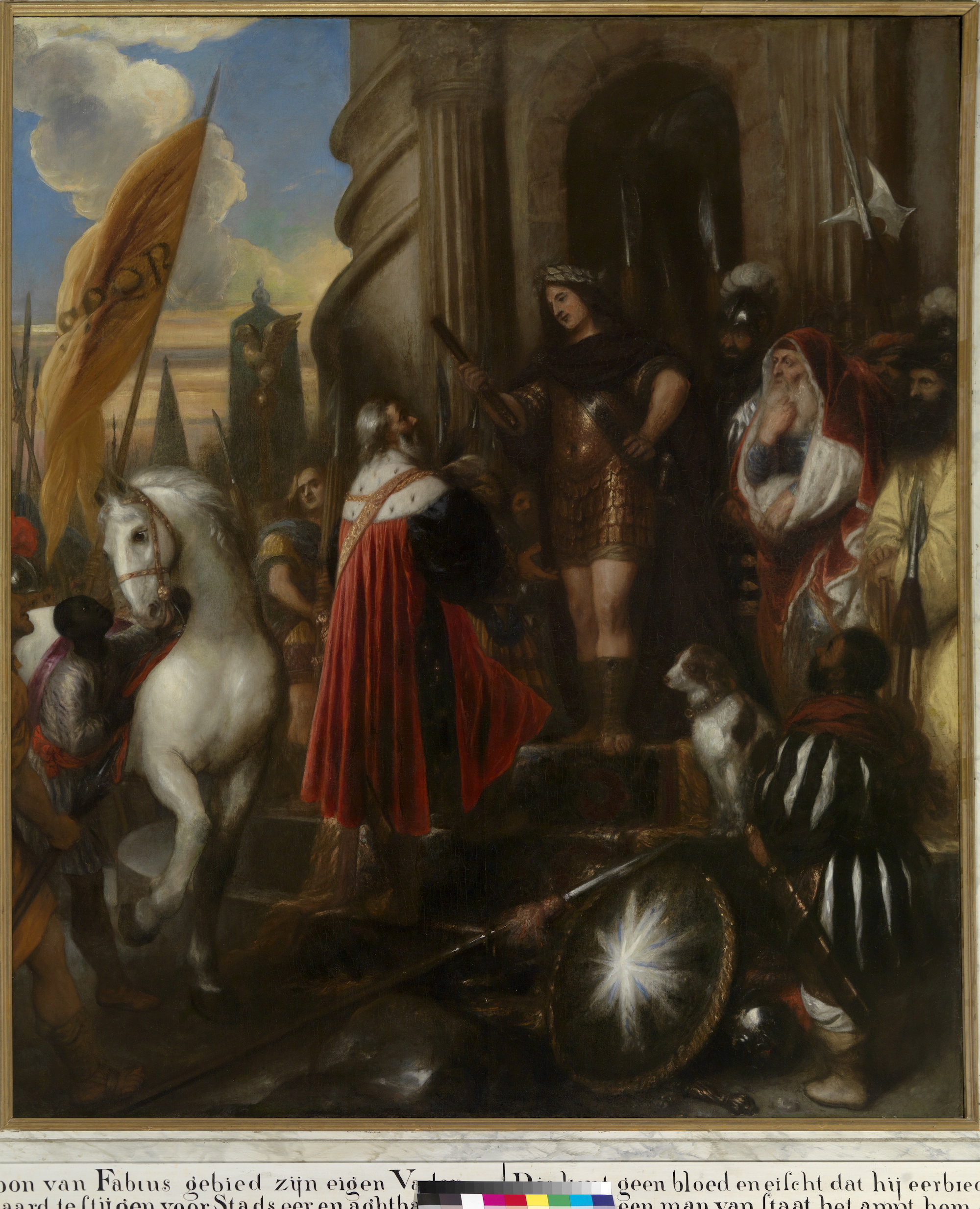
  32. Rudi Ekkart, โ€˜Govert Flinck and Ferdinand Bol: The Portraitsโ€™, in: Ferdinand Bol and Govert Flinck: Rembrandt’s Master Pupils, Zwolle, 2018, p. 158; Eric Jan Sluijter, โ€˜Out of Rembrandt’s Shadow: Govert Flinck and Ferdinand Bol as History Paintersโ€™, pp. 129-131.
  33. The etchings by Ferdinand Bol in this article are cited by the Hollstein number, in: F.W.H. Hollstein: Dutch and Flemish Etchings Engravings and Woodcuts, Amsterdam 1950, Vol. 3. pp. 15-35. However, the states noted here are updated, as anticipated in the forthcoming New Hollstein volume.
  34. The first one to point this out was Pierre Yver: Supplement au catalogue raisonneฬ de M. M. Gersaint, Helle & Glomy: de toutes les pieces qui forment l’oeuvre de Rembrandt. Amsterdam 1756, pp. 39-40, no.108, although he referred to the third, 1681 edition of the book. The etching is already present in the first, 1644 edition, published in Amsterdam.
  35. Den Christelyken Hovelingh has been commonly described as a play, but it is written as a poetic dialogue. If it was meant to be a play and/or if it was ever staged is not known to me. It is not listed as having been staged from 1637 to 1772: see Creative Amsterdam. An E-Humanities Perspective. Onstage. Online Datasystem of Theatre in Amsterdam from the Golden Age to the present: https://www.vondel.humanities.uva.nl/onstage/plays (accessed 7 July 2024). The title page of the 1642 volume indicates โ€˜Den Christelyk Hovelinghโ€™. However, the headers on all pages of that volume use the spelling โ€˜Christelykenโ€™, as do subsequent authors and libraries. See Jan Harmensz. Krul: Den Christelyk Hovelingh, Amsterdam 1642.
  36. This appears to have been first noted in N.C.H. Wijngaards.: Jan Harmens Krul: zijn leven, zijn werk en zijn betekenis, Zwolle, 1964, and is also described in: H.C. van Bemmel: Bibliografie van de werken van Jan Hermans Krul, Amsterdam, 1984.
  37. David de Witt and Leonore van Sloten, โ€˜Ferdinand Bol: Rembrandtโ€™s Discipleโ€™ in: Bol and Flinck (note 1), p. 48; and: Leonore van Sloten, โ€˜Ferdinand Bol, the Etcherโ€™, in: Bol and Flinck (note 1), p. 207; and Sophia Thomassen, โ€˜Timelineโ€™, in: Bol and Flinck, 2018 (note 1), p. 11.
  38. De Witt and Van Sloten, Bol, 2018 (note 6); Robert Schillemans: Bijbelschilderkunst rond Rembrandt, Utrecht 1989, pp. 31-34.
  39. Wijngaards, Krul, 1964 (note 5); Van Bemmel, Bibliographie, 1984 (note 5). I have been able to trace only thee copies: Library of the University of Amsterdam (2780 C 51), Royal Library, Den Haag, (KB: 3 C 20:10), and Noord-Hollands Archief, Haarlem (Oude Boekerij: 88 A 16). The copy in Den Haag lacks the page (A2) with Bol’s print.
  40. Wijngaards, Krul, 1964 (note 5); Van Bemmel, Bibliographie, 1984 (note 5).
  41. The 1644 edition (J.H. Krul: Pampiere Wereld, First edition. Amsterdam1644) is a folio edition measuring 302 x 190 mm; the 1681 edition (J.H. Krul: Pampiere Wereld, 3rd edition. Amsterdam, the widow of van Jan Jacobsz Schipper) is in quarto, measuring 216 mm x 170 mm. and the 1644-45 edition (J.H. Krul: Pampiere Wereld, 2nd edition, Amsterdam) is in octavo, measuring 169 x 104 mm. Book and library catalogues commonly ascribe c.1650 as the date for the latter, but the source of this attribution is not clear, and it is in error. See also Van Bemmel, Bibliographie (note 5).
  42. Van Bemmel, Bibliographie (note 5); The anonymous copy is in reverse, by an unknown hand, is neither signed nor dated, measures 85 x 74.5 mm, is of the same theme and general composition, but is artistically distinctly different. The shield is blank in this copy of Bol’s etching. I have not found any impressions of this copy that were not part of the printed book. I have identified three other distinct copies after Bol’s print, for a total of four, rather than the single copy identified by Hollstein (note 2).
  43. In 1644 and again in 1645 Krul obtained two successive loans, with the second providing funds to pay off the first, to permit him to publish the first two editions of Pampiere Wereld. Krul gave successively each lender volumes of the work, the patent rights and โ€˜someโ€™ copper plates for the period of the loan. It is not clear if the plates included Bol’s etching. See Wijngaards, Krul, 1964 (note 5); Van Bemmel, Bibliographie, 1984 (note 5).
  44. Jan Harmensz. Krul: Minne-Spiegel ter Deughden, Amsterdam 1650-51, J. H. Krul: Minne-Spiegel ter Deughden, Amsterdam; J. H. Krul: Minne-Spiegel ter Deughden, Joost Hartgers, Amsterdam, 1640; J. H. Krul: Minne-Spiegel ter Deughden, Michiel de Groot, Amsterdam, 1662; Jan Harmensz. Krul: Minne-Spiegel ter Deughden, Amsterdam, 1669-72.
  45. Hollstein gives only four states; more recently, George C. Kenney lists five, albeit described differently than the six here. See George C. Kenney: The Illustrated Bartsch, vol. 51. Supplement: Netherlandish Artists. Ferdinand Bol. New York 2017, p. 73, no. 18.
  46. In addition to the partial burnishing out of Bol’s name on the blade of the spade in the second state, lines are added partially obscuring the remaining portion of the signature; additional background work is added in several places; there is some work added on the scythe, table, book and the skull of the skeleton; and some additional work on the woman’s headdress/cape (fig. 2). The unique impression of this state is touched with black chalk and lead white, including the addition of a domed building in the distant background, horizontal lines below and to the left of the domed building, and the outline of a blank shield (or cartouche) covering the left part of the end of the coffin. Kenney also mentioned this state, but mistakenly describes the building in the background as a state difference. See: Kenney, Bol, 2017 (note 14). Only two other Bol prints have retouchings by the artist that appeared in the subsequent state: The Philosopher, H.6ii, 1643 (Amsterdam, RP-P-BI-1994); and The Young man Wearing a Plumed Cap, H.14i, 1642 (London, 1921,1008.21; and Dresden, A41073). The retouchings for H.6ii and H.14i appear in the plates for the next state of their respective prints. It is interesting to note that all retouched impressions were done in approximately the same period, and that the retouchings for H.6 and H.14 are very small in comparison to the significant retouchings for H.18. It is possible that this is a reflection of Bol’s satisfying his client’s wishes. Retouchings of impressions of other Bol prints are not judged to have been by his hand.
  47. My thanks to Jaco Rutgers for this suggestion
  48. The fifth state has added substantial additional background work and some work to the woman’s dress, and a bit on the shield, and the skull of the skeleton.
  49. The sixth, and final, state has added rather crude extensive reworking consisting of regular patterns of cross-hatching using the burin, for instance on the back of the skull, the inside of the tent, and the clothes of the female courtier. See fig 6.
  50. It had long been thought that Rembrandt painted his portrait in 1633. However, more recently, this has been called into question by Ernst van de Watering, A Corpus of Rembrandt Paintings, vol. 6: Rembrandtโ€™s Paintings Revisited, Dordrecht 2017, p. 526, no. 91. There were also family connections; see M. Louttit: โ€˜The Romantic Dress of Saskia van Ulenborch: Its Pastoral and Theatrical Associationsโ€™, The Burlington Magazine 115 (1973), pp. 317-326.
  51. Leonore van Sloten, โ€˜Ferdinand Bol in de voetsporen van Rembrandt: Twee herontdekte schilderijenโ€™, in: Rudie van Leeuwen, Lilian Ruhe, and David de Witt, eds, Not Always Rembrandt; 37 studies in Baroque art. Turnhout, Belgium 2023, pp. 20-31.
  52. Jan Soet, Soets Clorinde en Dambise, Amsterdam 1640.
  53. University of Amsterdam: Creative Amsterdam. An E-Humanities Perspective. Onstage. Online Datasystem of Theatre in Amsterdam from the Golden Age to the present. https://www.vondel.humanities.uva.nl/onstage/plays/359 (accessed 7 July 2024).
  54. N.C.H. Wijngaards, (note 5).
  55. Antonio de Guevara: Menosprecio de corte y alabanza de aldea. Valladolid 1539.
  56. See: S. Oosterwijk, โ€˜Morbid morality. The Danse macabre motif in Dutch art of the Golden Ageโ€™, in: Ilona Hans-Collas et al. (eds.), Mort n’espargne ne petit ne grant [Texte imprimรฉ] : รฉtudes autour de la mort et de ses reprรฉsentations : actes du XVIIIe Congrรจs international de l’association Danses macabres d’Europe, Paris, 19-23 mars 2019, Paris 2019, pp. 174-195.
  57. Translation: Linda Stone-Ferrier: โ€˜Ferdinand Bol: The Hour of Deathโ€™, in: Dutch Prints of Daily Life: Mirrors of Life or Masks of Morals? Lawrence, Kansas: The Spencer Museum of Art of The University of Kansas, 1983, pp. 144-146, credits Oliver C. Phillips, Classics Department, University Of Kansas, for the translation.
  58. There is no Bol print dated earlier than H.18, although he may have created one, Abraham’s Sacrifice (H.1), when working in Rembrandt’s studio; however, this is uncertain, as it is not dated.
  59. Gerard Roosenboom, Recueil van verscheyde keuren, en costumen. Midtsgaders maniere van procederen binnen de stadt Amsterdam. Eerst gecollecteert en beschreven, door Gerard Rooseboom, Amsterdam, 1656, pp. 120-131.
  60. Stadsarchief Amsterdam (hereafter SAA), 5061, 3051 Memorieboek, p. 29.
  61. http://remdoc.huygens.knaw.nl/#/document/remdoc/e4581 (accessed 3 December 2025).
  62. Arthur K. Wheelock jr., โ€œJan Lievens: Bringing new light to an old masterโ€, in: Wheelock Jr. ed, Jan Lievens. A Dutch master rediscovered, exh. cat. Washington: National Gallery of Art; Milwaukee: Milwaukee Art Museum; Amsterdam: Rembrandt House Museum, 2008-2009, pp. 6-7.
  63. SAA, 5075, 1745 not. Jan Quirijnen Spithof, pp. 124-125, 1-3-1644; Abraham Bedius, โ€œHet verblijf van Jan Miense Molenaer te Amsterdam, in documentenโ€, in: Frederik D.O. Obreen, Archief voor Nederlandsche Kunstgeschiedenis, vol. 7, Rotterdam 1888-1890, p. 293.
  64. Arthur K. Wheelock jr., in: exh. cat. Amsterdam 2009 (see note 4), pp. 17-18.
  65. SAA, 5061, 3063 Huwelijkskrakeelregisters, 8-12-1646.
  66. SAA, 5075, 1080, not. Joost van de Ven, ff. 203r-203v, 7-12-1646.
  67. โ€œter saecke sij als haar regeerster bij den req[uiran]t gewoont haddeโ€ (see note 8).
  68. โ€œhaer beloften van trouw heeft gedaan, van haer in eeuwig niet te sullen verlate & haer een vierkant stucken, neefens een ander silvere stuxkens gegeven & daarbeneffens van hem beslaepen & beswangertโ€ (see note 7). The mentioned silver square piece was a klip, an emergency coinage at that time struck mainly in West Friesland, or a medal/jeton.
  69. SAA, 5061, 3064, Huwelijkskrakeelregisters, 14-10-1649.
  70. The name Anna or Annetje Jacobs was fairly common; in 1647, eleven children were baptised in Amsterdam whose mother bore a variant of this name.
  71. The notarial archives contain many examples of such payments, both as compensation for the woman and as maintenance costs for any illegitimate children. For instance, Jan van de Velde agreed to the payments of two guilders per week in maintenance for the child he had conceived out of wedlock with Trijn Jans in 1636 (SAA, 5075, 601 not. Laurens Lamberti, p. 456, 17-07-1642). Whether this concerns the painter Jan van de Velde (III) from Haarlem, active in Amsterdam, is not clear. In 1661 David Abraham Cardozo paid no less than 1,000 guilders for โ€œdeflorationโ€ and the maintenance of two children resulting from his extramarital relationship with Dorothea Jans Bentem (SAA, 5075, 2210 not. Adriaen Lock, pp. 1107-1108, 27-05-1661).
  72. London (Christieโ€™s), 17 December 2020 (online auction 18877), lot 231 (inaccurately described as 185.4 x 195.5 cm); Old Master Paintings, Vienna (Dorotheum), 10 November 2021, lot 82 (as Jรผrgen Ovens, Pentecost).
  73. Arnold Houbraken, De groote schouburgh der Nederlantsche konstschilders en schilderessen I, Amsterdam 1718, p. 273.
  74. Constanze Kรถster,ย Jรผrgen Ovens (1623-1678). Maler in Schleswig-Holstein und Amsterdam, Petersberg 2017,ย p. 53; pp. 327-328, Qu. II.A.7.
  75. Archiveย ofย Schleswig-Holsteinย (LAS),ย Abt. 7, no. 6504, f. 1r; Kรถster 2017 (seeย noteย 3), pp. 37-38;ย p.ย 326, Qu. II.A.2.
  76. Kรถster 2017 (seeย noteย 3), p. 38.
  77. Kรถster 2017 (seeย noteย 3), p. 389, G145.
  78. Kรถster 2017 (see note 3), p. 390, G147.
  79. The Eighteenthโ€ฏYear Bookโ€ฏof the Brooklyn Institute of Arts and Sciences, 1905-1906, pp. 70, 124,โ€ฏ224;ย โ€œDepartment of Fine Artsโ€,ย The Museum News (Brooklyn Institute of Arts and Sciences)ย 1 (1906) no. 10, p. 144.
  80. Handwritten list of Maria Ovensโ€™s estate (private collection, location unknown), cited after Harry Schmidt, โ€œDasย Nachlass-Inventarย desย Malersย Jรผrgen Ovensโ€,ย Oud-Hollandย 32 (1914),ย p. 44, no. 16, note 7;ย Harry Schmidt,ย Jรผrgen Ovens.ย Sein Leben und seine Werke. Ein Beitrag zur Geschichte der niederlรคndischen Malerei im XVII.ย Jahrhundert, Kiel 1922,ย p. 150,ย underย no. 59a, p. 271, note 26 (as probably a copy after an original by Ovens);ย Kรถster 2017 (see note 3),ย p. 39;โ€ฏp. 325,โ€ฏQu. I.4.c.
  81. Erik Hinterding, Jaco Rutgers,ย The New Hollstein, Dutch & Flemish etchings, engravings and woodcuts, 1450-1700. Rembrandt,ย Ouderkerkย aanย denย IJsselย 2013, text 2, pp. 59-60, no. 185.
  82. Hinterding, Rutgers 2013 (see note 10), text 2, pp. 151-154, no. 239.
  83. Melchiorย Kรผsel,ย Iconesย Biblicaeย Veterisย et Noviย Testamenti.ย Figurenย biblischerย Historienย altenย undย neuenย Testaments, Augsburg 1679, โ€˜Bookย of Esther,ย Chapterย 6โ€™, fig. 20;ย reprintย Hildesheim 1968.ย Seeโ€ฏalso:โ€ฏPeter van derโ€ฏCoelen, โ€˜Rembrandt in Duitsland โ€“ Iconografie en verspreiding van zijn etsen in de zeventiende eeuwโ€™,ย Kroniek van het Rembrandthuisโ€ฏ2004, no. 1-2,ย p. 3, fig. 2.
  84. or a mirror-image of this man in theย Hundred Guilder Print, see: Ernst van de Wetering et al.,ย A Corpus of Rembrandt Paintings V. Small-scale history paintings, Dordrechtย 2011, p. 144, fig. 4.
  85. Kรถster 2017 (see note 3), p. 397, Z12-13.
  86. Hinterding, Rutgers 2013 (see note 10), pp. 39-41, no. 173.
  87. The presence of Mary or of other women at Pentecost, such as Mary Magdalene, is usually inferred from Acts 1:14: โ€œThey all joined together constantly in prayer, along with the women and Mary, the mother of Jesus [โ€ฆ]โ€.
  88. Hinterding, Rutgers 2013 (see note 10), text 1, pp. 189-191, no. 119.
  89. Hinterding, Rutgers 2013 (see note 10), text 1, p. 84, no. 55; pp. 220-221, no. 138.
  90. Hinterding, Rutgers 2013 (see note 10), text 2, pp. 158-159, no. 241.
  91. The only possible exception in this respect is Ovensโ€™s painted self-portrait from c. 1652 in the Hamburger Kunsthalle (inv. no. HK-26), which seems to go back to Rembrandtโ€™s famous 1639 etchingย Self-Portrait leaning on aย Stoneย Sill. See:ย Patrick Larsen, โ€œThe relationship between Govert Flinck and Jรผrgen Ovensโ€, in: Stephanie S. Dickeyย (ed.),ย Ferdinand Bol and Govert Flinck. New research, Zwolle 2017, p. 182, fig. 12.2, p. 184;ย Hinterding, Rutgers 2013ย (seeโ€ฏnoteโ€ฏ10),โ€ฏtextโ€ฏ2,โ€ฏpp. 33-35, no. 171.
  92. Karel van Mander,ย Het schilder-boeck, Haarlem 1604, fol. 5r; Philips Angel,ย Lof der schilder-konst, Leiden 1642, pp. 36-37.
  93. For Ovensโ€™s artistic appropriations of figures and motives from seventeenth-century art of the Low Countries during his Northern German periods, see:ย Patrick Larsen, โ€œThe Imitation of Dutch and Flemish Art in Jรผrgen Ovensโ€™ (1623-1678) Paintings in Schleswig-Holsteinโ€, in:ย Rieke van Leeuwen, Juliette Rodingย (eds.),ย Masters of Mobility. Cultural exchange between the Netherlands and the German lands in the long 17th centuryย (Gerson Digital VI), The Hague: RKD, 2020,ย https://masters-of-mobility.rkdstudies.nl/13-the-imitation-of-dutch-and-flemish-art-in-j%C3%BCrgen-ovens-1623-1678-paintings-in-schleswig-holstein/.
  94. ย Nadineย M. Orenstein, โ€œPrintmaking among artists of the Rembrandt Schoolโ€, in: Stephanie S. Dickeyย (ed.),ย Rembrandt and his circle. Insights and discoveries, Amsterdam 2017, p. 308, fig. 16.3. For Ovensโ€™s prints, see: Tilman Falk, Robert Zijlma, โ€œJรผrgen Ovensโ€, in:ย Hollsteinโ€™s German engravings, etchings and woodcuts,ย 1400-1700, vol.ย XXXI,ย Amsterdam 1991, pp. 61-74, nos. 1-10b; Kรถster 2017 (see note 3), pp. 415-416, R1-R7.
  95. Werner Sumowski,ย Gemรคldeย der Rembrandt-Schรผlerย II, Landau/Pfalz 1983, p. 1020, no. 615;ย Hinterding, Rutgers (see note 10), text 1, pp.ย 201-202, no. 125.
  96. Guus Sluiter,ย โ€œโ€˜De Passie, anders de Historie van denย lydendenย Christusโ€™.ย Arent de Gelders Passieserieโ€, in: Peter Schoon et al.,ย Arent de Gelder (1645-1727). Rembrandts laatste leerling,ย exh.ย cat. Dordrecht: Dordrechts Museum; Cologne:ย Wallraf–Richartz-Museum, 1998, pp. 73-75,ย figs. 2-13;ย pp. 78-80, 85; Guus Sluiter, โ€œDe fascinatie van Arent de Gelder voor Rembrandts etsenโ€,ย Bulletin Dordrechts Museum 22 (1998), pp. 35-45.
  97. Sumowskiย 1983 (see note 24), p. 1163, no. 738;ย Hinterding, Rutgers 2013ย (see noteย 10),ย text 2,ย pp. 57-58, no. 184.
  98. Sumowskiย 1983 (see note 24), p. 1421, no. 935;ย Hinterding, Rutgers 2013ย (see noteย 10),ย text 1,ย pp. 251-253, no. 155.
  99. LAS,โ€ฏAbt. 7, no.โ€ฏ2311, fol. 90r; Kรถsterย 2017 (see note 3),ย p. 304,โ€ฏnoteโ€ฏ195;โ€ฏp. 332,โ€ฏQu. II.B.1.1652.ย Also see:ย Patrick Larsen, โ€œJรผrgen Ovens (1623-1678) as an Art Agent for the Dukes of Gottorfโ€, in:ย Rieke van Leeuwen et al.,ย The Big Picture. Collecting Dutch and Flemish Art in Germany 1600-1850ย (Gerson Digital VIII), The Hague: RKD, 2022,ย https://the-big-picture.rkdstudies.nl/2-jรผrgen-ovens-16231678-as-an-art-agent-for-the-dukes-of-gottorf/.
  100. Rembrandt prints were offered for sale in the German-speaking lands fairly early.ย See Van derย Coelenย 2004ย (seeย noteย 12), pp. 5-15; Jaco Rutgers, โ€œRembrandt op papier. De rol van prenten bij het vestigen van Rembrandts reputatie als schilderโ€, in: Jaco Rutgers, Mieke Rijnders (eds.),ย Rembrandt in perspectief. De veranderende visie op de meester en zijn werk, Zwolle 2014, p. 122.
  101. Neither the so-called Gottorf account books nor the 1694, 1710 and 1743 inventories of Gottorf castle mention works on paper by Rembrandt.
  102. Werner Sumowski, Paul Huys Janssen, The Hoogsteder Exhibition of Rembrandtโ€™s Academy, exh. cat. The Hague: Hoogsteder & Hoogsteder, 1992, cat. no. 28.
  103. Exhibition catalogues: Albert Blanckert, Jezus in de Gouden Eeuw, exh. cat. Rotterdam: Kunsthal, 2000โ€“2001; Akira Kofuku, Rembrandt and the Rembrandt School. The Bible, mythology and ancient history, exh. cat. Tokyo: Museum of Western Art, 2003; Arthur K. Wheelock et al., Jan Lievens. A Dutch Master Rediscovered, exh. cat. Washington: National Gallery of Art; Milwaukee: Milwaukee Art Museum; Amsterdam: Rembrandt House Museum, 2008-2009, cat.no. 52; Louis van Tilborgh, Constantijn Huygens. Kunstkenner en verzamelaar, exh. cat. The Hague: Museum Bredius, 2013, cat. no. 14. Other literature: Werner Sumowski, Gemรคlde der Rembrandtschรผler, vol. 4, Landau, 1983, p. 3726, no. 2356, fig. 3964; Helga Gutbrod, Lievens und Rembrandt : Studien zum Verhaฬˆltnis ihrer Kunst, Frankfurt am Main, 1996, p. 299; Edwin Buijssen (ed.), Haagse schilders in de Gouden Eeuw, Het Hoogsteder lexicon van alle schilders werkzaam in Den Haag 1600-1700, The Hague, 1998, p. 191; Lloyd DeWitt, Evolution and Ambition in the career of Jan Lievens, 1607-1674, Phd. Diss. University of Maryland, College Park, 2006, p. 228.
  104. DeWitt, Evolution (see note 2), p. 228.
  105. For example those mentioned in the Montias Database of 17th Century Dutch Art Inventories and the Getty Provenance Research Index.
  106. Sumowski, Huys Janssen, Academy (see note 1), p. 220.
  107. Dr Gaston Gaudinot sale, Paris (Drouot), 13-14 February 1869.
  108. Sumowski, Huys Janssen, Academy (see note 1), p. 220.
  109. Ibid.
  110. Sumowski, Huys Janssen, Academy (see note 1), p. 226. Huys Janssen explains that the miracle as described in Luke and John differs from the version told by Matthew.
  111. After listening to the centurion, and before addressing him directly, Jesus speaks to his followers: โ€œI tell you, many will come from east and west and sit at table with Abraham, Isaac, and Jacob in the kingdom of heaven.โ€ (Matthew 8:11) Perhaps Lievens incorporated this part of the text and explicitly included people coming from the east (from the standpoint of his Dutch audience). A second possibility is that they are Pharisees. This group plays the role elsewhere in Matthew of disbelieving critics, and here they may serve to accentuate the belief of the centurion in the Christian faith. In early prints (Sebald Beham, Israhel van Meckenem, Hans Schaรผfelein and Cornelis Massijs) and several Italian prints from Lievensโ€™s time (seventeenth century prints after Paolo Veronese), Pharisees wear such headdresses. A parallel between blacks and overseas regions, such as in Lievensโ€™s Brinio, is convincingly outlined by Elmer Kolfin (in: Elmer Kolfin, De kunst van de macht, Jordaens, Lievens en Rembrandt in het Paleis op de Dam, Zwolle, 2023, p. 67), does not seem to apply here.
  112. Sumowski, Huys Janssen, Academy (see note 1), p. 223.
  113. Sumowski, Huys Janssen, Academy (see note 1), pp. 223, 226.
  114. The right eye from the perspective of the viewer. There, a pupil was painted in, in a later restoration. Because of the sketchy manner it is difficult to ascertain whether or not both eyes are present, but in the left the lower eyelid is visible, while it is undefined in the right eye.
  115. For example: Jacobus Neeffs (after Jacob Jordaens), Judgement of Christ, etching, c. 1630-1645; Marinus van der Goes (after Jacques Jordaens), Judgement of Christ, engraving, c. 1614-1639; Willem Panneels (after Peter Paul Rubens), Adoration of the kings, etching, 1630; Nicolaes Lauwers (after Peter Paul Rubens), Ecce Homo, engraving, c. 1619-1652; and many more. Generally, for examples of inspiration drawn from prints by Lievens, see De
    Witt, Evolution (see note 2).
  116. Sumowski, Huys Janssen, Academy (see note 1), p. 226. Huys Janssen refers to examples by Nicolaes Moeyaert (Herentals, St. Waltrudis church) and Adam Camerarius (Amsterdam, Rijksmuseum, inv. no. SK-A-733). DeWitt refers to a painting by Bartholomeus Breenbergh (Karlsruhe, Staatliche Kunsthalle Karlsruhe, inv. no. 228) and the Moeyaert in Herentals (DeWitt, Evolution (see note 2), p. 227). But also see a woodcut with this subject by Cornelis van Sichem II in Der zielen lusthof (1629). Also of interest: Claes Moeyeart, Christ and the Centurion, 1632 (Minneapolis, Minneapolis Institute of Art, inv. no. 2012.84.5). Although the painting is known under this subject, it may in fact depict Cornelius kneeling before Peter, since more than one figure is shown kneeling and the composition closely resembles prints of this subject.
  117. Henri van de Waal, โ€œโ€™s Lands oudste verleden in de voorstelling van Vondel en zijn tijdgenootenโ€, Elsevierโ€™s Maandschrift 47 (1937); Henri van de Waal, โ€œTempesta en de historieschilderingen op het Amsterdamse stadhuisโ€, Oud Holland 56 (1939); Henri van de Waal, Drie eeuwen vaderlandsche geschied-uitbeelding 1500-1800, een iconologische studie, The Hague, 1952; Kolfin, Kunst (see note 10).
  118. Antonio Tempesta (after Otto van Veen), Print 8 in (โ€ฆ)De Batavische oft oude Hollandtsche oorloghe teghen de Romeynen, 1612. Etching, 167 x 210 mm. Rijksmuseum, Amsterdam, inv. no. RP-P-OB-37.614. Jรผrgen Ovens based his drawing for the Batavian Series depicting Claudius Civilis leaving the Women and Children to fight at Xanten (Hamburg, Hamburger Kunsthalle, inv. no. 22342) on this print.
  119. On the period in The Hague:ย Buijssenย Haagseย (see note 2), pp.191-193.
  120. Haarlem,ย Teylersย Museum, inv. no. P 006. For the identification and context, see: Gregor Weber, โ€œDusย leeftย deย dappreย Graaf: Zuย einemย Bildnisย Andries deย Graeffsย von Jan Lievens (1607-1674)โ€,ย Oud Hollandย 99 (1985), pp. 44-56.
  121. Van de Waal,ย Eeuwenย (seeย noteย 16), p. 230;ย Kolfin,ย De kunst van de machtย (seeย noteย 10), pp. 19-20.
  122. Van de Waal, โ€œโ€™s Landsโ€ย (seeย noteย 16), p. 301-302.
  123. ย Kolfin,ย Kunstย (seeย noteย 10), p. 41.ย Four Batavian scenes were never completed. For two the themes are known, for the other two are not known.
  124. Munich,ย Staatlicheย Graphischeย Sammlungย Mรผnchen, inv. no. 1451; Hamburg, Hamburger Kunsthalle, Kupferstichkabinett,ย inv. no. 22342.ย A lesser-known drawing of Rembrandtโ€™sย Conspiracy of Claudius Civilisย (Edinburgh, National Galleries of Scotland, inv. no. D 23862) shows โ€“ when compared to the drawing in Munich โ€“ that the lower section of the painting is covered by a frieze and that portions of the left and right sides are obscured. This may indicate that an alternative conception of the framing of the lunettes was considered before the one ultimately implemented. It is possible that this earlier framing was already envisioned when Lievens produced his oil sketchย Christ and the Centurion.
  125. Van de Waal,ย Eeuwenย (see note 16), p. 225, referring to SAA, 5039, 2ย resolutieboek, f. 66r.
  126. Ibid., referring to SAA, 5039, 153ย rapiamusย 1661, f.195v.
  127. Van de Waal,ย Eeuwenย (seeย note 16), p. 225.
  128. Gregor Weber, โ€œJan Lievensโ€™s โ€˜The Shield-raising of Brinioโ€™ a Second Oil Sketchโ€,ย Hoogsteder-Naumann Mercuryย 12/13 (1992), nt. 8.
  129. Dewitt,ย Evolutionย (see note 2), p. 221.
  130. Kolfin,ย Kunstย (seeย noteย 10), p.67.
  131. Kolfin,ย Kunstย (seeย noteย 10), p. 44.
  132. For, among other things, contemporary poetry in which Civilis and others are compared to the members of the House of Orange: Van de Waal,ย Eeuwenย (see note 16), pp. 220-221, 223.
  133. Kolfin,ย Kunstย (seeย noteย 10), p. 47.
  134. Margriet van Eikema Hommes, Elmerย Kolfin,ย De Oranjezaal in Huis ten Bosch, Een zaal uit loutere liefde, Zwolle, 2013, p. 77.
  135. Kolfin,ย Kunstย (seeย noteย 10), pp. 41-47, 77.
  136. One may ask,ย in light ofย points discussed in this article, whether the โ€œChristโ€ figure in the first version was in fact Christ at all. If so, the oil sketch would initially have represented solely a Christian scene without any reference to the Batavian Revolt, thereby less relatable to the (eventual) decoration program of the Town Hallโ€™s gallery. Given that in the initial design the groups left and right with Biblical and/or eastern figures do not seem to have been included (aside from a bearded man on the right, judging from the x-ray), the large central figure may originally have been Julius Civilis. In compositional terms, this would align the painting more closely with the print by Tempesta after Van Veen. The apparent similarity in hairstyle between the final Christ figure and the initial figure, together with the possible initial presence of a (holy) beam of light directed toward the figure, may argue against this hypothesis; nevertheless,ย Brinnoย in Lievensโ€™sย Brinio Raised on the Shield likewise features long hair and even incorporates a diagonal compositional line through the clouds, comparable to the line through the foliage in the initial version of the present subject. The later insertion of Christ could then be understood as a deliberate twist, imparting a more prominent Christian meaning to the historical scene. These suggestions and observations were kindly shared by Jochem van Eijsden.

Samuel van Hoogstraten as Rembrandtโ€™s teaching assistant

Introduction: โ€œWhen I was still a discipleโ€ย 
In hisย Inleydingย tot deย hoogeย schooleย derย schilderkonstย (1678), Samuel van Hoogstraten calls himself aย โ€˜โ€™discipelโ€™โ€™ย (pupil), when referring to his time with Rembrandt,137 between circa 1642 and 1647. For a long time, this was seen as the sole extent of his role during this period. Later art historians (Wernerย Sumowski, Jonathan Bikker and David de Witt) opted for another dimension: that of Rembrandtโ€™s teaching assistant, during the last four years of his stay.138 In the context of the recent exhibition and research project on Van Hoogstraten (Kunsthistorisches Museum Vienna, Rembrandt House Museum, and RKD),139 the notion of an assistantship following hisย pupilshipย has become commonplace.140ย However, there are no documentedย assistentenย (assistants) in painters workshops in seventeenth-century Holland.141ย Leerlingenย (pupils) andย gezellenย (journeymen) though, are well attested. All three roles imply a subordinate position,142ย and an assistant role could still be assumed by Van Hoogstraten in his capacity as a pupil, but the idea of an assistant may equally connoteย remunerationย and professional skill. This suggests that he may have served as a journeyman, a capacity not yet considered. This article examines how Van Hoogstratenโ€™sย possible role, articulated in the literature as a โ€œteaching assistantโ€,ย in Rembrandtโ€™s workshop should be understood, based on guild regulations, dictionary entries, archival documents, and artworks.

1.1 The rules
In order toย clarify Van Hoogstratenโ€™s proposed assistant role, it is helpful to examine the implications of the use of the term โ€œassistantโ€ for his probableย de jureย role (pupil or journeyman) in the context of a seventeenth-century Amsterdam painterโ€™s workshop. The most formal reference point for understanding Van Hoogstratenโ€™s position with Rembrandt is the ordinances of the Amsterdam Guildย of Saint Luke.143ย An eighteenth-century ordinance book states that Amsterdam-based pupils (called โ€œleerjongensโ€) had to be registered with the guild and serve a pupilship for the minimum of two years.144ย Journeymen (calledย โ€œ(werk)gesellenโ€ and โ€œknechtsโ€ย โ€“ servants or hands),145 are described simply as working: no minimum term or registration requirement is mentioned.146ย Both pupils and journeymen had to appear with a master at the guild office upon arrival in the city and pay a fee of ten stivers.147 Journeymen who failed to find employment received reimbursement for travel and lodging expenses.148ย This was effectively a refund of the ten stivers.

The guild ordinances, however, do not further define the terms pupils and journeyman. Theย Dutch-Latinย dictionaryย Etymologicumย Teutonicaeย Linguaeย (1599), offers some clarification through contemporary synonyms. The termย  โ€œleerlinckโ€ is translated as โ€œdiscipulusโ€, which is also the Latin translation given for โ€œleerkindโ€, โ€œleer-iongheโ€, โ€œleerknechtโ€, and โ€œdiscipelโ€.149ย The phrase โ€œgheselleย vanย eenย amptโ€ (journeyman in a trade) is translated in Latin as โ€œcollegaโ€ย (colleague),150ย while โ€œknechtโ€ โ€“ synonym for โ€œdienaerโ€ย (servant)ย โ€“ is translated as โ€œservusโ€, โ€œfamulusโ€, โ€œministerโ€, and โ€œpuerโ€.151ย In correspondence with the regulations in the guild ordinances, a journeyman painter was a trained practitioner working in someone elseโ€™s employ. This fits with the profile of a documented example: Louis du Prรชt. In 1624, at aroundย the age of thirty-five, this painter was described as a โ€œknechtโ€ of portraitist Cornelis van der Voort. 152 Among his colleagues however, Du Prรชt was an esteemed connoisseur of Italian painting.153

1.2 The practiceย 
Moreover, the guild ordinances do not clearly specify the distinct roles or tasks of pupils and journeymen. As Ronald de Jager (1990) has shown, surviving contracts between master painters and young aspiring ones also rarely distinguish between these functions.154 Broadly speaking, all young men in a master painterโ€™s studio were expected to be diligent and obedient, to paint, to prepare materials, and to act only with permission.155 While a distinction between pupil and journeyman evidently existed, the official period of pupilship appears to have been prolonged in seventeenth-century Amsterdam, as we will see. De Jager already notes that artistic training was generally lengthy and often consisted of an initial phase of about four years, followed by a second, concluding phase of approximately two.156ย Despite the diversity of contracts, a rough trajectory from novice pupil to experienced journeyman in Amsterdam can be discerned, comparable to a line emerging from a scatter plot. This will help to estimate Van Hoogstratenโ€™s formal role in Rembrandtโ€™s workshop.

The starting point is the 1626 agreement in which fourteen-year-old Gerritย Willemszย Horst began a six-yearย pupilship with Anthony Lust.157ย In the contract, the term โ€œdienaerโ€ is consistently crossed out and replaced by โ€œleerknechtโ€.158ย Horstโ€™s age, title and (remarkably long) contract mark him as a typical novice. A next step inย pupilshipย is found in the 1635 contract of Adriaen Carman, who at seventeen became Isaacย Isaacszโ€™ โ€œleerknechtโ€ for two years. Though also described as a โ€œdienaerโ€, Carman was taught painting and related skills, prepared canvases, and ground pigments.159 No tuition or wage was paid; instead, Carmanโ€™s father annually giftedย Isaacsz a small barrel of herring or stockfish, worth about twelve guilders,160 modest compared to common fees.161ย He thus appears to have occupied a position virtually between pupil and journeyman. Notably, Carman wasย permittedย to create his own work: one painting per year on aย daelderย (Dutchย silver thaler)ย size canvas or panel (c.โ€ฏ123ย ร— 92 cm).162

1.3 Learning on the job
A typical journeyman was Markusย Waltusz. Although this twenty-one-year-oldย entered intoย service with Bartholomeus van derย Helstย as a โ€œdiscipelโ€ in 1652, he did so for a daily wage of ten and a half stivers. His duties included painting, keeping shop, and following orders. Van derย Helst was to instruct him.163ย While not explicitly referred to as a journeyman,ย Waltusz effectively functioned as one: he got paid,164 was hired for only a year (shorter than permitted for pupils), and had already been described as a painter six months earlier at the time of his marriage.165ย A final example, at the endpoint of the progression from pupil to journeyman, is the 1649 contract between Gerardus vanย Berleborch and Lambertus Jansz de Hue,166ย both referred to as โ€œschilderโ€ (painter). Vanย Berleborch entered De Hueโ€™s service for one year at fifteen stivers per day, with restrictions on painting for himself or others except on Sundays and during the time of one free month.167

The case ofย Waltuszย (andย to some extent Carman) illustrates that in Amsterdam, one could functionally be a journeyman whileย remainingย contractually a pupil. Masters and guildsย appear to haveย prolonged pupil status as much as possible. Thisย seems to reflectย a broader development from the late sixteenth to the early eighteenth century. 168 A 1766 publication compiling all known Amsterdam guild regulations shows that in 1553, masters were limited to two pupils,169 and by 1579, journeymen were required to pay a weekly fee of one half or one stiver, depending on their wages.170 Such distinctions between pupils and journeymen are absent in the abovementioned ordinance book.171ย This practice of gradually blurring theย boundaries between pupils andย journeyman, and extending theย pupilshipย period, makes it convincing that Van Hoogstraten formally remained a pupil throughout his time with Rembrandt, even if he may already have taken on responsibilities more typical of a journeyman, or even a master.

1.4 Early signs
The fact that Carman, as a pupil, and Vanย Berleborch, as a journeyman, were allowed to produce independent work invites addressing a complicating aspect of Van Hoogstratenโ€™s time in Rembrandtโ€™s workshop: between 1644 and 1647, Van Hoogstraten made and signed paintings, one or two works per year.172 It has previously been argued that only master painters were entitled to sign their work, as a mark of completed training.173 This view is primarily based on guild regulations from The Hague and Utrecht dating to the 1650s,174 the only known ordinances of their kind. No such rule appears to have existed in Amsterdam. There, both pupils and journeymen (with their masterโ€™s consent) could produce independent work. Moreover, some Amsterdam contracts specify who owned the work produced by pupils,175ย suggesting such arrangements were negotiable.ย Clearly, attitudesย in Amsterdam differed from those in The Hague and Utrecht.

Although Carmanโ€™s is the only known pupil with such an production arrangement, among the scarce surviving pupil-master contracts from Amsterdam, it is possible that Van Hoogstraten โ€“ who as a pupil produced around two small-format paintings per year (ranging from 54 ร— 45 cm to 74 ร— 48 cm,ย groteย stooterย (groat)ย toย tienย stuiverย (ten stivers)ย size),176ย but roughly adding up to aย daelderย size โ€“ had had a similar opportunity as Carman. De Witt and Leonore vanย Slotenย have already noted that Van Hoogstratenโ€™s early worksย display a distinctly personal character,177ย suggesting they may not have been intended forย open-marketย sale, orย made on commission. So even if Amsterdam guild practice held that only masters sell signed work, such production might have gone unnoticed by the guild. In any case, Van Hoogstratenโ€™s early signed and dated paintings offer littleย indicationย that he was a master; heย probably createdย them while still a pupil.

2.1 A teaching pupil
In the literature, the idea of Van Hoogstraten as Rembrandtโ€™s teaching assistant hasย largely relied on the suggestion that he gave painting instructions to Drost while still working in Rembrandtโ€™s studio. Although this notion is convincing of itself โ€“ based on the proposed stylistic similarities between the two artistsโ€™ works โ€“ it remains just one example.178 However, recent research by the author into the life and work of Barent Fabritius now provides further support for the notion of Van Hoogstraten as a teaching pupil within Rembrandtโ€™s workshop, this time in the domain of drawing. Fabritius is likely to have spent some years of his training in Rembrandtโ€™s studio, approximately between 1645 and 1647, just as his elder brother Carel a few years before. This is primarily based on the evidence of Barent Fabritiusโ€™s early drawings, which also reveal a striking affinity with works by Van Hoogstraten from the latter half of the 1640s.179

Although Barent Fabritius is generally not considered a pupil of Rembrandt in the most recent literature on him,180 several of his early drawings do suggest his presence in Rembrandtโ€™s workshop. The most important of these is a copy after Rembrandtโ€™s painting Susanna and the Elders. Fabritius reproduced the painting faithfully (figs. 1 and 2). There are some differences between the copy and the original, and technical examination of the painting indicates that the drawing must have been made after an intermediate stage in the paintingโ€™s creation, in 1646 or 1647.181 At that moment it was a direct copy. In fact, it was so precise, it shows that Rembrandt was still at work on the painting: he was in the process of correcting the position of Susannaโ€™s left foot.182 The painting must therefore have been present in the studio at the time the drawing was made โ€“ when Van Hoogstraten was also active there.

Fig 1. Rembrandt, Susanna and the Elders, 1647. Oil on panel, 76.6 ร— 92.8 cm. Berlin, Staatlichen Museen zu Berlin, Gemรคldegalerie, inv. no. 828D.
Fig 2. Attributed to Barent Fabritius, Susanna and the Elders, c. 1646-1647. Pen and brown ink, washed with red and grey, on paper, 178 ร— 238 mm. Budapest, Szรฉpmลฑvรฉszeti Mรบzeum, inv. no. 1737.

2.2 Drawing inspiration
The Suzanna drawing thus originated in Rembrandtโ€™s studio, yet notably, Fabritius did not adopt Rembrandtโ€™s drawing style. The drawings currently attributed to Rembrandt from the second half of the 1650โ€™s are characterized by a more sketchily approach, in solely black ink and chalk.183 Fabritius appears to have been inspired instead by Van Hoogstraten. Several of Fabritiusโ€™s drawings were at one point even attributed to him.184 Shared characteristics include doll-like figures, a pictorial rendering in a full tonal range, and use of varied materials (fig. 3 and fig 4).

Fig 3. Attributed to Barent Fabritius, The Departure of the Prodigal Son, c. 1650. Chalk, red chalk, pen in black ink, brush in black and red, 198 ร— 320 mm. Stรคdel Museum, Frankfurt am Main, inv. no. 817 Z.ย 
Fig 4. Samuel van Hoogstraten, Balaam blesses the Israelites, c. 1646. Pen in grey, brush in grey, red chalk, grey wash, heightened with white, 174 x 309 mm. London, The British Museum, inv. no. 1895,0915.1175.

In the early part of the second half of the 1640s, both artists employed multiple media, especially red chalk. Van Hoogstraten though used it more prominently, primarily in the initial layout and contours of the figures. Barent applied it more sparingly, mainly for accentuation and detailing. There are also differences in how each artist created houding in their drawings.185 Fabritius typically developed the background in chalk, leaving it more indistinct in order to achieve a convincing atmospheric perspective.186 Van Hoogstraten tended to work more sketchily with a fine pen in the backgrounds, while rendering the foreground with greater precision.

Fig 5. (Here) attributed to Barent Fabritius and Samuel van Hoogstraten, The Rest on the Flight into Egypt, c. 1646-1647. Black chalk, pen in brown and grey ink, grey wash, red chalk, and white heightening, 195 ร— 223 mm. Dresden, Staatliche Kunstsammlungen, Kupferstich-Kabinett, inv. no. c 1443r.

Van Hoogstratenโ€™s role as his drawing instructor becomes apparent in Fabritiusโ€™s Rest on the Flight into Egypt (fig. 5).187 The drawingโ€™s chaotic character stems from the variety of materials, linework, and especially the coexistence of different drawing styles. It appears to have been corrected โ€“ there are even two Josephs โ€“ confirmed by handwritten suggestions on the verso, strikingly rare among Rembrandt and his pupils.188 In the corrections, the angular black pen lines in Josephโ€™s face are particularly telling, echoing Van Hoogstratenโ€™s figural stylizations, such as the sharp nasal bridge and long, slightly arched eyebrows seen in his drawings from around 1647 (Table 1).189 The โ€œsecondโ€, more sketch-like Joseph is faint, but resembles Van Hoogstratenโ€™s looser sketched works of the period: the lobed coiffure and broken, scratchy contour of the left shoulder recall those of Joseph in his Adoration of the Shepherds (c. 1647), while the facial features echo the peering Zechariah in Van Hoogstratenโ€™s Visitation (1646/1648). That the drawing at the basis of the Dresden sheet is in fact by Fabritius, is evident from, among other things, the dark grey washes and broad zigzag hatching in the shadow areas.190 These features closely resemble those found in Barentโ€™s Susanna and the Elders. In addition, the restrained use of red chalk โ€“ in the Dresden drawing for instance applied on the donkey, is comparable in its seemingly arbitrary application for emphasis and detail in the two drawings. The text on the back is possible too by Barentโ€™s hand.191

ย 

Tableโ€ฏ1.
u.l.: detail fromโ€ฏfigโ€ฏ5.โ€ฏ
u.ctr.:โ€ฏdetailโ€ฏfromโ€ฏfigโ€ฏ4.
l.l.: detail fromโ€ฏfigโ€ฏ5.โ€ฏ
l.ctr.: Samuel van Hoogstraten,โ€ฏThe Adoration of theโ€ฏShepherds, c. 1646-1647. Black chalk, pen in brown, red chalk, brown wash, brush in brown, heightened with white, 153 ร— 204 mm.โ€ฏHamburg, Hamburgerโ€ฏKunsthalle,โ€ฏinv. no.โ€ฏ22050.
l.r.: Samuel van Hoogstraten,โ€ฏTheโ€ฏVisitation,โ€ฏc.โ€ฏ1646-1648.โ€ฏPenโ€ฏin brown, red chalk, brown wash, brush in brown, 72 ร— 88 mm. Amsterdam, Amsterdam Museum, inv. no.โ€ฏTA 10153.โ€ฏ

2.3 Dual master

Fig 6. Attributed to Rembrandt, The Rest on the Flight into Egypt, c. 1647. Pen and brown ink on paper, 126 ร— 203 mm. Berlin, Staatlichen Museen zu Berlin, Kupferstichkabinett, inv. no. KdZ 5262.

Taking a step back, it is striking that three key elements in the two drawings by Fabritius discussed here are echoed in Van Hoogstratenโ€™s discussion of drawing in his Inleyding: the value of copying paintings as a means of sharpening perception and understanding composition;192 the didactic function of corrections in the drawing itself;193 and the painterly quality of red chalk drawing.194 Combined with stylistic affinities and the presence of corrections by Van Hoogstraten in one of Fabritiusโ€™s sheets, this suggests a pedagogical relationship between them, likely dating to 1645-1647. Additionally, these principles appear to have been situated within the context of Rembrandtโ€™s workshop. Fabritiusโ€™s Dresden drawing is closely related to an undated sketch by Rembrandt in Berlin with the same subject, and the annotations on Fabritiusโ€™s sheet are in turn visualized by Rembrandt himself (fig. 6).195 While Van Hoogstratenโ€™s role in Fabritiusโ€™s training seems more direct, Rembrandt, too, appears to have contributed to his artistic development.

The three-way artistic relationship between Fabritius, Rembrandt and Van Hoogstraten is likewise revealed in Fabritiusโ€™s drawing of The Adoration of the Shepherds in Leiden (fig. 7) The drawing closely relates to Van Hoogstratenโ€™s painting of the same subject from 1647, almost certainly created in Amsterdam (fig. 8).196

Fig 7. Attributed to Barent Fabritius, The Adoration of the Shepherds, c. 1647. Black and red chalk, pen in brown, brown wash heightened with white, 193 ร— 248 mm. Leiden, Leiden University, inv. no. PK-T-AW-274.
Fig 8. Samuel van Hoogstraten, The Adoration of the Shepherds, 1647. Oil on panel, 58.2 ร— 70.8 cm. Dordrechts Museum, Dordrecht, inv. no. DM/980/567.

ย 

Striking similarities include a figure lifting the cloth in the manger like a crumpled rag, the half-height wooden partition on the right, and the wide-brimmed hat. The shepherd seen from the back is derived from the figure of Saint John the Evangelist in Van Hoogstratenโ€™s drawing The Crucifixion (fig. 9).197 At the same time, Fabritius seems to have drawn inspiration from Rembrandtโ€™s Tobit and Anna with the Kid from 1645โ€“46 (fig. 10), echoing the lighting from the left, the slanted shanty roof in the upper right, and the seated figure right of center. Thematically and compositionally, the drawing also resonates with Rembrandtโ€™s The Dream of Joseph in the Stable (fig. 11).

Fig 9. Attributed to Samuel van Hoogstraten, The Crucifixion, c. 1649, Pen in brown, brown wash, brush in brown, heightened with white, 155 ร— 150 mm. Bremen, Kunsthalle Bremen, 1951/385.
Fig 10. Rembrandt, The Wife of Tobias with the Goat, 1645. Oil on panel, 21.5 ร— 16.5 cm. Staatlichen Museen zu Berlin, Gemรคldegalerie, inv. no. 828F.


Fig 11. Rembrandt, The Dream of Joseph, 1645. Oil on panel, 52 ร— 41 cm. Staatlichen Museen zu Berlin, Gemรคldegalerie, inv. no. 828E.


2.4 Primus inter pares
In the context of the idea that Van Hoogstratenย remainedย a pupil throughout his time with Rembrandt, it is worth pointing to evidence that he was still in training between 1644 and 1647. In 1646, he made a drawing ofย The Adoration of the Shepherds, after a painting Rembrandt made for the Passion series, commissioned by Stadtholder Frederik Hendrik.198 Several comparable drawings by other Rembrandt pupils from around 1646 survive.199 Fabritiusโ€™sย Susanna and the Eldersย is not unique in this regard. During this same period,ย figureย drawing from nude models also took place in Rembrandtโ€™s workshop. Three such drawings by pupils and an etching by the master himself,ย The Walking Trainerย (B 194), attest toย this practice.200 One of the pupil drawings has long been attributed to Van Hoogstraten (fig. 12); another, long unattributed (fig. 13),201ย appears to be by Barent Fabritius.202ย Around 1646, Van Hoogstraten thusย participatedย in group training exercises alongside Fabritius โ€“ at a similar level, evenย while giving him drawing instruction.

Fig 12. Attributed to Samuel van Hoogstraten, Standing Nude Man, c. 1646. Pen in brown, brown wash, white gouache, 247 ร— 155 mm. Paris, Musรฉe du Louvre, inv. no. RF 4713 recto.
Fig 13. (Here) attributed to Barent Fabritius, Standing Nude Man, c. 1646. Pen in brown, brown wash, white gouache, 252 ร— 193 mm. London, The British Museum, inv. no. Oo,9.94.


There is no evidence that around 1645 other Rembrandt pupils were correcting each otherโ€™s work. It is therefore justified to assume that peer correction was not standard practice in the studio, and that Van Hoogstraten acted asย primus inter pares โ€“ a pupil with teaching responsibilities. This raises the question whether his role was unique in the history of Rembrandtโ€™s studio, or if there were predecessors or successors. A possible predecessor may have been Van Hoogstratenโ€™s fellow Dordrecht native Ferdinand Bol.203ย Although Bol already referred to himself as a painter in Dordrecht as early as 1635, he worked in Rembrandtโ€™s studio in the late 1630s, which is usually considered aย pupilship.204ย Only from 1642 onward does he seem to produce works typical of a master painter.205ย Moreover, Bol appears to have influenced later Rembrandt pupils, such as Carel Fabritius.206ย So, while no direct evidence has been found, Bol may have served as a functional forerunner to Van Hoogstraten.207ย At a later stage in his career, Van Hoogstraten appears to have implemented a similar system in his own studio. Arnoldย Houbraken was, according to himself, the eldest pupil among Van Hoogstratenโ€™s disciples and had a room of his own.208

Conclusion: Once a disciple, always a disciple
Recent scholarship has argued that Samuel van Hoogstraten, after starting aย pupilshipย with Rembrandt in 1642, became an โ€œassistantโ€ in the studio from 1644, until 1647, entrusted with teaching pupils and producing his own work. While this may imply the status of a journeyman, it is unlikely that Van Hoogstratenย attainedย that position.ย In the course ofย the seventeenth century, extendedย pupilshipย (with some privileges) appeared to beย favoredย overย journeymanshipย in Amsterdam. Van Hoogstraten thus likelyย remained, in formal terms, a pupil under Rembrandt. The idea of Van Hoogstraten being a teaching assistant instructing his peers, as aย primus inter pares, is further substantiated by evidence that he provided drawing instruction to Barent Fabritius. His early drawn works reveal corrections by Van Hoogstraten, but also stylistic affinities with him, and pedagogical principles later articulated by him in hisย Inleyding. The close parallels between Fabritiusโ€™s drawings and Rembrandtโ€™sย works further underscore that this happened under the supervision of Rembrandt. Van Hoogstraten thusย emergesย as a key figure mediating Rembrandtโ€™s pedagogy within the workshop, in the capacity of a pupil. Whether other pupils before or after him adopted comparable rolesย remainsย an open question, meriting further research.


  1. Arnold Houbraken, De groote schouburgh der Nederlantsche konstschilders en schilderessen vol. 2, Amsterdam 1719, p. 272: โ€œHy verkeerde in den herfst van zyn leven wel meest met gemeene luiden, en zulke die de Konst hanteerden.โ€
  2. Ernst van de Wetering, A Corpus of Rembrandt Paintings V: The Small-Scale History Paintings, Dordrecht 2011, pp. 3-6; vol. 6, pp. 296-297; and: Eric Jan Sluijter, in Govert Flinck: Reflecting History, Cleves 2015, pp. 68-69.
  3. Ben Broos, โ€œSaskia, Rembrandtโ€™s Frisian Brideโ€, in: Marlies Stoter (ed.), Rembrandt & Saskia: love and marriage in the Dutch Golden Age, Zwolle, 2018, pp. 23-24.
  4. Houbraken, Schouburgh (see note 1), pp. 100, 174.
  5. Epco Runia, David de Witt, Rembrandtโ€™s Social Network: family, friends, and acquaintances, Amsterdam: The Rembrandt House Museum, 2019.
  6. http://remdoc.huygens.knaw.nl/#/document/remdoc/e12959, with reference to a letter from Constantijn Huygens Jr. to his brother Christiaen, of 6 December 1663, in the Leiden University Library; see Hendrick E. van Gelder, โ€œDe jonge Huygensen en Rembrandtโ€, Oud Holland 73 (1958), pp. 238-241, identifying the drawings, currently: River Scene with Boats and Figures Bathing, c. 1590/1595. Pen in brown, 111 x 205 mm. Formerly Chatsworth, Duke of Devonshire Collection; most recently, Alfred Taubman sale, New York, (Sothebyโ€™s), 27 January 2016, lot 33 (as the original, but without noting the Rembrandt provenance); and the copy with Everhard Jabach in Paris: pen in brown, 112 x 186 mm. Washington, National Gallery of Art, inv. no. NGA 72075 (as also as the original).
  7. David de Witt, Abraham van Dijck (1635-1680): Life and Work of a Late Rembrandt Pupil, Zwolle 2020, p. 32.
  8. Werner Sumowski,ย Gemรคlde der Rembrandtschรผlerย vol.ย 2, Landau 1987, p. 1951.
  9. Michiel Roscam Abbing,ย Eigentijdse bronnen & oeuvre van gesigneerde schilderijen, Leiden 1993, pp. 42-49.ย 
  10. De Witt,ย Van Dijckย (see note 7), pp. 12-13.
  11. Abraham van Dijck,ย The Widow of Zarephath and her Son, signed, c. 1655, oil on canvas, 115.6 x 95.9 cm.;ย Portrait of a Fifty-Year-Old Woman, signed and dated 1655, oil on panel, 75 x 62 cm, both Kingston ON, Agnes Etherington Art Centre, acc. nos. 60-001 and 56-003.10; see: De Witt,ย Van Dijckย (see note 7), pp. 98-101, nos. P22, P23.
  12. First spotted by Sabrina Meloni, after cleaning in 2014.ย 
  13. De Witt,ย Van Dijckย (see note 7), p. 126, no. P35.
  14. Sale, Milan (Lucas Casa dโ€™Arte), 21 May 2025, lot 220.
  15. Monogrammed and dated 1657, oil on panel, 35 x 29.5 cm, The Hague, with S. Nijstad, in 1983; De Witt,ย Van Dijck (see note 7), p. 118, no. P31.
  16. The idea that the Washington painting had been altered from a generic scholar into a St. Paul was already proposed by Arthur K. Wheelock, in: Arthur K. Wheelock,ย Rembrandtโ€™s Late Religious Portraits, Washington: National Gallery of Art; Los Angeles: Getty Museum, 2005, pp. 141-157; followed by Van de Wetering: Ernst van de Wetering,ย Rembrandtโ€™s Paintings Revisited: a complete survey II, Dordrecht 2017, 2017, cat. 254, p. 640 (as c. 1655). The new study brings conclusive evidence in support of this scenario, based on an extensive technical research: Marjorie Wieseman, John K. Delaney and Kathryn A. Dooley, โ€œCompositional Changes in Rembrandtโ€™s The Apostle Paul: New Technical Findingsโ€,ย Rembrandt as a Painter: New Technical Research. ArtMatters. International Journal for Technical Art History. Special Issue #2, 2025, pp. 80-92.ย https://doi.org/10.64655/AM.si25r.b1963ย (accessed 16 December 2025).ย 
  17. The connection with an interim state of the painting was already surmised by Werner Sumowski, in:ย Drawings of the Rembrandt School, vol. 11:ย Anonymous Drawingsย (manuscript left unpublished on his death in 2015; forthcoming in an edition translated and edited by the author, with Brill).
  18. Werner Sumowski,ย Drawings of the Rembrandt Schoolย vol. 5, New York, 1981, p. 2712, no. 1224x:ย https://rkd.nl/images/311330.
  19. Van de Wetering,ย Rembrandtโ€™sย (see note 16), p. 650-651, no. 265:ย https://rkd.nl/images/54379.
  20. David de Witt, โ€œA New and Individual Approach to Contour: 1653, 1658 and Beyondโ€, in:ย Samuel van Hoogstraten (1627-1678): Catalogue Raisonnรฉ: https://vanhoogstraten.rkdstudies.nl/samuel-van-hoogstratens-drawings-history-life-universality/a-new-and-individual-approach-to-contour-1653-1658-and-beyond/ย (accessed 25 May 2025).
  21. https://rkd.nl/images/289005.
  22. Samuel van Hoogstraten,ย Madonna and Child, c. 1660, oil on canvas, 92 x 71.2 cm, Amsterdam (Christieโ€™s), 25 May 2016, lot 74:ย https://rkd.nl/images/314055.
  23. David de Witt, โ€œRembrandtโ€™s Late Pupils: Studying under a Geniusโ€,ย Rembrandtโ€™s Late Pupils: Studying Under a Genius, exh. cat. Amsterdam: The Rembrandt House Museum, 2015, p. 85, with reference to:ย  Sumowski, Gemรคlde (see note 8), vol. 3 (1987), p. 1951; also posited in Roscam Abbing,ย Schilderย (see note 9), p. 40. It is true that Maes consulted drawings by Van Hoogstraten for his early painting ofย Christ Blessing the Childrenย in London, but this is very likely because he had access to Van Hoogstratenโ€™s drawings left behind in his studio when he left for Vienna and Italy in 1651: they were moreover older drawings, from c. 1646-1648; see: David de Witt, โ€œSamuel van Hoogstratenโ€™s Drawings: History, Life, Universalityโ€ in:ย Samuel van Hoogstraten (1627-1678): Catalogue Raisonnรฉ:ย https://vanhoogstraten.rkdstudies.nl/samuel-van-hoogstratens-drawings-history-life-universality/the-core-group-from-pictorial-technique-to-innovative-contour/ (accessed 25 May 2025).
  24. https://rkd.nl/images/285887.
  25. Sumowski,ย Gemรคldeย (see note 8), vol. 3 (1987), p. 2009, no. 1324:ย https://rkd.nl/images/251100.
  26. My thanks to curator Justus de Lang for sharing his thoughts on the connection, reflected in part in the hanging of both works near each other in the gallery.
  27. De Witt,ย Vanย Dijckย (see note 7), pp. 52-53, no. P1.
  28. http://remdoc.huygens.knaw.nl/#/document/remdoc/e4704.
  29. David de Witt, โ€œFrom Rembrandtโ€™s Nae โ€˜t leven to Van Hoogstratenโ€™s Zichtbaere Wereltโ€, in: David de Wittย andย Leonore van Sloten,ย Samuel van Hoogstraten.ย The Illusionist, Amsterdam: The Rembrandt House Museum, 2025, pp. 74-79.
  30. Adriaen Waiboer,ย Vermeer and the Masters of Genre Painting: Inspiration and Rivalry, Dublin: National Gallery of Ireland; Washington: National Gallery of Art; Paris: Musรฉe du Louvre, 2017-2018, and specifically on travel: Blaise Ducos, โ€œThe โ€œTour of Hollandโ€: Visitors from Abroad in the United Provincesโ€, pp. 101-111.
  31. Houbraken,ย Schouburghย (see note 1), p. 157.
  32. Rudi Ekkart, โ€˜Govert Flinck and Ferdinand Bol: The Portraitsโ€™, in: Ferdinand Bol and Govert Flinck: Rembrandt’s Master Pupils, Zwolle, 2018, p. 158; Eric Jan Sluijter, โ€˜Out of Rembrandt’s Shadow: Govert Flinck and Ferdinand Bol as History Paintersโ€™, pp. 129-131.
  33. The etchings by Ferdinand Bol in this article are cited by the Hollstein number, in: F.W.H. Hollstein: Dutch and Flemish Etchings Engravings and Woodcuts, Amsterdam 1950, Vol. 3. pp. 15-35. However, the states noted here are updated, as anticipated in the forthcoming New Hollstein volume.
  34. The first one to point this out was Pierre Yver: Supplement au catalogue raisonneฬ de M. M. Gersaint, Helle & Glomy: de toutes les pieces qui forment l’oeuvre de Rembrandt. Amsterdam 1756, pp. 39-40, no.108, although he referred to the third, 1681 edition of the book. The etching is already present in the first, 1644 edition, published in Amsterdam.
  35. Den Christelyken Hovelingh has been commonly described as a play, but it is written as a poetic dialogue. If it was meant to be a play and/or if it was ever staged is not known to me. It is not listed as having been staged from 1637 to 1772: see Creative Amsterdam. An E-Humanities Perspective. Onstage. Online Datasystem of Theatre in Amsterdam from the Golden Age to the present: https://www.vondel.humanities.uva.nl/onstage/plays (accessed 7 July 2024). The title page of the 1642 volume indicates โ€˜Den Christelyk Hovelinghโ€™. However, the headers on all pages of that volume use the spelling โ€˜Christelykenโ€™, as do subsequent authors and libraries. See Jan Harmensz. Krul: Den Christelyk Hovelingh, Amsterdam 1642.
  36. This appears to have been first noted in N.C.H. Wijngaards.: Jan Harmens Krul: zijn leven, zijn werk en zijn betekenis, Zwolle, 1964, and is also described in: H.C. van Bemmel: Bibliografie van de werken van Jan Hermans Krul, Amsterdam, 1984.
  37. David de Witt and Leonore van Sloten, โ€˜Ferdinand Bol: Rembrandtโ€™s Discipleโ€™ in: Bol and Flinck (note 1), p. 48; and: Leonore van Sloten, โ€˜Ferdinand Bol, the Etcherโ€™, in: Bol and Flinck (note 1), p. 207; and Sophia Thomassen, โ€˜Timelineโ€™, in: Bol and Flinck, 2018 (note 1), p. 11.
  38. De Witt and Van Sloten, Bol, 2018 (note 6); Robert Schillemans: Bijbelschilderkunst rond Rembrandt, Utrecht 1989, pp. 31-34.
  39. Wijngaards, Krul, 1964 (note 5); Van Bemmel, Bibliographie, 1984 (note 5). I have been able to trace only thee copies: Library of the University of Amsterdam (2780 C 51), Royal Library, Den Haag, (KB: 3 C 20:10), and Noord-Hollands Archief, Haarlem (Oude Boekerij: 88 A 16). The copy in Den Haag lacks the page (A2) with Bol’s print.
  40. Wijngaards, Krul, 1964 (note 5); Van Bemmel, Bibliographie, 1984 (note 5).
  41. The 1644 edition (J.H. Krul: Pampiere Wereld, First edition. Amsterdam1644) is a folio edition measuring 302 x 190 mm; the 1681 edition (J.H. Krul: Pampiere Wereld, 3rd edition. Amsterdam, the widow of van Jan Jacobsz Schipper) is in quarto, measuring 216 mm x 170 mm. and the 1644-45 edition (J.H. Krul: Pampiere Wereld, 2nd edition, Amsterdam) is in octavo, measuring 169 x 104 mm. Book and library catalogues commonly ascribe c.1650 as the date for the latter, but the source of this attribution is not clear, and it is in error. See also Van Bemmel, Bibliographie (note 5).
  42. Van Bemmel, Bibliographie (note 5); The anonymous copy is in reverse, by an unknown hand, is neither signed nor dated, measures 85 x 74.5 mm, is of the same theme and general composition, but is artistically distinctly different. The shield is blank in this copy of Bol’s etching. I have not found any impressions of this copy that were not part of the printed book. I have identified three other distinct copies after Bol’s print, for a total of four, rather than the single copy identified by Hollstein (note 2).
  43. In 1644 and again in 1645 Krul obtained two successive loans, with the second providing funds to pay off the first, to permit him to publish the first two editions of Pampiere Wereld. Krul gave successively each lender volumes of the work, the patent rights and โ€˜someโ€™ copper plates for the period of the loan. It is not clear if the plates included Bol’s etching. See Wijngaards, Krul, 1964 (note 5); Van Bemmel, Bibliographie, 1984 (note 5).
  44. Jan Harmensz. Krul: Minne-Spiegel ter Deughden, Amsterdam 1650-51, J. H. Krul: Minne-Spiegel ter Deughden, Amsterdam; J. H. Krul: Minne-Spiegel ter Deughden, Joost Hartgers, Amsterdam, 1640; J. H. Krul: Minne-Spiegel ter Deughden, Michiel de Groot, Amsterdam, 1662; Jan Harmensz. Krul: Minne-Spiegel ter Deughden, Amsterdam, 1669-72.
  45. Hollstein gives only four states; more recently, George C. Kenney lists five, albeit described differently than the six here. See George C. Kenney: The Illustrated Bartsch, vol. 51. Supplement: Netherlandish Artists. Ferdinand Bol. New York 2017, p. 73, no. 18.
  46. In addition to the partial burnishing out of Bol’s name on the blade of the spade in the second state, lines are added partially obscuring the remaining portion of the signature; additional background work is added in several places; there is some work added on the scythe, table, book and the skull of the skeleton; and some additional work on the woman’s headdress/cape (fig. 2). The unique impression of this state is touched with black chalk and lead white, including the addition of a domed building in the distant background, horizontal lines below and to the left of the domed building, and the outline of a blank shield (or cartouche) covering the left part of the end of the coffin. Kenney also mentioned this state, but mistakenly describes the building in the background as a state difference. See: Kenney, Bol, 2017 (note 14). Only two other Bol prints have retouchings by the artist that appeared in the subsequent state: The Philosopher, H.6ii, 1643 (Amsterdam, RP-P-BI-1994); and The Young man Wearing a Plumed Cap, H.14i, 1642 (London, 1921,1008.21; and Dresden, A41073). The retouchings for H.6ii and H.14i appear in the plates for the next state of their respective prints. It is interesting to note that all retouched impressions were done in approximately the same period, and that the retouchings for H.6 and H.14 are very small in comparison to the significant retouchings for H.18. It is possible that this is a reflection of Bol’s satisfying his client’s wishes. Retouchings of impressions of other Bol prints are not judged to have been by his hand.
  47. My thanks to Jaco Rutgers for this suggestion
  48. The fifth state has added substantial additional background work and some work to the woman’s dress, and a bit on the shield, and the skull of the skeleton.
  49. The sixth, and final, state has added rather crude extensive reworking consisting of regular patterns of cross-hatching using the burin, for instance on the back of the skull, the inside of the tent, and the clothes of the female courtier. See fig 6.
  50. It had long been thought that Rembrandt painted his portrait in 1633. However, more recently, this has been called into question by Ernst van de Watering, A Corpus of Rembrandt Paintings, vol. 6: Rembrandtโ€™s Paintings Revisited, Dordrecht 2017, p. 526, no. 91. There were also family connections; see M. Louttit: โ€˜The Romantic Dress of Saskia van Ulenborch: Its Pastoral and Theatrical Associationsโ€™, The Burlington Magazine 115 (1973), pp. 317-326.
  51. Leonore van Sloten, โ€˜Ferdinand Bol in de voetsporen van Rembrandt: Twee herontdekte schilderijenโ€™, in: Rudie van Leeuwen, Lilian Ruhe, and David de Witt, eds, Not Always Rembrandt; 37 studies in Baroque art. Turnhout, Belgium 2023, pp. 20-31.
  52. Jan Soet, Soets Clorinde en Dambise, Amsterdam 1640.
  53. University of Amsterdam: Creative Amsterdam. An E-Humanities Perspective. Onstage. Online Datasystem of Theatre in Amsterdam from the Golden Age to the present. https://www.vondel.humanities.uva.nl/onstage/plays/359 (accessed 7 July 2024).
  54. N.C.H. Wijngaards, (note 5).
  55. Antonio de Guevara: Menosprecio de corte y alabanza de aldea. Valladolid 1539.
  56. See: S. Oosterwijk, โ€˜Morbid morality. The Danse macabre motif in Dutch art of the Golden Ageโ€™, in: Ilona Hans-Collas et al. (eds.), Mort n’espargne ne petit ne grant [Texte imprimรฉ] : รฉtudes autour de la mort et de ses reprรฉsentations : actes du XVIIIe Congrรจs international de l’association Danses macabres d’Europe, Paris, 19-23 mars 2019, Paris 2019, pp. 174-195.
  57. Translation: Linda Stone-Ferrier: โ€˜Ferdinand Bol: The Hour of Deathโ€™, in: Dutch Prints of Daily Life: Mirrors of Life or Masks of Morals? Lawrence, Kansas: The Spencer Museum of Art of The University of Kansas, 1983, pp. 144-146, credits Oliver C. Phillips, Classics Department, University Of Kansas, for the translation.
  58. There is no Bol print dated earlier than H.18, although he may have created one, Abraham’s Sacrifice (H.1), when working in Rembrandt’s studio; however, this is uncertain, as it is not dated.
  59. Gerard Roosenboom, Recueil van verscheyde keuren, en costumen. Midtsgaders maniere van procederen binnen de stadt Amsterdam. Eerst gecollecteert en beschreven, door Gerard Rooseboom, Amsterdam, 1656, pp. 120-131.
  60. Stadsarchief Amsterdam (hereafter SAA), 5061, 3051 Memorieboek, p. 29.
  61. http://remdoc.huygens.knaw.nl/#/document/remdoc/e4581 (accessed 3 December 2025).
  62. Arthur K. Wheelock jr., โ€œJan Lievens: Bringing new light to an old masterโ€, in: Wheelock Jr. ed, Jan Lievens. A Dutch master rediscovered, exh. cat. Washington: National Gallery of Art; Milwaukee: Milwaukee Art Museum; Amsterdam: Rembrandt House Museum, 2008-2009, pp. 6-7.
  63. SAA, 5075, 1745 not. Jan Quirijnen Spithof, pp. 124-125, 1-3-1644; Abraham Bedius, โ€œHet verblijf van Jan Miense Molenaer te Amsterdam, in documentenโ€, in: Frederik D.O. Obreen, Archief voor Nederlandsche Kunstgeschiedenis, vol. 7, Rotterdam 1888-1890, p. 293.
  64. Arthur K. Wheelock jr., in: exh. cat. Amsterdam 2009 (see note 4), pp. 17-18.
  65. SAA, 5061, 3063 Huwelijkskrakeelregisters, 8-12-1646.
  66. SAA, 5075, 1080, not. Joost van de Ven, ff. 203r-203v, 7-12-1646.
  67. โ€œter saecke sij als haar regeerster bij den req[uiran]t gewoont haddeโ€ (see note 8).
  68. โ€œhaer beloften van trouw heeft gedaan, van haer in eeuwig niet te sullen verlate & haer een vierkant stucken, neefens een ander silvere stuxkens gegeven & daarbeneffens van hem beslaepen & beswangertโ€ (see note 7). The mentioned silver square piece was a klip, an emergency coinage at that time struck mainly in West Friesland, or a medal/jeton.
  69. SAA, 5061, 3064, Huwelijkskrakeelregisters, 14-10-1649.
  70. The name Anna or Annetje Jacobs was fairly common; in 1647, eleven children were baptised in Amsterdam whose mother bore a variant of this name.
  71. The notarial archives contain many examples of such payments, both as compensation for the woman and as maintenance costs for any illegitimate children. For instance, Jan van de Velde agreed to the payments of two guilders per week in maintenance for the child he had conceived out of wedlock with Trijn Jans in 1636 (SAA, 5075, 601 not. Laurens Lamberti, p. 456, 17-07-1642). Whether this concerns the painter Jan van de Velde (III) from Haarlem, active in Amsterdam, is not clear. In 1661 David Abraham Cardozo paid no less than 1,000 guilders for โ€œdeflorationโ€ and the maintenance of two children resulting from his extramarital relationship with Dorothea Jans Bentem (SAA, 5075, 2210 not. Adriaen Lock, pp. 1107-1108, 27-05-1661).
  72. London (Christieโ€™s), 17 December 2020 (online auction 18877), lot 231 (inaccurately described as 185.4 x 195.5 cm); Old Master Paintings, Vienna (Dorotheum), 10 November 2021, lot 82 (as Jรผrgen Ovens, Pentecost).
  73. Arnold Houbraken, De groote schouburgh der Nederlantsche konstschilders en schilderessen I, Amsterdam 1718, p. 273.
  74. Constanze Kรถster,ย Jรผrgen Ovens (1623-1678). Maler in Schleswig-Holstein und Amsterdam, Petersberg 2017,ย p. 53; pp. 327-328, Qu. II.A.7.
  75. Archiveย ofย Schleswig-Holsteinย (LAS),ย Abt. 7, no. 6504, f. 1r; Kรถster 2017 (seeย noteย 3), pp. 37-38;ย p.ย 326, Qu. II.A.2.
  76. Kรถster 2017 (seeย noteย 3), p. 38.
  77. Kรถster 2017 (seeย noteย 3), p. 389, G145.
  78. Kรถster 2017 (see note 3), p. 390, G147.
  79. The Eighteenthโ€ฏYear Bookโ€ฏof the Brooklyn Institute of Arts and Sciences, 1905-1906, pp. 70, 124,โ€ฏ224;ย โ€œDepartment of Fine Artsโ€,ย The Museum News (Brooklyn Institute of Arts and Sciences)ย 1 (1906) no. 10, p. 144.
  80. Handwritten list of Maria Ovensโ€™s estate (private collection, location unknown), cited after Harry Schmidt, โ€œDasย Nachlass-Inventarย desย Malersย Jรผrgen Ovensโ€,ย Oud-Hollandย 32 (1914),ย p. 44, no. 16, note 7;ย Harry Schmidt,ย Jรผrgen Ovens.ย Sein Leben und seine Werke. Ein Beitrag zur Geschichte der niederlรคndischen Malerei im XVII.ย Jahrhundert, Kiel 1922,ย p. 150,ย underย no. 59a, p. 271, note 26 (as probably a copy after an original by Ovens);ย Kรถster 2017 (see note 3),ย p. 39;โ€ฏp. 325,โ€ฏQu. I.4.c.
  81. Erik Hinterding, Jaco Rutgers,ย The New Hollstein, Dutch & Flemish etchings, engravings and woodcuts, 1450-1700. Rembrandt,ย Ouderkerkย aanย denย IJsselย 2013, text 2, pp. 59-60, no. 185.
  82. Hinterding, Rutgers 2013 (see note 10), text 2, pp. 151-154, no. 239.
  83. Melchiorย Kรผsel,ย Iconesย Biblicaeย Veterisย et Noviย Testamenti.ย Figurenย biblischerย Historienย altenย undย neuenย Testaments, Augsburg 1679, โ€˜Bookย of Esther,ย Chapterย 6โ€™, fig. 20;ย reprintย Hildesheim 1968.ย Seeโ€ฏalso:โ€ฏPeter van derโ€ฏCoelen, โ€˜Rembrandt in Duitsland โ€“ Iconografie en verspreiding van zijn etsen in de zeventiende eeuwโ€™,ย Kroniek van het Rembrandthuisโ€ฏ2004, no. 1-2,ย p. 3, fig. 2.
  84. or a mirror-image of this man in theย Hundred Guilder Print, see: Ernst van de Wetering et al.,ย A Corpus of Rembrandt Paintings V. Small-scale history paintings, Dordrechtย 2011, p. 144, fig. 4.
  85. Kรถster 2017 (see note 3), p. 397, Z12-13.
  86. Hinterding, Rutgers 2013 (see note 10), pp. 39-41, no. 173.
  87. The presence of Mary or of other women at Pentecost, such as Mary Magdalene, is usually inferred from Acts 1:14: โ€œThey all joined together constantly in prayer, along with the women and Mary, the mother of Jesus [โ€ฆ]โ€.
  88. Hinterding, Rutgers 2013 (see note 10), text 1, pp. 189-191, no. 119.
  89. Hinterding, Rutgers 2013 (see note 10), text 1, p. 84, no. 55; pp. 220-221, no. 138.
  90. Hinterding, Rutgers 2013 (see note 10), text 2, pp. 158-159, no. 241.
  91. The only possible exception in this respect is Ovensโ€™s painted self-portrait from c. 1652 in the Hamburger Kunsthalle (inv. no. HK-26), which seems to go back to Rembrandtโ€™s famous 1639 etchingย Self-Portrait leaning on aย Stoneย Sill. See:ย Patrick Larsen, โ€œThe relationship between Govert Flinck and Jรผrgen Ovensโ€, in: Stephanie S. Dickeyย (ed.),ย Ferdinand Bol and Govert Flinck. New research, Zwolle 2017, p. 182, fig. 12.2, p. 184;ย Hinterding, Rutgers 2013ย (seeโ€ฏnoteโ€ฏ10),โ€ฏtextโ€ฏ2,โ€ฏpp. 33-35, no. 171.
  92. Karel van Mander,ย Het schilder-boeck, Haarlem 1604, fol. 5r; Philips Angel,ย Lof der schilder-konst, Leiden 1642, pp. 36-37.
  93. For Ovensโ€™s artistic appropriations of figures and motives from seventeenth-century art of the Low Countries during his Northern German periods, see:ย Patrick Larsen, โ€œThe Imitation of Dutch and Flemish Art in Jรผrgen Ovensโ€™ (1623-1678) Paintings in Schleswig-Holsteinโ€, in:ย Rieke van Leeuwen, Juliette Rodingย (eds.),ย Masters of Mobility. Cultural exchange between the Netherlands and the German lands in the long 17th centuryย (Gerson Digital VI), The Hague: RKD, 2020,ย https://masters-of-mobility.rkdstudies.nl/13-the-imitation-of-dutch-and-flemish-art-in-j%C3%BCrgen-ovens-1623-1678-paintings-in-schleswig-holstein/.
  94. ย Nadineย M. Orenstein, โ€œPrintmaking among artists of the Rembrandt Schoolโ€, in: Stephanie S. Dickeyย (ed.),ย Rembrandt and his circle. Insights and discoveries, Amsterdam 2017, p. 308, fig. 16.3. For Ovensโ€™s prints, see: Tilman Falk, Robert Zijlma, โ€œJรผrgen Ovensโ€, in:ย Hollsteinโ€™s German engravings, etchings and woodcuts,ย 1400-1700, vol.ย XXXI,ย Amsterdam 1991, pp. 61-74, nos. 1-10b; Kรถster 2017 (see note 3), pp. 415-416, R1-R7.
  95. Werner Sumowski,ย Gemรคldeย der Rembrandt-Schรผlerย II, Landau/Pfalz 1983, p. 1020, no. 615;ย Hinterding, Rutgers (see note 10), text 1, pp.ย 201-202, no. 125.
  96. Guus Sluiter,ย โ€œโ€˜De Passie, anders de Historie van denย lydendenย Christusโ€™.ย Arent de Gelders Passieserieโ€, in: Peter Schoon et al.,ย Arent de Gelder (1645-1727). Rembrandts laatste leerling,ย exh.ย cat. Dordrecht: Dordrechts Museum; Cologne:ย Wallraf–Richartz-Museum, 1998, pp. 73-75,ย figs. 2-13;ย pp. 78-80, 85; Guus Sluiter, โ€œDe fascinatie van Arent de Gelder voor Rembrandts etsenโ€,ย Bulletin Dordrechts Museum 22 (1998), pp. 35-45.
  97. Sumowskiย 1983 (see note 24), p. 1163, no. 738;ย Hinterding, Rutgers 2013ย (see noteย 10),ย text 2,ย pp. 57-58, no. 184.
  98. Sumowskiย 1983 (see note 24), p. 1421, no. 935;ย Hinterding, Rutgers 2013ย (see noteย 10),ย text 1,ย pp. 251-253, no. 155.
  99. LAS,โ€ฏAbt. 7, no.โ€ฏ2311, fol. 90r; Kรถsterย 2017 (see note 3),ย p. 304,โ€ฏnoteโ€ฏ195;โ€ฏp. 332,โ€ฏQu. II.B.1.1652.ย Also see:ย Patrick Larsen, โ€œJรผrgen Ovens (1623-1678) as an Art Agent for the Dukes of Gottorfโ€, in:ย Rieke van Leeuwen et al.,ย The Big Picture. Collecting Dutch and Flemish Art in Germany 1600-1850ย (Gerson Digital VIII), The Hague: RKD, 2022,ย https://the-big-picture.rkdstudies.nl/2-jรผrgen-ovens-16231678-as-an-art-agent-for-the-dukes-of-gottorf/.
  100. Rembrandt prints were offered for sale in the German-speaking lands fairly early.ย See Van derย Coelenย 2004ย (seeย noteย 12), pp. 5-15; Jaco Rutgers, โ€œRembrandt op papier. De rol van prenten bij het vestigen van Rembrandts reputatie als schilderโ€, in: Jaco Rutgers, Mieke Rijnders (eds.),ย Rembrandt in perspectief. De veranderende visie op de meester en zijn werk, Zwolle 2014, p. 122.
  101. Neither the so-called Gottorf account books nor the 1694, 1710 and 1743 inventories of Gottorf castle mention works on paper by Rembrandt.
  102. Werner Sumowski, Paul Huys Janssen, The Hoogsteder Exhibition of Rembrandtโ€™s Academy, exh. cat. The Hague: Hoogsteder & Hoogsteder, 1992, cat. no. 28.
  103. Exhibition catalogues: Albert Blanckert, Jezus in de Gouden Eeuw, exh. cat. Rotterdam: Kunsthal, 2000โ€“2001; Akira Kofuku, Rembrandt and the Rembrandt School. The Bible, mythology and ancient history, exh. cat. Tokyo: Museum of Western Art, 2003; Arthur K. Wheelock et al., Jan Lievens. A Dutch Master Rediscovered, exh. cat. Washington: National Gallery of Art; Milwaukee: Milwaukee Art Museum; Amsterdam: Rembrandt House Museum, 2008-2009, cat.no. 52; Louis van Tilborgh, Constantijn Huygens. Kunstkenner en verzamelaar, exh. cat. The Hague: Museum Bredius, 2013, cat. no. 14. Other literature: Werner Sumowski, Gemรคlde der Rembrandtschรผler, vol. 4, Landau, 1983, p. 3726, no. 2356, fig. 3964; Helga Gutbrod, Lievens und Rembrandt : Studien zum Verhaฬˆltnis ihrer Kunst, Frankfurt am Main, 1996, p. 299; Edwin Buijssen (ed.), Haagse schilders in de Gouden Eeuw, Het Hoogsteder lexicon van alle schilders werkzaam in Den Haag 1600-1700, The Hague, 1998, p. 191; Lloyd DeWitt, Evolution and Ambition in the career of Jan Lievens, 1607-1674, Phd. Diss. University of Maryland, College Park, 2006, p. 228.
  104. DeWitt, Evolution (see note 2), p. 228.
  105. For example those mentioned in the Montias Database of 17th Century Dutch Art Inventories and the Getty Provenance Research Index.
  106. Sumowski, Huys Janssen, Academy (see note 1), p. 220.
  107. Dr Gaston Gaudinot sale, Paris (Drouot), 13-14 February 1869.
  108. Sumowski, Huys Janssen, Academy (see note 1), p. 220.
  109. Ibid.
  110. Sumowski, Huys Janssen, Academy (see note 1), p. 226. Huys Janssen explains that the miracle as described in Luke and John differs from the version told by Matthew.
  111. After listening to the centurion, and before addressing him directly, Jesus speaks to his followers: โ€œI tell you, many will come from east and west and sit at table with Abraham, Isaac, and Jacob in the kingdom of heaven.โ€ (Matthew 8:11) Perhaps Lievens incorporated this part of the text and explicitly included people coming from the east (from the standpoint of his Dutch audience). A second possibility is that they are Pharisees. This group plays the role elsewhere in Matthew of disbelieving critics, and here they may serve to accentuate the belief of the centurion in the Christian faith. In early prints (Sebald Beham, Israhel van Meckenem, Hans Schaรผfelein and Cornelis Massijs) and several Italian prints from Lievensโ€™s time (seventeenth century prints after Paolo Veronese), Pharisees wear such headdresses. A parallel between blacks and overseas regions, such as in Lievensโ€™s Brinio, is convincingly outlined by Elmer Kolfin (in: Elmer Kolfin, De kunst van de macht, Jordaens, Lievens en Rembrandt in het Paleis op de Dam, Zwolle, 2023, p. 67), does not seem to apply here.
  112. Sumowski, Huys Janssen, Academy (see note 1), p. 223.
  113. Sumowski, Huys Janssen, Academy (see note 1), pp. 223, 226.
  114. The right eye from the perspective of the viewer. There, a pupil was painted in, in a later restoration. Because of the sketchy manner it is difficult to ascertain whether or not both eyes are present, but in the left the lower eyelid is visible, while it is undefined in the right eye.
  115. For example: Jacobus Neeffs (after Jacob Jordaens), Judgement of Christ, etching, c. 1630-1645; Marinus van der Goes (after Jacques Jordaens), Judgement of Christ, engraving, c. 1614-1639; Willem Panneels (after Peter Paul Rubens), Adoration of the kings, etching, 1630; Nicolaes Lauwers (after Peter Paul Rubens), Ecce Homo, engraving, c. 1619-1652; and many more. Generally, for examples of inspiration drawn from prints by Lievens, see De
    Witt, Evolution (see note 2).
  116. Sumowski, Huys Janssen, Academy (see note 1), p. 226. Huys Janssen refers to examples by Nicolaes Moeyaert (Herentals, St. Waltrudis church) and Adam Camerarius (Amsterdam, Rijksmuseum, inv. no. SK-A-733). DeWitt refers to a painting by Bartholomeus Breenbergh (Karlsruhe, Staatliche Kunsthalle Karlsruhe, inv. no. 228) and the Moeyaert in Herentals (DeWitt, Evolution (see note 2), p. 227). But also see a woodcut with this subject by Cornelis van Sichem II in Der zielen lusthof (1629). Also of interest: Claes Moeyeart, Christ and the Centurion, 1632 (Minneapolis, Minneapolis Institute of Art, inv. no. 2012.84.5). Although the painting is known under this subject, it may in fact depict Cornelius kneeling before Peter, since more than one figure is shown kneeling and the composition closely resembles prints of this subject.
  117. Henri van de Waal, โ€œโ€™s Lands oudste verleden in de voorstelling van Vondel en zijn tijdgenootenโ€, Elsevierโ€™s Maandschrift 47 (1937); Henri van de Waal, โ€œTempesta en de historieschilderingen op het Amsterdamse stadhuisโ€, Oud Holland 56 (1939); Henri van de Waal, Drie eeuwen vaderlandsche geschied-uitbeelding 1500-1800, een iconologische studie, The Hague, 1952; Kolfin, Kunst (see note 10).
  118. Antonio Tempesta (after Otto van Veen), Print 8 in (โ€ฆ)De Batavische oft oude Hollandtsche oorloghe teghen de Romeynen, 1612. Etching, 167 x 210 mm. Rijksmuseum, Amsterdam, inv. no. RP-P-OB-37.614. Jรผrgen Ovens based his drawing for the Batavian Series depicting Claudius Civilis leaving the Women and Children to fight at Xanten (Hamburg, Hamburger Kunsthalle, inv. no. 22342) on this print.
  119. On the period in The Hague:ย Buijssenย Haagseย (see note 2), pp.191-193.
  120. Haarlem,ย Teylersย Museum, inv. no. P 006. For the identification and context, see: Gregor Weber, โ€œDusย leeftย deย dappreย Graaf: Zuย einemย Bildnisย Andries deย Graeffsย von Jan Lievens (1607-1674)โ€,ย Oud Hollandย 99 (1985), pp. 44-56.
  121. Van de Waal,ย Eeuwenย (seeย noteย 16), p. 230;ย Kolfin,ย De kunst van de machtย (seeย noteย 10), pp. 19-20.
  122. Van de Waal, โ€œโ€™s Landsโ€ย (seeย noteย 16), p. 301-302.
  123. ย Kolfin,ย Kunstย (seeย noteย 10), p. 41.ย Four Batavian scenes were never completed. For two the themes are known, for the other two are not known.
  124. Munich,ย Staatlicheย Graphischeย Sammlungย Mรผnchen, inv. no. 1451; Hamburg, Hamburger Kunsthalle, Kupferstichkabinett,ย inv. no. 22342.ย A lesser-known drawing of Rembrandtโ€™sย Conspiracy of Claudius Civilisย (Edinburgh, National Galleries of Scotland, inv. no. D 23862) shows โ€“ when compared to the drawing in Munich โ€“ that the lower section of the painting is covered by a frieze and that portions of the left and right sides are obscured. This may indicate that an alternative conception of the framing of the lunettes was considered before the one ultimately implemented. It is possible that this earlier framing was already envisioned when Lievens produced his oil sketchย Christ and the Centurion.
  125. Van de Waal,ย Eeuwenย (see note 16), p. 225, referring to SAA, 5039, 2ย resolutieboek, f. 66r.
  126. Ibid., referring to SAA, 5039, 153ย rapiamusย 1661, f.195v.
  127. Van de Waal,ย Eeuwenย (seeย note 16), p. 225.
  128. Gregor Weber, โ€œJan Lievensโ€™s โ€˜The Shield-raising of Brinioโ€™ a Second Oil Sketchโ€,ย Hoogsteder-Naumann Mercuryย 12/13 (1992), nt. 8.
  129. Dewitt,ย Evolutionย (see note 2), p. 221.
  130. Kolfin,ย Kunstย (seeย noteย 10), p.67.
  131. Kolfin,ย Kunstย (seeย noteย 10), p. 44.
  132. For, among other things, contemporary poetry in which Civilis and others are compared to the members of the House of Orange: Van de Waal,ย Eeuwenย (see note 16), pp. 220-221, 223.
  133. Kolfin,ย Kunstย (seeย noteย 10), p. 47.
  134. Margriet van Eikema Hommes, Elmerย Kolfin,ย De Oranjezaal in Huis ten Bosch, Een zaal uit loutere liefde, Zwolle, 2013, p. 77.
  135. Kolfin,ย Kunstย (seeย noteย 10), pp. 41-47, 77.
  136. One may ask,ย in light ofย points discussed in this article, whether the โ€œChristโ€ figure in the first version was in fact Christ at all. If so, the oil sketch would initially have represented solely a Christian scene without any reference to the Batavian Revolt, thereby less relatable to the (eventual) decoration program of the Town Hallโ€™s gallery. Given that in the initial design the groups left and right with Biblical and/or eastern figures do not seem to have been included (aside from a bearded man on the right, judging from the x-ray), the large central figure may originally have been Julius Civilis. In compositional terms, this would align the painting more closely with the print by Tempesta after Van Veen. The apparent similarity in hairstyle between the final Christ figure and the initial figure, together with the possible initial presence of a (holy) beam of light directed toward the figure, may argue against this hypothesis; nevertheless,ย Brinnoย in Lievensโ€™sย Brinio Raised on the Shield likewise features long hair and even incorporates a diagonal compositional line through the clouds, comparable to the line through the foliage in the initial version of the present subject. The later insertion of Christ could then be understood as a deliberate twist, imparting a more prominent Christian meaning to the historical scene. These suggestions and observations were kindly shared by Jochem van Eijsden.
  137. Samuel van Hoogstraten, Inleyding tot de hooge schoole der schilderkonst: anders de zichtbaere werelt, Rotterdam 1678, p. 18. Van Hoogstraten here refers to the period when he was โ€œstill a discipleโ€, during which, as part of a โ€œweโ€, he and others discussed a particular question, to which a certain โ€œFabritiusโ€ responded with an answer. It is generally assumed that this refers to Carel Fabritius, who is assumed to have studied with Rembrandt between approximately 1641 and 1643.
  138. Werner Sumowski described Van Hoogstraten as โ€œpรคdagogisch begabt, Assistent Rembrandts gewesenโ€ (Werner Sumowski, Gemรคlde der Rembrandt-Schรผler II, Landau/Pfalz 1984, p. 1286). As supporting evidence, Sumowski argued that Van Hoogstraten corrected drawings by Constantijn Daniรซl van Renesse (; p. 1290, nt. 2). When discussing one of these drawings (Moses and Reuelโ€™s Daughters at the Well, Amsterdam, Rijksmuseum, inv. no. RP-T-1893-A-2782) Sumowski suggested the possibility that โ€œSamuel van Hoogstraten acted as assistant to the master on occasional trips even at a later dateโ€. (Werner Sumowski, Drawings of the Rembrandt School IX, New York 1985, no. 2159x). Building on this, Jonathan Bikker suggested in his monograph on Willem Drost that Van Hoogstraten โ€œmight have supervised Drost during his early days in Rembrandtโ€™s studioโ€ (Jonathan Bikker, Willem Drost, A Rembrandt Pupil in Amsterdam and Venice, New Haven/London 2005, p. 11). David de Witt later observed, in his Abraham van Dijck monograph, concerning Van Hoogstraten: โ€œby 1646 his training would have been complete, but he appears to have stayed on as a tutor or head pupil for several yearsโ€ (David De Witt, Life and Work of Late Rembrandt Pupil Abraham van Dijck, c. 1635-1680, Amsterdam 2020, p. 11).
  139. Sabine Pรฉnot, Rembrandt – Hoogstraten. Colour and Illusion, exh. cat. Vienna: Kunsthistorisches Museum Wien, 2024; Nathalie Maciesza, Epco Runia, Samuel van Hoogstraten. De Illusionist, exh. cat. Amsterdam: Rembrandt House Museum, 2025; Sabine van Beek, Leonore van Sloten, David de Witt et al., Samuel van Hoogstraten: Catalogue Raisonnรฉ, The Hague 2025.
  140. The catalogue of the Vienna exhibition assumes a position for Van Hoogstraten as an assistant for approximately three to four years (Angelina Illes, in: exh. cat. Vienna 2024 (see note 3), p. 29; Jonathan Bikker, in: exh. cat. Vienna 2024 (see note 3), p. 93), though it makes no mention of any teaching responsibilities. These are, however, included in the publication accompanying the exhibition at the Rembrandt House Museum (Michiel Roscam Abbing, in: exh. cat. Amsterdam 2025 (see note 3), p. 19; David De Witt, in: exh. cat. Amsterdam 2025 (see note 3), p. 131), and in the online Van Hoogstraten catalogue raisonnรฉ by the RKD (Michiel Roscam Abbing, in: The Hague 2025 (see note 3), โ€œWith Rembrandt in Amsterdamโ€. https://vanhoogstraten.rkdstudies.nl/samuel-van-hoogstraten-the-ingenious-and-poetic-painter/with-rembrandt-inamsterdam/, 26 May 2025).
  141. The term โ€œassistentโ€ was used in Holland in the 17th century, albeit in other contexts, see: Woordenboek Nederlandse taal, s.v. assistent, https://gtb.ivdnt.org/iWDB/search?actie=article&wdb=WNT&id=M004535&lemma=assistent&domein=0&conc=true, 11
    July 2025.
  142. โ€œEen min of meer ondergeschikte helperโ€, a more or less subordinate helper (see note 5); โ€œA person who helps or supports somebody, usually in their jobโ€: Oxford English Dictionary, s.v. assistant, https://www.oed.com/view/Entry/12041, 11 July 2025.
  143. The guild archive has been lost. For a comprehensive account of the Amsterdam Guild of Saint Luke and its ordinances, see: Isabella H. van Eeghen, โ€œSchilders of Sint Lucasgildeโ€, in: Isabella H. van Eeghen (ed.), Inventarissen der archieven van de gilden en van het brouwerscollege, Amsterdam 1951, passim.; Isabella H. van Eeghen (Jasper Hillegers, translator), โ€œThe Amsterdam Guild of Saint Luke in the 17th Centuryโ€, Journal of Historians for Netherlandish Art 4.2 (2012), passim., DOI:10.5092/jhna.2012.4.2.4, 11 July 2025. The current article relies exclusively on the guild regulations of the Amsterdam De Kroniek 2024/25 – Museum Rembrandthuis 10 paintersโ€™ guild. It is often assumed that the regulations of paintersโ€™ guilds in different Dutch towns did not differ substantially in content. On that assumption, gaps in the regulations of one town might be filled by those of another. However, the discussion later in this article regarding whether apprentices were permitted to produce their own work shows that crucial differences did in fact exist. For that reason, guild regulations from other cities are not used here to fill the gaps in the surviving Amsterdam regulations.
  144. Extract van de willekeuren en ordonnantien den gilde van St. Lucas verleent, Amsterdam 1720, p. 11.
  145. Extract (see note 8), p. 11; This is also the case in the chapter title and margin of the 1766 publication of all known guild charters: Ordonnantien en willekeuren van het Lucas-gilde binnen Amsterdam, Amsterdam 1766, p. 64, 68. It is noteworthy that the dean and headmen of the guild employed a gilde kneght (Extract (see note 8), pp. 26-27. This was not a pupilship, and the tasks meet the definition of an assistant in the Oxford English Dictionary and the Woordenboek Nederlandse Taal (see note 6)
  146. Extract (see note 8), pp. 12-13
  147. Extract (see note 8), pp. 11-12.
  148. Extract (see note 8), p. 12.
  149. Cornelis Kiliaen (ed. Frans Claes), Etymologicum teutonicae linguae, Antwerp 1599 (The Hague 1972), p. 278, s.v. leerionghe; leer-kind; leer-knecht; leerlinck; p. 703, s.v. discipel. In the regulations of the Haarlem Guild of St. Luke from 1634 (NHA, 1105, Ambachtsgilden te Haarlem (Gilden Haarlem), no. 219), the terms โ€œleerlingโ€, โ€œleerjongenโ€, and โ€œdiscipelโ€ are
    used. This might suggest that a distinction existed between them, but they are actually used interchangeably. The same applies to the terms โ€œ(werk)gezelโ€, โ€œknechtโ€, and โ€“ a new term โ€“ โ€œgastโ€. The latter is synonymous with journeyman or servant: โ€œKnecht van een ambachtsman of fabrikant; gezel, werkknechtโ€, servant of a tradesman or manufacturer; journeyman, workshop hand: Woordenboek Nederlandse taal, s.v. gast, https://gtb.ivdnt.org/iWDB/searchactie=article&wdb=WNT&id=M017355.re.35&lemma=werkgast&domein=0&conc=true,
    16 oktober 2025.
  150. Kiliaen, Etymologicum (see note 13), p. 139, s.v. ghe-selle van een ampt. The Latin word โ€œcollegaโ€ is likewise a translation for โ€œambtgenootโ€, โ€œmaetโ€, and โ€œvennootโ€ (Kiliaen, Etymologicum (see note 13), p. 18, s.v. ampt-ghenoot; p. 302, s.v. maet, med-maet, maetken; p. 579, s.v. veyn-out, veyn-noot, ven-noot, vennoot, veyn-gnoot).
  151. Kiliaen, Etymologicum (see note 13), p. 244, s.v. knecht, dienaer.
  152. Nicolaas de Roever, โ€œDrie Amsterdamsche Schilders (Pieter Isaaksz, Abraham Vinck, Cornelis van der Voort)โ€, Oud Holland 3 (1885), p. 198.
  153. In 1619, he was asked together with several artists who had traveled to Italy, including Pieter Lastman, Adriaen van Nieulandt, and Barent van Someren, to assess the authenticity of a Caravaggio painting from the collection of the late Louis Finson. Abraham Bredius, Nicolaas de Roever, โ€œPieter Lastman en Franรงois Venantโ€, Oud Holland 4 (1886), pp. 7-8.
  154. Ronald de Jager โ€œMeester, leerjongen, leertijd. Een analyse van Zeventiende-eeuwse Noord-Nederlandse leerlingcontracten van kunstschilders, goud- en zilversmedenโ€, Oud Holland 104 (1990), p. 96, nt. 107. The title of โ€œgezelโ€ is, in fact, never mentioned in the known Amsterdam contracts.
  155. De Jager, โ€œMeesterโ€ (see note 18), pp. 73-75.
  156. De Jager, โ€œMeesterโ€ (see note 18), p. 71.
  157. Stadsarchief Amsterdam (hereafter SAA), 5075, 393A, nots. Jacob Jacobs and Nicolaes Jacobs, ff. 59r-59v, 20-07-1626; Abraham Bredius, โ€œGerrit Willemsz. Horstโ€, Oud Holland 50 (1933), pp. 5-6; De Jager, โ€œMeesterโ€ (see note 18), p. 98, no. 7.
  158. This underscores a clear distinction: as was also evidenced by the entries in Kiliaen, Etymologicum (see note 13), dienaer was a synonym for knecht, not for leerknecht (see note 15).
  159. Abraham Bredius, Kรผnstlerinventare. Urkunden zur Geschichte der hollรคndischen Kunst des XVIten, XVIIten und XVIIIten Jahrhunderts V, The Hague 191, pp. 1482-1483; De Jager, โ€œMeesterโ€ (see note 18), p. 98, no. 10.
  160. The value of a barrel of herring in Amsterdam in 1635 was approximately 120 grams of silver (Bo Poulsen, Dutch Herring. An Environmental History, c. 1600โ€“1860, Amsterdam 2008, p. 93, table 6.9); in the seventeenth century, ten grams of silver corresponded to the value of roughly one guilder.
  161. The tuition fees in Holland for a two-year contract averaged 61.5 guilders per year (De Jager, โ€œMeesterโ€ (see note 18), p. 75).
  162. Josua Bruyn, โ€œEen onderzoek naar 17de -eeuwse schilderijformaten, voornamelijk in Noord-Nederlandโ€, Oud Holland 93 (1979), p. 113.
  163. Abraham Bredius, Kรผnstlerinventare. Urkunden zur Geschichte der hollรคndischen Kunst des XVIten, XVIIten und XVIIIten Jahrhunderts II, The Hague 1916, pp. 400-401; De Jager, โ€œMeesterโ€ (see note 18), p. 98
  164. As a journeyman painter Waltusz earned less than half the daily wage of peers in other trades. In 1652, journeymen carpenters and bricklayers in Amsterdam earned approximately 26 to 27 stivers per summer day (although there are no exact figures for 1651, data is available for 1633, 27 and 25 stivers respectively, and for 1667, 28 and 27 stivers respectively).
    This disparity between painterโ€™s journeymen and their peers in other trades mirrors the situation in 1579. The guild
    regulations (gildebrief) of the St. Lukeโ€™s Guild from that year mention journeymen earning 4 stivers and others earning 10
    stivers per day (Ordonnantien (see note 9), p. 17, art. 11). Taking the average of 7 stivers, these were notably low wages โ€“
    practically half โ€“ when compared to the 14 and 12 stivers earned by carpenters and bricklayers, respectively, in that same
    year. For the wages of the workers mentioned here, see: Hubert Nutseling, Welvaart en werkgelegenheid in Amsterdam
    1540โ€“1860, Amsterdam/Dieren 1985, p. 252, appendix 5.1, table A.
  165. SAA, DTB 5001, 469, p. 241, 30-09-1651; Judith van Gent, Bartholomeus van der Helst (circa 1613-1670): een studie naar zijn leven en zijn werk, Utrecht (Utrecht University), p. 41.
  166. Virtually nothing is known about Gerardus van Berleborch (Bernard Renckens, โ€œG. van Berkborchโ€, Oud Holland 84 (1967), no. 4, passim). He or his father was likely from the region around Bad Berleburg in Germany. He appears to have been present in Leiden in 1665, when he is recorded as a witness (โ€œGerrit van Berlebergโ€) at the baptism of a child of the painter Jacobus Geutkien (Erfgoed Leiden en Omstreken (hereafter ELO), DTB 1004, 237, fol. 236v, 3-12-1665).
  167. SAA, 5075, 875, not. Jacob van Zwieten, pp. 638-640, 16-10-1649; Johannes G. van Dillen, Bronnen tot de geschiedenis van het bedrijfsleven en het gildewezen van Amsterdam 1510-1672 III, p. 540, no. 1057.
  168. A possible reason for this may be that young painters attained the status of master more quickly. This benefited the guild financially, as it earned income only from masters and pupils, not from journeymen.
  169. Ordonnantien (see note 9), p. 10, art. 3.
  170. Ordonnantien (see note 9), p. 17, art. 11.
  171. Joachim von Sandrartโ€™s famous anecdote about Rembrandtโ€™s studio being filled with โ€œcountless elite childrenโ€, pupils who each paid an annual tuition fee of 100 guilders suggests that the legal limit on the number of pupils was, in practice, a dead letter (Joachim von Sandrardt, Teutsche Academie, Nuremberg 1675, p. 326; Van Eeghen, โ€œGuildโ€ (see note 7), p. 6).
  172. Young Man Reading with a Vanitas Still Life, 1644, oil on panel, 58 x 74 cm, Rotterdam, Museum Boijmans Van Beuningen, inv. no. 1386; Self-portrait, 1644, oil on panel, 63 x 48 cm, The Hague, Museum Bredius, inv. no. 056-1946; Self-portrait, 1645, oil on panel, 54.1 x 44.8 cm, Liechtenstein, The Princely Collections, Vaduz-Vienna, inv. no. GE 107; Portrait of a Child, 1645, oil on panel, 68.6 x 57.8 cm, private collection; The Adoration of the Shepherds, 1647, oil on canvas, 58.2 x 70.8 cm, Dordrecht, Dordrechts Museum, inv. no. DM/980/567.
  173. Godefridus J. Hoogewerff, De geschiedenis van de St. Lucasgilden in Nederland, Amsterdam 1947, p. 24; Ernst van de Wetering โ€œProblems of Pupilship and Studio Practiceโ€ in: Josua Bruyn et al., A Corpus of Rembrandt Paintings II: 1631-1634, Amsterdam 1986, p. 57; Bikker, Drost (see note 2), p. 11; Angelina Illes, in: exh. cat. Vienna 2024 (see note 3), p. 29.
  174. Samuel Muller Fz., Schilders-vereenigingen te Utrecht. Bescheiden uit het Gemeentearchief, Utrecht 1880, p. 76; Frederik D.O. Obreen, Archief voor Nederlandsche Kunstgeschiedenis IV, Rotterdam 1881/1882, p. 51. The very fact that such a regulation had to be instituted in these cities already indicates that works were being signed by non-masters.
  175. De Jager, โ€œMeesterโ€ (see note 18), pp. 77-79.
  176. Bruyn, โ€œOnderzoekโ€, (see note 26), p. 113.
  177. David de Witt, Leonore van Sloten, in: The Hague 2025 (see note 3), โ€œRembrandtโ€™s Impactโ€, https://vanhoogstraten.rkdstudies.nl/catalogus-schilderijen/rembrandts-impact/, 3 June 2025.
  178. Almost exclusively, reference is made to Bikker, Drost (see note 2), p. 11. Also in the exhibition catalogue of the Van Hoogstraten exhibition in Amsterdam, Drost is cited as an example of an early student of Van Hoogstraten (David de Witt, in: exh. cat. Amsterdam 2025 (see note 3), p. 131.
  179. Since Daniรซl Pont’s monograph on Barent Fabritius, (Daniรซl Pont, Barent Fabritius 1624โ€“1673, The Hague, 1958) and Sumowski’s Drawings of the Rembrandt School (see note 2), no subsequent scholarly efforts have systematically De Kroniek 2024/25 – Museum Rembrandthuis 12 reconstructed his drawn oeuvre or analyzed the development of his distinctive style. The author’s forthcoming dissertation addresses this lacuna, and catalogues drawings by Barent Fabritius.
  180. Pont was among the first to suggest he may not have been a direct pupil of Rembrandt, but instead only came into contact with Rembrandtโ€™s work indirectly, through his brother Carel (Pont, Barent (see note 43), p. 96). In the literature, uncertainty on this matter appears to have become the norm, with scholars consistently noting โ€“ or implicitly dealing with โ€“ the lack of evidence for a formal pupilship with Rembrandt (see: Paul Huys Jansen, Werner Sumowski, The Hoogsteder Exhibition of Rembrandtโ€™s Academy, exh. cat. The Hague: Hoogsteder & Hoogsteder, 1992, p. 139; Walter A. Liedkte in: Hubert von Sonneburg, Rembrandt/Not Rembrandt in the Metropolitan Museum of Art I, exh. cat. New York City: The Metropolitan Museum of Art, 1995, cat. 48, pp. 145-146; Peter C. Sutton in: Albert Blankert, Rembrandt. A Genius and his impact, exh. cat. Melbourne: National Gallery of Victoria; Canberra: National Gallery of Australia, 1997, p. 283; Jan Blanc, Dans lโ€™atelier de Rembrandt. Le maรฎtre et ses รฉlรจves, Paris 2006, p. 140.
  181. Holm Bevers, โ€œDas Susanna-Thema im Werkstattzusammenhang: Zeichnungenโ€, in: Holm Bevers, Katja Kleinert, Claudia Laurenze-Landsberg, Rembrandts Berliner Susanna und die beiden Alten. Die Schaffung eins meisterwerks, exh. cat. Berlin: Staatliche Museen zu Berlin, Kupferstichkabinett; Gemรคldegalerie, 2015, pp. 49-50.
  182. Katja Kleinert, Claudia Laurenze-Landsberg, โ€œWandlungen eines Gemรคldes. Rembrandts Berliner Susanna und die beiden Altenโ€, in: exh. cat. Berlin 2015 (see note 45), p. 19, 32.
  183. See for instance Rembrandtโ€™s Holy Family in the Carpenterโ€™s workshop or his Star of the Kings (London, The British Museum, inv. nos. 1900,0824.144, 1910,0212.189).
  184. The drawing of a male model (here attributed to Barent Fabritius) has been described as stylistically very close to Van Hoogstraten (Martin Royalton-Kisch in: Catalogue of Drawings by Rembrandt and his School, London: The British Museum, 2010, cat. 71). The Departure of the Prodigal Son, a drawing already earlier attributed to Fabritius, is still considered a work by Van Hoogstraten (Frankfurt am Main, Stรคdel Museum, inv. no. 817).
  185. A convincing spatial representation of the scene, achieved through a successful use of proportion, perspective, light, and color. For a elaboration on this definition, including references, see: Leonore van Sloten, โ€œRegels voor de kunstโ€, in: David de Witt, Leonore van Sloten, Jaap van der Veen, Rembrandts late leerlingen. In de leer bij een genie, exh. cat. Amsterdam: Rembrandt House Museum, 2015, p. 73, note 31.
  186. In drawings by Barent Fabritius from the second half of the 1640s, his preparatory chalk underdrawing is generally careful and precise but not detailed, with clear, exact contours rendered in continuous, rounded lines. The somewhat squat figures possess a doll-like, slightly caricatural character. When using pen to trace or fill in the figures, particularly those in the foreground, the style becomes sketchier and more angular. Fabritiusโ€™s hatching lines become more carefully placed as theyย  grow finer, laid loosely side by side with only occasional thin-pen scratching, while thicker lines, including contours, are rendered in a zigzag, looser manner, often applied to foreground elements such as a repoussoir. Groups of hatching in shadowed, complex motifs (e.g., figures or foreground foliage) are neither intertwined nor uniformly oriented, and though the balance of light and shadow varies between drawings, it remains consistent within each composition; early mastery is evident in his wash applications, where loosely brushed transitions in shadows lend a painterly quality, enhancing figural plasticity and atmospheric depth, as seen in drawings with dramatic chiaroscuro effects.
  187. Although it has been argued by Holm Bevers that this drawing is by Constantijn Daniรซl van Renesse and dates from between 1650 and 1652 (Holm Bevers, โ€œAusstellungen zu Rembrandt in Rรผckblickโ€, Kunstchronik, 58 (2005), p. 480; Holm Bevers, in: Rembrandt. Die Zeichnungen im Berliner Kupferstichkabinett, exh. cat. Berlin: Staatliche Museen zu Berlin, Kupferstichkabinett, 2006, cat. no. 45, p. 158, nt. 12; Holm Bevers in: Holm Bevers et al., Drawings by Rembrandt and his Pupils. Telling the Difference, exh. cat. Los Angeles: The J. Paul Getty Museum, 2009, cat. no. 31.2, pp. 190-191), a number of features are so uncharacteristic of Van Renesse that the attribution cannot be sustained. This applies in particular to elements such as the heavy, coarse scratches in the shadow areas and the sketch-like rendering of the faces of Joseph and Mary. Van Renesse typically keeps shadow areas and light transitions in brush clear and even. Also characteristic is his meticulous penwork, marked by fine, short strokes in the contours and hatching lines (see for instance: The Judgment of Salomon, New York City (The Metropolitan Museum of Art, Robert Lehman Collection, inv. no. 1975.1.806; Daniel in the Lionโ€™s Den, Rotterdam, Museum Boijmans Van Beuningen, inv. no. MB 200). Generally, it shows the boldness of Barent much more than the careful restraint of Renesse
  188. โ€œBeeter waer ‘t dat [om de veranderin[g]] een eesel van achteren was, dan dat al de hoofden iuist wt het stuck sien. Dat oock omtrent de boom wat meerder groente was. | 1 losep heft af te swaer en te onbesuist | 2 Maria most het kindeken wat meerder vieren, want een teeder kint magh sulck duwen niet ver[dragen]. | losep al te kort en dick, sijn hooft wast hem wt de [borst?]. Sijn hebben alle beide al te groote koppenโ€. Transcript from: Leonore van Sloten, in: exh. cat. Amsterdam 2015 (see note 49), p. 73, nt. 27. โ€œIt would be better that [for the alteration] there were a donkey from the back, than that all the heads are looking straight out of the work. That there were also somewhat more greenery around the tree. | 1 Joseph lifts too heavily and too inconsiderately. | 2 Mary ought to ease the little child somewhat more, for a tender infant cannot [endure] such pushing. | Joseph is all too short and stout, his head grows out of the [chest?]. They both have all too large headsโ€. These instructions are also partly articulated within the drawing itself. Joseph is indeed shown tugging firmly at Maryโ€™s arm, whereas in the more sketch-like version, he supports her more gently at the back. The small patch of greenery in the lower corner may also be a later addition, in correspondence with the suggestion.
  189. The face does not appear to be a correction in the technical sense, but rather an example of a foreshortened face viewed from below โ€“ a challenging principle of perspective.
  190. An attribution proposed Christian Dittrich (Christian Dittrich in: Christian Dittrich, Thomas Ketelsen, Rembrandt. Die Dresdener Zeichnungen 2004, exh. cat. Dresden: Staatliche Kunstsammlungen Dresden, Kupferstich-Kabinett, 2004, cat. no.14, pp. 80-81).
  191. Brusati implied the possibility that the text was written partly by Rembrandt and partly by Van Hoogstraten (Celeste Brusati, Artifice & Illusion. The Art and Writing of Samuel van Hoogstraten, Chicago/London 1995, pp. 31, 275, note 40). Rembrandt was excluded as the author of the instructions by Bevers, while Van Hoogstraten as author remained an option. Van Renesse was likewise ruled out by Bevers, based on a comparison with the handwriting on his Daniel in the Lionsโ€™ Den drawing and The Judgment of Solomon drawing (see note 51); Holm Bevers, in: exh. cat. Los Angeles 2009 (see note 51), cat. 31.1โ€“31.2, p. 190; 191, note 3). To this may be added that the handwriting also closely resembles that of Barent Fabritius. Although little comparative material survives, the compact, small script of Fabritiusโ€™s name beneath the death inventory of his sister-in-law Aeltje, dated 24 April 1643 (SAA, 5075, 1628a, not. David de lโ€™Hommel, p. 399), shows a strong resemblance to the instructions on the Dresden sheet.
  192. โ€œOnce you have mastered your handling and your eye is somewhat clarified, it will no longer trouble you to translate many naturalistic paintings into a naturalistic drawingโ€. โ€œWanneer gy uwe handeling nu machtich zijt, en uw oog wat verklaert is, zoo zal ‘t u ook niet verscheelen veel verwige Schilderyen in een verwige teykeningen na te klarenโ€ (Van Hoogstraten, Inleyding (see note 1), p. 27)
  193. โ€œI advise masters, when they review the drawings of their pupils, to improve them by making sketches of the same subject themselves. This is an excellent exercise and has greatly assisted many in the art of compositionโ€. โ€œDe meesters raed ik, als ze de Teykeningen haerer discipelen overzien, datze de zelve, met schetssen op ‘t zelve voorwerp te maeken, verbeeteren. Dit oeffent ongemeen, en heeft veelen geweldich in de schikkunst geholpenโ€ (Van Hoogstraten, Inleyding (see note 1), p. 192).
  194. โ€œAnd certainly, this manner of drawing with pen and brush is likewise the most suitable for completing a masterly work in its full force. For one can also, whenever it proves convenient, work into it with red chalk and crayons, as though one were almost painting with coloursโ€. โ€œEn zeker deeze wijze van met pen en pinseel te teykenen, is ook allerbequaemst om een meesterlijk werk in zijn volle kracht te voleinden. Dewijl men’er ook, als’t pas geeft, met rood krijt en kryons in kan speelen, als of men byna met verwen schilderdeโ€ (Van Hoogstraten, Inleyding (see note 1), p. 31.
  195. On stylistic grounds, this Rembrandt drawing has been placed among a group of history drawings dating to around 1650 (Otto Benesch, The Drawings of Rembrandt V, New York 1957, no. 902). Among other arguments, this dating led Bevers to attribute the Dresden drawing to Constantijn van Renesse, rather than Barent Fabritius (Holm Bevers, in: exh. cat. Berlin 2006 (see note 51), cat. no. 45, p. 157, 158, nt. 12) However, it remains questionable whether the Rembrandt drawing in Berlin should be understood within that context. Unlike the other history drawings, this work is not an autonomous composition but rather a sketched response to the Dresden sheet. It is plausible that the sketch was already made around 1647. In terms of linework, it is not far removed from the portrait sketch of Jan Six, dating from in or before 1647 (Amsterdam, Six Collection).
    It is drawn in a similarly free style, applied in a sketch, comparable to other drawings from the second half of the 1640โ€™s (see
    note 47). Rembrandtโ€™s Berlin drawing could thus have been made quite soon after Fabritiusโ€™s corrected drawing
  196. Josua Bruyn, โ€œGemรคlde der Rembrandt-Schรผler II by Werner Sumowski Reviewโ€, Oud Holland 101 (1987) no. 3, p. 229.
  197. https://rkd.nl/images/313061, 17 July 2025. In terms of drawing style, this work is not far removed from Van Hoogstratenโ€™s drawing The Sacrifice of Manoah of 1649 (Braunschweig, Herzog Anton Ulrich Museum, inv. no. Z 335; https://rkd.nl/images/71286, 17 July 2025). We may even assume that The Crucifixion predates it; the departing angel in theย  Braunschweig drawing โ€“ also seen from the back โ€“ appears to be a more developed and refined treatment of the motif of a figure seen from behind.
  198. Samuel van Hoogstraten, The Adoration of the Shepherds. London, The British Museum, inv. no. 1895,0915.1203; https://rkd.nl/images/313552, 17 July 2025. A drawing of The Circumcision, likewise painted as a part of the Passion series in 1646, has been attributed to Gerbrand van den Eeckhout (Brussels, Koninklijke Musea voor Schone Kunsten Belgiรซ, inv. no. 4060/1212). There are also two copies after Rembrandtโ€™s Holy Family with a Curtain from 1646 (London, The British Museum, inv. no. 1895,0915.1200; Oxford, Ashmolean Museum, inv. no. WA1986.56).
  199. Josua Bruyn in: Josua Bruyn et al., A Corpus of Rembrandt Paintings III: 1635-1642, Amsterdam 1989 pp. 13-16.
  200. Martin Royalton-Kisch, Drawings by Rembrandt and his Circle in the British Museum, London: The British Museum, 1992, cat. no. 87, pp. 180-182; Holm Bevers, โ€œDrawings in Rembrandtโ€™s Workshopโ€, in: exh. cat. Los Angeles 2009 (see note 51), pp. 13-17; David de Witt, โ€œLeren van het leven: tekeningen van Rembrandts leerlingenโ€ in: Judith Noorman, David de Witt, Rembrandts Naakte Waarheid. Tekenen naar naaktmodellen in de Gouden Eeuw, exh. cat. Amsterdam: Rembrandt House Museum, 2015, pp. 117-120.
  201. Initially, this drawing was attributed to Rembrandt, but as early as 1908, this attribution was already being questioned (Martin Conway, โ€œSome Rembrandt Drawingsโ€, Burlington Magazine 14 (1908/1909), p.37).
  202. This sheet has previously been judged the weakest of the three (David de Witt, in: exh. cat. Amsterdam 2015 (see note 64), p. 118), and it has even been suggested that Rembrandt may have corrected it. (Martin Royalton-Kisch, in: col. cat. London 2010 (see note 48), cat. 71). The fine parallel pen strokes in the boyโ€™s torso are comparable to those in the body of Susanna in the Budapest drawing. The somewhat arbitrary use of red chalk (in the modelโ€™s right armpit area, on the reverse side of the cushion, and in the upper left corner) also stands out in both sheets. The type of loose, heavy pen lines used for the cushion corresponds to those found in the cloak of the old man in the Susanna drawing.
  203. For a first suggestion of Bol being the assistant of Rembrandt, see: Albert Blanckert, Ferdinand Bol (1616-1680). Rembrandtโ€™s Pupil, Doornspijk 1982, pp. 17-18.
  204. Blanckert, Bol (see note 67), pp. 17-18; David de Witt, โ€œFerdinand Bol, discipel van Rembrandtโ€, in: Norbert Middelkoop, Ferdinand Bol en Govert Flinck. Rembrandts meesterleerlingen, Amsterdam (Rembrandt House Museum/Amsterdam Museum) 2017, pp. 44-45
  205. Portrait of a Lady, 1642. Berlin, Staatliche Museen zu Berlin, Gemรคldegalerie, inv. no. 809. However, there are paintings by Bol, or attributed to him, of an earlier date or dating. The Liberation of St Peter (private collection), dated around 1636, may be, given its strong connection to the work of Benjamin Cuyp (David de Witt, in: exh. cat. Amsterdam 2017 (see note 68), pp. 42-43), made before Bolโ€™s departure to Amsterdam. Gideon’s Sacrifice of 1640, signed by Bol (Utrecht, Museum Catharijneconvent, inv. no. RMCC s24), is typical in subject matter and composition of his later work from the 1640s, and may
    be made under conditions comparable to those proposed in this article for the paintings by Van Hoogstraten, dating from
    between 1644 and 1647. Other works attributed to Bol prior to 1642 are often copies or adaptations of compositions by
    Rembrandt.
  206. Christopher Brown, Carel Fabritius, Oxford 1981, p. 47; Gero Seelig in: Frederik J. Duparc, Carel Fabritius 1622-1654, exh. cat. The Hague: Mauritshuis; Schwerin: Staatliches Museum, 2004-2005, cat. no. 4, p. 97.
  207. Erna Kok erroneously states that Bol is mentioned as Rembrandt’s โ€œwerckgeselโ€ in a document of 30 August 1640 (Erna Kok, โ€œGovert Flinck en Ferdinand Bol en hun netwerken van opdrachtgevers,โ€ in: exh. cat. Amsterdam 2017 (see note 68), p. 71, p. 244, n. 37). Bolโ€™s exact role during his time in Rembrandtโ€™s workshop is never documented. It is striking that the drawn copies after three of Rembrandtโ€™s paintings from around 1636 are attributed to Ferdinand Bol (Peter Schatborn, โ€œTekeningen van Govert Flinck en Ferdinand Bolโ€, in: exh. cat. Amsterdam 2017 (see note 68), p.185). Apart from these sheets and those datable around 1646 by later pupils, there are few, if any, known drawings by Rembrandtโ€™s pupils that are direct copies after his history or figure paintings. It is possible that Bol played an important role in introducing this method into the studio, and that it was later adopted by Van Hoogstraten. Van Hoogstraten is likely to have been in contact with Bol while in Amsterdam. After Bol established himself as an independent master, around 1642, he too began to draw in red chalk. He did so, however, almost exclusively in preparatory studies for (mainly) paintings โ€“ see, for instance, Joseph brings his Father before Pharaoh (Dresden, Gemรคldegalerie, inv. no. 1605), and its preliminary drawing (Amsterdam, Rijksmuseum, inv. no. RP-T-1883-A-276). Van Hoogstraten may well have adopted this practice from him. This suggests that, even as an official pupil of Rembrandt, Van Hoogstraten felt the freedom to look to the work of other contemporaries as well. Van Sloten has argued that Bol continued to visit Rembrandt during the first half of the 1640s (Leonore van Sloten, โ€œFerdinand Bol, de etserโ€, in: exh. cat. Amsterdam 2017 (see note 68), pp. 218โ€“221). Bolโ€™s use of red chalk for preparatory studies may therefore have been the source of Van Hoogstratenโ€™s conception that the use of red chalk contributes to the painterly quality of a drawing.
  208. Arnold Houbraken, De groote schouburgh der Nederlantsche konstschilders en schilderessen, Amsterdam, 1976, p. 165.

In memoriam Ger Luijten (1956-2022)

On Monday, 19 December 2022, at the age of 66, drs. Ger Luijten, art historian and director of the Fondation Custodia in Paris, very suddenly passed away. With his death, the art historical world has lost not only a particularly amicable person, but also an important connoisseur and champion. The Rembrandt House collaborated with Ger and his team in Paris on various projects; driven by a mutual love of works on paper, old as well as new. But also in his earlier role as Head of the Print Collection at the Rijksmuseum, the Rembrandt House could always count on Gerโ€™s enthusiastic and generous collaboration, arising from a powerful drive to share art with others.

After completing his studies in Art History at Utrecht University, Ger embarked on his museum career in 1987 at Museum Boijmans Van Beuningen, where he served until 1990 as research assistant for the Rotterdam collection of prints and drawings. He left for the Rijksmuseum in Amsterdam to become Chief Curator of prints of the Rijksprentenkabinet, where in 2001 he was appointed Head of the Print Collection. Exhibitions he produced during this period on drawings and prints of the 16th and 17th centuries yielded important catalogues such as Dawn of the Golden Age. Northern Netherlandish Art, 1580-1620 and Mirror of Everyday Life: Genre Prints in the Netherlands, 1550-1700. As part of his work in explaining and sharing the art of printmaking, Ger also played an important role as editor of catalogues of oeuvres of Dutch and Flemish printmakers who appeared in the Hollstein series. He served on the editorial boards of scholarly periodicals, including Simiolus. And he was closely involved, as board member, in activities and developments at the RKD and the Vereniging Rembrandt.

Collaboration between Ger and the Rembrandt House mostly took place during his early years as director of the Fondation Custodia. In 2010 Ger succeeded the retired Mร ria van Berge-Gerbaud as director, and for the twelve ensuing years Ger devoted himself with heart and soul to the foundation that administers the legacy of Frits Lugt, and to the staff that cares every day for this important Dutch collection in Paris. The collection of the Fondation is linked to that of the Rembrandt House Museum thanks to the presence of work by Rembrandt. Besides works by many other artists, Frits Lugt acquired a considerable number of prints by Rembrandt, of extraordinary quality. And at the same time also a large group of drawings, plus no less than two handwritten letters by the master. In 2010/11 the Rembrandt House Museum and Fondation Custodia dedicated an exhibition to Frits Lugt and his collection, entitled Kabinet van een kenner (Un cabinet particulier / A connoisseurโ€™s cabinet). And in 2012 the Fondation and the Rembrandt House were two of the three venues to present selections of drawings from the collection of the Hamburger Kunsthalle, on the occasion of the completion of a comprehensive collection catalogue of this German collection of Netherlandish works on paper. ย 

Besides a fascination for Rembrandt, our institutions also share a love of contemporary graphic art. Both the Rembrandt House and Fondation own a substantial collection of work by contemporary graphic artists โ€“ more specifically etchers, whose work is indebted to Rembrandt. In collaboration with the Hercules Segers Foundation and on the initiative of former Rembrandt House director Ed de Heer many exhibitions of these graphic artists were presented. Under Mร ria van Berge-Gerbaud the Fondation had already joined this initiative. Upon his appointment Ger continued with it and in 2013 the two museums organized the exhibition Peter Vos. Metamorfosen. When new leadership of the Rembrandt House decided in 2017 to take leave of these monographic exhibitions, Ger continued with renewed passion. In recent years he opened the Paris venue for graphic artists Anna Metz and Siemen Dijkstra, among others.

Gerโ€™s love of the arts, and in particular for art that is refined and poetic, found expression not only in important exhibitions and publications but also in personal contact with others. Enthusiastic, and drawing on vast knowledge, Ger always knew how to clarify what art has to say. The gift of conveying knowledge and passion made him a great teacher of young art historians and everyone who worked with him. The memories of Gerโ€™s inspiring personality, but also of visits to the Fondation, where Ger toured us through the museum and his new collection of โ€œsublimeโ€ oil sketches, will always remain with us.

Leonore van Sloten, Senior Curator, Rembrandt House Museum

Ger in passionate conversation in the galleries of the Fondation Custodia. Photo: Fondation Custoria.


  1. Arnold Houbraken, De groote schouburgh der Nederlantsche konstschilders en schilderessen vol. 2, Amsterdam 1719, p. 272: โ€œHy verkeerde in den herfst van zyn leven wel meest met gemeene luiden, en zulke die de Konst hanteerden.โ€
  2. Ernst van de Wetering, A Corpus of Rembrandt Paintings V: The Small-Scale History Paintings, Dordrecht 2011, pp. 3-6; vol. 6, pp. 296-297; and: Eric Jan Sluijter, in Govert Flinck: Reflecting History, Cleves 2015, pp. 68-69.
  3. Ben Broos, โ€œSaskia, Rembrandtโ€™s Frisian Brideโ€, in: Marlies Stoter (ed.), Rembrandt & Saskia: love and marriage in the Dutch Golden Age, Zwolle, 2018, pp. 23-24.
  4. Houbraken, Schouburgh (see note 1), pp. 100, 174.
  5. Epco Runia, David de Witt, Rembrandtโ€™s Social Network: family, friends, and acquaintances, Amsterdam: The Rembrandt House Museum, 2019.
  6. http://remdoc.huygens.knaw.nl/#/document/remdoc/e12959, with reference to a letter from Constantijn Huygens Jr. to his brother Christiaen, of 6 December 1663, in the Leiden University Library; see Hendrick E. van Gelder, โ€œDe jonge Huygensen en Rembrandtโ€, Oud Holland 73 (1958), pp. 238-241, identifying the drawings, currently: River Scene with Boats and Figures Bathing, c. 1590/1595. Pen in brown, 111 x 205 mm. Formerly Chatsworth, Duke of Devonshire Collection; most recently, Alfred Taubman sale, New York, (Sothebyโ€™s), 27 January 2016, lot 33 (as the original, but without noting the Rembrandt provenance); and the copy with Everhard Jabach in Paris: pen in brown, 112 x 186 mm. Washington, National Gallery of Art, inv. no. NGA 72075 (as also as the original).
  7. David de Witt, Abraham van Dijck (1635-1680): Life and Work of a Late Rembrandt Pupil, Zwolle 2020, p. 32.
  8. Werner Sumowski,ย Gemรคlde der Rembrandtschรผlerย vol.ย 2, Landau 1987, p. 1951.
  9. Michiel Roscam Abbing,ย Eigentijdse bronnen & oeuvre van gesigneerde schilderijen, Leiden 1993, pp. 42-49.ย 
  10. De Witt,ย Van Dijckย (see note 7), pp. 12-13.
  11. Abraham van Dijck,ย The Widow of Zarephath and her Son, signed, c. 1655, oil on canvas, 115.6 x 95.9 cm.;ย Portrait of a Fifty-Year-Old Woman, signed and dated 1655, oil on panel, 75 x 62 cm, both Kingston ON, Agnes Etherington Art Centre, acc. nos. 60-001 and 56-003.10; see: De Witt,ย Van Dijckย (see note 7), pp. 98-101, nos. P22, P23.
  12. First spotted by Sabrina Meloni, after cleaning in 2014.ย 
  13. De Witt,ย Van Dijckย (see note 7), p. 126, no. P35.
  14. Sale, Milan (Lucas Casa dโ€™Arte), 21 May 2025, lot 220.
  15. Monogrammed and dated 1657, oil on panel, 35 x 29.5 cm, The Hague, with S. Nijstad, in 1983; De Witt,ย Van Dijck (see note 7), p. 118, no. P31.
  16. The idea that the Washington painting had been altered from a generic scholar into a St. Paul was already proposed by Arthur K. Wheelock, in: Arthur K. Wheelock,ย Rembrandtโ€™s Late Religious Portraits, Washington: National Gallery of Art; Los Angeles: Getty Museum, 2005, pp. 141-157; followed by Van de Wetering: Ernst van de Wetering,ย Rembrandtโ€™s Paintings Revisited: a complete survey II, Dordrecht 2017, 2017, cat. 254, p. 640 (as c. 1655). The new study brings conclusive evidence in support of this scenario, based on an extensive technical research: Marjorie Wieseman, John K. Delaney and Kathryn A. Dooley, โ€œCompositional Changes in Rembrandtโ€™s The Apostle Paul: New Technical Findingsโ€,ย Rembrandt as a Painter: New Technical Research. ArtMatters. International Journal for Technical Art History. Special Issue #2, 2025, pp. 80-92.ย https://doi.org/10.64655/AM.si25r.b1963ย (accessed 16 December 2025).ย 
  17. The connection with an interim state of the painting was already surmised by Werner Sumowski, in:ย Drawings of the Rembrandt School, vol. 11:ย Anonymous Drawingsย (manuscript left unpublished on his death in 2015; forthcoming in an edition translated and edited by the author, with Brill).
  18. Werner Sumowski,ย Drawings of the Rembrandt Schoolย vol. 5, New York, 1981, p. 2712, no. 1224x:ย https://rkd.nl/images/311330.
  19. Van de Wetering,ย Rembrandtโ€™sย (see note 16), p. 650-651, no. 265:ย https://rkd.nl/images/54379.
  20. David de Witt, โ€œA New and Individual Approach to Contour: 1653, 1658 and Beyondโ€, in:ย Samuel van Hoogstraten (1627-1678): Catalogue Raisonnรฉ: https://vanhoogstraten.rkdstudies.nl/samuel-van-hoogstratens-drawings-history-life-universality/a-new-and-individual-approach-to-contour-1653-1658-and-beyond/ย (accessed 25 May 2025).
  21. https://rkd.nl/images/289005.
  22. Samuel van Hoogstraten,ย Madonna and Child, c. 1660, oil on canvas, 92 x 71.2 cm, Amsterdam (Christieโ€™s), 25 May 2016, lot 74:ย https://rkd.nl/images/314055.
  23. David de Witt, โ€œRembrandtโ€™s Late Pupils: Studying under a Geniusโ€,ย Rembrandtโ€™s Late Pupils: Studying Under a Genius, exh. cat. Amsterdam: The Rembrandt House Museum, 2015, p. 85, with reference to:ย  Sumowski, Gemรคlde (see note 8), vol. 3 (1987), p. 1951; also posited in Roscam Abbing,ย Schilderย (see note 9), p. 40. It is true that Maes consulted drawings by Van Hoogstraten for his early painting ofย Christ Blessing the Childrenย in London, but this is very likely because he had access to Van Hoogstratenโ€™s drawings left behind in his studio when he left for Vienna and Italy in 1651: they were moreover older drawings, from c. 1646-1648; see: David de Witt, โ€œSamuel van Hoogstratenโ€™s Drawings: History, Life, Universalityโ€ in:ย Samuel van Hoogstraten (1627-1678): Catalogue Raisonnรฉ:ย https://vanhoogstraten.rkdstudies.nl/samuel-van-hoogstratens-drawings-history-life-universality/the-core-group-from-pictorial-technique-to-innovative-contour/ (accessed 25 May 2025).
  24. https://rkd.nl/images/285887.
  25. Sumowski,ย Gemรคldeย (see note 8), vol. 3 (1987), p. 2009, no. 1324:ย https://rkd.nl/images/251100.
  26. My thanks to curator Justus de Lang for sharing his thoughts on the connection, reflected in part in the hanging of both works near each other in the gallery.
  27. De Witt,ย Vanย Dijckย (see note 7), pp. 52-53, no. P1.
  28. http://remdoc.huygens.knaw.nl/#/document/remdoc/e4704.
  29. David de Witt, โ€œFrom Rembrandtโ€™s Nae โ€˜t leven to Van Hoogstratenโ€™s Zichtbaere Wereltโ€, in: David de Wittย andย Leonore van Sloten,ย Samuel van Hoogstraten.ย The Illusionist, Amsterdam: The Rembrandt House Museum, 2025, pp. 74-79.
  30. Adriaen Waiboer,ย Vermeer and the Masters of Genre Painting: Inspiration and Rivalry, Dublin: National Gallery of Ireland; Washington: National Gallery of Art; Paris: Musรฉe du Louvre, 2017-2018, and specifically on travel: Blaise Ducos, โ€œThe โ€œTour of Hollandโ€: Visitors from Abroad in the United Provincesโ€, pp. 101-111.
  31. Houbraken,ย Schouburghย (see note 1), p. 157.
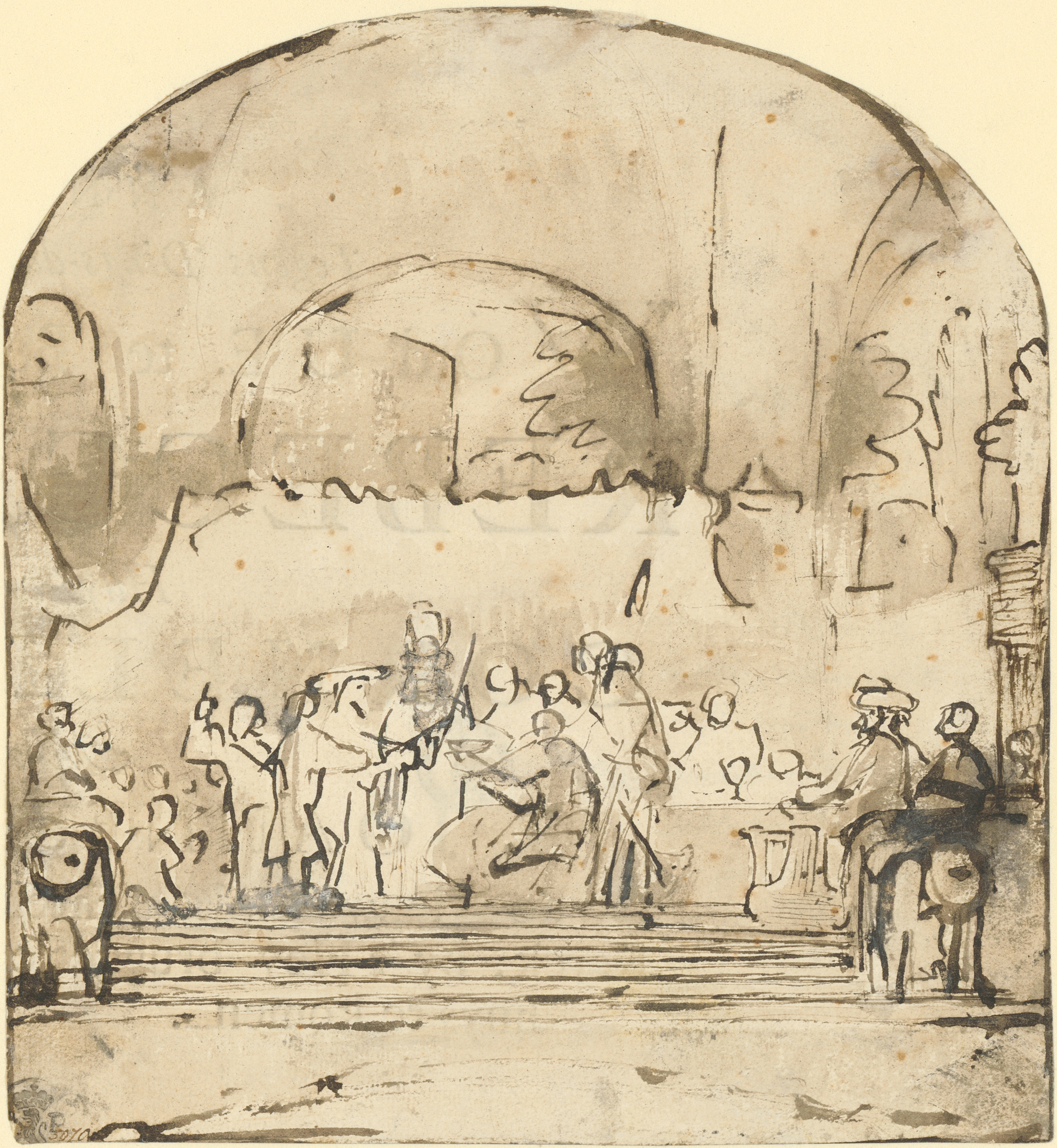
  32. Rudi Ekkart, โ€˜Govert Flinck and Ferdinand Bol: The Portraitsโ€™, in: Ferdinand Bol and Govert Flinck: Rembrandt’s Master Pupils, Zwolle, 2018, p. 158; Eric Jan Sluijter, โ€˜Out of Rembrandt’s Shadow: Govert Flinck and Ferdinand Bol as History Paintersโ€™, pp. 129-131.
  33. The etchings by Ferdinand Bol in this article are cited by the Hollstein number, in: F.W.H. Hollstein: Dutch and Flemish Etchings Engravings and Woodcuts, Amsterdam 1950, Vol. 3. pp. 15-35. However, the states noted here are updated, as anticipated in the forthcoming New Hollstein volume.
  34. The first one to point this out was Pierre Yver: Supplement au catalogue raisonneฬ de M. M. Gersaint, Helle & Glomy: de toutes les pieces qui forment l’oeuvre de Rembrandt. Amsterdam 1756, pp. 39-40, no.108, although he referred to the third, 1681 edition of the book. The etching is already present in the first, 1644 edition, published in Amsterdam.
  35. Den Christelyken Hovelingh has been commonly described as a play, but it is written as a poetic dialogue. If it was meant to be a play and/or if it was ever staged is not known to me. It is not listed as having been staged from 1637 to 1772: see Creative Amsterdam. An E-Humanities Perspective. Onstage. Online Datasystem of Theatre in Amsterdam from the Golden Age to the present: https://www.vondel.humanities.uva.nl/onstage/plays (accessed 7 July 2024). The title page of the 1642 volume indicates โ€˜Den Christelyk Hovelinghโ€™. However, the headers on all pages of that volume use the spelling โ€˜Christelykenโ€™, as do subsequent authors and libraries. See Jan Harmensz. Krul: Den Christelyk Hovelingh, Amsterdam 1642.
  36. This appears to have been first noted in N.C.H. Wijngaards.: Jan Harmens Krul: zijn leven, zijn werk en zijn betekenis, Zwolle, 1964, and is also described in: H.C. van Bemmel: Bibliografie van de werken van Jan Hermans Krul, Amsterdam, 1984.
  37. David de Witt and Leonore van Sloten, โ€˜Ferdinand Bol: Rembrandtโ€™s Discipleโ€™ in: Bol and Flinck (note 1), p. 48; and: Leonore van Sloten, โ€˜Ferdinand Bol, the Etcherโ€™, in: Bol and Flinck (note 1), p. 207; and Sophia Thomassen, โ€˜Timelineโ€™, in: Bol and Flinck, 2018 (note 1), p. 11.
  38. De Witt and Van Sloten, Bol, 2018 (note 6); Robert Schillemans: Bijbelschilderkunst rond Rembrandt, Utrecht 1989, pp. 31-34.
  39. Wijngaards, Krul, 1964 (note 5); Van Bemmel, Bibliographie, 1984 (note 5). I have been able to trace only thee copies: Library of the University of Amsterdam (2780 C 51), Royal Library, Den Haag, (KB: 3 C 20:10), and Noord-Hollands Archief, Haarlem (Oude Boekerij: 88 A 16). The copy in Den Haag lacks the page (A2) with Bol’s print.
  40. Wijngaards, Krul, 1964 (note 5); Van Bemmel, Bibliographie, 1984 (note 5).
  41. The 1644 edition (J.H. Krul: Pampiere Wereld, First edition. Amsterdam1644) is a folio edition measuring 302 x 190 mm; the 1681 edition (J.H. Krul: Pampiere Wereld, 3rd edition. Amsterdam, the widow of van Jan Jacobsz Schipper) is in quarto, measuring 216 mm x 170 mm. and the 1644-45 edition (J.H. Krul: Pampiere Wereld, 2nd edition, Amsterdam) is in octavo, measuring 169 x 104 mm. Book and library catalogues commonly ascribe c.1650 as the date for the latter, but the source of this attribution is not clear, and it is in error. See also Van Bemmel, Bibliographie (note 5).
  42. Van Bemmel, Bibliographie (note 5); The anonymous copy is in reverse, by an unknown hand, is neither signed nor dated, measures 85 x 74.5 mm, is of the same theme and general composition, but is artistically distinctly different. The shield is blank in this copy of Bol’s etching. I have not found any impressions of this copy that were not part of the printed book. I have identified three other distinct copies after Bol’s print, for a total of four, rather than the single copy identified by Hollstein (note 2).
  43. In 1644 and again in 1645 Krul obtained two successive loans, with the second providing funds to pay off the first, to permit him to publish the first two editions of Pampiere Wereld. Krul gave successively each lender volumes of the work, the patent rights and โ€˜someโ€™ copper plates for the period of the loan. It is not clear if the plates included Bol’s etching. See Wijngaards, Krul, 1964 (note 5); Van Bemmel, Bibliographie, 1984 (note 5).
  44. Jan Harmensz. Krul: Minne-Spiegel ter Deughden, Amsterdam 1650-51, J. H. Krul: Minne-Spiegel ter Deughden, Amsterdam; J. H. Krul: Minne-Spiegel ter Deughden, Joost Hartgers, Amsterdam, 1640; J. H. Krul: Minne-Spiegel ter Deughden, Michiel de Groot, Amsterdam, 1662; Jan Harmensz. Krul: Minne-Spiegel ter Deughden, Amsterdam, 1669-72.
  45. Hollstein gives only four states; more recently, George C. Kenney lists five, albeit described differently than the six here. See George C. Kenney: The Illustrated Bartsch, vol. 51. Supplement: Netherlandish Artists. Ferdinand Bol. New York 2017, p. 73, no. 18.
  46. In addition to the partial burnishing out of Bol’s name on the blade of the spade in the second state, lines are added partially obscuring the remaining portion of the signature; additional background work is added in several places; there is some work added on the scythe, table, book and the skull of the skeleton; and some additional work on the woman’s headdress/cape (fig. 2). The unique impression of this state is touched with black chalk and lead white, including the addition of a domed building in the distant background, horizontal lines below and to the left of the domed building, and the outline of a blank shield (or cartouche) covering the left part of the end of the coffin. Kenney also mentioned this state, but mistakenly describes the building in the background as a state difference. See: Kenney, Bol, 2017 (note 14). Only two other Bol prints have retouchings by the artist that appeared in the subsequent state: The Philosopher, H.6ii, 1643 (Amsterdam, RP-P-BI-1994); and The Young man Wearing a Plumed Cap, H.14i, 1642 (London, 1921,1008.21; and Dresden, A41073). The retouchings for H.6ii and H.14i appear in the plates for the next state of their respective prints. It is interesting to note that all retouched impressions were done in approximately the same period, and that the retouchings for H.6 and H.14 are very small in comparison to the significant retouchings for H.18. It is possible that this is a reflection of Bol’s satisfying his client’s wishes. Retouchings of impressions of other Bol prints are not judged to have been by his hand.
  47. My thanks to Jaco Rutgers for this suggestion
  48. The fifth state has added substantial additional background work and some work to the woman’s dress, and a bit on the shield, and the skull of the skeleton.
  49. The sixth, and final, state has added rather crude extensive reworking consisting of regular patterns of cross-hatching using the burin, for instance on the back of the skull, the inside of the tent, and the clothes of the female courtier. See fig 6.
  50. It had long been thought that Rembrandt painted his portrait in 1633. However, more recently, this has been called into question by Ernst van de Watering, A Corpus of Rembrandt Paintings, vol. 6: Rembrandtโ€™s Paintings Revisited, Dordrecht 2017, p. 526, no. 91. There were also family connections; see M. Louttit: โ€˜The Romantic Dress of Saskia van Ulenborch: Its Pastoral and Theatrical Associationsโ€™, The Burlington Magazine 115 (1973), pp. 317-326.
  51. Leonore van Sloten, โ€˜Ferdinand Bol in de voetsporen van Rembrandt: Twee herontdekte schilderijenโ€™, in: Rudie van Leeuwen, Lilian Ruhe, and David de Witt, eds, Not Always Rembrandt; 37 studies in Baroque art. Turnhout, Belgium 2023, pp. 20-31.
  52. Jan Soet, Soets Clorinde en Dambise, Amsterdam 1640.
  53. University of Amsterdam: Creative Amsterdam. An E-Humanities Perspective. Onstage. Online Datasystem of Theatre in Amsterdam from the Golden Age to the present. https://www.vondel.humanities.uva.nl/onstage/plays/359 (accessed 7 July 2024).
  54. N.C.H. Wijngaards, (note 5).
  55. Antonio de Guevara: Menosprecio de corte y alabanza de aldea. Valladolid 1539.
  56. See: S. Oosterwijk, โ€˜Morbid morality. The Danse macabre motif in Dutch art of the Golden Ageโ€™, in: Ilona Hans-Collas et al. (eds.), Mort n’espargne ne petit ne grant [Texte imprimรฉ] : รฉtudes autour de la mort et de ses reprรฉsentations : actes du XVIIIe Congrรจs international de l’association Danses macabres d’Europe, Paris, 19-23 mars 2019, Paris 2019, pp. 174-195.
  57. Translation: Linda Stone-Ferrier: โ€˜Ferdinand Bol: The Hour of Deathโ€™, in: Dutch Prints of Daily Life: Mirrors of Life or Masks of Morals? Lawrence, Kansas: The Spencer Museum of Art of The University of Kansas, 1983, pp. 144-146, credits Oliver C. Phillips, Classics Department, University Of Kansas, for the translation.
  58. There is no Bol print dated earlier than H.18, although he may have created one, Abraham’s Sacrifice (H.1), when working in Rembrandt’s studio; however, this is uncertain, as it is not dated.
  59. Gerard Roosenboom, Recueil van verscheyde keuren, en costumen. Midtsgaders maniere van procederen binnen de stadt Amsterdam. Eerst gecollecteert en beschreven, door Gerard Rooseboom, Amsterdam, 1656, pp. 120-131.
  60. Stadsarchief Amsterdam (hereafter SAA), 5061, 3051 Memorieboek, p. 29.
  61. http://remdoc.huygens.knaw.nl/#/document/remdoc/e4581 (accessed 3 December 2025).
  62. Arthur K. Wheelock jr., โ€œJan Lievens: Bringing new light to an old masterโ€, in: Wheelock Jr. ed, Jan Lievens. A Dutch master rediscovered, exh. cat. Washington: National Gallery of Art; Milwaukee: Milwaukee Art Museum; Amsterdam: Rembrandt House Museum, 2008-2009, pp. 6-7.
  63. SAA, 5075, 1745 not. Jan Quirijnen Spithof, pp. 124-125, 1-3-1644; Abraham Bedius, โ€œHet verblijf van Jan Miense Molenaer te Amsterdam, in documentenโ€, in: Frederik D.O. Obreen, Archief voor Nederlandsche Kunstgeschiedenis, vol. 7, Rotterdam 1888-1890, p. 293.
  64. Arthur K. Wheelock jr., in: exh. cat. Amsterdam 2009 (see note 4), pp. 17-18.
  65. SAA, 5061, 3063 Huwelijkskrakeelregisters, 8-12-1646.
  66. SAA, 5075, 1080, not. Joost van de Ven, ff. 203r-203v, 7-12-1646.
  67. โ€œter saecke sij als haar regeerster bij den req[uiran]t gewoont haddeโ€ (see note 8).
  68. โ€œhaer beloften van trouw heeft gedaan, van haer in eeuwig niet te sullen verlate & haer een vierkant stucken, neefens een ander silvere stuxkens gegeven & daarbeneffens van hem beslaepen & beswangertโ€ (see note 7). The mentioned silver square piece was a klip, an emergency coinage at that time struck mainly in West Friesland, or a medal/jeton.
  69. SAA, 5061, 3064, Huwelijkskrakeelregisters, 14-10-1649.
  70. The name Anna or Annetje Jacobs was fairly common; in 1647, eleven children were baptised in Amsterdam whose mother bore a variant of this name.
  71. The notarial archives contain many examples of such payments, both as compensation for the woman and as maintenance costs for any illegitimate children. For instance, Jan van de Velde agreed to the payments of two guilders per week in maintenance for the child he had conceived out of wedlock with Trijn Jans in 1636 (SAA, 5075, 601 not. Laurens Lamberti, p. 456, 17-07-1642). Whether this concerns the painter Jan van de Velde (III) from Haarlem, active in Amsterdam, is not clear. In 1661 David Abraham Cardozo paid no less than 1,000 guilders for โ€œdeflorationโ€ and the maintenance of two children resulting from his extramarital relationship with Dorothea Jans Bentem (SAA, 5075, 2210 not. Adriaen Lock, pp. 1107-1108, 27-05-1661).
  72. London (Christieโ€™s), 17 December 2020 (online auction 18877), lot 231 (inaccurately described as 185.4 x 195.5 cm); Old Master Paintings, Vienna (Dorotheum), 10 November 2021, lot 82 (as Jรผrgen Ovens, Pentecost).
  73. Arnold Houbraken, De groote schouburgh der Nederlantsche konstschilders en schilderessen I, Amsterdam 1718, p. 273.
  74. Constanze Kรถster,ย Jรผrgen Ovens (1623-1678). Maler in Schleswig-Holstein und Amsterdam, Petersberg 2017,ย p. 53; pp. 327-328, Qu. II.A.7.
  75. Archiveย ofย Schleswig-Holsteinย (LAS),ย Abt. 7, no. 6504, f. 1r; Kรถster 2017 (seeย noteย 3), pp. 37-38;ย p.ย 326, Qu. II.A.2.
  76. Kรถster 2017 (seeย noteย 3), p. 38.
  77. Kรถster 2017 (seeย noteย 3), p. 389, G145.
  78. Kรถster 2017 (see note 3), p. 390, G147.
  79. The Eighteenthโ€ฏYear Bookโ€ฏof the Brooklyn Institute of Arts and Sciences, 1905-1906, pp. 70, 124,โ€ฏ224;ย โ€œDepartment of Fine Artsโ€,ย The Museum News (Brooklyn Institute of Arts and Sciences)ย 1 (1906) no. 10, p. 144.
  80. Handwritten list of Maria Ovensโ€™s estate (private collection, location unknown), cited after Harry Schmidt, โ€œDasย Nachlass-Inventarย desย Malersย Jรผrgen Ovensโ€,ย Oud-Hollandย 32 (1914),ย p. 44, no. 16, note 7;ย Harry Schmidt,ย Jรผrgen Ovens.ย Sein Leben und seine Werke. Ein Beitrag zur Geschichte der niederlรคndischen Malerei im XVII.ย Jahrhundert, Kiel 1922,ย p. 150,ย underย no. 59a, p. 271, note 26 (as probably a copy after an original by Ovens);ย Kรถster 2017 (see note 3),ย p. 39;โ€ฏp. 325,โ€ฏQu. I.4.c.
  81. Erik Hinterding, Jaco Rutgers,ย The New Hollstein, Dutch & Flemish etchings, engravings and woodcuts, 1450-1700. Rembrandt,ย Ouderkerkย aanย denย IJsselย 2013, text 2, pp. 59-60, no. 185.
  82. Hinterding, Rutgers 2013 (see note 10), text 2, pp. 151-154, no. 239.
  83. Melchiorย Kรผsel,ย Iconesย Biblicaeย Veterisย et Noviย Testamenti.ย Figurenย biblischerย Historienย altenย undย neuenย Testaments, Augsburg 1679, โ€˜Bookย of Esther,ย Chapterย 6โ€™, fig. 20;ย reprintย Hildesheim 1968.ย Seeโ€ฏalso:โ€ฏPeter van derโ€ฏCoelen, โ€˜Rembrandt in Duitsland โ€“ Iconografie en verspreiding van zijn etsen in de zeventiende eeuwโ€™,ย Kroniek van het Rembrandthuisโ€ฏ2004, no. 1-2,ย p. 3, fig. 2.
  84. or a mirror-image of this man in theย Hundred Guilder Print, see: Ernst van de Wetering et al.,ย A Corpus of Rembrandt Paintings V. Small-scale history paintings, Dordrechtย 2011, p. 144, fig. 4.
  85. Kรถster 2017 (see note 3), p. 397, Z12-13.
  86. Hinterding, Rutgers 2013 (see note 10), pp. 39-41, no. 173.
  87. The presence of Mary or of other women at Pentecost, such as Mary Magdalene, is usually inferred from Acts 1:14: โ€œThey all joined together constantly in prayer, along with the women and Mary, the mother of Jesus [โ€ฆ]โ€.
  88. Hinterding, Rutgers 2013 (see note 10), text 1, pp. 189-191, no. 119.
  89. Hinterding, Rutgers 2013 (see note 10), text 1, p. 84, no. 55; pp. 220-221, no. 138.
  90. Hinterding, Rutgers 2013 (see note 10), text 2, pp. 158-159, no. 241.
  91. The only possible exception in this respect is Ovensโ€™s painted self-portrait from c. 1652 in the Hamburger Kunsthalle (inv. no. HK-26), which seems to go back to Rembrandtโ€™s famous 1639 etchingย Self-Portrait leaning on aย Stoneย Sill. See:ย Patrick Larsen, โ€œThe relationship between Govert Flinck and Jรผrgen Ovensโ€, in: Stephanie S. Dickeyย (ed.),ย Ferdinand Bol and Govert Flinck. New research, Zwolle 2017, p. 182, fig. 12.2, p. 184;ย Hinterding, Rutgers 2013ย (seeโ€ฏnoteโ€ฏ10),โ€ฏtextโ€ฏ2,โ€ฏpp. 33-35, no. 171.
  92. Karel van Mander,ย Het schilder-boeck, Haarlem 1604, fol. 5r; Philips Angel,ย Lof der schilder-konst, Leiden 1642, pp. 36-37.
  93. For Ovensโ€™s artistic appropriations of figures and motives from seventeenth-century art of the Low Countries during his Northern German periods, see:ย Patrick Larsen, โ€œThe Imitation of Dutch and Flemish Art in Jรผrgen Ovensโ€™ (1623-1678) Paintings in Schleswig-Holsteinโ€, in:ย Rieke van Leeuwen, Juliette Rodingย (eds.),ย Masters of Mobility. Cultural exchange between the Netherlands and the German lands in the long 17th centuryย (Gerson Digital VI), The Hague: RKD, 2020,ย https://masters-of-mobility.rkdstudies.nl/13-the-imitation-of-dutch-and-flemish-art-in-j%C3%BCrgen-ovens-1623-1678-paintings-in-schleswig-holstein/.
  94. ย Nadineย M. Orenstein, โ€œPrintmaking among artists of the Rembrandt Schoolโ€, in: Stephanie S. Dickeyย (ed.),ย Rembrandt and his circle. Insights and discoveries, Amsterdam 2017, p. 308, fig. 16.3. For Ovensโ€™s prints, see: Tilman Falk, Robert Zijlma, โ€œJรผrgen Ovensโ€, in:ย Hollsteinโ€™s German engravings, etchings and woodcuts,ย 1400-1700, vol.ย XXXI,ย Amsterdam 1991, pp. 61-74, nos. 1-10b; Kรถster 2017 (see note 3), pp. 415-416, R1-R7.
  95. Werner Sumowski,ย Gemรคldeย der Rembrandt-Schรผlerย II, Landau/Pfalz 1983, p. 1020, no. 615;ย Hinterding, Rutgers (see note 10), text 1, pp.ย 201-202, no. 125.
  96. Guus Sluiter,ย โ€œโ€˜De Passie, anders de Historie van denย lydendenย Christusโ€™.ย Arent de Gelders Passieserieโ€, in: Peter Schoon et al.,ย Arent de Gelder (1645-1727). Rembrandts laatste leerling,ย exh.ย cat. Dordrecht: Dordrechts Museum; Cologne:ย Wallraf–Richartz-Museum, 1998, pp. 73-75,ย figs. 2-13;ย pp. 78-80, 85; Guus Sluiter, โ€œDe fascinatie van Arent de Gelder voor Rembrandts etsenโ€,ย Bulletin Dordrechts Museum 22 (1998), pp. 35-45.
  97. Sumowskiย 1983 (see note 24), p. 1163, no. 738;ย Hinterding, Rutgers 2013ย (see noteย 10),ย text 2,ย pp. 57-58, no. 184.
  98. Sumowskiย 1983 (see note 24), p. 1421, no. 935;ย Hinterding, Rutgers 2013ย (see noteย 10),ย text 1,ย pp. 251-253, no. 155.
  99. LAS,โ€ฏAbt. 7, no.โ€ฏ2311, fol. 90r; Kรถsterย 2017 (see note 3),ย p. 304,โ€ฏnoteโ€ฏ195;โ€ฏp. 332,โ€ฏQu. II.B.1.1652.ย Also see:ย Patrick Larsen, โ€œJรผrgen Ovens (1623-1678) as an Art Agent for the Dukes of Gottorfโ€, in:ย Rieke van Leeuwen et al.,ย The Big Picture. Collecting Dutch and Flemish Art in Germany 1600-1850ย (Gerson Digital VIII), The Hague: RKD, 2022,ย https://the-big-picture.rkdstudies.nl/2-jรผrgen-ovens-16231678-as-an-art-agent-for-the-dukes-of-gottorf/.
  100. Rembrandt prints were offered for sale in the German-speaking lands fairly early.ย See Van derย Coelenย 2004ย (seeย noteย 12), pp. 5-15; Jaco Rutgers, โ€œRembrandt op papier. De rol van prenten bij het vestigen van Rembrandts reputatie als schilderโ€, in: Jaco Rutgers, Mieke Rijnders (eds.),ย Rembrandt in perspectief. De veranderende visie op de meester en zijn werk, Zwolle 2014, p. 122.
  101. Neither the so-called Gottorf account books nor the 1694, 1710 and 1743 inventories of Gottorf castle mention works on paper by Rembrandt.
  102. Werner Sumowski, Paul Huys Janssen, The Hoogsteder Exhibition of Rembrandtโ€™s Academy, exh. cat. The Hague: Hoogsteder & Hoogsteder, 1992, cat. no. 28.
  103. Exhibition catalogues: Albert Blanckert, Jezus in de Gouden Eeuw, exh. cat. Rotterdam: Kunsthal, 2000โ€“2001; Akira Kofuku, Rembrandt and the Rembrandt School. The Bible, mythology and ancient history, exh. cat. Tokyo: Museum of Western Art, 2003; Arthur K. Wheelock et al., Jan Lievens. A Dutch Master Rediscovered, exh. cat. Washington: National Gallery of Art; Milwaukee: Milwaukee Art Museum; Amsterdam: Rembrandt House Museum, 2008-2009, cat.no. 52; Louis van Tilborgh, Constantijn Huygens. Kunstkenner en verzamelaar, exh. cat. The Hague: Museum Bredius, 2013, cat. no. 14. Other literature: Werner Sumowski, Gemรคlde der Rembrandtschรผler, vol. 4, Landau, 1983, p. 3726, no. 2356, fig. 3964; Helga Gutbrod, Lievens und Rembrandt : Studien zum Verhaฬˆltnis ihrer Kunst, Frankfurt am Main, 1996, p. 299; Edwin Buijssen (ed.), Haagse schilders in de Gouden Eeuw, Het Hoogsteder lexicon van alle schilders werkzaam in Den Haag 1600-1700, The Hague, 1998, p. 191; Lloyd DeWitt, Evolution and Ambition in the career of Jan Lievens, 1607-1674, Phd. Diss. University of Maryland, College Park, 2006, p. 228.
  104. DeWitt, Evolution (see note 2), p. 228.
  105. For example those mentioned in the Montias Database of 17th Century Dutch Art Inventories and the Getty Provenance Research Index.
  106. Sumowski, Huys Janssen, Academy (see note 1), p. 220.
  107. Dr Gaston Gaudinot sale, Paris (Drouot), 13-14 February 1869.
  108. Sumowski, Huys Janssen, Academy (see note 1), p. 220.
  109. Ibid.
  110. Sumowski, Huys Janssen, Academy (see note 1), p. 226. Huys Janssen explains that the miracle as described in Luke and John differs from the version told by Matthew.
  111. After listening to the centurion, and before addressing him directly, Jesus speaks to his followers: โ€œI tell you, many will come from east and west and sit at table with Abraham, Isaac, and Jacob in the kingdom of heaven.โ€ (Matthew 8:11) Perhaps Lievens incorporated this part of the text and explicitly included people coming from the east (from the standpoint of his Dutch audience). A second possibility is that they are Pharisees. This group plays the role elsewhere in Matthew of disbelieving critics, and here they may serve to accentuate the belief of the centurion in the Christian faith. In early prints (Sebald Beham, Israhel van Meckenem, Hans Schaรผfelein and Cornelis Massijs) and several Italian prints from Lievensโ€™s time (seventeenth century prints after Paolo Veronese), Pharisees wear such headdresses. A parallel between blacks and overseas regions, such as in Lievensโ€™s Brinio, is convincingly outlined by Elmer Kolfin (in: Elmer Kolfin, De kunst van de macht, Jordaens, Lievens en Rembrandt in het Paleis op de Dam, Zwolle, 2023, p. 67), does not seem to apply here.
  112. Sumowski, Huys Janssen, Academy (see note 1), p. 223.
  113. Sumowski, Huys Janssen, Academy (see note 1), pp. 223, 226.
  114. The right eye from the perspective of the viewer. There, a pupil was painted in, in a later restoration. Because of the sketchy manner it is difficult to ascertain whether or not both eyes are present, but in the left the lower eyelid is visible, while it is undefined in the right eye.
  115. For example: Jacobus Neeffs (after Jacob Jordaens), Judgement of Christ, etching, c. 1630-1645; Marinus van der Goes (after Jacques Jordaens), Judgement of Christ, engraving, c. 1614-1639; Willem Panneels (after Peter Paul Rubens), Adoration of the kings, etching, 1630; Nicolaes Lauwers (after Peter Paul Rubens), Ecce Homo, engraving, c. 1619-1652; and many more. Generally, for examples of inspiration drawn from prints by Lievens, see De
    Witt, Evolution (see note 2).
  116. Sumowski, Huys Janssen, Academy (see note 1), p. 226. Huys Janssen refers to examples by Nicolaes Moeyaert (Herentals, St. Waltrudis church) and Adam Camerarius (Amsterdam, Rijksmuseum, inv. no. SK-A-733). DeWitt refers to a painting by Bartholomeus Breenbergh (Karlsruhe, Staatliche Kunsthalle Karlsruhe, inv. no. 228) and the Moeyaert in Herentals (DeWitt, Evolution (see note 2), p. 227). But also see a woodcut with this subject by Cornelis van Sichem II in Der zielen lusthof (1629). Also of interest: Claes Moeyeart, Christ and the Centurion, 1632 (Minneapolis, Minneapolis Institute of Art, inv. no. 2012.84.5). Although the painting is known under this subject, it may in fact depict Cornelius kneeling before Peter, since more than one figure is shown kneeling and the composition closely resembles prints of this subject.
  117. Henri van de Waal, โ€œโ€™s Lands oudste verleden in de voorstelling van Vondel en zijn tijdgenootenโ€, Elsevierโ€™s Maandschrift 47 (1937); Henri van de Waal, โ€œTempesta en de historieschilderingen op het Amsterdamse stadhuisโ€, Oud Holland 56 (1939); Henri van de Waal, Drie eeuwen vaderlandsche geschied-uitbeelding 1500-1800, een iconologische studie, The Hague, 1952; Kolfin, Kunst (see note 10).
  118. Antonio Tempesta (after Otto van Veen), Print 8 in (โ€ฆ)De Batavische oft oude Hollandtsche oorloghe teghen de Romeynen, 1612. Etching, 167 x 210 mm. Rijksmuseum, Amsterdam, inv. no. RP-P-OB-37.614. Jรผrgen Ovens based his drawing for the Batavian Series depicting Claudius Civilis leaving the Women and Children to fight at Xanten (Hamburg, Hamburger Kunsthalle, inv. no. 22342) on this print.
  119. On the period in The Hague:ย Buijssenย Haagseย (see note 2), pp.191-193.
  120. Haarlem,ย Teylersย Museum, inv. no. P 006. For the identification and context, see: Gregor Weber, โ€œDusย leeftย deย dappreย Graaf: Zuย einemย Bildnisย Andries deย Graeffsย von Jan Lievens (1607-1674)โ€,ย Oud Hollandย 99 (1985), pp. 44-56.
  121. Van de Waal,ย Eeuwenย (seeย noteย 16), p. 230;ย Kolfin,ย De kunst van de machtย (seeย noteย 10), pp. 19-20.
  122. Van de Waal, โ€œโ€™s Landsโ€ย (seeย noteย 16), p. 301-302.
  123. ย Kolfin,ย Kunstย (seeย noteย 10), p. 41.ย Four Batavian scenes were never completed. For two the themes are known, for the other two are not known.
  124. Munich,ย Staatlicheย Graphischeย Sammlungย Mรผnchen, inv. no. 1451; Hamburg, Hamburger Kunsthalle, Kupferstichkabinett,ย inv. no. 22342.ย A lesser-known drawing of Rembrandtโ€™sย Conspiracy of Claudius Civilisย (Edinburgh, National Galleries of Scotland, inv. no. D 23862) shows โ€“ when compared to the drawing in Munich โ€“ that the lower section of the painting is covered by a frieze and that portions of the left and right sides are obscured. This may indicate that an alternative conception of the framing of the lunettes was considered before the one ultimately implemented. It is possible that this earlier framing was already envisioned when Lievens produced his oil sketchย Christ and the Centurion.
  125. Van de Waal,ย Eeuwenย (see note 16), p. 225, referring to SAA, 5039, 2ย resolutieboek, f. 66r.
  126. Ibid., referring to SAA, 5039, 153ย rapiamusย 1661, f.195v.
  127. Van de Waal,ย Eeuwenย (seeย note 16), p. 225.
  128. Gregor Weber, โ€œJan Lievensโ€™s โ€˜The Shield-raising of Brinioโ€™ a Second Oil Sketchโ€,ย Hoogsteder-Naumann Mercuryย 12/13 (1992), nt. 8.
  129. Dewitt,ย Evolutionย (see note 2), p. 221.
  130. Kolfin,ย Kunstย (seeย noteย 10), p.67.
  131. Kolfin,ย Kunstย (seeย noteย 10), p. 44.
  132. For, among other things, contemporary poetry in which Civilis and others are compared to the members of the House of Orange: Van de Waal,ย Eeuwenย (see note 16), pp. 220-221, 223.
  133. Kolfin,ย Kunstย (seeย noteย 10), p. 47.
  134. Margriet van Eikema Hommes, Elmerย Kolfin,ย De Oranjezaal in Huis ten Bosch, Een zaal uit loutere liefde, Zwolle, 2013, p. 77.
  135. Kolfin,ย Kunstย (seeย noteย 10), pp. 41-47, 77.
  136. One may ask,ย in light ofย points discussed in this article, whether the โ€œChristโ€ figure in the first version was in fact Christ at all. If so, the oil sketch would initially have represented solely a Christian scene without any reference to the Batavian Revolt, thereby less relatable to the (eventual) decoration program of the Town Hallโ€™s gallery. Given that in the initial design the groups left and right with Biblical and/or eastern figures do not seem to have been included (aside from a bearded man on the right, judging from the x-ray), the large central figure may originally have been Julius Civilis. In compositional terms, this would align the painting more closely with the print by Tempesta after Van Veen. The apparent similarity in hairstyle between the final Christ figure and the initial figure, together with the possible initial presence of a (holy) beam of light directed toward the figure, may argue against this hypothesis; nevertheless,ย Brinnoย in Lievensโ€™sย Brinio Raised on the Shield likewise features long hair and even incorporates a diagonal compositional line through the clouds, comparable to the line through the foliage in the initial version of the present subject. The later insertion of Christ could then be understood as a deliberate twist, imparting a more prominent Christian meaning to the historical scene. These suggestions and observations were kindly shared by Jochem van Eijsden.
  137. Samuel van Hoogstraten, Inleyding tot de hooge schoole der schilderkonst: anders de zichtbaere werelt, Rotterdam 1678, p. 18. Van Hoogstraten here refers to the period when he was โ€œstill a discipleโ€, during which, as part of a โ€œweโ€, he and others discussed a particular question, to which a certain โ€œFabritiusโ€ responded with an answer. It is generally assumed that this refers to Carel Fabritius, who is assumed to have studied with Rembrandt between approximately 1641 and 1643.
  138. Werner Sumowski described Van Hoogstraten as โ€œpรคdagogisch begabt, Assistent Rembrandts gewesenโ€ (Werner Sumowski, Gemรคlde der Rembrandt-Schรผler II, Landau/Pfalz 1984, p. 1286). As supporting evidence, Sumowski argued that Van Hoogstraten corrected drawings by Constantijn Daniรซl van Renesse (; p. 1290, nt. 2). When discussing one of these drawings (Moses and Reuelโ€™s Daughters at the Well, Amsterdam, Rijksmuseum, inv. no. RP-T-1893-A-2782) Sumowski suggested the possibility that โ€œSamuel van Hoogstraten acted as assistant to the master on occasional trips even at a later dateโ€. (Werner Sumowski, Drawings of the Rembrandt School IX, New York 1985, no. 2159x). Building on this, Jonathan Bikker suggested in his monograph on Willem Drost that Van Hoogstraten โ€œmight have supervised Drost during his early days in Rembrandtโ€™s studioโ€ (Jonathan Bikker, Willem Drost, A Rembrandt Pupil in Amsterdam and Venice, New Haven/London 2005, p. 11). David de Witt later observed, in his Abraham van Dijck monograph, concerning Van Hoogstraten: โ€œby 1646 his training would have been complete, but he appears to have stayed on as a tutor or head pupil for several yearsโ€ (David De Witt, Life and Work of Late Rembrandt Pupil Abraham van Dijck, c. 1635-1680, Amsterdam 2020, p. 11).
  139. Sabine Pรฉnot, Rembrandt – Hoogstraten. Colour and Illusion, exh. cat. Vienna: Kunsthistorisches Museum Wien, 2024; Nathalie Maciesza, Epco Runia, Samuel van Hoogstraten. De Illusionist, exh. cat. Amsterdam: Rembrandt House Museum, 2025; Sabine van Beek, Leonore van Sloten, David de Witt et al., Samuel van Hoogstraten: Catalogue Raisonnรฉ, The Hague 2025.
  140. The catalogue of the Vienna exhibition assumes a position for Van Hoogstraten as an assistant for approximately three to four years (Angelina Illes, in: exh. cat. Vienna 2024 (see note 3), p. 29; Jonathan Bikker, in: exh. cat. Vienna 2024 (see note 3), p. 93), though it makes no mention of any teaching responsibilities. These are, however, included in the publication accompanying the exhibition at the Rembrandt House Museum (Michiel Roscam Abbing, in: exh. cat. Amsterdam 2025 (see note 3), p. 19; David De Witt, in: exh. cat. Amsterdam 2025 (see note 3), p. 131), and in the online Van Hoogstraten catalogue raisonnรฉ by the RKD (Michiel Roscam Abbing, in: The Hague 2025 (see note 3), โ€œWith Rembrandt in Amsterdamโ€. https://vanhoogstraten.rkdstudies.nl/samuel-van-hoogstraten-the-ingenious-and-poetic-painter/with-rembrandt-inamsterdam/, 26 May 2025).
  141. The term โ€œassistentโ€ was used in Holland in the 17th century, albeit in other contexts, see: Woordenboek Nederlandse taal, s.v. assistent, https://gtb.ivdnt.org/iWDB/search?actie=article&wdb=WNT&id=M004535&lemma=assistent&domein=0&conc=true, 11
    July 2025.
  142. โ€œEen min of meer ondergeschikte helperโ€, a more or less subordinate helper (see note 5); โ€œA person who helps or supports somebody, usually in their jobโ€: Oxford English Dictionary, s.v. assistant, https://www.oed.com/view/Entry/12041, 11 July 2025.
  143. The guild archive has been lost. For a comprehensive account of the Amsterdam Guild of Saint Luke and its ordinances, see: Isabella H. van Eeghen, โ€œSchilders of Sint Lucasgildeโ€, in: Isabella H. van Eeghen (ed.), Inventarissen der archieven van de gilden en van het brouwerscollege, Amsterdam 1951, passim.; Isabella H. van Eeghen (Jasper Hillegers, translator), โ€œThe Amsterdam Guild of Saint Luke in the 17th Centuryโ€, Journal of Historians for Netherlandish Art 4.2 (2012), passim., DOI:10.5092/jhna.2012.4.2.4, 11 July 2025. The current article relies exclusively on the guild regulations of the Amsterdam De Kroniek 2024/25 – Museum Rembrandthuis 10 paintersโ€™ guild. It is often assumed that the regulations of paintersโ€™ guilds in different Dutch towns did not differ substantially in content. On that assumption, gaps in the regulations of one town might be filled by those of another. However, the discussion later in this article regarding whether apprentices were permitted to produce their own work shows that crucial differences did in fact exist. For that reason, guild regulations from other cities are not used here to fill the gaps in the surviving Amsterdam regulations.
  144. Extract van de willekeuren en ordonnantien den gilde van St. Lucas verleent, Amsterdam 1720, p. 11.
  145. Extract (see note 8), p. 11; This is also the case in the chapter title and margin of the 1766 publication of all known guild charters: Ordonnantien en willekeuren van het Lucas-gilde binnen Amsterdam, Amsterdam 1766, p. 64, 68. It is noteworthy that the dean and headmen of the guild employed a gilde kneght (Extract (see note 8), pp. 26-27. This was not a pupilship, and the tasks meet the definition of an assistant in the Oxford English Dictionary and the Woordenboek Nederlandse Taal (see note 6)
  146. Extract (see note 8), pp. 12-13
  147. Extract (see note 8), pp. 11-12.
  148. Extract (see note 8), p. 12.
  149. Cornelis Kiliaen (ed. Frans Claes), Etymologicum teutonicae linguae, Antwerp 1599 (The Hague 1972), p. 278, s.v. leerionghe; leer-kind; leer-knecht; leerlinck; p. 703, s.v. discipel. In the regulations of the Haarlem Guild of St. Luke from 1634 (NHA, 1105, Ambachtsgilden te Haarlem (Gilden Haarlem), no. 219), the terms โ€œleerlingโ€, โ€œleerjongenโ€, and โ€œdiscipelโ€ are
    used. This might suggest that a distinction existed between them, but they are actually used interchangeably. The same applies to the terms โ€œ(werk)gezelโ€, โ€œknechtโ€, and โ€“ a new term โ€“ โ€œgastโ€. The latter is synonymous with journeyman or servant: โ€œKnecht van een ambachtsman of fabrikant; gezel, werkknechtโ€, servant of a tradesman or manufacturer; journeyman, workshop hand: Woordenboek Nederlandse taal, s.v. gast, https://gtb.ivdnt.org/iWDB/searchactie=article&wdb=WNT&id=M017355.re.35&lemma=werkgast&domein=0&conc=true,
    16 oktober 2025.
  150. Kiliaen, Etymologicum (see note 13), p. 139, s.v. ghe-selle van een ampt. The Latin word โ€œcollegaโ€ is likewise a translation for โ€œambtgenootโ€, โ€œmaetโ€, and โ€œvennootโ€ (Kiliaen, Etymologicum (see note 13), p. 18, s.v. ampt-ghenoot; p. 302, s.v. maet, med-maet, maetken; p. 579, s.v. veyn-out, veyn-noot, ven-noot, vennoot, veyn-gnoot).
  151. Kiliaen, Etymologicum (see note 13), p. 244, s.v. knecht, dienaer.
  152. Nicolaas de Roever, โ€œDrie Amsterdamsche Schilders (Pieter Isaaksz, Abraham Vinck, Cornelis van der Voort)โ€, Oud Holland 3 (1885), p. 198.
  153. In 1619, he was asked together with several artists who had traveled to Italy, including Pieter Lastman, Adriaen van Nieulandt, and Barent van Someren, to assess the authenticity of a Caravaggio painting from the collection of the late Louis Finson. Abraham Bredius, Nicolaas de Roever, โ€œPieter Lastman en Franรงois Venantโ€, Oud Holland 4 (1886), pp. 7-8.
  154. Ronald de Jager โ€œMeester, leerjongen, leertijd. Een analyse van Zeventiende-eeuwse Noord-Nederlandse leerlingcontracten van kunstschilders, goud- en zilversmedenโ€, Oud Holland 104 (1990), p. 96, nt. 107. The title of โ€œgezelโ€ is, in fact, never mentioned in the known Amsterdam contracts.
  155. De Jager, โ€œMeesterโ€ (see note 18), pp. 73-75.
  156. De Jager, โ€œMeesterโ€ (see note 18), p. 71.
  157. Stadsarchief Amsterdam (hereafter SAA), 5075, 393A, nots. Jacob Jacobs and Nicolaes Jacobs, ff. 59r-59v, 20-07-1626; Abraham Bredius, โ€œGerrit Willemsz. Horstโ€, Oud Holland 50 (1933), pp. 5-6; De Jager, โ€œMeesterโ€ (see note 18), p. 98, no. 7.
  158. This underscores a clear distinction: as was also evidenced by the entries in Kiliaen, Etymologicum (see note 13), dienaer was a synonym for knecht, not for leerknecht (see note 15).
  159. Abraham Bredius, Kรผnstlerinventare. Urkunden zur Geschichte der hollรคndischen Kunst des XVIten, XVIIten und XVIIIten Jahrhunderts V, The Hague 191, pp. 1482-1483; De Jager, โ€œMeesterโ€ (see note 18), p. 98, no. 10.
  160. The value of a barrel of herring in Amsterdam in 1635 was approximately 120 grams of silver (Bo Poulsen, Dutch Herring. An Environmental History, c. 1600โ€“1860, Amsterdam 2008, p. 93, table 6.9); in the seventeenth century, ten grams of silver corresponded to the value of roughly one guilder.
  161. The tuition fees in Holland for a two-year contract averaged 61.5 guilders per year (De Jager, โ€œMeesterโ€ (see note 18), p. 75).
  162. Josua Bruyn, โ€œEen onderzoek naar 17de -eeuwse schilderijformaten, voornamelijk in Noord-Nederlandโ€, Oud Holland 93 (1979), p. 113.
  163. Abraham Bredius, Kรผnstlerinventare. Urkunden zur Geschichte der hollรคndischen Kunst des XVIten, XVIIten und XVIIIten Jahrhunderts II, The Hague 1916, pp. 400-401; De Jager, โ€œMeesterโ€ (see note 18), p. 98
  164. As a journeyman painter Waltusz earned less than half the daily wage of peers in other trades. In 1652, journeymen carpenters and bricklayers in Amsterdam earned approximately 26 to 27 stivers per summer day (although there are no exact figures for 1651, data is available for 1633, 27 and 25 stivers respectively, and for 1667, 28 and 27 stivers respectively).
    This disparity between painterโ€™s journeymen and their peers in other trades mirrors the situation in 1579. The guild
    regulations (gildebrief) of the St. Lukeโ€™s Guild from that year mention journeymen earning 4 stivers and others earning 10
    stivers per day (Ordonnantien (see note 9), p. 17, art. 11). Taking the average of 7 stivers, these were notably low wages โ€“
    practically half โ€“ when compared to the 14 and 12 stivers earned by carpenters and bricklayers, respectively, in that same
    year. For the wages of the workers mentioned here, see: Hubert Nutseling, Welvaart en werkgelegenheid in Amsterdam
    1540โ€“1860, Amsterdam/Dieren 1985, p. 252, appendix 5.1, table A.
  165. SAA, DTB 5001, 469, p. 241, 30-09-1651; Judith van Gent, Bartholomeus van der Helst (circa 1613-1670): een studie naar zijn leven en zijn werk, Utrecht (Utrecht University), p. 41.
  166. Virtually nothing is known about Gerardus van Berleborch (Bernard Renckens, โ€œG. van Berkborchโ€, Oud Holland 84 (1967), no. 4, passim). He or his father was likely from the region around Bad Berleburg in Germany. He appears to have been present in Leiden in 1665, when he is recorded as a witness (โ€œGerrit van Berlebergโ€) at the baptism of a child of the painter Jacobus Geutkien (Erfgoed Leiden en Omstreken (hereafter ELO), DTB 1004, 237, fol. 236v, 3-12-1665).
  167. SAA, 5075, 875, not. Jacob van Zwieten, pp. 638-640, 16-10-1649; Johannes G. van Dillen, Bronnen tot de geschiedenis van het bedrijfsleven en het gildewezen van Amsterdam 1510-1672 III, p. 540, no. 1057.
  168. A possible reason for this may be that young painters attained the status of master more quickly. This benefited the guild financially, as it earned income only from masters and pupils, not from journeymen.
  169. Ordonnantien (see note 9), p. 10, art. 3.
  170. Ordonnantien (see note 9), p. 17, art. 11.
  171. Joachim von Sandrartโ€™s famous anecdote about Rembrandtโ€™s studio being filled with โ€œcountless elite childrenโ€, pupils who each paid an annual tuition fee of 100 guilders suggests that the legal limit on the number of pupils was, in practice, a dead letter (Joachim von Sandrardt, Teutsche Academie, Nuremberg 1675, p. 326; Van Eeghen, โ€œGuildโ€ (see note 7), p. 6).
  172. Young Man Reading with a Vanitas Still Life, 1644, oil on panel, 58 x 74 cm, Rotterdam, Museum Boijmans Van Beuningen, inv. no. 1386; Self-portrait, 1644, oil on panel, 63 x 48 cm, The Hague, Museum Bredius, inv. no. 056-1946; Self-portrait, 1645, oil on panel, 54.1 x 44.8 cm, Liechtenstein, The Princely Collections, Vaduz-Vienna, inv. no. GE 107; Portrait of a Child, 1645, oil on panel, 68.6 x 57.8 cm, private collection; The Adoration of the Shepherds, 1647, oil on canvas, 58.2 x 70.8 cm, Dordrecht, Dordrechts Museum, inv. no. DM/980/567.
  173. Godefridus J. Hoogewerff, De geschiedenis van de St. Lucasgilden in Nederland, Amsterdam 1947, p. 24; Ernst van de Wetering โ€œProblems of Pupilship and Studio Practiceโ€ in: Josua Bruyn et al., A Corpus of Rembrandt Paintings II: 1631-1634, Amsterdam 1986, p. 57; Bikker, Drost (see note 2), p. 11; Angelina Illes, in: exh. cat. Vienna 2024 (see note 3), p. 29.
  174. Samuel Muller Fz., Schilders-vereenigingen te Utrecht. Bescheiden uit het Gemeentearchief, Utrecht 1880, p. 76; Frederik D.O. Obreen, Archief voor Nederlandsche Kunstgeschiedenis IV, Rotterdam 1881/1882, p. 51. The very fact that such a regulation had to be instituted in these cities already indicates that works were being signed by non-masters.
  175. De Jager, โ€œMeesterโ€ (see note 18), pp. 77-79.
  176. Bruyn, โ€œOnderzoekโ€, (see note 26), p. 113.
  177. David de Witt, Leonore van Sloten, in: The Hague 2025 (see note 3), โ€œRembrandtโ€™s Impactโ€, https://vanhoogstraten.rkdstudies.nl/catalogus-schilderijen/rembrandts-impact/, 3 June 2025.
  178. Almost exclusively, reference is made to Bikker, Drost (see note 2), p. 11. Also in the exhibition catalogue of the Van Hoogstraten exhibition in Amsterdam, Drost is cited as an example of an early student of Van Hoogstraten (David de Witt, in: exh. cat. Amsterdam 2025 (see note 3), p. 131.
  179. Since Daniรซl Pont’s monograph on Barent Fabritius, (Daniรซl Pont, Barent Fabritius 1624โ€“1673, The Hague, 1958) and Sumowski’s Drawings of the Rembrandt School (see note 2), no subsequent scholarly efforts have systematically De Kroniek 2024/25 – Museum Rembrandthuis 12 reconstructed his drawn oeuvre or analyzed the development of his distinctive style. The author’s forthcoming dissertation addresses this lacuna, and catalogues drawings by Barent Fabritius.
  180. Pont was among the first to suggest he may not have been a direct pupil of Rembrandt, but instead only came into contact with Rembrandtโ€™s work indirectly, through his brother Carel (Pont, Barent (see note 43), p. 96). In the literature, uncertainty on this matter appears to have become the norm, with scholars consistently noting โ€“ or implicitly dealing with โ€“ the lack of evidence for a formal pupilship with Rembrandt (see: Paul Huys Jansen, Werner Sumowski, The Hoogsteder Exhibition of Rembrandtโ€™s Academy, exh. cat. The Hague: Hoogsteder & Hoogsteder, 1992, p. 139; Walter A. Liedkte in: Hubert von Sonneburg, Rembrandt/Not Rembrandt in the Metropolitan Museum of Art I, exh. cat. New York City: The Metropolitan Museum of Art, 1995, cat. 48, pp. 145-146; Peter C. Sutton in: Albert Blankert, Rembrandt. A Genius and his impact, exh. cat. Melbourne: National Gallery of Victoria; Canberra: National Gallery of Australia, 1997, p. 283; Jan Blanc, Dans lโ€™atelier de Rembrandt. Le maรฎtre et ses รฉlรจves, Paris 2006, p. 140.
  181. Holm Bevers, โ€œDas Susanna-Thema im Werkstattzusammenhang: Zeichnungenโ€, in: Holm Bevers, Katja Kleinert, Claudia Laurenze-Landsberg, Rembrandts Berliner Susanna und die beiden Alten. Die Schaffung eins meisterwerks, exh. cat. Berlin: Staatliche Museen zu Berlin, Kupferstichkabinett; Gemรคldegalerie, 2015, pp. 49-50.
  182. Katja Kleinert, Claudia Laurenze-Landsberg, โ€œWandlungen eines Gemรคldes. Rembrandts Berliner Susanna und die beiden Altenโ€, in: exh. cat. Berlin 2015 (see note 45), p. 19, 32.
  183. See for instance Rembrandtโ€™s Holy Family in the Carpenterโ€™s workshop or his Star of the Kings (London, The British Museum, inv. nos. 1900,0824.144, 1910,0212.189).
  184. The drawing of a male model (here attributed to Barent Fabritius) has been described as stylistically very close to Van Hoogstraten (Martin Royalton-Kisch in: Catalogue of Drawings by Rembrandt and his School, London: The British Museum, 2010, cat. 71). The Departure of the Prodigal Son, a drawing already earlier attributed to Fabritius, is still considered a work by Van Hoogstraten (Frankfurt am Main, Stรคdel Museum, inv. no. 817).
  185. A convincing spatial representation of the scene, achieved through a successful use of proportion, perspective, light, and color. For a elaboration on this definition, including references, see: Leonore van Sloten, โ€œRegels voor de kunstโ€, in: David de Witt, Leonore van Sloten, Jaap van der Veen, Rembrandts late leerlingen. In de leer bij een genie, exh. cat. Amsterdam: Rembrandt House Museum, 2015, p. 73, note 31.
  186. In drawings by Barent Fabritius from the second half of the 1640s, his preparatory chalk underdrawing is generally careful and precise but not detailed, with clear, exact contours rendered in continuous, rounded lines. The somewhat squat figures possess a doll-like, slightly caricatural character. When using pen to trace or fill in the figures, particularly those in the foreground, the style becomes sketchier and more angular. Fabritiusโ€™s hatching lines become more carefully placed as theyย  grow finer, laid loosely side by side with only occasional thin-pen scratching, while thicker lines, including contours, are rendered in a zigzag, looser manner, often applied to foreground elements such as a repoussoir. Groups of hatching in shadowed, complex motifs (e.g., figures or foreground foliage) are neither intertwined nor uniformly oriented, and though the balance of light and shadow varies between drawings, it remains consistent within each composition; early mastery is evident in his wash applications, where loosely brushed transitions in shadows lend a painterly quality, enhancing figural plasticity and atmospheric depth, as seen in drawings with dramatic chiaroscuro effects.
  187. Although it has been argued by Holm Bevers that this drawing is by Constantijn Daniรซl van Renesse and dates from between 1650 and 1652 (Holm Bevers, โ€œAusstellungen zu Rembrandt in Rรผckblickโ€, Kunstchronik, 58 (2005), p. 480; Holm Bevers, in: Rembrandt. Die Zeichnungen im Berliner Kupferstichkabinett, exh. cat. Berlin: Staatliche Museen zu Berlin, Kupferstichkabinett, 2006, cat. no. 45, p. 158, nt. 12; Holm Bevers in: Holm Bevers et al., Drawings by Rembrandt and his Pupils. Telling the Difference, exh. cat. Los Angeles: The J. Paul Getty Museum, 2009, cat. no. 31.2, pp. 190-191), a number of features are so uncharacteristic of Van Renesse that the attribution cannot be sustained. This applies in particular to elements such as the heavy, coarse scratches in the shadow areas and the sketch-like rendering of the faces of Joseph and Mary. Van Renesse typically keeps shadow areas and light transitions in brush clear and even. Also characteristic is his meticulous penwork, marked by fine, short strokes in the contours and hatching lines (see for instance: The Judgment of Salomon, New York City (The Metropolitan Museum of Art, Robert Lehman Collection, inv. no. 1975.1.806; Daniel in the Lionโ€™s Den, Rotterdam, Museum Boijmans Van Beuningen, inv. no. MB 200). Generally, it shows the boldness of Barent much more than the careful restraint of Renesse
  188. โ€œBeeter waer ‘t dat [om de veranderin[g]] een eesel van achteren was, dan dat al de hoofden iuist wt het stuck sien. Dat oock omtrent de boom wat meerder groente was. | 1 losep heft af te swaer en te onbesuist | 2 Maria most het kindeken wat meerder vieren, want een teeder kint magh sulck duwen niet ver[dragen]. | losep al te kort en dick, sijn hooft wast hem wt de [borst?]. Sijn hebben alle beide al te groote koppenโ€. Transcript from: Leonore van Sloten, in: exh. cat. Amsterdam 2015 (see note 49), p. 73, nt. 27. โ€œIt would be better that [for the alteration] there were a donkey from the back, than that all the heads are looking straight out of the work. That there were also somewhat more greenery around the tree. | 1 Joseph lifts too heavily and too inconsiderately. | 2 Mary ought to ease the little child somewhat more, for a tender infant cannot [endure] such pushing. | Joseph is all too short and stout, his head grows out of the [chest?]. They both have all too large headsโ€. These instructions are also partly articulated within the drawing itself. Joseph is indeed shown tugging firmly at Maryโ€™s arm, whereas in the more sketch-like version, he supports her more gently at the back. The small patch of greenery in the lower corner may also be a later addition, in correspondence with the suggestion.
  189. The face does not appear to be a correction in the technical sense, but rather an example of a foreshortened face viewed from below โ€“ a challenging principle of perspective.
  190. An attribution proposed Christian Dittrich (Christian Dittrich in: Christian Dittrich, Thomas Ketelsen, Rembrandt. Die Dresdener Zeichnungen 2004, exh. cat. Dresden: Staatliche Kunstsammlungen Dresden, Kupferstich-Kabinett, 2004, cat. no.14, pp. 80-81).
  191. Brusati implied the possibility that the text was written partly by Rembrandt and partly by Van Hoogstraten (Celeste Brusati, Artifice & Illusion. The Art and Writing of Samuel van Hoogstraten, Chicago/London 1995, pp. 31, 275, note 40). Rembrandt was excluded as the author of the instructions by Bevers, while Van Hoogstraten as author remained an option. Van Renesse was likewise ruled out by Bevers, based on a comparison with the handwriting on his Daniel in the Lionsโ€™ Den drawing and The Judgment of Solomon drawing (see note 51); Holm Bevers, in: exh. cat. Los Angeles 2009 (see note 51), cat. 31.1โ€“31.2, p. 190; 191, note 3). To this may be added that the handwriting also closely resembles that of Barent Fabritius. Although little comparative material survives, the compact, small script of Fabritiusโ€™s name beneath the death inventory of his sister-in-law Aeltje, dated 24 April 1643 (SAA, 5075, 1628a, not. David de lโ€™Hommel, p. 399), shows a strong resemblance to the instructions on the Dresden sheet.
  192. โ€œOnce you have mastered your handling and your eye is somewhat clarified, it will no longer trouble you to translate many naturalistic paintings into a naturalistic drawingโ€. โ€œWanneer gy uwe handeling nu machtich zijt, en uw oog wat verklaert is, zoo zal ‘t u ook niet verscheelen veel verwige Schilderyen in een verwige teykeningen na te klarenโ€ (Van Hoogstraten, Inleyding (see note 1), p. 27)
  193. โ€œI advise masters, when they review the drawings of their pupils, to improve them by making sketches of the same subject themselves. This is an excellent exercise and has greatly assisted many in the art of compositionโ€. โ€œDe meesters raed ik, als ze de Teykeningen haerer discipelen overzien, datze de zelve, met schetssen op ‘t zelve voorwerp te maeken, verbeeteren. Dit oeffent ongemeen, en heeft veelen geweldich in de schikkunst geholpenโ€ (Van Hoogstraten, Inleyding (see note 1), p. 192).
  194. โ€œAnd certainly, this manner of drawing with pen and brush is likewise the most suitable for completing a masterly work in its full force. For one can also, whenever it proves convenient, work into it with red chalk and crayons, as though one were almost painting with coloursโ€. โ€œEn zeker deeze wijze van met pen en pinseel te teykenen, is ook allerbequaemst om een meesterlijk werk in zijn volle kracht te voleinden. Dewijl men’er ook, als’t pas geeft, met rood krijt en kryons in kan speelen, als of men byna met verwen schilderdeโ€ (Van Hoogstraten, Inleyding (see note 1), p. 31.
  195. On stylistic grounds, this Rembrandt drawing has been placed among a group of history drawings dating to around 1650 (Otto Benesch, The Drawings of Rembrandt V, New York 1957, no. 902). Among other arguments, this dating led Bevers to attribute the Dresden drawing to Constantijn van Renesse, rather than Barent Fabritius (Holm Bevers, in: exh. cat. Berlin 2006 (see note 51), cat. no. 45, p. 157, 158, nt. 12) However, it remains questionable whether the Rembrandt drawing in Berlin should be understood within that context. Unlike the other history drawings, this work is not an autonomous composition but rather a sketched response to the Dresden sheet. It is plausible that the sketch was already made around 1647. In terms of linework, it is not far removed from the portrait sketch of Jan Six, dating from in or before 1647 (Amsterdam, Six Collection).
    It is drawn in a similarly free style, applied in a sketch, comparable to other drawings from the second half of the 1640โ€™s (see
    note 47). Rembrandtโ€™s Berlin drawing could thus have been made quite soon after Fabritiusโ€™s corrected drawing
  196. Josua Bruyn, โ€œGemรคlde der Rembrandt-Schรผler II by Werner Sumowski Reviewโ€, Oud Holland 101 (1987) no. 3, p. 229.
  197. https://rkd.nl/images/313061, 17 July 2025. In terms of drawing style, this work is not far removed from Van Hoogstratenโ€™s drawing The Sacrifice of Manoah of 1649 (Braunschweig, Herzog Anton Ulrich Museum, inv. no. Z 335; https://rkd.nl/images/71286, 17 July 2025). We may even assume that The Crucifixion predates it; the departing angel in theย  Braunschweig drawing โ€“ also seen from the back โ€“ appears to be a more developed and refined treatment of the motif of a figure seen from behind.
  198. Samuel van Hoogstraten, The Adoration of the Shepherds. London, The British Museum, inv. no. 1895,0915.1203; https://rkd.nl/images/313552, 17 July 2025. A drawing of The Circumcision, likewise painted as a part of the Passion series in 1646, has been attributed to Gerbrand van den Eeckhout (Brussels, Koninklijke Musea voor Schone Kunsten Belgiรซ, inv. no. 4060/1212). There are also two copies after Rembrandtโ€™s Holy Family with a Curtain from 1646 (London, The British Museum, inv. no. 1895,0915.1200; Oxford, Ashmolean Museum, inv. no. WA1986.56).
  199. Josua Bruyn in: Josua Bruyn et al., A Corpus of Rembrandt Paintings III: 1635-1642, Amsterdam 1989 pp. 13-16.
  200. Martin Royalton-Kisch, Drawings by Rembrandt and his Circle in the British Museum, London: The British Museum, 1992, cat. no. 87, pp. 180-182; Holm Bevers, โ€œDrawings in Rembrandtโ€™s Workshopโ€, in: exh. cat. Los Angeles 2009 (see note 51), pp. 13-17; David de Witt, โ€œLeren van het leven: tekeningen van Rembrandts leerlingenโ€ in: Judith Noorman, David de Witt, Rembrandts Naakte Waarheid. Tekenen naar naaktmodellen in de Gouden Eeuw, exh. cat. Amsterdam: Rembrandt House Museum, 2015, pp. 117-120.
  201. Initially, this drawing was attributed to Rembrandt, but as early as 1908, this attribution was already being questioned (Martin Conway, โ€œSome Rembrandt Drawingsโ€, Burlington Magazine 14 (1908/1909), p.37).
  202. This sheet has previously been judged the weakest of the three (David de Witt, in: exh. cat. Amsterdam 2015 (see note 64), p. 118), and it has even been suggested that Rembrandt may have corrected it. (Martin Royalton-Kisch, in: col. cat. London 2010 (see note 48), cat. 71). The fine parallel pen strokes in the boyโ€™s torso are comparable to those in the body of Susanna in the Budapest drawing. The somewhat arbitrary use of red chalk (in the modelโ€™s right armpit area, on the reverse side of the cushion, and in the upper left corner) also stands out in both sheets. The type of loose, heavy pen lines used for the cushion corresponds to those found in the cloak of the old man in the Susanna drawing.
  203. For a first suggestion of Bol being the assistant of Rembrandt, see: Albert Blanckert, Ferdinand Bol (1616-1680). Rembrandtโ€™s Pupil, Doornspijk 1982, pp. 17-18.
  204. Blanckert, Bol (see note 67), pp. 17-18; David de Witt, โ€œFerdinand Bol, discipel van Rembrandtโ€, in: Norbert Middelkoop, Ferdinand Bol en Govert Flinck. Rembrandts meesterleerlingen, Amsterdam (Rembrandt House Museum/Amsterdam Museum) 2017, pp. 44-45
  205. Portrait of a Lady, 1642. Berlin, Staatliche Museen zu Berlin, Gemรคldegalerie, inv. no. 809. However, there are paintings by Bol, or attributed to him, of an earlier date or dating. The Liberation of St Peter (private collection), dated around 1636, may be, given its strong connection to the work of Benjamin Cuyp (David de Witt, in: exh. cat. Amsterdam 2017 (see note 68), pp. 42-43), made before Bolโ€™s departure to Amsterdam. Gideon’s Sacrifice of 1640, signed by Bol (Utrecht, Museum Catharijneconvent, inv. no. RMCC s24), is typical in subject matter and composition of his later work from the 1640s, and may
    be made under conditions comparable to those proposed in this article for the paintings by Van Hoogstraten, dating from
    between 1644 and 1647. Other works attributed to Bol prior to 1642 are often copies or adaptations of compositions by
    Rembrandt.
  206. Christopher Brown, Carel Fabritius, Oxford 1981, p. 47; Gero Seelig in: Frederik J. Duparc, Carel Fabritius 1622-1654, exh. cat. The Hague: Mauritshuis; Schwerin: Staatliches Museum, 2004-2005, cat. no. 4, p. 97.
  207. Erna Kok erroneously states that Bol is mentioned as Rembrandt’s โ€œwerckgeselโ€ in a document of 30 August 1640 (Erna Kok, โ€œGovert Flinck en Ferdinand Bol en hun netwerken van opdrachtgevers,โ€ in: exh. cat. Amsterdam 2017 (see note 68), p. 71, p. 244, n. 37). Bolโ€™s exact role during his time in Rembrandtโ€™s workshop is never documented. It is striking that the drawn copies after three of Rembrandtโ€™s paintings from around 1636 are attributed to Ferdinand Bol (Peter Schatborn, โ€œTekeningen van Govert Flinck en Ferdinand Bolโ€, in: exh. cat. Amsterdam 2017 (see note 68), p.185). Apart from these sheets and those datable around 1646 by later pupils, there are few, if any, known drawings by Rembrandtโ€™s pupils that are direct copies after his history or figure paintings. It is possible that Bol played an important role in introducing this method into the studio, and that it was later adopted by Van Hoogstraten. Van Hoogstraten is likely to have been in contact with Bol while in Amsterdam. After Bol established himself as an independent master, around 1642, he too began to draw in red chalk. He did so, however, almost exclusively in preparatory studies for (mainly) paintings โ€“ see, for instance, Joseph brings his Father before Pharaoh (Dresden, Gemรคldegalerie, inv. no. 1605), and its preliminary drawing (Amsterdam, Rijksmuseum, inv. no. RP-T-1883-A-276). Van Hoogstraten may well have adopted this practice from him. This suggests that, even as an official pupil of Rembrandt, Van Hoogstraten felt the freedom to look to the work of other contemporaries as well. Van Sloten has argued that Bol continued to visit Rembrandt during the first half of the 1640s (Leonore van Sloten, โ€œFerdinand Bol, de etserโ€, in: exh. cat. Amsterdam 2017 (see note 68), pp. 218โ€“221). Bolโ€™s use of red chalk for preparatory studies may therefore have been the source of Van Hoogstratenโ€™s conception that the use of red chalk contributes to the painterly quality of a drawing.
  208. Arnold Houbraken, De groote schouburgh der Nederlantsche konstschilders en schilderessen, Amsterdam, 1976, p. 165.

Lievens in Antwerp: a New Portrait Discovery

Jan Lievens, Portrait of a Man with a Gold Chain, c. 1638.
1. Jan Lievens, Portrait of a Man with a Gold Chain, c. 1638. Canvas, 59 x 46 cm. Amsterdam, The Rembrandt House Museum, on loan from David and Michelle Berrong-Bader.


Jan Lievens, Portrait of Constantijn Huygens, 1629.
2. Jan Lievens, Portrait of Constantijn Huygens, 1629. Panel, 99 x 84 cm. Rijksmuseum, Amsterdam (SK-C-1467), on loan from the Musรฉe de la Chartreuse, Douai, since 1962.

Detail (stripped state): possible remnants of a signature, middle right.
3. Detail (stripped state): possible remnants of a signature, middle right.

Portraiture evidently suited Jan Lievens (1607-1674) well. His earliest independent work, according to Jan Jacobsz Orlers (1570-1646), was a likeness of his mother that earned him immediate local fame.209 Later, Constantijn Huygens (1596-1687) encouraged the young Lievens in the same direction. Despite his initial misgivings, Lievens produced a striking and memorable likeness of the Stadholderโ€™s secretary, even evoking his preoccupied state of mind (fig. 2).210 It was certainly the right specialty for his subsequent move to London (1632), where Anthony van Dyck (1599-1641) was kept busy with portrait commissions. Lievens did not break through the market there, however, and proceeded to Antwerp (1634). He evidently sought courtly patronage, such as he later achieved with commissions in The Hague and Berlin211. Recently, a portrait has resurfaced that strongly suggests that he did achieve at least one high-level commission for a portrait painting during his nine years in the city on the Scheldt.


A Rediscovered Portrait

In November 2020, a bust-length portrait of a mature man in near profile appeared in a mixed sale in Vienna, as from the โ€œCircle of Bartholomeus van der Helstโ€ (fig. 1).212 This was not an overestimation, as the high quality of the work was evident, but it was nonetheless inaccurate. The handling displays none of the smooth and broad application typical of Van der Helst, nor his typical dynamism of sweeping lines. Closer inspection reveals a remarkable, even dazzling range of textural effects, especially in the frizzy hair but also in the skin, beard stubble, and fabric. These are choregraphed to enhance the sitterโ€™s presence, in a grand presentation closely aligned with the work of a different Dutch artist, namely Jan Lievens, and more specifically that of his Antwerp period, from 1634 to 1644. It was purchased at the sale by David and Michelle Berrong-Bader and was cleaned by Michel van de Laar, revealing minor losses, and the possible remnants of a monogram (fig. 3). This striking painting is currently on loan to the Rembrandt House Museum.

It is perhaps not very surprising that this work went largely unrecognized at the sale, as there are no directly comparable painted portraits by Lievens from the same period. Instead the most relevant paintings are found among Lievensโ€™s tronies from the period, most significantly the Old Man in Schwerin (fig. 4), with its striking rendering of a full beard in layers of fine strokes in opaque paint, some of it dragged213 This striking technique employs physical texture, known as kenlijkheid,214. to catch the eye and draws these lines forward, conjuring an open, nest-like structure for the beard. It provides a direct parallel to the handing of the hair at the side of the head in the Bader-Berrong painting (figs. 5, 6). The effect is enhanced by the use of black, grey, white and ochre for the various layers of depth. We already see a leadup in the colour play of cool greys and ochres in Lievensโ€™s signal and final masterpiece in Leiden, the Job on the Dungheap of 1631, now in Ottawa,

Jan Lievens, A Bearded Old Man with Folded Hands, c. 1637.
4. Jan Lievens, A Bearded Old Man with Folded Hands, c. 1637. Panel, 61.5 x 51 cm. Schwering, Staatliches Museum Schwerin (G 327)

detail of fig. 1: hair.
5. detail of fig. 1: hair.

detail of fig. 4: hair.
6. detail of fig. 4: hair.


215 and the closely related Penitent Magdalene in the Bader Collection at Queenโ€™s University in Kingston.216 These brilliant technical experiments carried out in friendly competition with Rembrandt in Leiden, until 1631, still echo around six years later in the newly resurfaced portrait.

Jan Lievens, Head of a Bearded Old Man, monogrammed and dated 1640, lower right.
8. Jan Lievens, Head of a Bearded Old Man, monogrammed and dated 1640, lower right. Canvas, 76.2 x 62.5 cm. New Orleans, New Orleans Museum of Art, gift of Mr. and Mrs. Henry H. Weldon (81.294).

At the same time, the impact of Anthony van Dyckโ€™s portraiture studied in London and Antwerp also reveals itself. The gently undulating surface and fluid, sweeping contours of the collar and edges of folds of the jerkin depart from the stiff solidity of the Leiden years, witnessed in the Huygens portrait. We see this development already in Lievensโ€™s drawn portrait of his friend and fellow artist in Antwerp, the still life specialist Jan Davidsz. de Heem (1606-1684: fig. 7).217 In his Head of an Old Man in New Orleans, which bears a monogram and date of 1640, Lievens appears to have gone even further in adopting Van Dyckโ€™s manner (fig. 8).218 He has moved further away from the flamboyant textural effects of his Leiden years, and towards a smoother idealization of the figure. Even accounting for possible wear, the beard and hair no longer show the prickly, toothy effect of the webs of thin opaque dragged strokes in the Schwerin and Bader-Berrong paintings; these can therefore be placed earlier. The soft and atmospheric handling approximates another male tronie, in the Bader Collection in Kingston, which must also date around 1640.219


Jan Lievens, Portrait of Jan Davidsz. de Heem, c. 1636. Black chalk with grey-brown body colour. London, British Museum
7. Jan Lievens, Portrait of Jan Davidsz. de Heem, c. 1636. Black chalk with grey-brown body colour. London, British Museum (1895,0915.1199).

The date and place of a portrait often find reflection in the fashion represented. The most prominent element in the Bader-Berrong portrait is the broad, flat collar. It is largely the same as worn in several portraits drawn by Lievens in Antwerp around 1636/37, including that of Jan Davidsz. de Heem (fig. 7), and of Adriaen Brouwer (1603-1638). 220 It is quite different from the lace collars that dominate elite male portraiture in Amsterdam and London in the second half of the 1630s. When Lievens portrayed Constantijn Huygens in a drawing on a visit to Leiden in 1639, it was, by contrast, in a lace collar.221 Yet it appears to have been a general preference for portrait representations in each location, and that behind the scenes, in real life, lace and flat collars were both worn in both locations. Marieke de Winkel speculates that the preference for flat collars in Antwerp portraits may even have been dictated by painters who saw the surface of the flat collar as better suited to the fluid lines and undulating surfaces characterizing local painting fashion in general and who may have been disinclined to labour over the details of lace.222

det. of fig. 1: brocade textile of the jerkin.
9. det. of fig. 1: brocade textile of the jerkin.

detail of: Jan Lievens, Portrait of Adriaen Trip, 1644, private collection.
10. detail of: Jan Lievens, Portrait of Adriaen Trip, 1644, private collection.

Lievens was himself otherwise not shy when it came to description of detail. He devoted special attention to the manโ€™s striking jerkin peering out from under the collar. Liquid strokes of thin black and ochre paint describe a stiff textile with a reflective surface pattern, likely brocade.ย 223ย  The artist occasionally employed such strokes as part of his demonstrative mastery of brush and paint, as he did in the metallic trim on the front of the doublet of the young merchant Adriaen Trip, painted soon after Lievens moved to Amsterdam in 1644 (figs. 9 and 10).

The kind of imposing presentation in the Bader-Berrong painting was favoured by Lievens, as already observed by Huygens soon after he encountered the artist in a visit to Leiden in 1628.224 Wearing the shoes of the liefhebber, or art lover, the secretary to the stadholder was exercising powers of observation and analysis in the well-known passage of his autobiography contrasting Lievensโ€™s inclinations with Rembrandtโ€™s talent for conjuring grand emotions even in small figures. His characterization of Lievens was later echoed in the inscription on the print after Anthony van Dyckโ€™s portrait of the artist: โ€œPictor Humanarvm Figvrarem Maiorvmโ€(Painter of Grand Human Figures).225

Already his earliest known paintings fill the frame with the subject. This can also be said of his first known formal portrait, depicting Huygens himself (fig. 2).226ย  He forms a stable and imposing pyramidal shape in the picture plane, with his rich black cloak billowing out to the right and left. The overall focus falls on the sharply defined eyes, with their fixed gaze to the right, emphasized by tonal contrast of iris against the whites of the eyes, and shadows cast by the light from the side.


Despite Huygensโ€™s high praise, Lievens did not right away attract substantial commissions for painted portraits. An intriguing pen portrait of King Charles I may represent a fleeting high point of his stay in London, although Orlers claims he also painted a portrait of the British royal family.227

Jan Lievens, Portrait of Petrus Egidius de Morrion, 1637
11. Jan Lievens, Portrait of Petrus Egidius de Morrion, 1637. Panel, 83.5 x 59 cm. Budapest, Museum of Fine Arts (4311).


Jan Lievens, Portrait of Hieronymus de Bran, c. 1635-1643. Black chalk, 144 x 134 mm (octagonal). San Francisco, Fine Arts Museums of San Francisco, Achenbach Foundation (1986.2.40).
12. Jan Lievens, Portrait of Hieronymus de Bran, c. 1635-1643. Black chalk, 144 x 134 mm (octagonal). San Francisco, Fine Arts Museums of San Francisco, Achenbach Foundation (1986.2.40).

Commissions for painted portraits appear to have represented a threshold Lievens found difficult to cross in his first ventures outside the United Provinces. Only one example from the Antwerp period (1634-1644) was previously known, and it is notable for its eccentricity (fig. 11). Egidius Petrus de Morrion is shown peering through an illusionistic carved frame, bearing an illusionistic piece of paper identifying the sitter and claiming an astonishing age of 112 years. The cartouche is completed with the artistโ€™s signature and a date of 1637. Strangely, we know nothing else about De Morrion. The Latinized first and second names (for Gillis and Pieter or Peter) strongly suggest a scholarly profile, and the manโ€™s sharp gaze and smile evoke intellect and wit. It could be that he was portrayed for reasons other than his extreme age. But the portrait does not project high social or political status, and thus falls short of the court patronage ambitions that drew Lievens to London and Antwerp.


From the 1630s we mainly have drawn portraits, mostly of fellow artists. In Antwerp, he drew striking portraits of painters Adriaen Brouwer and Jan Davidsz. De Heem, who, judging by the inclusion of all three in Brouwerโ€™s famous Smokers in New York, were his friends.228 His portrait prints of these and other acquaintances, including flower painter Daniel Seghers, were inspired by Van Dyckโ€™s series of famous men and women, the Iconography, and likely intended to form part of a similar series.229


Curiously, Lievens did manage to secure high level patronage for drawn portraits. In terms of characterization of the sitter, the work from these years most closely related to the Bader-Barrong portrait is a drawing of the military captain Hieronymus de Bran (in a lace collar, exceptionally: fig. 12).230 It appears to have been intended for inclusion in the Iconography.231 The context must have been similar for both: a portrait of a man in a high political or military position, as their formal poses exude fortitude. The gold chain both men wear speaks of a gift of favour from a King or Emperor, usually awarded for service, often political or military but sometimes also literary or artistic. We do not see a medallion identifying the ruler. We also do not have any other attributes or clear connections leading to a specific identity for the handsome sitter here. It is tempting to look to Lievensโ€™s most prominent commissions for history paintings in these years, but these were for the Jesuits, and were obtained through his father-in-law, a prominent Antwerp sculptor already working on the same projects.232 An impressive drawn portrait of a man has been identified as Thomas Howard, Earl of Arundel (1585-1646), the noble collector who fled to Antwerp in the wake of the demise of Charles I.233 The expressive head betrays a downcast sentiment, in line with his distressed situation in exile, in Antwerp, around 1643. By this time, Lievens was probably already looking to move on in search of patronage.

A comparably high social status is represented in the portrait now on loan to the Rembrandt House Museum. The sitter gazes slightly upwards, and seems to sets his sights on higher aspirations, probably more worldly than spiritual, as Lievens did. A similar, slightly elevated gaze occurs in Lievens’ portrait of Huygens (fig. 2) and subsequently in several tronies, in which the artist also experimented with a grand effect.234 It reflected his image of himself as well. His confident attitude rubbed several people the wrong way, first of all Huygens himself, but also the Earl of Ancram (c. 1579-1655), who wrote with clear irritation at Lievensโ€™s claim to be the best painter in all of Northern Europe.235 Status mattered to Lievens, in ways it did not to his friend Rembrandt, who turned out one bourgeois portrait after another after arriving in Amsterdam. Around 1637, in Antwerp, Lievens evidently found his moment, and later in the Northern Netherlands he would indeed attract commissions, also for portraits, at the highest levels.


David de Witt is Senior Curator at The Rembrandt House Museum


My thanks to Stephanie Dickey for her careful reading of this article, and for her valuable insights and suggestions.


  1. Arnold Houbraken, De groote schouburgh der Nederlantsche konstschilders en schilderessen vol. 2, Amsterdam 1719, p. 272: โ€œHy verkeerde in den herfst van zyn leven wel meest met gemeene luiden, en zulke die de Konst hanteerden.โ€
  2. Ernst van de Wetering, A Corpus of Rembrandt Paintings V: The Small-Scale History Paintings, Dordrecht 2011, pp. 3-6; vol. 6, pp. 296-297; and: Eric Jan Sluijter, in Govert Flinck: Reflecting History, Cleves 2015, pp. 68-69.
  3. Ben Broos, โ€œSaskia, Rembrandtโ€™s Frisian Brideโ€, in: Marlies Stoter (ed.), Rembrandt & Saskia: love and marriage in the Dutch Golden Age, Zwolle, 2018, pp. 23-24.
  4. Houbraken, Schouburgh (see note 1), pp. 100, 174.
  5. Epco Runia, David de Witt, Rembrandtโ€™s Social Network: family, friends, and acquaintances, Amsterdam: The Rembrandt House Museum, 2019.
  6. http://remdoc.huygens.knaw.nl/#/document/remdoc/e12959, with reference to a letter from Constantijn Huygens Jr. to his brother Christiaen, of 6 December 1663, in the Leiden University Library; see Hendrick E. van Gelder, โ€œDe jonge Huygensen en Rembrandtโ€, Oud Holland 73 (1958), pp. 238-241, identifying the drawings, currently: River Scene with Boats and Figures Bathing, c. 1590/1595. Pen in brown, 111 x 205 mm. Formerly Chatsworth, Duke of Devonshire Collection; most recently, Alfred Taubman sale, New York, (Sothebyโ€™s), 27 January 2016, lot 33 (as the original, but without noting the Rembrandt provenance); and the copy with Everhard Jabach in Paris: pen in brown, 112 x 186 mm. Washington, National Gallery of Art, inv. no. NGA 72075 (as also as the original).
  7. David de Witt, Abraham van Dijck (1635-1680): Life and Work of a Late Rembrandt Pupil, Zwolle 2020, p. 32.
  8. Werner Sumowski,ย Gemรคlde der Rembrandtschรผlerย vol.ย 2, Landau 1987, p. 1951.
  9. Michiel Roscam Abbing,ย Eigentijdse bronnen & oeuvre van gesigneerde schilderijen, Leiden 1993, pp. 42-49.ย 
  10. De Witt,ย Van Dijckย (see note 7), pp. 12-13.
  11. Abraham van Dijck,ย The Widow of Zarephath and her Son, signed, c. 1655, oil on canvas, 115.6 x 95.9 cm.;ย Portrait of a Fifty-Year-Old Woman, signed and dated 1655, oil on panel, 75 x 62 cm, both Kingston ON, Agnes Etherington Art Centre, acc. nos. 60-001 and 56-003.10; see: De Witt,ย Van Dijckย (see note 7), pp. 98-101, nos. P22, P23.
  12. First spotted by Sabrina Meloni, after cleaning in 2014.ย 
  13. De Witt,ย Van Dijckย (see note 7), p. 126, no. P35.
  14. Sale, Milan (Lucas Casa dโ€™Arte), 21 May 2025, lot 220.
  15. Monogrammed and dated 1657, oil on panel, 35 x 29.5 cm, The Hague, with S. Nijstad, in 1983; De Witt,ย Van Dijck (see note 7), p. 118, no. P31.
  16. The idea that the Washington painting had been altered from a generic scholar into a St. Paul was already proposed by Arthur K. Wheelock, in: Arthur K. Wheelock,ย Rembrandtโ€™s Late Religious Portraits, Washington: National Gallery of Art; Los Angeles: Getty Museum, 2005, pp. 141-157; followed by Van de Wetering: Ernst van de Wetering,ย Rembrandtโ€™s Paintings Revisited: a complete survey II, Dordrecht 2017, 2017, cat. 254, p. 640 (as c. 1655). The new study brings conclusive evidence in support of this scenario, based on an extensive technical research: Marjorie Wieseman, John K. Delaney and Kathryn A. Dooley, โ€œCompositional Changes in Rembrandtโ€™s The Apostle Paul: New Technical Findingsโ€,ย Rembrandt as a Painter: New Technical Research. ArtMatters. International Journal for Technical Art History. Special Issue #2, 2025, pp. 80-92.ย https://doi.org/10.64655/AM.si25r.b1963ย (accessed 16 December 2025).ย 
  17. The connection with an interim state of the painting was already surmised by Werner Sumowski, in:ย Drawings of the Rembrandt School, vol. 11:ย Anonymous Drawingsย (manuscript left unpublished on his death in 2015; forthcoming in an edition translated and edited by the author, with Brill).
  18. Werner Sumowski,ย Drawings of the Rembrandt Schoolย vol. 5, New York, 1981, p. 2712, no. 1224x:ย https://rkd.nl/images/311330.
  19. Van de Wetering,ย Rembrandtโ€™sย (see note 16), p. 650-651, no. 265:ย https://rkd.nl/images/54379.
  20. David de Witt, โ€œA New and Individual Approach to Contour: 1653, 1658 and Beyondโ€, in:ย Samuel van Hoogstraten (1627-1678): Catalogue Raisonnรฉ: https://vanhoogstraten.rkdstudies.nl/samuel-van-hoogstratens-drawings-history-life-universality/a-new-and-individual-approach-to-contour-1653-1658-and-beyond/ย (accessed 25 May 2025).
  21. https://rkd.nl/images/289005.
  22. Samuel van Hoogstraten,ย Madonna and Child, c. 1660, oil on canvas, 92 x 71.2 cm, Amsterdam (Christieโ€™s), 25 May 2016, lot 74:ย https://rkd.nl/images/314055.
  23. David de Witt, โ€œRembrandtโ€™s Late Pupils: Studying under a Geniusโ€,ย Rembrandtโ€™s Late Pupils: Studying Under a Genius, exh. cat. Amsterdam: The Rembrandt House Museum, 2015, p. 85, with reference to:ย  Sumowski, Gemรคlde (see note 8), vol. 3 (1987), p. 1951; also posited in Roscam Abbing,ย Schilderย (see note 9), p. 40. It is true that Maes consulted drawings by Van Hoogstraten for his early painting ofย Christ Blessing the Childrenย in London, but this is very likely because he had access to Van Hoogstratenโ€™s drawings left behind in his studio when he left for Vienna and Italy in 1651: they were moreover older drawings, from c. 1646-1648; see: David de Witt, โ€œSamuel van Hoogstratenโ€™s Drawings: History, Life, Universalityโ€ in:ย Samuel van Hoogstraten (1627-1678): Catalogue Raisonnรฉ:ย https://vanhoogstraten.rkdstudies.nl/samuel-van-hoogstratens-drawings-history-life-universality/the-core-group-from-pictorial-technique-to-innovative-contour/ (accessed 25 May 2025).
  24. https://rkd.nl/images/285887.
  25. Sumowski,ย Gemรคldeย (see note 8), vol. 3 (1987), p. 2009, no. 1324:ย https://rkd.nl/images/251100.
  26. My thanks to curator Justus de Lang for sharing his thoughts on the connection, reflected in part in the hanging of both works near each other in the gallery.
  27. De Witt,ย Vanย Dijckย (see note 7), pp. 52-53, no. P1.
  28. http://remdoc.huygens.knaw.nl/#/document/remdoc/e4704.
  29. David de Witt, โ€œFrom Rembrandtโ€™s Nae โ€˜t leven to Van Hoogstratenโ€™s Zichtbaere Wereltโ€, in: David de Wittย andย Leonore van Sloten,ย Samuel van Hoogstraten.ย The Illusionist, Amsterdam: The Rembrandt House Museum, 2025, pp. 74-79.
  30. Adriaen Waiboer,ย Vermeer and the Masters of Genre Painting: Inspiration and Rivalry, Dublin: National Gallery of Ireland; Washington: National Gallery of Art; Paris: Musรฉe du Louvre, 2017-2018, and specifically on travel: Blaise Ducos, โ€œThe โ€œTour of Hollandโ€: Visitors from Abroad in the United Provincesโ€, pp. 101-111.
  31. Houbraken,ย Schouburghย (see note 1), p. 157.
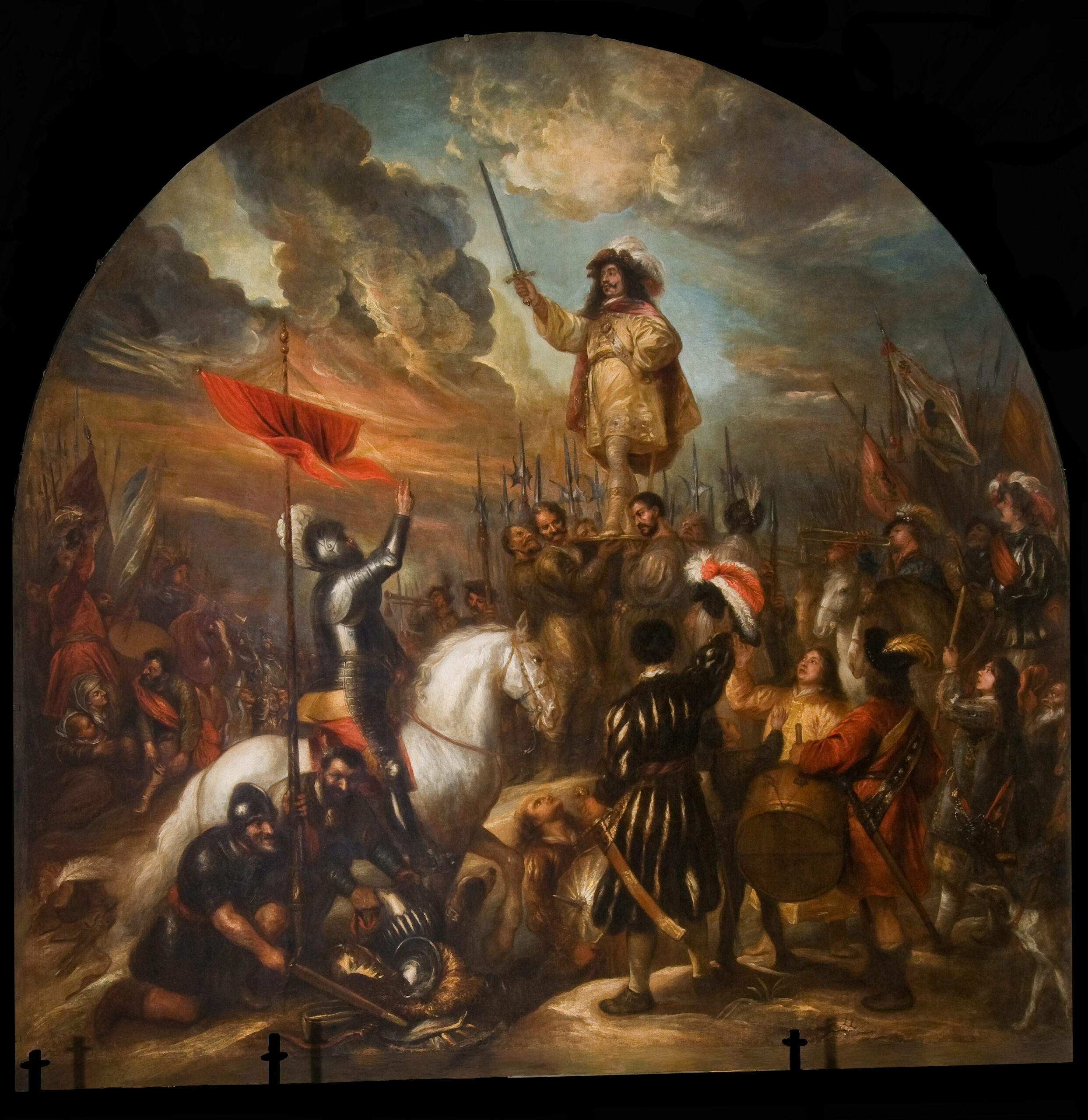
  32. Rudi Ekkart, โ€˜Govert Flinck and Ferdinand Bol: The Portraitsโ€™, in: Ferdinand Bol and Govert Flinck: Rembrandt’s Master Pupils, Zwolle, 2018, p. 158; Eric Jan Sluijter, โ€˜Out of Rembrandt’s Shadow: Govert Flinck and Ferdinand Bol as History Paintersโ€™, pp. 129-131.
  33. The etchings by Ferdinand Bol in this article are cited by the Hollstein number, in: F.W.H. Hollstein: Dutch and Flemish Etchings Engravings and Woodcuts, Amsterdam 1950, Vol. 3. pp. 15-35. However, the states noted here are updated, as anticipated in the forthcoming New Hollstein volume.
  34. The first one to point this out was Pierre Yver: Supplement au catalogue raisonneฬ de M. M. Gersaint, Helle & Glomy: de toutes les pieces qui forment l’oeuvre de Rembrandt. Amsterdam 1756, pp. 39-40, no.108, although he referred to the third, 1681 edition of the book. The etching is already present in the first, 1644 edition, published in Amsterdam.
  35. Den Christelyken Hovelingh has been commonly described as a play, but it is written as a poetic dialogue. If it was meant to be a play and/or if it was ever staged is not known to me. It is not listed as having been staged from 1637 to 1772: see Creative Amsterdam. An E-Humanities Perspective. Onstage. Online Datasystem of Theatre in Amsterdam from the Golden Age to the present: https://www.vondel.humanities.uva.nl/onstage/plays (accessed 7 July 2024). The title page of the 1642 volume indicates โ€˜Den Christelyk Hovelinghโ€™. However, the headers on all pages of that volume use the spelling โ€˜Christelykenโ€™, as do subsequent authors and libraries. See Jan Harmensz. Krul: Den Christelyk Hovelingh, Amsterdam 1642.
  36. This appears to have been first noted in N.C.H. Wijngaards.: Jan Harmens Krul: zijn leven, zijn werk en zijn betekenis, Zwolle, 1964, and is also described in: H.C. van Bemmel: Bibliografie van de werken van Jan Hermans Krul, Amsterdam, 1984.
  37. David de Witt and Leonore van Sloten, โ€˜Ferdinand Bol: Rembrandtโ€™s Discipleโ€™ in: Bol and Flinck (note 1), p. 48; and: Leonore van Sloten, โ€˜Ferdinand Bol, the Etcherโ€™, in: Bol and Flinck (note 1), p. 207; and Sophia Thomassen, โ€˜Timelineโ€™, in: Bol and Flinck, 2018 (note 1), p. 11.
  38. De Witt and Van Sloten, Bol, 2018 (note 6); Robert Schillemans: Bijbelschilderkunst rond Rembrandt, Utrecht 1989, pp. 31-34.
  39. Wijngaards, Krul, 1964 (note 5); Van Bemmel, Bibliographie, 1984 (note 5). I have been able to trace only thee copies: Library of the University of Amsterdam (2780 C 51), Royal Library, Den Haag, (KB: 3 C 20:10), and Noord-Hollands Archief, Haarlem (Oude Boekerij: 88 A 16). The copy in Den Haag lacks the page (A2) with Bol’s print.
  40. Wijngaards, Krul, 1964 (note 5); Van Bemmel, Bibliographie, 1984 (note 5).
  41. The 1644 edition (J.H. Krul: Pampiere Wereld, First edition. Amsterdam1644) is a folio edition measuring 302 x 190 mm; the 1681 edition (J.H. Krul: Pampiere Wereld, 3rd edition. Amsterdam, the widow of van Jan Jacobsz Schipper) is in quarto, measuring 216 mm x 170 mm. and the 1644-45 edition (J.H. Krul: Pampiere Wereld, 2nd edition, Amsterdam) is in octavo, measuring 169 x 104 mm. Book and library catalogues commonly ascribe c.1650 as the date for the latter, but the source of this attribution is not clear, and it is in error. See also Van Bemmel, Bibliographie (note 5).
  42. Van Bemmel, Bibliographie (note 5); The anonymous copy is in reverse, by an unknown hand, is neither signed nor dated, measures 85 x 74.5 mm, is of the same theme and general composition, but is artistically distinctly different. The shield is blank in this copy of Bol’s etching. I have not found any impressions of this copy that were not part of the printed book. I have identified three other distinct copies after Bol’s print, for a total of four, rather than the single copy identified by Hollstein (note 2).
  43. In 1644 and again in 1645 Krul obtained two successive loans, with the second providing funds to pay off the first, to permit him to publish the first two editions of Pampiere Wereld. Krul gave successively each lender volumes of the work, the patent rights and โ€˜someโ€™ copper plates for the period of the loan. It is not clear if the plates included Bol’s etching. See Wijngaards, Krul, 1964 (note 5); Van Bemmel, Bibliographie, 1984 (note 5).
  44. Jan Harmensz. Krul: Minne-Spiegel ter Deughden, Amsterdam 1650-51, J. H. Krul: Minne-Spiegel ter Deughden, Amsterdam; J. H. Krul: Minne-Spiegel ter Deughden, Joost Hartgers, Amsterdam, 1640; J. H. Krul: Minne-Spiegel ter Deughden, Michiel de Groot, Amsterdam, 1662; Jan Harmensz. Krul: Minne-Spiegel ter Deughden, Amsterdam, 1669-72.
  45. Hollstein gives only four states; more recently, George C. Kenney lists five, albeit described differently than the six here. See George C. Kenney: The Illustrated Bartsch, vol. 51. Supplement: Netherlandish Artists. Ferdinand Bol. New York 2017, p. 73, no. 18.
  46. In addition to the partial burnishing out of Bol’s name on the blade of the spade in the second state, lines are added partially obscuring the remaining portion of the signature; additional background work is added in several places; there is some work added on the scythe, table, book and the skull of the skeleton; and some additional work on the woman’s headdress/cape (fig. 2). The unique impression of this state is touched with black chalk and lead white, including the addition of a domed building in the distant background, horizontal lines below and to the left of the domed building, and the outline of a blank shield (or cartouche) covering the left part of the end of the coffin. Kenney also mentioned this state, but mistakenly describes the building in the background as a state difference. See: Kenney, Bol, 2017 (note 14). Only two other Bol prints have retouchings by the artist that appeared in the subsequent state: The Philosopher, H.6ii, 1643 (Amsterdam, RP-P-BI-1994); and The Young man Wearing a Plumed Cap, H.14i, 1642 (London, 1921,1008.21; and Dresden, A41073). The retouchings for H.6ii and H.14i appear in the plates for the next state of their respective prints. It is interesting to note that all retouched impressions were done in approximately the same period, and that the retouchings for H.6 and H.14 are very small in comparison to the significant retouchings for H.18. It is possible that this is a reflection of Bol’s satisfying his client’s wishes. Retouchings of impressions of other Bol prints are not judged to have been by his hand.
  47. My thanks to Jaco Rutgers for this suggestion
  48. The fifth state has added substantial additional background work and some work to the woman’s dress, and a bit on the shield, and the skull of the skeleton.
  49. The sixth, and final, state has added rather crude extensive reworking consisting of regular patterns of cross-hatching using the burin, for instance on the back of the skull, the inside of the tent, and the clothes of the female courtier. See fig 6.
  50. It had long been thought that Rembrandt painted his portrait in 1633. However, more recently, this has been called into question by Ernst van de Watering, A Corpus of Rembrandt Paintings, vol. 6: Rembrandtโ€™s Paintings Revisited, Dordrecht 2017, p. 526, no. 91. There were also family connections; see M. Louttit: โ€˜The Romantic Dress of Saskia van Ulenborch: Its Pastoral and Theatrical Associationsโ€™, The Burlington Magazine 115 (1973), pp. 317-326.
  51. Leonore van Sloten, โ€˜Ferdinand Bol in de voetsporen van Rembrandt: Twee herontdekte schilderijenโ€™, in: Rudie van Leeuwen, Lilian Ruhe, and David de Witt, eds, Not Always Rembrandt; 37 studies in Baroque art. Turnhout, Belgium 2023, pp. 20-31.
  52. Jan Soet, Soets Clorinde en Dambise, Amsterdam 1640.
  53. University of Amsterdam: Creative Amsterdam. An E-Humanities Perspective. Onstage. Online Datasystem of Theatre in Amsterdam from the Golden Age to the present. https://www.vondel.humanities.uva.nl/onstage/plays/359 (accessed 7 July 2024).
  54. N.C.H. Wijngaards, (note 5).
  55. Antonio de Guevara: Menosprecio de corte y alabanza de aldea. Valladolid 1539.
  56. See: S. Oosterwijk, โ€˜Morbid morality. The Danse macabre motif in Dutch art of the Golden Ageโ€™, in: Ilona Hans-Collas et al. (eds.), Mort n’espargne ne petit ne grant [Texte imprimรฉ] : รฉtudes autour de la mort et de ses reprรฉsentations : actes du XVIIIe Congrรจs international de l’association Danses macabres d’Europe, Paris, 19-23 mars 2019, Paris 2019, pp. 174-195.
  57. Translation: Linda Stone-Ferrier: โ€˜Ferdinand Bol: The Hour of Deathโ€™, in: Dutch Prints of Daily Life: Mirrors of Life or Masks of Morals? Lawrence, Kansas: The Spencer Museum of Art of The University of Kansas, 1983, pp. 144-146, credits Oliver C. Phillips, Classics Department, University Of Kansas, for the translation.
  58. There is no Bol print dated earlier than H.18, although he may have created one, Abraham’s Sacrifice (H.1), when working in Rembrandt’s studio; however, this is uncertain, as it is not dated.
  59. Gerard Roosenboom, Recueil van verscheyde keuren, en costumen. Midtsgaders maniere van procederen binnen de stadt Amsterdam. Eerst gecollecteert en beschreven, door Gerard Rooseboom, Amsterdam, 1656, pp. 120-131.
  60. Stadsarchief Amsterdam (hereafter SAA), 5061, 3051 Memorieboek, p. 29.
  61. http://remdoc.huygens.knaw.nl/#/document/remdoc/e4581 (accessed 3 December 2025).
  62. Arthur K. Wheelock jr., โ€œJan Lievens: Bringing new light to an old masterโ€, in: Wheelock Jr. ed, Jan Lievens. A Dutch master rediscovered, exh. cat. Washington: National Gallery of Art; Milwaukee: Milwaukee Art Museum; Amsterdam: Rembrandt House Museum, 2008-2009, pp. 6-7.
  63. SAA, 5075, 1745 not. Jan Quirijnen Spithof, pp. 124-125, 1-3-1644; Abraham Bedius, โ€œHet verblijf van Jan Miense Molenaer te Amsterdam, in documentenโ€, in: Frederik D.O. Obreen, Archief voor Nederlandsche Kunstgeschiedenis, vol. 7, Rotterdam 1888-1890, p. 293.
  64. Arthur K. Wheelock jr., in: exh. cat. Amsterdam 2009 (see note 4), pp. 17-18.
  65. SAA, 5061, 3063 Huwelijkskrakeelregisters, 8-12-1646.
  66. SAA, 5075, 1080, not. Joost van de Ven, ff. 203r-203v, 7-12-1646.
  67. โ€œter saecke sij als haar regeerster bij den req[uiran]t gewoont haddeโ€ (see note 8).
  68. โ€œhaer beloften van trouw heeft gedaan, van haer in eeuwig niet te sullen verlate & haer een vierkant stucken, neefens een ander silvere stuxkens gegeven & daarbeneffens van hem beslaepen & beswangertโ€ (see note 7). The mentioned silver square piece was a klip, an emergency coinage at that time struck mainly in West Friesland, or a medal/jeton.
  69. SAA, 5061, 3064, Huwelijkskrakeelregisters, 14-10-1649.
  70. The name Anna or Annetje Jacobs was fairly common; in 1647, eleven children were baptised in Amsterdam whose mother bore a variant of this name.
  71. The notarial archives contain many examples of such payments, both as compensation for the woman and as maintenance costs for any illegitimate children. For instance, Jan van de Velde agreed to the payments of two guilders per week in maintenance for the child he had conceived out of wedlock with Trijn Jans in 1636 (SAA, 5075, 601 not. Laurens Lamberti, p. 456, 17-07-1642). Whether this concerns the painter Jan van de Velde (III) from Haarlem, active in Amsterdam, is not clear. In 1661 David Abraham Cardozo paid no less than 1,000 guilders for โ€œdeflorationโ€ and the maintenance of two children resulting from his extramarital relationship with Dorothea Jans Bentem (SAA, 5075, 2210 not. Adriaen Lock, pp. 1107-1108, 27-05-1661).
  72. London (Christieโ€™s), 17 December 2020 (online auction 18877), lot 231 (inaccurately described as 185.4 x 195.5 cm); Old Master Paintings, Vienna (Dorotheum), 10 November 2021, lot 82 (as Jรผrgen Ovens, Pentecost).
  73. Arnold Houbraken, De groote schouburgh der Nederlantsche konstschilders en schilderessen I, Amsterdam 1718, p. 273.
  74. Constanze Kรถster,ย Jรผrgen Ovens (1623-1678). Maler in Schleswig-Holstein und Amsterdam, Petersberg 2017,ย p. 53; pp. 327-328, Qu. II.A.7.
  75. Archiveย ofย Schleswig-Holsteinย (LAS),ย Abt. 7, no. 6504, f. 1r; Kรถster 2017 (seeย noteย 3), pp. 37-38;ย p.ย 326, Qu. II.A.2.
  76. Kรถster 2017 (seeย noteย 3), p. 38.
  77. Kรถster 2017 (seeย noteย 3), p. 389, G145.
  78. Kรถster 2017 (see note 3), p. 390, G147.
  79. The Eighteenthโ€ฏYear Bookโ€ฏof the Brooklyn Institute of Arts and Sciences, 1905-1906, pp. 70, 124,โ€ฏ224;ย โ€œDepartment of Fine Artsโ€,ย The Museum News (Brooklyn Institute of Arts and Sciences)ย 1 (1906) no. 10, p. 144.
  80. Handwritten list of Maria Ovensโ€™s estate (private collection, location unknown), cited after Harry Schmidt, โ€œDasย Nachlass-Inventarย desย Malersย Jรผrgen Ovensโ€,ย Oud-Hollandย 32 (1914),ย p. 44, no. 16, note 7;ย Harry Schmidt,ย Jรผrgen Ovens.ย Sein Leben und seine Werke. Ein Beitrag zur Geschichte der niederlรคndischen Malerei im XVII.ย Jahrhundert, Kiel 1922,ย p. 150,ย underย no. 59a, p. 271, note 26 (as probably a copy after an original by Ovens);ย Kรถster 2017 (see note 3),ย p. 39;โ€ฏp. 325,โ€ฏQu. I.4.c.
  81. Erik Hinterding, Jaco Rutgers,ย The New Hollstein, Dutch & Flemish etchings, engravings and woodcuts, 1450-1700. Rembrandt,ย Ouderkerkย aanย denย IJsselย 2013, text 2, pp. 59-60, no. 185.
  82. Hinterding, Rutgers 2013 (see note 10), text 2, pp. 151-154, no. 239.
  83. Melchiorย Kรผsel,ย Iconesย Biblicaeย Veterisย et Noviย Testamenti.ย Figurenย biblischerย Historienย altenย undย neuenย Testaments, Augsburg 1679, โ€˜Bookย of Esther,ย Chapterย 6โ€™, fig. 20;ย reprintย Hildesheim 1968.ย Seeโ€ฏalso:โ€ฏPeter van derโ€ฏCoelen, โ€˜Rembrandt in Duitsland โ€“ Iconografie en verspreiding van zijn etsen in de zeventiende eeuwโ€™,ย Kroniek van het Rembrandthuisโ€ฏ2004, no. 1-2,ย p. 3, fig. 2.
  84. or a mirror-image of this man in theย Hundred Guilder Print, see: Ernst van de Wetering et al.,ย A Corpus of Rembrandt Paintings V. Small-scale history paintings, Dordrechtย 2011, p. 144, fig. 4.
  85. Kรถster 2017 (see note 3), p. 397, Z12-13.
  86. Hinterding, Rutgers 2013 (see note 10), pp. 39-41, no. 173.
  87. The presence of Mary or of other women at Pentecost, such as Mary Magdalene, is usually inferred from Acts 1:14: โ€œThey all joined together constantly in prayer, along with the women and Mary, the mother of Jesus [โ€ฆ]โ€.
  88. Hinterding, Rutgers 2013 (see note 10), text 1, pp. 189-191, no. 119.
  89. Hinterding, Rutgers 2013 (see note 10), text 1, p. 84, no. 55; pp. 220-221, no. 138.
  90. Hinterding, Rutgers 2013 (see note 10), text 2, pp. 158-159, no. 241.
  91. The only possible exception in this respect is Ovensโ€™s painted self-portrait from c. 1652 in the Hamburger Kunsthalle (inv. no. HK-26), which seems to go back to Rembrandtโ€™s famous 1639 etchingย Self-Portrait leaning on aย Stoneย Sill. See:ย Patrick Larsen, โ€œThe relationship between Govert Flinck and Jรผrgen Ovensโ€, in: Stephanie S. Dickeyย (ed.),ย Ferdinand Bol and Govert Flinck. New research, Zwolle 2017, p. 182, fig. 12.2, p. 184;ย Hinterding, Rutgers 2013ย (seeโ€ฏnoteโ€ฏ10),โ€ฏtextโ€ฏ2,โ€ฏpp. 33-35, no. 171.
  92. Karel van Mander,ย Het schilder-boeck, Haarlem 1604, fol. 5r; Philips Angel,ย Lof der schilder-konst, Leiden 1642, pp. 36-37.
  93. For Ovensโ€™s artistic appropriations of figures and motives from seventeenth-century art of the Low Countries during his Northern German periods, see:ย Patrick Larsen, โ€œThe Imitation of Dutch and Flemish Art in Jรผrgen Ovensโ€™ (1623-1678) Paintings in Schleswig-Holsteinโ€, in:ย Rieke van Leeuwen, Juliette Rodingย (eds.),ย Masters of Mobility. Cultural exchange between the Netherlands and the German lands in the long 17th centuryย (Gerson Digital VI), The Hague: RKD, 2020,ย https://masters-of-mobility.rkdstudies.nl/13-the-imitation-of-dutch-and-flemish-art-in-j%C3%BCrgen-ovens-1623-1678-paintings-in-schleswig-holstein/.
  94. ย Nadineย M. Orenstein, โ€œPrintmaking among artists of the Rembrandt Schoolโ€, in: Stephanie S. Dickeyย (ed.),ย Rembrandt and his circle. Insights and discoveries, Amsterdam 2017, p. 308, fig. 16.3. For Ovensโ€™s prints, see: Tilman Falk, Robert Zijlma, โ€œJรผrgen Ovensโ€, in:ย Hollsteinโ€™s German engravings, etchings and woodcuts,ย 1400-1700, vol.ย XXXI,ย Amsterdam 1991, pp. 61-74, nos. 1-10b; Kรถster 2017 (see note 3), pp. 415-416, R1-R7.
  95. Werner Sumowski,ย Gemรคldeย der Rembrandt-Schรผlerย II, Landau/Pfalz 1983, p. 1020, no. 615;ย Hinterding, Rutgers (see note 10), text 1, pp.ย 201-202, no. 125.
  96. Guus Sluiter,ย โ€œโ€˜De Passie, anders de Historie van denย lydendenย Christusโ€™.ย Arent de Gelders Passieserieโ€, in: Peter Schoon et al.,ย Arent de Gelder (1645-1727). Rembrandts laatste leerling,ย exh.ย cat. Dordrecht: Dordrechts Museum; Cologne:ย Wallraf–Richartz-Museum, 1998, pp. 73-75,ย figs. 2-13;ย pp. 78-80, 85; Guus Sluiter, โ€œDe fascinatie van Arent de Gelder voor Rembrandts etsenโ€,ย Bulletin Dordrechts Museum 22 (1998), pp. 35-45.
  97. Sumowskiย 1983 (see note 24), p. 1163, no. 738;ย Hinterding, Rutgers 2013ย (see noteย 10),ย text 2,ย pp. 57-58, no. 184.
  98. Sumowskiย 1983 (see note 24), p. 1421, no. 935;ย Hinterding, Rutgers 2013ย (see noteย 10),ย text 1,ย pp. 251-253, no. 155.
  99. LAS,โ€ฏAbt. 7, no.โ€ฏ2311, fol. 90r; Kรถsterย 2017 (see note 3),ย p. 304,โ€ฏnoteโ€ฏ195;โ€ฏp. 332,โ€ฏQu. II.B.1.1652.ย Also see:ย Patrick Larsen, โ€œJรผrgen Ovens (1623-1678) as an Art Agent for the Dukes of Gottorfโ€, in:ย Rieke van Leeuwen et al.,ย The Big Picture. Collecting Dutch and Flemish Art in Germany 1600-1850ย (Gerson Digital VIII), The Hague: RKD, 2022,ย https://the-big-picture.rkdstudies.nl/2-jรผrgen-ovens-16231678-as-an-art-agent-for-the-dukes-of-gottorf/.
  100. Rembrandt prints were offered for sale in the German-speaking lands fairly early.ย See Van derย Coelenย 2004ย (seeย noteย 12), pp. 5-15; Jaco Rutgers, โ€œRembrandt op papier. De rol van prenten bij het vestigen van Rembrandts reputatie als schilderโ€, in: Jaco Rutgers, Mieke Rijnders (eds.),ย Rembrandt in perspectief. De veranderende visie op de meester en zijn werk, Zwolle 2014, p. 122.
  101. Neither the so-called Gottorf account books nor the 1694, 1710 and 1743 inventories of Gottorf castle mention works on paper by Rembrandt.
  102. Werner Sumowski, Paul Huys Janssen, The Hoogsteder Exhibition of Rembrandtโ€™s Academy, exh. cat. The Hague: Hoogsteder & Hoogsteder, 1992, cat. no. 28.
  103. Exhibition catalogues: Albert Blanckert, Jezus in de Gouden Eeuw, exh. cat. Rotterdam: Kunsthal, 2000โ€“2001; Akira Kofuku, Rembrandt and the Rembrandt School. The Bible, mythology and ancient history, exh. cat. Tokyo: Museum of Western Art, 2003; Arthur K. Wheelock et al., Jan Lievens. A Dutch Master Rediscovered, exh. cat. Washington: National Gallery of Art; Milwaukee: Milwaukee Art Museum; Amsterdam: Rembrandt House Museum, 2008-2009, cat.no. 52; Louis van Tilborgh, Constantijn Huygens. Kunstkenner en verzamelaar, exh. cat. The Hague: Museum Bredius, 2013, cat. no. 14. Other literature: Werner Sumowski, Gemรคlde der Rembrandtschรผler, vol. 4, Landau, 1983, p. 3726, no. 2356, fig. 3964; Helga Gutbrod, Lievens und Rembrandt : Studien zum Verhaฬˆltnis ihrer Kunst, Frankfurt am Main, 1996, p. 299; Edwin Buijssen (ed.), Haagse schilders in de Gouden Eeuw, Het Hoogsteder lexicon van alle schilders werkzaam in Den Haag 1600-1700, The Hague, 1998, p. 191; Lloyd DeWitt, Evolution and Ambition in the career of Jan Lievens, 1607-1674, Phd. Diss. University of Maryland, College Park, 2006, p. 228.
  104. DeWitt, Evolution (see note 2), p. 228.
  105. For example those mentioned in the Montias Database of 17th Century Dutch Art Inventories and the Getty Provenance Research Index.
  106. Sumowski, Huys Janssen, Academy (see note 1), p. 220.
  107. Dr Gaston Gaudinot sale, Paris (Drouot), 13-14 February 1869.
  108. Sumowski, Huys Janssen, Academy (see note 1), p. 220.
  109. Ibid.
  110. Sumowski, Huys Janssen, Academy (see note 1), p. 226. Huys Janssen explains that the miracle as described in Luke and John differs from the version told by Matthew.
  111. After listening to the centurion, and before addressing him directly, Jesus speaks to his followers: โ€œI tell you, many will come from east and west and sit at table with Abraham, Isaac, and Jacob in the kingdom of heaven.โ€ (Matthew 8:11) Perhaps Lievens incorporated this part of the text and explicitly included people coming from the east (from the standpoint of his Dutch audience). A second possibility is that they are Pharisees. This group plays the role elsewhere in Matthew of disbelieving critics, and here they may serve to accentuate the belief of the centurion in the Christian faith. In early prints (Sebald Beham, Israhel van Meckenem, Hans Schaรผfelein and Cornelis Massijs) and several Italian prints from Lievensโ€™s time (seventeenth century prints after Paolo Veronese), Pharisees wear such headdresses. A parallel between blacks and overseas regions, such as in Lievensโ€™s Brinio, is convincingly outlined by Elmer Kolfin (in: Elmer Kolfin, De kunst van de macht, Jordaens, Lievens en Rembrandt in het Paleis op de Dam, Zwolle, 2023, p. 67), does not seem to apply here.
  112. Sumowski, Huys Janssen, Academy (see note 1), p. 223.
  113. Sumowski, Huys Janssen, Academy (see note 1), pp. 223, 226.
  114. The right eye from the perspective of the viewer. There, a pupil was painted in, in a later restoration. Because of the sketchy manner it is difficult to ascertain whether or not both eyes are present, but in the left the lower eyelid is visible, while it is undefined in the right eye.
  115. For example: Jacobus Neeffs (after Jacob Jordaens), Judgement of Christ, etching, c. 1630-1645; Marinus van der Goes (after Jacques Jordaens), Judgement of Christ, engraving, c. 1614-1639; Willem Panneels (after Peter Paul Rubens), Adoration of the kings, etching, 1630; Nicolaes Lauwers (after Peter Paul Rubens), Ecce Homo, engraving, c. 1619-1652; and many more. Generally, for examples of inspiration drawn from prints by Lievens, see De
    Witt, Evolution (see note 2).
  116. Sumowski, Huys Janssen, Academy (see note 1), p. 226. Huys Janssen refers to examples by Nicolaes Moeyaert (Herentals, St. Waltrudis church) and Adam Camerarius (Amsterdam, Rijksmuseum, inv. no. SK-A-733). DeWitt refers to a painting by Bartholomeus Breenbergh (Karlsruhe, Staatliche Kunsthalle Karlsruhe, inv. no. 228) and the Moeyaert in Herentals (DeWitt, Evolution (see note 2), p. 227). But also see a woodcut with this subject by Cornelis van Sichem II in Der zielen lusthof (1629). Also of interest: Claes Moeyeart, Christ and the Centurion, 1632 (Minneapolis, Minneapolis Institute of Art, inv. no. 2012.84.5). Although the painting is known under this subject, it may in fact depict Cornelius kneeling before Peter, since more than one figure is shown kneeling and the composition closely resembles prints of this subject.
  117. Henri van de Waal, โ€œโ€™s Lands oudste verleden in de voorstelling van Vondel en zijn tijdgenootenโ€, Elsevierโ€™s Maandschrift 47 (1937); Henri van de Waal, โ€œTempesta en de historieschilderingen op het Amsterdamse stadhuisโ€, Oud Holland 56 (1939); Henri van de Waal, Drie eeuwen vaderlandsche geschied-uitbeelding 1500-1800, een iconologische studie, The Hague, 1952; Kolfin, Kunst (see note 10).
  118. Antonio Tempesta (after Otto van Veen), Print 8 in (โ€ฆ)De Batavische oft oude Hollandtsche oorloghe teghen de Romeynen, 1612. Etching, 167 x 210 mm. Rijksmuseum, Amsterdam, inv. no. RP-P-OB-37.614. Jรผrgen Ovens based his drawing for the Batavian Series depicting Claudius Civilis leaving the Women and Children to fight at Xanten (Hamburg, Hamburger Kunsthalle, inv. no. 22342) on this print.
  119. On the period in The Hague:ย Buijssenย Haagseย (see note 2), pp.191-193.
  120. Haarlem,ย Teylersย Museum, inv. no. P 006. For the identification and context, see: Gregor Weber, โ€œDusย leeftย deย dappreย Graaf: Zuย einemย Bildnisย Andries deย Graeffsย von Jan Lievens (1607-1674)โ€,ย Oud Hollandย 99 (1985), pp. 44-56.
  121. Van de Waal,ย Eeuwenย (seeย noteย 16), p. 230;ย Kolfin,ย De kunst van de machtย (seeย noteย 10), pp. 19-20.
  122. Van de Waal, โ€œโ€™s Landsโ€ย (seeย noteย 16), p. 301-302.
  123. ย Kolfin,ย Kunstย (seeย noteย 10), p. 41.ย Four Batavian scenes were never completed. For two the themes are known, for the other two are not known.
  124. Munich,ย Staatlicheย Graphischeย Sammlungย Mรผnchen, inv. no. 1451; Hamburg, Hamburger Kunsthalle, Kupferstichkabinett,ย inv. no. 22342.ย A lesser-known drawing of Rembrandtโ€™sย Conspiracy of Claudius Civilisย (Edinburgh, National Galleries of Scotland, inv. no. D 23862) shows โ€“ when compared to the drawing in Munich โ€“ that the lower section of the painting is covered by a frieze and that portions of the left and right sides are obscured. This may indicate that an alternative conception of the framing of the lunettes was considered before the one ultimately implemented. It is possible that this earlier framing was already envisioned when Lievens produced his oil sketchย Christ and the Centurion.
  125. Van de Waal,ย Eeuwenย (see note 16), p. 225, referring to SAA, 5039, 2ย resolutieboek, f. 66r.
  126. Ibid., referring to SAA, 5039, 153ย rapiamusย 1661, f.195v.
  127. Van de Waal,ย Eeuwenย (seeย note 16), p. 225.
  128. Gregor Weber, โ€œJan Lievensโ€™s โ€˜The Shield-raising of Brinioโ€™ a Second Oil Sketchโ€,ย Hoogsteder-Naumann Mercuryย 12/13 (1992), nt. 8.
  129. Dewitt,ย Evolutionย (see note 2), p. 221.
  130. Kolfin,ย Kunstย (seeย noteย 10), p.67.
  131. Kolfin,ย Kunstย (seeย noteย 10), p. 44.
  132. For, among other things, contemporary poetry in which Civilis and others are compared to the members of the House of Orange: Van de Waal,ย Eeuwenย (see note 16), pp. 220-221, 223.
  133. Kolfin,ย Kunstย (seeย noteย 10), p. 47.
  134. Margriet van Eikema Hommes, Elmerย Kolfin,ย De Oranjezaal in Huis ten Bosch, Een zaal uit loutere liefde, Zwolle, 2013, p. 77.
  135. Kolfin,ย Kunstย (seeย noteย 10), pp. 41-47, 77.
  136. One may ask,ย in light ofย points discussed in this article, whether the โ€œChristโ€ figure in the first version was in fact Christ at all. If so, the oil sketch would initially have represented solely a Christian scene without any reference to the Batavian Revolt, thereby less relatable to the (eventual) decoration program of the Town Hallโ€™s gallery. Given that in the initial design the groups left and right with Biblical and/or eastern figures do not seem to have been included (aside from a bearded man on the right, judging from the x-ray), the large central figure may originally have been Julius Civilis. In compositional terms, this would align the painting more closely with the print by Tempesta after Van Veen. The apparent similarity in hairstyle between the final Christ figure and the initial figure, together with the possible initial presence of a (holy) beam of light directed toward the figure, may argue against this hypothesis; nevertheless,ย Brinnoย in Lievensโ€™sย Brinio Raised on the Shield likewise features long hair and even incorporates a diagonal compositional line through the clouds, comparable to the line through the foliage in the initial version of the present subject. The later insertion of Christ could then be understood as a deliberate twist, imparting a more prominent Christian meaning to the historical scene. These suggestions and observations were kindly shared by Jochem van Eijsden.
  137. Samuel van Hoogstraten, Inleyding tot de hooge schoole der schilderkonst: anders de zichtbaere werelt, Rotterdam 1678, p. 18. Van Hoogstraten here refers to the period when he was โ€œstill a discipleโ€, during which, as part of a โ€œweโ€, he and others discussed a particular question, to which a certain โ€œFabritiusโ€ responded with an answer. It is generally assumed that this refers to Carel Fabritius, who is assumed to have studied with Rembrandt between approximately 1641 and 1643.
  138. Werner Sumowski described Van Hoogstraten as โ€œpรคdagogisch begabt, Assistent Rembrandts gewesenโ€ (Werner Sumowski, Gemรคlde der Rembrandt-Schรผler II, Landau/Pfalz 1984, p. 1286). As supporting evidence, Sumowski argued that Van Hoogstraten corrected drawings by Constantijn Daniรซl van Renesse (; p. 1290, nt. 2). When discussing one of these drawings (Moses and Reuelโ€™s Daughters at the Well, Amsterdam, Rijksmuseum, inv. no. RP-T-1893-A-2782) Sumowski suggested the possibility that โ€œSamuel van Hoogstraten acted as assistant to the master on occasional trips even at a later dateโ€. (Werner Sumowski, Drawings of the Rembrandt School IX, New York 1985, no. 2159x). Building on this, Jonathan Bikker suggested in his monograph on Willem Drost that Van Hoogstraten โ€œmight have supervised Drost during his early days in Rembrandtโ€™s studioโ€ (Jonathan Bikker, Willem Drost, A Rembrandt Pupil in Amsterdam and Venice, New Haven/London 2005, p. 11). David de Witt later observed, in his Abraham van Dijck monograph, concerning Van Hoogstraten: โ€œby 1646 his training would have been complete, but he appears to have stayed on as a tutor or head pupil for several yearsโ€ (David De Witt, Life and Work of Late Rembrandt Pupil Abraham van Dijck, c. 1635-1680, Amsterdam 2020, p. 11).
  139. Sabine Pรฉnot, Rembrandt – Hoogstraten. Colour and Illusion, exh. cat. Vienna: Kunsthistorisches Museum Wien, 2024; Nathalie Maciesza, Epco Runia, Samuel van Hoogstraten. De Illusionist, exh. cat. Amsterdam: Rembrandt House Museum, 2025; Sabine van Beek, Leonore van Sloten, David de Witt et al., Samuel van Hoogstraten: Catalogue Raisonnรฉ, The Hague 2025.
  140. The catalogue of the Vienna exhibition assumes a position for Van Hoogstraten as an assistant for approximately three to four years (Angelina Illes, in: exh. cat. Vienna 2024 (see note 3), p. 29; Jonathan Bikker, in: exh. cat. Vienna 2024 (see note 3), p. 93), though it makes no mention of any teaching responsibilities. These are, however, included in the publication accompanying the exhibition at the Rembrandt House Museum (Michiel Roscam Abbing, in: exh. cat. Amsterdam 2025 (see note 3), p. 19; David De Witt, in: exh. cat. Amsterdam 2025 (see note 3), p. 131), and in the online Van Hoogstraten catalogue raisonnรฉ by the RKD (Michiel Roscam Abbing, in: The Hague 2025 (see note 3), โ€œWith Rembrandt in Amsterdamโ€. https://vanhoogstraten.rkdstudies.nl/samuel-van-hoogstraten-the-ingenious-and-poetic-painter/with-rembrandt-inamsterdam/, 26 May 2025).
  141. The term โ€œassistentโ€ was used in Holland in the 17th century, albeit in other contexts, see: Woordenboek Nederlandse taal, s.v. assistent, https://gtb.ivdnt.org/iWDB/search?actie=article&wdb=WNT&id=M004535&lemma=assistent&domein=0&conc=true, 11
    July 2025.
  142. โ€œEen min of meer ondergeschikte helperโ€, a more or less subordinate helper (see note 5); โ€œA person who helps or supports somebody, usually in their jobโ€: Oxford English Dictionary, s.v. assistant, https://www.oed.com/view/Entry/12041, 11 July 2025.
  143. The guild archive has been lost. For a comprehensive account of the Amsterdam Guild of Saint Luke and its ordinances, see: Isabella H. van Eeghen, โ€œSchilders of Sint Lucasgildeโ€, in: Isabella H. van Eeghen (ed.), Inventarissen der archieven van de gilden en van het brouwerscollege, Amsterdam 1951, passim.; Isabella H. van Eeghen (Jasper Hillegers, translator), โ€œThe Amsterdam Guild of Saint Luke in the 17th Centuryโ€, Journal of Historians for Netherlandish Art 4.2 (2012), passim., DOI:10.5092/jhna.2012.4.2.4, 11 July 2025. The current article relies exclusively on the guild regulations of the Amsterdam De Kroniek 2024/25 – Museum Rembrandthuis 10 paintersโ€™ guild. It is often assumed that the regulations of paintersโ€™ guilds in different Dutch towns did not differ substantially in content. On that assumption, gaps in the regulations of one town might be filled by those of another. However, the discussion later in this article regarding whether apprentices were permitted to produce their own work shows that crucial differences did in fact exist. For that reason, guild regulations from other cities are not used here to fill the gaps in the surviving Amsterdam regulations.
  144. Extract van de willekeuren en ordonnantien den gilde van St. Lucas verleent, Amsterdam 1720, p. 11.
  145. Extract (see note 8), p. 11; This is also the case in the chapter title and margin of the 1766 publication of all known guild charters: Ordonnantien en willekeuren van het Lucas-gilde binnen Amsterdam, Amsterdam 1766, p. 64, 68. It is noteworthy that the dean and headmen of the guild employed a gilde kneght (Extract (see note 8), pp. 26-27. This was not a pupilship, and the tasks meet the definition of an assistant in the Oxford English Dictionary and the Woordenboek Nederlandse Taal (see note 6)
  146. Extract (see note 8), pp. 12-13
  147. Extract (see note 8), pp. 11-12.
  148. Extract (see note 8), p. 12.
  149. Cornelis Kiliaen (ed. Frans Claes), Etymologicum teutonicae linguae, Antwerp 1599 (The Hague 1972), p. 278, s.v. leerionghe; leer-kind; leer-knecht; leerlinck; p. 703, s.v. discipel. In the regulations of the Haarlem Guild of St. Luke from 1634 (NHA, 1105, Ambachtsgilden te Haarlem (Gilden Haarlem), no. 219), the terms โ€œleerlingโ€, โ€œleerjongenโ€, and โ€œdiscipelโ€ are
    used. This might suggest that a distinction existed between them, but they are actually used interchangeably. The same applies to the terms โ€œ(werk)gezelโ€, โ€œknechtโ€, and โ€“ a new term โ€“ โ€œgastโ€. The latter is synonymous with journeyman or servant: โ€œKnecht van een ambachtsman of fabrikant; gezel, werkknechtโ€, servant of a tradesman or manufacturer; journeyman, workshop hand: Woordenboek Nederlandse taal, s.v. gast, https://gtb.ivdnt.org/iWDB/searchactie=article&wdb=WNT&id=M017355.re.35&lemma=werkgast&domein=0&conc=true,
    16 oktober 2025.
  150. Kiliaen, Etymologicum (see note 13), p. 139, s.v. ghe-selle van een ampt. The Latin word โ€œcollegaโ€ is likewise a translation for โ€œambtgenootโ€, โ€œmaetโ€, and โ€œvennootโ€ (Kiliaen, Etymologicum (see note 13), p. 18, s.v. ampt-ghenoot; p. 302, s.v. maet, med-maet, maetken; p. 579, s.v. veyn-out, veyn-noot, ven-noot, vennoot, veyn-gnoot).
  151. Kiliaen, Etymologicum (see note 13), p. 244, s.v. knecht, dienaer.
  152. Nicolaas de Roever, โ€œDrie Amsterdamsche Schilders (Pieter Isaaksz, Abraham Vinck, Cornelis van der Voort)โ€, Oud Holland 3 (1885), p. 198.
  153. In 1619, he was asked together with several artists who had traveled to Italy, including Pieter Lastman, Adriaen van Nieulandt, and Barent van Someren, to assess the authenticity of a Caravaggio painting from the collection of the late Louis Finson. Abraham Bredius, Nicolaas de Roever, โ€œPieter Lastman en Franรงois Venantโ€, Oud Holland 4 (1886), pp. 7-8.
  154. Ronald de Jager โ€œMeester, leerjongen, leertijd. Een analyse van Zeventiende-eeuwse Noord-Nederlandse leerlingcontracten van kunstschilders, goud- en zilversmedenโ€, Oud Holland 104 (1990), p. 96, nt. 107. The title of โ€œgezelโ€ is, in fact, never mentioned in the known Amsterdam contracts.
  155. De Jager, โ€œMeesterโ€ (see note 18), pp. 73-75.
  156. De Jager, โ€œMeesterโ€ (see note 18), p. 71.
  157. Stadsarchief Amsterdam (hereafter SAA), 5075, 393A, nots. Jacob Jacobs and Nicolaes Jacobs, ff. 59r-59v, 20-07-1626; Abraham Bredius, โ€œGerrit Willemsz. Horstโ€, Oud Holland 50 (1933), pp. 5-6; De Jager, โ€œMeesterโ€ (see note 18), p. 98, no. 7.
  158. This underscores a clear distinction: as was also evidenced by the entries in Kiliaen, Etymologicum (see note 13), dienaer was a synonym for knecht, not for leerknecht (see note 15).
  159. Abraham Bredius, Kรผnstlerinventare. Urkunden zur Geschichte der hollรคndischen Kunst des XVIten, XVIIten und XVIIIten Jahrhunderts V, The Hague 191, pp. 1482-1483; De Jager, โ€œMeesterโ€ (see note 18), p. 98, no. 10.
  160. The value of a barrel of herring in Amsterdam in 1635 was approximately 120 grams of silver (Bo Poulsen, Dutch Herring. An Environmental History, c. 1600โ€“1860, Amsterdam 2008, p. 93, table 6.9); in the seventeenth century, ten grams of silver corresponded to the value of roughly one guilder.
  161. The tuition fees in Holland for a two-year contract averaged 61.5 guilders per year (De Jager, โ€œMeesterโ€ (see note 18), p. 75).
  162. Josua Bruyn, โ€œEen onderzoek naar 17de -eeuwse schilderijformaten, voornamelijk in Noord-Nederlandโ€, Oud Holland 93 (1979), p. 113.
  163. Abraham Bredius, Kรผnstlerinventare. Urkunden zur Geschichte der hollรคndischen Kunst des XVIten, XVIIten und XVIIIten Jahrhunderts II, The Hague 1916, pp. 400-401; De Jager, โ€œMeesterโ€ (see note 18), p. 98
  164. As a journeyman painter Waltusz earned less than half the daily wage of peers in other trades. In 1652, journeymen carpenters and bricklayers in Amsterdam earned approximately 26 to 27 stivers per summer day (although there are no exact figures for 1651, data is available for 1633, 27 and 25 stivers respectively, and for 1667, 28 and 27 stivers respectively).
    This disparity between painterโ€™s journeymen and their peers in other trades mirrors the situation in 1579. The guild
    regulations (gildebrief) of the St. Lukeโ€™s Guild from that year mention journeymen earning 4 stivers and others earning 10
    stivers per day (Ordonnantien (see note 9), p. 17, art. 11). Taking the average of 7 stivers, these were notably low wages โ€“
    practically half โ€“ when compared to the 14 and 12 stivers earned by carpenters and bricklayers, respectively, in that same
    year. For the wages of the workers mentioned here, see: Hubert Nutseling, Welvaart en werkgelegenheid in Amsterdam
    1540โ€“1860, Amsterdam/Dieren 1985, p. 252, appendix 5.1, table A.
  165. SAA, DTB 5001, 469, p. 241, 30-09-1651; Judith van Gent, Bartholomeus van der Helst (circa 1613-1670): een studie naar zijn leven en zijn werk, Utrecht (Utrecht University), p. 41.
  166. Virtually nothing is known about Gerardus van Berleborch (Bernard Renckens, โ€œG. van Berkborchโ€, Oud Holland 84 (1967), no. 4, passim). He or his father was likely from the region around Bad Berleburg in Germany. He appears to have been present in Leiden in 1665, when he is recorded as a witness (โ€œGerrit van Berlebergโ€) at the baptism of a child of the painter Jacobus Geutkien (Erfgoed Leiden en Omstreken (hereafter ELO), DTB 1004, 237, fol. 236v, 3-12-1665).
  167. SAA, 5075, 875, not. Jacob van Zwieten, pp. 638-640, 16-10-1649; Johannes G. van Dillen, Bronnen tot de geschiedenis van het bedrijfsleven en het gildewezen van Amsterdam 1510-1672 III, p. 540, no. 1057.
  168. A possible reason for this may be that young painters attained the status of master more quickly. This benefited the guild financially, as it earned income only from masters and pupils, not from journeymen.
  169. Ordonnantien (see note 9), p. 10, art. 3.
  170. Ordonnantien (see note 9), p. 17, art. 11.
  171. Joachim von Sandrartโ€™s famous anecdote about Rembrandtโ€™s studio being filled with โ€œcountless elite childrenโ€, pupils who each paid an annual tuition fee of 100 guilders suggests that the legal limit on the number of pupils was, in practice, a dead letter (Joachim von Sandrardt, Teutsche Academie, Nuremberg 1675, p. 326; Van Eeghen, โ€œGuildโ€ (see note 7), p. 6).
  172. Young Man Reading with a Vanitas Still Life, 1644, oil on panel, 58 x 74 cm, Rotterdam, Museum Boijmans Van Beuningen, inv. no. 1386; Self-portrait, 1644, oil on panel, 63 x 48 cm, The Hague, Museum Bredius, inv. no. 056-1946; Self-portrait, 1645, oil on panel, 54.1 x 44.8 cm, Liechtenstein, The Princely Collections, Vaduz-Vienna, inv. no. GE 107; Portrait of a Child, 1645, oil on panel, 68.6 x 57.8 cm, private collection; The Adoration of the Shepherds, 1647, oil on canvas, 58.2 x 70.8 cm, Dordrecht, Dordrechts Museum, inv. no. DM/980/567.
  173. Godefridus J. Hoogewerff, De geschiedenis van de St. Lucasgilden in Nederland, Amsterdam 1947, p. 24; Ernst van de Wetering โ€œProblems of Pupilship and Studio Practiceโ€ in: Josua Bruyn et al., A Corpus of Rembrandt Paintings II: 1631-1634, Amsterdam 1986, p. 57; Bikker, Drost (see note 2), p. 11; Angelina Illes, in: exh. cat. Vienna 2024 (see note 3), p. 29.
  174. Samuel Muller Fz., Schilders-vereenigingen te Utrecht. Bescheiden uit het Gemeentearchief, Utrecht 1880, p. 76; Frederik D.O. Obreen, Archief voor Nederlandsche Kunstgeschiedenis IV, Rotterdam 1881/1882, p. 51. The very fact that such a regulation had to be instituted in these cities already indicates that works were being signed by non-masters.
  175. De Jager, โ€œMeesterโ€ (see note 18), pp. 77-79.
  176. Bruyn, โ€œOnderzoekโ€, (see note 26), p. 113.
  177. David de Witt, Leonore van Sloten, in: The Hague 2025 (see note 3), โ€œRembrandtโ€™s Impactโ€, https://vanhoogstraten.rkdstudies.nl/catalogus-schilderijen/rembrandts-impact/, 3 June 2025.
  178. Almost exclusively, reference is made to Bikker, Drost (see note 2), p. 11. Also in the exhibition catalogue of the Van Hoogstraten exhibition in Amsterdam, Drost is cited as an example of an early student of Van Hoogstraten (David de Witt, in: exh. cat. Amsterdam 2025 (see note 3), p. 131.
  179. Since Daniรซl Pont’s monograph on Barent Fabritius, (Daniรซl Pont, Barent Fabritius 1624โ€“1673, The Hague, 1958) and Sumowski’s Drawings of the Rembrandt School (see note 2), no subsequent scholarly efforts have systematically De Kroniek 2024/25 – Museum Rembrandthuis 12 reconstructed his drawn oeuvre or analyzed the development of his distinctive style. The author’s forthcoming dissertation addresses this lacuna, and catalogues drawings by Barent Fabritius.
  180. Pont was among the first to suggest he may not have been a direct pupil of Rembrandt, but instead only came into contact with Rembrandtโ€™s work indirectly, through his brother Carel (Pont, Barent (see note 43), p. 96). In the literature, uncertainty on this matter appears to have become the norm, with scholars consistently noting โ€“ or implicitly dealing with โ€“ the lack of evidence for a formal pupilship with Rembrandt (see: Paul Huys Jansen, Werner Sumowski, The Hoogsteder Exhibition of Rembrandtโ€™s Academy, exh. cat. The Hague: Hoogsteder & Hoogsteder, 1992, p. 139; Walter A. Liedkte in: Hubert von Sonneburg, Rembrandt/Not Rembrandt in the Metropolitan Museum of Art I, exh. cat. New York City: The Metropolitan Museum of Art, 1995, cat. 48, pp. 145-146; Peter C. Sutton in: Albert Blankert, Rembrandt. A Genius and his impact, exh. cat. Melbourne: National Gallery of Victoria; Canberra: National Gallery of Australia, 1997, p. 283; Jan Blanc, Dans lโ€™atelier de Rembrandt. Le maรฎtre et ses รฉlรจves, Paris 2006, p. 140.
  181. Holm Bevers, โ€œDas Susanna-Thema im Werkstattzusammenhang: Zeichnungenโ€, in: Holm Bevers, Katja Kleinert, Claudia Laurenze-Landsberg, Rembrandts Berliner Susanna und die beiden Alten. Die Schaffung eins meisterwerks, exh. cat. Berlin: Staatliche Museen zu Berlin, Kupferstichkabinett; Gemรคldegalerie, 2015, pp. 49-50.
  182. Katja Kleinert, Claudia Laurenze-Landsberg, โ€œWandlungen eines Gemรคldes. Rembrandts Berliner Susanna und die beiden Altenโ€, in: exh. cat. Berlin 2015 (see note 45), p. 19, 32.
  183. See for instance Rembrandtโ€™s Holy Family in the Carpenterโ€™s workshop or his Star of the Kings (London, The British Museum, inv. nos. 1900,0824.144, 1910,0212.189).
  184. The drawing of a male model (here attributed to Barent Fabritius) has been described as stylistically very close to Van Hoogstraten (Martin Royalton-Kisch in: Catalogue of Drawings by Rembrandt and his School, London: The British Museum, 2010, cat. 71). The Departure of the Prodigal Son, a drawing already earlier attributed to Fabritius, is still considered a work by Van Hoogstraten (Frankfurt am Main, Stรคdel Museum, inv. no. 817).
  185. A convincing spatial representation of the scene, achieved through a successful use of proportion, perspective, light, and color. For a elaboration on this definition, including references, see: Leonore van Sloten, โ€œRegels voor de kunstโ€, in: David de Witt, Leonore van Sloten, Jaap van der Veen, Rembrandts late leerlingen. In de leer bij een genie, exh. cat. Amsterdam: Rembrandt House Museum, 2015, p. 73, note 31.
  186. In drawings by Barent Fabritius from the second half of the 1640s, his preparatory chalk underdrawing is generally careful and precise but not detailed, with clear, exact contours rendered in continuous, rounded lines. The somewhat squat figures possess a doll-like, slightly caricatural character. When using pen to trace or fill in the figures, particularly those in the foreground, the style becomes sketchier and more angular. Fabritiusโ€™s hatching lines become more carefully placed as theyย  grow finer, laid loosely side by side with only occasional thin-pen scratching, while thicker lines, including contours, are rendered in a zigzag, looser manner, often applied to foreground elements such as a repoussoir. Groups of hatching in shadowed, complex motifs (e.g., figures or foreground foliage) are neither intertwined nor uniformly oriented, and though the balance of light and shadow varies between drawings, it remains consistent within each composition; early mastery is evident in his wash applications, where loosely brushed transitions in shadows lend a painterly quality, enhancing figural plasticity and atmospheric depth, as seen in drawings with dramatic chiaroscuro effects.
  187. Although it has been argued by Holm Bevers that this drawing is by Constantijn Daniรซl van Renesse and dates from between 1650 and 1652 (Holm Bevers, โ€œAusstellungen zu Rembrandt in Rรผckblickโ€, Kunstchronik, 58 (2005), p. 480; Holm Bevers, in: Rembrandt. Die Zeichnungen im Berliner Kupferstichkabinett, exh. cat. Berlin: Staatliche Museen zu Berlin, Kupferstichkabinett, 2006, cat. no. 45, p. 158, nt. 12; Holm Bevers in: Holm Bevers et al., Drawings by Rembrandt and his Pupils. Telling the Difference, exh. cat. Los Angeles: The J. Paul Getty Museum, 2009, cat. no. 31.2, pp. 190-191), a number of features are so uncharacteristic of Van Renesse that the attribution cannot be sustained. This applies in particular to elements such as the heavy, coarse scratches in the shadow areas and the sketch-like rendering of the faces of Joseph and Mary. Van Renesse typically keeps shadow areas and light transitions in brush clear and even. Also characteristic is his meticulous penwork, marked by fine, short strokes in the contours and hatching lines (see for instance: The Judgment of Salomon, New York City (The Metropolitan Museum of Art, Robert Lehman Collection, inv. no. 1975.1.806; Daniel in the Lionโ€™s Den, Rotterdam, Museum Boijmans Van Beuningen, inv. no. MB 200). Generally, it shows the boldness of Barent much more than the careful restraint of Renesse
  188. โ€œBeeter waer ‘t dat [om de veranderin[g]] een eesel van achteren was, dan dat al de hoofden iuist wt het stuck sien. Dat oock omtrent de boom wat meerder groente was. | 1 losep heft af te swaer en te onbesuist | 2 Maria most het kindeken wat meerder vieren, want een teeder kint magh sulck duwen niet ver[dragen]. | losep al te kort en dick, sijn hooft wast hem wt de [borst?]. Sijn hebben alle beide al te groote koppenโ€. Transcript from: Leonore van Sloten, in: exh. cat. Amsterdam 2015 (see note 49), p. 73, nt. 27. โ€œIt would be better that [for the alteration] there were a donkey from the back, than that all the heads are looking straight out of the work. That there were also somewhat more greenery around the tree. | 1 Joseph lifts too heavily and too inconsiderately. | 2 Mary ought to ease the little child somewhat more, for a tender infant cannot [endure] such pushing. | Joseph is all too short and stout, his head grows out of the [chest?]. They both have all too large headsโ€. These instructions are also partly articulated within the drawing itself. Joseph is indeed shown tugging firmly at Maryโ€™s arm, whereas in the more sketch-like version, he supports her more gently at the back. The small patch of greenery in the lower corner may also be a later addition, in correspondence with the suggestion.
  189. The face does not appear to be a correction in the technical sense, but rather an example of a foreshortened face viewed from below โ€“ a challenging principle of perspective.
  190. An attribution proposed Christian Dittrich (Christian Dittrich in: Christian Dittrich, Thomas Ketelsen, Rembrandt. Die Dresdener Zeichnungen 2004, exh. cat. Dresden: Staatliche Kunstsammlungen Dresden, Kupferstich-Kabinett, 2004, cat. no.14, pp. 80-81).
  191. Brusati implied the possibility that the text was written partly by Rembrandt and partly by Van Hoogstraten (Celeste Brusati, Artifice & Illusion. The Art and Writing of Samuel van Hoogstraten, Chicago/London 1995, pp. 31, 275, note 40). Rembrandt was excluded as the author of the instructions by Bevers, while Van Hoogstraten as author remained an option. Van Renesse was likewise ruled out by Bevers, based on a comparison with the handwriting on his Daniel in the Lionsโ€™ Den drawing and The Judgment of Solomon drawing (see note 51); Holm Bevers, in: exh. cat. Los Angeles 2009 (see note 51), cat. 31.1โ€“31.2, p. 190; 191, note 3). To this may be added that the handwriting also closely resembles that of Barent Fabritius. Although little comparative material survives, the compact, small script of Fabritiusโ€™s name beneath the death inventory of his sister-in-law Aeltje, dated 24 April 1643 (SAA, 5075, 1628a, not. David de lโ€™Hommel, p. 399), shows a strong resemblance to the instructions on the Dresden sheet.
  192. โ€œOnce you have mastered your handling and your eye is somewhat clarified, it will no longer trouble you to translate many naturalistic paintings into a naturalistic drawingโ€. โ€œWanneer gy uwe handeling nu machtich zijt, en uw oog wat verklaert is, zoo zal ‘t u ook niet verscheelen veel verwige Schilderyen in een verwige teykeningen na te klarenโ€ (Van Hoogstraten, Inleyding (see note 1), p. 27)
  193. โ€œI advise masters, when they review the drawings of their pupils, to improve them by making sketches of the same subject themselves. This is an excellent exercise and has greatly assisted many in the art of compositionโ€. โ€œDe meesters raed ik, als ze de Teykeningen haerer discipelen overzien, datze de zelve, met schetssen op ‘t zelve voorwerp te maeken, verbeeteren. Dit oeffent ongemeen, en heeft veelen geweldich in de schikkunst geholpenโ€ (Van Hoogstraten, Inleyding (see note 1), p. 192).
  194. โ€œAnd certainly, this manner of drawing with pen and brush is likewise the most suitable for completing a masterly work in its full force. For one can also, whenever it proves convenient, work into it with red chalk and crayons, as though one were almost painting with coloursโ€. โ€œEn zeker deeze wijze van met pen en pinseel te teykenen, is ook allerbequaemst om een meesterlijk werk in zijn volle kracht te voleinden. Dewijl men’er ook, als’t pas geeft, met rood krijt en kryons in kan speelen, als of men byna met verwen schilderdeโ€ (Van Hoogstraten, Inleyding (see note 1), p. 31.
  195. On stylistic grounds, this Rembrandt drawing has been placed among a group of history drawings dating to around 1650 (Otto Benesch, The Drawings of Rembrandt V, New York 1957, no. 902). Among other arguments, this dating led Bevers to attribute the Dresden drawing to Constantijn van Renesse, rather than Barent Fabritius (Holm Bevers, in: exh. cat. Berlin 2006 (see note 51), cat. no. 45, p. 157, 158, nt. 12) However, it remains questionable whether the Rembrandt drawing in Berlin should be understood within that context. Unlike the other history drawings, this work is not an autonomous composition but rather a sketched response to the Dresden sheet. It is plausible that the sketch was already made around 1647. In terms of linework, it is not far removed from the portrait sketch of Jan Six, dating from in or before 1647 (Amsterdam, Six Collection).
    It is drawn in a similarly free style, applied in a sketch, comparable to other drawings from the second half of the 1640โ€™s (see
    note 47). Rembrandtโ€™s Berlin drawing could thus have been made quite soon after Fabritiusโ€™s corrected drawing
  196. Josua Bruyn, โ€œGemรคlde der Rembrandt-Schรผler II by Werner Sumowski Reviewโ€, Oud Holland 101 (1987) no. 3, p. 229.
  197. https://rkd.nl/images/313061, 17 July 2025. In terms of drawing style, this work is not far removed from Van Hoogstratenโ€™s drawing The Sacrifice of Manoah of 1649 (Braunschweig, Herzog Anton Ulrich Museum, inv. no. Z 335; https://rkd.nl/images/71286, 17 July 2025). We may even assume that The Crucifixion predates it; the departing angel in theย  Braunschweig drawing โ€“ also seen from the back โ€“ appears to be a more developed and refined treatment of the motif of a figure seen from behind.
  198. Samuel van Hoogstraten, The Adoration of the Shepherds. London, The British Museum, inv. no. 1895,0915.1203; https://rkd.nl/images/313552, 17 July 2025. A drawing of The Circumcision, likewise painted as a part of the Passion series in 1646, has been attributed to Gerbrand van den Eeckhout (Brussels, Koninklijke Musea voor Schone Kunsten Belgiรซ, inv. no. 4060/1212). There are also two copies after Rembrandtโ€™s Holy Family with a Curtain from 1646 (London, The British Museum, inv. no. 1895,0915.1200; Oxford, Ashmolean Museum, inv. no. WA1986.56).
  199. Josua Bruyn in: Josua Bruyn et al., A Corpus of Rembrandt Paintings III: 1635-1642, Amsterdam 1989 pp. 13-16.
  200. Martin Royalton-Kisch, Drawings by Rembrandt and his Circle in the British Museum, London: The British Museum, 1992, cat. no. 87, pp. 180-182; Holm Bevers, โ€œDrawings in Rembrandtโ€™s Workshopโ€, in: exh. cat. Los Angeles 2009 (see note 51), pp. 13-17; David de Witt, โ€œLeren van het leven: tekeningen van Rembrandts leerlingenโ€ in: Judith Noorman, David de Witt, Rembrandts Naakte Waarheid. Tekenen naar naaktmodellen in de Gouden Eeuw, exh. cat. Amsterdam: Rembrandt House Museum, 2015, pp. 117-120.
  201. Initially, this drawing was attributed to Rembrandt, but as early as 1908, this attribution was already being questioned (Martin Conway, โ€œSome Rembrandt Drawingsโ€, Burlington Magazine 14 (1908/1909), p.37).
  202. This sheet has previously been judged the weakest of the three (David de Witt, in: exh. cat. Amsterdam 2015 (see note 64), p. 118), and it has even been suggested that Rembrandt may have corrected it. (Martin Royalton-Kisch, in: col. cat. London 2010 (see note 48), cat. 71). The fine parallel pen strokes in the boyโ€™s torso are comparable to those in the body of Susanna in the Budapest drawing. The somewhat arbitrary use of red chalk (in the modelโ€™s right armpit area, on the reverse side of the cushion, and in the upper left corner) also stands out in both sheets. The type of loose, heavy pen lines used for the cushion corresponds to those found in the cloak of the old man in the Susanna drawing.
  203. For a first suggestion of Bol being the assistant of Rembrandt, see: Albert Blanckert, Ferdinand Bol (1616-1680). Rembrandtโ€™s Pupil, Doornspijk 1982, pp. 17-18.
  204. Blanckert, Bol (see note 67), pp. 17-18; David de Witt, โ€œFerdinand Bol, discipel van Rembrandtโ€, in: Norbert Middelkoop, Ferdinand Bol en Govert Flinck. Rembrandts meesterleerlingen, Amsterdam (Rembrandt House Museum/Amsterdam Museum) 2017, pp. 44-45
  205. Portrait of a Lady, 1642. Berlin, Staatliche Museen zu Berlin, Gemรคldegalerie, inv. no. 809. However, there are paintings by Bol, or attributed to him, of an earlier date or dating. The Liberation of St Peter (private collection), dated around 1636, may be, given its strong connection to the work of Benjamin Cuyp (David de Witt, in: exh. cat. Amsterdam 2017 (see note 68), pp. 42-43), made before Bolโ€™s departure to Amsterdam. Gideon’s Sacrifice of 1640, signed by Bol (Utrecht, Museum Catharijneconvent, inv. no. RMCC s24), is typical in subject matter and composition of his later work from the 1640s, and may
    be made under conditions comparable to those proposed in this article for the paintings by Van Hoogstraten, dating from
    between 1644 and 1647. Other works attributed to Bol prior to 1642 are often copies or adaptations of compositions by
    Rembrandt.
  206. Christopher Brown, Carel Fabritius, Oxford 1981, p. 47; Gero Seelig in: Frederik J. Duparc, Carel Fabritius 1622-1654, exh. cat. The Hague: Mauritshuis; Schwerin: Staatliches Museum, 2004-2005, cat. no. 4, p. 97.
  207. Erna Kok erroneously states that Bol is mentioned as Rembrandt’s โ€œwerckgeselโ€ in a document of 30 August 1640 (Erna Kok, โ€œGovert Flinck en Ferdinand Bol en hun netwerken van opdrachtgevers,โ€ in: exh. cat. Amsterdam 2017 (see note 68), p. 71, p. 244, n. 37). Bolโ€™s exact role during his time in Rembrandtโ€™s workshop is never documented. It is striking that the drawn copies after three of Rembrandtโ€™s paintings from around 1636 are attributed to Ferdinand Bol (Peter Schatborn, โ€œTekeningen van Govert Flinck en Ferdinand Bolโ€, in: exh. cat. Amsterdam 2017 (see note 68), p.185). Apart from these sheets and those datable around 1646 by later pupils, there are few, if any, known drawings by Rembrandtโ€™s pupils that are direct copies after his history or figure paintings. It is possible that Bol played an important role in introducing this method into the studio, and that it was later adopted by Van Hoogstraten. Van Hoogstraten is likely to have been in contact with Bol while in Amsterdam. After Bol established himself as an independent master, around 1642, he too began to draw in red chalk. He did so, however, almost exclusively in preparatory studies for (mainly) paintings โ€“ see, for instance, Joseph brings his Father before Pharaoh (Dresden, Gemรคldegalerie, inv. no. 1605), and its preliminary drawing (Amsterdam, Rijksmuseum, inv. no. RP-T-1883-A-276). Van Hoogstraten may well have adopted this practice from him. This suggests that, even as an official pupil of Rembrandt, Van Hoogstraten felt the freedom to look to the work of other contemporaries as well. Van Sloten has argued that Bol continued to visit Rembrandt during the first half of the 1640s (Leonore van Sloten, โ€œFerdinand Bol, de etserโ€, in: exh. cat. Amsterdam 2017 (see note 68), pp. 218โ€“221). Bolโ€™s use of red chalk for preparatory studies may therefore have been the source of Van Hoogstratenโ€™s conception that the use of red chalk contributes to the painterly quality of a drawing.
  208. Arnold Houbraken, De groote schouburgh der Nederlantsche konstschilders en schilderessen, Amsterdam, 1976, p. 165.
  209. Jan Jacobsz. Orlers, Beschrijvinge der Stadt Leyden, 2nd ed., Leiden, 1641, p. 376.
  210. See the translation from the original Latin: โ€œConstantijn Huygens on Lievens and Rembrandt,โ€ in: Arthur K. Wheelock et al., Jan Lievens. A Dutch Master Rediscovered, exh. cat. Washington: National Gallery of Art; Milwaukee: Milwaukee Art Museum; Amsterdam: Museum Het Rembrandthuis, 2008-2009, p. 287.
  211. See: Arthur K. Wheelock, โ€œJan Lievens: Bringing New Light to an Old Master,โ€ in: Wheelock, Lievens (see note 2), pp. 13-23; and: Lloyd DeWitt, Evolution and Ambition in the Career of Jan Lievens (1607-1674), Ph.D. dissertation, University of Maryland, 2006: https://www.researchgate.net/publication/277127128_Evolution_and_Ambition_in_the_Career_of_Jan_Lievens_1607-1674
  212. Property from Aristocratic Estates and Important Provenance, Vienna (Dorotheum), 8 September 2020, lot 59 (as Circle of Bartholomeus van der Helst).
  213. Werner Sumowski, Gemรคlde der Rembrandt-Schรผler, Landau, vol. 5, 1990, p. 3109, no. 2127, ill. p. 3279
  214. Ernst van de Wetering, Rembrandt: the Painter at Work, Amsterdam, 1997, pp. 182-185.
  215. Jan Lievens, Job in his Misery, monogrammed and dated 1631, canvas, 171.5 x 148.6 cm, Ottawa, National Gallery of Canada (4093). See Lloyd DeWitt in Wheelock, Lievens (see note 2), pp. 130-131, no. 25 (colour illus.).
  216. Jan Lievens, The Penitent Magdalene, c. 1631. Canvas, 63.5 x 49.5 cm. Kingston, Agnes Etherington Art Centre, gift of Dr. and Mrs. Alfred Bader, 1975 (18.126). See David de Witt in Wheelock, Lievens, pp. 128-129, no. 24 (colour illus.).
  217. Portrait of Jan Davidsz. de Heem, c. 1635/37, black chalk with some white body colour, 265 x 201 mm, London, British Museum (1895,0915.1199); Werner Sumowski, Drawings of the Rembrandt School, New York, vol. 7 (1983), pp. 3682-3683, no. 1652x (illus.).
  218. See entry by Lloyd DeWitt in: Wheelock, Lievens (see note 2), pp. 154-155, no. 38 (colour illus.).
  219. Jan Lievens, Head of a Bearded Old Man, c. 1640. Panel, 55 x 43 cm (oval), Kingston, Agnes Etherington Art Centre, gift of Alfred and Isabel Bader. See: David de Witt, The Bader Collection: Dutch and Flemish Paintings. Kingston, 2008, p. 198, no. 117 (colour illus.).
  220. Jan Lievens, Portrait of Adriaen Brouwer, c. 1635/37, black chalk with touches of pen in black, 221 x 185 mm, Paris, Fondation Custodia, Collection Frits Lugt (1203); Sumowski, Drawings (see note 9), pp. 3356-3357, no. 1594 (illus.).
  221. Jan Lievens, Portrait of Constantijn Huygens, 1639, black chalk with touches of pen in brown, 238 x 174 mm, London, British Museum (1836.8.11.342); see Wheelock, Lievens (see note 2), p. 242-243, no. 103 (colour illus.).
  222. Email correspondence with the author, 9 September 2020.
  223. My thanks to Stephanie Dickey for this information (email, 31 October 2022), confirmed by Marieke de Winkel.
  224. See Wheelock, Lievens (see note 2), p. 286.
  225. Lucas Vorsterman, after Anthony van Dyck, Portrait of Jan Lievens, c. 1630-1645, engraving, 241 x 158 mm, in 6 states, for the series: Icones Principorum Vivorum Doctorum Pictorumโ€ฆ; see: Marie Mauquoy-Hendrickx, Lโ€™Iconographie dโ€™Antoine van Dyck, 2nd ed., Brussels, 1991, vol. 1, p. 155, no. 85; vol. 2, pl. 54 (illus.).
  226. Wheelock, Lievens (see note 2), pp. 112-113, no. 112 (colour illus.).
  227. Jan Lievens, Portrait of Charles I, pen in brown, 183 x 140 mm, Turin, Biblioteca Reale (D. C. 16365); Sumowski, Drawings (see note 9), pp. 3898-3899, no. 1754xx, (illus.); Orlers, Beschrijvinge (see note 1), pp. 375-377.
  228. Karolien de Klippel, โ€œAdriaen Brouwer, Portrait Painter: New Identifications and an Iconographic Novelty,โ€ Simiolus 30 (2003), pp. 196-216.
  229. Stephanie Dickey, โ€œJan Lievens and Printmaking,โ€ in Wheelock, Lievens (see note 2), pp. 60-62. On the Iconography, see Mauquoy-Hendrickx, Iconographie (see note 7).
  230. DeWitt, Evolution (see note 3), p. 192, illus. fig. 144 (Lievens c. 1635/43, H. de Bran); attribution by Werner Sumowski: written correspondence with the museum of 28 July 1986; and: Drawings of the Rembrandt School, vol. 12 (Addenda), Leiden (forthcoming), no. 3104x.
  231. See Mauquoy-Hendrick, Iconography (see note 17), vol. 1, p. 214, no. 190; vol. 2, pl. 119.
  232. See DeWitt, Evolution (see note 3), pp. 160-164.
  233. Jan Lievens, Portrait of Thomas Howard, Earl of Arundel, black and red chalk, 180 x 140 mm, Staatliche Museen zu Berlin, Kupferstichkabinett (KdZ 5869); Wheelock, Lievens (see note 2), p. 249, no. 109 (colour illus.).
  234. Jan Lievens, Profile Head of an Old Woman in Oriental Dress, c. 1630, panel, 43.2 x 33.7 cm, Kingston, Agnes Etherington Art Centre, gift of Alfred and Isabel Bader, 2005 (48-002). See entry by David de Witt in Wheelock, Lievens (see note 2), pp. 122-123, no. 21 (colour illus.).
  235. Letter to his son the Earl of Lothian, May 1654: Correspondence of Sir Robert Kerr, First Earl of Ancram, and His Son William, Third Earl of Lothian, vol. 2, London, 1875, p. 383; C. Hofstede de Groot, โ€œHollandsche Kunst in Schotland,โ€ Oud Holland 11 (1893), p. 214.

Unravelling A Myth: Tulp’s Chimpanzee and Rembrandt

A book by the prominent 17th-century Dutch physician and acquaintance of Rembrandt, Nicolaes Tulp, contains a print of an anthropoid ape. The University of British Columbia (UBC) Library owns a copy of the book in which an original red chalk drawing occupies the place of the engraving. Hugh Sinclair, its last private owner, believed it was the preparatory drawing for the print, and that it was drawn by Rembrandt. In this article we will examine the evidence and unravel a Rembrandt myth, which to this date has remained under the radar of Rembrandt specialists.


The drawing in: N. Tulp, Observationum Medicarum, p. 275, copy of Hugh Sinclair. Vancouver, UBC Library.
1. The drawing in: N. Tulp, Observationum Medicarum, p. 275, copy of Hugh Sinclair. Vancouver, UBC Library.

A drawing attributed to Rembrandt

In 1965, the University of British Columbia (UBC) Library acquired the collection of historical medical books from the medical researcher Hugh Macdonald Sinclair (1910-1990).236 The purchase of this collection forms a significant portion of the Gibson Collection of Medicine and Science. An inventory, listing the contents of the 65 tea chests containing approximately 7000 books, accompanied the purchase.237

While most of the items in the list are brief records with some minor annotations prepared by the collector, Hugh Sinclair, there is one full page detailing his copy of the Observationum Medicarum of 1641, written by the Amsterdam physician and surgeon Nicolaes Tulp (1593-1674). In UBCโ€™s copy of the first edition, there is an original red chalk drawing representing a seated โ€˜Orang-outangโ€™ (Fig. 1) whereas in other copies of this edition, one finds a print of the same composition, in mirror image (Fig. 2).238 In his description, Sinclair presumes this drawing to be the original from which the engraving for the plate was made and argues that it was drawn by Rembrandt. However, the drawing, which is neither dated nor signed, has never been discussed in the literature on Rembrandt. Its existence has also never been signalled in the literature on the discovery of anthropoid apes, for which orangutan was a generic term until the end of the eighteenth century.


Unknown artist, Portrait of a chimpanzee. Engraving, in: N. Tulp, Observationum Medicarum, Amsterdam 1641, p. 275. Leiden, Leiden University Libraries
2. Unknown artist, Portrait of a chimpanzee. Engraving, in: N. Tulp, Observationum Medicarum, Amsterdam 1641, p. 275. Leiden, Leiden University Libraries, 615F2.

The birth of a Rembrandt myth

A review of the Libraryโ€™s acquisition files revealed that there was a great deal of press coverage concerning the acquisition and the Rembrandt claim. For example, UBC Reports, a newsletter of the university, made a big splash of the acquisition:

A rare 1641 edition of a medical text by Nicholaas Tulp, physician to Rembrandt, which has been bound into it a red chalk drawing of a chimpanzee, allegedly by the great Dutch painter. The chalk drawing is the original used to make a copper engraving which is used to illustrate other copies of the Tulp book also in the collection.239

Other newspaper clippings and correspondence in the acquisition files pick up the claim. The Oxford Times (February 25, 1966) quotes Dr. Sinclair about the sale โ€œโ€ฆ including a copy of Tulpโ€™s Observations worth 3,000 pounds and containing a drawing attributed to Rembrandtโ€. An article in the Vancouver Sun (March 24, 1966) entitled, UBC has puzzle painting, reflects caution when quoting Dr. William Gibson (Professor and Head of the History of Medicine and Science Department): โ€œWeโ€™re not making it a cause celebreโ€ and explaining that the university had no plans to get experts to verify or disprove whether the drawing was an original Rembrandt.


Motivation to investigate further

In 2017, while researching the Gibson Collection, Charlotte Beck, a librarian at UBC re-discovered Sinclairโ€™s inventory of the collection he sold to UBC in 1965 and the note in the original catalogue record for Tulpโ€™s Observationum Medicarum, โ€œattributed by some to be by Rembrandt,โ€ caught her attention. With Katherine Kalsbeek, Head of Rare Books and Special Collections, she began to investigate the basis for this attribution. Recently a new impulse arose at the UBC to investigate this matter further.

At the Rembrandt House Museum in the summer of 2021 another copy of the 1641 edition of the Observationum Medicarum appeared in the exhibition Hansken. Rembrandt’s Elephant. Rembrandt was fascinated by unfamiliar animals from distant regions and his drawings of the elephant Hansken bear witness to this.240 A similar interest surfaces in Tulp’s book. Never before had such a human-like animal reached the European continent alive. The book was exhibited opened to the page with the engraving (Fig. 2). Next to it was a seventeenth-century map of Guinea in Africa, on which the same animal (actually a chimpanzee), appears in the same seated position.

Nina Siegal reviewed the exhibition for The New York Times.241 Her piece caught the attention of Katherine Kalsbeek in Vancouver. She contacted Michiel Roscam Abbing, guest curator of the exhibition. The present article is the result of the collaborative research that followed.

Hugh Sinclairโ€™s description of the book and the drawing. Hugh Sinclairโ€™s typescript inventory, Vancouver, UBC Library.
3. Hugh Sinclairโ€™s description of the book and the drawing. Hugh Sinclairโ€™s typescript inventory, Vancouver, UBC Library.


Claims made by Sinclair

In the last line of his description, Sinclair recalls a visit to his library by the โ€œlate Professor William Jackson of Harvardโ€. Jackson, at the time an internationally renowned bibliographer and a librarian at the Houghton Library, part of Harvard College Library, died in Boston on October 4, 1964, which implies that Sinclair wrote the inventory in connection to the sale. Sinclair begins his entry with a brief description of both editions of Tulp’s book in his possession, from 1641 and 1739 respectively.242 This is followed by an elaboration of the drawing in the earliest edition. Sinclair argues that the drawing should be attributed to Rembrandt. He had discussed this with scholars, including Professor Jackson. The entry is published here for the first time (Fig. 3):ย 

Tulp, Nicolaas (1593-1674). Observationum medicarum libri tres. Amstelredami, 1641. Bount in contemporary vellum with on title-page: โ€œSimon Mollerius Chirurgus jure me possidet 1641 die 18 Nov.โ€

Also another edition: Observationes medicae. Edition sexta. LB, 1739. Bound in contemporary calf, gilt, with the plate of the โ€œorang-outangโ€ on p. 271.

The first of these is the rare first edition of 1641, which was the first book to contain a plate of a man-like ape, called by Tulp for the first time โ€œorang-outangโ€ (in fact, a chimpanzee). (The true orang was first described in 1658; the gorilla was not even discovered until 1847). But in this copy of the first edition, the plate which should be at p. 275 is replaced by an original red chalk drawing, mirror image of the actual plate. The drawing bound into the book is obviously the original from which the copper engraving for the plate was made, and there are the following strong reasons for believing it was drawn by Rembrandt.

Tulp was the first to describe the vasa lactea and the ileocaecal valve. Apart from being the outstanding general practitioner of his time in Amsterdam, he also was an important figure in the civic affairs of the town (four times Burgomaster; eight times City Treasurer; City Councillor from 1629-53; etc.). Rembrandt (1606-1669) was his close friend, and the famous โ€œAnatomy Lessonโ€ of 1632 shows Tulp as the central figure carrying out the dissection. Tulp in the above book refers to a patient of his who is certainly Rembrandt (chap. XVIII, pp. 37-9): โ€œInsignis Pictor โ€ฆ in arte sua abunde sagax, et vix ulli secundusโ€: the painter was so pleased of his cure by Tulp that he could not adequately praise his healer. So these friends were presumably in close contact in Amsterdam around 1641 (the year Rembrandt painted Anna Wijmer whose son Jan married Tulpโ€™s daughter Margaretha).

At this time Prince Frederik Hendrik of Nassau was sent an alive โ€œorang-outangโ€ from the Dutch East Indies. It was a centre of attraction in Amsterdam, and was carefully described by Tulp who also pictured it in his book. The excitement caused by the arrival of the ape in Amsterdam is further shown by a second representation, made for William Grotius (brother of the celebrated Hugo) which he sent to friends in Paris; this led to the French philosopher and naturalist Claude Peiresc placing the animal between monkey and man (E.T. Hamy: Documents inรฉdits sur lโ€™Homo Sylvestris rapportรฉ dโ€™Angola en 1630. Bull. Mus. Hist. Nat., Paris, 1897, 5, 277-282).

Who more likely for Tulp to ask to draw this interesting ape than his friend and patient Rembrandt who was so indebted to him? Further, Rembrandt himself kept a pet monkey which he still included in his large family portrait after its lamented death. He drew dead birds, โ€œThe slaughtered oxโ€ three times, elephants and lions. In this early period he used red and black chalk on various occasions, although his later drawings are almost exclusively in pen and wash. The red chalk drawing in this book is supremely well done, and the cross-hatching in particular is exactly similar to that in red chalk drawings preserved in the Rembrandt House in Amsterdam.

Dr. Heckscher, in his great study Rembrandtโ€™s Anatomy of Dr. Nicolaas Tulp (1958) states (p. 152): โ€œMenno Hertzberger, Amsterdam, offered and sold recently a copy of the Observationes in which the place of the plate is taken by an excellent drawing that might conceivably be the original designโ€. This is the book referred to. Soon after I obtained it, the Dutch Government tried to stop export. Professor Horst Gerson, Director of the Netherlands Institute of Art History, later informed Dr. Heckscher that he believed the drawing preceded the print; and Dr. Menno Hertzberger, when he recently visited my library, told me it had been attributed to Rembrandt. The late Professor William Jackson of Harvard came to see the book and told me he was quite certain the drawing bound in was the original for the published copper engraving.


Ownership inscription by Simon Mollerius, 1641.
4. Ownership inscription by Simon Mollerius, 1641.

Claims made by others

Sinclair does not say when he bought the book, but he does say from whom. The Amsterdam antiquarian Menno Hertzberger (1897-1982) specialized in historical medical publications. In his sales catalogue from 1954, the book is offered under lot 442 and the drawing is shown on page 71.243 In the catalogue Hertzberger gives the following detailed description:

This engraving, representing an โ€œorang outangโ€ or chimpanzee, is replaced by a sketch in red chalk of the same subject in inversed sense. We have found no mention of any other copy having this feature. The drawing appears to be by a contemporary hand and, as such, might be the earliest in existence showing this animal and might have served for the engraving. Possibly it was made by the Surgeon Simon Mollerius, the first owner of the copy, whose autograph, dated 1641, is found on title together with two later ownershipโ€™s entries.

As the catalogue entry notes, the book was bought in 1641 by Simon Mollerius, according to the ownership inscription dated November 28, 1641 (Fig. 4). Mollerius married IJtje Gerrits on 1 January 1633 in Amsterdam. He was 25 years old and came from Emden in Germany. In February 1642 Mollerius sold a house in the Oude Looiersstraat. On October 10, 1649 he was buried in the Westerkerk as “master Simon Mollerius” and living on the Prinsengracht. Surgeons took care of the sick and were allowed to perform simple medical treatments. They were trained by the Surgeons Guild. Mollerius undoubtedly attended Tulpโ€™s lessons and he would have benefitted from the medical chapters in the book.

Rembrandt, The Anatomy Lesson of Dr. Nicolaes Tulp, 1632. Oil on canvas, 169.5 x 216.5 cm. The Hague, Mauritshuis.
5. Rembrandt, The Anatomy Lesson of Dr. Nicolaes Tulp, 1632. Oil on canvas, 169.5 x 216.5 cm. The Hague, Mauritshuis.

In 1958, art historian William S. Heckscher (1904-1999) published a monographic study on Rembrandtโ€™s Anatomy Lesson of Dr. Nicolaes Tulp, now in the Mauritshuis (Fig. 5). In this study, Heckscher refers to the chimpanzee that Tulp describes, as well as the copy of the book sold by Hertzberger, and its drawing. Hertzbergerโ€™s own copy of the sales catalogue records six handwritten names in the margin of lot 442, five of which precede with a cross (Fig. 6).244 No doubt he sent a copy to these six, one of them โ€œHeckscherโ€, assuming they might be interested in purchasing the book. The only name without a cross is the buyer, โ€œDr. Sinclairโ€. Heckscher received the sales catalogue and noted its assertion that the drawing might be the original after which the engraving was made.245 Hertzberger suggests that the drawing might have been made by the book’s first owner, the surgeon Mollerius. But here he contradicts himself: how could a drawing have been made by the first owner of the book if that same drawing served as an example of the engraving that should have been included in that book? Heckscher does not follow this suggestion and neither of them mention Rembrandt.

Handwritten notes by Menno Hertzberger in his sales catalogue Medicine Hippocrates-Claude Bernard (1954). Amsterdam, Allard Pierson, University of Amsterdam, Archives of Menno Hertzberger
6. Handwritten notes by Menno Hertzberger in his sales catalogue Medicine Hippocrates-Claude Bernard (1954). Amsterdam, Allard Pierson, University of Amsterdam, Archives of Menno Hertzberger, UBA235.

The assumption that the drawing was the model for the engraving was understandable though, because the drawing seems to be a mirror image of the engraving. According to Sinclair, the art historians he consulted were of that opinion. Horst Gerson (1907-1978), the then director of the Netherlands Institute for Art Historical Documentation, later informed Heckscher that he (also) believed that the drawing preceded the print. Professor William Jackson was likewise convinced that the drawing was the original from which the copper engraving was made. Sinclair does not mention that he was also in direct contact with Heckscher.246


A later owner of the copy had the drawing made

Analysis of the binding of the book provides new insight into the genesis of the drawing. It is not pasted or bound as a separate sheet, but made on the sheet of paper on which the engraving should have been printed. This is easy to explain. Two print runs were required in 1641. In the first, the inscription and page number were printed in the lead type (“Medicarum Lib. III. ย ย ย 275”) and the space below was left blank for the second printing run. The second printing was necessary to print the image of the copper plate. In this specific case, only the first print run took place, and the copy was sold without the engraving of the described chimpanzee. A printer’s error. This means that the drawing could never have been made before 1641 and could never have been the original to which the engraving was made.

Anonymus, Portrait of a chimpanzee. Engraving, in: De drie Boecken der Medicijnsche Aenmerkingen, after Tulp 1641. Allard Pierson, University of Amsterdam
7. Anonymus, Portrait of a chimpanzee. Engraving, in: De drie Boecken der Medicijnsche Aenmerkingen, after Tulp 1641. Allard Pierson, University of Amsterdam, OK 62-1902, p. 275.

In the year after Mollerius’ death, in 1650, a Dutch translation of Tulpโ€™s book entitled De drie boecken der medicijnsche aenmerkingen, was published. This was an unauthorized translation. Tulp had nothing to do with it, but was naturally vexed, and toward the end of his life produced his own translation from the Latin. It did not go to press, however, most likely because of Tulpโ€™s death in 1674.247 Unsurprisingly, the Amsterdam bookseller who published the unauthorized translation, Jacob Benjamyn (c. 1624-1673), did not have at his disposal the copper plates that were used in 1641. These remained in Tulp’s possession and would be used for two subsequent Latin editions, in 1652 and in 1672, still during Tulpโ€™s lifetime. They were also intended to be used to illustrate Tulpโ€™s own, never-published translation.248 Benjamyn had very good copies made, which have never been used for any other edition. The engraving of the great ape is a mirror image of the engraving from 1641 (Fig. 7).

The unknown draftsman of the chimpanzee in the copy that Sinclair bought from Hertzberger followed the engraving of the translated edition of 1650 to fill in the blank page with the missing image. We can be sure as he also took over the engraved text on both sides of the head, โ€œTab. XIIIIโ€ and โ€œHomo sylvestris. Orang-outang,โ€ exactly after the example he had before him (Fig. 8).

So what can be concluded is that, after Molleriusโ€™ death in 1649, in or after 1650, a later owner commissioned the illustration in red chalk. A second entry, dated October 18, 1682, shows that the book was then owned by Dethard Meppen (1656-1702), a lawyer who obtained his doctorate in Jena in 1677.249 It is unknown who owned the book between 1649 and 1682.


Unknown artist, Portrait of a chimpanzee, 1650 or later. Red chalk, in: N. Tulp, Observationum Medicarum, p. 275, copy of Hugh Sinclair. Vancouver, UBC Library
8. Unknown artist, Portrait of a chimpanzee, 1650 or later. Red chalk, in: N. Tulp, Observationum Medicarum, p. 275, copy of Hugh Sinclair. Vancouver, UBC Library

Sinclairโ€™s hypotheses

In theory the draftsman could still have been Rembrandt, since he died in 1669. Sinclair argued that Rembrandt was responsible for the drawing. He relates that Hertzberger had visited his library and assured him that the drawing was attributed to Rembrandt.250 However there is no evidence of any other scholarโ€™s support of this view. Tulp’s description of one of his patients, an unnamed painter cured by him, leads Sinclair to unreservedly assume that that unnamed patient must be Rembrandt: “Who more likely for Tulp to ask and draw this interesting ape than his friend and patient Rembrandt who was so indebted to him?โ€

Sinclair further states that shortly after purchasing the book, the Dutch government tried to stop its export. If there really was an attempt to ban export, it must have had to do with the attribution to Rembrandt. However, during our research in the National Archives in The Hague we were unable to confirm this event.251 Nor has any correspondence about this case with Sinclair been found in Menno Herzberger’s personal archive.252 In the Netherlands, the Cultural Heritage Preservation Act (Wet tot Behoud van Cultuurbezit) today the Heritage Act (Erfgoedwet) only came into effect in 1985. In the 1950s there was not even any legal basis to ban the export of such an item.253

The book collector achieves some traction when he points to drawings by Rembrandt in red chalk with a similar hatching. Sinclair states that drawings with cross-hatching that is โ€˜exactly similarโ€™ are kept in the Rembrandt House Museum. However, there was and is not a single red chalk drawing by Rembrandt in the Museumโ€™s collection. In 2021 Sinclair’s attribution was confidently rejected on stylistic grounds by Peter Schatborn, former head of the Rijksmuseum’s Print Room, one of worldโ€™s leading Rembrandt experts, and compiler of the most recent catalogue of Rembrandt’s drawings.254


Willem Blaeu, Map of Guinea (dedicated to Nicolaes Tulp), 1634. Engraving and water colour. University of Amsterdam
9. Willem Blaeu, Map of Guinea (dedicated to Nicolaes Tulp), 1634. Engraving and water colour, 38.5 x 52.5 cm. Allard Pierson, University of Amsterdam, HB-KZL 33.20.62.

The arrival of the anthropoid ape in Europe

Tulp wrote in his report that the โ€˜Orang-outangโ€™ was a gift to Stadholder Frederik Hendrik and, in his memory, came from Angola. He does not record the year he saw the animal. But Sinclair had found a publication stating that the ape arrived in Holland in 1630.255 He does not elaborate on this information however, and does not mention that Rembrandt was still living in Leiden at that time, and would only meet Tulp and paint the Anatomy Lesson in Amsterdam two years later.

Ernst Brinck (1582-1649), the regent from Harderwijk who made notes about the elephant Hansken, also confirms 1630 as the year of the chimpanzee’s arrival. His notes specify that the ape arrived in Amsterdam and was brought by ships of the West India Company.256 It is unknown how long the animal lived.

It is plausible that a portrait was made of the chimpanzee on its arrival in Amsterdam. In 1641 that portrait was available to Tulp who had an engraving made after it. No longer extant, this original had already been in the hands of the Amsterdam mapmaker Willem Jansz Blaeu (1571-1638). Blaeuโ€™s map of Guinea from 1634, dedicated to Nicolaes Tulp, shows the sitting ape (Fig. 9).257 Sinclair was evidently unaware that the original portrait was known and published some seven years before publication of Tulpโ€™s book.

ย 

Conclusion

The long-standing myth that Rembrandt was the creator of this drawing seems to have originated with Hugh Sinclair himself. We can now conclude that the drawing in Sinclair’s book is a later version, made in or after 1650, after a copy of a copy of the original portrait of the chimpanzee that must have been made shortly after the animal’s arrival in Amsterdam in 1630. Based on our research, it is evident that the drawing in Sinclair’s book was commissioned by a later owner of the book and done by an unknown artist.

Katherine Kalsbeek (BA, MLIS) has worked with UBC Library since 2004 and is currently the Head, Rare Books & Special Collections (RBSC).

Michiel Roscam Abbing (1958) was awarded his doctorate at Amsterdam University with a thesis on Rembrandt documents, Rembrant toont syn konst (1999). He compiled a list of New Rembrandt documents (2006) and was guest-curator of the exhibition Hansken, Rembrandt’s elephant (2021) in the Rembrandt House Museum.ย 

Charlotte Beck, a reference librarian at Woodward Library, UBC, is the liaison for the rehabilitation sciences and as the history of science and medicine librarian has oversight for the Gibson collection.


  1. Arnold Houbraken, De groote schouburgh der Nederlantsche konstschilders en schilderessen vol. 2, Amsterdam 1719, p. 272: โ€œHy verkeerde in den herfst van zyn leven wel meest met gemeene luiden, en zulke die de Konst hanteerden.โ€
  2. Ernst van de Wetering, A Corpus of Rembrandt Paintings V: The Small-Scale History Paintings, Dordrecht 2011, pp. 3-6; vol. 6, pp. 296-297; and: Eric Jan Sluijter, in Govert Flinck: Reflecting History, Cleves 2015, pp. 68-69.
  3. Ben Broos, โ€œSaskia, Rembrandtโ€™s Frisian Brideโ€, in: Marlies Stoter (ed.), Rembrandt & Saskia: love and marriage in the Dutch Golden Age, Zwolle, 2018, pp. 23-24.
  4. Houbraken, Schouburgh (see note 1), pp. 100, 174.
  5. Epco Runia, David de Witt, Rembrandtโ€™s Social Network: family, friends, and acquaintances, Amsterdam: The Rembrandt House Museum, 2019.
  6. http://remdoc.huygens.knaw.nl/#/document/remdoc/e12959, with reference to a letter from Constantijn Huygens Jr. to his brother Christiaen, of 6 December 1663, in the Leiden University Library; see Hendrick E. van Gelder, โ€œDe jonge Huygensen en Rembrandtโ€, Oud Holland 73 (1958), pp. 238-241, identifying the drawings, currently: River Scene with Boats and Figures Bathing, c. 1590/1595. Pen in brown, 111 x 205 mm. Formerly Chatsworth, Duke of Devonshire Collection; most recently, Alfred Taubman sale, New York, (Sothebyโ€™s), 27 January 2016, lot 33 (as the original, but without noting the Rembrandt provenance); and the copy with Everhard Jabach in Paris: pen in brown, 112 x 186 mm. Washington, National Gallery of Art, inv. no. NGA 72075 (as also as the original).
  7. David de Witt, Abraham van Dijck (1635-1680): Life and Work of a Late Rembrandt Pupil, Zwolle 2020, p. 32.
  8. Werner Sumowski,ย Gemรคlde der Rembrandtschรผlerย vol.ย 2, Landau 1987, p. 1951.
  9. Michiel Roscam Abbing,ย Eigentijdse bronnen & oeuvre van gesigneerde schilderijen, Leiden 1993, pp. 42-49.ย 
  10. De Witt,ย Van Dijckย (see note 7), pp. 12-13.
  11. Abraham van Dijck,ย The Widow of Zarephath and her Son, signed, c. 1655, oil on canvas, 115.6 x 95.9 cm.;ย Portrait of a Fifty-Year-Old Woman, signed and dated 1655, oil on panel, 75 x 62 cm, both Kingston ON, Agnes Etherington Art Centre, acc. nos. 60-001 and 56-003.10; see: De Witt,ย Van Dijckย (see note 7), pp. 98-101, nos. P22, P23.
  12. First spotted by Sabrina Meloni, after cleaning in 2014.ย 
  13. De Witt,ย Van Dijckย (see note 7), p. 126, no. P35.
  14. Sale, Milan (Lucas Casa dโ€™Arte), 21 May 2025, lot 220.
  15. Monogrammed and dated 1657, oil on panel, 35 x 29.5 cm, The Hague, with S. Nijstad, in 1983; De Witt,ย Van Dijck (see note 7), p. 118, no. P31.
  16. The idea that the Washington painting had been altered from a generic scholar into a St. Paul was already proposed by Arthur K. Wheelock, in: Arthur K. Wheelock,ย Rembrandtโ€™s Late Religious Portraits, Washington: National Gallery of Art; Los Angeles: Getty Museum, 2005, pp. 141-157; followed by Van de Wetering: Ernst van de Wetering,ย Rembrandtโ€™s Paintings Revisited: a complete survey II, Dordrecht 2017, 2017, cat. 254, p. 640 (as c. 1655). The new study brings conclusive evidence in support of this scenario, based on an extensive technical research: Marjorie Wieseman, John K. Delaney and Kathryn A. Dooley, โ€œCompositional Changes in Rembrandtโ€™s The Apostle Paul: New Technical Findingsโ€,ย Rembrandt as a Painter: New Technical Research. ArtMatters. International Journal for Technical Art History. Special Issue #2, 2025, pp. 80-92.ย https://doi.org/10.64655/AM.si25r.b1963ย (accessed 16 December 2025).ย 
  17. The connection with an interim state of the painting was already surmised by Werner Sumowski, in:ย Drawings of the Rembrandt School, vol. 11:ย Anonymous Drawingsย (manuscript left unpublished on his death in 2015; forthcoming in an edition translated and edited by the author, with Brill).
  18. Werner Sumowski,ย Drawings of the Rembrandt Schoolย vol. 5, New York, 1981, p. 2712, no. 1224x:ย https://rkd.nl/images/311330.
  19. Van de Wetering,ย Rembrandtโ€™sย (see note 16), p. 650-651, no. 265:ย https://rkd.nl/images/54379.
  20. David de Witt, โ€œA New and Individual Approach to Contour: 1653, 1658 and Beyondโ€, in:ย Samuel van Hoogstraten (1627-1678): Catalogue Raisonnรฉ: https://vanhoogstraten.rkdstudies.nl/samuel-van-hoogstratens-drawings-history-life-universality/a-new-and-individual-approach-to-contour-1653-1658-and-beyond/ย (accessed 25 May 2025).
  21. https://rkd.nl/images/289005.
  22. Samuel van Hoogstraten,ย Madonna and Child, c. 1660, oil on canvas, 92 x 71.2 cm, Amsterdam (Christieโ€™s), 25 May 2016, lot 74:ย https://rkd.nl/images/314055.
  23. David de Witt, โ€œRembrandtโ€™s Late Pupils: Studying under a Geniusโ€,ย Rembrandtโ€™s Late Pupils: Studying Under a Genius, exh. cat. Amsterdam: The Rembrandt House Museum, 2015, p. 85, with reference to:ย  Sumowski, Gemรคlde (see note 8), vol. 3 (1987), p. 1951; also posited in Roscam Abbing,ย Schilderย (see note 9), p. 40. It is true that Maes consulted drawings by Van Hoogstraten for his early painting ofย Christ Blessing the Childrenย in London, but this is very likely because he had access to Van Hoogstratenโ€™s drawings left behind in his studio when he left for Vienna and Italy in 1651: they were moreover older drawings, from c. 1646-1648; see: David de Witt, โ€œSamuel van Hoogstratenโ€™s Drawings: History, Life, Universalityโ€ in:ย Samuel van Hoogstraten (1627-1678): Catalogue Raisonnรฉ:ย https://vanhoogstraten.rkdstudies.nl/samuel-van-hoogstratens-drawings-history-life-universality/the-core-group-from-pictorial-technique-to-innovative-contour/ (accessed 25 May 2025).
  24. https://rkd.nl/images/285887.
  25. Sumowski,ย Gemรคldeย (see note 8), vol. 3 (1987), p. 2009, no. 1324:ย https://rkd.nl/images/251100.
  26. My thanks to curator Justus de Lang for sharing his thoughts on the connection, reflected in part in the hanging of both works near each other in the gallery.
  27. De Witt,ย Vanย Dijckย (see note 7), pp. 52-53, no. P1.
  28. http://remdoc.huygens.knaw.nl/#/document/remdoc/e4704.
  29. David de Witt, โ€œFrom Rembrandtโ€™s Nae โ€˜t leven to Van Hoogstratenโ€™s Zichtbaere Wereltโ€, in: David de Wittย andย Leonore van Sloten,ย Samuel van Hoogstraten.ย The Illusionist, Amsterdam: The Rembrandt House Museum, 2025, pp. 74-79.
  30. Adriaen Waiboer,ย Vermeer and the Masters of Genre Painting: Inspiration and Rivalry, Dublin: National Gallery of Ireland; Washington: National Gallery of Art; Paris: Musรฉe du Louvre, 2017-2018, and specifically on travel: Blaise Ducos, โ€œThe โ€œTour of Hollandโ€: Visitors from Abroad in the United Provincesโ€, pp. 101-111.
  31. Houbraken,ย Schouburghย (see note 1), p. 157.
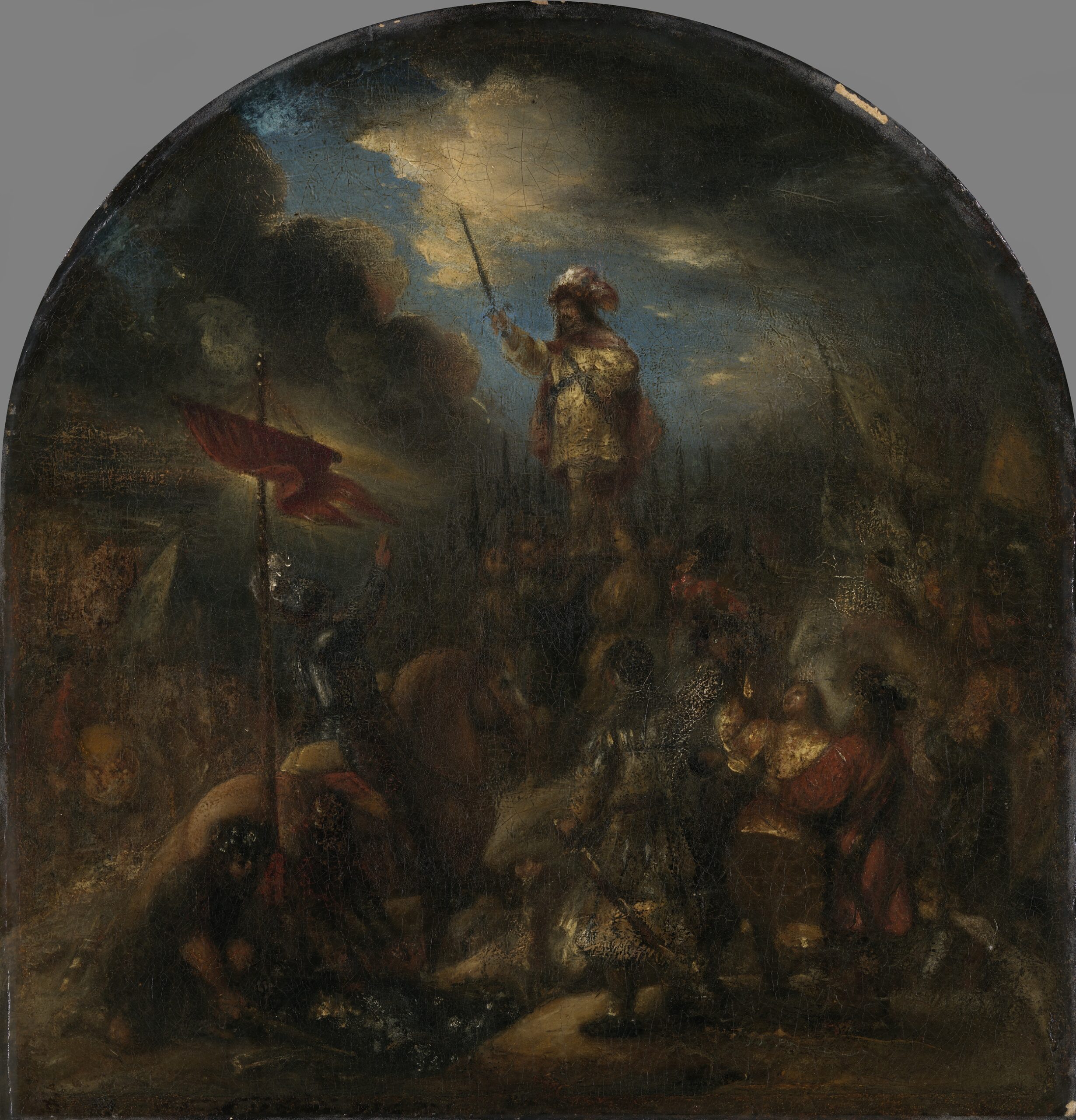
  32. Rudi Ekkart, โ€˜Govert Flinck and Ferdinand Bol: The Portraitsโ€™, in: Ferdinand Bol and Govert Flinck: Rembrandt’s Master Pupils, Zwolle, 2018, p. 158; Eric Jan Sluijter, โ€˜Out of Rembrandt’s Shadow: Govert Flinck and Ferdinand Bol as History Paintersโ€™, pp. 129-131.
  33. The etchings by Ferdinand Bol in this article are cited by the Hollstein number, in: F.W.H. Hollstein: Dutch and Flemish Etchings Engravings and Woodcuts, Amsterdam 1950, Vol. 3. pp. 15-35. However, the states noted here are updated, as anticipated in the forthcoming New Hollstein volume.
  34. The first one to point this out was Pierre Yver: Supplement au catalogue raisonneฬ de M. M. Gersaint, Helle & Glomy: de toutes les pieces qui forment l’oeuvre de Rembrandt. Amsterdam 1756, pp. 39-40, no.108, although he referred to the third, 1681 edition of the book. The etching is already present in the first, 1644 edition, published in Amsterdam.
  35. Den Christelyken Hovelingh has been commonly described as a play, but it is written as a poetic dialogue. If it was meant to be a play and/or if it was ever staged is not known to me. It is not listed as having been staged from 1637 to 1772: see Creative Amsterdam. An E-Humanities Perspective. Onstage. Online Datasystem of Theatre in Amsterdam from the Golden Age to the present: https://www.vondel.humanities.uva.nl/onstage/plays (accessed 7 July 2024). The title page of the 1642 volume indicates โ€˜Den Christelyk Hovelinghโ€™. However, the headers on all pages of that volume use the spelling โ€˜Christelykenโ€™, as do subsequent authors and libraries. See Jan Harmensz. Krul: Den Christelyk Hovelingh, Amsterdam 1642.
  36. This appears to have been first noted in N.C.H. Wijngaards.: Jan Harmens Krul: zijn leven, zijn werk en zijn betekenis, Zwolle, 1964, and is also described in: H.C. van Bemmel: Bibliografie van de werken van Jan Hermans Krul, Amsterdam, 1984.
  37. David de Witt and Leonore van Sloten, โ€˜Ferdinand Bol: Rembrandtโ€™s Discipleโ€™ in: Bol and Flinck (note 1), p. 48; and: Leonore van Sloten, โ€˜Ferdinand Bol, the Etcherโ€™, in: Bol and Flinck (note 1), p. 207; and Sophia Thomassen, โ€˜Timelineโ€™, in: Bol and Flinck, 2018 (note 1), p. 11.
  38. De Witt and Van Sloten, Bol, 2018 (note 6); Robert Schillemans: Bijbelschilderkunst rond Rembrandt, Utrecht 1989, pp. 31-34.
  39. Wijngaards, Krul, 1964 (note 5); Van Bemmel, Bibliographie, 1984 (note 5). I have been able to trace only thee copies: Library of the University of Amsterdam (2780 C 51), Royal Library, Den Haag, (KB: 3 C 20:10), and Noord-Hollands Archief, Haarlem (Oude Boekerij: 88 A 16). The copy in Den Haag lacks the page (A2) with Bol’s print.
  40. Wijngaards, Krul, 1964 (note 5); Van Bemmel, Bibliographie, 1984 (note 5).
  41. The 1644 edition (J.H. Krul: Pampiere Wereld, First edition. Amsterdam1644) is a folio edition measuring 302 x 190 mm; the 1681 edition (J.H. Krul: Pampiere Wereld, 3rd edition. Amsterdam, the widow of van Jan Jacobsz Schipper) is in quarto, measuring 216 mm x 170 mm. and the 1644-45 edition (J.H. Krul: Pampiere Wereld, 2nd edition, Amsterdam) is in octavo, measuring 169 x 104 mm. Book and library catalogues commonly ascribe c.1650 as the date for the latter, but the source of this attribution is not clear, and it is in error. See also Van Bemmel, Bibliographie (note 5).
  42. Van Bemmel, Bibliographie (note 5); The anonymous copy is in reverse, by an unknown hand, is neither signed nor dated, measures 85 x 74.5 mm, is of the same theme and general composition, but is artistically distinctly different. The shield is blank in this copy of Bol’s etching. I have not found any impressions of this copy that were not part of the printed book. I have identified three other distinct copies after Bol’s print, for a total of four, rather than the single copy identified by Hollstein (note 2).
  43. In 1644 and again in 1645 Krul obtained two successive loans, with the second providing funds to pay off the first, to permit him to publish the first two editions of Pampiere Wereld. Krul gave successively each lender volumes of the work, the patent rights and โ€˜someโ€™ copper plates for the period of the loan. It is not clear if the plates included Bol’s etching. See Wijngaards, Krul, 1964 (note 5); Van Bemmel, Bibliographie, 1984 (note 5).
  44. Jan Harmensz. Krul: Minne-Spiegel ter Deughden, Amsterdam 1650-51, J. H. Krul: Minne-Spiegel ter Deughden, Amsterdam; J. H. Krul: Minne-Spiegel ter Deughden, Joost Hartgers, Amsterdam, 1640; J. H. Krul: Minne-Spiegel ter Deughden, Michiel de Groot, Amsterdam, 1662; Jan Harmensz. Krul: Minne-Spiegel ter Deughden, Amsterdam, 1669-72.
  45. Hollstein gives only four states; more recently, George C. Kenney lists five, albeit described differently than the six here. See George C. Kenney: The Illustrated Bartsch, vol. 51. Supplement: Netherlandish Artists. Ferdinand Bol. New York 2017, p. 73, no. 18.
  46. In addition to the partial burnishing out of Bol’s name on the blade of the spade in the second state, lines are added partially obscuring the remaining portion of the signature; additional background work is added in several places; there is some work added on the scythe, table, book and the skull of the skeleton; and some additional work on the woman’s headdress/cape (fig. 2). The unique impression of this state is touched with black chalk and lead white, including the addition of a domed building in the distant background, horizontal lines below and to the left of the domed building, and the outline of a blank shield (or cartouche) covering the left part of the end of the coffin. Kenney also mentioned this state, but mistakenly describes the building in the background as a state difference. See: Kenney, Bol, 2017 (note 14). Only two other Bol prints have retouchings by the artist that appeared in the subsequent state: The Philosopher, H.6ii, 1643 (Amsterdam, RP-P-BI-1994); and The Young man Wearing a Plumed Cap, H.14i, 1642 (London, 1921,1008.21; and Dresden, A41073). The retouchings for H.6ii and H.14i appear in the plates for the next state of their respective prints. It is interesting to note that all retouched impressions were done in approximately the same period, and that the retouchings for H.6 and H.14 are very small in comparison to the significant retouchings for H.18. It is possible that this is a reflection of Bol’s satisfying his client’s wishes. Retouchings of impressions of other Bol prints are not judged to have been by his hand.
  47. My thanks to Jaco Rutgers for this suggestion
  48. The fifth state has added substantial additional background work and some work to the woman’s dress, and a bit on the shield, and the skull of the skeleton.
  49. The sixth, and final, state has added rather crude extensive reworking consisting of regular patterns of cross-hatching using the burin, for instance on the back of the skull, the inside of the tent, and the clothes of the female courtier. See fig 6.
  50. It had long been thought that Rembrandt painted his portrait in 1633. However, more recently, this has been called into question by Ernst van de Watering, A Corpus of Rembrandt Paintings, vol. 6: Rembrandtโ€™s Paintings Revisited, Dordrecht 2017, p. 526, no. 91. There were also family connections; see M. Louttit: โ€˜The Romantic Dress of Saskia van Ulenborch: Its Pastoral and Theatrical Associationsโ€™, The Burlington Magazine 115 (1973), pp. 317-326.
  51. Leonore van Sloten, โ€˜Ferdinand Bol in de voetsporen van Rembrandt: Twee herontdekte schilderijenโ€™, in: Rudie van Leeuwen, Lilian Ruhe, and David de Witt, eds, Not Always Rembrandt; 37 studies in Baroque art. Turnhout, Belgium 2023, pp. 20-31.
  52. Jan Soet, Soets Clorinde en Dambise, Amsterdam 1640.
  53. University of Amsterdam: Creative Amsterdam. An E-Humanities Perspective. Onstage. Online Datasystem of Theatre in Amsterdam from the Golden Age to the present. https://www.vondel.humanities.uva.nl/onstage/plays/359 (accessed 7 July 2024).
  54. N.C.H. Wijngaards, (note 5).
  55. Antonio de Guevara: Menosprecio de corte y alabanza de aldea. Valladolid 1539.
  56. See: S. Oosterwijk, โ€˜Morbid morality. The Danse macabre motif in Dutch art of the Golden Ageโ€™, in: Ilona Hans-Collas et al. (eds.), Mort n’espargne ne petit ne grant [Texte imprimรฉ] : รฉtudes autour de la mort et de ses reprรฉsentations : actes du XVIIIe Congrรจs international de l’association Danses macabres d’Europe, Paris, 19-23 mars 2019, Paris 2019, pp. 174-195.
  57. Translation: Linda Stone-Ferrier: โ€˜Ferdinand Bol: The Hour of Deathโ€™, in: Dutch Prints of Daily Life: Mirrors of Life or Masks of Morals? Lawrence, Kansas: The Spencer Museum of Art of The University of Kansas, 1983, pp. 144-146, credits Oliver C. Phillips, Classics Department, University Of Kansas, for the translation.
  58. There is no Bol print dated earlier than H.18, although he may have created one, Abraham’s Sacrifice (H.1), when working in Rembrandt’s studio; however, this is uncertain, as it is not dated.
  59. Gerard Roosenboom, Recueil van verscheyde keuren, en costumen. Midtsgaders maniere van procederen binnen de stadt Amsterdam. Eerst gecollecteert en beschreven, door Gerard Rooseboom, Amsterdam, 1656, pp. 120-131.
  60. Stadsarchief Amsterdam (hereafter SAA), 5061, 3051 Memorieboek, p. 29.
  61. http://remdoc.huygens.knaw.nl/#/document/remdoc/e4581 (accessed 3 December 2025).
  62. Arthur K. Wheelock jr., โ€œJan Lievens: Bringing new light to an old masterโ€, in: Wheelock Jr. ed, Jan Lievens. A Dutch master rediscovered, exh. cat. Washington: National Gallery of Art; Milwaukee: Milwaukee Art Museum; Amsterdam: Rembrandt House Museum, 2008-2009, pp. 6-7.
  63. SAA, 5075, 1745 not. Jan Quirijnen Spithof, pp. 124-125, 1-3-1644; Abraham Bedius, โ€œHet verblijf van Jan Miense Molenaer te Amsterdam, in documentenโ€, in: Frederik D.O. Obreen, Archief voor Nederlandsche Kunstgeschiedenis, vol. 7, Rotterdam 1888-1890, p. 293.
  64. Arthur K. Wheelock jr., in: exh. cat. Amsterdam 2009 (see note 4), pp. 17-18.
  65. SAA, 5061, 3063 Huwelijkskrakeelregisters, 8-12-1646.
  66. SAA, 5075, 1080, not. Joost van de Ven, ff. 203r-203v, 7-12-1646.
  67. โ€œter saecke sij als haar regeerster bij den req[uiran]t gewoont haddeโ€ (see note 8).
  68. โ€œhaer beloften van trouw heeft gedaan, van haer in eeuwig niet te sullen verlate & haer een vierkant stucken, neefens een ander silvere stuxkens gegeven & daarbeneffens van hem beslaepen & beswangertโ€ (see note 7). The mentioned silver square piece was a klip, an emergency coinage at that time struck mainly in West Friesland, or a medal/jeton.
  69. SAA, 5061, 3064, Huwelijkskrakeelregisters, 14-10-1649.
  70. The name Anna or Annetje Jacobs was fairly common; in 1647, eleven children were baptised in Amsterdam whose mother bore a variant of this name.
  71. The notarial archives contain many examples of such payments, both as compensation for the woman and as maintenance costs for any illegitimate children. For instance, Jan van de Velde agreed to the payments of two guilders per week in maintenance for the child he had conceived out of wedlock with Trijn Jans in 1636 (SAA, 5075, 601 not. Laurens Lamberti, p. 456, 17-07-1642). Whether this concerns the painter Jan van de Velde (III) from Haarlem, active in Amsterdam, is not clear. In 1661 David Abraham Cardozo paid no less than 1,000 guilders for โ€œdeflorationโ€ and the maintenance of two children resulting from his extramarital relationship with Dorothea Jans Bentem (SAA, 5075, 2210 not. Adriaen Lock, pp. 1107-1108, 27-05-1661).
  72. London (Christieโ€™s), 17 December 2020 (online auction 18877), lot 231 (inaccurately described as 185.4 x 195.5 cm); Old Master Paintings, Vienna (Dorotheum), 10 November 2021, lot 82 (as Jรผrgen Ovens, Pentecost).
  73. Arnold Houbraken, De groote schouburgh der Nederlantsche konstschilders en schilderessen I, Amsterdam 1718, p. 273.
  74. Constanze Kรถster,ย Jรผrgen Ovens (1623-1678). Maler in Schleswig-Holstein und Amsterdam, Petersberg 2017,ย p. 53; pp. 327-328, Qu. II.A.7.
  75. Archiveย ofย Schleswig-Holsteinย (LAS),ย Abt. 7, no. 6504, f. 1r; Kรถster 2017 (seeย noteย 3), pp. 37-38;ย p.ย 326, Qu. II.A.2.
  76. Kรถster 2017 (seeย noteย 3), p. 38.
  77. Kรถster 2017 (seeย noteย 3), p. 389, G145.
  78. Kรถster 2017 (see note 3), p. 390, G147.
  79. The Eighteenthโ€ฏYear Bookโ€ฏof the Brooklyn Institute of Arts and Sciences, 1905-1906, pp. 70, 124,โ€ฏ224;ย โ€œDepartment of Fine Artsโ€,ย The Museum News (Brooklyn Institute of Arts and Sciences)ย 1 (1906) no. 10, p. 144.
  80. Handwritten list of Maria Ovensโ€™s estate (private collection, location unknown), cited after Harry Schmidt, โ€œDasย Nachlass-Inventarย desย Malersย Jรผrgen Ovensโ€,ย Oud-Hollandย 32 (1914),ย p. 44, no. 16, note 7;ย Harry Schmidt,ย Jรผrgen Ovens.ย Sein Leben und seine Werke. Ein Beitrag zur Geschichte der niederlรคndischen Malerei im XVII.ย Jahrhundert, Kiel 1922,ย p. 150,ย underย no. 59a, p. 271, note 26 (as probably a copy after an original by Ovens);ย Kรถster 2017 (see note 3),ย p. 39;โ€ฏp. 325,โ€ฏQu. I.4.c.
  81. Erik Hinterding, Jaco Rutgers,ย The New Hollstein, Dutch & Flemish etchings, engravings and woodcuts, 1450-1700. Rembrandt,ย Ouderkerkย aanย denย IJsselย 2013, text 2, pp. 59-60, no. 185.
  82. Hinterding, Rutgers 2013 (see note 10), text 2, pp. 151-154, no. 239.
  83. Melchiorย Kรผsel,ย Iconesย Biblicaeย Veterisย et Noviย Testamenti.ย Figurenย biblischerย Historienย altenย undย neuenย Testaments, Augsburg 1679, โ€˜Bookย of Esther,ย Chapterย 6โ€™, fig. 20;ย reprintย Hildesheim 1968.ย Seeโ€ฏalso:โ€ฏPeter van derโ€ฏCoelen, โ€˜Rembrandt in Duitsland โ€“ Iconografie en verspreiding van zijn etsen in de zeventiende eeuwโ€™,ย Kroniek van het Rembrandthuisโ€ฏ2004, no. 1-2,ย p. 3, fig. 2.
  84. or a mirror-image of this man in theย Hundred Guilder Print, see: Ernst van de Wetering et al.,ย A Corpus of Rembrandt Paintings V. Small-scale history paintings, Dordrechtย 2011, p. 144, fig. 4.
  85. Kรถster 2017 (see note 3), p. 397, Z12-13.
  86. Hinterding, Rutgers 2013 (see note 10), pp. 39-41, no. 173.
  87. The presence of Mary or of other women at Pentecost, such as Mary Magdalene, is usually inferred from Acts 1:14: โ€œThey all joined together constantly in prayer, along with the women and Mary, the mother of Jesus [โ€ฆ]โ€.
  88. Hinterding, Rutgers 2013 (see note 10), text 1, pp. 189-191, no. 119.
  89. Hinterding, Rutgers 2013 (see note 10), text 1, p. 84, no. 55; pp. 220-221, no. 138.
  90. Hinterding, Rutgers 2013 (see note 10), text 2, pp. 158-159, no. 241.
  91. The only possible exception in this respect is Ovensโ€™s painted self-portrait from c. 1652 in the Hamburger Kunsthalle (inv. no. HK-26), which seems to go back to Rembrandtโ€™s famous 1639 etchingย Self-Portrait leaning on aย Stoneย Sill. See:ย Patrick Larsen, โ€œThe relationship between Govert Flinck and Jรผrgen Ovensโ€, in: Stephanie S. Dickeyย (ed.),ย Ferdinand Bol and Govert Flinck. New research, Zwolle 2017, p. 182, fig. 12.2, p. 184;ย Hinterding, Rutgers 2013ย (seeโ€ฏnoteโ€ฏ10),โ€ฏtextโ€ฏ2,โ€ฏpp. 33-35, no. 171.
  92. Karel van Mander,ย Het schilder-boeck, Haarlem 1604, fol. 5r; Philips Angel,ย Lof der schilder-konst, Leiden 1642, pp. 36-37.
  93. For Ovensโ€™s artistic appropriations of figures and motives from seventeenth-century art of the Low Countries during his Northern German periods, see:ย Patrick Larsen, โ€œThe Imitation of Dutch and Flemish Art in Jรผrgen Ovensโ€™ (1623-1678) Paintings in Schleswig-Holsteinโ€, in:ย Rieke van Leeuwen, Juliette Rodingย (eds.),ย Masters of Mobility. Cultural exchange between the Netherlands and the German lands in the long 17th centuryย (Gerson Digital VI), The Hague: RKD, 2020,ย https://masters-of-mobility.rkdstudies.nl/13-the-imitation-of-dutch-and-flemish-art-in-j%C3%BCrgen-ovens-1623-1678-paintings-in-schleswig-holstein/.
  94. ย Nadineย M. Orenstein, โ€œPrintmaking among artists of the Rembrandt Schoolโ€, in: Stephanie S. Dickeyย (ed.),ย Rembrandt and his circle. Insights and discoveries, Amsterdam 2017, p. 308, fig. 16.3. For Ovensโ€™s prints, see: Tilman Falk, Robert Zijlma, โ€œJรผrgen Ovensโ€, in:ย Hollsteinโ€™s German engravings, etchings and woodcuts,ย 1400-1700, vol.ย XXXI,ย Amsterdam 1991, pp. 61-74, nos. 1-10b; Kรถster 2017 (see note 3), pp. 415-416, R1-R7.
  95. Werner Sumowski,ย Gemรคldeย der Rembrandt-Schรผlerย II, Landau/Pfalz 1983, p. 1020, no. 615;ย Hinterding, Rutgers (see note 10), text 1, pp.ย 201-202, no. 125.
  96. Guus Sluiter,ย โ€œโ€˜De Passie, anders de Historie van denย lydendenย Christusโ€™.ย Arent de Gelders Passieserieโ€, in: Peter Schoon et al.,ย Arent de Gelder (1645-1727). Rembrandts laatste leerling,ย exh.ย cat. Dordrecht: Dordrechts Museum; Cologne:ย Wallraf–Richartz-Museum, 1998, pp. 73-75,ย figs. 2-13;ย pp. 78-80, 85; Guus Sluiter, โ€œDe fascinatie van Arent de Gelder voor Rembrandts etsenโ€,ย Bulletin Dordrechts Museum 22 (1998), pp. 35-45.
  97. Sumowskiย 1983 (see note 24), p. 1163, no. 738;ย Hinterding, Rutgers 2013ย (see noteย 10),ย text 2,ย pp. 57-58, no. 184.
  98. Sumowskiย 1983 (see note 24), p. 1421, no. 935;ย Hinterding, Rutgers 2013ย (see noteย 10),ย text 1,ย pp. 251-253, no. 155.
  99. LAS,โ€ฏAbt. 7, no.โ€ฏ2311, fol. 90r; Kรถsterย 2017 (see note 3),ย p. 304,โ€ฏnoteโ€ฏ195;โ€ฏp. 332,โ€ฏQu. II.B.1.1652.ย Also see:ย Patrick Larsen, โ€œJรผrgen Ovens (1623-1678) as an Art Agent for the Dukes of Gottorfโ€, in:ย Rieke van Leeuwen et al.,ย The Big Picture. Collecting Dutch and Flemish Art in Germany 1600-1850ย (Gerson Digital VIII), The Hague: RKD, 2022,ย https://the-big-picture.rkdstudies.nl/2-jรผrgen-ovens-16231678-as-an-art-agent-for-the-dukes-of-gottorf/.
  100. Rembrandt prints were offered for sale in the German-speaking lands fairly early.ย See Van derย Coelenย 2004ย (seeย noteย 12), pp. 5-15; Jaco Rutgers, โ€œRembrandt op papier. De rol van prenten bij het vestigen van Rembrandts reputatie als schilderโ€, in: Jaco Rutgers, Mieke Rijnders (eds.),ย Rembrandt in perspectief. De veranderende visie op de meester en zijn werk, Zwolle 2014, p. 122.
  101. Neither the so-called Gottorf account books nor the 1694, 1710 and 1743 inventories of Gottorf castle mention works on paper by Rembrandt.
  102. Werner Sumowski, Paul Huys Janssen, The Hoogsteder Exhibition of Rembrandtโ€™s Academy, exh. cat. The Hague: Hoogsteder & Hoogsteder, 1992, cat. no. 28.
  103. Exhibition catalogues: Albert Blanckert, Jezus in de Gouden Eeuw, exh. cat. Rotterdam: Kunsthal, 2000โ€“2001; Akira Kofuku, Rembrandt and the Rembrandt School. The Bible, mythology and ancient history, exh. cat. Tokyo: Museum of Western Art, 2003; Arthur K. Wheelock et al., Jan Lievens. A Dutch Master Rediscovered, exh. cat. Washington: National Gallery of Art; Milwaukee: Milwaukee Art Museum; Amsterdam: Rembrandt House Museum, 2008-2009, cat.no. 52; Louis van Tilborgh, Constantijn Huygens. Kunstkenner en verzamelaar, exh. cat. The Hague: Museum Bredius, 2013, cat. no. 14. Other literature: Werner Sumowski, Gemรคlde der Rembrandtschรผler, vol. 4, Landau, 1983, p. 3726, no. 2356, fig. 3964; Helga Gutbrod, Lievens und Rembrandt : Studien zum Verhaฬˆltnis ihrer Kunst, Frankfurt am Main, 1996, p. 299; Edwin Buijssen (ed.), Haagse schilders in de Gouden Eeuw, Het Hoogsteder lexicon van alle schilders werkzaam in Den Haag 1600-1700, The Hague, 1998, p. 191; Lloyd DeWitt, Evolution and Ambition in the career of Jan Lievens, 1607-1674, Phd. Diss. University of Maryland, College Park, 2006, p. 228.
  104. DeWitt, Evolution (see note 2), p. 228.
  105. For example those mentioned in the Montias Database of 17th Century Dutch Art Inventories and the Getty Provenance Research Index.
  106. Sumowski, Huys Janssen, Academy (see note 1), p. 220.
  107. Dr Gaston Gaudinot sale, Paris (Drouot), 13-14 February 1869.
  108. Sumowski, Huys Janssen, Academy (see note 1), p. 220.
  109. Ibid.
  110. Sumowski, Huys Janssen, Academy (see note 1), p. 226. Huys Janssen explains that the miracle as described in Luke and John differs from the version told by Matthew.
  111. After listening to the centurion, and before addressing him directly, Jesus speaks to his followers: โ€œI tell you, many will come from east and west and sit at table with Abraham, Isaac, and Jacob in the kingdom of heaven.โ€ (Matthew 8:11) Perhaps Lievens incorporated this part of the text and explicitly included people coming from the east (from the standpoint of his Dutch audience). A second possibility is that they are Pharisees. This group plays the role elsewhere in Matthew of disbelieving critics, and here they may serve to accentuate the belief of the centurion in the Christian faith. In early prints (Sebald Beham, Israhel van Meckenem, Hans Schaรผfelein and Cornelis Massijs) and several Italian prints from Lievensโ€™s time (seventeenth century prints after Paolo Veronese), Pharisees wear such headdresses. A parallel between blacks and overseas regions, such as in Lievensโ€™s Brinio, is convincingly outlined by Elmer Kolfin (in: Elmer Kolfin, De kunst van de macht, Jordaens, Lievens en Rembrandt in het Paleis op de Dam, Zwolle, 2023, p. 67), does not seem to apply here.
  112. Sumowski, Huys Janssen, Academy (see note 1), p. 223.
  113. Sumowski, Huys Janssen, Academy (see note 1), pp. 223, 226.
  114. The right eye from the perspective of the viewer. There, a pupil was painted in, in a later restoration. Because of the sketchy manner it is difficult to ascertain whether or not both eyes are present, but in the left the lower eyelid is visible, while it is undefined in the right eye.
  115. For example: Jacobus Neeffs (after Jacob Jordaens), Judgement of Christ, etching, c. 1630-1645; Marinus van der Goes (after Jacques Jordaens), Judgement of Christ, engraving, c. 1614-1639; Willem Panneels (after Peter Paul Rubens), Adoration of the kings, etching, 1630; Nicolaes Lauwers (after Peter Paul Rubens), Ecce Homo, engraving, c. 1619-1652; and many more. Generally, for examples of inspiration drawn from prints by Lievens, see De
    Witt, Evolution (see note 2).
  116. Sumowski, Huys Janssen, Academy (see note 1), p. 226. Huys Janssen refers to examples by Nicolaes Moeyaert (Herentals, St. Waltrudis church) and Adam Camerarius (Amsterdam, Rijksmuseum, inv. no. SK-A-733). DeWitt refers to a painting by Bartholomeus Breenbergh (Karlsruhe, Staatliche Kunsthalle Karlsruhe, inv. no. 228) and the Moeyaert in Herentals (DeWitt, Evolution (see note 2), p. 227). But also see a woodcut with this subject by Cornelis van Sichem II in Der zielen lusthof (1629). Also of interest: Claes Moeyeart, Christ and the Centurion, 1632 (Minneapolis, Minneapolis Institute of Art, inv. no. 2012.84.5). Although the painting is known under this subject, it may in fact depict Cornelius kneeling before Peter, since more than one figure is shown kneeling and the composition closely resembles prints of this subject.
  117. Henri van de Waal, โ€œโ€™s Lands oudste verleden in de voorstelling van Vondel en zijn tijdgenootenโ€, Elsevierโ€™s Maandschrift 47 (1937); Henri van de Waal, โ€œTempesta en de historieschilderingen op het Amsterdamse stadhuisโ€, Oud Holland 56 (1939); Henri van de Waal, Drie eeuwen vaderlandsche geschied-uitbeelding 1500-1800, een iconologische studie, The Hague, 1952; Kolfin, Kunst (see note 10).
  118. Antonio Tempesta (after Otto van Veen), Print 8 in (โ€ฆ)De Batavische oft oude Hollandtsche oorloghe teghen de Romeynen, 1612. Etching, 167 x 210 mm. Rijksmuseum, Amsterdam, inv. no. RP-P-OB-37.614. Jรผrgen Ovens based his drawing for the Batavian Series depicting Claudius Civilis leaving the Women and Children to fight at Xanten (Hamburg, Hamburger Kunsthalle, inv. no. 22342) on this print.
  119. On the period in The Hague:ย Buijssenย Haagseย (see note 2), pp.191-193.
  120. Haarlem,ย Teylersย Museum, inv. no. P 006. For the identification and context, see: Gregor Weber, โ€œDusย leeftย deย dappreย Graaf: Zuย einemย Bildnisย Andries deย Graeffsย von Jan Lievens (1607-1674)โ€,ย Oud Hollandย 99 (1985), pp. 44-56.
  121. Van de Waal,ย Eeuwenย (seeย noteย 16), p. 230;ย Kolfin,ย De kunst van de machtย (seeย noteย 10), pp. 19-20.
  122. Van de Waal, โ€œโ€™s Landsโ€ย (seeย noteย 16), p. 301-302.
  123. ย Kolfin,ย Kunstย (seeย noteย 10), p. 41.ย Four Batavian scenes were never completed. For two the themes are known, for the other two are not known.
  124. Munich,ย Staatlicheย Graphischeย Sammlungย Mรผnchen, inv. no. 1451; Hamburg, Hamburger Kunsthalle, Kupferstichkabinett,ย inv. no. 22342.ย A lesser-known drawing of Rembrandtโ€™sย Conspiracy of Claudius Civilisย (Edinburgh, National Galleries of Scotland, inv. no. D 23862) shows โ€“ when compared to the drawing in Munich โ€“ that the lower section of the painting is covered by a frieze and that portions of the left and right sides are obscured. This may indicate that an alternative conception of the framing of the lunettes was considered before the one ultimately implemented. It is possible that this earlier framing was already envisioned when Lievens produced his oil sketchย Christ and the Centurion.
  125. Van de Waal,ย Eeuwenย (see note 16), p. 225, referring to SAA, 5039, 2ย resolutieboek, f. 66r.
  126. Ibid., referring to SAA, 5039, 153ย rapiamusย 1661, f.195v.
  127. Van de Waal,ย Eeuwenย (seeย note 16), p. 225.
  128. Gregor Weber, โ€œJan Lievensโ€™s โ€˜The Shield-raising of Brinioโ€™ a Second Oil Sketchโ€,ย Hoogsteder-Naumann Mercuryย 12/13 (1992), nt. 8.
  129. Dewitt,ย Evolutionย (see note 2), p. 221.
  130. Kolfin,ย Kunstย (seeย noteย 10), p.67.
  131. Kolfin,ย Kunstย (seeย noteย 10), p. 44.
  132. For, among other things, contemporary poetry in which Civilis and others are compared to the members of the House of Orange: Van de Waal,ย Eeuwenย (see note 16), pp. 220-221, 223.
  133. Kolfin,ย Kunstย (seeย noteย 10), p. 47.
  134. Margriet van Eikema Hommes, Elmerย Kolfin,ย De Oranjezaal in Huis ten Bosch, Een zaal uit loutere liefde, Zwolle, 2013, p. 77.
  135. Kolfin,ย Kunstย (seeย noteย 10), pp. 41-47, 77.
  136. One may ask,ย in light ofย points discussed in this article, whether the โ€œChristโ€ figure in the first version was in fact Christ at all. If so, the oil sketch would initially have represented solely a Christian scene without any reference to the Batavian Revolt, thereby less relatable to the (eventual) decoration program of the Town Hallโ€™s gallery. Given that in the initial design the groups left and right with Biblical and/or eastern figures do not seem to have been included (aside from a bearded man on the right, judging from the x-ray), the large central figure may originally have been Julius Civilis. In compositional terms, this would align the painting more closely with the print by Tempesta after Van Veen. The apparent similarity in hairstyle between the final Christ figure and the initial figure, together with the possible initial presence of a (holy) beam of light directed toward the figure, may argue against this hypothesis; nevertheless,ย Brinnoย in Lievensโ€™sย Brinio Raised on the Shield likewise features long hair and even incorporates a diagonal compositional line through the clouds, comparable to the line through the foliage in the initial version of the present subject. The later insertion of Christ could then be understood as a deliberate twist, imparting a more prominent Christian meaning to the historical scene. These suggestions and observations were kindly shared by Jochem van Eijsden.
  137. Samuel van Hoogstraten, Inleyding tot de hooge schoole der schilderkonst: anders de zichtbaere werelt, Rotterdam 1678, p. 18. Van Hoogstraten here refers to the period when he was โ€œstill a discipleโ€, during which, as part of a โ€œweโ€, he and others discussed a particular question, to which a certain โ€œFabritiusโ€ responded with an answer. It is generally assumed that this refers to Carel Fabritius, who is assumed to have studied with Rembrandt between approximately 1641 and 1643.
  138. Werner Sumowski described Van Hoogstraten as โ€œpรคdagogisch begabt, Assistent Rembrandts gewesenโ€ (Werner Sumowski, Gemรคlde der Rembrandt-Schรผler II, Landau/Pfalz 1984, p. 1286). As supporting evidence, Sumowski argued that Van Hoogstraten corrected drawings by Constantijn Daniรซl van Renesse (; p. 1290, nt. 2). When discussing one of these drawings (Moses and Reuelโ€™s Daughters at the Well, Amsterdam, Rijksmuseum, inv. no. RP-T-1893-A-2782) Sumowski suggested the possibility that โ€œSamuel van Hoogstraten acted as assistant to the master on occasional trips even at a later dateโ€. (Werner Sumowski, Drawings of the Rembrandt School IX, New York 1985, no. 2159x). Building on this, Jonathan Bikker suggested in his monograph on Willem Drost that Van Hoogstraten โ€œmight have supervised Drost during his early days in Rembrandtโ€™s studioโ€ (Jonathan Bikker, Willem Drost, A Rembrandt Pupil in Amsterdam and Venice, New Haven/London 2005, p. 11). David de Witt later observed, in his Abraham van Dijck monograph, concerning Van Hoogstraten: โ€œby 1646 his training would have been complete, but he appears to have stayed on as a tutor or head pupil for several yearsโ€ (David De Witt, Life and Work of Late Rembrandt Pupil Abraham van Dijck, c. 1635-1680, Amsterdam 2020, p. 11).
  139. Sabine Pรฉnot, Rembrandt – Hoogstraten. Colour and Illusion, exh. cat. Vienna: Kunsthistorisches Museum Wien, 2024; Nathalie Maciesza, Epco Runia, Samuel van Hoogstraten. De Illusionist, exh. cat. Amsterdam: Rembrandt House Museum, 2025; Sabine van Beek, Leonore van Sloten, David de Witt et al., Samuel van Hoogstraten: Catalogue Raisonnรฉ, The Hague 2025.
  140. The catalogue of the Vienna exhibition assumes a position for Van Hoogstraten as an assistant for approximately three to four years (Angelina Illes, in: exh. cat. Vienna 2024 (see note 3), p. 29; Jonathan Bikker, in: exh. cat. Vienna 2024 (see note 3), p. 93), though it makes no mention of any teaching responsibilities. These are, however, included in the publication accompanying the exhibition at the Rembrandt House Museum (Michiel Roscam Abbing, in: exh. cat. Amsterdam 2025 (see note 3), p. 19; David De Witt, in: exh. cat. Amsterdam 2025 (see note 3), p. 131), and in the online Van Hoogstraten catalogue raisonnรฉ by the RKD (Michiel Roscam Abbing, in: The Hague 2025 (see note 3), โ€œWith Rembrandt in Amsterdamโ€. https://vanhoogstraten.rkdstudies.nl/samuel-van-hoogstraten-the-ingenious-and-poetic-painter/with-rembrandt-inamsterdam/, 26 May 2025).
  141. The term โ€œassistentโ€ was used in Holland in the 17th century, albeit in other contexts, see: Woordenboek Nederlandse taal, s.v. assistent, https://gtb.ivdnt.org/iWDB/search?actie=article&wdb=WNT&id=M004535&lemma=assistent&domein=0&conc=true, 11
    July 2025.
  142. โ€œEen min of meer ondergeschikte helperโ€, a more or less subordinate helper (see note 5); โ€œA person who helps or supports somebody, usually in their jobโ€: Oxford English Dictionary, s.v. assistant, https://www.oed.com/view/Entry/12041, 11 July 2025.
  143. The guild archive has been lost. For a comprehensive account of the Amsterdam Guild of Saint Luke and its ordinances, see: Isabella H. van Eeghen, โ€œSchilders of Sint Lucasgildeโ€, in: Isabella H. van Eeghen (ed.), Inventarissen der archieven van de gilden en van het brouwerscollege, Amsterdam 1951, passim.; Isabella H. van Eeghen (Jasper Hillegers, translator), โ€œThe Amsterdam Guild of Saint Luke in the 17th Centuryโ€, Journal of Historians for Netherlandish Art 4.2 (2012), passim., DOI:10.5092/jhna.2012.4.2.4, 11 July 2025. The current article relies exclusively on the guild regulations of the Amsterdam De Kroniek 2024/25 – Museum Rembrandthuis 10 paintersโ€™ guild. It is often assumed that the regulations of paintersโ€™ guilds in different Dutch towns did not differ substantially in content. On that assumption, gaps in the regulations of one town might be filled by those of another. However, the discussion later in this article regarding whether apprentices were permitted to produce their own work shows that crucial differences did in fact exist. For that reason, guild regulations from other cities are not used here to fill the gaps in the surviving Amsterdam regulations.
  144. Extract van de willekeuren en ordonnantien den gilde van St. Lucas verleent, Amsterdam 1720, p. 11.
  145. Extract (see note 8), p. 11; This is also the case in the chapter title and margin of the 1766 publication of all known guild charters: Ordonnantien en willekeuren van het Lucas-gilde binnen Amsterdam, Amsterdam 1766, p. 64, 68. It is noteworthy that the dean and headmen of the guild employed a gilde kneght (Extract (see note 8), pp. 26-27. This was not a pupilship, and the tasks meet the definition of an assistant in the Oxford English Dictionary and the Woordenboek Nederlandse Taal (see note 6)
  146. Extract (see note 8), pp. 12-13
  147. Extract (see note 8), pp. 11-12.
  148. Extract (see note 8), p. 12.
  149. Cornelis Kiliaen (ed. Frans Claes), Etymologicum teutonicae linguae, Antwerp 1599 (The Hague 1972), p. 278, s.v. leerionghe; leer-kind; leer-knecht; leerlinck; p. 703, s.v. discipel. In the regulations of the Haarlem Guild of St. Luke from 1634 (NHA, 1105, Ambachtsgilden te Haarlem (Gilden Haarlem), no. 219), the terms โ€œleerlingโ€, โ€œleerjongenโ€, and โ€œdiscipelโ€ are
    used. This might suggest that a distinction existed between them, but they are actually used interchangeably. The same applies to the terms โ€œ(werk)gezelโ€, โ€œknechtโ€, and โ€“ a new term โ€“ โ€œgastโ€. The latter is synonymous with journeyman or servant: โ€œKnecht van een ambachtsman of fabrikant; gezel, werkknechtโ€, servant of a tradesman or manufacturer; journeyman, workshop hand: Woordenboek Nederlandse taal, s.v. gast, https://gtb.ivdnt.org/iWDB/searchactie=article&wdb=WNT&id=M017355.re.35&lemma=werkgast&domein=0&conc=true,
    16 oktober 2025.
  150. Kiliaen, Etymologicum (see note 13), p. 139, s.v. ghe-selle van een ampt. The Latin word โ€œcollegaโ€ is likewise a translation for โ€œambtgenootโ€, โ€œmaetโ€, and โ€œvennootโ€ (Kiliaen, Etymologicum (see note 13), p. 18, s.v. ampt-ghenoot; p. 302, s.v. maet, med-maet, maetken; p. 579, s.v. veyn-out, veyn-noot, ven-noot, vennoot, veyn-gnoot).
  151. Kiliaen, Etymologicum (see note 13), p. 244, s.v. knecht, dienaer.
  152. Nicolaas de Roever, โ€œDrie Amsterdamsche Schilders (Pieter Isaaksz, Abraham Vinck, Cornelis van der Voort)โ€, Oud Holland 3 (1885), p. 198.
  153. In 1619, he was asked together with several artists who had traveled to Italy, including Pieter Lastman, Adriaen van Nieulandt, and Barent van Someren, to assess the authenticity of a Caravaggio painting from the collection of the late Louis Finson. Abraham Bredius, Nicolaas de Roever, โ€œPieter Lastman en Franรงois Venantโ€, Oud Holland 4 (1886), pp. 7-8.
  154. Ronald de Jager โ€œMeester, leerjongen, leertijd. Een analyse van Zeventiende-eeuwse Noord-Nederlandse leerlingcontracten van kunstschilders, goud- en zilversmedenโ€, Oud Holland 104 (1990), p. 96, nt. 107. The title of โ€œgezelโ€ is, in fact, never mentioned in the known Amsterdam contracts.
  155. De Jager, โ€œMeesterโ€ (see note 18), pp. 73-75.
  156. De Jager, โ€œMeesterโ€ (see note 18), p. 71.
  157. Stadsarchief Amsterdam (hereafter SAA), 5075, 393A, nots. Jacob Jacobs and Nicolaes Jacobs, ff. 59r-59v, 20-07-1626; Abraham Bredius, โ€œGerrit Willemsz. Horstโ€, Oud Holland 50 (1933), pp. 5-6; De Jager, โ€œMeesterโ€ (see note 18), p. 98, no. 7.
  158. This underscores a clear distinction: as was also evidenced by the entries in Kiliaen, Etymologicum (see note 13), dienaer was a synonym for knecht, not for leerknecht (see note 15).
  159. Abraham Bredius, Kรผnstlerinventare. Urkunden zur Geschichte der hollรคndischen Kunst des XVIten, XVIIten und XVIIIten Jahrhunderts V, The Hague 191, pp. 1482-1483; De Jager, โ€œMeesterโ€ (see note 18), p. 98, no. 10.
  160. The value of a barrel of herring in Amsterdam in 1635 was approximately 120 grams of silver (Bo Poulsen, Dutch Herring. An Environmental History, c. 1600โ€“1860, Amsterdam 2008, p. 93, table 6.9); in the seventeenth century, ten grams of silver corresponded to the value of roughly one guilder.
  161. The tuition fees in Holland for a two-year contract averaged 61.5 guilders per year (De Jager, โ€œMeesterโ€ (see note 18), p. 75).
  162. Josua Bruyn, โ€œEen onderzoek naar 17de -eeuwse schilderijformaten, voornamelijk in Noord-Nederlandโ€, Oud Holland 93 (1979), p. 113.
  163. Abraham Bredius, Kรผnstlerinventare. Urkunden zur Geschichte der hollรคndischen Kunst des XVIten, XVIIten und XVIIIten Jahrhunderts II, The Hague 1916, pp. 400-401; De Jager, โ€œMeesterโ€ (see note 18), p. 98
  164. As a journeyman painter Waltusz earned less than half the daily wage of peers in other trades. In 1652, journeymen carpenters and bricklayers in Amsterdam earned approximately 26 to 27 stivers per summer day (although there are no exact figures for 1651, data is available for 1633, 27 and 25 stivers respectively, and for 1667, 28 and 27 stivers respectively).
    This disparity between painterโ€™s journeymen and their peers in other trades mirrors the situation in 1579. The guild
    regulations (gildebrief) of the St. Lukeโ€™s Guild from that year mention journeymen earning 4 stivers and others earning 10
    stivers per day (Ordonnantien (see note 9), p. 17, art. 11). Taking the average of 7 stivers, these were notably low wages โ€“
    practically half โ€“ when compared to the 14 and 12 stivers earned by carpenters and bricklayers, respectively, in that same
    year. For the wages of the workers mentioned here, see: Hubert Nutseling, Welvaart en werkgelegenheid in Amsterdam
    1540โ€“1860, Amsterdam/Dieren 1985, p. 252, appendix 5.1, table A.
  165. SAA, DTB 5001, 469, p. 241, 30-09-1651; Judith van Gent, Bartholomeus van der Helst (circa 1613-1670): een studie naar zijn leven en zijn werk, Utrecht (Utrecht University), p. 41.
  166. Virtually nothing is known about Gerardus van Berleborch (Bernard Renckens, โ€œG. van Berkborchโ€, Oud Holland 84 (1967), no. 4, passim). He or his father was likely from the region around Bad Berleburg in Germany. He appears to have been present in Leiden in 1665, when he is recorded as a witness (โ€œGerrit van Berlebergโ€) at the baptism of a child of the painter Jacobus Geutkien (Erfgoed Leiden en Omstreken (hereafter ELO), DTB 1004, 237, fol. 236v, 3-12-1665).
  167. SAA, 5075, 875, not. Jacob van Zwieten, pp. 638-640, 16-10-1649; Johannes G. van Dillen, Bronnen tot de geschiedenis van het bedrijfsleven en het gildewezen van Amsterdam 1510-1672 III, p. 540, no. 1057.
  168. A possible reason for this may be that young painters attained the status of master more quickly. This benefited the guild financially, as it earned income only from masters and pupils, not from journeymen.
  169. Ordonnantien (see note 9), p. 10, art. 3.
  170. Ordonnantien (see note 9), p. 17, art. 11.
  171. Joachim von Sandrartโ€™s famous anecdote about Rembrandtโ€™s studio being filled with โ€œcountless elite childrenโ€, pupils who each paid an annual tuition fee of 100 guilders suggests that the legal limit on the number of pupils was, in practice, a dead letter (Joachim von Sandrardt, Teutsche Academie, Nuremberg 1675, p. 326; Van Eeghen, โ€œGuildโ€ (see note 7), p. 6).
  172. Young Man Reading with a Vanitas Still Life, 1644, oil on panel, 58 x 74 cm, Rotterdam, Museum Boijmans Van Beuningen, inv. no. 1386; Self-portrait, 1644, oil on panel, 63 x 48 cm, The Hague, Museum Bredius, inv. no. 056-1946; Self-portrait, 1645, oil on panel, 54.1 x 44.8 cm, Liechtenstein, The Princely Collections, Vaduz-Vienna, inv. no. GE 107; Portrait of a Child, 1645, oil on panel, 68.6 x 57.8 cm, private collection; The Adoration of the Shepherds, 1647, oil on canvas, 58.2 x 70.8 cm, Dordrecht, Dordrechts Museum, inv. no. DM/980/567.
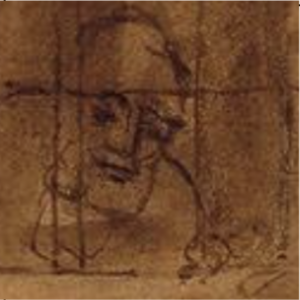
  173. Godefridus J. Hoogewerff, De geschiedenis van de St. Lucasgilden in Nederland, Amsterdam 1947, p. 24; Ernst van de Wetering โ€œProblems of Pupilship and Studio Practiceโ€ in: Josua Bruyn et al., A Corpus of Rembrandt Paintings II: 1631-1634, Amsterdam 1986, p. 57; Bikker, Drost (see note 2), p. 11; Angelina Illes, in: exh. cat. Vienna 2024 (see note 3), p. 29.
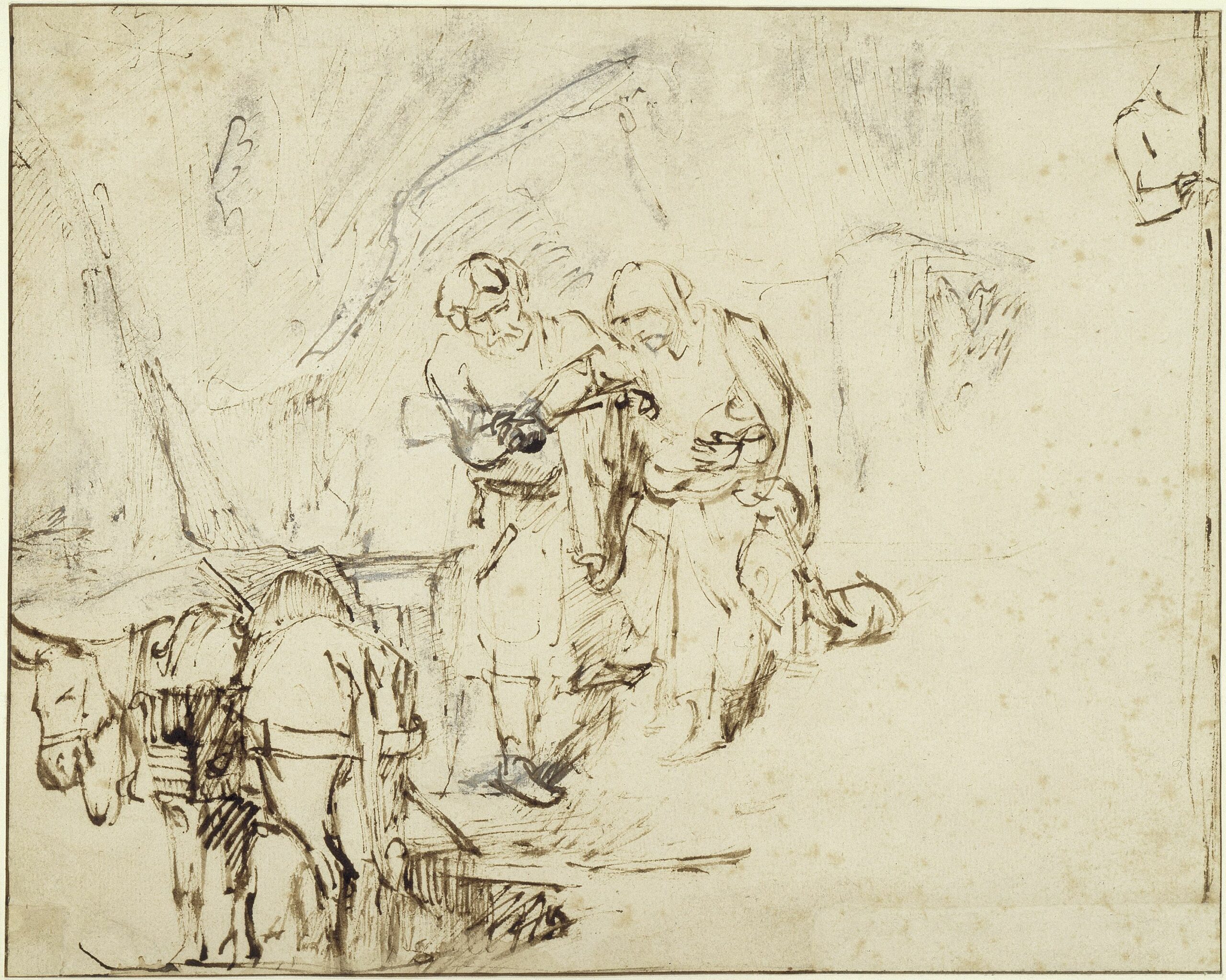
  174. Samuel Muller Fz., Schilders-vereenigingen te Utrecht. Bescheiden uit het Gemeentearchief, Utrecht 1880, p. 76; Frederik D.O. Obreen, Archief voor Nederlandsche Kunstgeschiedenis IV, Rotterdam 1881/1882, p. 51. The very fact that such a regulation had to be instituted in these cities already indicates that works were being signed by non-masters.
  175. De Jager, โ€œMeesterโ€ (see note 18), pp. 77-79.
  176. Bruyn, โ€œOnderzoekโ€, (see note 26), p. 113.
  177. David de Witt, Leonore van Sloten, in: The Hague 2025 (see note 3), โ€œRembrandtโ€™s Impactโ€, https://vanhoogstraten.rkdstudies.nl/catalogus-schilderijen/rembrandts-impact/, 3 June 2025.
  178. Almost exclusively, reference is made to Bikker, Drost (see note 2), p. 11. Also in the exhibition catalogue of the Van Hoogstraten exhibition in Amsterdam, Drost is cited as an example of an early student of Van Hoogstraten (David de Witt, in: exh. cat. Amsterdam 2025 (see note 3), p. 131.
  179. Since Daniรซl Pont’s monograph on Barent Fabritius, (Daniรซl Pont, Barent Fabritius 1624โ€“1673, The Hague, 1958) and Sumowski’s Drawings of the Rembrandt School (see note 2), no subsequent scholarly efforts have systematically De Kroniek 2024/25 – Museum Rembrandthuis 12 reconstructed his drawn oeuvre or analyzed the development of his distinctive style. The author’s forthcoming dissertation addresses this lacuna, and catalogues drawings by Barent Fabritius.
  180. Pont was among the first to suggest he may not have been a direct pupil of Rembrandt, but instead only came into contact with Rembrandtโ€™s work indirectly, through his brother Carel (Pont, Barent (see note 43), p. 96). In the literature, uncertainty on this matter appears to have become the norm, with scholars consistently noting โ€“ or implicitly dealing with โ€“ the lack of evidence for a formal pupilship with Rembrandt (see: Paul Huys Jansen, Werner Sumowski, The Hoogsteder Exhibition of Rembrandtโ€™s Academy, exh. cat. The Hague: Hoogsteder & Hoogsteder, 1992, p. 139; Walter A. Liedkte in: Hubert von Sonneburg, Rembrandt/Not Rembrandt in the Metropolitan Museum of Art I, exh. cat. New York City: The Metropolitan Museum of Art, 1995, cat. 48, pp. 145-146; Peter C. Sutton in: Albert Blankert, Rembrandt. A Genius and his impact, exh. cat. Melbourne: National Gallery of Victoria; Canberra: National Gallery of Australia, 1997, p. 283; Jan Blanc, Dans lโ€™atelier de Rembrandt. Le maรฎtre et ses รฉlรจves, Paris 2006, p. 140.
  181. Holm Bevers, โ€œDas Susanna-Thema im Werkstattzusammenhang: Zeichnungenโ€, in: Holm Bevers, Katja Kleinert, Claudia Laurenze-Landsberg, Rembrandts Berliner Susanna und die beiden Alten. Die Schaffung eins meisterwerks, exh. cat. Berlin: Staatliche Museen zu Berlin, Kupferstichkabinett; Gemรคldegalerie, 2015, pp. 49-50.
  182. Katja Kleinert, Claudia Laurenze-Landsberg, โ€œWandlungen eines Gemรคldes. Rembrandts Berliner Susanna und die beiden Altenโ€, in: exh. cat. Berlin 2015 (see note 45), p. 19, 32.
  183. See for instance Rembrandtโ€™s Holy Family in the Carpenterโ€™s workshop or his Star of the Kings (London, The British Museum, inv. nos. 1900,0824.144, 1910,0212.189).
  184. The drawing of a male model (here attributed to Barent Fabritius) has been described as stylistically very close to Van Hoogstraten (Martin Royalton-Kisch in: Catalogue of Drawings by Rembrandt and his School, London: The British Museum, 2010, cat. 71). The Departure of the Prodigal Son, a drawing already earlier attributed to Fabritius, is still considered a work by Van Hoogstraten (Frankfurt am Main, Stรคdel Museum, inv. no. 817).
  185. A convincing spatial representation of the scene, achieved through a successful use of proportion, perspective, light, and color. For a elaboration on this definition, including references, see: Leonore van Sloten, โ€œRegels voor de kunstโ€, in: David de Witt, Leonore van Sloten, Jaap van der Veen, Rembrandts late leerlingen. In de leer bij een genie, exh. cat. Amsterdam: Rembrandt House Museum, 2015, p. 73, note 31.
  186. In drawings by Barent Fabritius from the second half of the 1640s, his preparatory chalk underdrawing is generally careful and precise but not detailed, with clear, exact contours rendered in continuous, rounded lines. The somewhat squat figures possess a doll-like, slightly caricatural character. When using pen to trace or fill in the figures, particularly those in the foreground, the style becomes sketchier and more angular. Fabritiusโ€™s hatching lines become more carefully placed as theyย  grow finer, laid loosely side by side with only occasional thin-pen scratching, while thicker lines, including contours, are rendered in a zigzag, looser manner, often applied to foreground elements such as a repoussoir. Groups of hatching in shadowed, complex motifs (e.g., figures or foreground foliage) are neither intertwined nor uniformly oriented, and though the balance of light and shadow varies between drawings, it remains consistent within each composition; early mastery is evident in his wash applications, where loosely brushed transitions in shadows lend a painterly quality, enhancing figural plasticity and atmospheric depth, as seen in drawings with dramatic chiaroscuro effects.
  187. Although it has been argued by Holm Bevers that this drawing is by Constantijn Daniรซl van Renesse and dates from between 1650 and 1652 (Holm Bevers, โ€œAusstellungen zu Rembrandt in Rรผckblickโ€, Kunstchronik, 58 (2005), p. 480; Holm Bevers, in: Rembrandt. Die Zeichnungen im Berliner Kupferstichkabinett, exh. cat. Berlin: Staatliche Museen zu Berlin, Kupferstichkabinett, 2006, cat. no. 45, p. 158, nt. 12; Holm Bevers in: Holm Bevers et al., Drawings by Rembrandt and his Pupils. Telling the Difference, exh. cat. Los Angeles: The J. Paul Getty Museum, 2009, cat. no. 31.2, pp. 190-191), a number of features are so uncharacteristic of Van Renesse that the attribution cannot be sustained. This applies in particular to elements such as the heavy, coarse scratches in the shadow areas and the sketch-like rendering of the faces of Joseph and Mary. Van Renesse typically keeps shadow areas and light transitions in brush clear and even. Also characteristic is his meticulous penwork, marked by fine, short strokes in the contours and hatching lines (see for instance: The Judgment of Salomon, New York City (The Metropolitan Museum of Art, Robert Lehman Collection, inv. no. 1975.1.806; Daniel in the Lionโ€™s Den, Rotterdam, Museum Boijmans Van Beuningen, inv. no. MB 200). Generally, it shows the boldness of Barent much more than the careful restraint of Renesse
  188. โ€œBeeter waer ‘t dat [om de veranderin[g]] een eesel van achteren was, dan dat al de hoofden iuist wt het stuck sien. Dat oock omtrent de boom wat meerder groente was. | 1 losep heft af te swaer en te onbesuist | 2 Maria most het kindeken wat meerder vieren, want een teeder kint magh sulck duwen niet ver[dragen]. | losep al te kort en dick, sijn hooft wast hem wt de [borst?]. Sijn hebben alle beide al te groote koppenโ€. Transcript from: Leonore van Sloten, in: exh. cat. Amsterdam 2015 (see note 49), p. 73, nt. 27. โ€œIt would be better that [for the alteration] there were a donkey from the back, than that all the heads are looking straight out of the work. That there were also somewhat more greenery around the tree. | 1 Joseph lifts too heavily and too inconsiderately. | 2 Mary ought to ease the little child somewhat more, for a tender infant cannot [endure] such pushing. | Joseph is all too short and stout, his head grows out of the [chest?]. They both have all too large headsโ€. These instructions are also partly articulated within the drawing itself. Joseph is indeed shown tugging firmly at Maryโ€™s arm, whereas in the more sketch-like version, he supports her more gently at the back. The small patch of greenery in the lower corner may also be a later addition, in correspondence with the suggestion.
  189. The face does not appear to be a correction in the technical sense, but rather an example of a foreshortened face viewed from below โ€“ a challenging principle of perspective.
  190. An attribution proposed Christian Dittrich (Christian Dittrich in: Christian Dittrich, Thomas Ketelsen, Rembrandt. Die Dresdener Zeichnungen 2004, exh. cat. Dresden: Staatliche Kunstsammlungen Dresden, Kupferstich-Kabinett, 2004, cat. no.14, pp. 80-81).
  191. Brusati implied the possibility that the text was written partly by Rembrandt and partly by Van Hoogstraten (Celeste Brusati, Artifice & Illusion. The Art and Writing of Samuel van Hoogstraten, Chicago/London 1995, pp. 31, 275, note 40). Rembrandt was excluded as the author of the instructions by Bevers, while Van Hoogstraten as author remained an option. Van Renesse was likewise ruled out by Bevers, based on a comparison with the handwriting on his Daniel in the Lionsโ€™ Den drawing and The Judgment of Solomon drawing (see note 51); Holm Bevers, in: exh. cat. Los Angeles 2009 (see note 51), cat. 31.1โ€“31.2, p. 190; 191, note 3). To this may be added that the handwriting also closely resembles that of Barent Fabritius. Although little comparative material survives, the compact, small script of Fabritiusโ€™s name beneath the death inventory of his sister-in-law Aeltje, dated 24 April 1643 (SAA, 5075, 1628a, not. David de lโ€™Hommel, p. 399), shows a strong resemblance to the instructions on the Dresden sheet.
  192. โ€œOnce you have mastered your handling and your eye is somewhat clarified, it will no longer trouble you to translate many naturalistic paintings into a naturalistic drawingโ€. โ€œWanneer gy uwe handeling nu machtich zijt, en uw oog wat verklaert is, zoo zal ‘t u ook niet verscheelen veel verwige Schilderyen in een verwige teykeningen na te klarenโ€ (Van Hoogstraten, Inleyding (see note 1), p. 27)
  193. โ€œI advise masters, when they review the drawings of their pupils, to improve them by making sketches of the same subject themselves. This is an excellent exercise and has greatly assisted many in the art of compositionโ€. โ€œDe meesters raed ik, als ze de Teykeningen haerer discipelen overzien, datze de zelve, met schetssen op ‘t zelve voorwerp te maeken, verbeeteren. Dit oeffent ongemeen, en heeft veelen geweldich in de schikkunst geholpenโ€ (Van Hoogstraten, Inleyding (see note 1), p. 192).
  194. โ€œAnd certainly, this manner of drawing with pen and brush is likewise the most suitable for completing a masterly work in its full force. For one can also, whenever it proves convenient, work into it with red chalk and crayons, as though one were almost painting with coloursโ€. โ€œEn zeker deeze wijze van met pen en pinseel te teykenen, is ook allerbequaemst om een meesterlijk werk in zijn volle kracht te voleinden. Dewijl men’er ook, als’t pas geeft, met rood krijt en kryons in kan speelen, als of men byna met verwen schilderdeโ€ (Van Hoogstraten, Inleyding (see note 1), p. 31.
  195. On stylistic grounds, this Rembrandt drawing has been placed among a group of history drawings dating to around 1650 (Otto Benesch, The Drawings of Rembrandt V, New York 1957, no. 902). Among other arguments, this dating led Bevers to attribute the Dresden drawing to Constantijn van Renesse, rather than Barent Fabritius (Holm Bevers, in: exh. cat. Berlin 2006 (see note 51), cat. no. 45, p. 157, 158, nt. 12) However, it remains questionable whether the Rembrandt drawing in Berlin should be understood within that context. Unlike the other history drawings, this work is not an autonomous composition but rather a sketched response to the Dresden sheet. It is plausible that the sketch was already made around 1647. In terms of linework, it is not far removed from the portrait sketch of Jan Six, dating from in or before 1647 (Amsterdam, Six Collection).
    It is drawn in a similarly free style, applied in a sketch, comparable to other drawings from the second half of the 1640โ€™s (see
    note 47). Rembrandtโ€™s Berlin drawing could thus have been made quite soon after Fabritiusโ€™s corrected drawing
  196. Josua Bruyn, โ€œGemรคlde der Rembrandt-Schรผler II by Werner Sumowski Reviewโ€, Oud Holland 101 (1987) no. 3, p. 229.
  197. https://rkd.nl/images/313061, 17 July 2025. In terms of drawing style, this work is not far removed from Van Hoogstratenโ€™s drawing The Sacrifice of Manoah of 1649 (Braunschweig, Herzog Anton Ulrich Museum, inv. no. Z 335; https://rkd.nl/images/71286, 17 July 2025). We may even assume that The Crucifixion predates it; the departing angel in theย  Braunschweig drawing โ€“ also seen from the back โ€“ appears to be a more developed and refined treatment of the motif of a figure seen from behind.
  198. Samuel van Hoogstraten, The Adoration of the Shepherds. London, The British Museum, inv. no. 1895,0915.1203; https://rkd.nl/images/313552, 17 July 2025. A drawing of The Circumcision, likewise painted as a part of the Passion series in 1646, has been attributed to Gerbrand van den Eeckhout (Brussels, Koninklijke Musea voor Schone Kunsten Belgiรซ, inv. no. 4060/1212). There are also two copies after Rembrandtโ€™s Holy Family with a Curtain from 1646 (London, The British Museum, inv. no. 1895,0915.1200; Oxford, Ashmolean Museum, inv. no. WA1986.56).
  199. Josua Bruyn in: Josua Bruyn et al., A Corpus of Rembrandt Paintings III: 1635-1642, Amsterdam 1989 pp. 13-16.
  200. Martin Royalton-Kisch, Drawings by Rembrandt and his Circle in the British Museum, London: The British Museum, 1992, cat. no. 87, pp. 180-182; Holm Bevers, โ€œDrawings in Rembrandtโ€™s Workshopโ€, in: exh. cat. Los Angeles 2009 (see note 51), pp. 13-17; David de Witt, โ€œLeren van het leven: tekeningen van Rembrandts leerlingenโ€ in: Judith Noorman, David de Witt, Rembrandts Naakte Waarheid. Tekenen naar naaktmodellen in de Gouden Eeuw, exh. cat. Amsterdam: Rembrandt House Museum, 2015, pp. 117-120.
  201. Initially, this drawing was attributed to Rembrandt, but as early as 1908, this attribution was already being questioned (Martin Conway, โ€œSome Rembrandt Drawingsโ€, Burlington Magazine 14 (1908/1909), p.37).
  202. This sheet has previously been judged the weakest of the three (David de Witt, in: exh. cat. Amsterdam 2015 (see note 64), p. 118), and it has even been suggested that Rembrandt may have corrected it. (Martin Royalton-Kisch, in: col. cat. London 2010 (see note 48), cat. 71). The fine parallel pen strokes in the boyโ€™s torso are comparable to those in the body of Susanna in the Budapest drawing. The somewhat arbitrary use of red chalk (in the modelโ€™s right armpit area, on the reverse side of the cushion, and in the upper left corner) also stands out in both sheets. The type of loose, heavy pen lines used for the cushion corresponds to those found in the cloak of the old man in the Susanna drawing.
  203. For a first suggestion of Bol being the assistant of Rembrandt, see: Albert Blanckert, Ferdinand Bol (1616-1680). Rembrandtโ€™s Pupil, Doornspijk 1982, pp. 17-18.
  204. Blanckert, Bol (see note 67), pp. 17-18; David de Witt, โ€œFerdinand Bol, discipel van Rembrandtโ€, in: Norbert Middelkoop, Ferdinand Bol en Govert Flinck. Rembrandts meesterleerlingen, Amsterdam (Rembrandt House Museum/Amsterdam Museum) 2017, pp. 44-45
  205. Portrait of a Lady, 1642. Berlin, Staatliche Museen zu Berlin, Gemรคldegalerie, inv. no. 809. However, there are paintings by Bol, or attributed to him, of an earlier date or dating. The Liberation of St Peter (private collection), dated around 1636, may be, given its strong connection to the work of Benjamin Cuyp (David de Witt, in: exh. cat. Amsterdam 2017 (see note 68), pp. 42-43), made before Bolโ€™s departure to Amsterdam. Gideon’s Sacrifice of 1640, signed by Bol (Utrecht, Museum Catharijneconvent, inv. no. RMCC s24), is typical in subject matter and composition of his later work from the 1640s, and may
    be made under conditions comparable to those proposed in this article for the paintings by Van Hoogstraten, dating from
    between 1644 and 1647. Other works attributed to Bol prior to 1642 are often copies or adaptations of compositions by
    Rembrandt.
  206. Christopher Brown, Carel Fabritius, Oxford 1981, p. 47; Gero Seelig in: Frederik J. Duparc, Carel Fabritius 1622-1654, exh. cat. The Hague: Mauritshuis; Schwerin: Staatliches Museum, 2004-2005, cat. no. 4, p. 97.
  207. Erna Kok erroneously states that Bol is mentioned as Rembrandt’s โ€œwerckgeselโ€ in a document of 30 August 1640 (Erna Kok, โ€œGovert Flinck en Ferdinand Bol en hun netwerken van opdrachtgevers,โ€ in: exh. cat. Amsterdam 2017 (see note 68), p. 71, p. 244, n. 37). Bolโ€™s exact role during his time in Rembrandtโ€™s workshop is never documented. It is striking that the drawn copies after three of Rembrandtโ€™s paintings from around 1636 are attributed to Ferdinand Bol (Peter Schatborn, โ€œTekeningen van Govert Flinck en Ferdinand Bolโ€, in: exh. cat. Amsterdam 2017 (see note 68), p.185). Apart from these sheets and those datable around 1646 by later pupils, there are few, if any, known drawings by Rembrandtโ€™s pupils that are direct copies after his history or figure paintings. It is possible that Bol played an important role in introducing this method into the studio, and that it was later adopted by Van Hoogstraten. Van Hoogstraten is likely to have been in contact with Bol while in Amsterdam. After Bol established himself as an independent master, around 1642, he too began to draw in red chalk. He did so, however, almost exclusively in preparatory studies for (mainly) paintings โ€“ see, for instance, Joseph brings his Father before Pharaoh (Dresden, Gemรคldegalerie, inv. no. 1605), and its preliminary drawing (Amsterdam, Rijksmuseum, inv. no. RP-T-1883-A-276). Van Hoogstraten may well have adopted this practice from him. This suggests that, even as an official pupil of Rembrandt, Van Hoogstraten felt the freedom to look to the work of other contemporaries as well. Van Sloten has argued that Bol continued to visit Rembrandt during the first half of the 1640s (Leonore van Sloten, โ€œFerdinand Bol, de etserโ€, in: exh. cat. Amsterdam 2017 (see note 68), pp. 218โ€“221). Bolโ€™s use of red chalk for preparatory studies may therefore have been the source of Van Hoogstratenโ€™s conception that the use of red chalk contributes to the painterly quality of a drawing.
  208. Arnold Houbraken, De groote schouburgh der Nederlantsche konstschilders en schilderessen, Amsterdam, 1976, p. 165.
  209. Jan Jacobsz. Orlers, Beschrijvinge der Stadt Leyden, 2nd ed., Leiden, 1641, p. 376.
  210. See the translation from the original Latin: โ€œConstantijn Huygens on Lievens and Rembrandt,โ€ in: Arthur K. Wheelock et al., Jan Lievens. A Dutch Master Rediscovered, exh. cat. Washington: National Gallery of Art; Milwaukee: Milwaukee Art Museum; Amsterdam: Museum Het Rembrandthuis, 2008-2009, p. 287.
  211. See: Arthur K. Wheelock, โ€œJan Lievens: Bringing New Light to an Old Master,โ€ in: Wheelock, Lievens (see note 2), pp. 13-23; and: Lloyd DeWitt, Evolution and Ambition in the Career of Jan Lievens (1607-1674), Ph.D. dissertation, University of Maryland, 2006: https://www.researchgate.net/publication/277127128_Evolution_and_Ambition_in_the_Career_of_Jan_Lievens_1607-1674
  212. Property from Aristocratic Estates and Important Provenance, Vienna (Dorotheum), 8 September 2020, lot 59 (as Circle of Bartholomeus van der Helst).
  213. Werner Sumowski, Gemรคlde der Rembrandt-Schรผler, Landau, vol. 5, 1990, p. 3109, no. 2127, ill. p. 3279
  214. Ernst van de Wetering, Rembrandt: the Painter at Work, Amsterdam, 1997, pp. 182-185.
  215. Jan Lievens, Job in his Misery, monogrammed and dated 1631, canvas, 171.5 x 148.6 cm, Ottawa, National Gallery of Canada (4093). See Lloyd DeWitt in Wheelock, Lievens (see note 2), pp. 130-131, no. 25 (colour illus.).
  216. Jan Lievens, The Penitent Magdalene, c. 1631. Canvas, 63.5 x 49.5 cm. Kingston, Agnes Etherington Art Centre, gift of Dr. and Mrs. Alfred Bader, 1975 (18.126). See David de Witt in Wheelock, Lievens, pp. 128-129, no. 24 (colour illus.).
  217. Portrait of Jan Davidsz. de Heem, c. 1635/37, black chalk with some white body colour, 265 x 201 mm, London, British Museum (1895,0915.1199); Werner Sumowski, Drawings of the Rembrandt School, New York, vol. 7 (1983), pp. 3682-3683, no. 1652x (illus.).
  218. See entry by Lloyd DeWitt in: Wheelock, Lievens (see note 2), pp. 154-155, no. 38 (colour illus.).
  219. Jan Lievens, Head of a Bearded Old Man, c. 1640. Panel, 55 x 43 cm (oval), Kingston, Agnes Etherington Art Centre, gift of Alfred and Isabel Bader. See: David de Witt, The Bader Collection: Dutch and Flemish Paintings. Kingston, 2008, p. 198, no. 117 (colour illus.).
  220. Jan Lievens, Portrait of Adriaen Brouwer, c. 1635/37, black chalk with touches of pen in black, 221 x 185 mm, Paris, Fondation Custodia, Collection Frits Lugt (1203); Sumowski, Drawings (see note 9), pp. 3356-3357, no. 1594 (illus.).
  221. Jan Lievens, Portrait of Constantijn Huygens, 1639, black chalk with touches of pen in brown, 238 x 174 mm, London, British Museum (1836.8.11.342); see Wheelock, Lievens (see note 2), p. 242-243, no. 103 (colour illus.).
  222. Email correspondence with the author, 9 September 2020.
  223. My thanks to Stephanie Dickey for this information (email, 31 October 2022), confirmed by Marieke de Winkel.
  224. See Wheelock, Lievens (see note 2), p. 286.
  225. Lucas Vorsterman, after Anthony van Dyck, Portrait of Jan Lievens, c. 1630-1645, engraving, 241 x 158 mm, in 6 states, for the series: Icones Principorum Vivorum Doctorum Pictorumโ€ฆ; see: Marie Mauquoy-Hendrickx, Lโ€™Iconographie dโ€™Antoine van Dyck, 2nd ed., Brussels, 1991, vol. 1, p. 155, no. 85; vol. 2, pl. 54 (illus.).
  226. Wheelock, Lievens (see note 2), pp. 112-113, no. 112 (colour illus.).
  227. Jan Lievens, Portrait of Charles I, pen in brown, 183 x 140 mm, Turin, Biblioteca Reale (D. C. 16365); Sumowski, Drawings (see note 9), pp. 3898-3899, no. 1754xx, (illus.); Orlers, Beschrijvinge (see note 1), pp. 375-377.
  228. Karolien de Klippel, โ€œAdriaen Brouwer, Portrait Painter: New Identifications and an Iconographic Novelty,โ€ Simiolus 30 (2003), pp. 196-216.
  229. Stephanie Dickey, โ€œJan Lievens and Printmaking,โ€ in Wheelock, Lievens (see note 2), pp. 60-62. On the Iconography, see Mauquoy-Hendrickx, Iconographie (see note 7).
  230. DeWitt, Evolution (see note 3), p. 192, illus. fig. 144 (Lievens c. 1635/43, H. de Bran); attribution by Werner Sumowski: written correspondence with the museum of 28 July 1986; and: Drawings of the Rembrandt School, vol. 12 (Addenda), Leiden (forthcoming), no. 3104x.
  231. See Mauquoy-Hendrick, Iconography (see note 17), vol. 1, p. 214, no. 190; vol. 2, pl. 119.
  232. See DeWitt, Evolution (see note 3), pp. 160-164.
  233. Jan Lievens, Portrait of Thomas Howard, Earl of Arundel, black and red chalk, 180 x 140 mm, Staatliche Museen zu Berlin, Kupferstichkabinett (KdZ 5869); Wheelock, Lievens (see note 2), p. 249, no. 109 (colour illus.).
  234. Jan Lievens, Profile Head of an Old Woman in Oriental Dress, c. 1630, panel, 43.2 x 33.7 cm, Kingston, Agnes Etherington Art Centre, gift of Alfred and Isabel Bader, 2005 (48-002). See entry by David de Witt in Wheelock, Lievens (see note 2), pp. 122-123, no. 21 (colour illus.).
  235. Letter to his son the Earl of Lothian, May 1654: Correspondence of Sir Robert Kerr, First Earl of Ancram, and His Son William, Third Earl of Lothian, vol. 2, London, 1875, p. 383; C. Hofstede de Groot, โ€œHollandsche Kunst in Schotland,โ€ Oud Holland 11 (1893), p. 214.
  236. On Sinclair: Jeannette Ewin, Fine Wines and Fish Oil: The Life of Hugh Macdonald Sinclair, Oxford 2001.
  237. The typescript is available in the โ€œLibrary acquisition file for the Sinclair collectionโ€.
  238. UBC Library, WZ250 .T9 1641.
  239. โ€œ7,000 rare books arriveโ€, UBC Reports 12, no. 3 (March-April, 1966). https://www.library.ubc.ca/archives/pdfs/ubcreports/UBC_Reports_1966_03_00.pdf
  240. Michiel Roscam Abbing, Rembrandtโ€™s Elephant. Following in Hanskenโ€™s Footsteps, Amstelveen 2021.
  241. Nina Siegal, โ€œWhen Rembrandt Met an Elephantโ€, The New York Times, July 16, 2021.
  242. UBC Library, WZ250 .T9 1641 and WZ260 .T83 1739 with the title Observationes Medicae.
  243. Allard Pierson, University of Amsterdam, Archives of Menno Hertzberger (UBA235). Sales catalogue Medicine Hippocrates-Claude Bernard, Amsterdam [February 1954], lot 442.
  244. Note 8 for this annotated copy.
  245. He also kept the relevant page from the catalogue in his files. Hamburg, Warburg Haus, Heckscher Archiv, Box 121 (โ€˜Rembrandt: Dr. Tulpโ€™), folder โ€˜Dr. Tulp Photoโ€™s Iโ€™. Sinclairโ€™s copy is kept in UBC Library call number Z999.74.
  246. According to Heckscherโ€™s own administration he sent letters to Hugh Sinclair on 15 February and 2 March 1963. Hamburg, Warburg Haus, Heckscher Archiv, Box 52 (โ€˜Heckscher: Korrespondenz und Arbeitenโ€™). We thank Ms. Fanny Weidehaas of the Heckscher Archiv for her assistance. These letters were not found among Sinclairโ€™s papers in The Museum of English Rural Life at the University of Reading. We thank Ms. Emma Farmer for checking these files.
  247. The translation was not published until 1991: Nicolaes Tulp, Geneesinzichten van Dr. Nicolaes Tulp etc., eds. (and transcriptions) C.G.L. Apeldoorn and T. Beijer. Amsterdam, 1991.
  248. The title page of the manuscript reads: โ€œNicolaes Tulp. Inzichten over de geneeskunst in vier boeken met koperen platenโ€ (Nicolaes Tulp. Medical Insights in Four Books with Copper Plates).
  249. โ€œD. Meppen Nordaย Frisii 1682 d. 18 8.brisโ€. We thank Koert van der Horst, retired keeper of manuscripts of the Utrecht University Library, for this identification. A third (unidentified) ownershipโ€™s inscription reads: โ€œL. Fries stud. med. 1838 16/2.โ€
  250. The visit is not recorded in Sinclairโ€™s Visitors book. Reading, The Museum of English Rural Life, Papers of Hugh Macdonald Sinclair, D HS 1/7/1: Visitorโ€™s book 1941-1989: Dr Hugh Sinclair’s book of visitors to his home, Lady Place in Sutton Courtenay. We are grateful to Ms. Hollie Piff for checking.
  251. In the National Archives in The Hague we consulted the archives of the Department of Archeology and Nature Conservation, inv. no. 105 (Stukken betreffende de aanvraag van vergunningen voor de in- en uitvoer van voorwerpen van geschiedenis en kunst. 1946-1964).
  252. Allard Pierson, University of Amsterdam, Archives of Menno Hertzberger (UBA235), personal archives.
  253. Kindly provided information by Ms. Nina Duggen, Inspectie Overheidsinformatie en Erfgoed (Information and Heritage Inspectorate).
  254. Peter Schatborn and Erik Hinterding, Rembrandt. The Complete Drawings and Etchings, Cologne 2019. Peter Schatborn gave his judgement in an email of September 15, 2021, in translation: โ€œIn any case, the drawing was not made by Rembrandt. The stylistic differences are too great and I can’t find any drawing by Rembrandt that is comparableโ€.
  255. Ernest Theodore Hamy, ‘Documents inรฉdits sur l’Homo sylvestris rapportรฉ d’Angola en 1630′, Bulletin du Musรฉum d’histoire naturelle 3 (1897), pp. 277-282.
  256. Michiel Roscam Abbing is currently preparing a book-length study, The Ape of Tulp, in which these data are to be published.
  257. Peter van der Krogt and Erlend de Groot, The Atlas Blaeu-Van der Hem of the Austrian National Library V (Utrecht 2005), pp. 88-89 (no. 35:40). The suggestion that Blaeu, who died in 1638, had access to the engraving of the chimpanzee and that this engraving was made by Tulp long before 1641, as argued by Kees Zandvliet (De Wereld van de familie Blaeu, Zutphen 2023, p. 66) must be rejected.

Sign Up for the Newsletter

Paint

Schrijf je in voor de nieuwsbrief

paint
Salta al contenuto