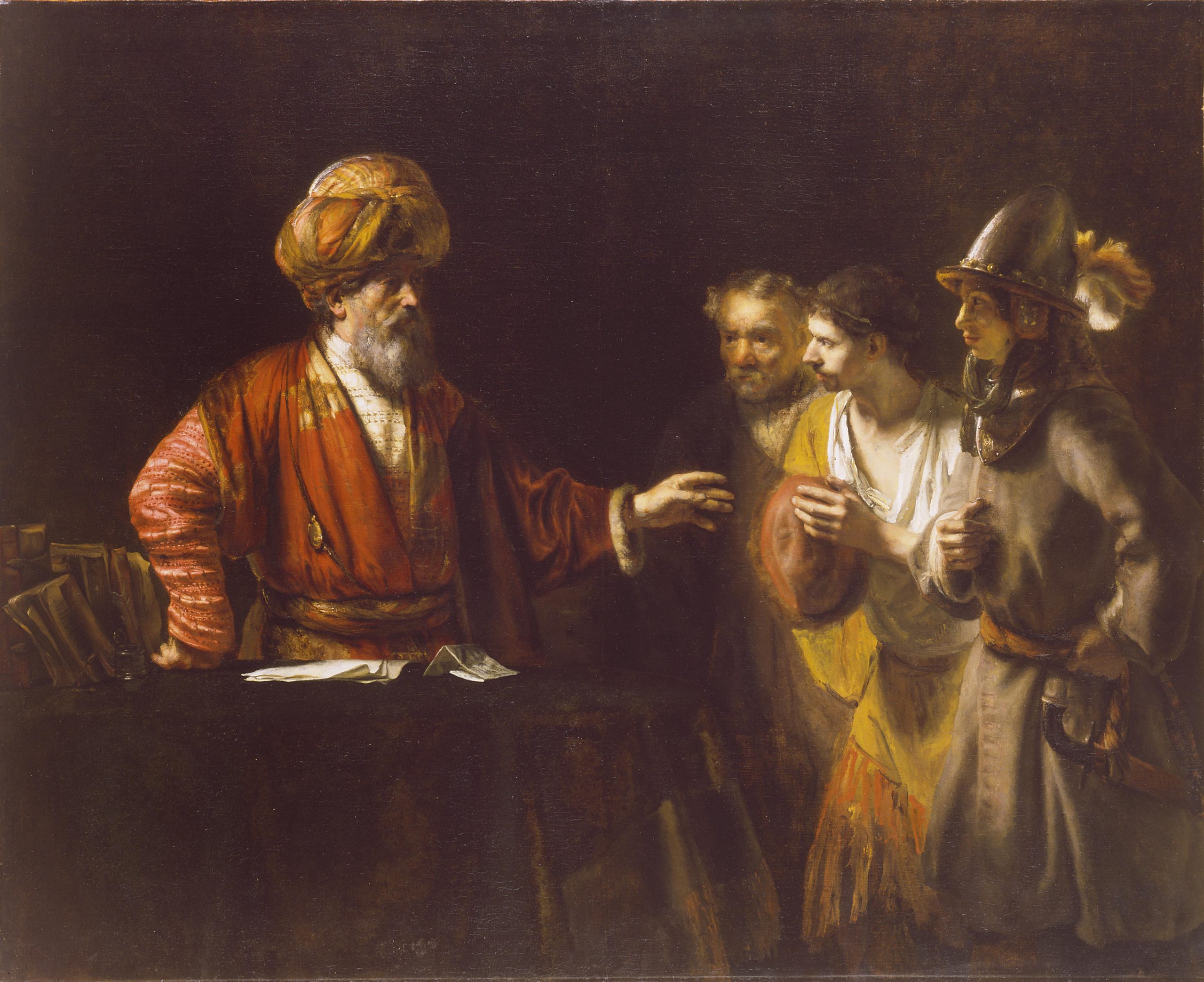
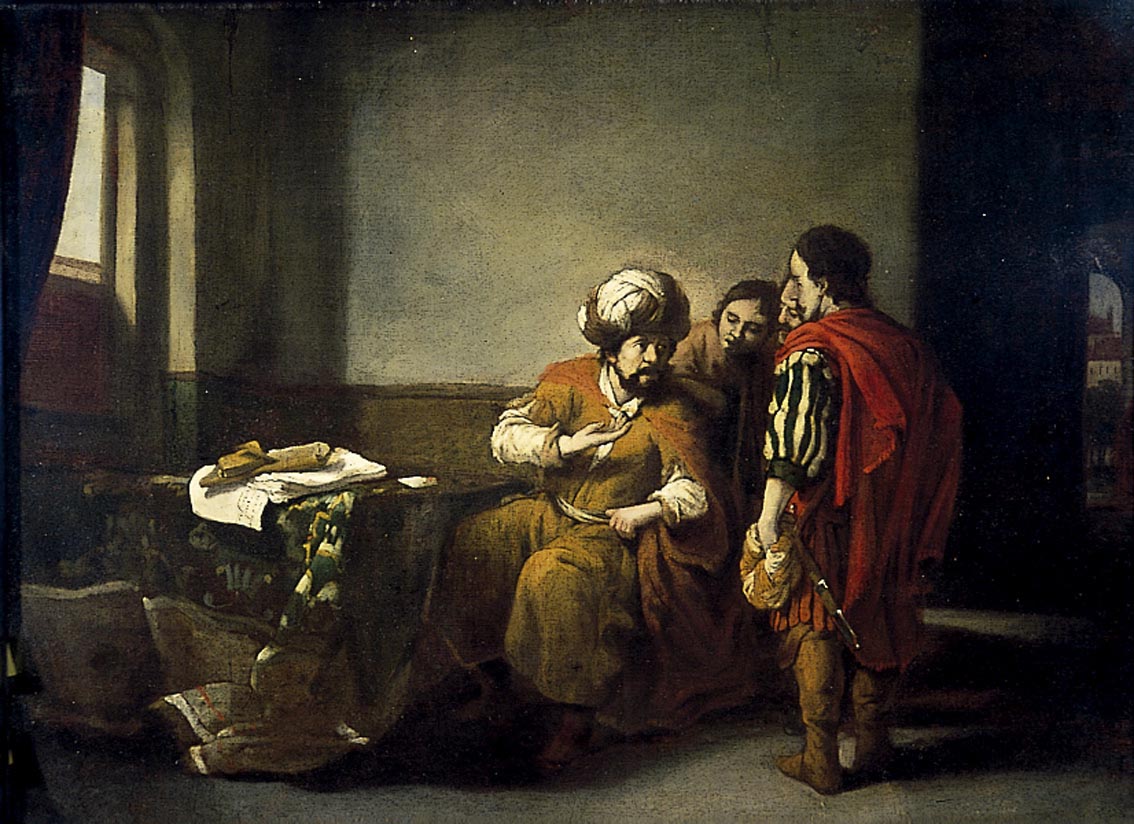
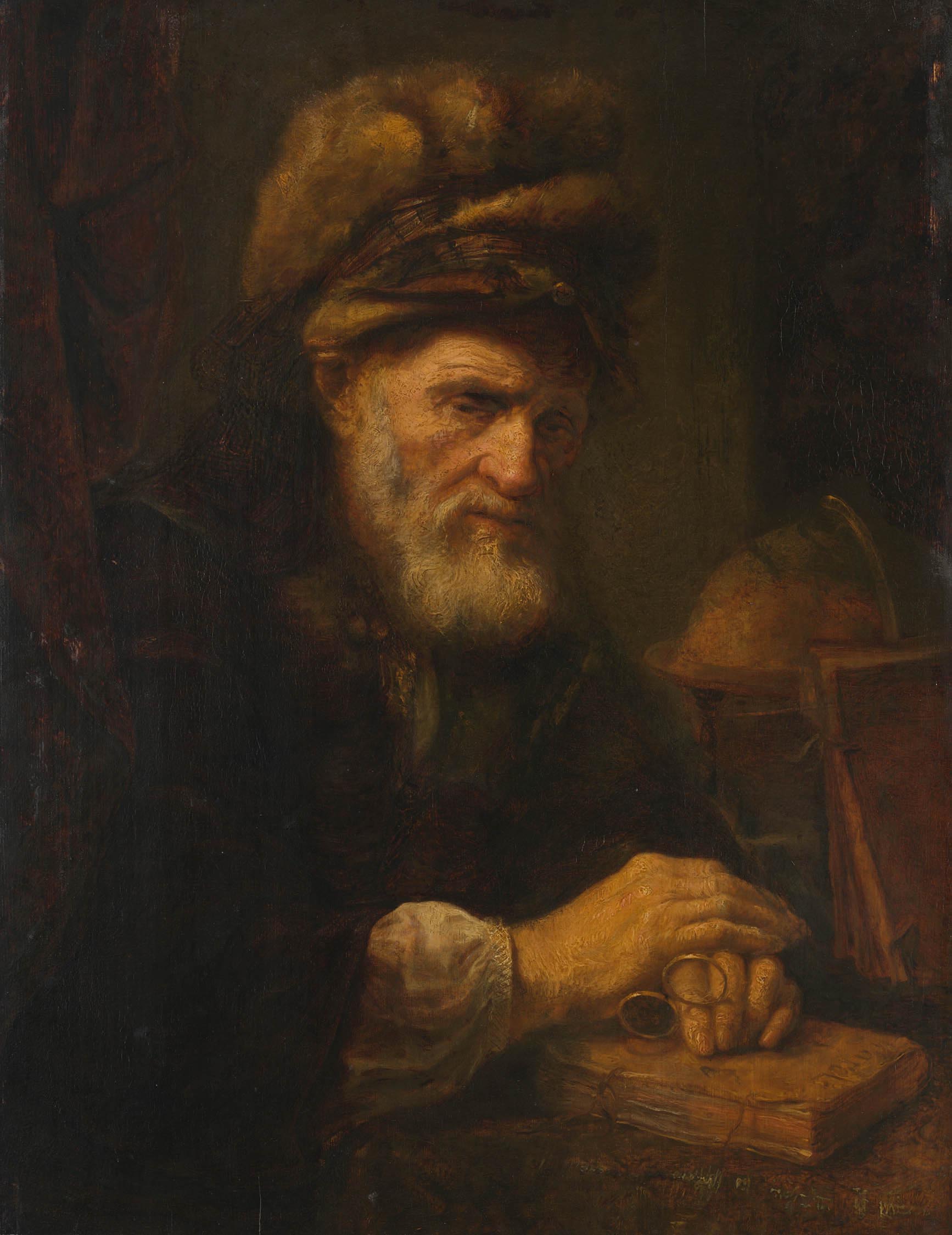
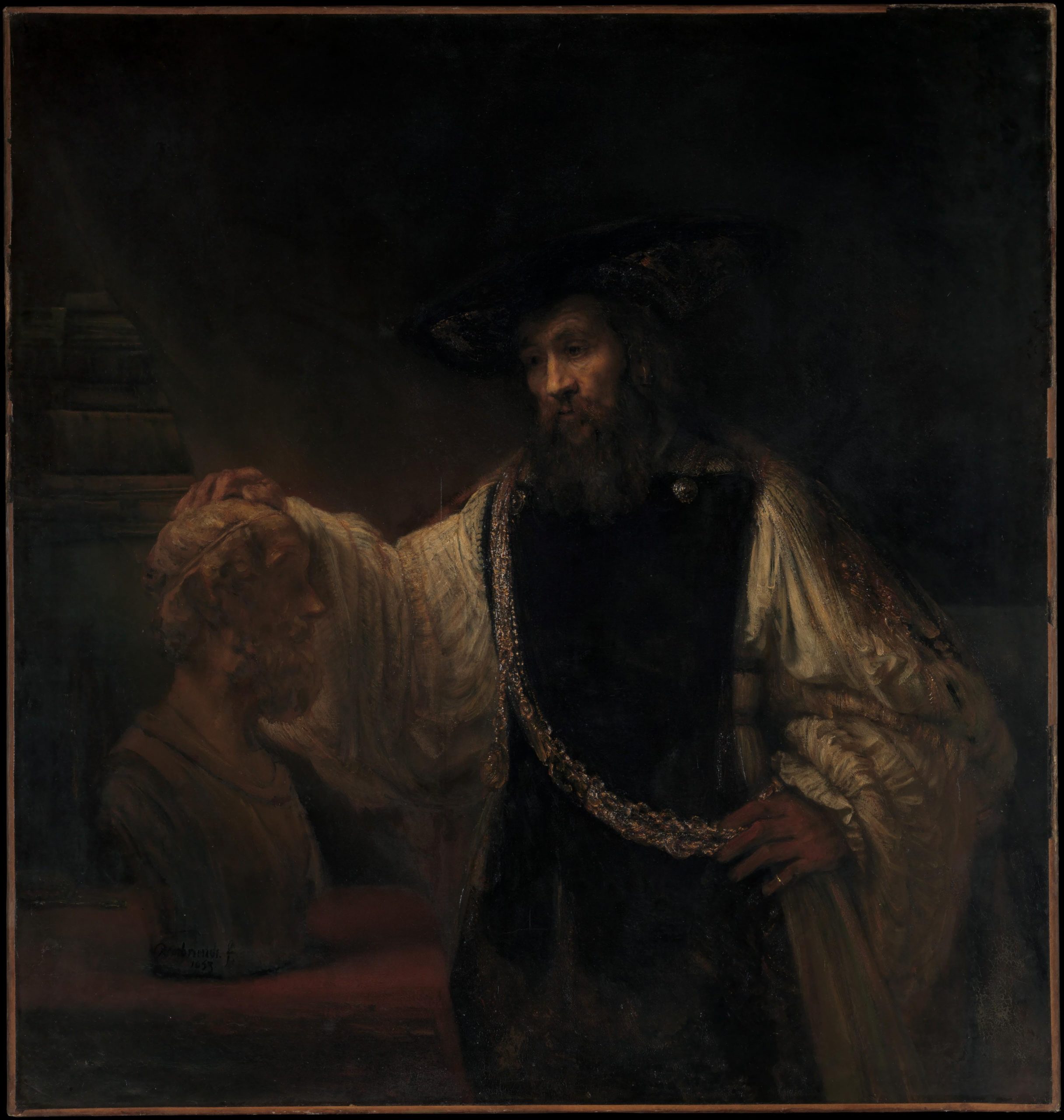
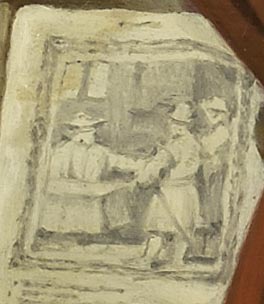
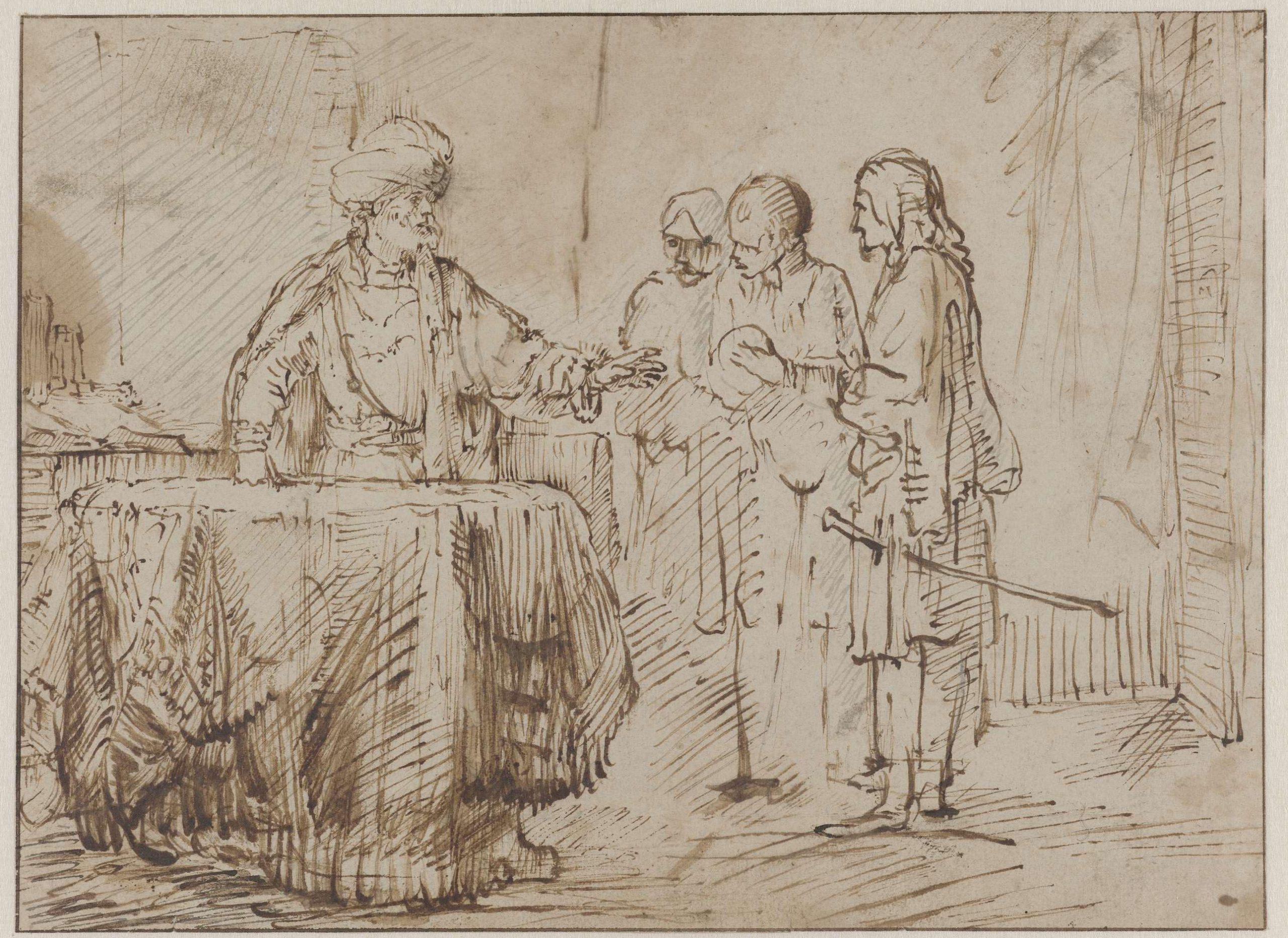
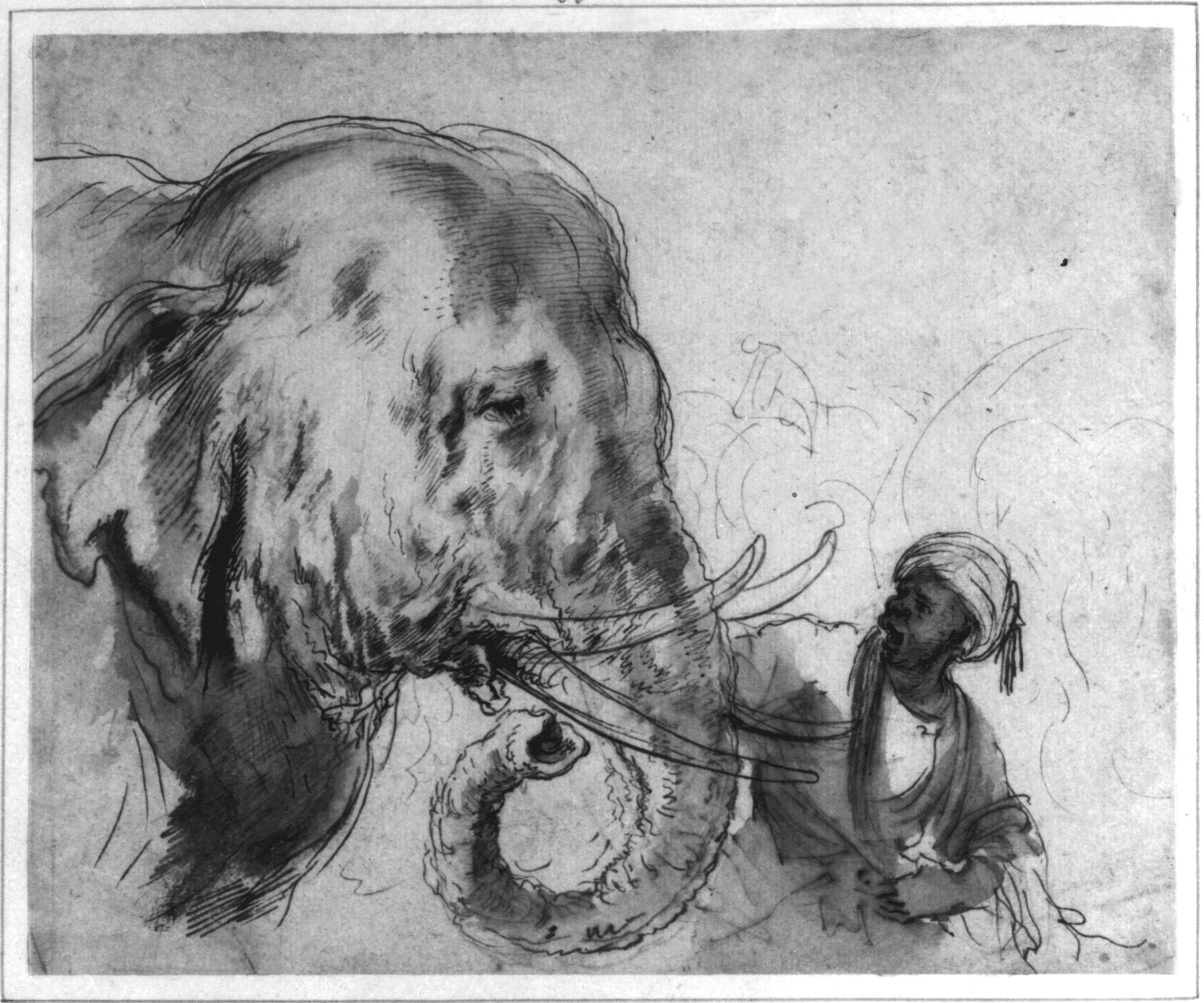
Drawing on the Neighbourhood in Rembrandt’s Inscription on a Drawing

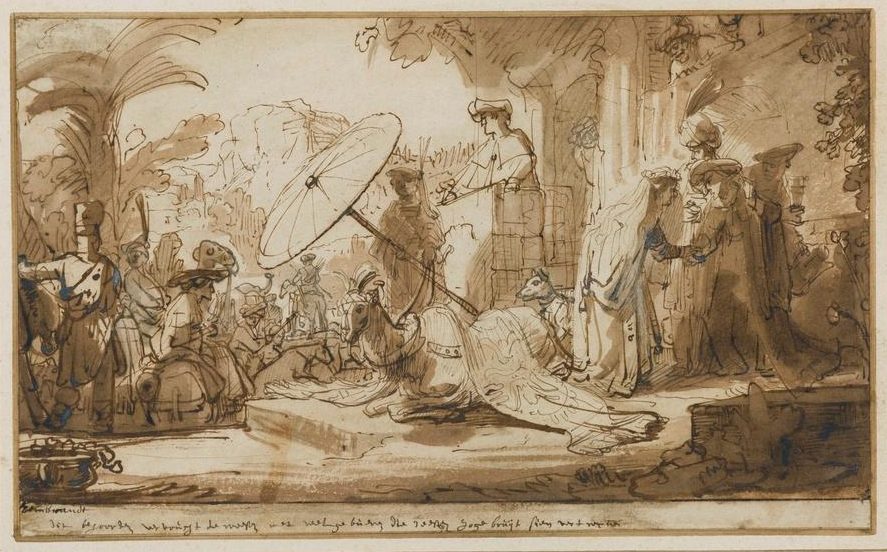
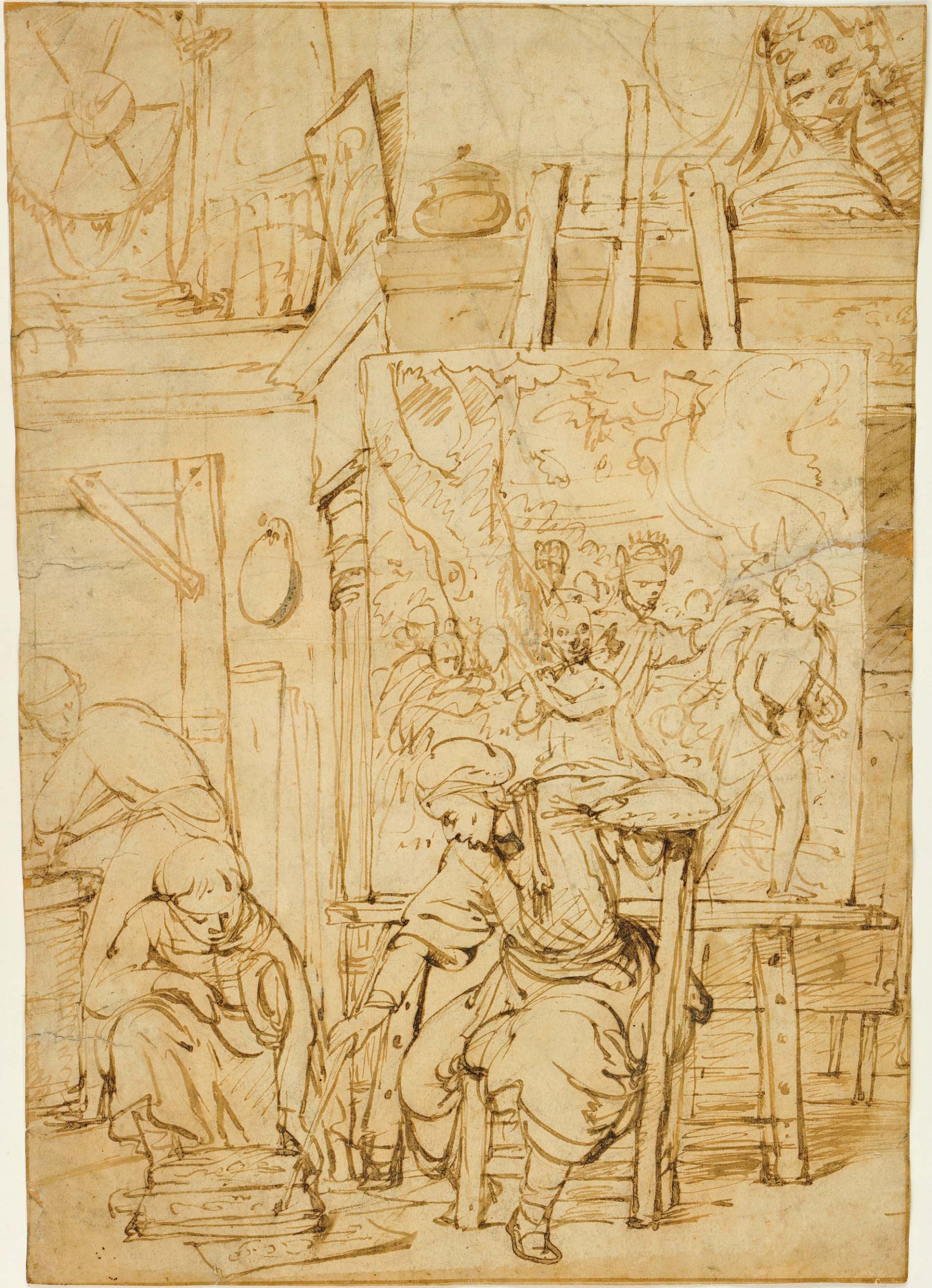
Workshop of Rembrandt, with inscription by Rembrandt, The Departure of Rebecca, c. 1637. Reed pen with bistre, wash and fine highlights mounted on cardboard
1. Workshop of Rembrandt, with inscription by Rembrandt, The Departure of Rebecca, c. 1637. Reed pen with bistre, wash and fine highlights mounted on cardboard, 185 x 306 mm. Stuttgart, Staatsgalerie, Graphische Sammlung (C 1965/GL 936). Photo: © Staatsgalerie Stuttgart.

In the undisputed hand of Rembrandt Harmensz van Rijn, the intriguing inscription that appears beneath the drawing of an Old Testament scene, The Departure of Rebecca, c. 1637, has generated various studies (fig. 1).1 The rarity of the artist’s annotations, in general, has served to intensify scholarly interest in them. Discussions of the inscription have examined its relationship to the drawing’s attribution, the artist’s teaching methods, and his instructional intent. This study posits that the inscription’s specific wording raises additional significant questions, which have yet to be considered.

Written in ink different from that of the drawing, Rembrandt’s directive reads: “This should contain the figures of many neighbours who witness the departure of the noble bride.”2 In another hand, “Rembrandt” appears just above the inscription. The master’s critique emphasises the importance of having many “gebueren” (neighbours) in attendance at the housefront of Rebecca’s parents as she departs for her marriage to Isaac, even while the related biblical text lacks any reference to such persons.3

This study considers the significance of Rembrandt’s specific instructions to include neighbours, rather than generic figures, “who witness the departure of the noble bride.” Gary Schwartz also noted that the Old Testament story does not allude to neighbours, and he accounted for Rembrandt’s artistic licence by concluding the artist wished to approximate everyday experience.4  Schwartz, however, did not elaborate further on his observation.

Rembrandt’s instructions to add many neighbours in the drawing of Rebecca’s departure from her home did, in fact, result in a scene that resembled everyday life for a seventeenth-century Dutch viewer. I argue that neighbours’ well-embedded social practices—in particular, gatherings on domestic stoops and engagement with each other’s nuptial rituals—account for the artistic licence taken by Rembrandt with the biblical text. In the drawing, both the inclusion of neighbours at the housefront and their interest in the procession leading Rebecca to her marriage would have evoked in viewers their own, comparable experiences as neighbours.

Similarly in some other biblical works, as Amy Golahny has shown, Rembrandt melded reality that he had observed or experienced with imagined history.5 Contemporary with The Departure of Rebecca, Rembrandt’s black chalk drawing A Blind Beggar with a Boy and a Dog (private collection), for example, showcases figures he observed in daily life that he later incorporated in the biblical etchings such as The Hundred Guilder Print, c. 1647–1649 (B.074), and The Blind Tobit, 1651 (B.042), and which also appear in some students’ drawings.6

Like most of his urban contemporaries, Rembrandt belonged to self-determined and robust neighbourhood organizations (gebuyrten) in Leiden and Amsterdam. The written regulations (buurtbrieven) of such official organizations typically mandated membership of all who lived within the respective unit’s geographical footprint.7 Many official gebuyrten decrees, as well as unofficial expectations, relied on neighbours’ familiarity with each other’s daily affairs. Residents frequently shared news and gossip on domestic stoops, and at housefront windows and open doors to maintain the collective honour of their neighbourhood. Communal conviviality helped to construct and reinforce the neighbourhoods’ shared goals of brotherhood, friendship, and unity.8 Typically, neighbours also observed or attended various social gatherings, including before, during, and after the marriage of fellow residents. I argue that the expectation among neighbours to keep abreast of news and gossip shared informally on front stoops, and to participate in celebratory occasions, including nuptial festivities, informed the assumptions, advice, and wording of Rembrandt’s inscription beneath the drawing The Departure of Rebecca.

The various Old Testament events described in Genesis 24 that led to the marriage of Isaac and Rebecca appear in numerous seventeenth-century Dutch paintings, prints, and drawings, including those by Rembrandt and his pupils.9 The specific scene in The Departure of Rebecca captures the realization of instructions initially given by Abraham to his servant Eliezer to find a wife for the patriarch’s son, Isaac. With camels and gifts, Eliezer left Abraham and embarked on his mission. As evening fell, he approached a well where he foretold that if a woman agreed to share her water with him and his camels, she would be Isaac’s future wife. In time, Rebecca fulfilled the servant’s request.10 Eliezer revealed his objective to Rebecca’s brother and father, who, along with Rebecca, happily agreed to the marriage. Subsequently, Rebecca and her companions climbed onto camels and followed Eliezer on his return journey to join Isaac.

In the drawing, several figures assemble on or near the domestic threshold of Rebecca’s parents, or peer out from the housefront’s doorway and open windows. Since some of the figures overlap the drawn details of the window and door, their addition may postdate Rembrandt’s inscribed instructions.11 A man—presumably Rebecca’s brother or father—overlooks the scene from the low balcony attached to the façade.

Seen at an oblique angle, the domestic structure fills most of the right side of the composition. The home’s expansive stoop extends into the foreground, parallels the bottom edge of the composition, and readily affords the viewer, as neighbour, close visual and spatial engagement with the event. On the right, Rebecca bids farewell to her mother. The additional individuals gather behind them. A camel kneels on the stoop ready for Rebecca’s journey. Behind the docile animal, a standing man holds a large open umbrella at an angle. On the left, a retinue of people on foot and on horseback begins to take its leave. After the Old Testament’s account of Rebecca’s departure, which the scene in the drawing anticipates, the text describes the subsequent journey through the countryside to meet Isaac, who took her as his wife.

Studies of Rembrandt’s inscription have addressed the relevance of the artist’s instructions for the drawing’s inconclusive attribution to either the master himself or to one of his pupils.12 The latter include Salomon Koninck or a Koninck group; perhaps Govert Flinck; and Gerbrand van den Eeckhout.13

One scholar has argued that Rembrandt wrote the comment on his own drawing in order to provide a model as a correction to a pupil’s image.14 However, Rembrandt rarely inscribed his own drawings and unlikely with self-criticism.15 Instead, as several scholars have convincingly concluded, the master’s inscription appears on a student’s drawing about that work, rather than on his own drawing.16 Such studio instruction by Rembrandt was long-lived. Under the master’s tutelage, the painter Samuel van Hoogstraten learned from comparable corrections and recommended such artistic training in his Introduction to the Academy of Painting, or the Visible World, 1678.17

Further discussions of Rembrandt’s inscription—like analyses of his other written comments on, and corrections of, students’ drawings—have assessed the master’s artistic instructions vis-à-vis the scene’s compositional and narrative elements.18 Although the inscription evokes art theory’s concern for the appropriate number of figures in a text-based story, art theory does not account for Rembrandt’s explicit call for neighbours, rather than generic figures.19

To the observations that Rembrandt’s instructions addressed compositional and iconographic elements of the scene, I add discussion of significant Dutch social practices, which, I contend, the master evoked in his specific call for the depiction of neighbours. The social network, social exchange, and social control inherent in seventeenth-century Dutch neighbourhoods provide a rich interpretive context, which further illuminates the significance of Rembrandt’s inscription on the drawing.


Rembrandt and Neighbourhood Culture

The artist would have been intimately familiar with the social practices, social network, and social exchange of neighbourhoods, which constituted a primary organizing unit of social control in everyday relations. Small in footprint, Dutch neighbourhoods were typically circumscribed by the borders of only one or two streets or one side of a canal, and adjacent alleys. Membership typically included all residents living within the small community’s geographical parameters: men and women; natives and immigrants; and diverse socioeconomic classes, trades, and religions.20 Neighbours selected a governing board from among themselves consisting of various administrators. They oversaw neighbourhood meetings; played conciliatory and mediatory roles to protect order and quiet; ensured the rights, responsibilities, and honour of residents; and enforced the binding regulations, which did not warrant the intervention of civic authorities.21

Neighbourhood organizations resulted from a desire for calm, stability, camaraderie, and the preservation of individual and communal honour. The most compelling goal of seventeenth-century Dutch neighbourhood organizations centred around harmonious shared experience. Attendance at various informal gatherings as well as official social events fostered a sense of community. To maintain a neighbourhood’s mores and reinforce convivial relations, regulations required residents to participate in each other’s lives and stay abreast of good and bad news through daily interaction of all kinds, including conversation and gossip.22 At housefront thresholds, stoops, and windows, much as we see in The Departure of Rebecca, neighbours kept aware of communal news of large and little consequence. They also intervened as witnesses to social infractions and negotiated resolutions to conflicts.

Rembrandt was certainly familiar with the official regulations, unofficial expectations, social values, and experiences of neighbourhood life. In Leiden, where he was born in 1606, his family lived in the Pelikaanshoek (Pelican Corner) neighbourhood.23 Prominent administrative roles held by Rembrandt’s father and brother in their neighbourhood organization would have provided the artist even greater familiarity with the social control characteristic of gebuyrten. While the young Rembrandt still lived in Leiden, his father Harmen Gerritsz van Rijn, a miller, served as chairman (heer) of the family’s neighbourhood. From 1643 until his death in 1652, Rembrandt’s brother, Adriaen Harmensz van Rijn, served as heer of the same Leiden neighbourhood organization.24

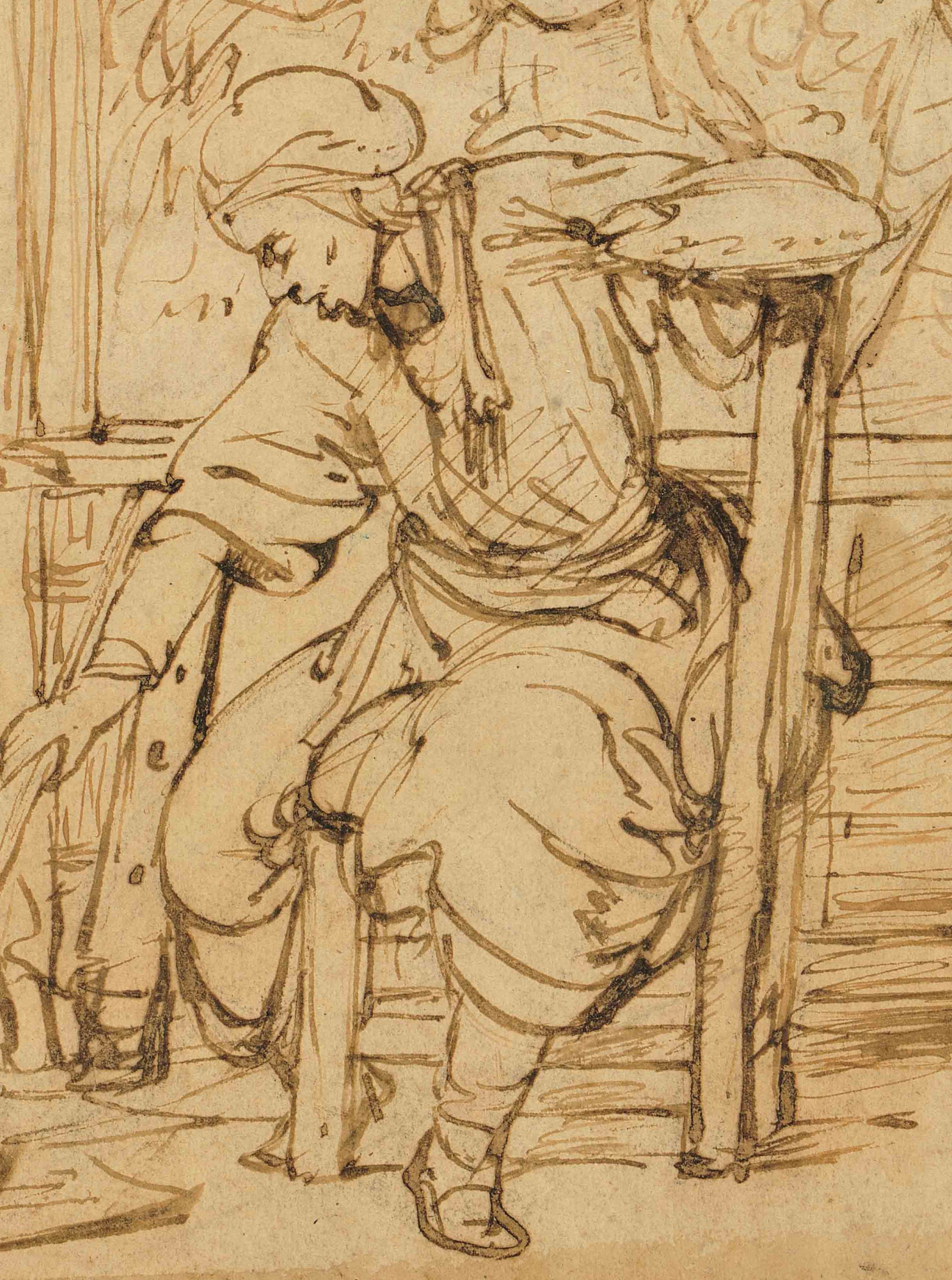
The various drawings by Rembrandt that evince his familiarity with neighbourhood life at the intersection of home and street are close in date to The Departure of Rebecca, c. 1637. The subjects and compositions of the drawings pictorially educe the ebb and flow of neighbourhood social exchange before a housefront, as Rembrandt’s inscription similarly called for in the Old Testament scene. A resident either sits on a domestic stoop or peers out from an open window or half-open Dutch door. The figures’ positions and their gazes invite neighbourhood encounters.

Schilderij van Rembrandt, Seated Man Wearing a Flat Cap, c. 1635–1640. Pen and brown ink, brush and brown wash, heightened with white gouache.
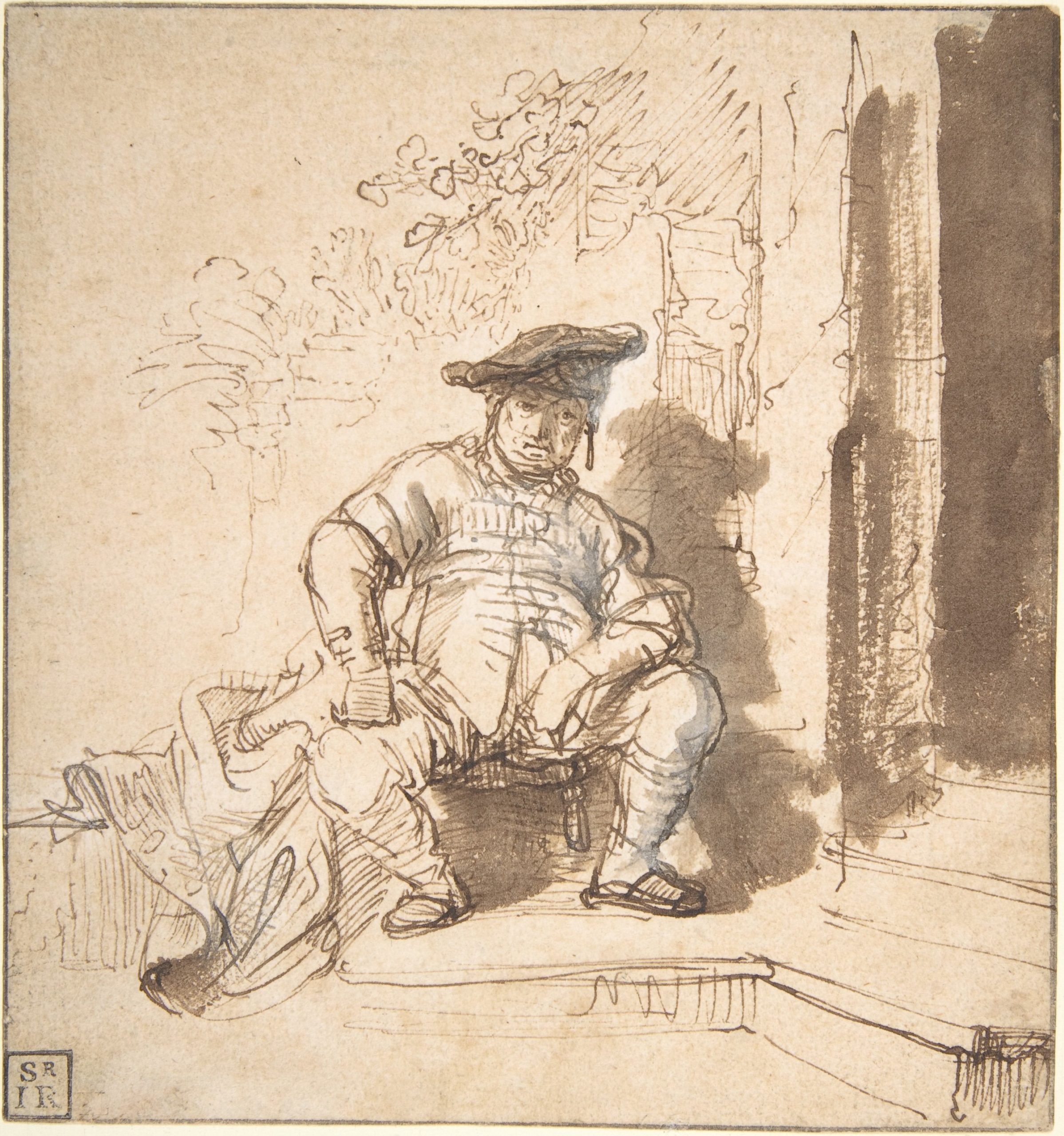
2. Rembrandt, Seated Man Wearing a Flat Cap, c. 1635–1640. Pen and brown ink, brush and brown wash, heightened with white gouache, 148 x 138 mm. Metropolitan Museum of Art, H. O. Havemeyer Collection, Bequest of Mrs. H. O. Havemeyer, 1929 (29.100.935). Photo: The Metropolitan Museum of Art, New York, Thomas J. Watson Library.

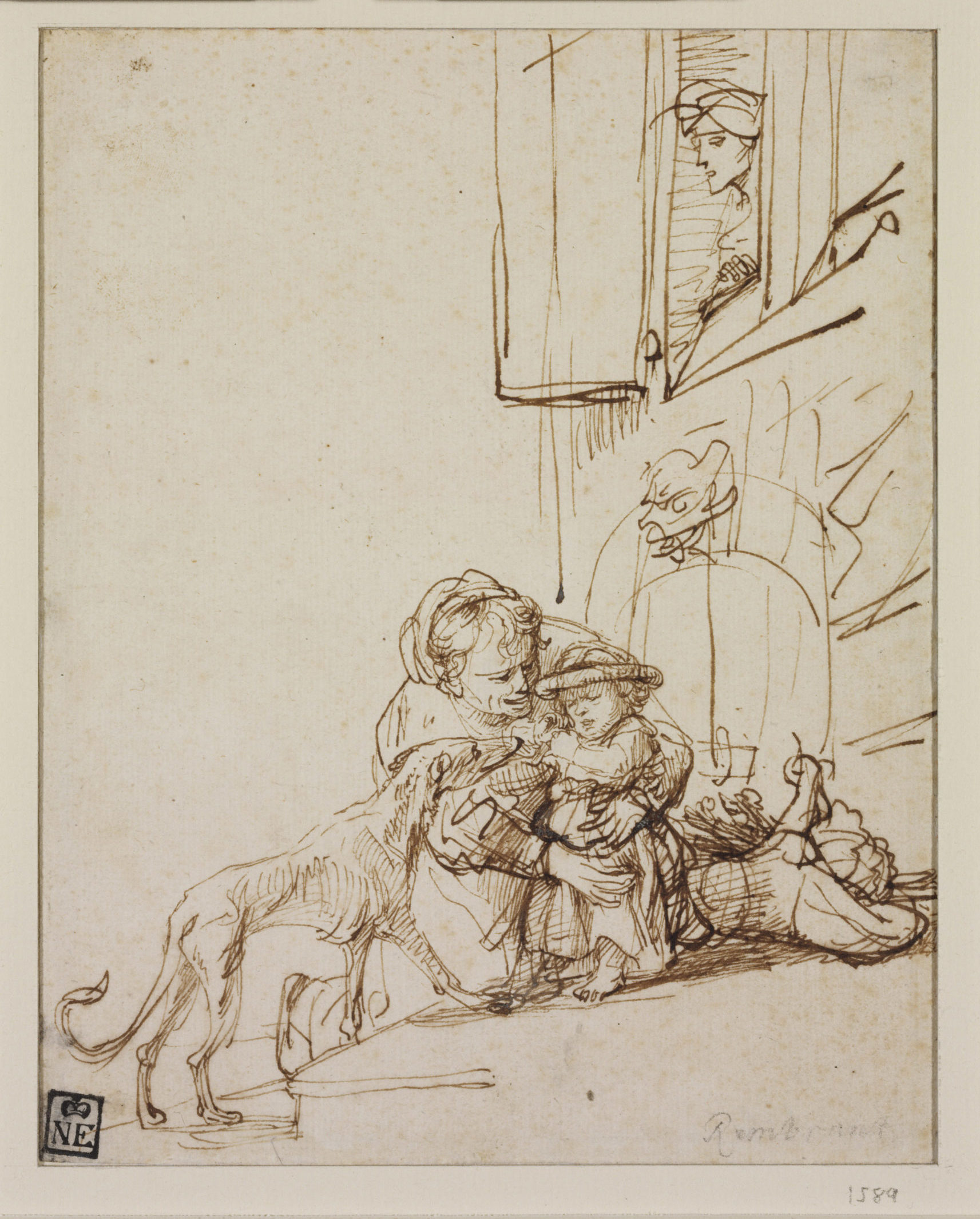
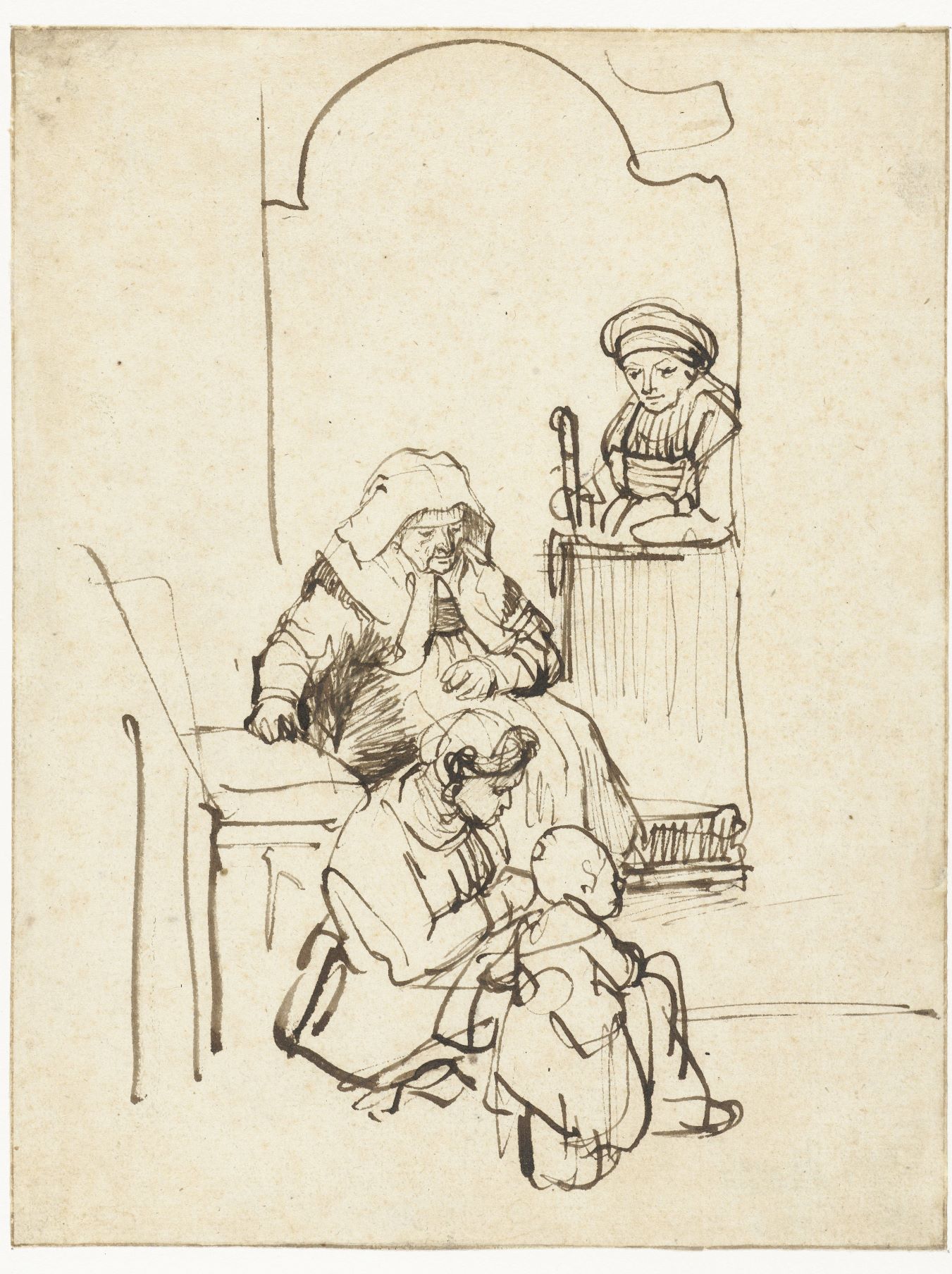
In Seated Man Wearing a Flat Cap, c. 1635–1640, for example, a resting figure on his stoop gazes directly out at the viewer as passerby/neighbour (fig. 2). Woman Holding a Child Frightened by a Dog, on the Doorstep of a House, c. 1635–1636, pictures a woman leaning out of a housefront window surveying the scene below (fig. 3). On the top step, a smiling mother kneels and embraces a frightened toddler, while a carefree dog edges close. In Three Women and a Child by a Door, c. 1645, a female figure behind a half-open Dutch door leans on the ledge of the bottom half and watches two women and a child, seated below on the stoop and step (fig. 4).

Schilderij van Rembrandt, Woman Holding a Child Frightened by a Dog, on the Doorstep of a House.
3. Rembrandt, Woman Holding a Child Frightened by a Dog, on the Doorstep of a House, c. 1635–1636. Pen, brown ink on paper, 180 x 150 mm. Budapest, Szépmüvészeti Múzeum (1589). © The Museum of Fine Arts Budapest/Scala/Art Resource, NY, Photo: Jozsa Denes.

Such scenes attest to the good cheer and engagement essential to shared goals of friendship, brotherhood, and unity, which neighbours enjoyed on domestic front stoops, steps, and in the adjacent street. Rembrandt also called for such neighbourly engagement in the scene of Rebecca’s departure from the front stoop of her parents’ house. A century and a half later, in 1773, Jan le Francq de Berkheij, a professor of natural history at Leiden University, published his short description of that city—Rembrandt’s hometown—in which he described neighbourly gatherings at housefronts.

A very old custom of sociability [gezelligheid] occurs on summer evenings when various neighbours, after eating, come together outside the front door, usually in the street, on the bench, or in the house’s front room [voorhuis], and treat each other to a cup of coffee or beer, [a custom] which they refer to as “benching” [banken], and [which] usually lasts until eleven o’clock or later.25

The long-lived, gezellig custom among Leiden neighbours, who gathered socially “outside the front door, usually in the street, on the bench, or in the house’s front room,” was also enjoyed in other Dutch cities.


Schilderij van Rembrandt, Three Women and a Child by a Door, c. 1645. Paper, pen and brown ink, framing line in brown ink
4. Rembrandt, Three Women and a Child by a Door, c. 1645. Paper, pen and brown ink, framing line in brown ink, 233 x 178 mm. Amsterdam, Rijksmuseum (RP-T-1889-A-2056).


Neighbours as Nuptial Celebrants

Rembrandt’s instructions to depict “many neighbours who witness the departure of the noble bride” also allude to the commonplace attendance by neighbours at each other’s marital events. Their presence at an array of such occasions would have informed Rembrandt’s inscription. While seventeenth-century Dutch neighbours often observed or joined celebratory events in honour of a betrothed or newly married couple, the bride and groom (or their parents), in turn, fulfilled a widespread regulation to honour their neighbourhood at the time of a wedding. An example of such a decree was published on 24 March 1593, by the city fathers of Leiden—Rembrandt’s hometown.26 The 1593 General Regulation included “Article 6. Marriages,” which remained in effect in Leiden throughout the seventeenth century. The ruling declared that

He who marries off a son or daughter, or himself marries—whether one stays in the neighbourhood; whether one leaves for another neighbourhood—is obliged to make a respectable contribution to the neighbourhood where he lives according to his own discretion, civility, and the state of his marriage.27

A “respectable contribution” referred to one that was monetary and made to the neighbourhood’s cash box, which funded communal enterprises, such as the annual neighbourhood feast.28  Such reciprocity of significant engagement and support by neighbours on behalf of a newly betrothed couple amongst them, on the one hand, and by a newly married couple or their parents on behalf of their neighbourhood, on the other hand, further illuminates Rembrandt’s call for the inclusion of neighbours in The Departure of Rebecca.

By Dutch tradition, when an engaged couple departed from the bride’s home to be married, neighbours and other interested observers gathered on her household stoop and in the adjacent street. Among all Dutch marriage customs involving neighbours, this ritualised step in the nuptial narrative most closely parallels details and circumstances in The Departure of Rebecca. Similarities between the custom and the drawing include the bride’s departure from her home for the wedding ceremony; the domestic threshold setting; and the array of bystanders and onlookers, including neighbours, whose depiction Rembrandt called for in the scene. The drawing, however, does not replicate that ritualised step in the contemporary nuptial narrative. Consistent with the biblical account, Rebecca’s future groom, Isaac, who remained at some distance away, does not accompany her as she departs from her home.

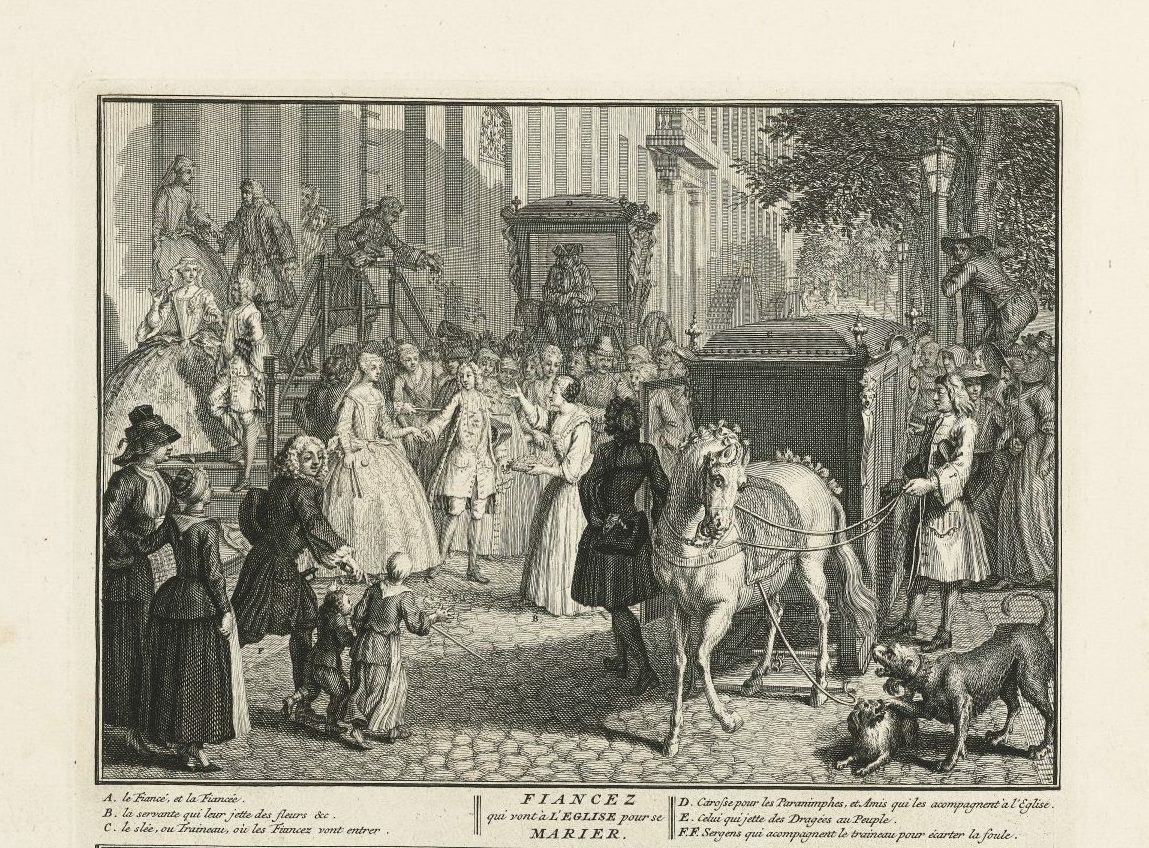
Schilderij van Bernard Picart, Bride and Bridegroom on Their Way to the Church/ Dutch Reformed Church Marriage Ceremony, 1730. Etching and engraving
5. Bernard Picart, Bride and Bridegroom on Their Way to the Church/ Dutch Reformed Church Marriage Ceremony, 1730. Etching and engraving, 333 × 218 mm. In: Bernard Picart, Cérémonies et coutumes religieuses de tous les peuples du monde […]. Tome troisieme, qui contient les cérémonies des Grecs & des protestans. Deel 3 (Amsterdam: Jean Frederic Bernard, 1733). Amsterdam, Rijksprentenkabinet, Rijksmuseum (RP-P-OB-51.714).

The specific Dutch ritual of the bride’s departure from her home was documented in an etched and engraved print, Bride and Bridegroom on Their Way to the Church/ Dutch Reformed Church Marriage Ceremony, 1730, by Bernard Picart (working in Amsterdam beginning in 1711) (fig. 5).29 An engaged couple leaves the bride’s home for their Dutch Reformed church wedding.30 Although impressions of Picart’s print sold individually, the artist also reproduced the image in his five-volume publication Cérémonies et coutumes religieuses de tous les peuples du monde (Ceremonies and religious customs of all the people of the world).31

In the Netherlandish edition of Picart’s volumes, the Dutch text that expounds upon the print Bride and Bridegroom on Their Way to the Church/ Dutch Reformed Church Marriage Ceremony references neighbours who watch the couple’s departure from the bride’s home. Notably, this passage corresponds to the instructions that Rembrandt inscribed under the drawing in which Rebecca leaves her parents’ house. The text in Picart’s publication advises that “the full splendour of the future spouses can be seen by all of the neighbours and the crowd of people, who approach from all sides of the house.”32

In Picart’s print, numerous figures, including neighbours, in everyday dress stand in the left foreground, the right middle ground, and in the background and they happily observe the departure of the engaged couple.33  On the right, a small boy has climbed a tree to get a better view. In the middle distance, a woman—perhaps late for the occasion—runs across a bridge in the direction of the foreground gathering.

After a seventeenth-century Dutch wedding ceremony, a second traditional procession composed of the bride, her neighbours, and friends travelled together to meet the groom. The bride and celebrants made their way to the groom at his house or an inn, where elaborate wedding festivities typically took place.34 Although the scene in The Departure of Rebecca marks an earlier moment in a nuptial narrative, neighbours figure prominently in both Rembrandt’s call for their inclusion in the drawing and in their actual participation in the second type of Dutch wedding procession.

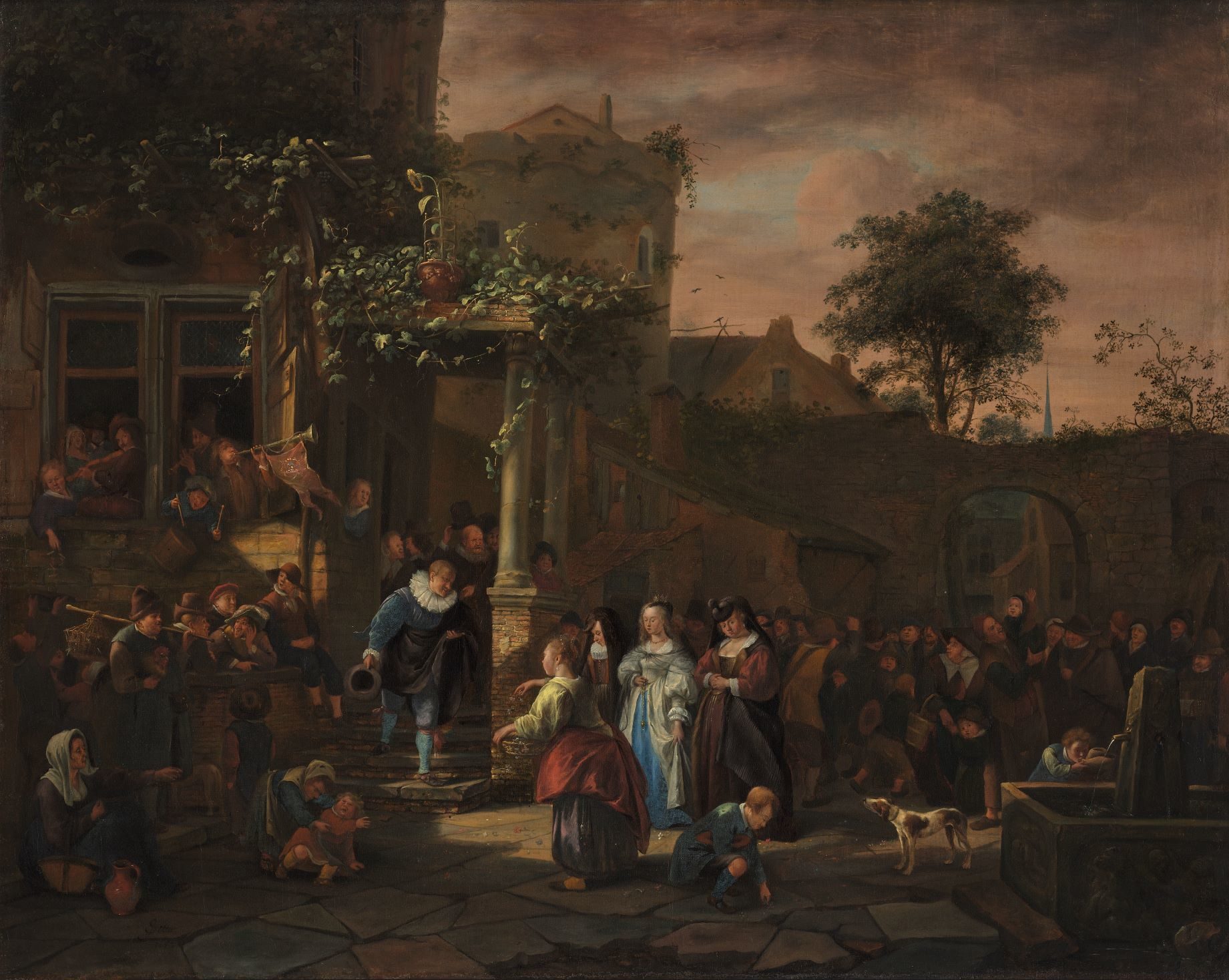
Schilderij van Jan Steen, The Village Wedding, 1653. Canvas
6. Jan Steen, The Village Wedding, 1653. Canvas, 64 x 81 cm. Rotterdam, Museum Boijmans Van Beuningen (2314 [OK]), on loan from: Rijksdienst voor het Cultureel Erfgoed. Photo: Studio Tromp, Rotterdam.

Jan Steen’s The Village Wedding, 1653, depicts the post-wedding parade of celebrants led by the bride (fig. 6). The groom descends the steps to greet his approaching wife, who is accompanied in the procession by family members, neighbours, and friends. As noted by Petra van Boheemen, in Steen’s scene “half the neighbourhood has run out to be present at the meeting” of the couple.35

Other seventeenth-century Dutch marriage customs also manifest the widespread engagement of neighbours in wedding-related events. Such traditions further contextualise the social practices invoked by Rembrandt’s instructions to include neighbours in the drawing of Rebecca’s departure to join her future groom. Elaborate celebratory meals occurred before, as well as after Dutch marriage ceremonies. Like family and friends, neighbours often received formal invitations to attend them.36

Sometime between 1590 and 1595, the Englishman Fynes Moryson noted in his journal of travels through the northern Netherlands that on the third day after a typical wedding ceremony, the couple invited their “neighbours and ordinary freundes” for “supper and dauncing.” His comments appear midst his more detailed observations about Dutch marriage celebrations.37 Preparations for engagement and wedding festivities began days in advance, included special food and drink, and often a dinner or banquet.38

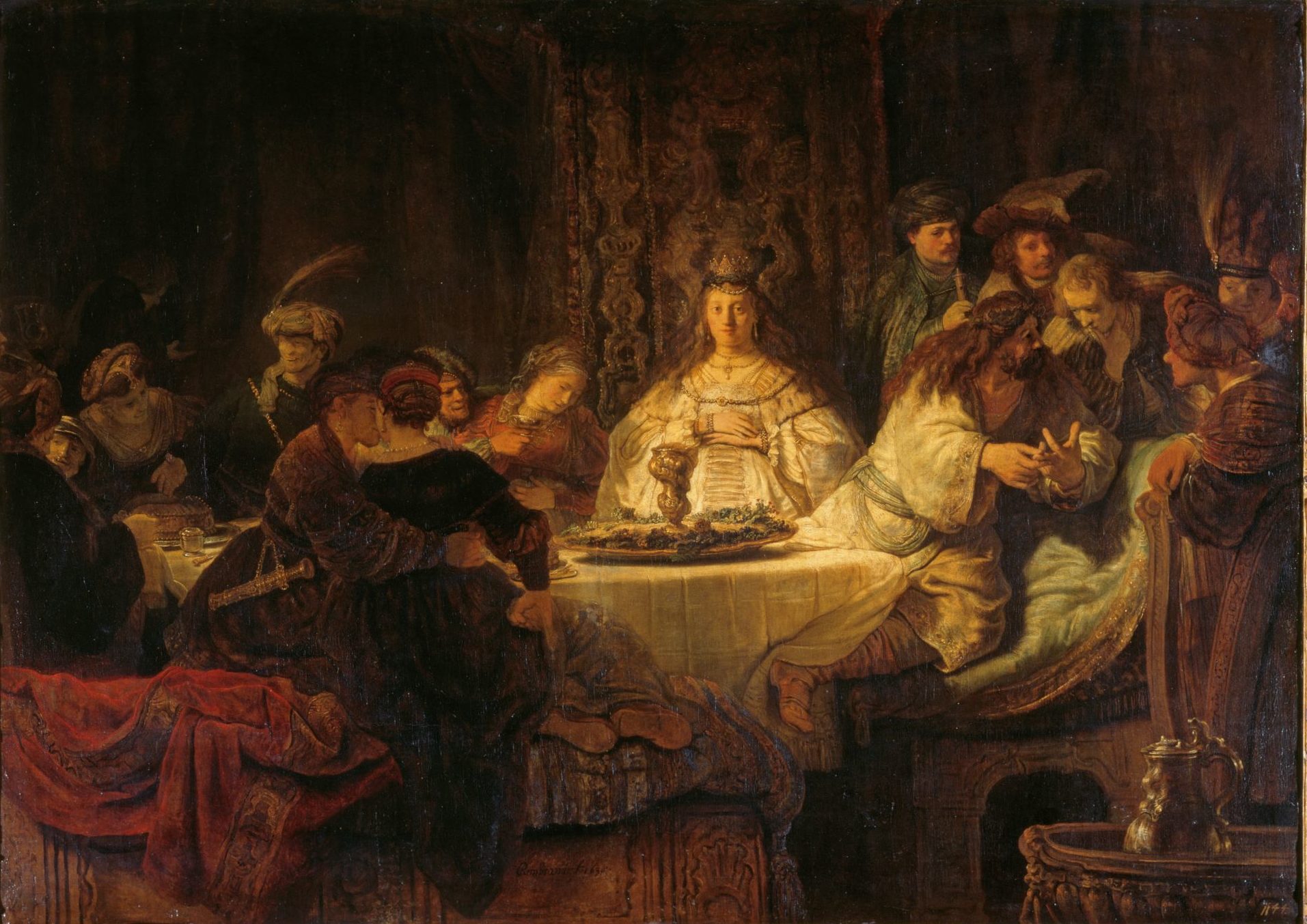
Schilderij van Rembrandt, Wedding of Samson, 1638. Canvas, 127 x 178 cm. Dresden, Gemäldegalerie Alte Meister, Staatliche Kunstsammlungen Dresden (1560)
7. Rembrandt, Wedding of Samson, 1638. Canvas, 127 x 178 cm. Dresden, Gemäldegalerie Alte Meister, Staatliche Kunstsammlungen Dresden (1560). Photo: bpk Bildagentur/ Dresden, Gemäldegalerie Alte Meister/ Hans-Peter Klut/ Art Resource, NY.

Several Old Testament pictures by Rembrandt and his contemporaries showcase wedding banquets with numerous guests.39 Viewers may have assumed the revellers included neighbours in a melding of lived experience with imagined history. Close in date to The Departure of Rebecca, c. 1637, Rembrandt’s painting The Wedding of Samson, 1638, stages several celebrants at the Old Testament meal (fig. 7). In comments on the painting four years later, a Leiden observer noted a similar blending of lived Dutch customs with the imagined biblical past. In his Lof der Schilder-konst (Praise of Painting), 1642, Philips Angel observed: “since all the guests are not concerned with one and the same matter, [Rembrandt] showed others making merry, not listening to [Samson’s] riddle, but holding up a glass of wine and laughing. Others were kissing—in short, it was a merry wedding feast . . . the actions were of the kind found in our modern wedding feasts.”40

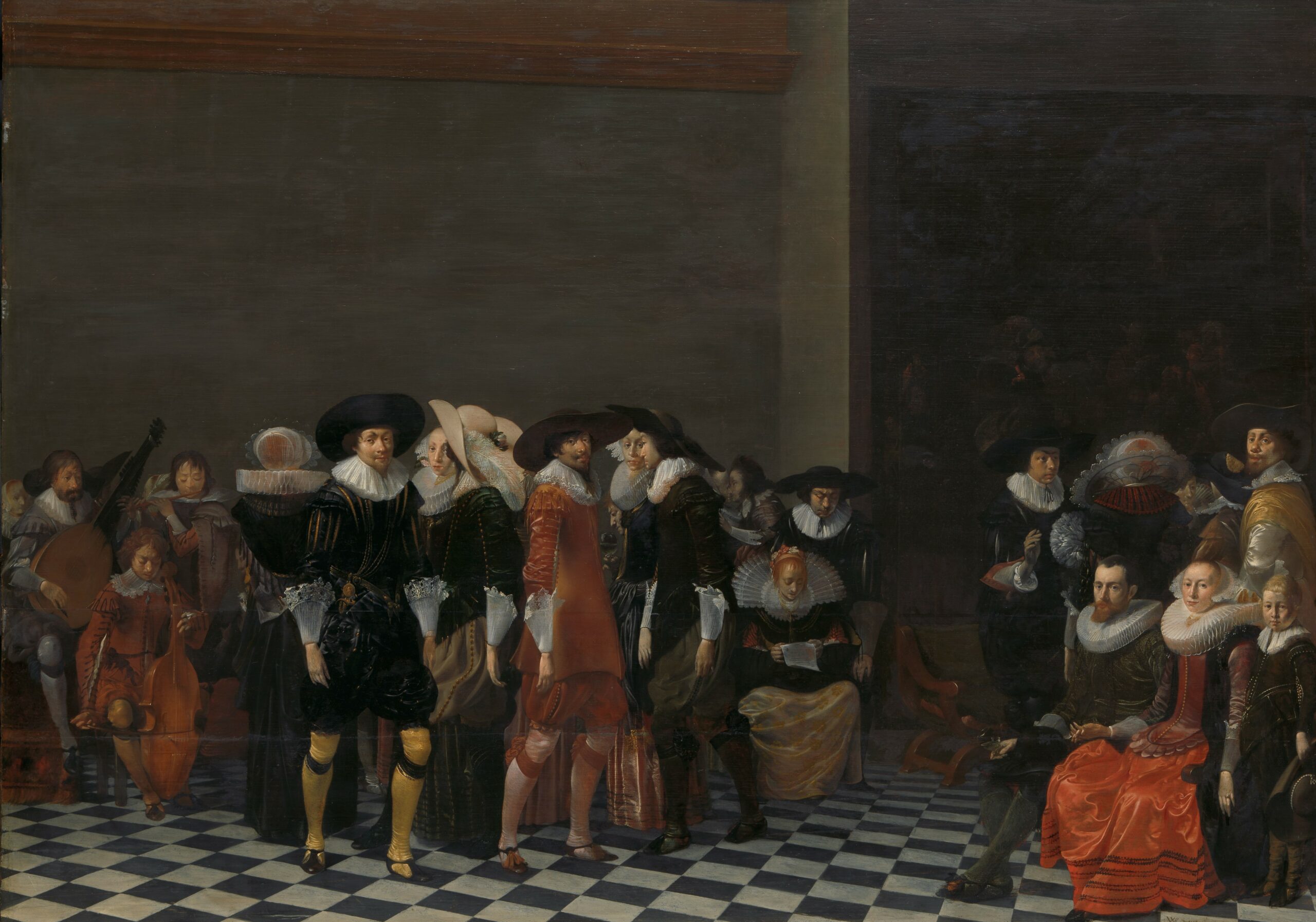
Schilderij van Willem Cornelisz Duyster, A Wedding Feast, long known as “The Wedding of Adriaen Ploos van Amstel and Agnes van Bijler, 1616”
8. Willem Cornelisz Duyster, A Wedding Feast, long known as “The Wedding of Adriaen Ploos van Amstel and Agnes van Bijler, 1616”, c. 1625. Panel, 75.5 x 106.5 cm. Amsterdam, Rijksmuseum (SK-C-514).

In addition to paintings of Old Testament wedding festivities, Dutch portraits of newly married couples place them midst their nuptial celebrations. Presumably, the wide range of guests included neighbours. Willem Cornelisz Duyster’s Wedding Feast, long known as “The Wedding of Adriaen Ploos van Amstel and Agnes van Bijler, 1616,” c. 1625, exemplifies such a celebration with numerous participants (fig. 8). Since the average size of an urban, Dutch nuclear family consisted of approximately three and three-quarter persons, including two children, but rarely extended family members, the large number of celebrants in Duyster’s painting suggests they include neighbours.41

Gatherings on domestic stoops as well as nuptial customs that neighbours shared provide a revealing context in which to elucidate Rembrandt’s inscription: “This should contain the figures of many neighbours who witness the departure of the noble bride.” Like other occasions staged in genre imagery, Old Testament scenes, and portraiture, The Departure of Rebecca includes engaged neighbours. Although Rembrandt’s biblical imagery has long been admired for its universal themes, the evocation of neighbourhood social practices in his inscription demonstrates that lived reality also informed his conception of the past. As a member himself of Leiden and Amsterdam neighbourhoods, Rembrandt valued the rich texture of neighbourly relationships in his own art and in that of his pupils.

Linda Stone-Ferrier is a professor of seventeenth-century Dutch and Flemish art in the Kress Foundation Department of Art History at the University of Kansas. Her book, The Little Street: The Neighborhood in Seventeenth-Century Dutch Art and Culture, was published in August 2022 by Yale University Press.


  1. Much of the previous literature cites the drawing as The Departure of Rebecca from Her Parents’ House. The Staatsgalerie, Stuttgart, which owns the drawing, adopted the shorter title (https://www.staatsgalerie.de/en/html).
  2. dit behoorde vervoucht te weesen me[t] veel gebueren die deese hoge bruijt sien vertrek[k]en”: Peter Schatborn, “The Core Group of Rembrandt Drawings, I: Overview,” Master Drawings 49 (2011), p. 320.
  3. According to the Woordenboek der Nederlandsche Taal,geburen” may mean “figures” or “bystanders,” as two scholars interpreted the word in Rembrandt’s inscription: (https://gtb.ivdnt.org/iWDB/search?actie=article&wdb=WNT&id=M017638.re.1&lemma=geburen&domein=0&conc=true). For “figures,” see: Volker Manuth, in: Rembrandt: A Genius and His Impact, exh. cat. Canberra, Australian National Gallery; Melbourne, National Gallery of Victoria, 1997, p. 270, cat. no. 53. For “bystanders,” see: Marieke de Winkel, Fashion and Fancy: Dress and Meaning in Rembrandt’s Paintings, Amsterdam 2006, pp. 214–215). However, in the full context of Rembrandt’s inscription and the drawing’s iconography, “geburen” most strongly refers to neighbours, as translated for example by Gary Schwartz and Peter Schatborn. See: Gary Schwartz, The Rembrandt Book, New York 2006, p. 107, fig. 195; Schatborn, “Core” (see note 2), p. 320.
  4. Schwartz, Rembrandt (see note 3), p. 107.
  5. Amy Golahny, “Rembrandt and ‘Everyday Life’: the Fusion of Genre and History,” in: Genre Imagery in Early Modern Northern Europe: New Perspectives, London 2016, pp. 174, 177.
  6. The Rembrandt drawing (130 x 185 mm) was sold at Christie’s (London) on 3 July 2012, lot. 50, sale 5688. Golahny, “Rembrandt” (see note 5), pp. 170–174, figs. 7.5–9.
  7. Herman Roodenburg, “Naar een etnografie van de vroegmoderne stad: de ‘gebuyrten’ in Leiden en Den Haag,” in: Cultuur en maatschappij in Nederland 15001850. Een historisch-antropologisch perspectief, Meppel 1992, p. 233.
  8. For a discussion of neighbourhoods’ goals, see: Herman Roodenburg, “’Freundschaft’, ‘Brüderlichkeit’ und ‘Einigkeit’: Städtische Nachbarschaften im Westen der Republik,” in: Ausbreitung bürgerlicher Kultur in den Niederlanden und Nordwestdeutschland, Münster 1991, pp. 11, 12, 21; Gabrielle Dorren, “Communities within the Community: Aspects of Neighbourhood in Seventeenth-Century Haarlem,” Urban History 25 (1998), pp. 180, 188.
  9. See, for example, Rembrandt’s drawings Benesch 491, 503, 566, 988 and his painting Portrait of a Couple as Isaac and Rebecca, c. 1665–1669 (oil on canvas, 121.5 x 166.5 cm, Amsterdam, Rijksmuseum).
  10. All Biblical translations from: The New English Bible with the Apocrypha, New York 1971.
  11. Schatborn, “Core” (see note 2), p. 320.
  12. The Staatsgalerie Stuttgart attributes the inscription to Rembrandt and the drawing to either Rembrandt or Gerbrand van den Eeckhout. Hans Martin Kaulbach, Curator of German and Netherlandish Prints and Drawings before 1800, Graphische Sammlung, Staatsgalerie Stuttgart, email message to the author, 25 April 2018.
  13. For Koninck see for example: Horst Gerson, Philips Koninck; ein beitrag zur Erforschung der holländischen Malerei des XVII. Jahrhunderts, Berlin 1936, p. 174, Z.LXV. For Flinck: Wilhelm Reinhold Valentiner, Rembrandt: des Meisters Handzeichnungen, Stuttgart 1933, part 2, p. 247. For Van den Eeckhout: Martin Royalton-Kisch, Drawings by Rembrandt and His Circle in the British Museum, exh. cat., London, British Museum 1992, p. 202, cat. no. 97; Holm Bevers, “Drawing in Rembrandt’s Workshop,” in: Drawings by Rembrandt and His Pupils: Telling the Difference, exh. cat., Los Angeles, J. Paul Getty Museum 2009, p. 27; Schatborn, “Core” (see note 2), pp. 320, 322, note 38. For an argument against the Van den Eeckhout attribution, see: Eric Jan Sluijter and Nicolette Sluijter-Seijffert, “Rembrandt’s Pupils? The Attribution of Early Drawings to Gerbrand van den Eeckhout and Jan Victors,” in: Connoisseurship Essays in Honour of Fred G. Meijer, Leiden 2020, pp. 289–296.
  14. Werner Sumowski, Drawings of the Rembrandt School, New York 1979–1992, vol. 3, p. 1734, 806xx; Bevers, “Drawing” (see note 13), pp. 27, notes 97–98.
  15. Seymour Slive, Rembrandt Drawings, Los Angeles 2009, p. 215; Schatborn, “Core” (see note 2), p. 320; Bevers, “Drawing” (see note 13), p. 2.
  16. Cornelis Hofstede de Groot and Bob Haak, Rembrandt Zeichnungen, Köln 1974, p. 13; Manuth, Rembrandt (see note 3), p. 270, cat. no. 53.
  17. Samuel van Hoogstraten, De Inleyding tot de hooge schoole der schilderkunst anders de zichtbaere werelt, Rotterdam 1678, p. 192. Bevers, “Drawing” (see note 13), p. 25, notes 86–87.
  18. Bevers, “Drawing” (see note 13), pp. 25–27, 187, 189­–90; Schatborn, “Core” (see note 2), p. 320.
  19. Bevers, “Drawing” (see note 13), p. 27.
  20. Roodenburg, “Naar” (see note 7), pp. 222–224; Dorren, “Communities” (see note 8), p. 177; Llewellyn Bogaers, “Geleund over de onderdeur: Doorkijkjes in het Utrechtse buurtleven van de vroege middeleeuwen tot in de zeventiende eeuw,” in: Bijdragen en mededelingen betreffende de geschiedenis der Nederlanden 112 (1997), pp. 349, 357, 359.
  21. Roodenburg, “Naar” (see note 7), pp. 224, 233–234; Bogaers, “Geleund” (see note 20), pp. 340–342, 348.
  22. Catherina Lis and Hugo Soly, “Neighborhood Social Change in Western European Cities,” International Review of Social History 38 (1993), p. 5.
  23. Kees Walle, Buurthouden. De geschiedenis van burengebruiken en buurtorganisaties in Leiden (14e–19e eeuw), Leiden 2005, pp. 75, 306.
  24. Regionaal Archief Leiden (RAL); Stadsarchief (SA) II inv.nr. 1216, f. 149 and RAL SA II inv.nr. 1217, f. 10 vso; cited in: Walle, Buurthouden (see note 23), p. 231, note 77.
  25. Jan le Francq van Berkheij, Natuurlyke historie van Holland, 12 parts in 9 vols., Amsterdam 1769–1811, vol. 3, part 2, pp. 1045–1046; Roodenburg, “Naar” (see note 7), p. 225.
  26. RAL; SA II inv.nr. 16; Aflezingboek F, f. 58 vso; cited in: Walle, Buurthouden (see note 23), pp. 43, 227, notes 141, 270.
  27. Algemene Verordening, n.p.; cited in: Walle, Buurthouden (see note 23), pp. 46, 275.
  28. Roodenburg, “’Freundschaft’” (see note 8), p. 15; Bogaers, “Geleund” (see note 20), p. 349.
  29. Ilja Veldman and Lynne Richards, “Familiar Customs and Exotic Rituals: Picart’s Illustrations for Cérémonies et coutumes religieuses de tous les peuples,” Simiolus: Netherlandish quarterly for the history of art, vol. 33 (2007/2008), p. 94.
  30. Picart’s widow explained that “the prints of the Reformed congregation were drawn from life and are very accurate.” Bernard Picart and Anne Vincent, Impostures innocentes ou recueil d’estampes d’après divers peintres illustres . . . etc. gravées par Bernard Picart avec son éloge historique et le catalogue de ses ouvrages, Amsterdam 1734, p. 9; Veldman and Richards, “Familiar” (see note 29), p. 99, note 20.
  31. Veldman and Richards, “Familiar” (see note 29), p. 97.
  32. Bernard Picart, Cérémonies et coutumes religieuses de tous les peuples du monde, Amsterdam 1723–1743, p. 345.
  33. As Petra van Boheemen noted, the “interest of the neighbourhood is visible” in Picart’s print. Petra van Boheemen et al., Kent, en versint, eer datje mint: vrijen en trouwen, 1500–1800, Apeldoorn, Historisch Museum Marialust; Zwolle 1989, p. 170.
  34. Van Boheemen, Kent (see note 33), pp. 170–172; H. Perry Chapman, Jan Steen, Painter and Storyteller, exh. cat., Washington, DC, National Gallery of Art; Amsterdam, Rijksmuseum 1996, pp. 116–118 note 1, cat. no. 6.
  35. Van Boheemen, Kent (see note 33), p. 170.
  36. Irma Thoen, Strategic Affection? Gift Exchange in Seventeenth-Century Holland, Amsterdam 2007, p. 106.
  37. Fynes Moryson and Charles Hughes, Shakespeare’s Europe. Unpublished Chapters of Fynes Moryson’s Itinerary Being a Survey of the Condition of Europe at the End of the 16th Century, London 1903, pp. 379–380.
  38. A. Lynn Martin, Alcohol, Sex, and Gender in Late Medieval and Early Modern Europe, New York 2001, pp. 52–53; Thoen, Strategic (see note 36), p. 105.
  39. See, for example, Jan Steen’s The Wedding of Tobias and Sarah, c. 1667–1668, oil on canvas, 131 x 172 cm, Braunschweig, Herzog Anton Ulrich-Museum; Chapman, Jan Steen (see note 34), pp. 203–205, cat. no. 32.
  40. Philips Angel, Lof der schilder-konst, Leyden 1642, p. 48. Translation from: Philips Angel, Michael Hoyle, and Hessel Miedema, “Philips Angel, Praise of Painting,” Simiolus, Netherlandish Quarterly for the History of Art 24 (1996), p. 246.
  41. A. M. van der Woude, “Variations in Size and Structure of the Household in the United Provinces of the Netherlands in the Seventeenth and Eighteenth Centuries,” in: Household and Family in Past Time: Comparative Studies in the Size and Structure of the Domestic Group over the Last Three Centuries in England, France, Serbia, Japan and Colonial North America, with Further Materials from Western Europe, Cambridge 1972, p. 315.
New Light on Family Ties: Rembrandt, Vinck, Van Swanenburgh

Tekst van Nicolaes Vinck, Memoriael, Leiden, Erfgoed Leiden en Omstreken
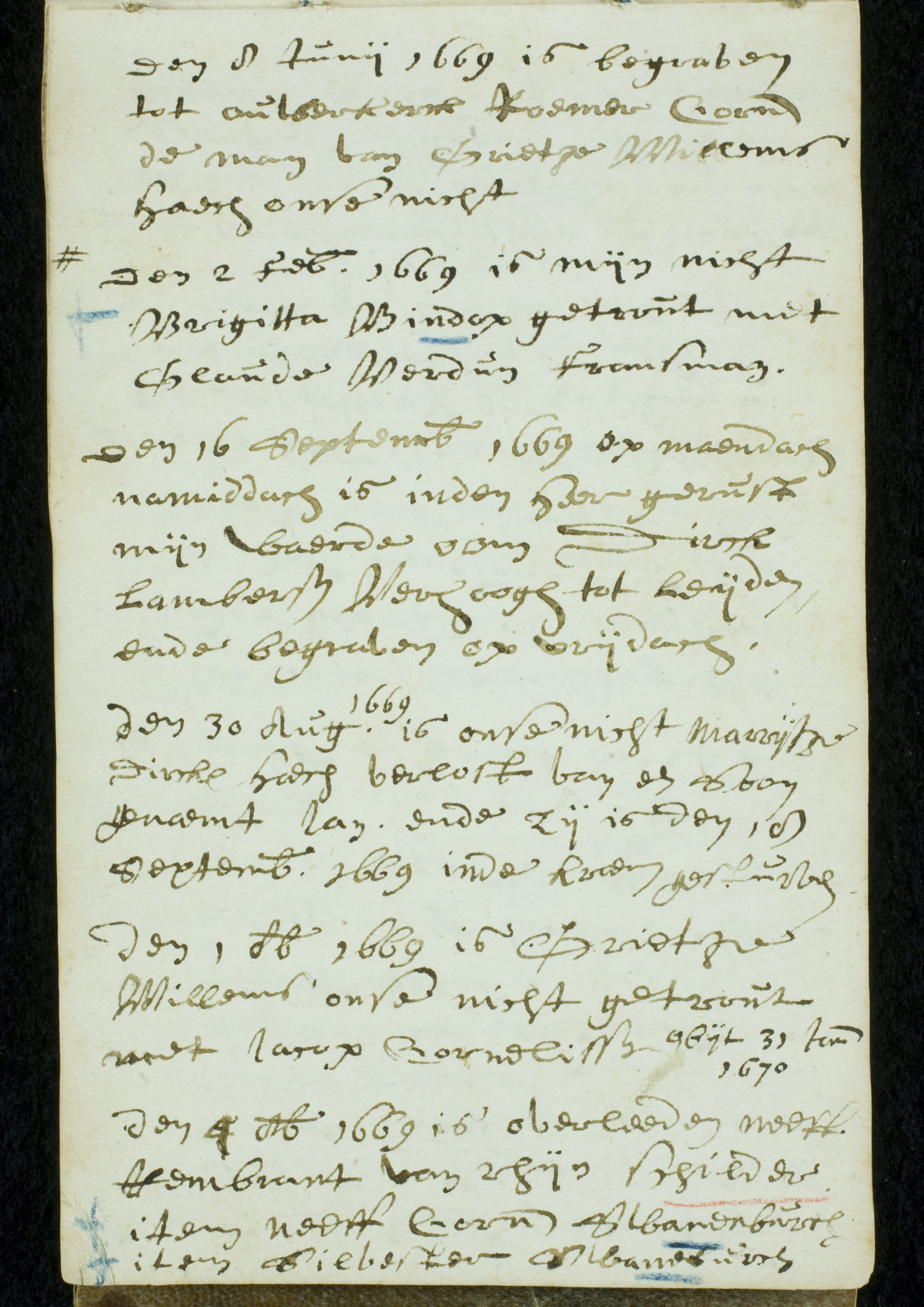
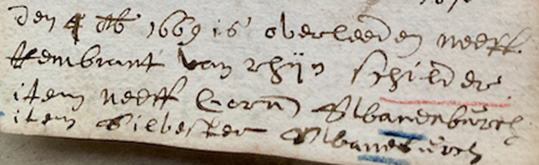
2. Nicolaes Vinck, Memoriael, Leiden, Erfgoed Leiden en Omstreken, Manuscript LB 6761 klein deel, page for late 1669 with note of Rembrandt’s death (photo: S. Dickey).
Schilderij van Nicolaes Vinck, Memoriael. Leiden, Erfgoed Leiden en Omstreken
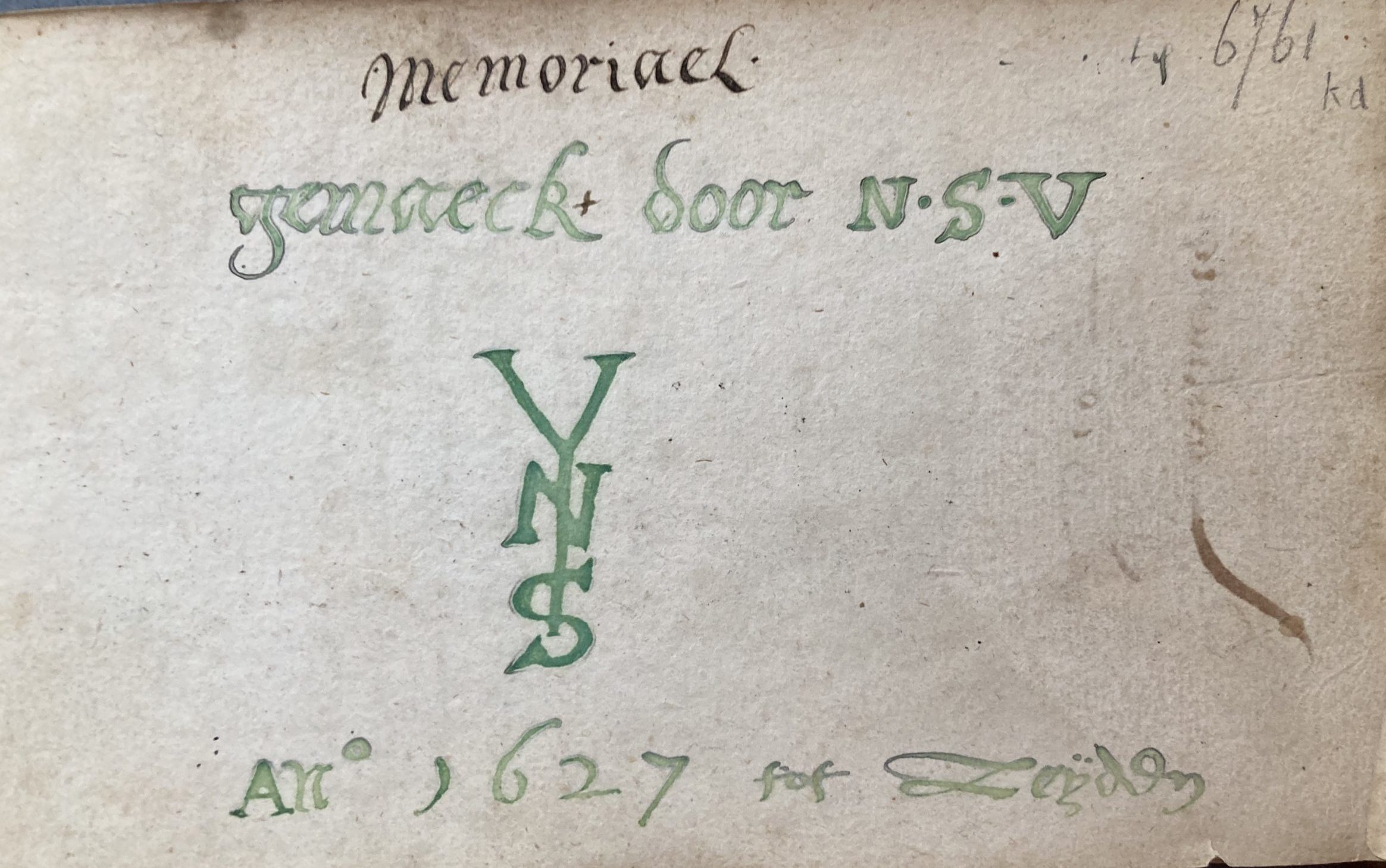
1. Nicolaes Vinck, Memoriael. Leiden, Erfgoed Leiden en Omstreken, Manuscript LB 6761 klein deel), title page (photo: S. Dickey).

The most basic facts of Rembrandt’s life, his birth and death, are sparsely documented. In 1641, the Leiden city historian Jan Orlers listed the artist’s birthdate as 15 July 1606. Lacking a baptismal record, most scholars have taken Orlers at his word.42 The only source for Rembrandt’s date of death is the Memoriael, or family record book, kept by Nicolaes Sebastiaensz Vinck (1608-1679), an apothecary who grew up in Leiden and moved to Amsterdam a few years before Rembrandt did (fig. 1). In a list of events from 1669, Vinck writes that his neef (relative or cousin), ‘Rembrandt van Rhyn, painter’, died on 4 October (fig. 2). The ‘4’ is corrected from a ‘5’, suggesting that Vinck received the information at some remove from the event, but the date aligns with burial records indicating that Rembrandt was interred in the Westerkerk in Amsterdam on 8 October 1669.43

A partial transcription of Vinck’s Memoriael was published in 1906 but failed to catch the attention of Rembrandt scholars.44  In 1956, Dirk Rühl cited Vinck’s account in an article on heraldry and the Van Rijn family.45 When Walter Strauss compiled The Rembrandt Documents in 1979, he repeated Rühl’s brief citation and dismissed Vinck as a ‘distant relative’.46 There the matter rested until 2022, when research for a new publication contextualizing Rembrandt’s death prompted us to seek out Vinck’s Memoriael for a first-hand look. We found it in the archives of Erfgoed Leiden en Omstreken (not in the Centraal Bureau voor Genealogie in The Hague, as stated by Rühl and Strauss).47 As it turns out, this family chronicle sheds light not only on Rembrandt’s death, but also on his childhood in Leiden.

            The clue lies in two entries that follow Vinck’s reference to Rembrandt:

            den 4 8b[er] is overleeden neeff Rembrant van Rhijn schilder

            item neeff Corn[elis] Swanenburch

            item Silvester van Swaneburch

Remarkably, these notes have not been examined until now. A similar chronicle written by Willem Jacobsz. van Heemskerk (1613-1692), husband of Maria van Swanenburgh (1616-1680), confirms that ‘Silvester van Swaneburch’ can be identified as the son born in Naples in 1610 to the Leiden painter Jacob van Swanenburgh (1578-1638) and his Neapolitan wife, Margaretha Cardone (d. 1639). Vinck’s ‘neeff Corn[elis]’ must be Silvester’s second cousin, the eldest child of Jacob van Swanenburgh’s first cousin, Huygh Claesz van Swanenburgh, alias van Rossum (1578/79-1635), and Adriana Claesdr. van Leeuwen (d. 1640). Huygh was a cloth merchant, and Cornelis followed his father’s profession, becoming a staalmeester in 1641. Born the same year as Rembrandt, Cornelis was buried in Leiden on 7 October 1669. Silvester van Swanenburgh died soon after.48

This essay explores Rembrandt’s connections with the Vinck and Van Swanenburgh families and their implications for his life and career. Given the importance of family alliances in early modern Dutch society, we consider relations by marriage as well as by blood. Through this research, Nicolaes Vinck and Silvester van Swanenburgh gain substance as persons in Rembrandt’s social network. A key discovery is that if Silvester was related to Vinck, and hence to Rembrandt, so too was Silvester’s father: Jacob van Swanenburgh, Rembrandt’s first teacher.

Detail of Fig. 2 (bottom of page)
2. Detail of Fig. 2 (bottom of page)

Nicolaes Vinck and his
Memoriael

As noted on his title page (fig. 1), Vinck started the chronicle in Leiden in 1627. Milestones in the lives of several generations fill its small, densely packed pages. While some entries are brief, others convey vivid details. When a child is born, Vinck often records which older relative the child is named for and who stands as godparent. He describes painful deliveries, protracted illnesses, and difficult deaths. For instance, his neef Lambert Teunissen suffered for five days before dying on 23 May 1669; he had fallen off a wagon that then rolled over him.49 On a page for 1679, a line is drawn and new handwriting appears. Nicolaes’s eldest son Sebastiaen (1638–1717) writes that his father ‘Claes Vinck’ died between four and five in the morning of 14 November after ailing for several weeks. He was laid to rest in the Begijnkerk in Amsterdam beside his wife, Maria Dircks Haegen (1614-1678), who had died on 4 August 1678.50 Sebastiaen and other descendants continue to add data to the Memoriael until the mid-1760s.

When Vinck turned the page of his notebook after listing the deaths of Rembrandt and the Van Swanenburghs, he recorded one of the few general reflections in his text: Anno 1669 was een jaer van groote sieckte ende sturven door veel Hollandsche steeden verscheyde gequalificeerde burgers principael tot Leyden daer allevier de burgemeesters overleeden. (‘1669 was a year heavy with disease, and in many cities in Holland various distinguished burghers died, especially in Leiden, where all four burgomasters passed away’.)51 The Van Heemskerk chronicle also mentions this epidemic and the deaths of many relatives during this period, including two within fifteen hours in October: Silvester and another cousin, Mr. Isaac van Swanenburgh (c. 1643-1669).52 Historical research has confirmed a widespread outbreak of an unspecified disease in 1669; Amsterdam was affected but Leiden was especially hard hit.53 It is unlikely that Rembrandt died from this epidemic; there are numerous indications that the artist continued painting and receiving visitors until his final days, suggesting that his death was quite sudden.54

Tekening Rembrandt, Head of an Old Woman with a Cap (Rembrandt's Mother), etching touched with black chalk
3. Rembrandt, Head of an Old Woman with a Cap (Rembrandt’s Mother), etching touched with black chalk, 65 x 58 mm, Amsterdam, Rijksmuseum, inv. RP-P-OB-747 (photo: Rijksmuseum).


Family Ties: Vinck and Rembrandt

Rembrandt’s mother, Neeltje (or Cornelia) Willemsdr. van Zuytbroeck (1568-1640), is often identified as the model who posed for numerous studies of elderly ladies by the young artist and his associates in Leiden (fig. 3).55 Neeltje’s family tree provides the connection to Nicolaes Vinck (fig. 4).56 Neeltje and Bastiaen Dircsz. Vinck (before 1581-1623), Nicolaes’s father, shared the same grandmother, Reymptgen (or Rijmpje / Rimigia) van Banchem (or Bancken) (c. 1510-1581/5).57 Strauss suggested that Rembrandt’s unusual first name was chosen to honor her.58 Reymptgen’s husband Cornelis van Tetrode (d. 1564) adopted his mother’s surname, Vinck. Their children included Rembrandt’s grandmother (Neeltje’s mother) Elisabeth Cornelisdr. [Van Tetrode] (1530-1603), Nicolaes Vinck’s grandfather Dirk Cornelisz. Vinck (1542-1632), who became a grain dealer, and Gerrit Cornelisz. Vinck (before 1544-after 1588), a painter and baker.59 

Family tree: relationship of Rembrandt and Nicolaes Vinck
4. Family tree: relationship of Rembrandt and Nicolaes Vinck (only family members relevant to article)(A. Jager): SEE PDF.

In 1581, Rembrandt’s widowed great-grandmother Reymptgen was living with her son Dirck Cornelisz. Vinck and his wife in a house called ‘t Gulden Warcken (‘the Golden Hog’) on the Warmoesmarkt in Leiden. The census document records their household immediately before that of Rembrandt’s grandparents, Elisabeth Cornelisdr. and Willem van Zuytbroeck, a baker (d. 1609). Thus, Rembrandt’s mother Neeltje and Nicolaes Vinck’s father Bastiaen grew up next door to one another.60 Nicolaes was born on 14 December 1608, two and a half years after Rembrandt. It seems likely they knew each other as children.


Vinck tells us that on 16 May 1628, he moved to Amsterdam to join the apothecary practice of Roelof Ortsz Walsburch. On 20 April 1629, Walsburch and his wife drowned in the IJ.61 This tragic accident enabled Vinck to purchase their house and business, located on the Kalverstraat on the corner of the Watersteeg, close to the Begijnhof; he lived there for the rest of his life.62  On 10 May 1636, Vinck and Maria Dircks Haegen were married at the Begijnkerk; the renowned Catholic pastor Leonardus Marius (1588-1652) officiated.63 Other family members also joined the Catholic community in Amsterdam. Baptisms in the Begijnkerk are recorded, and several of the women became beguines, including Vinck’s sister Clara (1617-1657), who lived in the Begijnhof until her death.64 His brother Albert (1611-1683), a grocer and baker, married Maria Jansdr. Poef (d. 1654) in Amsterdam on 2 January 1642 and became a citizen (poorter) a few months later.65 In 1647, they buried their mother, Jannetje Gerritsdr. de Man (1585-1647), in the Begijnkerk.66 Like Nicolaes and his wife, Clara and Albert would also be buried there.67

5. Family tree: relationship of Rembrandt, Nicolaes Vinck and Karel van der Pluym (only family members relevant to article)(A. Jager): SEE PDF.

Belonging to another branch of this family tree was the painter Karel van der Pluym (1625-1672) (fig. 5). Karel was the only child of Rembrandt’s cousin Cornelia Cornelisdr van Zuytbroeck (d. 1652); her father, Cornelis Willemsz. van Zuytbroeck (1566-1631), a baker, was Neeltje’s brother (thus, Rembrandt’s uncle).68 Karel’s father was Domenicus van der Pluym (d. 1661), a prosperous plumber and slater in Leiden. In the 1640s and 1650s, Karel produced history paintings and figure studies that follow Rembrandt’s example so closely that it seems clear he moved to Amsterdam to study with his cousin. He might have lodged with another uncle, Willem Jansz van der Pluym (d. 1675), whose inventory includes a portrait drawing of himself by Rembrandt. Other documents show that the families kept in touch. Karel gave up painting a few years after he returned to Leiden in 1648. He joined the city’s governing Council of Forty in 1664 and died a wealthy man. If Rembrandt and his son Titus had not predeceased him, they would have been among his beneficiaries.69

Although Nicolaes Vinck has been overlooked as a ‘distant relative’, his genealogical connection to Rembrandt was closer than that of Karel van der Pluym. His father, Bastiaen Dircksz. Vinck, and Rembrandt’s mother, Neeltje, were first cousins; Van der Pluym’s grandfather Cornelis was their second cousin. So far, however, there is no evidence that Rembrandt maintained a relationship with the Vincks as he apparently did with the Van der Pluyms. This might partly be explained by the fact that Vinck’s social network was largely Catholic. Yet, Nicolaes Vinck, his brother Albert, and Rembrandt were cousins, close in age and social status, who lived near each other as children and moved from Leiden to Amsterdam within a few years of each other. Profession offers another possible contact point: apothecaries often supplied painters with pigments.70 While Rembrandt developed close ties with another apothecary, Abraham Francen (1612-after 1678), their friendship may have been based on their shared passion for collecting, documented in Rembrandt’s etched portrait of Francen surrounded by his treasures (c. 1657).71 We do not know from whom Rembrandt purchased his painting materials.

Family tree: relationship of Rembrandt, Nicolaes Vinck and Jacob van Swanenburgh
6. Family tree: relationship of Rembrandt, Nicolaes Vinck and Jacob van Swanenburgh (only family members relevant to article)(A. Jager): SEE PDF.


Vinck, Van Swanenburgh, and Rembrandt’s Training as a Painter

The connection between the Van Swanenburghs and the Vincks is found in Nicolaes’s mother, Jannetje Gerritsdr. de Man (fig. 6). She was the daughter of Gerrit Arentsz. de Man, a Catholic baker and zoutzieder (salt refiner), and Jacobge Claesdr. van Swanenburgh. This lineage adds another artist to the family tree: Gerrit was the brother of the landscape painter Jan Arentsz. de Man (d. 1625), named by Orlers as teacher to Jan van Goyen (1596-1656).72 Jacobge was the youngest sister of the painter and burgomaster Isaac Claesz. van Swanenburgh (1537-1614) and, hence, the aunt of Rembrandt’s instructor, Jacob van Swanenburgh.73 In the Leiden census of 1581 (before Jannetje was born), the couple De Man and their three children were recorded living on the Boterstraat, around the corner from the Vinck and Van Zuytbroeck families on the Warmoesmarkt, mentioned above.74 The involvement of these families in grain dealing, milling, and baking bound them together within the city’s economy. It is highly likely that they were in contact.

Jacob van Swanenburgh, Aeneas and the Sybil in the Underworld, c. 1600, oil on canvas
7. Jacob van Swanenburgh, Aeneas and the Sybil in the Underworld, c. 1600, oil on canvas, 101.5 x 150 cm, Brussels, Old Masters Museum, Royal Museums of Fine Arts of Belgium, inv. 10241 (photo: Wikimedia Commons).

As a child, Jannetje Gerritsdr. de Man may well have observed her older brother, Isaac van Swanenburgh, instructing her cousin Jacob in the art of painting. In 1591, Jacob left Leiden for adventures abroad. From 1596 to 1615, he resided in Naples, where he married and joined a community of Dutch and Flemish artists.75 The year after his father died, he returned to Leiden, and in 1618, he brought his wife to live there along with their son Silvester and two daughters. In Leiden, Jacob continued to produce the dramatic history paintings and scenes of hellfire and witchcraft that had brought him notoriety in Italy (fig. 7), but he also received commissions for decorative painting from the Stadholder’s court.76

In 1620, Rembrandt’s parents enrolled him in Leiden University, and it has recently been discovered that he renewed his registration in 1622.77 Nevertheless, as Orlers describes, he was determined to pursue a career in painting, and his parents chose Jacob van Swanenburgh as his first instructor. Perhaps Jannetje Gerritsdr. de Man played a role in establishing contact between Rembrandt’s parents and her cousin Jacob. Orlers states that Rembrandt spent three years in Jacob’s studio before going to Amsterdam to work for six months with Pieter Lastman (1583-1633).78 During these years (1622-25), Silvester van Swanenburgh would surely have encountered Rembrandt in the family home. Silvester resided on the Breestraat in Leiden until 1654, when he moved to Huis ter Lucht on the Donkersteeg.79 By 1637, he was established as a public notary, and in 1638 he is listed as a citizen (poorter) of Leiden and secretaris van het baljuwschap van Rijnland (Secretary of the Bailiwick of Rijnland). He still held that post when he was recorded on 12 October 1669 as sick in bed; he must have died shortly thereafter.80

Rembrandt, Musical Allegory, 1626, oil on panel, Amsterdam,
8. Rembrandt, Musical Allegory, 1626, oil on panel, 63.5 x 48 cm, Amsterdam, Rijksmuseum, inv. SK-A-4674 (photo: Rijksmuseum).

Many authors have sought to explain why Rembrandt’s parents chose Jacob van Swanenburgh as his first teacher. There is little obvious connection between the two artists’ approaches to subject matter or style. Yet, this disparity is less concerning than it seems: from his initial instructor, Rembrandt would be expected to learn fundamental skills rather than a specific style, and many painters developed independently as they matured.81 Constantijn Huygens, not realizing that Rembrandt’s parents were prosperous, supposed they sought a local artist ‘whose fees were modest’, but this dismissive statement seems disingenuous when we realize that Jacob received court patronage and that Huygens’ own son, Constantijn the Younger, was tutored by Jacob’s cousin Johan and married into the family.82 The simplest explanation is lack of choice: in Leiden in the 1620s, only Jacob van Swanenburgh and Joris van Schooten (1587-1651) were painting historical subjects. Van Schooten, teacher of Rembrandt’s friend and rival Jan Lievens (1607-1674), was better known for portraiture.83 That said, the assumption that Rembrandt set out to be a history painter is challenged by the large number of genre scenes and tronies (figure studies) he created in his early years, together with Lievens and their associates. The iconographic fluidity of Rembrandt’s early work suggests that he aspired to an even higher goal: to be a ‘universal artist’, adept at all aspects of his craft.84 A case in point is the cryptic Musical Allegory (fig. 8), in which we recognize Rembrandt’s mother in the richly dressed old woman, while Lievens plays the harpist whose rude gesture signals a moralizing connotation for the scene.85 The inventiveness of Van Swanenburgh’s dramatic imagery must have caught Rembrandt’s interest, while techniques and anecdotes collected abroad would have dazzled an ambitious young artist who had never left his native city.

All this may explain why Rembrandt was content to stay in Van Swanenburgh’s workshop for three years, but, as Orlers stated, the choice to send him there was made by his parents. As far as we know, they were not scholars or art collectors. One of their older sons took over the family business; another became a baker and grain dealer. Baking and milling were respectable professions that could lead to prosperity, but they were also practical trades, pursued by a network of families whose interests and connections were more local than global. Perhaps for Rembrandt’s parents, international cachet was all very well, but faith and family ties would have resonated more directly.86 Although Catholicism after 1618 became a political liability, Rembrandt’s mother, who came from a Catholic family, might have appreciated the fact that Jacob van Swanenburgh and his Italian wife were Catholic.87 We can now add the reassuring factor of a family relationship, through the Vincks, with the distinguished Van Swanenburgh clan. Rembrandt’s choice of profession seems less surprising when we realize there were already artists in the family.


Family Network and Art Patronage in Leiden

While our research sheds light on Rembrandt’s choice of teacher, it does not yet add evidence of Leiden patronage for him.88 In fact, several people in his network seem to have preferred the work of Lievens. Arnold Houbraken transcribed a poem published in 1662 by the Leiden author Dirk Traudenius, Op de gedootverfde beeldenis van de Heer Secretaris Silvester van Swanenburg door Johan Lievens (‘On the painted likeness of Mr. Secretary Silvester van Swanenburgh by Jan Lievens’). The text adopts a conventional trope praising the portrait as almost lifelike enough to speak.89 Lievens left Leiden in 1632, but he returned in 1639 for a commission to paint The Magnanimity of Scipio for the Leiden Town Hall. Completed in 1641, the painting was praised by Orlers, and the Leiden city fathers awarded Lievens the impressive sum of 1500 guilders and a gold medal.90 Perhaps it was in this context that Lievens painted Silvester to celebrate his role as Heer Secretaris.

Jan Lievens, Allegory of the Five Senses, c.
9. Jan Lievens, Allegory of the Five Senses, c. 1622, oil on panel, 78.2 x 124.4 cm, private collection (photo: Arthive).

Since Rembrandt and Lievens continued to share interests and patrons as they matured, Silvester’s portrait belongs by extension to Rembrandt’s milieu.91  Thus, it remains intriguing that Silvester chose Lievens and not Rembrandt. The same can be said for the Van Leeuwens, a prominent Leiden family with which the Van Swanenburghs and two of Rembrandt’s brothers were connected by marriage.92 In his recent study of the Leiden art market, Piet Bakker found 43 mentions of Lievens in 22 Leiden inventories, including a painting of ‘The Five Senses’ in the estate of the wealthy brewer Adriaen van Leeuwen (1641), husband of Jacob van Swanenburgh’s niece Maria (fig. 9). He found only 16 paintings by Rembrandt in 10 estates.93 Orlers stated that Jan van der Graft — father-in-law of ‘our’ Cornelis van Swanenburgh — owned so many paintings by Lievens that he could not list them all, yet he did not mention one painting by Rembrandt in a Leiden collection.94 It begins to seem that Rembrandt’s family contacts were not so useful after all. Perhaps even at this early stage, his work appealed more to elite connoisseurs such as Petrus Scriverius (1576-1680), the scholar who owned two of his early history paintings. Further research is warranted.95


By 1632, Rembrandt and Lievens had joined an exodus of youthful talent from Leiden that also included Jan van Goyen and Jan Davidsz de Heem (1606-1683/4).96 Lievens sought court patronage in London, while Amsterdam offered Rembrandt a more liberal religious climate and a richer art market. In Nicolaes Vinck, Rembrandt would have found a cousin already established in the city. The fact that Vinck took note of the artist’s death more than thirty years later hints at the possibility of continued contact. That he squeezed in the two Van Swanenburgh entries just below suggests connection as well as chronology. The previous generation of this family network included Jacob van Swanenburgh, first cousin of Vinck’s mother, cousin-in-law of Rembrandt’s mother, father of Silvester, and teacher of Rembrandt.


Stephanie Dickey is Professor of Art History and Bader Chair in Northern Baroque Art at Queen’s University, Kingston, Canada. She recently co-curated the exhibition Rembrandt in Amsterdam: Creativity and Competition (Städel Museum, Frankfurt, and Ottawa, National Gallery of Canada, 2021-22) and is the author of numerous publications on Rembrandt and artists in his circle.


Angela Jager is Curator of Dutch and Flemish Old Master Painting at the RKD – Netherlands Institute for Art History. She has published on the mass market for seventeenth-century paintings and the international trade in Dutch art. In her research, she draws on a variety of archival sources on early modern artists, art dealers and their clients.


  1. Much of the previous literature cites the drawing as The Departure of Rebecca from Her Parents’ House. The Staatsgalerie, Stuttgart, which owns the drawing, adopted the shorter title (https://www.staatsgalerie.de/en/html).
  2. dit behoorde vervoucht te weesen me[t] veel gebueren die deese hoge bruijt sien vertrek[k]en”: Peter Schatborn, “The Core Group of Rembrandt Drawings, I: Overview,” Master Drawings 49 (2011), p. 320.
  3. According to the Woordenboek der Nederlandsche Taal,geburen” may mean “figures” or “bystanders,” as two scholars interpreted the word in Rembrandt’s inscription: (https://gtb.ivdnt.org/iWDB/search?actie=article&wdb=WNT&id=M017638.re.1&lemma=geburen&domein=0&conc=true). For “figures,” see: Volker Manuth, in: Rembrandt: A Genius and His Impact, exh. cat. Canberra, Australian National Gallery; Melbourne, National Gallery of Victoria, 1997, p. 270, cat. no. 53. For “bystanders,” see: Marieke de Winkel, Fashion and Fancy: Dress and Meaning in Rembrandt’s Paintings, Amsterdam 2006, pp. 214–215). However, in the full context of Rembrandt’s inscription and the drawing’s iconography, “geburen” most strongly refers to neighbours, as translated for example by Gary Schwartz and Peter Schatborn. See: Gary Schwartz, The Rembrandt Book, New York 2006, p. 107, fig. 195; Schatborn, “Core” (see note 2), p. 320.
  4. Schwartz, Rembrandt (see note 3), p. 107.
  5. Amy Golahny, “Rembrandt and ‘Everyday Life’: the Fusion of Genre and History,” in: Genre Imagery in Early Modern Northern Europe: New Perspectives, London 2016, pp. 174, 177.
  6. The Rembrandt drawing (130 x 185 mm) was sold at Christie’s (London) on 3 July 2012, lot. 50, sale 5688. Golahny, “Rembrandt” (see note 5), pp. 170–174, figs. 7.5–9.
  7. Herman Roodenburg, “Naar een etnografie van de vroegmoderne stad: de ‘gebuyrten’ in Leiden en Den Haag,” in: Cultuur en maatschappij in Nederland 15001850. Een historisch-antropologisch perspectief, Meppel 1992, p. 233.
  8. For a discussion of neighbourhoods’ goals, see: Herman Roodenburg, “’Freundschaft’, ‘Brüderlichkeit’ und ‘Einigkeit’: Städtische Nachbarschaften im Westen der Republik,” in: Ausbreitung bürgerlicher Kultur in den Niederlanden und Nordwestdeutschland, Münster 1991, pp. 11, 12, 21; Gabrielle Dorren, “Communities within the Community: Aspects of Neighbourhood in Seventeenth-Century Haarlem,” Urban History 25 (1998), pp. 180, 188.
  9. See, for example, Rembrandt’s drawings Benesch 491, 503, 566, 988 and his painting Portrait of a Couple as Isaac and Rebecca, c. 1665–1669 (oil on canvas, 121.5 x 166.5 cm, Amsterdam, Rijksmuseum).
  10. All Biblical translations from: The New English Bible with the Apocrypha, New York 1971.
  11. Schatborn, “Core” (see note 2), p. 320.
  12. The Staatsgalerie Stuttgart attributes the inscription to Rembrandt and the drawing to either Rembrandt or Gerbrand van den Eeckhout. Hans Martin Kaulbach, Curator of German and Netherlandish Prints and Drawings before 1800, Graphische Sammlung, Staatsgalerie Stuttgart, email message to the author, 25 April 2018.
  13. For Koninck see for example: Horst Gerson, Philips Koninck; ein beitrag zur Erforschung der holländischen Malerei des XVII. Jahrhunderts, Berlin 1936, p. 174, Z.LXV. For Flinck: Wilhelm Reinhold Valentiner, Rembrandt: des Meisters Handzeichnungen, Stuttgart 1933, part 2, p. 247. For Van den Eeckhout: Martin Royalton-Kisch, Drawings by Rembrandt and His Circle in the British Museum, exh. cat., London, British Museum 1992, p. 202, cat. no. 97; Holm Bevers, “Drawing in Rembrandt’s Workshop,” in: Drawings by Rembrandt and His Pupils: Telling the Difference, exh. cat., Los Angeles, J. Paul Getty Museum 2009, p. 27; Schatborn, “Core” (see note 2), pp. 320, 322, note 38. For an argument against the Van den Eeckhout attribution, see: Eric Jan Sluijter and Nicolette Sluijter-Seijffert, “Rembrandt’s Pupils? The Attribution of Early Drawings to Gerbrand van den Eeckhout and Jan Victors,” in: Connoisseurship Essays in Honour of Fred G. Meijer, Leiden 2020, pp. 289–296.
  14. Werner Sumowski, Drawings of the Rembrandt School, New York 1979–1992, vol. 3, p. 1734, 806xx; Bevers, “Drawing” (see note 13), pp. 27, notes 97–98.
  15. Seymour Slive, Rembrandt Drawings, Los Angeles 2009, p. 215; Schatborn, “Core” (see note 2), p. 320; Bevers, “Drawing” (see note 13), p. 2.
  16. Cornelis Hofstede de Groot and Bob Haak, Rembrandt Zeichnungen, Köln 1974, p. 13; Manuth, Rembrandt (see note 3), p. 270, cat. no. 53.
  17. Samuel van Hoogstraten, De Inleyding tot de hooge schoole der schilderkunst anders de zichtbaere werelt, Rotterdam 1678, p. 192. Bevers, “Drawing” (see note 13), p. 25, notes 86–87.
  18. Bevers, “Drawing” (see note 13), pp. 25–27, 187, 189­–90; Schatborn, “Core” (see note 2), p. 320.
  19. Bevers, “Drawing” (see note 13), p. 27.
  20. Roodenburg, “Naar” (see note 7), pp. 222–224; Dorren, “Communities” (see note 8), p. 177; Llewellyn Bogaers, “Geleund over de onderdeur: Doorkijkjes in het Utrechtse buurtleven van de vroege middeleeuwen tot in de zeventiende eeuw,” in: Bijdragen en mededelingen betreffende de geschiedenis der Nederlanden 112 (1997), pp. 349, 357, 359.
  21. Roodenburg, “Naar” (see note 7), pp. 224, 233–234; Bogaers, “Geleund” (see note 20), pp. 340–342, 348.
  22. Catherina Lis and Hugo Soly, “Neighborhood Social Change in Western European Cities,” International Review of Social History 38 (1993), p. 5.
  23. Kees Walle, Buurthouden. De geschiedenis van burengebruiken en buurtorganisaties in Leiden (14e–19e eeuw), Leiden 2005, pp. 75, 306.
  24. Regionaal Archief Leiden (RAL); Stadsarchief (SA) II inv.nr. 1216, f. 149 and RAL SA II inv.nr. 1217, f. 10 vso; cited in: Walle, Buurthouden (see note 23), p. 231, note 77.
  25. Jan le Francq van Berkheij, Natuurlyke historie van Holland, 12 parts in 9 vols., Amsterdam 1769–1811, vol. 3, part 2, pp. 1045–1046; Roodenburg, “Naar” (see note 7), p. 225.
  26. RAL; SA II inv.nr. 16; Aflezingboek F, f. 58 vso; cited in: Walle, Buurthouden (see note 23), pp. 43, 227, notes 141, 270.
  27. Algemene Verordening, n.p.; cited in: Walle, Buurthouden (see note 23), pp. 46, 275.
  28. Roodenburg, “’Freundschaft’” (see note 8), p. 15; Bogaers, “Geleund” (see note 20), p. 349.
  29. Ilja Veldman and Lynne Richards, “Familiar Customs and Exotic Rituals: Picart’s Illustrations for Cérémonies et coutumes religieuses de tous les peuples,” Simiolus: Netherlandish quarterly for the history of art, vol. 33 (2007/2008), p. 94.
  30. Picart’s widow explained that “the prints of the Reformed congregation were drawn from life and are very accurate.” Bernard Picart and Anne Vincent, Impostures innocentes ou recueil d’estampes d’après divers peintres illustres . . . etc. gravées par Bernard Picart avec son éloge historique et le catalogue de ses ouvrages, Amsterdam 1734, p. 9; Veldman and Richards, “Familiar” (see note 29), p. 99, note 20.
  31. Veldman and Richards, “Familiar” (see note 29), p. 97.
  32. Bernard Picart, Cérémonies et coutumes religieuses de tous les peuples du monde, Amsterdam 1723–1743, p. 345.
  33. As Petra van Boheemen noted, the “interest of the neighbourhood is visible” in Picart’s print. Petra van Boheemen et al., Kent, en versint, eer datje mint: vrijen en trouwen, 1500–1800, Apeldoorn, Historisch Museum Marialust; Zwolle 1989, p. 170.
  34. Van Boheemen, Kent (see note 33), pp. 170–172; H. Perry Chapman, Jan Steen, Painter and Storyteller, exh. cat., Washington, DC, National Gallery of Art; Amsterdam, Rijksmuseum 1996, pp. 116–118 note 1, cat. no. 6.
  35. Van Boheemen, Kent (see note 33), p. 170.
  36. Irma Thoen, Strategic Affection? Gift Exchange in Seventeenth-Century Holland, Amsterdam 2007, p. 106.
  37. Fynes Moryson and Charles Hughes, Shakespeare’s Europe. Unpublished Chapters of Fynes Moryson’s Itinerary Being a Survey of the Condition of Europe at the End of the 16th Century, London 1903, pp. 379–380.
  38. A. Lynn Martin, Alcohol, Sex, and Gender in Late Medieval and Early Modern Europe, New York 2001, pp. 52–53; Thoen, Strategic (see note 36), p. 105.
  39. See, for example, Jan Steen’s The Wedding of Tobias and Sarah, c. 1667–1668, oil on canvas, 131 x 172 cm, Braunschweig, Herzog Anton Ulrich-Museum; Chapman, Jan Steen (see note 34), pp. 203–205, cat. no. 32.
  40. Philips Angel, Lof der schilder-konst, Leyden 1642, p. 48. Translation from: Philips Angel, Michael Hoyle, and Hessel Miedema, “Philips Angel, Praise of Painting,” Simiolus, Netherlandish Quarterly for the History of Art 24 (1996), p. 246.
  41. A. M. van der Woude, “Variations in Size and Structure of the Household in the United Provinces of the Netherlands in the Seventeenth and Eighteenth Centuries,” in: Household and Family in Past Time: Comparative Studies in the Size and Structure of the Domestic Group over the Last Three Centuries in England, France, Serbia, Japan and Colonial North America, with Further Materials from Western Europe, Cambridge 1972, p. 315.
  42. Jan Jansz Orlers, Beschrijvinge der stadt Leyden, 2nd ed., Leiden 1641, p. 375; Walter L. Strauss et al., Rembrandt Documents, New York 1979, doc. 1641/8. For rare objections, see Roelof van Straten, Young Rembrandt. The Leiden Years, 1606-1632, Leiden 2005, p. 16; Benjamin Binstock, ‘The birth of Rembrandt’, in Michiel Roscam Abbing, ed., Rembrandt 2006. Essays, Leiden 2006, pp. 267-278 (arguing for 1607).
  43. Strauss, Rembrandt Documents, doc. 1669/6.
  44. E.B.F.F. Wittert van Hoogland, ‘Genealogie van den tak van het geslacht van Tetrode, welke zich Vinck genoemd heeft. Reconstructie van de genealogie voorkomende in het stam- en wapenboek van aanzienlijke Nederlandsche geslachten. Memoriael Gemaeck door N(icolaas) S(ebastiaensz.) V(inck)’, Genealogische en heraldische bladen 1 (1906), pp. 122-149.
  45. Dirk Rühl, ‘Het wapen van Rembrandt’s broeder Willem Harmensz. van Rijn een gelegenheids-wapen? Een heraldisch probleem’, Gens Nostra. Maandblad van de Nederlandsche Genealogische Vereniging 11 (1956), pp. 117-128, esp. p. 127.
  46. Strauss et al., Rembrandt Documents, doc. 1669/4 (misspelling the name as ‘Vlinck’). See also: http://remdoc.huygens.knaw.nl/#/document/remdoc/e13470 (accessed 22 December 2022).
  47. Warm thanks to Ingrid Pot for her kind assistance, and to P.J.M. De Baar for an impromptu consultation on the document, manuscript LB 6761 klein deel, Erfgoed Leiden en Omstreken, Leiden (hereafter ELO). The notebook is chronological but unpaginated; we therefore cite Wittert van Hoogland. See further Stephanie S. Dickey, ‘Ars longa vita brevis. Rembrandt’s death and the status of the artist in late seventeenth-century Amsterdam’, Nederlands Kunsthistorisch Jaarboek 72 (2022), pp. 234-271.
  48. R.E.O. Ekkart, ‘Familiekroniek Van Heemskerck en Van Swanenburg (I)’, Jaarboek van het Centraal Bureau voor Genealogie 32 (1978), pp. 41-70; idem., ‘Familiekroniek Van Heemskerck en Van Swanenburg (II)’, Jaarboek van het Centraal Bureau voor Genealogie 33 (1979), pp. 44-75 (deaths of Cornelis and Sylvester van Swanenburgh, pp. 54, 72, 75). See also Gary Schwartz, Rembrandt, his life, his paintings, New York 1985, p. 22; https://www.mijnstambomen.nl/leiden/swanenburg.htm (accessed 16 December 2022). The dates of Silvester van Swanenburgh’s death and burial are unrecorded; he prepared his will on 12 October 1669, being siechelick van lichaem leggende te bedde (sick in bed); ELO, 0506, notary Justus Gerstecoren, no. 1144, deed 124, 12-10-1669.
  49. Wittert van Hoogland, ‘Genealogie’, p. 135.
  50. Wittert van Hoogland, ‘Genealogie’, pp. 136, 137. Burial: https://archief.amsterdam/archief/5001/1056 (accessed 16 December 2022).
  51. Wittert van Hoogland, ‘Genealogie’, pp. 135.
  52. Ekkart, ‘Familiekroniek’, pp. 54, 72.
  53. Rudi van Maanen and Leendert van Maanen, ‘De grote epidemie van 1669-1670’, Leids Jaarboekje 2021, pp. 67-83, with further references.
  54. See Dickey, ‘Ars longa vita brevis‘, with further references.
  55. See esp. Christaan Vogelaar and Gerbrand Korevaar, eds., Rembrandt’s Mother. Myth and Reality, exh. cat. Leiden: Stedelijk Museum de Lakenhal 2005, pp. 88-91, 97-98, cat. 3-6, 9-10.
  56. We are grateful to Jos Beerens and Weixuan Li for advice on software to visualize this data.
  57. Reymptgen’s husband, Cornelis Bartholomeusz (Meesz.) van Tetrode (1505-1550), a grain dealer in Leiden, died before Neeltje and Bastiaen were born. See Strauss et al., Rembrandt Documents, doc. 1561/1, 1574/3, 1579/1, 1581/1,1582/2.
  58. Strauss et al., Rembrandt Documents, p. 24.
  59. Gerrit Cornelisz. Vinck is registered living in Leiden 1544-1583; Historisch Leiden in Kaart, https://historischleideninkaart.nl/persoonformulier/?Id=8986 (accessed 16 December 2022). He became poorter of Delft in 1584; Stadsarchief Delft, 1.733, fol. 054v, 5-5-1584. See also W.C. Tettero, Genealogie van Tetrode 1300-1600, Voorburg 2000, p. 61; J.P. Jacobs, ‘Rembrandt verwant met Philips van Leyden’, De Nederlandse Leeuw 102 (1985), column 457-465.
  60. See also ELO, Stadsarchief van Leiden, 0501A, 6597, Register Vetus 1582-1601, p. 8v. ‘t Gulden Warken belonged to Reymptgen In 1579; by 1581, she had transferred ownership to Dirck; Strauss et al., Rembrandt Documents, p. 31 and doc. 1579/1, 1581/1, 1585/1.
  61. Wittert van Hoogland, p. 123. Walsburch was buried several weeks later; SAA DTB 5001, 1054, p. 46vo, 8-5-1629. Prenuptual agreement, SAA 5075, 445, not. Palm Mathijsz, 17-2-1631.
  62. SAA DTB 5001, 671, p. 33 (marriage bans) 27-1-1628; DTB 1054, p. 46vo, 8-5-1629 (burial record).
  63. Wittert van Hoogland, p. 124. They married on 10 May at the Begijnhof and 13 May at the Amsterdam Town Hall.
  64. Wittert van Hoogland, p. 126. Clara became a begijn in 1643 and registered her will as a bejaaarde geestelijke dochter, wonende op het Begijnhof, in 1655, appointing her brothers her heirs; SAA 5075, 2454, not. R. Duee, akte nummer 57860, 8-10-1655.
  65. Wittert van Hoogland, p. 127; SAA, DTB 676, p. 145, 2-1-1642; 5033 Poorterboeken, no. 2, p. 199, 24-4-1642. In 1647 Albert purchased a home on the Haarlemmerstraat; SAA, 5073, Kwijtscheldingen, no. 928, 5-1-1647. He posted the banns for his second marriage, to Grietje Harmens van der Aa, on 2 December 1655; SAA, DTB 682, p. 356, 2-12-1655.
  66. Wittert van Hoogland, p. 127.
  67. SAA DTB, 1055, p. 94v (Clara); 1056, p. 252, 26-6-1683 (Albert).
  68. Cornelis was recorded on 24 April 1587 as a baker, age 21. In 1600, he purchased a house later owned by Karel van der Pluym. Strauss et al., Rembrandt Documents, doc. 1581/2, 1662/4; Schwartz, Rembrandt, p. 18 (diagram of Rembrandt’s family tree by P.J.M. de Baar).
  69. Strauss et al., Rembrandt Documents, doc. 1662/4; Marieke de Winkel, ‘ »Cousin » Karel van der Pluym and the benefit of family’, in Epco Runia and David de Witt, eds., Rembrandt’s Social Network. Family, friends, acquaintances, exh. cat., Amsterdam: Museum het Rembrandthuis 2019, pp. 61-65, citing a red and black chalk drawing on vellum, dated 1634 (private collection in New York).
  70. See Koos Levy-Halm, ‘Where did Vermeer buy his painting materials? Theory and practice’, in Ivan Gaskell and Michiel Jonker, eds., National Gallery Studies in the History of Art, Vol. 55, Vermeer Studies, 1988, pp. 137-143; Jo Kirby, ‘The painter’s trade in the seventeenth century: theory and practice’, National Gallery Technical Bulletin 20 (1999), pp. 5-49.
  71. See Stephanie S. Dickey, Rembrandt. Portraits in Print, Amsterdam/Philadelphia 2004, pp. 141-149; Runia and De Witt, eds., Rembrandt’s Social Network, p. 124.
  72. Orlers, Beschryvinge, p. 373; https://rkd.nl/explore/artists/51111 (accessed 2 January 2023)
  73. Rudolf E.O. Ekkart, Isaac Claesz. van Swanenburgh 1537-1614, Zwolle 1998, p. 14. For the prenuptial agreement, Jacobge was assisted by her father Claes Isaacsz and her brothers Isaac Claesz and Claes Claesz; ELO, 0508 Het oude rechterlijke archief van Leiden, no. 76B-2, fol. 375, 15-10-1570.
  74. ELO, 0501A, Stadsarchief van Leiden, 1574-1816, no. 1289, Register van de volkstelling 1581, fol. 9.
  75. See Marije Osnabrugge, The Neapolitan Lives and Careers of Netherlandish Immigrant Painters (1575-1655), Amsterdam 2019, esp. pp. 66-73, 115-123. The Antwerp-born portraitist Abraham Vinck (1574/75-1619) associated with Jacob van Swanenburgh in Hamburg 1589-1598 and later in Naples; in 1602, he witnessed Van Swanenburgh’s marriage to Margaretha Cardone. He lived in Amsterdam 1609-1619. Rembrandt’s bankruptcy inventory includes ‘een doode Contrefijtsel van Abraham Vinck‘; Strauss et al., Rembrandt Documents, doc. 1656/12, no. 86, but we have not yet found a link between Abraham and the Vinck family discussed here.
  76. Ekkart, Isaac Claesz. van Swanenburgh, esp. p. 71; Schwartz, Rembrandt, pp. 22-23.
  77. Strauss et al., Rembrandt Documents, doc. 1620/1; Jef Schaeps and Mart van Duijn, Rembrandt en de Universiteit Leiden, Leiden 2019, esp. p. 28.
  78. Orlers, Beschryvinge, p. 375.
  79. Ekkart, ‘Familiekroniek’, pp. 71-72. Schwartz, Rembrandt, p. 17; Van Straten, Young Rembrandt, p. 24.
  80. ELO, Register van poorterinschrijvingen F, 1267, fol. 279v, 16-4-1638; Buurquestieboeken, 48G, fol. 105v, no. 2355, 12-9-1661; 0506, Notary Justus Gerstecoren, 1144, deed no. 124, 12-10-1669.
  81. Ernst van de Wetering, ‘Rembrandt’s gift and the underrated importance of his apprenticeship with Jacob isaacsz. van Swanenburg’, in Ernst van de Wetering and Bernhard Schnackenburg, eds., The Mystery of the Young Rembrandt, exh. cat., Kassel: Gemäldegalerie Alte Meister and Amsterdam: Museum het Rembrandthuis 2001, pp. 32-38.
  82. Strauss, et al., Rembrandt Documents, p. 69, doc. 1630/5; Schwartz, Rembrandt, p. 23; English translation: Wheelock, ed., et al., Jan Lievens, p. 286.
  83. Bakker, ‘Rembrandt and the emergence’; Vogelaar, ‘Rembrandt in Leiden’; Orlers, Beschryvinge, p. 376.
  84. See Boudewijn Bakker, ‘Rembrandt and the humanist ideal of the universal painter’, in Stephanie S. Dickey, ed., Rembrandt and his Circle. Insights and Discoveries, Amsterdam 2017, pp. 67-98.
  85. Volker Manuth, Marieke de Winkel and Rudie van Leeuwen, Rembrandt. The Complete Paintings, Cologne 2019, cat. 121.
  86. Carel Vosmaer, Rembrandt. Sa vie et ses oeuvres, The Hague 1877, pp. 28-35, 469, 461, unaware of Vinck’s Memoriael, posited a relationship to the Van Swanenburghs on Rembrandt’s father’s side. Ekkart, Isaac Claesz van Swanenburgh, p. 11, dismissed this. However, Claes Cornelisz van Berckel, half-brother of Harmen Gerritsz van Rijn, was married to Brechtje Mourijnsdr. van Swanenburch. The half-brothers lived next door to each other on the Weddesteeg in 1605 and 1624 and owned a mill together; ELO, Buurquesties 48B, blad 2, aktenummer 520, 4-4-1605; 48D, blad 201, aktenumer 1339, 22-4-1624; Tiende Register, Bon Noord-Rijnevest (B), Stadsvrijdom en molens op de wallen, archiefnummer 501A, Stukken betreffende afzonderlijke onderwerpen; Registratie van onroerend goed 1585-1816 (1819), inventarisnummer 6634, blad 31, 1602-1724. It is not yet clear how Brechtje Mourijnsdr. connects to Jacob and Silvester van Swanenburgh. See also Schwartz, Rembrandt, pp. 21-25.
  87. For context, see S.A.C. Dudok van Heel, ‘Rembrandt van Rijn (1606-1669), een remonstrantsgezind schilder uit calvinistisch Leiden’, in idem., De jonge Rembrandt onder tijdgenoten. Godsdienst en schilderkunst in Leiden en Amsterdam, Nijmegen 2006, pp. 177-223.
  88. On art patronage in Leiden, see esp. Gerbrand Korevaar, ‘Leiden in Rembrandt’s time’, in Van de Wetering and Schnackenburg, Mystery, pp. 12-21; Piet Bakker, ‘Rembrandt and the emergence of the Leiden art market’, in Jacquelyn N. Coutré, ed., Leiden ca. 1630. Rembrandt Emerges, exh. cat., Kingston: Agnes Etherington Art Centre 2019, pp. 66-95. We are grateful to Piet Bakker for advice on the present essay.
  89. Dirk Traudenius, Tyd-zifter, Amsterdam 1662, p. 16; Arnold Houbraken, De groote schouburgh der Nederlandtsche konstschilders en schilderessen, Amsterdam 1718-21, III, p. 33; H. Schneider, ed. by R.E.O. Ekkart, Jan Lievens, Sein Leben und Seine Werke, Amsterdam 1973, p. 151, no. 262; https://houbraken-translated.rkdstudies.nl/3-1-59/page-30-39/ (accessed 16 December 2022,) with English translation. The painting has not been discovered.
  90. Wheelock, ed., Jan Lievens, pp. 3, 16-17, fig. 19. The painting was destroyed in 1929.
  91. On their extended connection, see Stephanie S. Dickey, ‘Jan Lievens in Rembrandt’s house’, Kroniek van het Rembrandthuis 2008, pp. 36-53.
  92. As noted above, Cornelis van Swanenburgh’s mother was Adriana van Leeuwen. Rembrandt’s oldest brother, Adriaen van Rijn, married Lystbertgen Symonsdr van Leeuwen in 1617, and Willem van Rijn married Willempje Pietersdr van Steylandt, widow of Jacob Symonsz van Leeuwen, in 1636; Rühl, ‘Het wapen’, pp. 117-119, 123.
  93. Bakker, ‘Rembrandt and the Emergence’, pp. 81-83; Wheelock, ed., Jan Lievens, p. 84, cat. 2.
  94. Orlers, Beschryvinge, pp. 367-377; Bakker, ‘Rembrandt and the emergence’, p. 82. One of these was a ‘Pylatus’, possibly Pilate Washing his Hands (Raleigh, North Carolina Museum of Art); Wheelock, ed., Jan Lievens, p. 289.
  95. Strauss et al., Rembrandt Documents, doc. 1663/7; Schwartz, Rembrandt, p. 37; Dudok van Heel, ‘Rembrandt van Rijn’, pp. 190-193; Christopher Brown, An van Camp and Christiaan Vogelaar, eds., Young Rembrandt, exh. cat., Leiden: Museum De Lakenhal and Oxford: Ashmolean Museum 2019, pp. 24, 158-160. Angela Jager is preparing a study of art patronage in Rembrandt’s family network.
  96. Bakker, ‘Rembrandt and the Emergence’, pp. 85-90.  See also C. Willemijn Fock, trans. by Anne Baudoin, ‘Art ownership in Leiden in the seventeenth century’, Journal of Historians of Netherlandish Art  13:1 (2021), DOI: 10.5092/jhna.2021.13.1.4.

In memoriam Willemijn Fock (1942-2021)

On the third of June this year Willemijn Fock, Emeritus Professor of the History of Applied Arts at Leiden University, passed away at the age of 78. In the late 1990s she was engaged by The Rembrandt House Museum as advisor on the reinstallation of the interior according to the situation in Rembrandt’s time.

Foto van Willemijn Fock (1942-2021), Foto gemaakt door Leo van Velzen, 2007
Photo: Leo van Velzen, 2007

Under Willemijn Fock’s leadership the Applied Arts section in Leiden achieved international recognition. Willemijn Fock was inspiring through the depth of her knowledge and her drive to research and map out the history of the Applied Arts in The Netherlands. These qualities led, among other things, to an imposing six-volume publication on the history of residency on the Rapenburg Canal in Leiden. The investigation of properties on Rapenburg on the basis of inventories, construction plans and other source material yielded groundbreaking new insights. How did the original residents live in the houses and with what objects did they surround themselves?

This large-scale research project was of great significance for the subsequent approach to reconstruction of historic interiors. For this reason, Willemijn Fock’s expertise was brought to bear on questions arising from the reinstallation of the Rembrandt House in the late 1990s. Together with among others the architect and architectural historian Henk Zandkuijl, she formed part of the team that was charged with bringing the interior of the former house of Rembrandt back to life. Additionally she guided the research that the undersigned, Titia Vellenga, undertook on Rembrandt’s art cabinet. But also in more recent years the museum drew on her advice in the area of mid-seventeenth-century domestic interior arrangements in Amsterdam.

Willemijn Fock hereby made a decisive contribution to the reinstallation – based on scholarly research – of the building and the historical atmosphere that the Rembrandt House breathes. Since 2014 Professor Reinier Baarsen and Assistant Professor Alexander Dencher have assumed the tasks that she had laid down in 2007 with her retirement. They perform these roles alongside their duties as Curators at the Rijksmuseum. As a museum institution with a historical interior the Rembrandt House Museum also recognizes the importance of maintaining and expanding knowledge of the applied arts. The museum furthermore aspires – where possible and in memory of Willemijn Fock – to making a contribution to this field in the present and the future.

Titia Vellenga, former student of Willemijn Fock and former PR-Manager of the Rembrandt House Museum

Leonore van Sloten, Curator, The Rembrandt House Museum

  1. Much of the previous literature cites the drawing as The Departure of Rebecca from Her Parents’ House. The Staatsgalerie, Stuttgart, which owns the drawing, adopted the shorter title (https://www.staatsgalerie.de/en/html).
  2. dit behoorde vervoucht te weesen me[t] veel gebueren die deese hoge bruijt sien vertrek[k]en”: Peter Schatborn, “The Core Group of Rembrandt Drawings, I: Overview,” Master Drawings 49 (2011), p. 320.
  3. According to the Woordenboek der Nederlandsche Taal,geburen” may mean “figures” or “bystanders,” as two scholars interpreted the word in Rembrandt’s inscription: (https://gtb.ivdnt.org/iWDB/search?actie=article&wdb=WNT&id=M017638.re.1&lemma=geburen&domein=0&conc=true). For “figures,” see: Volker Manuth, in: Rembrandt: A Genius and His Impact, exh. cat. Canberra, Australian National Gallery; Melbourne, National Gallery of Victoria, 1997, p. 270, cat. no. 53. For “bystanders,” see: Marieke de Winkel, Fashion and Fancy: Dress and Meaning in Rembrandt’s Paintings, Amsterdam 2006, pp. 214–215). However, in the full context of Rembrandt’s inscription and the drawing’s iconography, “geburen” most strongly refers to neighbours, as translated for example by Gary Schwartz and Peter Schatborn. See: Gary Schwartz, The Rembrandt Book, New York 2006, p. 107, fig. 195; Schatborn, “Core” (see note 2), p. 320.
  4. Schwartz, Rembrandt (see note 3), p. 107.
  5. Amy Golahny, “Rembrandt and ‘Everyday Life’: the Fusion of Genre and History,” in: Genre Imagery in Early Modern Northern Europe: New Perspectives, London 2016, pp. 174, 177.
  6. The Rembrandt drawing (130 x 185 mm) was sold at Christie’s (London) on 3 July 2012, lot. 50, sale 5688. Golahny, “Rembrandt” (see note 5), pp. 170–174, figs. 7.5–9.
  7. Herman Roodenburg, “Naar een etnografie van de vroegmoderne stad: de ‘gebuyrten’ in Leiden en Den Haag,” in: Cultuur en maatschappij in Nederland 15001850. Een historisch-antropologisch perspectief, Meppel 1992, p. 233.
  8. For a discussion of neighbourhoods’ goals, see: Herman Roodenburg, “’Freundschaft’, ‘Brüderlichkeit’ und ‘Einigkeit’: Städtische Nachbarschaften im Westen der Republik,” in: Ausbreitung bürgerlicher Kultur in den Niederlanden und Nordwestdeutschland, Münster 1991, pp. 11, 12, 21; Gabrielle Dorren, “Communities within the Community: Aspects of Neighbourhood in Seventeenth-Century Haarlem,” Urban History 25 (1998), pp. 180, 188.
  9. See, for example, Rembrandt’s drawings Benesch 491, 503, 566, 988 and his painting Portrait of a Couple as Isaac and Rebecca, c. 1665–1669 (oil on canvas, 121.5 x 166.5 cm, Amsterdam, Rijksmuseum).
  10. All Biblical translations from: The New English Bible with the Apocrypha, New York 1971.
  11. Schatborn, “Core” (see note 2), p. 320.
  12. The Staatsgalerie Stuttgart attributes the inscription to Rembrandt and the drawing to either Rembrandt or Gerbrand van den Eeckhout. Hans Martin Kaulbach, Curator of German and Netherlandish Prints and Drawings before 1800, Graphische Sammlung, Staatsgalerie Stuttgart, email message to the author, 25 April 2018.
  13. For Koninck see for example: Horst Gerson, Philips Koninck; ein beitrag zur Erforschung der holländischen Malerei des XVII. Jahrhunderts, Berlin 1936, p. 174, Z.LXV. For Flinck: Wilhelm Reinhold Valentiner, Rembrandt: des Meisters Handzeichnungen, Stuttgart 1933, part 2, p. 247. For Van den Eeckhout: Martin Royalton-Kisch, Drawings by Rembrandt and His Circle in the British Museum, exh. cat., London, British Museum 1992, p. 202, cat. no. 97; Holm Bevers, “Drawing in Rembrandt’s Workshop,” in: Drawings by Rembrandt and His Pupils: Telling the Difference, exh. cat., Los Angeles, J. Paul Getty Museum 2009, p. 27; Schatborn, “Core” (see note 2), pp. 320, 322, note 38. For an argument against the Van den Eeckhout attribution, see: Eric Jan Sluijter and Nicolette Sluijter-Seijffert, “Rembrandt’s Pupils? The Attribution of Early Drawings to Gerbrand van den Eeckhout and Jan Victors,” in: Connoisseurship Essays in Honour of Fred G. Meijer, Leiden 2020, pp. 289–296.
  14. Werner Sumowski, Drawings of the Rembrandt School, New York 1979–1992, vol. 3, p. 1734, 806xx; Bevers, “Drawing” (see note 13), pp. 27, notes 97–98.
  15. Seymour Slive, Rembrandt Drawings, Los Angeles 2009, p. 215; Schatborn, “Core” (see note 2), p. 320; Bevers, “Drawing” (see note 13), p. 2.
  16. Cornelis Hofstede de Groot and Bob Haak, Rembrandt Zeichnungen, Köln 1974, p. 13; Manuth, Rembrandt (see note 3), p. 270, cat. no. 53.
  17. Samuel van Hoogstraten, De Inleyding tot de hooge schoole der schilderkunst anders de zichtbaere werelt, Rotterdam 1678, p. 192. Bevers, “Drawing” (see note 13), p. 25, notes 86–87.
  18. Bevers, “Drawing” (see note 13), pp. 25–27, 187, 189­–90; Schatborn, “Core” (see note 2), p. 320.
  19. Bevers, “Drawing” (see note 13), p. 27.
  20. Roodenburg, “Naar” (see note 7), pp. 222–224; Dorren, “Communities” (see note 8), p. 177; Llewellyn Bogaers, “Geleund over de onderdeur: Doorkijkjes in het Utrechtse buurtleven van de vroege middeleeuwen tot in de zeventiende eeuw,” in: Bijdragen en mededelingen betreffende de geschiedenis der Nederlanden 112 (1997), pp. 349, 357, 359.
  21. Roodenburg, “Naar” (see note 7), pp. 224, 233–234; Bogaers, “Geleund” (see note 20), pp. 340–342, 348.
  22. Catherina Lis and Hugo Soly, “Neighborhood Social Change in Western European Cities,” International Review of Social History 38 (1993), p. 5.
  23. Kees Walle, Buurthouden. De geschiedenis van burengebruiken en buurtorganisaties in Leiden (14e–19e eeuw), Leiden 2005, pp. 75, 306.
  24. Regionaal Archief Leiden (RAL); Stadsarchief (SA) II inv.nr. 1216, f. 149 and RAL SA II inv.nr. 1217, f. 10 vso; cited in: Walle, Buurthouden (see note 23), p. 231, note 77.
  25. Jan le Francq van Berkheij, Natuurlyke historie van Holland, 12 parts in 9 vols., Amsterdam 1769–1811, vol. 3, part 2, pp. 1045–1046; Roodenburg, “Naar” (see note 7), p. 225.
  26. RAL; SA II inv.nr. 16; Aflezingboek F, f. 58 vso; cited in: Walle, Buurthouden (see note 23), pp. 43, 227, notes 141, 270.
  27. Algemene Verordening, n.p.; cited in: Walle, Buurthouden (see note 23), pp. 46, 275.
  28. Roodenburg, “’Freundschaft’” (see note 8), p. 15; Bogaers, “Geleund” (see note 20), p. 349.
  29. Ilja Veldman and Lynne Richards, “Familiar Customs and Exotic Rituals: Picart’s Illustrations for Cérémonies et coutumes religieuses de tous les peuples,” Simiolus: Netherlandish quarterly for the history of art, vol. 33 (2007/2008), p. 94.
  30. Picart’s widow explained that “the prints of the Reformed congregation were drawn from life and are very accurate.” Bernard Picart and Anne Vincent, Impostures innocentes ou recueil d’estampes d’après divers peintres illustres . . . etc. gravées par Bernard Picart avec son éloge historique et le catalogue de ses ouvrages, Amsterdam 1734, p. 9; Veldman and Richards, “Familiar” (see note 29), p. 99, note 20.
  31. Veldman and Richards, “Familiar” (see note 29), p. 97.
  32. Bernard Picart, Cérémonies et coutumes religieuses de tous les peuples du monde, Amsterdam 1723–1743, p. 345.
  33. As Petra van Boheemen noted, the “interest of the neighbourhood is visible” in Picart’s print. Petra van Boheemen et al., Kent, en versint, eer datje mint: vrijen en trouwen, 1500–1800, Apeldoorn, Historisch Museum Marialust; Zwolle 1989, p. 170.
  34. Van Boheemen, Kent (see note 33), pp. 170–172; H. Perry Chapman, Jan Steen, Painter and Storyteller, exh. cat., Washington, DC, National Gallery of Art; Amsterdam, Rijksmuseum 1996, pp. 116–118 note 1, cat. no. 6.
  35. Van Boheemen, Kent (see note 33), p. 170.
  36. Irma Thoen, Strategic Affection? Gift Exchange in Seventeenth-Century Holland, Amsterdam 2007, p. 106.
  37. Fynes Moryson and Charles Hughes, Shakespeare’s Europe. Unpublished Chapters of Fynes Moryson’s Itinerary Being a Survey of the Condition of Europe at the End of the 16th Century, London 1903, pp. 379–380.
  38. A. Lynn Martin, Alcohol, Sex, and Gender in Late Medieval and Early Modern Europe, New York 2001, pp. 52–53; Thoen, Strategic (see note 36), p. 105.
  39. See, for example, Jan Steen’s The Wedding of Tobias and Sarah, c. 1667–1668, oil on canvas, 131 x 172 cm, Braunschweig, Herzog Anton Ulrich-Museum; Chapman, Jan Steen (see note 34), pp. 203–205, cat. no. 32.
  40. Philips Angel, Lof der schilder-konst, Leyden 1642, p. 48. Translation from: Philips Angel, Michael Hoyle, and Hessel Miedema, “Philips Angel, Praise of Painting,” Simiolus, Netherlandish Quarterly for the History of Art 24 (1996), p. 246.
  41. A. M. van der Woude, “Variations in Size and Structure of the Household in the United Provinces of the Netherlands in the Seventeenth and Eighteenth Centuries,” in: Household and Family in Past Time: Comparative Studies in the Size and Structure of the Domestic Group over the Last Three Centuries in England, France, Serbia, Japan and Colonial North America, with Further Materials from Western Europe, Cambridge 1972, p. 315.
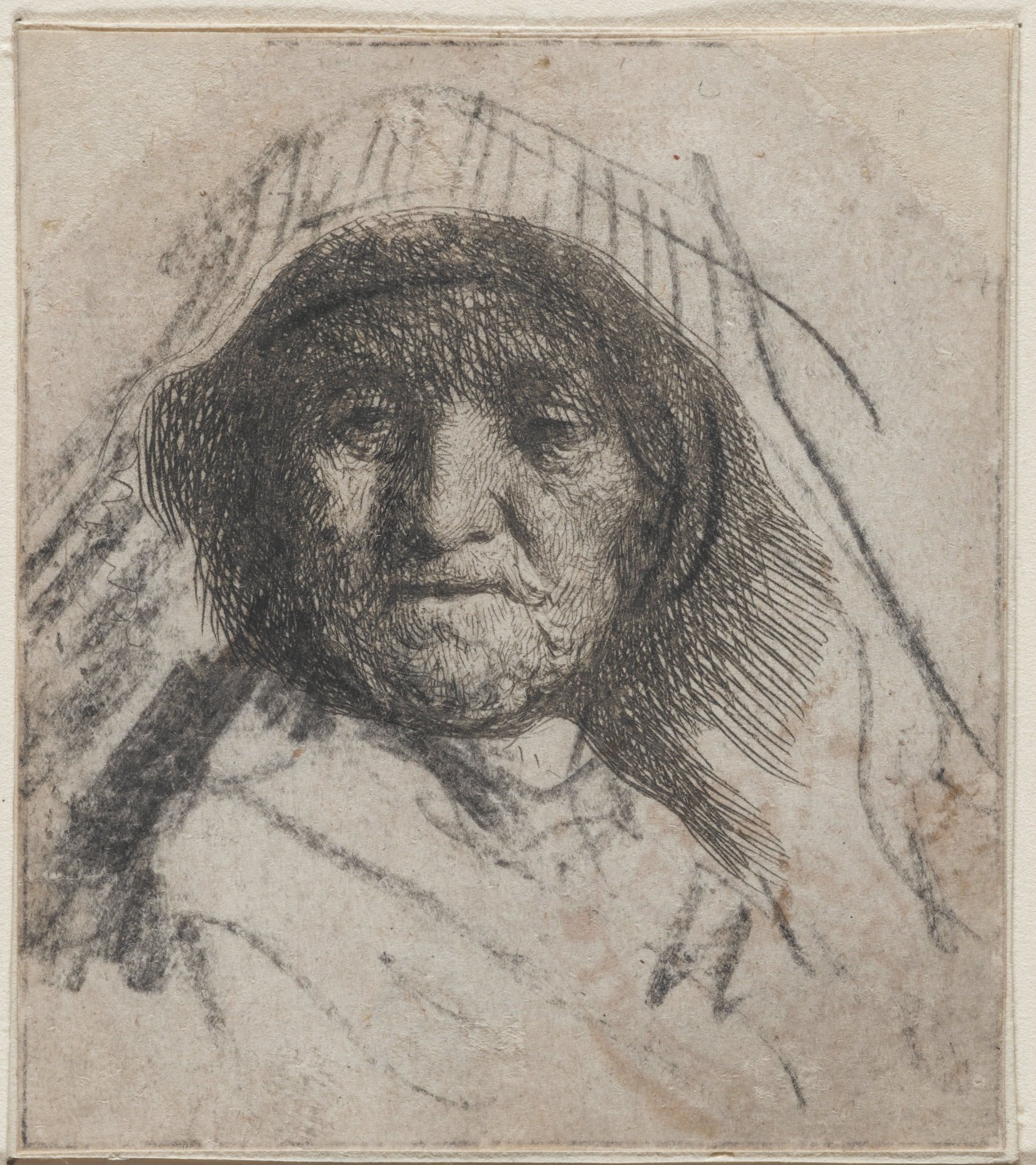
  42. Jan Jansz Orlers, Beschrijvinge der stadt Leyden, 2nd ed., Leiden 1641, p. 375; Walter L. Strauss et al., Rembrandt Documents, New York 1979, doc. 1641/8. For rare objections, see Roelof van Straten, Young Rembrandt. The Leiden Years, 1606-1632, Leiden 2005, p. 16; Benjamin Binstock, ‘The birth of Rembrandt’, in Michiel Roscam Abbing, ed., Rembrandt 2006. Essays, Leiden 2006, pp. 267-278 (arguing for 1607).
  43. Strauss, Rembrandt Documents, doc. 1669/6.
  44. E.B.F.F. Wittert van Hoogland, ‘Genealogie van den tak van het geslacht van Tetrode, welke zich Vinck genoemd heeft. Reconstructie van de genealogie voorkomende in het stam- en wapenboek van aanzienlijke Nederlandsche geslachten. Memoriael Gemaeck door N(icolaas) S(ebastiaensz.) V(inck)’, Genealogische en heraldische bladen 1 (1906), pp. 122-149.
  45. Dirk Rühl, ‘Het wapen van Rembrandt’s broeder Willem Harmensz. van Rijn een gelegenheids-wapen? Een heraldisch probleem’, Gens Nostra. Maandblad van de Nederlandsche Genealogische Vereniging 11 (1956), pp. 117-128, esp. p. 127.
  46. Strauss et al., Rembrandt Documents, doc. 1669/4 (misspelling the name as ‘Vlinck’). See also: http://remdoc.huygens.knaw.nl/#/document/remdoc/e13470 (accessed 22 December 2022).
  47. Warm thanks to Ingrid Pot for her kind assistance, and to P.J.M. De Baar for an impromptu consultation on the document, manuscript LB 6761 klein deel, Erfgoed Leiden en Omstreken, Leiden (hereafter ELO). The notebook is chronological but unpaginated; we therefore cite Wittert van Hoogland. See further Stephanie S. Dickey, ‘Ars longa vita brevis. Rembrandt’s death and the status of the artist in late seventeenth-century Amsterdam’, Nederlands Kunsthistorisch Jaarboek 72 (2022), pp. 234-271.
  48. R.E.O. Ekkart, ‘Familiekroniek Van Heemskerck en Van Swanenburg (I)’, Jaarboek van het Centraal Bureau voor Genealogie 32 (1978), pp. 41-70; idem., ‘Familiekroniek Van Heemskerck en Van Swanenburg (II)’, Jaarboek van het Centraal Bureau voor Genealogie 33 (1979), pp. 44-75 (deaths of Cornelis and Sylvester van Swanenburgh, pp. 54, 72, 75). See also Gary Schwartz, Rembrandt, his life, his paintings, New York 1985, p. 22; https://www.mijnstambomen.nl/leiden/swanenburg.htm (accessed 16 December 2022). The dates of Silvester van Swanenburgh’s death and burial are unrecorded; he prepared his will on 12 October 1669, being siechelick van lichaem leggende te bedde (sick in bed); ELO, 0506, notary Justus Gerstecoren, no. 1144, deed 124, 12-10-1669.
  49. Wittert van Hoogland, ‘Genealogie’, p. 135.
  50. Wittert van Hoogland, ‘Genealogie’, pp. 136, 137. Burial: https://archief.amsterdam/archief/5001/1056 (accessed 16 December 2022).
  51. Wittert van Hoogland, ‘Genealogie’, pp. 135.
  52. Ekkart, ‘Familiekroniek’, pp. 54, 72.
  53. Rudi van Maanen and Leendert van Maanen, ‘De grote epidemie van 1669-1670’, Leids Jaarboekje 2021, pp. 67-83, with further references.
  54. See Dickey, ‘Ars longa vita brevis‘, with further references.
  55. See esp. Christaan Vogelaar and Gerbrand Korevaar, eds., Rembrandt’s Mother. Myth and Reality, exh. cat. Leiden: Stedelijk Museum de Lakenhal 2005, pp. 88-91, 97-98, cat. 3-6, 9-10.
  56. We are grateful to Jos Beerens and Weixuan Li for advice on software to visualize this data.
  57. Reymptgen’s husband, Cornelis Bartholomeusz (Meesz.) van Tetrode (1505-1550), a grain dealer in Leiden, died before Neeltje and Bastiaen were born. See Strauss et al., Rembrandt Documents, doc. 1561/1, 1574/3, 1579/1, 1581/1,1582/2.
  58. Strauss et al., Rembrandt Documents, p. 24.
  59. Gerrit Cornelisz. Vinck is registered living in Leiden 1544-1583; Historisch Leiden in Kaart, https://historischleideninkaart.nl/persoonformulier/?Id=8986 (accessed 16 December 2022). He became poorter of Delft in 1584; Stadsarchief Delft, 1.733, fol. 054v, 5-5-1584. See also W.C. Tettero, Genealogie van Tetrode 1300-1600, Voorburg 2000, p. 61; J.P. Jacobs, ‘Rembrandt verwant met Philips van Leyden’, De Nederlandse Leeuw 102 (1985), column 457-465.
  60. See also ELO, Stadsarchief van Leiden, 0501A, 6597, Register Vetus 1582-1601, p. 8v. ‘t Gulden Warken belonged to Reymptgen In 1579; by 1581, she had transferred ownership to Dirck; Strauss et al., Rembrandt Documents, p. 31 and doc. 1579/1, 1581/1, 1585/1.
  61. Wittert van Hoogland, p. 123. Walsburch was buried several weeks later; SAA DTB 5001, 1054, p. 46vo, 8-5-1629. Prenuptual agreement, SAA 5075, 445, not. Palm Mathijsz, 17-2-1631.
  62. SAA DTB 5001, 671, p. 33 (marriage bans) 27-1-1628; DTB 1054, p. 46vo, 8-5-1629 (burial record).
  63. Wittert van Hoogland, p. 124. They married on 10 May at the Begijnhof and 13 May at the Amsterdam Town Hall.
  64. Wittert van Hoogland, p. 126. Clara became a begijn in 1643 and registered her will as a bejaaarde geestelijke dochter, wonende op het Begijnhof, in 1655, appointing her brothers her heirs; SAA 5075, 2454, not. R. Duee, akte nummer 57860, 8-10-1655.
  65. Wittert van Hoogland, p. 127; SAA, DTB 676, p. 145, 2-1-1642; 5033 Poorterboeken, no. 2, p. 199, 24-4-1642. In 1647 Albert purchased a home on the Haarlemmerstraat; SAA, 5073, Kwijtscheldingen, no. 928, 5-1-1647. He posted the banns for his second marriage, to Grietje Harmens van der Aa, on 2 December 1655; SAA, DTB 682, p. 356, 2-12-1655.
  66. Wittert van Hoogland, p. 127.
  67. SAA DTB, 1055, p. 94v (Clara); 1056, p. 252, 26-6-1683 (Albert).
  68. Cornelis was recorded on 24 April 1587 as a baker, age 21. In 1600, he purchased a house later owned by Karel van der Pluym. Strauss et al., Rembrandt Documents, doc. 1581/2, 1662/4; Schwartz, Rembrandt, p. 18 (diagram of Rembrandt’s family tree by P.J.M. de Baar).
  69. Strauss et al., Rembrandt Documents, doc. 1662/4; Marieke de Winkel, ‘ »Cousin » Karel van der Pluym and the benefit of family’, in Epco Runia and David de Witt, eds., Rembrandt’s Social Network. Family, friends, acquaintances, exh. cat., Amsterdam: Museum het Rembrandthuis 2019, pp. 61-65, citing a red and black chalk drawing on vellum, dated 1634 (private collection in New York).
  70. See Koos Levy-Halm, ‘Where did Vermeer buy his painting materials? Theory and practice’, in Ivan Gaskell and Michiel Jonker, eds., National Gallery Studies in the History of Art, Vol. 55, Vermeer Studies, 1988, pp. 137-143; Jo Kirby, ‘The painter’s trade in the seventeenth century: theory and practice’, National Gallery Technical Bulletin 20 (1999), pp. 5-49.
  71. See Stephanie S. Dickey, Rembrandt. Portraits in Print, Amsterdam/Philadelphia 2004, pp. 141-149; Runia and De Witt, eds., Rembrandt’s Social Network, p. 124.
  72. Orlers, Beschryvinge, p. 373; https://rkd.nl/explore/artists/51111 (accessed 2 January 2023)
  73. Rudolf E.O. Ekkart, Isaac Claesz. van Swanenburgh 1537-1614, Zwolle 1998, p. 14. For the prenuptial agreement, Jacobge was assisted by her father Claes Isaacsz and her brothers Isaac Claesz and Claes Claesz; ELO, 0508 Het oude rechterlijke archief van Leiden, no. 76B-2, fol. 375, 15-10-1570.
  74. ELO, 0501A, Stadsarchief van Leiden, 1574-1816, no. 1289, Register van de volkstelling 1581, fol. 9.
  75. See Marije Osnabrugge, The Neapolitan Lives and Careers of Netherlandish Immigrant Painters (1575-1655), Amsterdam 2019, esp. pp. 66-73, 115-123. The Antwerp-born portraitist Abraham Vinck (1574/75-1619) associated with Jacob van Swanenburgh in Hamburg 1589-1598 and later in Naples; in 1602, he witnessed Van Swanenburgh’s marriage to Margaretha Cardone. He lived in Amsterdam 1609-1619. Rembrandt’s bankruptcy inventory includes ‘een doode Contrefijtsel van Abraham Vinck‘; Strauss et al., Rembrandt Documents, doc. 1656/12, no. 86, but we have not yet found a link between Abraham and the Vinck family discussed here.
  76. Ekkart, Isaac Claesz. van Swanenburgh, esp. p. 71; Schwartz, Rembrandt, pp. 22-23.
  77. Strauss et al., Rembrandt Documents, doc. 1620/1; Jef Schaeps and Mart van Duijn, Rembrandt en de Universiteit Leiden, Leiden 2019, esp. p. 28.
  78. Orlers, Beschryvinge, p. 375.
  79. Ekkart, ‘Familiekroniek’, pp. 71-72. Schwartz, Rembrandt, p. 17; Van Straten, Young Rembrandt, p. 24.
  80. ELO, Register van poorterinschrijvingen F, 1267, fol. 279v, 16-4-1638; Buurquestieboeken, 48G, fol. 105v, no. 2355, 12-9-1661; 0506, Notary Justus Gerstecoren, 1144, deed no. 124, 12-10-1669.
  81. Ernst van de Wetering, ‘Rembrandt’s gift and the underrated importance of his apprenticeship with Jacob isaacsz. van Swanenburg’, in Ernst van de Wetering and Bernhard Schnackenburg, eds., The Mystery of the Young Rembrandt, exh. cat., Kassel: Gemäldegalerie Alte Meister and Amsterdam: Museum het Rembrandthuis 2001, pp. 32-38.
  82. Strauss, et al., Rembrandt Documents, p. 69, doc. 1630/5; Schwartz, Rembrandt, p. 23; English translation: Wheelock, ed., et al., Jan Lievens, p. 286.
  83. Bakker, ‘Rembrandt and the emergence’; Vogelaar, ‘Rembrandt in Leiden’; Orlers, Beschryvinge, p. 376.
  84. See Boudewijn Bakker, ‘Rembrandt and the humanist ideal of the universal painter’, in Stephanie S. Dickey, ed., Rembrandt and his Circle. Insights and Discoveries, Amsterdam 2017, pp. 67-98.
  85. Volker Manuth, Marieke de Winkel and Rudie van Leeuwen, Rembrandt. The Complete Paintings, Cologne 2019, cat. 121.
  86. Carel Vosmaer, Rembrandt. Sa vie et ses oeuvres, The Hague 1877, pp. 28-35, 469, 461, unaware of Vinck’s Memoriael, posited a relationship to the Van Swanenburghs on Rembrandt’s father’s side. Ekkart, Isaac Claesz van Swanenburgh, p. 11, dismissed this. However, Claes Cornelisz van Berckel, half-brother of Harmen Gerritsz van Rijn, was married to Brechtje Mourijnsdr. van Swanenburch. The half-brothers lived next door to each other on the Weddesteeg in 1605 and 1624 and owned a mill together; ELO, Buurquesties 48B, blad 2, aktenummer 520, 4-4-1605; 48D, blad 201, aktenumer 1339, 22-4-1624; Tiende Register, Bon Noord-Rijnevest (B), Stadsvrijdom en molens op de wallen, archiefnummer 501A, Stukken betreffende afzonderlijke onderwerpen; Registratie van onroerend goed 1585-1816 (1819), inventarisnummer 6634, blad 31, 1602-1724. It is not yet clear how Brechtje Mourijnsdr. connects to Jacob and Silvester van Swanenburgh. See also Schwartz, Rembrandt, pp. 21-25.
  87. For context, see S.A.C. Dudok van Heel, ‘Rembrandt van Rijn (1606-1669), een remonstrantsgezind schilder uit calvinistisch Leiden’, in idem., De jonge Rembrandt onder tijdgenoten. Godsdienst en schilderkunst in Leiden en Amsterdam, Nijmegen 2006, pp. 177-223.
  88. On art patronage in Leiden, see esp. Gerbrand Korevaar, ‘Leiden in Rembrandt’s time’, in Van de Wetering and Schnackenburg, Mystery, pp. 12-21; Piet Bakker, ‘Rembrandt and the emergence of the Leiden art market’, in Jacquelyn N. Coutré, ed., Leiden ca. 1630. Rembrandt Emerges, exh. cat., Kingston: Agnes Etherington Art Centre 2019, pp. 66-95. We are grateful to Piet Bakker for advice on the present essay.
  89. Dirk Traudenius, Tyd-zifter, Amsterdam 1662, p. 16; Arnold Houbraken, De groote schouburgh der Nederlandtsche konstschilders en schilderessen, Amsterdam 1718-21, III, p. 33; H. Schneider, ed. by R.E.O. Ekkart, Jan Lievens, Sein Leben und Seine Werke, Amsterdam 1973, p. 151, no. 262; https://houbraken-translated.rkdstudies.nl/3-1-59/page-30-39/ (accessed 16 December 2022,) with English translation. The painting has not been discovered.
  90. Wheelock, ed., Jan Lievens, pp. 3, 16-17, fig. 19. The painting was destroyed in 1929.
  91. On their extended connection, see Stephanie S. Dickey, ‘Jan Lievens in Rembrandt’s house’, Kroniek van het Rembrandthuis 2008, pp. 36-53.
  92. As noted above, Cornelis van Swanenburgh’s mother was Adriana van Leeuwen. Rembrandt’s oldest brother, Adriaen van Rijn, married Lystbertgen Symonsdr van Leeuwen in 1617, and Willem van Rijn married Willempje Pietersdr van Steylandt, widow of Jacob Symonsz van Leeuwen, in 1636; Rühl, ‘Het wapen’, pp. 117-119, 123.
  93. Bakker, ‘Rembrandt and the Emergence’, pp. 81-83; Wheelock, ed., Jan Lievens, p. 84, cat. 2.
  94. Orlers, Beschryvinge, pp. 367-377; Bakker, ‘Rembrandt and the emergence’, p. 82. One of these was a ‘Pylatus’, possibly Pilate Washing his Hands (Raleigh, North Carolina Museum of Art); Wheelock, ed., Jan Lievens, p. 289.
  95. Strauss et al., Rembrandt Documents, doc. 1663/7; Schwartz, Rembrandt, p. 37; Dudok van Heel, ‘Rembrandt van Rijn’, pp. 190-193; Christopher Brown, An van Camp and Christiaan Vogelaar, eds., Young Rembrandt, exh. cat., Leiden: Museum De Lakenhal and Oxford: Ashmolean Museum 2019, pp. 24, 158-160. Angela Jager is preparing a study of art patronage in Rembrandt’s family network.
  96. Bakker, ‘Rembrandt and the Emergence’, pp. 85-90.  See also C. Willemijn Fock, trans. by Anne Baudoin, ‘Art ownership in Leiden in the seventeenth century’, Journal of Historians of Netherlandish Art  13:1 (2021), DOI: 10.5092/jhna.2021.13.1.4.

In memoriam Ernst van de Wetering (1938-2021)

On 11 August of this year Ernst van de Wetering, former Head of the Rembrandt Research Project (RRP) and Professor Emeritus of Art History of the Early Modern Period at the University of Amsterdam (UvA), passed away. As the world’s foremost Rembrandt connoisseur, Ernst van de Wetering was of great significance to the Rembrandt House Museum. Years of intensive collaboration between him and the museum led to high profile exhibitions, that brought the museum onto the international stage. And his research into Rembrandt’s working methods and studio practice contributed to the installation and the educational activities of the museum as a seventeenth-century artist’s house.


Photo: ANP / Juan Vrijdag, In the large painting studio (groote schildercaemer) of the Rembrandt House at the opening of Rembrandt: The Quest of a Genius, 30 March 2006

In the research that he conducted over decades on the painted oeuvre of Rembrandt, insight into seventeenth-century working practice played a central role. In the Rembrandt House he thus felt at home. After all, one cannot get any closer to the artist. After Ernst had assumed leadership of the Rembrandt Research Project – of which he had been a part since its founding in 1968 – he encountered the Rembrandt House on his path. In 1995 he took a place on its board, in a period during which the museum was to undergo a fundamental change. A new museum wing beside the historic house would finally offer space for changing exhibitions of considerable size. This expansion, which opened in 1998, also made it possible to return the former house to its seventeenth-century state, to give an impression of how Rembrandt lived and worked in the house. Ernst was intimately involved in the development of plans for the installation of both of the painting studios.

Under the inspiring leadership of then-curator Bob van den Boogert, and under the oversight of director Ed de Heer, plans were made with Ernst for Rembrandt exhibitions of international calibre with important loans. The first exhibition of an intended trio became The Mystery of the Young Rembrandt, over the early years of Rembrandt’s artistic career. This was organized in 2001-2002 in collaboration with the Gemäldegalerie Schloss Wilhelmshöhe in Kassel. In the Rembrandt anniversary year 2006 there followed Rembrandt: The Quest of a Genius in collaboration with the Gemäldegalerie Berlin, on Rembrandt’s artistic crisis and renewal after the completion of the Night Watch. The third part, that would cover the final years of Rembrandt’s oeuvre, was never realized – partly owing to internal problems that affected the Rembrandt House in 2008 and 2009, about which Ernst was very critical.

In studying Rembrandt’s paintings, Ernst steadfastly referred to the drawn and etched oeuvre of the artist. His fascination for prints resulted in the 2009-2010 exhibition Rembrandt gespiegeld (Rembrandt Reflected), based on an idea of his. Original impressions of etchings by Rembrandt from the museum’s collection were displayed next to reproductions in mirror image. The result was a surprising insight into the compositions that Rembrandt had conceived when he was drawing them on the etching plates. Due to the printing process, however, these images have come down to us in mirror image. This exhibition generated a new understanding of the artistic intentions that Rembrandt had when he made his etchings. In an introductory film Ernst enthusiastically related how these new observations give us a glimpse into the mind of the master.

Besides these thematic exhibitions, in which the visitor (in some cases also with Ernst’s voice in their ears through the audiotour) was taken along in new insights over Rembrandt as an artist, important small presentations took place. Ernst’s research into the stylistic, technical and material aspects of the work of Rembrandt brough spectacular discoveries to light and led to new attributions. These were often the result of study of paintings with technical and scientific research methods. The application of such techniques were very present for Ernst in his approach to art historical research. Between 2003 (the discovery of an early self-portrait that had been overpainted) and 2011 (the discovery of a tronie of an old man painted by Rembrandt), various new finds were presented in the Rembrandt House. Such events attracted international press coverage and drew visitors to the museum.

Foto ANP / Marco Okhuizen, in Rembrandt’s Salon, at the presentation of the Tronie of an Old Man, 2011

Ernst had a special talent for captivating his audience. This is what drew me to Amsterdam in 1996 to come and study with him at the UvA. Ernst’s lectures were inspiring experiences that gave one the feeling of attending a special event. He let his listeners look, as it were, over his shoulder, by bringing them with detail images ever closer to the brush strokes. Also in the Rembrandt House Ernst shared his insights with visitors and staff. The palpable excitement turned every lecture into  a memorable occasion. The knowledge that Ernst shared with us on Rembrandt’s painting technique, studio practice, function of art works or ideas on art has been decisive for the ways in which curatorial and educational staff members have carried out their activities. We look back in gratitude on these moments and treasure the extensive knowledge that Ernst left us in his publications.

Leonore van Sloten, former student of Ernst van de Wetering and Curator at the Rembrandt House Museum


  1. Much of the previous literature cites the drawing as The Departure of Rebecca from Her Parents’ House. The Staatsgalerie, Stuttgart, which owns the drawing, adopted the shorter title (https://www.staatsgalerie.de/en/html).
  2. dit behoorde vervoucht te weesen me[t] veel gebueren die deese hoge bruijt sien vertrek[k]en”: Peter Schatborn, “The Core Group of Rembrandt Drawings, I: Overview,” Master Drawings 49 (2011), p. 320.
  3. According to the Woordenboek der Nederlandsche Taal,geburen” may mean “figures” or “bystanders,” as two scholars interpreted the word in Rembrandt’s inscription: (https://gtb.ivdnt.org/iWDB/search?actie=article&wdb=WNT&id=M017638.re.1&lemma=geburen&domein=0&conc=true). For “figures,” see: Volker Manuth, in: Rembrandt: A Genius and His Impact, exh. cat. Canberra, Australian National Gallery; Melbourne, National Gallery of Victoria, 1997, p. 270, cat. no. 53. For “bystanders,” see: Marieke de Winkel, Fashion and Fancy: Dress and Meaning in Rembrandt’s Paintings, Amsterdam 2006, pp. 214–215). However, in the full context of Rembrandt’s inscription and the drawing’s iconography, “geburen” most strongly refers to neighbours, as translated for example by Gary Schwartz and Peter Schatborn. See: Gary Schwartz, The Rembrandt Book, New York 2006, p. 107, fig. 195; Schatborn, “Core” (see note 2), p. 320.
  4. Schwartz, Rembrandt (see note 3), p. 107.
  5. Amy Golahny, “Rembrandt and ‘Everyday Life’: the Fusion of Genre and History,” in: Genre Imagery in Early Modern Northern Europe: New Perspectives, London 2016, pp. 174, 177.
  6. The Rembrandt drawing (130 x 185 mm) was sold at Christie’s (London) on 3 July 2012, lot. 50, sale 5688. Golahny, “Rembrandt” (see note 5), pp. 170–174, figs. 7.5–9.
  7. Herman Roodenburg, “Naar een etnografie van de vroegmoderne stad: de ‘gebuyrten’ in Leiden en Den Haag,” in: Cultuur en maatschappij in Nederland 15001850. Een historisch-antropologisch perspectief, Meppel 1992, p. 233.
  8. For a discussion of neighbourhoods’ goals, see: Herman Roodenburg, “’Freundschaft’, ‘Brüderlichkeit’ und ‘Einigkeit’: Städtische Nachbarschaften im Westen der Republik,” in: Ausbreitung bürgerlicher Kultur in den Niederlanden und Nordwestdeutschland, Münster 1991, pp. 11, 12, 21; Gabrielle Dorren, “Communities within the Community: Aspects of Neighbourhood in Seventeenth-Century Haarlem,” Urban History 25 (1998), pp. 180, 188.
  9. See, for example, Rembrandt’s drawings Benesch 491, 503, 566, 988 and his painting Portrait of a Couple as Isaac and Rebecca, c. 1665–1669 (oil on canvas, 121.5 x 166.5 cm, Amsterdam, Rijksmuseum).
  10. All Biblical translations from: The New English Bible with the Apocrypha, New York 1971.
  11. Schatborn, “Core” (see note 2), p. 320.
  12. The Staatsgalerie Stuttgart attributes the inscription to Rembrandt and the drawing to either Rembrandt or Gerbrand van den Eeckhout. Hans Martin Kaulbach, Curator of German and Netherlandish Prints and Drawings before 1800, Graphische Sammlung, Staatsgalerie Stuttgart, email message to the author, 25 April 2018.
  13. For Koninck see for example: Horst Gerson, Philips Koninck; ein beitrag zur Erforschung der holländischen Malerei des XVII. Jahrhunderts, Berlin 1936, p. 174, Z.LXV. For Flinck: Wilhelm Reinhold Valentiner, Rembrandt: des Meisters Handzeichnungen, Stuttgart 1933, part 2, p. 247. For Van den Eeckhout: Martin Royalton-Kisch, Drawings by Rembrandt and His Circle in the British Museum, exh. cat., London, British Museum 1992, p. 202, cat. no. 97; Holm Bevers, “Drawing in Rembrandt’s Workshop,” in: Drawings by Rembrandt and His Pupils: Telling the Difference, exh. cat., Los Angeles, J. Paul Getty Museum 2009, p. 27; Schatborn, “Core” (see note 2), pp. 320, 322, note 38. For an argument against the Van den Eeckhout attribution, see: Eric Jan Sluijter and Nicolette Sluijter-Seijffert, “Rembrandt’s Pupils? The Attribution of Early Drawings to Gerbrand van den Eeckhout and Jan Victors,” in: Connoisseurship Essays in Honour of Fred G. Meijer, Leiden 2020, pp. 289–296.
  14. Werner Sumowski, Drawings of the Rembrandt School, New York 1979–1992, vol. 3, p. 1734, 806xx; Bevers, “Drawing” (see note 13), pp. 27, notes 97–98.
  15. Seymour Slive, Rembrandt Drawings, Los Angeles 2009, p. 215; Schatborn, “Core” (see note 2), p. 320; Bevers, “Drawing” (see note 13), p. 2.
  16. Cornelis Hofstede de Groot and Bob Haak, Rembrandt Zeichnungen, Köln 1974, p. 13; Manuth, Rembrandt (see note 3), p. 270, cat. no. 53.
  17. Samuel van Hoogstraten, De Inleyding tot de hooge schoole der schilderkunst anders de zichtbaere werelt, Rotterdam 1678, p. 192. Bevers, “Drawing” (see note 13), p. 25, notes 86–87.
  18. Bevers, “Drawing” (see note 13), pp. 25–27, 187, 189­–90; Schatborn, “Core” (see note 2), p. 320.
  19. Bevers, “Drawing” (see note 13), p. 27.
  20. Roodenburg, “Naar” (see note 7), pp. 222–224; Dorren, “Communities” (see note 8), p. 177; Llewellyn Bogaers, “Geleund over de onderdeur: Doorkijkjes in het Utrechtse buurtleven van de vroege middeleeuwen tot in de zeventiende eeuw,” in: Bijdragen en mededelingen betreffende de geschiedenis der Nederlanden 112 (1997), pp. 349, 357, 359.
  21. Roodenburg, “Naar” (see note 7), pp. 224, 233–234; Bogaers, “Geleund” (see note 20), pp. 340–342, 348.
  22. Catherina Lis and Hugo Soly, “Neighborhood Social Change in Western European Cities,” International Review of Social History 38 (1993), p. 5.
  23. Kees Walle, Buurthouden. De geschiedenis van burengebruiken en buurtorganisaties in Leiden (14e–19e eeuw), Leiden 2005, pp. 75, 306.
  24. Regionaal Archief Leiden (RAL); Stadsarchief (SA) II inv.nr. 1216, f. 149 and RAL SA II inv.nr. 1217, f. 10 vso; cited in: Walle, Buurthouden (see note 23), p. 231, note 77.
  25. Jan le Francq van Berkheij, Natuurlyke historie van Holland, 12 parts in 9 vols., Amsterdam 1769–1811, vol. 3, part 2, pp. 1045–1046; Roodenburg, “Naar” (see note 7), p. 225.
  26. RAL; SA II inv.nr. 16; Aflezingboek F, f. 58 vso; cited in: Walle, Buurthouden (see note 23), pp. 43, 227, notes 141, 270.
  27. Algemene Verordening, n.p.; cited in: Walle, Buurthouden (see note 23), pp. 46, 275.
  28. Roodenburg, “’Freundschaft’” (see note 8), p. 15; Bogaers, “Geleund” (see note 20), p. 349.
  29. Ilja Veldman and Lynne Richards, “Familiar Customs and Exotic Rituals: Picart’s Illustrations for Cérémonies et coutumes religieuses de tous les peuples,” Simiolus: Netherlandish quarterly for the history of art, vol. 33 (2007/2008), p. 94.
  30. Picart’s widow explained that “the prints of the Reformed congregation were drawn from life and are very accurate.” Bernard Picart and Anne Vincent, Impostures innocentes ou recueil d’estampes d’après divers peintres illustres . . . etc. gravées par Bernard Picart avec son éloge historique et le catalogue de ses ouvrages, Amsterdam 1734, p. 9; Veldman and Richards, “Familiar” (see note 29), p. 99, note 20.
  31. Veldman and Richards, “Familiar” (see note 29), p. 97.
  32. Bernard Picart, Cérémonies et coutumes religieuses de tous les peuples du monde, Amsterdam 1723–1743, p. 345.
  33. As Petra van Boheemen noted, the “interest of the neighbourhood is visible” in Picart’s print. Petra van Boheemen et al., Kent, en versint, eer datje mint: vrijen en trouwen, 1500–1800, Apeldoorn, Historisch Museum Marialust; Zwolle 1989, p. 170.
  34. Van Boheemen, Kent (see note 33), pp. 170–172; H. Perry Chapman, Jan Steen, Painter and Storyteller, exh. cat., Washington, DC, National Gallery of Art; Amsterdam, Rijksmuseum 1996, pp. 116–118 note 1, cat. no. 6.
  35. Van Boheemen, Kent (see note 33), p. 170.
  36. Irma Thoen, Strategic Affection? Gift Exchange in Seventeenth-Century Holland, Amsterdam 2007, p. 106.
  37. Fynes Moryson and Charles Hughes, Shakespeare’s Europe. Unpublished Chapters of Fynes Moryson’s Itinerary Being a Survey of the Condition of Europe at the End of the 16th Century, London 1903, pp. 379–380.
  38. A. Lynn Martin, Alcohol, Sex, and Gender in Late Medieval and Early Modern Europe, New York 2001, pp. 52–53; Thoen, Strategic (see note 36), p. 105.
  39. See, for example, Jan Steen’s The Wedding of Tobias and Sarah, c. 1667–1668, oil on canvas, 131 x 172 cm, Braunschweig, Herzog Anton Ulrich-Museum; Chapman, Jan Steen (see note 34), pp. 203–205, cat. no. 32.
  40. Philips Angel, Lof der schilder-konst, Leyden 1642, p. 48. Translation from: Philips Angel, Michael Hoyle, and Hessel Miedema, “Philips Angel, Praise of Painting,” Simiolus, Netherlandish Quarterly for the History of Art 24 (1996), p. 246.
  41. A. M. van der Woude, “Variations in Size and Structure of the Household in the United Provinces of the Netherlands in the Seventeenth and Eighteenth Centuries,” in: Household and Family in Past Time: Comparative Studies in the Size and Structure of the Domestic Group over the Last Three Centuries in England, France, Serbia, Japan and Colonial North America, with Further Materials from Western Europe, Cambridge 1972, p. 315.
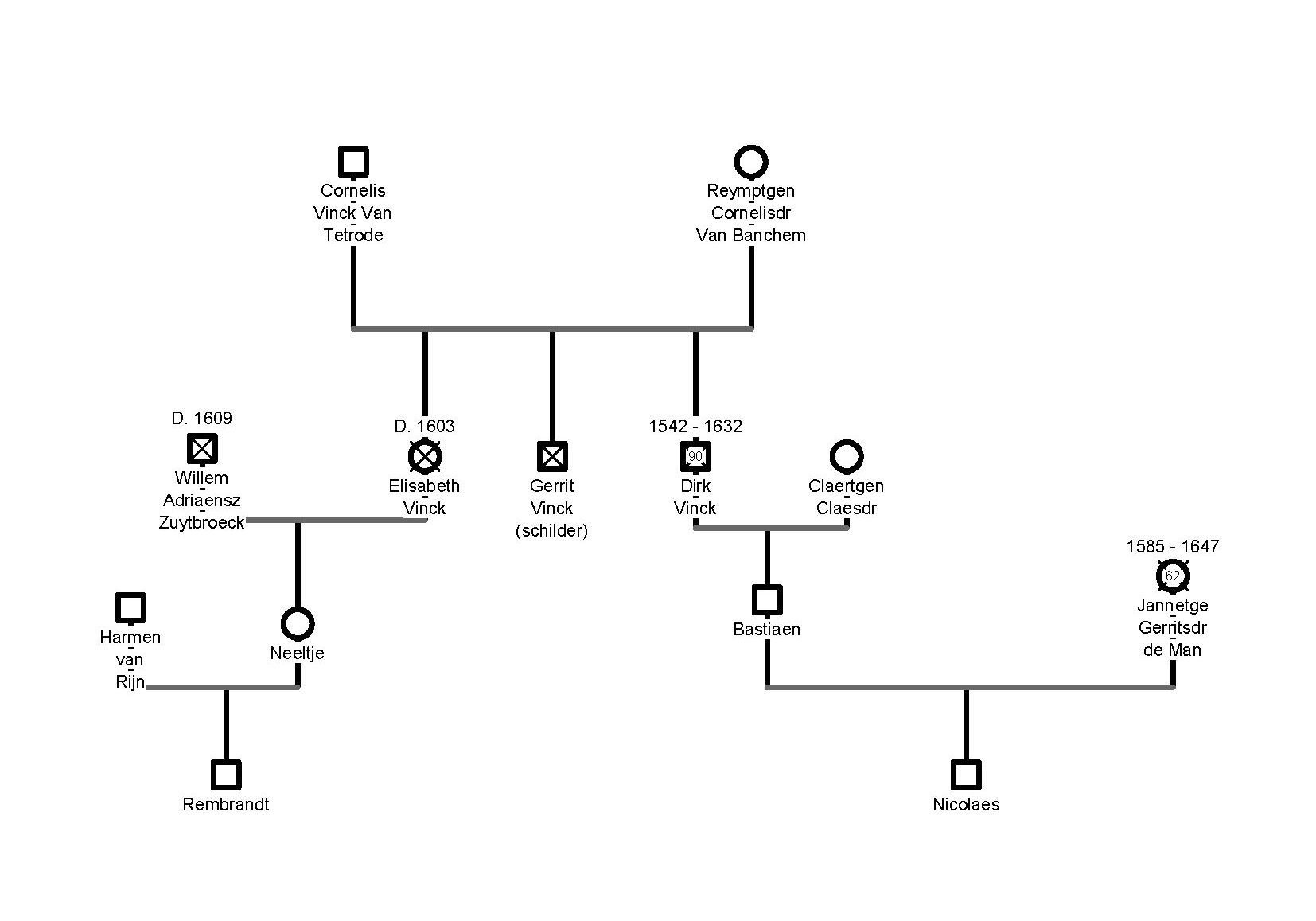
  42. Jan Jansz Orlers, Beschrijvinge der stadt Leyden, 2nd ed., Leiden 1641, p. 375; Walter L. Strauss et al., Rembrandt Documents, New York 1979, doc. 1641/8. For rare objections, see Roelof van Straten, Young Rembrandt. The Leiden Years, 1606-1632, Leiden 2005, p. 16; Benjamin Binstock, ‘The birth of Rembrandt’, in Michiel Roscam Abbing, ed., Rembrandt 2006. Essays, Leiden 2006, pp. 267-278 (arguing for 1607).
  43. Strauss, Rembrandt Documents, doc. 1669/6.
  44. E.B.F.F. Wittert van Hoogland, ‘Genealogie van den tak van het geslacht van Tetrode, welke zich Vinck genoemd heeft. Reconstructie van de genealogie voorkomende in het stam- en wapenboek van aanzienlijke Nederlandsche geslachten. Memoriael Gemaeck door N(icolaas) S(ebastiaensz.) V(inck)’, Genealogische en heraldische bladen 1 (1906), pp. 122-149.
  45. Dirk Rühl, ‘Het wapen van Rembrandt’s broeder Willem Harmensz. van Rijn een gelegenheids-wapen? Een heraldisch probleem’, Gens Nostra. Maandblad van de Nederlandsche Genealogische Vereniging 11 (1956), pp. 117-128, esp. p. 127.
  46. Strauss et al., Rembrandt Documents, doc. 1669/4 (misspelling the name as ‘Vlinck’). See also: http://remdoc.huygens.knaw.nl/#/document/remdoc/e13470 (accessed 22 December 2022).
  47. Warm thanks to Ingrid Pot for her kind assistance, and to P.J.M. De Baar for an impromptu consultation on the document, manuscript LB 6761 klein deel, Erfgoed Leiden en Omstreken, Leiden (hereafter ELO). The notebook is chronological but unpaginated; we therefore cite Wittert van Hoogland. See further Stephanie S. Dickey, ‘Ars longa vita brevis. Rembrandt’s death and the status of the artist in late seventeenth-century Amsterdam’, Nederlands Kunsthistorisch Jaarboek 72 (2022), pp. 234-271.
  48. R.E.O. Ekkart, ‘Familiekroniek Van Heemskerck en Van Swanenburg (I)’, Jaarboek van het Centraal Bureau voor Genealogie 32 (1978), pp. 41-70; idem., ‘Familiekroniek Van Heemskerck en Van Swanenburg (II)’, Jaarboek van het Centraal Bureau voor Genealogie 33 (1979), pp. 44-75 (deaths of Cornelis and Sylvester van Swanenburgh, pp. 54, 72, 75). See also Gary Schwartz, Rembrandt, his life, his paintings, New York 1985, p. 22; https://www.mijnstambomen.nl/leiden/swanenburg.htm (accessed 16 December 2022). The dates of Silvester van Swanenburgh’s death and burial are unrecorded; he prepared his will on 12 October 1669, being siechelick van lichaem leggende te bedde (sick in bed); ELO, 0506, notary Justus Gerstecoren, no. 1144, deed 124, 12-10-1669.
  49. Wittert van Hoogland, ‘Genealogie’, p. 135.
  50. Wittert van Hoogland, ‘Genealogie’, pp. 136, 137. Burial: https://archief.amsterdam/archief/5001/1056 (accessed 16 December 2022).
  51. Wittert van Hoogland, ‘Genealogie’, pp. 135.
  52. Ekkart, ‘Familiekroniek’, pp. 54, 72.
  53. Rudi van Maanen and Leendert van Maanen, ‘De grote epidemie van 1669-1670’, Leids Jaarboekje 2021, pp. 67-83, with further references.
  54. See Dickey, ‘Ars longa vita brevis‘, with further references.
  55. See esp. Christaan Vogelaar and Gerbrand Korevaar, eds., Rembrandt’s Mother. Myth and Reality, exh. cat. Leiden: Stedelijk Museum de Lakenhal 2005, pp. 88-91, 97-98, cat. 3-6, 9-10.
  56. We are grateful to Jos Beerens and Weixuan Li for advice on software to visualize this data.
  57. Reymptgen’s husband, Cornelis Bartholomeusz (Meesz.) van Tetrode (1505-1550), a grain dealer in Leiden, died before Neeltje and Bastiaen were born. See Strauss et al., Rembrandt Documents, doc. 1561/1, 1574/3, 1579/1, 1581/1,1582/2.
  58. Strauss et al., Rembrandt Documents, p. 24.
  59. Gerrit Cornelisz. Vinck is registered living in Leiden 1544-1583; Historisch Leiden in Kaart, https://historischleideninkaart.nl/persoonformulier/?Id=8986 (accessed 16 December 2022). He became poorter of Delft in 1584; Stadsarchief Delft, 1.733, fol. 054v, 5-5-1584. See also W.C. Tettero, Genealogie van Tetrode 1300-1600, Voorburg 2000, p. 61; J.P. Jacobs, ‘Rembrandt verwant met Philips van Leyden’, De Nederlandse Leeuw 102 (1985), column 457-465.
  60. See also ELO, Stadsarchief van Leiden, 0501A, 6597, Register Vetus 1582-1601, p. 8v. ‘t Gulden Warken belonged to Reymptgen In 1579; by 1581, she had transferred ownership to Dirck; Strauss et al., Rembrandt Documents, p. 31 and doc. 1579/1, 1581/1, 1585/1.
  61. Wittert van Hoogland, p. 123. Walsburch was buried several weeks later; SAA DTB 5001, 1054, p. 46vo, 8-5-1629. Prenuptual agreement, SAA 5075, 445, not. Palm Mathijsz, 17-2-1631.
  62. SAA DTB 5001, 671, p. 33 (marriage bans) 27-1-1628; DTB 1054, p. 46vo, 8-5-1629 (burial record).
  63. Wittert van Hoogland, p. 124. They married on 10 May at the Begijnhof and 13 May at the Amsterdam Town Hall.
  64. Wittert van Hoogland, p. 126. Clara became a begijn in 1643 and registered her will as a bejaaarde geestelijke dochter, wonende op het Begijnhof, in 1655, appointing her brothers her heirs; SAA 5075, 2454, not. R. Duee, akte nummer 57860, 8-10-1655.
  65. Wittert van Hoogland, p. 127; SAA, DTB 676, p. 145, 2-1-1642; 5033 Poorterboeken, no. 2, p. 199, 24-4-1642. In 1647 Albert purchased a home on the Haarlemmerstraat; SAA, 5073, Kwijtscheldingen, no. 928, 5-1-1647. He posted the banns for his second marriage, to Grietje Harmens van der Aa, on 2 December 1655; SAA, DTB 682, p. 356, 2-12-1655.
  66. Wittert van Hoogland, p. 127.
  67. SAA DTB, 1055, p. 94v (Clara); 1056, p. 252, 26-6-1683 (Albert).
  68. Cornelis was recorded on 24 April 1587 as a baker, age 21. In 1600, he purchased a house later owned by Karel van der Pluym. Strauss et al., Rembrandt Documents, doc. 1581/2, 1662/4; Schwartz, Rembrandt, p. 18 (diagram of Rembrandt’s family tree by P.J.M. de Baar).
  69. Strauss et al., Rembrandt Documents, doc. 1662/4; Marieke de Winkel, ‘ »Cousin » Karel van der Pluym and the benefit of family’, in Epco Runia and David de Witt, eds., Rembrandt’s Social Network. Family, friends, acquaintances, exh. cat., Amsterdam: Museum het Rembrandthuis 2019, pp. 61-65, citing a red and black chalk drawing on vellum, dated 1634 (private collection in New York).
  70. See Koos Levy-Halm, ‘Where did Vermeer buy his painting materials? Theory and practice’, in Ivan Gaskell and Michiel Jonker, eds., National Gallery Studies in the History of Art, Vol. 55, Vermeer Studies, 1988, pp. 137-143; Jo Kirby, ‘The painter’s trade in the seventeenth century: theory and practice’, National Gallery Technical Bulletin 20 (1999), pp. 5-49.
  71. See Stephanie S. Dickey, Rembrandt. Portraits in Print, Amsterdam/Philadelphia 2004, pp. 141-149; Runia and De Witt, eds., Rembrandt’s Social Network, p. 124.
  72. Orlers, Beschryvinge, p. 373; https://rkd.nl/explore/artists/51111 (accessed 2 January 2023)
  73. Rudolf E.O. Ekkart, Isaac Claesz. van Swanenburgh 1537-1614, Zwolle 1998, p. 14. For the prenuptial agreement, Jacobge was assisted by her father Claes Isaacsz and her brothers Isaac Claesz and Claes Claesz; ELO, 0508 Het oude rechterlijke archief van Leiden, no. 76B-2, fol. 375, 15-10-1570.
  74. ELO, 0501A, Stadsarchief van Leiden, 1574-1816, no. 1289, Register van de volkstelling 1581, fol. 9.
  75. See Marije Osnabrugge, The Neapolitan Lives and Careers of Netherlandish Immigrant Painters (1575-1655), Amsterdam 2019, esp. pp. 66-73, 115-123. The Antwerp-born portraitist Abraham Vinck (1574/75-1619) associated with Jacob van Swanenburgh in Hamburg 1589-1598 and later in Naples; in 1602, he witnessed Van Swanenburgh’s marriage to Margaretha Cardone. He lived in Amsterdam 1609-1619. Rembrandt’s bankruptcy inventory includes ‘een doode Contrefijtsel van Abraham Vinck‘; Strauss et al., Rembrandt Documents, doc. 1656/12, no. 86, but we have not yet found a link between Abraham and the Vinck family discussed here.
  76. Ekkart, Isaac Claesz. van Swanenburgh, esp. p. 71; Schwartz, Rembrandt, pp. 22-23.
  77. Strauss et al., Rembrandt Documents, doc. 1620/1; Jef Schaeps and Mart van Duijn, Rembrandt en de Universiteit Leiden, Leiden 2019, esp. p. 28.
  78. Orlers, Beschryvinge, p. 375.
  79. Ekkart, ‘Familiekroniek’, pp. 71-72. Schwartz, Rembrandt, p. 17; Van Straten, Young Rembrandt, p. 24.
  80. ELO, Register van poorterinschrijvingen F, 1267, fol. 279v, 16-4-1638; Buurquestieboeken, 48G, fol. 105v, no. 2355, 12-9-1661; 0506, Notary Justus Gerstecoren, 1144, deed no. 124, 12-10-1669.
  81. Ernst van de Wetering, ‘Rembrandt’s gift and the underrated importance of his apprenticeship with Jacob isaacsz. van Swanenburg’, in Ernst van de Wetering and Bernhard Schnackenburg, eds., The Mystery of the Young Rembrandt, exh. cat., Kassel: Gemäldegalerie Alte Meister and Amsterdam: Museum het Rembrandthuis 2001, pp. 32-38.
  82. Strauss, et al., Rembrandt Documents, p. 69, doc. 1630/5; Schwartz, Rembrandt, p. 23; English translation: Wheelock, ed., et al., Jan Lievens, p. 286.
  83. Bakker, ‘Rembrandt and the emergence’; Vogelaar, ‘Rembrandt in Leiden’; Orlers, Beschryvinge, p. 376.
  84. See Boudewijn Bakker, ‘Rembrandt and the humanist ideal of the universal painter’, in Stephanie S. Dickey, ed., Rembrandt and his Circle. Insights and Discoveries, Amsterdam 2017, pp. 67-98.
  85. Volker Manuth, Marieke de Winkel and Rudie van Leeuwen, Rembrandt. The Complete Paintings, Cologne 2019, cat. 121.
  86. Carel Vosmaer, Rembrandt. Sa vie et ses oeuvres, The Hague 1877, pp. 28-35, 469, 461, unaware of Vinck’s Memoriael, posited a relationship to the Van Swanenburghs on Rembrandt’s father’s side. Ekkart, Isaac Claesz van Swanenburgh, p. 11, dismissed this. However, Claes Cornelisz van Berckel, half-brother of Harmen Gerritsz van Rijn, was married to Brechtje Mourijnsdr. van Swanenburch. The half-brothers lived next door to each other on the Weddesteeg in 1605 and 1624 and owned a mill together; ELO, Buurquesties 48B, blad 2, aktenummer 520, 4-4-1605; 48D, blad 201, aktenumer 1339, 22-4-1624; Tiende Register, Bon Noord-Rijnevest (B), Stadsvrijdom en molens op de wallen, archiefnummer 501A, Stukken betreffende afzonderlijke onderwerpen; Registratie van onroerend goed 1585-1816 (1819), inventarisnummer 6634, blad 31, 1602-1724. It is not yet clear how Brechtje Mourijnsdr. connects to Jacob and Silvester van Swanenburgh. See also Schwartz, Rembrandt, pp. 21-25.
  87. For context, see S.A.C. Dudok van Heel, ‘Rembrandt van Rijn (1606-1669), een remonstrantsgezind schilder uit calvinistisch Leiden’, in idem., De jonge Rembrandt onder tijdgenoten. Godsdienst en schilderkunst in Leiden en Amsterdam, Nijmegen 2006, pp. 177-223.
  88. On art patronage in Leiden, see esp. Gerbrand Korevaar, ‘Leiden in Rembrandt’s time’, in Van de Wetering and Schnackenburg, Mystery, pp. 12-21; Piet Bakker, ‘Rembrandt and the emergence of the Leiden art market’, in Jacquelyn N. Coutré, ed., Leiden ca. 1630. Rembrandt Emerges, exh. cat., Kingston: Agnes Etherington Art Centre 2019, pp. 66-95. We are grateful to Piet Bakker for advice on the present essay.
  89. Dirk Traudenius, Tyd-zifter, Amsterdam 1662, p. 16; Arnold Houbraken, De groote schouburgh der Nederlandtsche konstschilders en schilderessen, Amsterdam 1718-21, III, p. 33; H. Schneider, ed. by R.E.O. Ekkart, Jan Lievens, Sein Leben und Seine Werke, Amsterdam 1973, p. 151, no. 262; https://houbraken-translated.rkdstudies.nl/3-1-59/page-30-39/ (accessed 16 December 2022,) with English translation. The painting has not been discovered.
  90. Wheelock, ed., Jan Lievens, pp. 3, 16-17, fig. 19. The painting was destroyed in 1929.
  91. On their extended connection, see Stephanie S. Dickey, ‘Jan Lievens in Rembrandt’s house’, Kroniek van het Rembrandthuis 2008, pp. 36-53.
  92. As noted above, Cornelis van Swanenburgh’s mother was Adriana van Leeuwen. Rembrandt’s oldest brother, Adriaen van Rijn, married Lystbertgen Symonsdr van Leeuwen in 1617, and Willem van Rijn married Willempje Pietersdr van Steylandt, widow of Jacob Symonsz van Leeuwen, in 1636; Rühl, ‘Het wapen’, pp. 117-119, 123.
  93. Bakker, ‘Rembrandt and the Emergence’, pp. 81-83; Wheelock, ed., Jan Lievens, p. 84, cat. 2.
  94. Orlers, Beschryvinge, pp. 367-377; Bakker, ‘Rembrandt and the emergence’, p. 82. One of these was a ‘Pylatus’, possibly Pilate Washing his Hands (Raleigh, North Carolina Museum of Art); Wheelock, ed., Jan Lievens, p. 289.
  95. Strauss et al., Rembrandt Documents, doc. 1663/7; Schwartz, Rembrandt, p. 37; Dudok van Heel, ‘Rembrandt van Rijn’, pp. 190-193; Christopher Brown, An van Camp and Christiaan Vogelaar, eds., Young Rembrandt, exh. cat., Leiden: Museum De Lakenhal and Oxford: Ashmolean Museum 2019, pp. 24, 158-160. Angela Jager is preparing a study of art patronage in Rembrandt’s family network.
  96. Bakker, ‘Rembrandt and the Emergence’, pp. 85-90.  See also C. Willemijn Fock, trans. by Anne Baudoin, ‘Art ownership in Leiden in the seventeenth century’, Journal of Historians of Netherlandish Art  13:1 (2021), DOI: 10.5092/jhna.2021.13.1.4.

A Drawn Studio Scene by Cornelis Bisschop, instead of Jan Lievens

In addition to the world before their eyes, seventeenth-century Dutch and Flemish artists also turned their gaze around, to themselves in self-portraits, and even to the ateliers in which they were working, in numerous drawings and paintings. These give us behind-the-scenes glimpses of period practice. This is especially helpful given the precious few written sources they left us, compared to their counterparts in Italy, or France. Such scenes help fill in the gaps, even when we account for artistic license, embellishments, and distortions shaped by prior traditions.97 One example in the Liberna Collection in Mettingen, a drawing in pen and wash, is particularly striking because it shows a moment of instruction (fig. 1). A painter points at a large drawing shown to him by a pupil on the floor, with a stick or brush in his hand. He pauses from his work on the painting taking shape on his easel behind him to offer instruction and correction. It is of course important to know whose viewpoint this was. Until now, the existing attribution has led us in the wrong direction, however.

Here attributed to Cornelis Bisschop (previously attributed to Jan Lievens), An Artist Instructing a Pupil in his Studio, c. 1660. Pen and brush in brown, black chalk
Here attributed to Cornelis Bisschop (previously attributed to Jan Lievens), An Artist Instructing a Pupil in his Studio, c. 1660. Pen and brush in brown, black chalk, 385 x 295 mm. Mettingen, Liberna Collection, inv. nr. 79. Photo: Stephan Kube

Attribution to Lievens

Scholars have assigned this sheet to an artist closely linked to Rembrandt: his Leiden friend and associate Jan Lievens (1607-1674). This attribution dates from 1983, when this work appeared under his name in the seventh volume of Werner Sumowski’s series Drawings of the Rembrandt School.98 The chief point of comparison with Lievens’s drawings lay in the bold, linear strokes of the pen. This attribution was carried over with the drawing’s presentation in the major monographic Lievens exhibition of 2008-2009, under the aegis of Gregory Rubinstein.99 There appears to be further evidence about the artist and studio here represented sitting high on the ledge. The round shield mounted with a point and the bust fitted out with costume drapery are familiar from depictions of artists at work by Rembrandt and his followers, with whom Lievens associated as well (figs. 2, 3). However, Sumowski dated the sheet quite late, to the 1660s. After departing from Leiden in 1631, Lievens led an itinerant existence, often in financial need. The scenario of this drawing would have to reflect a moment of prosperity enabled by one of several major commissions he won in his later years. Or it may instead show the situation of a fellow artist, or even an imagined situation. This assumes however that it is by Lievens. The detailed interior is unconventional for him however, and we do not recognize the face of an artist who depicted himself almost as readily as Rembrandt.


Historical Scene with self portrait
*oil on panel
*89,8 × 121 cm
*signed b.r.: R[L] 16[2]6
Rembrandt, An Artist Drawing from the Model, 1639, state II(2). Etching, burin and drypoint.
Rembrandt, An Artist Drawing from the Model, 1639, state II(2). Etching, burin and drypoint, 232 x 194 mm. Amsterdam, The Rembrandt House Museum, inv. no. 142

A Link to Another Artist: Cornelis Bisschop

At the same time we must consider a hitherto unnoticed, alternative link to another member of the Rembrandt circle: the Dordrecht painter Cornelis Bisschop (1630-1674). It is the painting on the easel, depicting The Contest between Apollo and Pan.100 Apollo has summoned Pan to the contest after hearing King Midas boasting about his flute-playing, and the mountain god Tmolos acts as judge. He favours Apollo, who then punishes Midas by endowing him with the ears of a donkey, an animal limited to raucous braying. In the drawn painting, the ass-eared Midas leans in protest toward the contemptuous Apollo to the right, while Pan raises his pipe to the viewer. The composition and figures relate directly to Bisschop’s depiction of the same theme in The Bader Collection at the Agnes Etherington Art Centre in Kingston, Ontario (fig. 4).101 Especially evident is the silhouette of Apollo, carrying a violin under his arm, and walking away to the right while turning for one last glance at Midas (fig. 5). Only, in the painting he turns his back to us. The disgraced Midas echoes the drawn figure’s unusual pose more closely, albeit in mirror image, with his arms flung out in exclamation against the negative judgement of the mountain god Tmolos. His champion, Pan, is likewise shown much as in the drawing, holding his pipe to his lips and turned slightly to the left. The tree also takes a similar place; only the unconventional representation of Tmolos, as a ghostly face (likely a self-portrait) in a cloud, is not reflected in the painting drawn into the sheet in Mettingen. The cloud itself is shown. The Kingston painting had previously been attributed to various Rembrandt pupils, including Barent Fabritius, Gerbrand van den Eeckhout and Nicolaes Maes, until Sumowski assigned it to Bisschop in 1989. It aligns with the smooth and broad rendering of surfaces and figures Bisschop had developed by the later 1650s.

Cornelis Bisschop, The Contest between Apollo and Pan, c. 1657/60. Oil on panel.
Cornelis Bisschop, The Contest between Apollo and Pan, c. 1657/60. Oil on panel, 38 x 45.6 cm. Kingston, Agnes Etherington Art Centre, Gift of Alfred and Isabel Bader, 1991, acc. no. 34-020.01
Detail of fig. 1: the painting on the easel

This striking connection raises the possibility that Bisschop, and not Lievens, is the author of the Mettingen atelier scene. His drawings are not well known, however. Werner Sumowski did discuss the artist in his series on the paintings of the Rembrandt school,102 but not in his series on the drawings. At least, not in the published volumes. This series remains incomplete, as many scholars know: we are still waiting for the bibliography to complete the authour-date references in the text. Sumowski passed away in 2015, and shortly thereafter the Rembrandt House Museum learned that he had bequeathed the manuscript of an unpublished Addendum volume. Contact with the series publisher Abaris books then revealed the existence of another unpublished volume, of Anonymous drawings. It contained the long awaited bibliography. Both will be translated, and prepared for pubication in 2023, with the support of Bader Philanthropies. The Addendum volume contains a small section of five drawings attributed to Cornelis Bisschop (who did not feature in the earlier volumes because he was, strictly speaking, not a known pupil of the master himself).103  It leads with a single core drawing (a secure sheet providing the basis for further attributions), one that he had already cited earlier, although only in a note (fig. 6).104 Depicting The Angel Appearing to Elijah, its composition aligns closely with a painting of the same theme, reasonably attributed to Bisschop, last with the Chicago collector and opera tenor Harry Moore (fig. 7).105

Cornelis Bisschop, The Angel Appearing to Elijah in the Wilderness, c. 1650, pen and brush in brown
Cornelis Bisschop, The Angel Appearing to Elijah in the Wilderness, c. 1650, pen and brush in brown, 163 x 170 mm. Present location unknown
Cornelis Bisschop, The Angel Appearing to Elijah in the Wilderness, c. 1650, oil on canvas
Cornelis Bisschop, The Angel Appearing to Elijah in the Wilderness, c. 1650, oil on canvas, 98 x 121.5 cm. Private collection

The handling in this drawing shows prominent, open and imprecise strokes of the pen, like what we see in the Mettingen atelier scene, in contours and hatching. There is a conspicuous tendency to abrupt, forceful curves, producing a lumpiness in the figures and foreground. The shading in patches of wash and vigourous looping hatching contributes further to an overall gnarly effect, at the expense of overall concentration. Bisschop evidently sought to underscore the emotional drama of Elijah’s rescue with these expressive elements. They resurface in the painting, in milder form. They were evidently an early stylistic direction. One can draw a parallel to the turbulence and clutter of the composition of the Mettingen drawing. It likewise features short, forceful curved contours, but they are generally smoother and more fluid, possibly reflecting development away from youthful bravado and dependence on his teacher.

Detail of fig. 1
Detail of fig. 1
Jan Lievens, The Penitent St. Jerome, monogrammed and dated 1665. Pen in brown.
Jan Lievens, The Penitent St. Jerome, monogrammed and dated 1665. Pen in brown, 217 x 318 mm. Düsseldorf, Kunstpalast, inv. no. F. P. 5085

These qualities at the same time point away from the traditional attribution to Lievens. Significant differences emerge already in the comparison with the drawing Sumowski cited in support of his attribution, the St. Jerome in Dusseldorf, signed and dated 1665 (fig. 9). There, the figure of Jerome shows Lievens’s typically extended, taut strokes, in contrast with the busy, tight rounded curves in the atelier scene (paralleling the rounded, abstract forms of his later paintings). Jerome’s massive figure achieves monumental presence, typical for Lievens, as is the powerful focus that he generated by accentuating Jerome’s rugged features. In the Mettingen sheet the instructing painter instead cuts a  svelte, agile figure, and his face blends into the diffuse pattern of lines mapping his figure. The overall composition there is agitated, and turbulent. The lines yield a more painterly effect, in part due to the fully loaded pen, even leaving pools in various places, as seen also in the Elijah. This technique yields softer surfaces and tones, as opposed to Lievens’s sharp, hard effect of hatching in the Jerome, generated with forceful, elastic strokes.

A Second Late Drawing Linked to Bisschop

In the further exploration of the possible attribution of the Mettingen sheet to Bisschop, we are confronted by the lack in the literature of a secure, later drawing that could serve as a reference core work for the period in which it would be expected to fall, around 1660-1670. However, a candidate does emerge among the drawings Sumowski attributes to Lievens, in another another anomalous sheet, which again offers a previously unnoted, direct link to a late painting by Bisschop.106  The vertical kitchen scene with a maid formerly with Houthakker in Amsterdam (fig. 11) closely relates to Bisschop’s striking kitchen scene in the museum in Dordrecht (fig. 10). Both exhibit a similarly oversized setting, a space with a particularly high ceiling, even incorporating an elevated gallery at the back, above an arched doorway. The motif of the boy blowing on the coals in the brazier is another clear, even decisive, link between painting and drawing; likewise that of the striding figure farther back (who is in turn similar to the bowed-over assistant at the mixing stone in Mettingen). The many correspondences strongly suggest that Bisschop is the author of this drawing.

Cornelis Bisschop, Kitchen Scene with a Woman Preparing Food, 1665. Oil on canvas.
Cornelis Bisschop, Kitchen Scene with a Woman Preparing Food, 1665. Oil on canvas, 72.3 x 97.5 cm, Dordrecht, Dordrechts Museum, inv. no. DM/014/1046
Here attributed to Cornelis Bisschop, Two Women and a Boy in a Kitchen, c. 1665. Pen and brush in brown.
Here attributed to Cornelis Bisschop, Two Women and a Boy in a Kitchen, c. 1665. Pen and brush in brown, 421 x 279 mm, signed lower right in a later hand: J. Livens. Present location unknown
Fig. 1
Fig. 1

In turn, it shows strong links to the Mettingen atelier scene, which lend support to the proposed attribution of that drawing to Bisschop. The drawn Kitchen Scene includes a similarly leaning, dynamic main figure contributing to a turbulent composition. The pen handling is dominated by tight curved lines drawn with a loaded pen, leaving pools of ink. Furthermore, both sheets show a structure of washes in a range of tones, an approach Lievens had largely left behind after his early years in Leiden; in his mature drawings he favoured hatching for tone, with strong contrasts, occasionally supplemented by wash.107 In addition, there is even a curious but telltale shared trait, of a slash in the cheek of the main figure in both, an exaggerated suggestion of the cheekbone, with artificial effect. The high fireplace mantel provides yet another distinctive link underscoring Bisschop’s authorship of the Mettingen sheet. As it inclines less to decorative effect, it more likely dates a bit earlier than the kitchen scene, to around 1660.

Context: Van Hoogstraten and Later Rembrandt Pupils in Dordrecht c. 1655-1660

The proposed attribution of the atelier scene to Bisschop places its origins among artists who were well acquainted with Rembrandt (much like Lievens was), but demonstrably more keenly interested in discussions concerning artistic theory and practice. Bisschop associated with various pupils of Rembrandt not just by way of tutelage under Bol in Amsterdam, around 1650-1652, but even more so in his subsequent years of practice back in his native city. Dordrecht became a hotspot of artistic activity oriented towards Rembrandt, after several native pupils returned to settle there after instruction under him, around 1653/54,108 and especially after the return of the older pupil and teacher Samuel van Hoogstraten from travels, in 1656.

It appears more than likely that Bisschop cultivated direct ties with Van Hoogstraten.109 His use of tonal washes in the atelier scene is closely tied to Van Hoogstraten’s distinctive pictorial combination of pen and brush in many of his drawings. It shows up as well in the work of Abraham van Dijck, pupil of Rembrandt and Van Hoogstraten, and evidently also a friend of Bisschop.110 Bisschop may also even have taken the prompt for the theme from Van Hoogstraten, who incorporated a painting of the famous mythological musical contest, with a calmer and more spacious composition, in one of the illusionistic interior spaces in his famous Perspective Box in the National Gallery in London, painted in Dordrecht around the same time as Bisschop’s panel (fig. 13).111

Samuel van Hoogstraten, A Peepshow with Views of the Interior of a Dutch House, c. 1657-1660. Egg tempera on panel, 58 x 88 x 60.5 cm (overall dimensions), London, National Gallery.
Samuel van Hoogstraten, A Peepshow with Views of the Interior of a Dutch House, c. 1657-1660. Egg tempera on panel, 58 x 88 x 60.5 cm (overall dimensions), London, National Gallery, inv. no. NG3832. Detail: side exterior panel, including a painting of The Musical Contest between Apollo and Pan

This shared interest was the likely context in turn for Bisschop’s production of illusionistic cutout paintings. They drew such attention that they ended up the focus of Arnold Houbraken’s biography of him. He is the only artist (of over six hundred presented) Houbraken identifies as producing them, and he goes on to relate that he placed them throughout his house in logical contexts, with the aim of pleasurably deceiving the unsuspecting viewer.112 Previously unnoted, the verso of the Kingston panel features a related illusionistic rendering of wood panelling, with edges skilfully articulated in light and shade to evoke the fall of light. The unusually thick (1 cm), unbeveled panel appears to have been incorporated into a three-dimensional architectural or furniture fixture, such as a door. The parallel with Houbraken’s description of cutout paintings is conspicuous, and supports the attribution made by Sumowski (unaware of these features), to Bisschop (fig. 14). Bisschop evidently followed the older master’s interest in illusionistic effects. He was probably aware of Van Hoogstraten’s triumph at the Vienna court with a similar visual deception, which earned him a gold chain from the Emperor.113 Houbraken dismissed the cutouts as trifling (consistent with his prioritization of idealization and lofty subject matter). But they likely expressed a serious interest in evoking the visible world, and how we perceive it, aligned with the core aim of Van Hoogstraten’s treatise, Inleyding tot de Hooghe Schoole der Schilderkonst, published in the year of his death, 1678.114 In a similar vein, Bisschop also followed Van Hoogstraten in the perspectival rendering of interiors. His kitchen scene in Dordrecht is striking for the grandeur it lends to the everyday theme, and he very likely sought to conjure a parallel to Van Hoogstraten’s monumental fantasy architectural scenes.115


Interest in Theory and Art Instruction

View of the back of the panel of fig. 4

The wider function of Van Hoogstraten’s treatise was art instruction, the very action displayed in the Mettingen drawing. Neither Van Dijck nor Bisschop is known to have had pupils, so it is very tempting to see this drawing as evoking the atmosphere in the studio of Van Hoogstraten, Dordrecht’s most prominent art pedagogue. There does seem to be a resemblance to Van Hoogstraten, for instance in the full lips and straight nose, but a clearly identifiable portrait may not have been intended here, but instead simply the figure of an artist. Even more than for his art, Van Hoogstraten is famous for his treatise, which in the first place aimed to teach the young painter. In nine “books”, each thematically associated with one of the nine Muses, he presented his extensive knowledge of the practice of painting, some of which he inherited from his own teacher Rembrandt. A vast array of rhetorical terms and principles are cited and applied in defining this art and encouraging young pupils in its practice. In one touching anecdote he recalls stern correction of a drawing by his teacher Rembrandt,116 which is eerily conjured in the painter’s assertive and insistent pose here, doing precisely the same thing. Perhaps the painting on the easel, showing the rejection of Pan’s unrefined music, was meant to underscore the significance of sound aesthetic judgement.


Drawings for Connoisseurs: Demonstrating Theory in Practice

The function of such a scene would have been similar to the two well-known drawn views of Rembrandt’s workshop in the 1650s.117 One, in Darmstadt, by pupil Constantijn Daniël à Renesse, anecdotal and possibly imagined but based on direct experience, shows Rembrandt himself leading a session of study from the nude model by pupils and fellow artists.118 The other is Rembrandt’s own pictorial rendering of Rembrandt’s studio in the Ashmolean Museum, which likewise demonstrates drawing from the nude model.119 Often linked to Rembrandt’s 1654 painting of Bathsheba in the Louvre,120 it actually corresponds more closely in costume, setting, and unusual half-nude pose to Rembrandt’s famous etching of A Half-Dressed Model by a Stove.121 This richly tonal print is signed and dated 1658, and was conceived as a masterwork, comparable to the Hundred-Guilder Print. It was subsequently hotly pursued by connoisseurs, in all of its states, as Arnold Houbraken relates with exasperation.122 The lavish, worked-up drawing in Oxford, showing his studio arrangement, was likely produced for the same audience: it quite distinct from Rembrandt’s spontaneous figure studies from life. Connoisseurs valued drawings precisely for their spontaneous reflection of initial artistic ideas and conceptions, compared to finished paintings, and Rembrandt too fed this interest with such works. The liefhebbers would have noted and appreciated the clear rendering in a pictorial technique of the lighting effect, also seen in the etching, drawing attention to Rembrandt’s innovative use of a sheet of cloth suspended high before the window, to capture more daylight and reflect it down, providing light from above, such as also recommended by Willem Goeree.123

Bisschop evidently likewise reflected on an recommended aspect of artistic practice in this remarkable rendering of an artist teaching his young pupil. It issued a backstage pass to knowledgeable and enthusiastic connoisseurs. They would also have appreciated Bisschop’s illusionistic paintings, and would have considered it obligatory to visit the artist in the studio. There they would engage in intelligent conversation on topics related to art, including the instruction of a younger generation of artists.

  1. Much of the previous literature cites the drawing as The Departure of Rebecca from Her Parents’ House. The Staatsgalerie, Stuttgart, which owns the drawing, adopted the shorter title (https://www.staatsgalerie.de/en/html).
  2. dit behoorde vervoucht te weesen me[t] veel gebueren die deese hoge bruijt sien vertrek[k]en”: Peter Schatborn, “The Core Group of Rembrandt Drawings, I: Overview,” Master Drawings 49 (2011), p. 320.
  3. According to the Woordenboek der Nederlandsche Taal,geburen” may mean “figures” or “bystanders,” as two scholars interpreted the word in Rembrandt’s inscription: (https://gtb.ivdnt.org/iWDB/search?actie=article&wdb=WNT&id=M017638.re.1&lemma=geburen&domein=0&conc=true). For “figures,” see: Volker Manuth, in: Rembrandt: A Genius and His Impact, exh. cat. Canberra, Australian National Gallery; Melbourne, National Gallery of Victoria, 1997, p. 270, cat. no. 53. For “bystanders,” see: Marieke de Winkel, Fashion and Fancy: Dress and Meaning in Rembrandt’s Paintings, Amsterdam 2006, pp. 214–215). However, in the full context of Rembrandt’s inscription and the drawing’s iconography, “geburen” most strongly refers to neighbours, as translated for example by Gary Schwartz and Peter Schatborn. See: Gary Schwartz, The Rembrandt Book, New York 2006, p. 107, fig. 195; Schatborn, “Core” (see note 2), p. 320.
  4. Schwartz, Rembrandt (see note 3), p. 107.
  5. Amy Golahny, “Rembrandt and ‘Everyday Life’: the Fusion of Genre and History,” in: Genre Imagery in Early Modern Northern Europe: New Perspectives, London 2016, pp. 174, 177.
  6. The Rembrandt drawing (130 x 185 mm) was sold at Christie’s (London) on 3 July 2012, lot. 50, sale 5688. Golahny, “Rembrandt” (see note 5), pp. 170–174, figs. 7.5–9.
  7. Herman Roodenburg, “Naar een etnografie van de vroegmoderne stad: de ‘gebuyrten’ in Leiden en Den Haag,” in: Cultuur en maatschappij in Nederland 15001850. Een historisch-antropologisch perspectief, Meppel 1992, p. 233.
  8. For a discussion of neighbourhoods’ goals, see: Herman Roodenburg, “’Freundschaft’, ‘Brüderlichkeit’ und ‘Einigkeit’: Städtische Nachbarschaften im Westen der Republik,” in: Ausbreitung bürgerlicher Kultur in den Niederlanden und Nordwestdeutschland, Münster 1991, pp. 11, 12, 21; Gabrielle Dorren, “Communities within the Community: Aspects of Neighbourhood in Seventeenth-Century Haarlem,” Urban History 25 (1998), pp. 180, 188.
  9. See, for example, Rembrandt’s drawings Benesch 491, 503, 566, 988 and his painting Portrait of a Couple as Isaac and Rebecca, c. 1665–1669 (oil on canvas, 121.5 x 166.5 cm, Amsterdam, Rijksmuseum).
  10. All Biblical translations from: The New English Bible with the Apocrypha, New York 1971.
  11. Schatborn, “Core” (see note 2), p. 320.
  12. The Staatsgalerie Stuttgart attributes the inscription to Rembrandt and the drawing to either Rembrandt or Gerbrand van den Eeckhout. Hans Martin Kaulbach, Curator of German and Netherlandish Prints and Drawings before 1800, Graphische Sammlung, Staatsgalerie Stuttgart, email message to the author, 25 April 2018.
  13. For Koninck see for example: Horst Gerson, Philips Koninck; ein beitrag zur Erforschung der holländischen Malerei des XVII. Jahrhunderts, Berlin 1936, p. 174, Z.LXV. For Flinck: Wilhelm Reinhold Valentiner, Rembrandt: des Meisters Handzeichnungen, Stuttgart 1933, part 2, p. 247. For Van den Eeckhout: Martin Royalton-Kisch, Drawings by Rembrandt and His Circle in the British Museum, exh. cat., London, British Museum 1992, p. 202, cat. no. 97; Holm Bevers, “Drawing in Rembrandt’s Workshop,” in: Drawings by Rembrandt and His Pupils: Telling the Difference, exh. cat., Los Angeles, J. Paul Getty Museum 2009, p. 27; Schatborn, “Core” (see note 2), pp. 320, 322, note 38. For an argument against the Van den Eeckhout attribution, see: Eric Jan Sluijter and Nicolette Sluijter-Seijffert, “Rembrandt’s Pupils? The Attribution of Early Drawings to Gerbrand van den Eeckhout and Jan Victors,” in: Connoisseurship Essays in Honour of Fred G. Meijer, Leiden 2020, pp. 289–296.
  14. Werner Sumowski, Drawings of the Rembrandt School, New York 1979–1992, vol. 3, p. 1734, 806xx; Bevers, “Drawing” (see note 13), pp. 27, notes 97–98.
  15. Seymour Slive, Rembrandt Drawings, Los Angeles 2009, p. 215; Schatborn, “Core” (see note 2), p. 320; Bevers, “Drawing” (see note 13), p. 2.
  16. Cornelis Hofstede de Groot and Bob Haak, Rembrandt Zeichnungen, Köln 1974, p. 13; Manuth, Rembrandt (see note 3), p. 270, cat. no. 53.
  17. Samuel van Hoogstraten, De Inleyding tot de hooge schoole der schilderkunst anders de zichtbaere werelt, Rotterdam 1678, p. 192. Bevers, “Drawing” (see note 13), p. 25, notes 86–87.
  18. Bevers, “Drawing” (see note 13), pp. 25–27, 187, 189­–90; Schatborn, “Core” (see note 2), p. 320.
  19. Bevers, “Drawing” (see note 13), p. 27.
  20. Roodenburg, “Naar” (see note 7), pp. 222–224; Dorren, “Communities” (see note 8), p. 177; Llewellyn Bogaers, “Geleund over de onderdeur: Doorkijkjes in het Utrechtse buurtleven van de vroege middeleeuwen tot in de zeventiende eeuw,” in: Bijdragen en mededelingen betreffende de geschiedenis der Nederlanden 112 (1997), pp. 349, 357, 359.
  21. Roodenburg, “Naar” (see note 7), pp. 224, 233–234; Bogaers, “Geleund” (see note 20), pp. 340–342, 348.
  22. Catherina Lis and Hugo Soly, “Neighborhood Social Change in Western European Cities,” International Review of Social History 38 (1993), p. 5.
  23. Kees Walle, Buurthouden. De geschiedenis van burengebruiken en buurtorganisaties in Leiden (14e–19e eeuw), Leiden 2005, pp. 75, 306.
  24. Regionaal Archief Leiden (RAL); Stadsarchief (SA) II inv.nr. 1216, f. 149 and RAL SA II inv.nr. 1217, f. 10 vso; cited in: Walle, Buurthouden (see note 23), p. 231, note 77.
  25. Jan le Francq van Berkheij, Natuurlyke historie van Holland, 12 parts in 9 vols., Amsterdam 1769–1811, vol. 3, part 2, pp. 1045–1046; Roodenburg, “Naar” (see note 7), p. 225.
  26. RAL; SA II inv.nr. 16; Aflezingboek F, f. 58 vso; cited in: Walle, Buurthouden (see note 23), pp. 43, 227, notes 141, 270.
  27. Algemene Verordening, n.p.; cited in: Walle, Buurthouden (see note 23), pp. 46, 275.
  28. Roodenburg, “’Freundschaft’” (see note 8), p. 15; Bogaers, “Geleund” (see note 20), p. 349.
  29. Ilja Veldman and Lynne Richards, “Familiar Customs and Exotic Rituals: Picart’s Illustrations for Cérémonies et coutumes religieuses de tous les peuples,” Simiolus: Netherlandish quarterly for the history of art, vol. 33 (2007/2008), p. 94.
  30. Picart’s widow explained that “the prints of the Reformed congregation were drawn from life and are very accurate.” Bernard Picart and Anne Vincent, Impostures innocentes ou recueil d’estampes d’après divers peintres illustres . . . etc. gravées par Bernard Picart avec son éloge historique et le catalogue de ses ouvrages, Amsterdam 1734, p. 9; Veldman and Richards, “Familiar” (see note 29), p. 99, note 20.
  31. Veldman and Richards, “Familiar” (see note 29), p. 97.
  32. Bernard Picart, Cérémonies et coutumes religieuses de tous les peuples du monde, Amsterdam 1723–1743, p. 345.
  33. As Petra van Boheemen noted, the “interest of the neighbourhood is visible” in Picart’s print. Petra van Boheemen et al., Kent, en versint, eer datje mint: vrijen en trouwen, 1500–1800, Apeldoorn, Historisch Museum Marialust; Zwolle 1989, p. 170.
  34. Van Boheemen, Kent (see note 33), pp. 170–172; H. Perry Chapman, Jan Steen, Painter and Storyteller, exh. cat., Washington, DC, National Gallery of Art; Amsterdam, Rijksmuseum 1996, pp. 116–118 note 1, cat. no. 6.
  35. Van Boheemen, Kent (see note 33), p. 170.
  36. Irma Thoen, Strategic Affection? Gift Exchange in Seventeenth-Century Holland, Amsterdam 2007, p. 106.
  37. Fynes Moryson and Charles Hughes, Shakespeare’s Europe. Unpublished Chapters of Fynes Moryson’s Itinerary Being a Survey of the Condition of Europe at the End of the 16th Century, London 1903, pp. 379–380.
  38. A. Lynn Martin, Alcohol, Sex, and Gender in Late Medieval and Early Modern Europe, New York 2001, pp. 52–53; Thoen, Strategic (see note 36), p. 105.
  39. See, for example, Jan Steen’s The Wedding of Tobias and Sarah, c. 1667–1668, oil on canvas, 131 x 172 cm, Braunschweig, Herzog Anton Ulrich-Museum; Chapman, Jan Steen (see note 34), pp. 203–205, cat. no. 32.
  40. Philips Angel, Lof der schilder-konst, Leyden 1642, p. 48. Translation from: Philips Angel, Michael Hoyle, and Hessel Miedema, “Philips Angel, Praise of Painting,” Simiolus, Netherlandish Quarterly for the History of Art 24 (1996), p. 246.
  41. A. M. van der Woude, “Variations in Size and Structure of the Household in the United Provinces of the Netherlands in the Seventeenth and Eighteenth Centuries,” in: Household and Family in Past Time: Comparative Studies in the Size and Structure of the Domestic Group over the Last Three Centuries in England, France, Serbia, Japan and Colonial North America, with Further Materials from Western Europe, Cambridge 1972, p. 315.
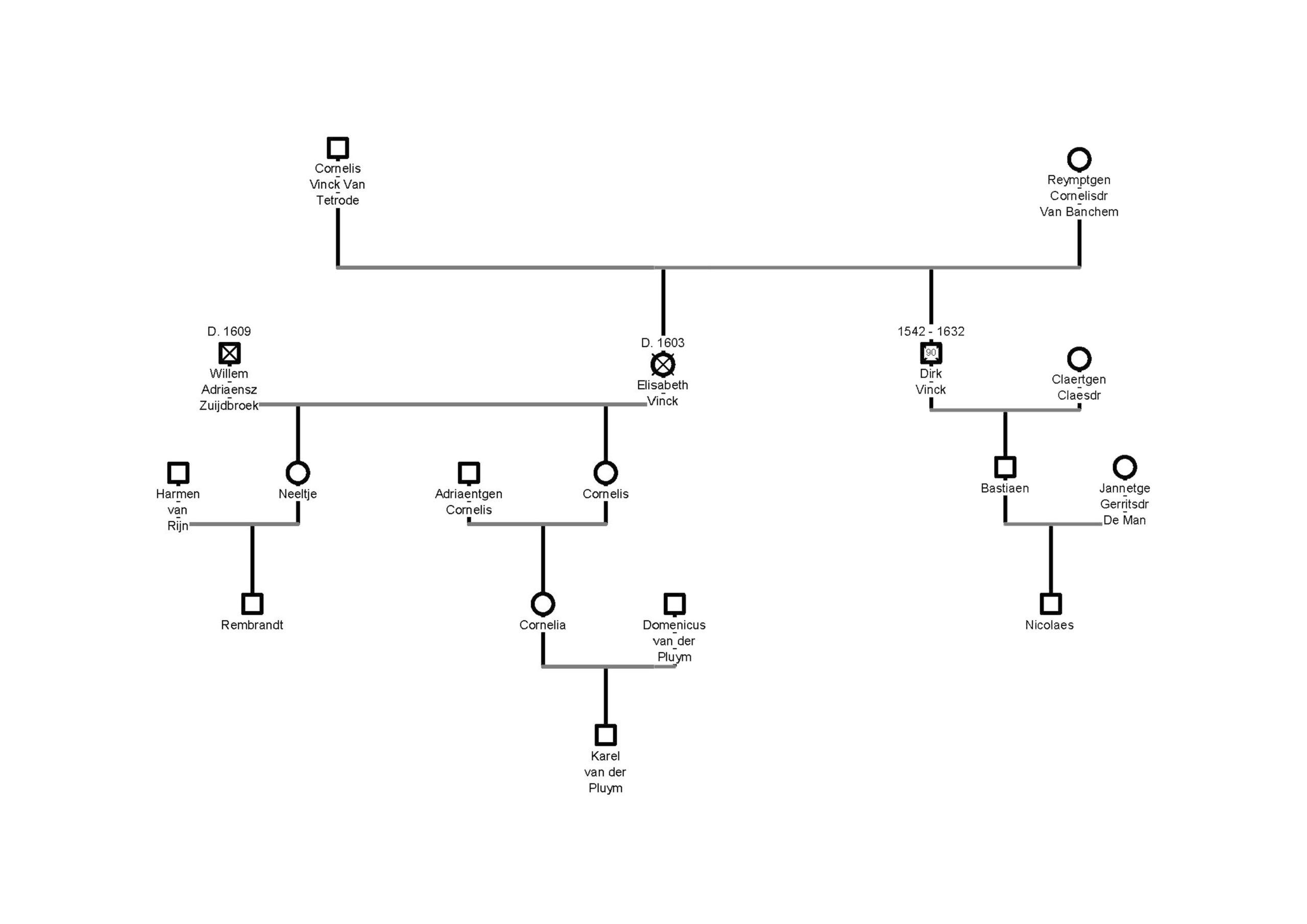
  42. Jan Jansz Orlers, Beschrijvinge der stadt Leyden, 2nd ed., Leiden 1641, p. 375; Walter L. Strauss et al., Rembrandt Documents, New York 1979, doc. 1641/8. For rare objections, see Roelof van Straten, Young Rembrandt. The Leiden Years, 1606-1632, Leiden 2005, p. 16; Benjamin Binstock, ‘The birth of Rembrandt’, in Michiel Roscam Abbing, ed., Rembrandt 2006. Essays, Leiden 2006, pp. 267-278 (arguing for 1607).
  43. Strauss, Rembrandt Documents, doc. 1669/6.
  44. E.B.F.F. Wittert van Hoogland, ‘Genealogie van den tak van het geslacht van Tetrode, welke zich Vinck genoemd heeft. Reconstructie van de genealogie voorkomende in het stam- en wapenboek van aanzienlijke Nederlandsche geslachten. Memoriael Gemaeck door N(icolaas) S(ebastiaensz.) V(inck)’, Genealogische en heraldische bladen 1 (1906), pp. 122-149.
  45. Dirk Rühl, ‘Het wapen van Rembrandt’s broeder Willem Harmensz. van Rijn een gelegenheids-wapen? Een heraldisch probleem’, Gens Nostra. Maandblad van de Nederlandsche Genealogische Vereniging 11 (1956), pp. 117-128, esp. p. 127.
  46. Strauss et al., Rembrandt Documents, doc. 1669/4 (misspelling the name as ‘Vlinck’). See also: http://remdoc.huygens.knaw.nl/#/document/remdoc/e13470 (accessed 22 December 2022).
  47. Warm thanks to Ingrid Pot for her kind assistance, and to P.J.M. De Baar for an impromptu consultation on the document, manuscript LB 6761 klein deel, Erfgoed Leiden en Omstreken, Leiden (hereafter ELO). The notebook is chronological but unpaginated; we therefore cite Wittert van Hoogland. See further Stephanie S. Dickey, ‘Ars longa vita brevis. Rembrandt’s death and the status of the artist in late seventeenth-century Amsterdam’, Nederlands Kunsthistorisch Jaarboek 72 (2022), pp. 234-271.
  48. R.E.O. Ekkart, ‘Familiekroniek Van Heemskerck en Van Swanenburg (I)’, Jaarboek van het Centraal Bureau voor Genealogie 32 (1978), pp. 41-70; idem., ‘Familiekroniek Van Heemskerck en Van Swanenburg (II)’, Jaarboek van het Centraal Bureau voor Genealogie 33 (1979), pp. 44-75 (deaths of Cornelis and Sylvester van Swanenburgh, pp. 54, 72, 75). See also Gary Schwartz, Rembrandt, his life, his paintings, New York 1985, p. 22; https://www.mijnstambomen.nl/leiden/swanenburg.htm (accessed 16 December 2022). The dates of Silvester van Swanenburgh’s death and burial are unrecorded; he prepared his will on 12 October 1669, being siechelick van lichaem leggende te bedde (sick in bed); ELO, 0506, notary Justus Gerstecoren, no. 1144, deed 124, 12-10-1669.
  49. Wittert van Hoogland, ‘Genealogie’, p. 135.
  50. Wittert van Hoogland, ‘Genealogie’, pp. 136, 137. Burial: https://archief.amsterdam/archief/5001/1056 (accessed 16 December 2022).
  51. Wittert van Hoogland, ‘Genealogie’, pp. 135.
  52. Ekkart, ‘Familiekroniek’, pp. 54, 72.
  53. Rudi van Maanen and Leendert van Maanen, ‘De grote epidemie van 1669-1670’, Leids Jaarboekje 2021, pp. 67-83, with further references.
  54. See Dickey, ‘Ars longa vita brevis‘, with further references.
  55. See esp. Christaan Vogelaar and Gerbrand Korevaar, eds., Rembrandt’s Mother. Myth and Reality, exh. cat. Leiden: Stedelijk Museum de Lakenhal 2005, pp. 88-91, 97-98, cat. 3-6, 9-10.
  56. We are grateful to Jos Beerens and Weixuan Li for advice on software to visualize this data.
  57. Reymptgen’s husband, Cornelis Bartholomeusz (Meesz.) van Tetrode (1505-1550), a grain dealer in Leiden, died before Neeltje and Bastiaen were born. See Strauss et al., Rembrandt Documents, doc. 1561/1, 1574/3, 1579/1, 1581/1,1582/2.
  58. Strauss et al., Rembrandt Documents, p. 24.
  59. Gerrit Cornelisz. Vinck is registered living in Leiden 1544-1583; Historisch Leiden in Kaart, https://historischleideninkaart.nl/persoonformulier/?Id=8986 (accessed 16 December 2022). He became poorter of Delft in 1584; Stadsarchief Delft, 1.733, fol. 054v, 5-5-1584. See also W.C. Tettero, Genealogie van Tetrode 1300-1600, Voorburg 2000, p. 61; J.P. Jacobs, ‘Rembrandt verwant met Philips van Leyden’, De Nederlandse Leeuw 102 (1985), column 457-465.
  60. See also ELO, Stadsarchief van Leiden, 0501A, 6597, Register Vetus 1582-1601, p. 8v. ‘t Gulden Warken belonged to Reymptgen In 1579; by 1581, she had transferred ownership to Dirck; Strauss et al., Rembrandt Documents, p. 31 and doc. 1579/1, 1581/1, 1585/1.
  61. Wittert van Hoogland, p. 123. Walsburch was buried several weeks later; SAA DTB 5001, 1054, p. 46vo, 8-5-1629. Prenuptual agreement, SAA 5075, 445, not. Palm Mathijsz, 17-2-1631.
  62. SAA DTB 5001, 671, p. 33 (marriage bans) 27-1-1628; DTB 1054, p. 46vo, 8-5-1629 (burial record).
  63. Wittert van Hoogland, p. 124. They married on 10 May at the Begijnhof and 13 May at the Amsterdam Town Hall.
  64. Wittert van Hoogland, p. 126. Clara became a begijn in 1643 and registered her will as a bejaaarde geestelijke dochter, wonende op het Begijnhof, in 1655, appointing her brothers her heirs; SAA 5075, 2454, not. R. Duee, akte nummer 57860, 8-10-1655.
  65. Wittert van Hoogland, p. 127; SAA, DTB 676, p. 145, 2-1-1642; 5033 Poorterboeken, no. 2, p. 199, 24-4-1642. In 1647 Albert purchased a home on the Haarlemmerstraat; SAA, 5073, Kwijtscheldingen, no. 928, 5-1-1647. He posted the banns for his second marriage, to Grietje Harmens van der Aa, on 2 December 1655; SAA, DTB 682, p. 356, 2-12-1655.
  66. Wittert van Hoogland, p. 127.
  67. SAA DTB, 1055, p. 94v (Clara); 1056, p. 252, 26-6-1683 (Albert).
  68. Cornelis was recorded on 24 April 1587 as a baker, age 21. In 1600, he purchased a house later owned by Karel van der Pluym. Strauss et al., Rembrandt Documents, doc. 1581/2, 1662/4; Schwartz, Rembrandt, p. 18 (diagram of Rembrandt’s family tree by P.J.M. de Baar).
  69. Strauss et al., Rembrandt Documents, doc. 1662/4; Marieke de Winkel, ‘ »Cousin » Karel van der Pluym and the benefit of family’, in Epco Runia and David de Witt, eds., Rembrandt’s Social Network. Family, friends, acquaintances, exh. cat., Amsterdam: Museum het Rembrandthuis 2019, pp. 61-65, citing a red and black chalk drawing on vellum, dated 1634 (private collection in New York).
  70. See Koos Levy-Halm, ‘Where did Vermeer buy his painting materials? Theory and practice’, in Ivan Gaskell and Michiel Jonker, eds., National Gallery Studies in the History of Art, Vol. 55, Vermeer Studies, 1988, pp. 137-143; Jo Kirby, ‘The painter’s trade in the seventeenth century: theory and practice’, National Gallery Technical Bulletin 20 (1999), pp. 5-49.
  71. See Stephanie S. Dickey, Rembrandt. Portraits in Print, Amsterdam/Philadelphia 2004, pp. 141-149; Runia and De Witt, eds., Rembrandt’s Social Network, p. 124.
  72. Orlers, Beschryvinge, p. 373; https://rkd.nl/explore/artists/51111 (accessed 2 January 2023)
  73. Rudolf E.O. Ekkart, Isaac Claesz. van Swanenburgh 1537-1614, Zwolle 1998, p. 14. For the prenuptial agreement, Jacobge was assisted by her father Claes Isaacsz and her brothers Isaac Claesz and Claes Claesz; ELO, 0508 Het oude rechterlijke archief van Leiden, no. 76B-2, fol. 375, 15-10-1570.
  74. ELO, 0501A, Stadsarchief van Leiden, 1574-1816, no. 1289, Register van de volkstelling 1581, fol. 9.
  75. See Marije Osnabrugge, The Neapolitan Lives and Careers of Netherlandish Immigrant Painters (1575-1655), Amsterdam 2019, esp. pp. 66-73, 115-123. The Antwerp-born portraitist Abraham Vinck (1574/75-1619) associated with Jacob van Swanenburgh in Hamburg 1589-1598 and later in Naples; in 1602, he witnessed Van Swanenburgh’s marriage to Margaretha Cardone. He lived in Amsterdam 1609-1619. Rembrandt’s bankruptcy inventory includes ‘een doode Contrefijtsel van Abraham Vinck‘; Strauss et al., Rembrandt Documents, doc. 1656/12, no. 86, but we have not yet found a link between Abraham and the Vinck family discussed here.
  76. Ekkart, Isaac Claesz. van Swanenburgh, esp. p. 71; Schwartz, Rembrandt, pp. 22-23.
  77. Strauss et al., Rembrandt Documents, doc. 1620/1; Jef Schaeps and Mart van Duijn, Rembrandt en de Universiteit Leiden, Leiden 2019, esp. p. 28.
  78. Orlers, Beschryvinge, p. 375.
  79. Ekkart, ‘Familiekroniek’, pp. 71-72. Schwartz, Rembrandt, p. 17; Van Straten, Young Rembrandt, p. 24.
  80. ELO, Register van poorterinschrijvingen F, 1267, fol. 279v, 16-4-1638; Buurquestieboeken, 48G, fol. 105v, no. 2355, 12-9-1661; 0506, Notary Justus Gerstecoren, 1144, deed no. 124, 12-10-1669.
  81. Ernst van de Wetering, ‘Rembrandt’s gift and the underrated importance of his apprenticeship with Jacob isaacsz. van Swanenburg’, in Ernst van de Wetering and Bernhard Schnackenburg, eds., The Mystery of the Young Rembrandt, exh. cat., Kassel: Gemäldegalerie Alte Meister and Amsterdam: Museum het Rembrandthuis 2001, pp. 32-38.
  82. Strauss, et al., Rembrandt Documents, p. 69, doc. 1630/5; Schwartz, Rembrandt, p. 23; English translation: Wheelock, ed., et al., Jan Lievens, p. 286.
  83. Bakker, ‘Rembrandt and the emergence’; Vogelaar, ‘Rembrandt in Leiden’; Orlers, Beschryvinge, p. 376.
  84. See Boudewijn Bakker, ‘Rembrandt and the humanist ideal of the universal painter’, in Stephanie S. Dickey, ed., Rembrandt and his Circle. Insights and Discoveries, Amsterdam 2017, pp. 67-98.
  85. Volker Manuth, Marieke de Winkel and Rudie van Leeuwen, Rembrandt. The Complete Paintings, Cologne 2019, cat. 121.
  86. Carel Vosmaer, Rembrandt. Sa vie et ses oeuvres, The Hague 1877, pp. 28-35, 469, 461, unaware of Vinck’s Memoriael, posited a relationship to the Van Swanenburghs on Rembrandt’s father’s side. Ekkart, Isaac Claesz van Swanenburgh, p. 11, dismissed this. However, Claes Cornelisz van Berckel, half-brother of Harmen Gerritsz van Rijn, was married to Brechtje Mourijnsdr. van Swanenburch. The half-brothers lived next door to each other on the Weddesteeg in 1605 and 1624 and owned a mill together; ELO, Buurquesties 48B, blad 2, aktenummer 520, 4-4-1605; 48D, blad 201, aktenumer 1339, 22-4-1624; Tiende Register, Bon Noord-Rijnevest (B), Stadsvrijdom en molens op de wallen, archiefnummer 501A, Stukken betreffende afzonderlijke onderwerpen; Registratie van onroerend goed 1585-1816 (1819), inventarisnummer 6634, blad 31, 1602-1724. It is not yet clear how Brechtje Mourijnsdr. connects to Jacob and Silvester van Swanenburgh. See also Schwartz, Rembrandt, pp. 21-25.
  87. For context, see S.A.C. Dudok van Heel, ‘Rembrandt van Rijn (1606-1669), een remonstrantsgezind schilder uit calvinistisch Leiden’, in idem., De jonge Rembrandt onder tijdgenoten. Godsdienst en schilderkunst in Leiden en Amsterdam, Nijmegen 2006, pp. 177-223.
  88. On art patronage in Leiden, see esp. Gerbrand Korevaar, ‘Leiden in Rembrandt’s time’, in Van de Wetering and Schnackenburg, Mystery, pp. 12-21; Piet Bakker, ‘Rembrandt and the emergence of the Leiden art market’, in Jacquelyn N. Coutré, ed., Leiden ca. 1630. Rembrandt Emerges, exh. cat., Kingston: Agnes Etherington Art Centre 2019, pp. 66-95. We are grateful to Piet Bakker for advice on the present essay.
  89. Dirk Traudenius, Tyd-zifter, Amsterdam 1662, p. 16; Arnold Houbraken, De groote schouburgh der Nederlandtsche konstschilders en schilderessen, Amsterdam 1718-21, III, p. 33; H. Schneider, ed. by R.E.O. Ekkart, Jan Lievens, Sein Leben und Seine Werke, Amsterdam 1973, p. 151, no. 262; https://houbraken-translated.rkdstudies.nl/3-1-59/page-30-39/ (accessed 16 December 2022,) with English translation. The painting has not been discovered.
  90. Wheelock, ed., Jan Lievens, pp. 3, 16-17, fig. 19. The painting was destroyed in 1929.
  91. On their extended connection, see Stephanie S. Dickey, ‘Jan Lievens in Rembrandt’s house’, Kroniek van het Rembrandthuis 2008, pp. 36-53.
  92. As noted above, Cornelis van Swanenburgh’s mother was Adriana van Leeuwen. Rembrandt’s oldest brother, Adriaen van Rijn, married Lystbertgen Symonsdr van Leeuwen in 1617, and Willem van Rijn married Willempje Pietersdr van Steylandt, widow of Jacob Symonsz van Leeuwen, in 1636; Rühl, ‘Het wapen’, pp. 117-119, 123.
  93. Bakker, ‘Rembrandt and the Emergence’, pp. 81-83; Wheelock, ed., Jan Lievens, p. 84, cat. 2.
  94. Orlers, Beschryvinge, pp. 367-377; Bakker, ‘Rembrandt and the emergence’, p. 82. One of these was a ‘Pylatus’, possibly Pilate Washing his Hands (Raleigh, North Carolina Museum of Art); Wheelock, ed., Jan Lievens, p. 289.
  95. Strauss et al., Rembrandt Documents, doc. 1663/7; Schwartz, Rembrandt, p. 37; Dudok van Heel, ‘Rembrandt van Rijn’, pp. 190-193; Christopher Brown, An van Camp and Christiaan Vogelaar, eds., Young Rembrandt, exh. cat., Leiden: Museum De Lakenhal and Oxford: Ashmolean Museum 2019, pp. 24, 158-160. Angela Jager is preparing a study of art patronage in Rembrandt’s family network.
  96. Bakker, ‘Rembrandt and the Emergence’, pp. 85-90.  See also C. Willemijn Fock, trans. by Anne Baudoin, ‘Art ownership in Leiden in the seventeenth century’, Journal of Historians of Netherlandish Art  13:1 (2021), DOI: 10.5092/jhna.2021.13.1.4.
  97. For an overview and analysis of the phenomenon of the atelier scene in Dutch art, see Katja Kleinert, Atelierdarstellungen in der niederländischen Genremalerei des 17. Jahrhunderts : realistisches Abbild oder glaubwürdiger Schein?, Petersburg 2006.
  98. Werner Sumowski, Drawings of the Rembrandt School, vol. 7, New York 1983, pp. 3648-3649, no. 1636bx (ill.). 
  99. Arthur K. Wheelock, ed., Jan Lievens. A Dutch Master Rediscovered, exh. cat. Washington: National Gallery of Art; Milwaukee: Milwaukee Art Museum; Amsterdam: The Rembrandt House Museum 2008/09, p. 246, no. 106.
  100. And not that between Apollo and Marsyas, as indicated by Sumowski.
  101. No painting of this theme is known by Lievens. There was a depiction of the contest between Apollo and Marsyas, showing Apollo playing the lyre, in the sale of the collection of the Count of Arundel, likely the same work later with the widow of Jürgen Ovens in 1691. See Hans Schneider and Rudi Ekkart, Jan Lievens: sein Leben und seine Werke. Amsterdam 1973, pp. 110-111, no. 78.
  102. Werner Sumowski, Gemälde der Rembrandtschüler, Landau 1983-1994, vol. 6 (1994), pp. 3691-3692, nos. 2185a-2194.
  103. Nos. 2857-2861 in: Sumowski, Drawings (see note 2), vol. 12, Addenda (in translation, forthcoming in 2023).
  104. Ibid., vol. 3, p. 1965, note 65. Currently assigned no. 2857 in vol. 12 (see note 2); sale, Paris (Christie’s), 21.3.2002, lot 114.
  105. Ibid., vol. 3, pp. 1961, 1965, 1977 (illus.). Sale, London (Bonhams), 29 October 2014, lot 147 (colour illus.).
  106. Amsterdam, Sotheby’s, 11 November 1997, lot 25, colour ill., as Lievens. Sumowski is far more hesitant here than with the Mettingen drawing: Drawings (see note 2), pp. 3904-3905, no. 1757xx, illus.: “…an unqualified attribution cannot be entertained  because there is no material for comparison.”
  107. Jan Lievens, Peasant Dwelllings under Trees with Milkmaid, pen in brown and brush in brown and grey, 108 x 193 mm, Dresden, Kupferstichkabinett, Staatliche Museen Dresden, inv. no. C 1453; see Sumowski, Drawings (see note 2), pp. 3724-3725, no. 1672 (illus.).
  108. See: Michiel Roscam Abbing, De schilder & schrijver Samuel van Hoogstraten, 1627-1678. Eigentijdse bronnen & oeuvre van gesigneerde schilderijen, Leiden 1993, pp. 40-41; Volker Manuth, “Dordrecht: bakermat voor Rembrandts leerlingen”, Bulletin Dordrechts Museum 3 (2006), pp. 3-7; and: David de Witt, Abraham van Dijck (1635-1680). Life and Work of a Late Rembrandt Pupil, Zwolle 2020, pp. 11-13.
  109. As also observed in Paarlberg, Bisschop (see note 12), p. 24.
  110. On their friendship see De Witt, Abraham van Dijck (see note 4), p. 108.
  111. David de Witt, The Bader Collection: Dutch and Flemish Paintings, Kingston 2008, pp. 63-64, no. 31), correcting Sumowski’s dating to the early 1660s, with the observation of hesitancy in handling that points to an earlier period.
  112. Arnold Houbraken, De groote schouburgh der Nederlantsche konstschilders en schilderessen, vol. 2, The Hague 1719, p. 220. They seem to have largely been lost. The only example linked to him is A Boy Asleep in an Enclosed Chair, c. 1655/60, oil on wood, 97.2 x 66.5 cm, London, with Johnny van Haeften in 2007; see Sumowski, Gemälde (see note 6), vol. 6 (1994), p. 3692, no. 2192, p. 3776 (illus., as Bisschop). It is unsigned, and clearly derived from a similar work signed and dated 1654 by the Haarlem painter Johannes Verspronck: oil on panel, 96 x 75.7 cm, Belgium, private collection. On this basis it has been attributed to that artist as well see: Rudi Ekkart in: Pride and Joy. Children’s Portraits in The Netherlands 1500-1700, exh. cat. Haarlem: Frans Halsmuseum; Antwerp: Koninklijk Museum voor Schone Kunsten Antwerpen, 2000-2001, pp. 227-229, no. 60. However, the thicker application of paint and harsher contrasts in the London version diverge from the one signed by Verspronck, and indeed more closely approximate Bisschop’s painting style of around 1660. If by him, this would suggest that Verspronck supplied an additional impulse for making such cutout paintings, besides Van Hoogstraten and his championing of illusionism.
  113. Houbraken, Schouburgh (see note 16), vol. 2 (1719), pp. 157-158.
  114. See the important analysis by Thijs Weststeijn: The Visible World. Samuel van Hoogstraten’s Art Theory and the Legitimation of Painting in the Dutch Golden Age, Amsterdam 2008.
  115. Sander Paarlberg, “Bisschop op zijn best. Dordrechts Museum krijgt zijn eigen Melkmeisje”, Bulletin van de Vereniging Rembrandt 25, no. 1, (2015), pp. 22-24, colour illus.
  116. Samuel van Hoogstraten, Inleyding tot de Hooghe Schoole der Schilderkonst, Dordrecht, 1678, p. 12.
  117. We do not include a painting attributed to Bisschop: The Young Artist in his Studio, c. 1653, oil on canvas, 90.8 × 76.8 cm, Detroit, Detroit Institute of Arts, inv. no. 38.29, as attributed to Cornelis Bisschop; George Keyes, in: Masters of Dutch Painting: The Detroit Institute of Arts, London 2004, pp. 28–29, no. 8 (ill.). The drawing shown in the lower left, a classic two-chalk drawing on blue-grey paper, underscores the stylistic evidence against his authorship, pointing instead to the circle around Govert Flinck (1615-1660) and Jacob Adriaensz. Backer (1608-1651); perhaps Adam Camerarius (?–1666).
  118. Constantijn Daniël à Renesse, Rembrandt and his Pupils Drawing from a Nude Model, black chalk, brush in brown, 180 x 266 mm, Hessisches Landesmuseum, Darmstadt, inv. no. AE 665; on the attribution see Peter Schatborn, Rembrandt and his circle: drawings in the Frits Lugt collection, Bussum 2010, p. 335.
  119. Rembrandt, Rembrandt’s Studio with a Half-Nude Model, c. 1654/58, pen and brush in brown, with white body colour, 205 x 190 mm, Oxford, Ashmolean Museum, inv. no. P.I.192 (WA1855.8): Peter Schatborn in Rembrandt : The Complete Etchings and Drawings, Cologne 2019, p. 269, no. T438 (colour illus., as c. 1654).
  120. Rembrandt, Bathsheba with King David’s Letter, 1654, oil on canvas, 142 x 142 cm, Paris, Musée du Louvre, inv. no. M.I. 975: Ernst van de Wetering, Rembrandt’s paintings revisited : a complete survey, Dordrecht, Boston and Lancaster 2014, pp. 623-624, no. 231; Volker Manuth, Marieke de Winkel and Rudie van Leeuwen, Rembrandt: the Complete Paintings, Cologne 2019, pp. 507-508, no. 23. As Van de Wetering explains, the pose of Bathsheba was originally conceived with an upward glance and turn of the head.
  121. Rembrandt, A Woman Sitting Half-Dressed beside a Stove, 1658, etching, buring and drypoint, 226 x 194 mm, in seven states: Erik Hinterding and Jaco Rutgers, The New Hollstein Dutch & Flemish Etchings, Engravings and Woodcuts 1450-1700, vol. 25-II: Rembrandt, Ouderkerk aan den IJssel 2013, pp. 292-294, no. 307.
  122. Houbraken, Schouburgh (see note 16), vol. 1 (1718), p. 271.
  123. As discussed by the author in: David de Witt and Franziska Gottwald, “Rembrandt & Light” in: Rembrandt’s Light, exh. cat. Dulwich, Dulwich Picture Gallery, 2019-2020, pp. 33-34 (the date of the drawing mistakenly altered in editing; should read c. 1654/58).

On Rembrandt and Elephant Buttocks “from life”

Hansken is the most famous elephant of the seventeenth century, partly thanks to Rembrandt, who drew her on several occasions. But there is much more material that gives insight into her life: prints, news reports, written sources, and even her skeleton.124  In the summer of 2021 a selection of these objects went on view at the Rembrandt House Museum, in the exhibition Hansken, Rembrandt’s Elephant. One recently discovered object that originally seemed to be related to Hansken did not make it into the final exhibition selection but merits a separate elucidation. It concerns a drawing of an elephant looking at its buttocks. Further research has shed new light on how this specific sheet was created. This article takes a closer look at the question.

Rembrandt, Young Asian Elephant (Hansken), 1637. Black chalk
Rembrandt, Young Asian Elephant (Hansken), 1637. Black chalk, 233 x 354 mm. Vienna, Albertina, inv. no. 17558

Drawing animals “from life”

Drawing based on direct perception was a must for seventeenth-century artists, not only during their training but also in conducting their profession.125 By for example studying animals in real life they learned how to depict them accurately and convincingly. This practice is not only evident from the many artist’s sketches of animals that have been preserved but also from written advice to artists, such as published by Willem Goeree in 1670 “one should especially make sure to seize opportunities when it comes to rarities, such as lions, tigers, bears, elephants, camels and such kinds of wild animals, which one seldomly gets to see with one’s own eyes, and sometimes needs to have seen in order to incorporate them into one’s inventions”.126

Rembrandt too made sketches of animals based on his own observations.127 Exotic animals when he had the chance but also dogs, horses, cows and pigs. These drawings formed part of an extensive collection of study material – autograph drawings and prints as well as numerous works on paper by other artists – that Rembrandt kept in his art cabinet. The inventory of Rembrandt’s collection from 1656 mentions among other items in this room “one ditto (Chinese basket) full of drawings by Rembrandt being animals after life.”128

There are various Rembrandtesque sketches of lions, dating to different periods. A number of these are attributed to Rembrandt.129 Others have been identified as by the hand of (anonymous) pupils. Lions and other animals appeared regularly at the Amsterdam fair.130 Evidently, Rembrandt took his pupils along to such events. Did this also happen when Hansken was in Amsterdam? From Rembrandt’s hand there are at least three known drawings of Hansken (including fig. 1).131 A fourth, in a New York collection, is not accepted by all Rembrandt drawing specialists as autograph.132 Could a highly competent pupil have made the sketch? Spontaneity and very specific observations characterize these four sketches as the product of live drawing sessions with Hansken as model.

Rembrandt Pupil (after Gerard van Groeningen), Elephant Seen from Behind, c. 1637. Black chalk
Rembrandt Pupil (after Gerard van Groeningen), Elephant Seen from Behind, c. 1637. Black chalk, 115 x 135 cm. Private collection

In the leadup to the exhibition, Rembrandt drawings scholar Peter Schatborn pointed out an unpublished drawing in a French private collection, of an elephant seen from behind (fig. 2).133 In the report that he had prepared for the owners he identified the sketch as a product of a drawing session after life.134 Perhaps even carried out at the Amsterdam fair in September 1637, while Rembrandt was making his first drawings of Hansken (fig. 1). The style of the drawing is closely related to the manner in which Rembrandt drew at the end of the 1630s. And just like Rembrandt’s sketch of Hansken it is executed in black chalk. But on account of the less skilled drawing hand Peter Schatborn identified the maker as an (anonymous) pupil of Rembrandt.

A physical characteristic of the paper on which the drawing was made supports this analysis: it bears a watermark (foolscap) that mainly occurs in paper from the second half of the seventeenth century.135 The identification of the draughtsman as someone from the circle around Rembrandt is very convincing, as is the dating of the sheet. And on first glance the suggestion that the artist joined Rembrandt in sitting around the elephant Hansken drawing seems believable. But herein we stumble upon a problem: the tusk that has been included. Female Asian elephants namely do not have such tusks, and also not Hansken.136  It is also highly unlikely that this kind of detail would have been added to a sketch after life. But how must we then explain this drawing?


The Buttocks of a Male Elephant

Hansken was a major attraction and many went to admire her. This may have put Rembrandt in mind to include her in an etching. A year after Rembrandt drew Hansken for the first time, he incorporated an elephant into a representation of Adam and Eve in Paradise, at the point of committing the great sin of their lives (fig. 3). It is the only instance of an elephant in a narrative scene by Rembrandt’s hand.

The earliest purchasers of this print will undoubtedly have drawn the link between the elephant in the background and the animal that just previously had been on view in Amsterdam.137 In this way Rembrandt’s print served as a visual reminder of a rare event. Rembrandt hereby, in a subtle way, joined an established tradition. Commemorative prints had namely been made of elephants that previously been in Europe.138 One of these proves to be crucial to understanding the drawing of the elephant’s buttocks.

Rembrandt, Adam and Eve in Paradise, 1638. Etching, state 2
Rembrandt, Adam and Eve in Paradise, 1638. Etching, state 2 (2), 162 x 116 mm. Amsterdam, The Rembrandt House Museum, inv. no. 16
Gerard van Groeningen, Commemorative Print of the Asian Elephant Emanuel, in Eight Different Poses, 1563 or shortly thereafter. Etching
Gerard van Groeningen, Commemorative Print of the Asian Elephant Emanuel, in Eight Different Poses, 1563 or shortly thereafter. Etching, 405 x 541 mm. Amsterdam, Rijksmuseum, inv. no. RP-P-OB-59.019

On 24 September 1563 a live Asian elephant went on display in Antwerp. The animal was given the name Emanuel.139 The etcher Gerard van Groeningen (Paludanus, active between c. 1561 and 1576) produced a commemorative print of the animal in that year or shortly thereafter (fig. 4).140 There the elephant concerned is represented in eight different poses, set in a fantasy mountainous landscape.

To the left Emanuel appears from behind; in the same pose and direction as in the French drawing and with a tusk (fig. 5). Although the dimensions of the elephant in the drawing digress somewhat from the printed one, and details vary somewhat from the etched elephant – the trunk has a simplified form and the tail hangs slightly differently – it is very likely that this figure served as model for the draughtsman.

detail of fig. 4
detail of fig. 4
- fig. 2, Rembrandt Pupil (after Gerard van Groeningen), Elephant Seen from Behind, c. 1637. Black chalk
– fig. 2, Rembrandt Pupil (after Gerard van Groeningen), Elephant Seen from Behind, c. 1637. Black chalk, 115 x 135 cm. Private collection

The anonymous artist clearly worked from a printed, and not from a living model. In light of the similarities and differences with the print by Van Groeningen, the motif was freely – and thereby not very precisely – copied. Such a method fit with current practice: over the course of their working lives artists worked from prints and other works of art, as well as from life. In order to develop and maintain their drawing skill but also to research and practice with motifs.


Suggestion of a herd

If the drawing of the elephant buttocks was made by a pupil of Rembrandt, then he would have had access to the print. Did Rembrandt perhaps own an impression? An observation of one of Rembrandt’s autograph drawings of Hansken could possibly support this hypothesis.

Van Groeningen’s print shows, according to the Latin inscription, how an elephant is able to move its legs. In older texts it was asserted that elephants could not kneel because they did not possess knee joints. By way of observations from the live elephant Emanuel this assumption could be waylaid. But, by showing Emanuel in various positions, and in an imaginary landscape, Van Groeningen suggests that Emanuel was part of a herd.

It was quite common for artists to combine multiple views of the same subject in one scene or sheet of sketches. Rembrandt did this as well in a drawing of Hansken. After his earliest representations of Hansken, Rembrandt observed and drew her again, probably in 1641 (fig. 7).141 This time he depicted the elephant in three different poses: while she stands, eats, and lies on the ground. In the process, Rembrandt fused his sketches, giving the suggestion of a herd of elephants.

Rembrandt, Asian Elephant (Hansken) in Three Different Poses, 1641
Rembrandt, Asian Elephant (Hansken) in Three Different Poses, 1641 (?). Black chalk, 299 x 354 mm. Vienna, Albertina, inv. no. 8900

Emanuel and Hansken were, at the moments that they were in Europe, the only living elephants on the European continent. And although there was little known about elephants, it was told in older and contemporary sources that they lived in herds.142  Hansken’s owner Cornelis van Groenevelt also shared information with spectators who posed questions. The print of the Antwerp elephant may have served as visual inspiration for Rembrandt to present his observations of Hansken with the suggestion of a small herd.


Wenceslaus Hollar (after Gerard van Groeningen), Commemorative Print of the Asian Elephant Don Diego, 1629.
Wenceslaus Hollar (after Gerard van Groeningen), Commemorative Print of the Asian Elephant Don Diego, 1629. Etching, 245 x 283 mm. Amsterdam, Rijksmuseum, inv. no. RP-P-1976-16

Elephants on a small scale

At any rate, the etching by Van Groeningen must have enjoyed some fame, as it inspired various artists. Between 1581 and 1600 an anonymous artist took over the eight elephant views in a book on animals that was published in Antwerp or Amsterdam.143 And in 1629 the Bohemian artist Wenceslaus Hollar (1607-1677) took them as a model.

Hollar etched the illustrations for a publicity print for another male elephant. That animal was in Europe shortly before Hansken and bore the name Don Diego.144 In this publicity print there is a main scene framed by a series of depictions of the tricks that the animal performed (fig. 8). When we zoom in on the main scene it is evident how much it is based on the print by Van Groeningen (fig. 9). In the centre an elephant stands in profile in a fantasy landscape. Around that animal other elephants can be seen, in very small scale, as if they are far away in the landscape. All of these elephants are copied from the print by Van Groeningen.

detail of fig. 8
detail of fig. 8

The reversed pose confirms the relationship for the small elephants: the copied figures ended up in mirror image on the paper as a result of the printing process. Among the small elephants is one seen from behind, this time with the head and trunk turned to the right. Because of the direction and the difference in scale it is not likely that the pupil of Rembrandt took Hollar’s print of 1629 as his model for his drawing. But it is in turn not impossible that Rembrandt knew this print as well, or even owned it since Rembrandt was an admirer of Hollar. In 1656 he owned several of his prints.145

The print of Don Diego could have provided Rembrandt with inspiration, for his abovementioned etching of Adam and Eve. There he chose to represent the elephant in a very small scale, far away, where she comes walking in a hollow (fig. 10). In his first encounter with Hansken, it would have been her large scale that would have made an impression.

detail of fig. 3
detail of fig. 3

Would he have known beforehand that he was going to see a large animal? He took along with him a large sheet of paper to the city centre to record her, but did not entirely succeed given the correction he made to the trunk, in order to keep it inside the pictorial frame.

But Rembrandt could also have come up with the idea of a small elephant via another route: from the prints of the Italian artist Antonio Tempesta (1555-1630). Rembrandt admired  his work as well and took it as a model, already early in his career.146 At his insolvency he owned multiple art books filled with Tempesta’s graphic work.147

One of the larger etchings in his oeuvre is the ‘Aetas Aurea’, The Golden Age, of 1599 (fig. 11). It shows a paradisiacal world in which humanity and animals peacefully coexist. In the background a small elephant boisterously raises its trunk (fig. 12). The same motif appears in several prints by Tempesta.148

Antonio Tempesta, The Golden Age, 1599. Etching, 221 x 336 mm. Amsterdam, Rijksmuseum
Antonio Tempesta, The Golden Age, 1599. Etching, 221 x 336 mm. Amsterdam, Rijksmuseum, inv. no. RP-P-1924-606

It is therefore likely that Rembrandt was already familiar with the motif when he started working on his etching of Adam and Eve.

It was said of elephants that they greet the sun out of divine intuition. Rembrandt possibly knew such folklore and wanted to incorporate it in his narrative scene filled with symbolism.149 The pose of the elephant in his etching is not a literal quotation, but rather a free interpretation by Rembrandt of depictions of elephants by other artists and from his own memory.

detail of fig. 11
detail of fig. 11


As long as it is “after life”

In his work Rembrandt relied on his own observations, but also those of others. By bringing together an enormous collections of prints by artists he admired he created an extensive image bank for himself and his pupils. And among these he kept his sketches. On the basis of all these works on paper he could draw inspiration and consult visual material. In this way working from nature and from art went hand in hand. Certainly when such printed examples were themselves made after life.

Anonymous (partly after Gerard van Groeningen), Publicity Print of the Female Asian Elephant of Bartel Verhagen, c. 1690-1700.
Anonymous (partly after Gerard van Groeningen), Publicity Print of the Female Asian Elephant of Bartel Verhagen, c. 1690-1700. Engraving, 320 x 255 mm. In: Wonderen der natuur: beschreven door Jan Velten (…).Amsterdam, Allard Pierson, Artis Bibliotheek, cabinet 238, fig. 663

The inventory of Rembrandt’s possessions of 1656 shows how both of these forms coexisted: besides his own autograph paintings and drawings of landscapes, people and animals there are multiple works by other artists explicitly cited as having been made after life: “een moor nae ’t leven afgegooten“ (a Moor cast from life), “agt stuck pleysterwerck op ’t leven afgegoten” (eight plaster casts from life) and “een leeuw en een bul op ’t leven gebouceert” (a lion and a bull rendered from life). Elsewhere in Rembrandt’s house are mentioned “drie hondekens nae ’t leven van Titus van Rijn” (three “doggies” after life by Titus van Rijn) and “een vissie nae ’t leven” (a fish after life).150 The knowledge that these objects provided an accurate image of the things represented was evidently important to indicate.151

It is partly for this reason that the print by Gerard van Groeningen would have been reused. It must have been seen, on account of its detail and variation – recorded by Van Groeningen on the basis of his own observations – as a trustworthy source. Especially in a time when there were very few other true-to-life images of elephants available.

As much as a century later Van Groeningen’s print served as model – directly, or indirectly via the print of Don Diego – for the commemorative print of a female elephant that made the next trek through Europe after Hansken (fig. 13).152  For several poses the maker of this print based himself on figures that can be traced back to Van Groeningen’s print.

The motif of the elephant’s buttocks is also used there: this time elaborated into a scene in which the animal shows its behind while swinging people through the air. In the caption it is suggested that the display of its buttocks was one of the tricks that the elephant performed. If she swung people through the air at the same time, is highly questionable. At any rate she would not have used tusks, as she also did not have them.153 And just like in the French drawing, we are looking here at an image of the male elephant Emanuel that journeyed through Europe a century earlier.


Hybrid practice

Albrecht Dürer, Christ in Limbo, 1512. Engraving
Albrecht Dürer, Christ in Limbo, 1512. Engraving, 116 x 75 mm. Amsterdam, Rijksmuseum, inv. no. RP-P-OB-1172

We have sketched above a practice in which artists based themselves equally readily on printed models even when they could go and see and study an animal in real life. Rembrandt’s small etched elephant also seems to witness to this approach. But his print of Adam and Eve is in many respects an example of a hybrid artistic practice.

Rembrandt must have been aware not only of prints of elephants in circulation, but also ones of dragons. Between 9 and 13 February 1638, he purchased various prints by Albrecht Dürer from the collection of Gommer Spranger.154  Christ in Limbo must have been among them (fig. 14).155 There the devil appears in the guise of a dragon. The similar in pose of the dragon in Rembrandt’s etching is often seen as conscious borrowing by Rembrandt from the German artist he greatly admired.

For a fantastic beast such as a dragon Rembrandt leaned on the powers of imagination of his illustrious predecessor. But on his own Rembrandt sought out the correct poses and interaction of the two main figures (fig. 15 and 16).156 Perhaps with the use of models, and thus “after life”. Here he chose – against all conventions – to render Adam and Eve not with ideal beauty but as common, realistic people. The result of all of these forms of inspiration was a scene rich in significance, with many references to myths and stories, and a female elephant that had just previously been in Amsterdam.157

Rembrandt, Studies for Adam and Eve in Paradise, 1638. Pen and brush in ink.
Rembrandt, Studies for Adam and Eve in Paradise, 1638. Pen and brush in ink, 115 x 115 mm. Leiden, University Libraries/ Prentenkabinet, inv. no. PK-P-103.149
Fig. 3, in mirror image, as Rembrandt would have drawn the image on the etching plate.

  1. Much of the previous literature cites the drawing as The Departure of Rebecca from Her Parents’ House. The Staatsgalerie, Stuttgart, which owns the drawing, adopted the shorter title (https://www.staatsgalerie.de/en/html).
  2. dit behoorde vervoucht te weesen me[t] veel gebueren die deese hoge bruijt sien vertrek[k]en”: Peter Schatborn, “The Core Group of Rembrandt Drawings, I: Overview,” Master Drawings 49 (2011), p. 320.
  3. According to the Woordenboek der Nederlandsche Taal,geburen” may mean “figures” or “bystanders,” as two scholars interpreted the word in Rembrandt’s inscription: (https://gtb.ivdnt.org/iWDB/search?actie=article&wdb=WNT&id=M017638.re.1&lemma=geburen&domein=0&conc=true). For “figures,” see: Volker Manuth, in: Rembrandt: A Genius and His Impact, exh. cat. Canberra, Australian National Gallery; Melbourne, National Gallery of Victoria, 1997, p. 270, cat. no. 53. For “bystanders,” see: Marieke de Winkel, Fashion and Fancy: Dress and Meaning in Rembrandt’s Paintings, Amsterdam 2006, pp. 214–215). However, in the full context of Rembrandt’s inscription and the drawing’s iconography, “geburen” most strongly refers to neighbours, as translated for example by Gary Schwartz and Peter Schatborn. See: Gary Schwartz, The Rembrandt Book, New York 2006, p. 107, fig. 195; Schatborn, “Core” (see note 2), p. 320.
  4. Schwartz, Rembrandt (see note 3), p. 107.
  5. Amy Golahny, “Rembrandt and ‘Everyday Life’: the Fusion of Genre and History,” in: Genre Imagery in Early Modern Northern Europe: New Perspectives, London 2016, pp. 174, 177.
  6. The Rembrandt drawing (130 x 185 mm) was sold at Christie’s (London) on 3 July 2012, lot. 50, sale 5688. Golahny, “Rembrandt” (see note 5), pp. 170–174, figs. 7.5–9.
  7. Herman Roodenburg, “Naar een etnografie van de vroegmoderne stad: de ‘gebuyrten’ in Leiden en Den Haag,” in: Cultuur en maatschappij in Nederland 15001850. Een historisch-antropologisch perspectief, Meppel 1992, p. 233.
  8. For a discussion of neighbourhoods’ goals, see: Herman Roodenburg, “’Freundschaft’, ‘Brüderlichkeit’ und ‘Einigkeit’: Städtische Nachbarschaften im Westen der Republik,” in: Ausbreitung bürgerlicher Kultur in den Niederlanden und Nordwestdeutschland, Münster 1991, pp. 11, 12, 21; Gabrielle Dorren, “Communities within the Community: Aspects of Neighbourhood in Seventeenth-Century Haarlem,” Urban History 25 (1998), pp. 180, 188.
  9. See, for example, Rembrandt’s drawings Benesch 491, 503, 566, 988 and his painting Portrait of a Couple as Isaac and Rebecca, c. 1665–1669 (oil on canvas, 121.5 x 166.5 cm, Amsterdam, Rijksmuseum).
  10. All Biblical translations from: The New English Bible with the Apocrypha, New York 1971.
  11. Schatborn, “Core” (see note 2), p. 320.
  12. The Staatsgalerie Stuttgart attributes the inscription to Rembrandt and the drawing to either Rembrandt or Gerbrand van den Eeckhout. Hans Martin Kaulbach, Curator of German and Netherlandish Prints and Drawings before 1800, Graphische Sammlung, Staatsgalerie Stuttgart, email message to the author, 25 April 2018.
  13. For Koninck see for example: Horst Gerson, Philips Koninck; ein beitrag zur Erforschung der holländischen Malerei des XVII. Jahrhunderts, Berlin 1936, p. 174, Z.LXV. For Flinck: Wilhelm Reinhold Valentiner, Rembrandt: des Meisters Handzeichnungen, Stuttgart 1933, part 2, p. 247. For Van den Eeckhout: Martin Royalton-Kisch, Drawings by Rembrandt and His Circle in the British Museum, exh. cat., London, British Museum 1992, p. 202, cat. no. 97; Holm Bevers, “Drawing in Rembrandt’s Workshop,” in: Drawings by Rembrandt and His Pupils: Telling the Difference, exh. cat., Los Angeles, J. Paul Getty Museum 2009, p. 27; Schatborn, “Core” (see note 2), pp. 320, 322, note 38. For an argument against the Van den Eeckhout attribution, see: Eric Jan Sluijter and Nicolette Sluijter-Seijffert, “Rembrandt’s Pupils? The Attribution of Early Drawings to Gerbrand van den Eeckhout and Jan Victors,” in: Connoisseurship Essays in Honour of Fred G. Meijer, Leiden 2020, pp. 289–296.
  14. Werner Sumowski, Drawings of the Rembrandt School, New York 1979–1992, vol. 3, p. 1734, 806xx; Bevers, “Drawing” (see note 13), pp. 27, notes 97–98.
  15. Seymour Slive, Rembrandt Drawings, Los Angeles 2009, p. 215; Schatborn, “Core” (see note 2), p. 320; Bevers, “Drawing” (see note 13), p. 2.
  16. Cornelis Hofstede de Groot and Bob Haak, Rembrandt Zeichnungen, Köln 1974, p. 13; Manuth, Rembrandt (see note 3), p. 270, cat. no. 53.
  17. Samuel van Hoogstraten, De Inleyding tot de hooge schoole der schilderkunst anders de zichtbaere werelt, Rotterdam 1678, p. 192. Bevers, “Drawing” (see note 13), p. 25, notes 86–87.
  18. Bevers, “Drawing” (see note 13), pp. 25–27, 187, 189­–90; Schatborn, “Core” (see note 2), p. 320.
  19. Bevers, “Drawing” (see note 13), p. 27.
  20. Roodenburg, “Naar” (see note 7), pp. 222–224; Dorren, “Communities” (see note 8), p. 177; Llewellyn Bogaers, “Geleund over de onderdeur: Doorkijkjes in het Utrechtse buurtleven van de vroege middeleeuwen tot in de zeventiende eeuw,” in: Bijdragen en mededelingen betreffende de geschiedenis der Nederlanden 112 (1997), pp. 349, 357, 359.
  21. Roodenburg, “Naar” (see note 7), pp. 224, 233–234; Bogaers, “Geleund” (see note 20), pp. 340–342, 348.
  22. Catherina Lis and Hugo Soly, “Neighborhood Social Change in Western European Cities,” International Review of Social History 38 (1993), p. 5.
  23. Kees Walle, Buurthouden. De geschiedenis van burengebruiken en buurtorganisaties in Leiden (14e–19e eeuw), Leiden 2005, pp. 75, 306.
  24. Regionaal Archief Leiden (RAL); Stadsarchief (SA) II inv.nr. 1216, f. 149 and RAL SA II inv.nr. 1217, f. 10 vso; cited in: Walle, Buurthouden (see note 23), p. 231, note 77.
  25. Jan le Francq van Berkheij, Natuurlyke historie van Holland, 12 parts in 9 vols., Amsterdam 1769–1811, vol. 3, part 2, pp. 1045–1046; Roodenburg, “Naar” (see note 7), p. 225.
  26. RAL; SA II inv.nr. 16; Aflezingboek F, f. 58 vso; cited in: Walle, Buurthouden (see note 23), pp. 43, 227, notes 141, 270.
  27. Algemene Verordening, n.p.; cited in: Walle, Buurthouden (see note 23), pp. 46, 275.
  28. Roodenburg, “’Freundschaft’” (see note 8), p. 15; Bogaers, “Geleund” (see note 20), p. 349.
  29. Ilja Veldman and Lynne Richards, “Familiar Customs and Exotic Rituals: Picart’s Illustrations for Cérémonies et coutumes religieuses de tous les peuples,” Simiolus: Netherlandish quarterly for the history of art, vol. 33 (2007/2008), p. 94.
  30. Picart’s widow explained that “the prints of the Reformed congregation were drawn from life and are very accurate.” Bernard Picart and Anne Vincent, Impostures innocentes ou recueil d’estampes d’après divers peintres illustres . . . etc. gravées par Bernard Picart avec son éloge historique et le catalogue de ses ouvrages, Amsterdam 1734, p. 9; Veldman and Richards, “Familiar” (see note 29), p. 99, note 20.
  31. Veldman and Richards, “Familiar” (see note 29), p. 97.
  32. Bernard Picart, Cérémonies et coutumes religieuses de tous les peuples du monde, Amsterdam 1723–1743, p. 345.
  33. As Petra van Boheemen noted, the “interest of the neighbourhood is visible” in Picart’s print. Petra van Boheemen et al., Kent, en versint, eer datje mint: vrijen en trouwen, 1500–1800, Apeldoorn, Historisch Museum Marialust; Zwolle 1989, p. 170.
  34. Van Boheemen, Kent (see note 33), pp. 170–172; H. Perry Chapman, Jan Steen, Painter and Storyteller, exh. cat., Washington, DC, National Gallery of Art; Amsterdam, Rijksmuseum 1996, pp. 116–118 note 1, cat. no. 6.
  35. Van Boheemen, Kent (see note 33), p. 170.
  36. Irma Thoen, Strategic Affection? Gift Exchange in Seventeenth-Century Holland, Amsterdam 2007, p. 106.
  37. Fynes Moryson and Charles Hughes, Shakespeare’s Europe. Unpublished Chapters of Fynes Moryson’s Itinerary Being a Survey of the Condition of Europe at the End of the 16th Century, London 1903, pp. 379–380.
  38. A. Lynn Martin, Alcohol, Sex, and Gender in Late Medieval and Early Modern Europe, New York 2001, pp. 52–53; Thoen, Strategic (see note 36), p. 105.
  39. See, for example, Jan Steen’s The Wedding of Tobias and Sarah, c. 1667–1668, oil on canvas, 131 x 172 cm, Braunschweig, Herzog Anton Ulrich-Museum; Chapman, Jan Steen (see note 34), pp. 203–205, cat. no. 32.
  40. Philips Angel, Lof der schilder-konst, Leyden 1642, p. 48. Translation from: Philips Angel, Michael Hoyle, and Hessel Miedema, “Philips Angel, Praise of Painting,” Simiolus, Netherlandish Quarterly for the History of Art 24 (1996), p. 246.
  41. A. M. van der Woude, “Variations in Size and Structure of the Household in the United Provinces of the Netherlands in the Seventeenth and Eighteenth Centuries,” in: Household and Family in Past Time: Comparative Studies in the Size and Structure of the Domestic Group over the Last Three Centuries in England, France, Serbia, Japan and Colonial North America, with Further Materials from Western Europe, Cambridge 1972, p. 315.
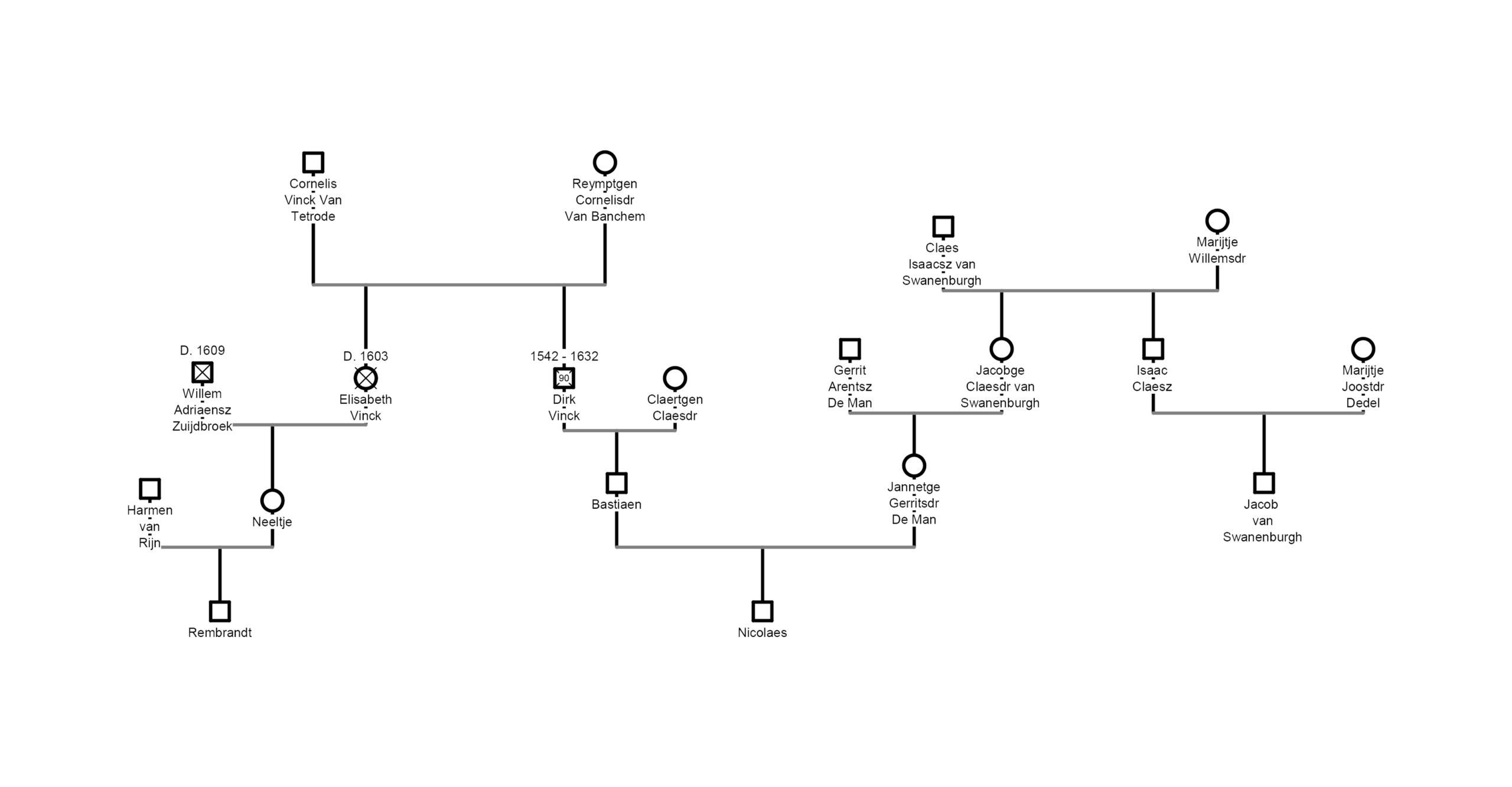
  42. Jan Jansz Orlers, Beschrijvinge der stadt Leyden, 2nd ed., Leiden 1641, p. 375; Walter L. Strauss et al., Rembrandt Documents, New York 1979, doc. 1641/8. For rare objections, see Roelof van Straten, Young Rembrandt. The Leiden Years, 1606-1632, Leiden 2005, p. 16; Benjamin Binstock, ‘The birth of Rembrandt’, in Michiel Roscam Abbing, ed., Rembrandt 2006. Essays, Leiden 2006, pp. 267-278 (arguing for 1607).
  43. Strauss, Rembrandt Documents, doc. 1669/6.
  44. E.B.F.F. Wittert van Hoogland, ‘Genealogie van den tak van het geslacht van Tetrode, welke zich Vinck genoemd heeft. Reconstructie van de genealogie voorkomende in het stam- en wapenboek van aanzienlijke Nederlandsche geslachten. Memoriael Gemaeck door N(icolaas) S(ebastiaensz.) V(inck)’, Genealogische en heraldische bladen 1 (1906), pp. 122-149.
  45. Dirk Rühl, ‘Het wapen van Rembrandt’s broeder Willem Harmensz. van Rijn een gelegenheids-wapen? Een heraldisch probleem’, Gens Nostra. Maandblad van de Nederlandsche Genealogische Vereniging 11 (1956), pp. 117-128, esp. p. 127.
  46. Strauss et al., Rembrandt Documents, doc. 1669/4 (misspelling the name as ‘Vlinck’). See also: http://remdoc.huygens.knaw.nl/#/document/remdoc/e13470 (accessed 22 December 2022).
  47. Warm thanks to Ingrid Pot for her kind assistance, and to P.J.M. De Baar for an impromptu consultation on the document, manuscript LB 6761 klein deel, Erfgoed Leiden en Omstreken, Leiden (hereafter ELO). The notebook is chronological but unpaginated; we therefore cite Wittert van Hoogland. See further Stephanie S. Dickey, ‘Ars longa vita brevis. Rembrandt’s death and the status of the artist in late seventeenth-century Amsterdam’, Nederlands Kunsthistorisch Jaarboek 72 (2022), pp. 234-271.
  48. R.E.O. Ekkart, ‘Familiekroniek Van Heemskerck en Van Swanenburg (I)’, Jaarboek van het Centraal Bureau voor Genealogie 32 (1978), pp. 41-70; idem., ‘Familiekroniek Van Heemskerck en Van Swanenburg (II)’, Jaarboek van het Centraal Bureau voor Genealogie 33 (1979), pp. 44-75 (deaths of Cornelis and Sylvester van Swanenburgh, pp. 54, 72, 75). See also Gary Schwartz, Rembrandt, his life, his paintings, New York 1985, p. 22; https://www.mijnstambomen.nl/leiden/swanenburg.htm (accessed 16 December 2022). The dates of Silvester van Swanenburgh’s death and burial are unrecorded; he prepared his will on 12 October 1669, being siechelick van lichaem leggende te bedde (sick in bed); ELO, 0506, notary Justus Gerstecoren, no. 1144, deed 124, 12-10-1669.
  49. Wittert van Hoogland, ‘Genealogie’, p. 135.
  50. Wittert van Hoogland, ‘Genealogie’, pp. 136, 137. Burial: https://archief.amsterdam/archief/5001/1056 (accessed 16 December 2022).
  51. Wittert van Hoogland, ‘Genealogie’, pp. 135.
  52. Ekkart, ‘Familiekroniek’, pp. 54, 72.
  53. Rudi van Maanen and Leendert van Maanen, ‘De grote epidemie van 1669-1670’, Leids Jaarboekje 2021, pp. 67-83, with further references.
  54. See Dickey, ‘Ars longa vita brevis‘, with further references.
  55. See esp. Christaan Vogelaar and Gerbrand Korevaar, eds., Rembrandt’s Mother. Myth and Reality, exh. cat. Leiden: Stedelijk Museum de Lakenhal 2005, pp. 88-91, 97-98, cat. 3-6, 9-10.
  56. We are grateful to Jos Beerens and Weixuan Li for advice on software to visualize this data.
  57. Reymptgen’s husband, Cornelis Bartholomeusz (Meesz.) van Tetrode (1505-1550), a grain dealer in Leiden, died before Neeltje and Bastiaen were born. See Strauss et al., Rembrandt Documents, doc. 1561/1, 1574/3, 1579/1, 1581/1,1582/2.
  58. Strauss et al., Rembrandt Documents, p. 24.
  59. Gerrit Cornelisz. Vinck is registered living in Leiden 1544-1583; Historisch Leiden in Kaart, https://historischleideninkaart.nl/persoonformulier/?Id=8986 (accessed 16 December 2022). He became poorter of Delft in 1584; Stadsarchief Delft, 1.733, fol. 054v, 5-5-1584. See also W.C. Tettero, Genealogie van Tetrode 1300-1600, Voorburg 2000, p. 61; J.P. Jacobs, ‘Rembrandt verwant met Philips van Leyden’, De Nederlandse Leeuw 102 (1985), column 457-465.
  60. See also ELO, Stadsarchief van Leiden, 0501A, 6597, Register Vetus 1582-1601, p. 8v. ‘t Gulden Warken belonged to Reymptgen In 1579; by 1581, she had transferred ownership to Dirck; Strauss et al., Rembrandt Documents, p. 31 and doc. 1579/1, 1581/1, 1585/1.
  61. Wittert van Hoogland, p. 123. Walsburch was buried several weeks later; SAA DTB 5001, 1054, p. 46vo, 8-5-1629. Prenuptual agreement, SAA 5075, 445, not. Palm Mathijsz, 17-2-1631.
  62. SAA DTB 5001, 671, p. 33 (marriage bans) 27-1-1628; DTB 1054, p. 46vo, 8-5-1629 (burial record).
  63. Wittert van Hoogland, p. 124. They married on 10 May at the Begijnhof and 13 May at the Amsterdam Town Hall.
  64. Wittert van Hoogland, p. 126. Clara became a begijn in 1643 and registered her will as a bejaaarde geestelijke dochter, wonende op het Begijnhof, in 1655, appointing her brothers her heirs; SAA 5075, 2454, not. R. Duee, akte nummer 57860, 8-10-1655.
  65. Wittert van Hoogland, p. 127; SAA, DTB 676, p. 145, 2-1-1642; 5033 Poorterboeken, no. 2, p. 199, 24-4-1642. In 1647 Albert purchased a home on the Haarlemmerstraat; SAA, 5073, Kwijtscheldingen, no. 928, 5-1-1647. He posted the banns for his second marriage, to Grietje Harmens van der Aa, on 2 December 1655; SAA, DTB 682, p. 356, 2-12-1655.
  66. Wittert van Hoogland, p. 127.
  67. SAA DTB, 1055, p. 94v (Clara); 1056, p. 252, 26-6-1683 (Albert).
  68. Cornelis was recorded on 24 April 1587 as a baker, age 21. In 1600, he purchased a house later owned by Karel van der Pluym. Strauss et al., Rembrandt Documents, doc. 1581/2, 1662/4; Schwartz, Rembrandt, p. 18 (diagram of Rembrandt’s family tree by P.J.M. de Baar).
  69. Strauss et al., Rembrandt Documents, doc. 1662/4; Marieke de Winkel, ‘ »Cousin » Karel van der Pluym and the benefit of family’, in Epco Runia and David de Witt, eds., Rembrandt’s Social Network. Family, friends, acquaintances, exh. cat., Amsterdam: Museum het Rembrandthuis 2019, pp. 61-65, citing a red and black chalk drawing on vellum, dated 1634 (private collection in New York).
  70. See Koos Levy-Halm, ‘Where did Vermeer buy his painting materials? Theory and practice’, in Ivan Gaskell and Michiel Jonker, eds., National Gallery Studies in the History of Art, Vol. 55, Vermeer Studies, 1988, pp. 137-143; Jo Kirby, ‘The painter’s trade in the seventeenth century: theory and practice’, National Gallery Technical Bulletin 20 (1999), pp. 5-49.
  71. See Stephanie S. Dickey, Rembrandt. Portraits in Print, Amsterdam/Philadelphia 2004, pp. 141-149; Runia and De Witt, eds., Rembrandt’s Social Network, p. 124.
  72. Orlers, Beschryvinge, p. 373; https://rkd.nl/explore/artists/51111 (accessed 2 January 2023)
  73. Rudolf E.O. Ekkart, Isaac Claesz. van Swanenburgh 1537-1614, Zwolle 1998, p. 14. For the prenuptial agreement, Jacobge was assisted by her father Claes Isaacsz and her brothers Isaac Claesz and Claes Claesz; ELO, 0508 Het oude rechterlijke archief van Leiden, no. 76B-2, fol. 375, 15-10-1570.
  74. ELO, 0501A, Stadsarchief van Leiden, 1574-1816, no. 1289, Register van de volkstelling 1581, fol. 9.
  75. See Marije Osnabrugge, The Neapolitan Lives and Careers of Netherlandish Immigrant Painters (1575-1655), Amsterdam 2019, esp. pp. 66-73, 115-123. The Antwerp-born portraitist Abraham Vinck (1574/75-1619) associated with Jacob van Swanenburgh in Hamburg 1589-1598 and later in Naples; in 1602, he witnessed Van Swanenburgh’s marriage to Margaretha Cardone. He lived in Amsterdam 1609-1619. Rembrandt’s bankruptcy inventory includes ‘een doode Contrefijtsel van Abraham Vinck‘; Strauss et al., Rembrandt Documents, doc. 1656/12, no. 86, but we have not yet found a link between Abraham and the Vinck family discussed here.
  76. Ekkart, Isaac Claesz. van Swanenburgh, esp. p. 71; Schwartz, Rembrandt, pp. 22-23.
  77. Strauss et al., Rembrandt Documents, doc. 1620/1; Jef Schaeps and Mart van Duijn, Rembrandt en de Universiteit Leiden, Leiden 2019, esp. p. 28.
  78. Orlers, Beschryvinge, p. 375.
  79. Ekkart, ‘Familiekroniek’, pp. 71-72. Schwartz, Rembrandt, p. 17; Van Straten, Young Rembrandt, p. 24.
  80. ELO, Register van poorterinschrijvingen F, 1267, fol. 279v, 16-4-1638; Buurquestieboeken, 48G, fol. 105v, no. 2355, 12-9-1661; 0506, Notary Justus Gerstecoren, 1144, deed no. 124, 12-10-1669.
  81. Ernst van de Wetering, ‘Rembrandt’s gift and the underrated importance of his apprenticeship with Jacob isaacsz. van Swanenburg’, in Ernst van de Wetering and Bernhard Schnackenburg, eds., The Mystery of the Young Rembrandt, exh. cat., Kassel: Gemäldegalerie Alte Meister and Amsterdam: Museum het Rembrandthuis 2001, pp. 32-38.
  82. Strauss, et al., Rembrandt Documents, p. 69, doc. 1630/5; Schwartz, Rembrandt, p. 23; English translation: Wheelock, ed., et al., Jan Lievens, p. 286.
  83. Bakker, ‘Rembrandt and the emergence’; Vogelaar, ‘Rembrandt in Leiden’; Orlers, Beschryvinge, p. 376.
  84. See Boudewijn Bakker, ‘Rembrandt and the humanist ideal of the universal painter’, in Stephanie S. Dickey, ed., Rembrandt and his Circle. Insights and Discoveries, Amsterdam 2017, pp. 67-98.
  85. Volker Manuth, Marieke de Winkel and Rudie van Leeuwen, Rembrandt. The Complete Paintings, Cologne 2019, cat. 121.
  86. Carel Vosmaer, Rembrandt. Sa vie et ses oeuvres, The Hague 1877, pp. 28-35, 469, 461, unaware of Vinck’s Memoriael, posited a relationship to the Van Swanenburghs on Rembrandt’s father’s side. Ekkart, Isaac Claesz van Swanenburgh, p. 11, dismissed this. However, Claes Cornelisz van Berckel, half-brother of Harmen Gerritsz van Rijn, was married to Brechtje Mourijnsdr. van Swanenburch. The half-brothers lived next door to each other on the Weddesteeg in 1605 and 1624 and owned a mill together; ELO, Buurquesties 48B, blad 2, aktenummer 520, 4-4-1605; 48D, blad 201, aktenumer 1339, 22-4-1624; Tiende Register, Bon Noord-Rijnevest (B), Stadsvrijdom en molens op de wallen, archiefnummer 501A, Stukken betreffende afzonderlijke onderwerpen; Registratie van onroerend goed 1585-1816 (1819), inventarisnummer 6634, blad 31, 1602-1724. It is not yet clear how Brechtje Mourijnsdr. connects to Jacob and Silvester van Swanenburgh. See also Schwartz, Rembrandt, pp. 21-25.
  87. For context, see S.A.C. Dudok van Heel, ‘Rembrandt van Rijn (1606-1669), een remonstrantsgezind schilder uit calvinistisch Leiden’, in idem., De jonge Rembrandt onder tijdgenoten. Godsdienst en schilderkunst in Leiden en Amsterdam, Nijmegen 2006, pp. 177-223.
  88. On art patronage in Leiden, see esp. Gerbrand Korevaar, ‘Leiden in Rembrandt’s time’, in Van de Wetering and Schnackenburg, Mystery, pp. 12-21; Piet Bakker, ‘Rembrandt and the emergence of the Leiden art market’, in Jacquelyn N. Coutré, ed., Leiden ca. 1630. Rembrandt Emerges, exh. cat., Kingston: Agnes Etherington Art Centre 2019, pp. 66-95. We are grateful to Piet Bakker for advice on the present essay.
  89. Dirk Traudenius, Tyd-zifter, Amsterdam 1662, p. 16; Arnold Houbraken, De groote schouburgh der Nederlandtsche konstschilders en schilderessen, Amsterdam 1718-21, III, p. 33; H. Schneider, ed. by R.E.O. Ekkart, Jan Lievens, Sein Leben und Seine Werke, Amsterdam 1973, p. 151, no. 262; https://houbraken-translated.rkdstudies.nl/3-1-59/page-30-39/ (accessed 16 December 2022,) with English translation. The painting has not been discovered.
  90. Wheelock, ed., Jan Lievens, pp. 3, 16-17, fig. 19. The painting was destroyed in 1929.
  91. On their extended connection, see Stephanie S. Dickey, ‘Jan Lievens in Rembrandt’s house’, Kroniek van het Rembrandthuis 2008, pp. 36-53.
  92. As noted above, Cornelis van Swanenburgh’s mother was Adriana van Leeuwen. Rembrandt’s oldest brother, Adriaen van Rijn, married Lystbertgen Symonsdr van Leeuwen in 1617, and Willem van Rijn married Willempje Pietersdr van Steylandt, widow of Jacob Symonsz van Leeuwen, in 1636; Rühl, ‘Het wapen’, pp. 117-119, 123.
  93. Bakker, ‘Rembrandt and the Emergence’, pp. 81-83; Wheelock, ed., Jan Lievens, p. 84, cat. 2.
  94. Orlers, Beschryvinge, pp. 367-377; Bakker, ‘Rembrandt and the emergence’, p. 82. One of these was a ‘Pylatus’, possibly Pilate Washing his Hands (Raleigh, North Carolina Museum of Art); Wheelock, ed., Jan Lievens, p. 289.
  95. Strauss et al., Rembrandt Documents, doc. 1663/7; Schwartz, Rembrandt, p. 37; Dudok van Heel, ‘Rembrandt van Rijn’, pp. 190-193; Christopher Brown, An van Camp and Christiaan Vogelaar, eds., Young Rembrandt, exh. cat., Leiden: Museum De Lakenhal and Oxford: Ashmolean Museum 2019, pp. 24, 158-160. Angela Jager is preparing a study of art patronage in Rembrandt’s family network.
  96. Bakker, ‘Rembrandt and the Emergence’, pp. 85-90.  See also C. Willemijn Fock, trans. by Anne Baudoin, ‘Art ownership in Leiden in the seventeenth century’, Journal of Historians of Netherlandish Art  13:1 (2021), DOI: 10.5092/jhna.2021.13.1.4.
  97. For an overview and analysis of the phenomenon of the atelier scene in Dutch art, see Katja Kleinert, Atelierdarstellungen in der niederländischen Genremalerei des 17. Jahrhunderts : realistisches Abbild oder glaubwürdiger Schein?, Petersburg 2006.
  98. Werner Sumowski, Drawings of the Rembrandt School, vol. 7, New York 1983, pp. 3648-3649, no. 1636bx (ill.). 
  99. Arthur K. Wheelock, ed., Jan Lievens. A Dutch Master Rediscovered, exh. cat. Washington: National Gallery of Art; Milwaukee: Milwaukee Art Museum; Amsterdam: The Rembrandt House Museum 2008/09, p. 246, no. 106.
  100. And not that between Apollo and Marsyas, as indicated by Sumowski.
  101. No painting of this theme is known by Lievens. There was a depiction of the contest between Apollo and Marsyas, showing Apollo playing the lyre, in the sale of the collection of the Count of Arundel, likely the same work later with the widow of Jürgen Ovens in 1691. See Hans Schneider and Rudi Ekkart, Jan Lievens: sein Leben und seine Werke. Amsterdam 1973, pp. 110-111, no. 78.
  102. Werner Sumowski, Gemälde der Rembrandtschüler, Landau 1983-1994, vol. 6 (1994), pp. 3691-3692, nos. 2185a-2194.
  103. Nos. 2857-2861 in: Sumowski, Drawings (see note 2), vol. 12, Addenda (in translation, forthcoming in 2023).
  104. Ibid., vol. 3, p. 1965, note 65. Currently assigned no. 2857 in vol. 12 (see note 2); sale, Paris (Christie’s), 21.3.2002, lot 114.
  105. Ibid., vol. 3, pp. 1961, 1965, 1977 (illus.). Sale, London (Bonhams), 29 October 2014, lot 147 (colour illus.).
  106. Amsterdam, Sotheby’s, 11 November 1997, lot 25, colour ill., as Lievens. Sumowski is far more hesitant here than with the Mettingen drawing: Drawings (see note 2), pp. 3904-3905, no. 1757xx, illus.: “…an unqualified attribution cannot be entertained  because there is no material for comparison.”
  107. Jan Lievens, Peasant Dwelllings under Trees with Milkmaid, pen in brown and brush in brown and grey, 108 x 193 mm, Dresden, Kupferstichkabinett, Staatliche Museen Dresden, inv. no. C 1453; see Sumowski, Drawings (see note 2), pp. 3724-3725, no. 1672 (illus.).
  108. See: Michiel Roscam Abbing, De schilder & schrijver Samuel van Hoogstraten, 1627-1678. Eigentijdse bronnen & oeuvre van gesigneerde schilderijen, Leiden 1993, pp. 40-41; Volker Manuth, “Dordrecht: bakermat voor Rembrandts leerlingen”, Bulletin Dordrechts Museum 3 (2006), pp. 3-7; and: David de Witt, Abraham van Dijck (1635-1680). Life and Work of a Late Rembrandt Pupil, Zwolle 2020, pp. 11-13.
  109. As also observed in Paarlberg, Bisschop (see note 12), p. 24.
  110. On their friendship see De Witt, Abraham van Dijck (see note 4), p. 108.
  111. David de Witt, The Bader Collection: Dutch and Flemish Paintings, Kingston 2008, pp. 63-64, no. 31), correcting Sumowski’s dating to the early 1660s, with the observation of hesitancy in handling that points to an earlier period.
  112. Arnold Houbraken, De groote schouburgh der Nederlantsche konstschilders en schilderessen, vol. 2, The Hague 1719, p. 220. They seem to have largely been lost. The only example linked to him is A Boy Asleep in an Enclosed Chair, c. 1655/60, oil on wood, 97.2 x 66.5 cm, London, with Johnny van Haeften in 2007; see Sumowski, Gemälde (see note 6), vol. 6 (1994), p. 3692, no. 2192, p. 3776 (illus., as Bisschop). It is unsigned, and clearly derived from a similar work signed and dated 1654 by the Haarlem painter Johannes Verspronck: oil on panel, 96 x 75.7 cm, Belgium, private collection. On this basis it has been attributed to that artist as well see: Rudi Ekkart in: Pride and Joy. Children’s Portraits in The Netherlands 1500-1700, exh. cat. Haarlem: Frans Halsmuseum; Antwerp: Koninklijk Museum voor Schone Kunsten Antwerpen, 2000-2001, pp. 227-229, no. 60. However, the thicker application of paint and harsher contrasts in the London version diverge from the one signed by Verspronck, and indeed more closely approximate Bisschop’s painting style of around 1660. If by him, this would suggest that Verspronck supplied an additional impulse for making such cutout paintings, besides Van Hoogstraten and his championing of illusionism.
  113. Houbraken, Schouburgh (see note 16), vol. 2 (1719), pp. 157-158.
  114. See the important analysis by Thijs Weststeijn: The Visible World. Samuel van Hoogstraten’s Art Theory and the Legitimation of Painting in the Dutch Golden Age, Amsterdam 2008.
  115. Sander Paarlberg, “Bisschop op zijn best. Dordrechts Museum krijgt zijn eigen Melkmeisje”, Bulletin van de Vereniging Rembrandt 25, no. 1, (2015), pp. 22-24, colour illus.
  116. Samuel van Hoogstraten, Inleyding tot de Hooghe Schoole der Schilderkonst, Dordrecht, 1678, p. 12.
  117. We do not include a painting attributed to Bisschop: The Young Artist in his Studio, c. 1653, oil on canvas, 90.8 × 76.8 cm, Detroit, Detroit Institute of Arts, inv. no. 38.29, as attributed to Cornelis Bisschop; George Keyes, in: Masters of Dutch Painting: The Detroit Institute of Arts, London 2004, pp. 28–29, no. 8 (ill.). The drawing shown in the lower left, a classic two-chalk drawing on blue-grey paper, underscores the stylistic evidence against his authorship, pointing instead to the circle around Govert Flinck (1615-1660) and Jacob Adriaensz. Backer (1608-1651); perhaps Adam Camerarius (?–1666).
  118. Constantijn Daniël à Renesse, Rembrandt and his Pupils Drawing from a Nude Model, black chalk, brush in brown, 180 x 266 mm, Hessisches Landesmuseum, Darmstadt, inv. no. AE 665; on the attribution see Peter Schatborn, Rembrandt and his circle: drawings in the Frits Lugt collection, Bussum 2010, p. 335.
  119. Rembrandt, Rembrandt’s Studio with a Half-Nude Model, c. 1654/58, pen and brush in brown, with white body colour, 205 x 190 mm, Oxford, Ashmolean Museum, inv. no. P.I.192 (WA1855.8): Peter Schatborn in Rembrandt : The Complete Etchings and Drawings, Cologne 2019, p. 269, no. T438 (colour illus., as c. 1654).
  120. Rembrandt, Bathsheba with King David’s Letter, 1654, oil on canvas, 142 x 142 cm, Paris, Musée du Louvre, inv. no. M.I. 975: Ernst van de Wetering, Rembrandt’s paintings revisited : a complete survey, Dordrecht, Boston and Lancaster 2014, pp. 623-624, no. 231; Volker Manuth, Marieke de Winkel and Rudie van Leeuwen, Rembrandt: the Complete Paintings, Cologne 2019, pp. 507-508, no. 23. As Van de Wetering explains, the pose of Bathsheba was originally conceived with an upward glance and turn of the head.
  121. Rembrandt, A Woman Sitting Half-Dressed beside a Stove, 1658, etching, buring and drypoint, 226 x 194 mm, in seven states: Erik Hinterding and Jaco Rutgers, The New Hollstein Dutch & Flemish Etchings, Engravings and Woodcuts 1450-1700, vol. 25-II: Rembrandt, Ouderkerk aan den IJssel 2013, pp. 292-294, no. 307.
  122. Houbraken, Schouburgh (see note 16), vol. 1 (1718), p. 271.
  123. As discussed by the author in: David de Witt and Franziska Gottwald, “Rembrandt & Light” in: Rembrandt’s Light, exh. cat. Dulwich, Dulwich Picture Gallery, 2019-2020, pp. 33-34 (the date of the drawing mistakenly altered in editing; should read c. 1654/58).
  124. See www.elephanthansken.com for a current collection of all the traces left by Hansken and her owner, brought together thanks to the research of Michiel Roscam Abbing. In 2016 M. Roscam Abbing, Rembrandts olifant. In het spoor van Hansken appeared, followed in 2021 by an updated edition in English translation entitled Rembrandt’s Elephant. Following in Hansken’s Footsteps, both with Leporello in Amsterdam.
  125. In Het Schilder-boeck of 1604 (Haarlem) Karel van Mander calls drawing the father of all of the arts. Constant practice, especially taking everything that nature offers as model, will make the artist successful; see fol. 8r+v, Van het teyckenen, oft Teycken-const. Tweede Capittel.
  126. W. Goeree, Inleydingh Tot de Praktijck Der Al-gemeene Schilder-Konst, Middelburg 1670, p. 121.
  127. For an overview see P. Schatborn, E. Hinterding, Rembrandt. Alle tekeningen en etsen, Cologne 2019, pp. 285-301.
  128. No. 249 in the inventory, see document/remdoc/e12724. For more background on Rembrandt’s collection, see B. Broos e.a., Rembrandt’s Treasures, Amsterdam 1999.
  129. Peter Schatborn accepts six lion drawings as autograph: Rembrandt, A Lioness or Young Lion with Prey (a Bird), Reclining, with Head to the Left, 1637-1641. Charcoal and wash, with white highlights, on prepared paper, 126 x 239 mm. London, British Museum, inv. no. Oo,9.71; Rembrandt, Reclining Lioness or Young Lion, with Head to the Right, 1637-1641. Charcoal and wash, with white highlights, on prepared paper, 125 x 180 mm. London, British Museum, inv. no. Oo,9.75; Rembrandt, Reclining Lioness or Young Lion, from the Front, 1637-1641. Charcoal and wash, with white highlights, on prepared paper, 115 x 150 mm. New York, The Leiden Collection, inv. no. RR-100; Rembrandt, Reclining Lion with Prey, c. 1650. Pen and brush in ink, brush in white paint, with traced contours, 140 x 203 mm. Rotterdam, Museum Boijmans Van Beuningen, Collection Franz Koenigs, inv. no. R 12; Rembrandt, Reclining Lion, c. 1650. Pen and brush in ink, 138 x 207 mm. Paris, Musée du Louvre, inv. no. RF4721; Rembrandt, Reclining Lion, c. 1660. Pen in brown on prepared paper, 122 x 212 mm. Amsterdam, Rijksmuseum, inv. no. RP-T-1901-A-4524.
  130. For lions, see M. Roscam Abbing, P. Tuynman, “Rembrandts drawings of the elephant Hansken”, in M. Roscam Abbing (ed.), Rembrandt 2006: Essays, Leiden 2006, pp. 173-189, p. 189.
  131. Rembrandt, Young Asian Elephant (Hansken), 1637. Black chalk, 233 x 354 mm. Vienna, Albertina, inv. no. 17558; Rembrandt, Asian Elephant (Hansken) in three different poses with steward. Black chalk, 239 x 354 mm. Vienna, Albertina, inv. no. 8900; Rembrandt, Asian Elephant (Hansken) with Spectators. Black chalk and charcoal, 179 x 256 mm. London, British Museum, inv. no. Gg,2.259.
  132. Rembrandt or pupil, Asian Elephant (Hansken), c. 1637. Black chalk and graphite, counterproof. 194 x 189 mm. New York, The Morgan Library & Museum, inv. no. I, 205.
  133. The drawing has in the meantime been published in M. Roscam Abbing, Rembrandt’s Elephant (see note 1), pp. 22-23. The interpretation of the drawing there is based on the research presented in this article.
  134. In the possession of Peter Schatborn, the owners of the drawing, and the author of this article.
  135. There is no available image of the watermark, so further identification is not possible at the moment.
  136. Female Asian elephants generally do not have tusks. But where present, they do not grow to longer than 10 cm, which does render them visible between the folds of the skin. Hansken had short visible tusks of this kind. Her skeleton, which was preserved after her death in 1655, and is kept on display at the natural history museum La Specola, shows evidence of this: the skull shows the stumps of tusks. The English traveller and writer wrote in 1641 in his diary: “his teeth were but short being a female, and not old, as they told us”. Zie E.S. de Beer (red.), The diary of John Evelyn, Vol. 2. In the same year Ernst Brinck observed: “zijn naar buiten uitstekende slagtanden waren nog maar weinig meer dan een vinger lang” (his protruding tusks were only a little more than a finger long). See also Roscam Abbing and Tuynman, “Rembrandt’s Drawings…” (see note 7), pp. 173-189. There it is explained how in 1633 Hansken’s tusks were not yet visible. In 1641 they were, according to the description of Evelyn and Brinck. They may have been broken off after then, not subsequently growing long enough to be visible.
  137. Roscam Abbing and Tuynman, “Rembrandt’s Drawings…” (see note 7), p. 184 and Roscam Abbing, Rembrandt’s Elephant (see note 1), pp. 24-25.
  138. Jan Mollijns, Commemorative Print of the Asian Elephant Emanuel, 1563. Hand coloured woodcut, 285 x 400 mm. London, The British Museum, inv. no. 1928,0310.97, https://www.britishmuseum.org/collection/object/P_1928-0310-97; Gerard van Groeningen, Commemorative Print of the Asian Elephant Emanuel, in Eight Different Poses, in or after 1563. Etching, 405 x 541 mm. Amsterdam, Rijksmuseum, inv. no. RP-P-OB-59.019; Wenceslaus Hollar (after Gerard van Groeningen), Commemorative Print of the Asian Elephant Don Diego, 1629. Etching, 245 x 283 mm. Amsterdam, Rijksmuseum, inv. no. RP-P-1976-16.
  139. See Chronycke van Antwerpe sedert het jaer 1500 tot 1575. Gevolgd van Eene beschryving van de historie en het landt van Brabant, sedert het jaer 51 vóór J.-C., tot 1565 na J.-C., volgens een onuitgegeven handschrift van de XVIe eeuw, edition of 1843, Antwerp, p. 59: “(…) anno 1563, int eynde van september, doen quam tot Antwerpen tschepe eenen olifant vuyt Portugael, off daer ontrent, oudt by de negen jaeren, hooge acht voeten; desen ginck sdaechs achter straeten dattet een yegelyck sien moechte: desen was seer tam ende wert geregeert van eenen moor doende alwat den moor hem gebiede: desen olifant hiet Emanuel.” (in the year 1563, at the end of September, there came by ship to Antwerp an elephant from Portugal, around nine years old, eight feet tall; it went by day through the streets so that all could see it: it was very tame and was led by a Moor, doing everything the Moor commanded: this elephant was called Emanuel). See e.g. also S. Dackerman, Prints and the Pursuit of Knowledge in Early Modern Europe, New Haven 2011, cat. no. 34.
  140. See note 15. For the impression in the collection of the Rijksmuseum see http://hdl.handle.net/10934/RM0001.COLLECT.119126.
  141. Hansken appeared in Amsterdam on four occasions: in the summer months of 1633 and at the fairs (kermissen) of 1637, 1641 and 1647. One of the drawings by Rembrandt can be connected to the fair of 1637, because Rembrandt dated the sheet. Peter Schatborn dates the other two drawings of Hansken by Rembrandt to the same year. However the drawing of Hansen in three poses (Albertina, inv. no. 8900) appears to have been made on a later occasion, in 1641. The animal in that drawing is noticeably older than in the sketch of 1637. See also Roscam Abbing and Tuynman, “Rembrandt’s Drawings…” (see note 7), pp. 173-189. Further research on the paper in the future may yield more information on the dating.
  142. Up to Rembrandt’s time, there was limited knowledge in Europe concerning elephants. What people thought to know was based on what Pliny the Elder had written in his Natural History (77-79 C.E.). Or on medieval legends such as could be read in the Physiologus, an ancient Greek moralizing text on plants and (mythical) animals. Over the course of time there appeared more and newer editions of these stories. Jacob van Maerlants Der naturen bloeme (c. 1350) is one example, in which the texts are no longer presented in Latin but in Dutch (“Dietsch”). In 1588 Christophel Plantijn in Antwerp published a collection of texts – including the Physiologus – under the title Sancti Patris Nostri Epiphanii, Episcopi Constantiae Cypri, ad Physiologum. Eiusdem in die festo Palmarum sermo. A century later, at the end of the 17th century, the skeleton Hansken, the elephant that died in 1655 in Florence, became accessible to scholars. This led to new insights into the existence of an ancestor species, the mammoth. A Latin description of Hansken’s skeleton by John Ray formed the basis in the 18th century for Carolus Linnaeus’ scientific description of the elephant in terms of its species.
  143. For the copy of the album in the collection of the Rijksmuseum, see: http://hdl.handle.net/10934/RM0001.COLLECT.353205. For the two prints in its, respectively of five and three elephants, see: http://hdl.handle.net/10934/RM0001.COLLECT.353210 and http://hdl.handle.net/10934/RM0001.COLLECT.353211.
  144. For the copy in the collection of the Rijksmuseum, see: http://hdl.handle.net/10934/RM0001.COLLECT.33090. Don Diego was in Europe from 1623 to 1635 in Europa. For more information on Don Diego see L. Rice, “Poussin’s Elephant”, Renaissance Quarterly 70 (2017), pp. 548-593; M. Roscam Abbing, “Poussin’s Elephant Revisited”, in Source: Notes in the History of Art 39 (2020), pp. 109-119.
  145. Op de kunstcaemer (….) [235] Een Oost-Indies benneken daarin verscheyde prenten van Rembrant, Hollaert, Cocq en andere meer”. See document/remdoc/e12723.
  146. [i] For his etching of Joseph and the Wife of Potiphar of 1634 (B39/ NHD128) Rembrandt looked to the etching of the same theme by Tempesta, of 1613. And Tempesta’s prints of lion hunts served as model for Rembrandt in his own depictions of the theme, the two small lion hunts of c. 1629 (B115/ NHD28, B116/ NHD29) and his large lion hunt of 1641 (B114/ NHD187). See e.g. B. van den Boogert, J. van der Veen, Dat kan beter! Rembrandt en de oude meesters, Amsterdam 2013, pp. 52-55.
  147. Nos. 210 – 212 in the inventory. See document/remdoc/e12721 and document/remdoc/e12722.
  148. See for example in the collection of the Rijksmuseum: God Creates the Animals http://hdl.handle.net/10934/RM0001.COLLECT.183114, Cain Murdering Abel http://hdl.handle.net/10934/RM0001.COLLECT.183148, Orpheus Enchanting the Animals with his Music http://hdl.handle.net/10934/RM0001.COLLECT.183809, Combat of the Centaurs and Various Animals http://hdl.handle.net/10934/RM0001.COLLECT.608702, God Commands Adam And Eve Not To Eat of The Tree of Knowledge http://hdl.handle.net/10934/RM0001.COLLECT.183140.
  149. See also Roscam Abbing, Rembrandts olifant (see note 1), pp. 22-23; Rembrandt’s Elephant (see note 1), pp. 24-25. Besides the iconography there described of the elephant as a chaste animal, and thereby symbol of humanity before the Fall into Sin, Rembrandt incorporated two myths about elephants. The myth of the mating ritual of elephants refers namely to the sin of the first people in the world. In order to stimulate arousal in the male, the female offers an aphrodisiac. Eve gives the forbidden fruit of the Tree of Knowledge of Good and Evil to Adam, and this fruit in fact serves as an aphrodisiac. Because after eating this fruit they become aware of their desires. And further it was said of elephants and dragons that they were symbols respectively of good and evil, and that they were each other’s greatest enemies. The draco (Latin, translatable as dragon or serpent) hides in a tree, in order to drop down onto an elephant walking by. What follows is a fight to the death, in which both animals perish. Rembrandt also refers to this coming event, as symbol of the struggle between good and evil that will result from Adam and Eve’s fall into sin.
  150. Respectively nos. 161, 178, 189, 298 and 307 in the inventory, see: document/remdoc/e12719, document/remdoc/e12719, document/remdoc/e12720, document/remdoc/e12727.
  151. The fact Rembrandt’s insolvency inventory contains such detailed information is one of the reasons to believe that Rembrandt himself dictated how the objects were to be described at the taking of the inventory, on 25 and 26 July 1656.
  152. For further information on this elephant see: M. Roscam Abbing, “‘So Een Wunder heeft men hier nooijt gesien’ De Indische vrouwtjesolifant (1678/80-1706) van Bartel Verhagen”, Jaarboek Amstelodamum 106 (2014), pp. 68-95.
  153. The tusks were probably added because they appear in the original print by Van Groeningen and were seen as a typical feature of an elephant. Hansken too was given prominent tusks in some illustrations. In one instance (a drawing from life, but embellished from imagination) it is clear that the artist tried to indicate how tusks would look on her. Stefano della Bella, Elephant (Hansken), with a Black Man. Pen and brush in ink, 128 x 159 mm. Present location unknown (sale,London, Christie’s, 18 March 1975, lot 17). For more on this drawing see: https://www.elephanthansken.com/wp-content/uploads/2013/07/fig.-17.jpg. Around 1647 a publicity or commemorative print of Hansken was also made. For the impression in the Rijksmuseum see http://hdl.handle.net/10934/RM0001.COLLECT.432625. Also in this print, she was mistakenly endowed with tusks, following the example of the print of Don Diego, which also served as model for the arrangement of the print with a central image surrounded by smaller images.
  154. See document/remdoc/e4447.
  155. Idem. RemDoc does not supply the detailed list of the works that Rembrandt purchased. The Rembrandt Documents (W. Strauss and M. van der Meulen, New York 1979) does summarize them (see doc. no. 1638/2). It is evident that over the auction days Rembrandt purchased various individual prints by Albrecht Dürer, a woodcut series of The Life of the Virgin, and a Passion series. The print Christ in Limbo was part of Dürer’s engraved Passion of 1511-1513.
  156. See also J. Schaeps e.a. Leiden viert feest! Hoogtepunten uit een academische collectie, 2014, cat. no. 17.
  157. See also Roscam Abbing, Rembrandts olifant (see note 1), pp. 22-23; Roscam Abbing, Rembrandt’s Elephant (see note 1), p. 24; Joost van den Vondel also incorporated Hansken’s presence into his work. She was on display in the city in September 1637 as Vondel was completing his play Gijsbrecht van Aemstel. This work premièred on 3 January 1638 in honour of, and in, the Amsterdam Schouwburgh on the Keizersgracht. In one of the scenes (line 1304) Vondel refers to one of the tricks Hansken performed during her appearances; see Roscam Abbing, Rembrandts olifant (see note 1), pp. 49-51.

Rembrandt Paints Master Carpenter Jacob Wesselsz Wiltingh. An Unknown Rembrandt From the Archive of the Amsterdam Notaries

Parchment-bound volumes of the notarial archive in an archival depot in the Vijzelstraat, 2008. This image is already  history: volumes are now kept in acid-free blue boxes. Photo Erik Schmitz

The painted oeuvre of Rembrandt has to a certain extent been delimited by the Rembrandt Research Project. Although the conclusions there formulated are not always shared by all, the discussion generally concerns works that are long known. The resurfacing of a completely unknown painting is extremely rare. Likewise, the emergence of an archival discovery is not an everyday occurrence. The archival researches of Abraham Bredius (1855-1946), Isabella van Eeghen (1913-1996), Bas Dudok van Heel (1938) and others have unearthed a rich treasure trove concerning the life and work of Rembrandt and his milieu. The very extensive Amsterdam Notarial Archive consistently showed itself to be a nearly inexhaustible source for drawing historical links and making new discoveries (fig. 1). Of course, new research also encountered known material. Dudok van Heel remarked in 1987 that a red or blue pencil crayon line meant that Bredius had beat him to it.158 Other researchers also left their traces (figs. 2, 3).

Leafing by hand through the protocols or close reading of microfilms is very time consuming and researchers followed the path dictated by their research. Already in Bredius time it was clear that some notaries were more regularly involved with art and artists; those parts of the archive offered better chances. Going through the entire notarial archive, which extends to 3.5 kilometres of bookshelves and covers a period of nearly 350 years (1578-1915), was utterly impossible in human terms, even if research was limited to a timespan of ten or twenty years. One remained dependent on the card index on individual names and subjects compiled by Simon Hart (1911-1981) and other archive employees (which covered around 5% of the entire archive), serendipity or lucky finds while doing other research.

Pencil markings in the margins by the statement of Samuel Gerincx and Lieven Sijmonsz Kelle concerning the purchase of the house of Rembrandt van Rijn, 7 October 1662. Amsterdam City Archives.
Pencil markings in the margins by the statement of Samuel Gerincx and Lieven Sijmonsz Kelle concerning the purchase of the house of Rembrandt van Rijn, 7 October 1662. Amsterdam City Archives, access no. 5075, inv. no. 1953, p. 345.
Cross mark in pencil by the words “Eersamen Wijtvermaerden Schilder Rembrant van Reijn”, in the margins of the statement of Geertje Dircxsz and Rembrandt van Rijn, 1 October 1649. Amsterdam City Archives.
Cross mark in pencil by the words “Eersamen Wijtvermaerden Schilder Rembrant van Reijn”, in the margins of the statement of Geertje Dircxsz and Rembrandt van Rijn, 1 October 1649. Amsterdam City Archives, access no. 5075, inv. no. 603, f. 332r (right page, top left corner)

All Amsterdam Records (Alle Amsterdamse Akten)

Searching by hand or microfilm through the notarial archive is increasingly becoming a part of the past. Starting in 2016, with the project Alle Amsterdamse Akten of the Amsterdam City Archives, and then indexed by volunteers. By October 2021 there were 8,8 million scans available on-line, mainly of documents from the seventeenth and eighteenth centuries. It is anticipated that by the end of 2021 the entire seventeenth-century section of the archive will be digitized, including the protocols with water and fire damage. This will turn out to be a treasure trove of information that has hitherto hardly been unlocked or used, a wealth of data from a period in which Amsterdam was one of Europe’s largest and most important cities. Thanks to its unique historical value, the archive was included in 2017 in the UNESCO Memory of the World Register. Current accessibility is limited to indexes by date, document type, individual names and locations outside of Amsterdam. The results are available to all through a search function on the website of the City Archives.159 The index already includes the impressive amount of 3.1 million individual names, a number that is steadily growing. Compared to the old boxes of index cards from the twentieth century, the Alle Amsterdamse Akten project represents an enormous leap ahead.160 It is however not yet possible to search the archive by word, so that human recognition, just as before, forms the basis for indexing. But here also changes are taking place. From March 2021 the Amsterdam City Archives hosts a search function in which documents transcribed by the computer program Transkribus are completely searchable using HTR (Handwritten Text Recognition).161 Although currently limited to a number of 300,000 documents, about 1.5% of the estimated 20 million scans that the notarial archive comprises, it is already evident that this combination of digital technology will revolutionise the use of written documents for historical research. The Rembrandt document described in this article is a direct result of this technology.


Two New Rembrandt References

The two hitherto unknown references to Rembrandt were found by the computer in the settlement of the estate of master carpenter Jacob Wesselsz Wiltingh, who died in 1661. In the account of the management of the estate drawn up by the notary Gillis Borsselaer (active in Amsterdam 1636-1675) the expenses and income from the years 1661-1665 are listed in chronological order.162 On 1 December 1663 a payment to the city messenger is noted, relating to three different issues: Rembrandt, the renters of a house in the Grote Kattenburgerstraat and the title of a document (probably a transfer of ownership): “Betaelt voor oncosten van Stadtsbode gelt van Rembrant de schilder te roepen met de luijden vande kelder ende kamer op kattenburch met een brieff opt Oostindische huijs overgeteijckent samen f. 1:13:- (Expenses paid to the city messenger to summon Rembrandt the painter, with the persons in the cellar and the room in the Grote Kattenburgerstraat with a document at the Oost-Indisch Huis transferred total f. 1:13:-)”. The city messenger brought Rembrandt the notice that he was to appear, and the expense post of 7 December 1663 reveals why: “Betaelt aen Rembrant de schilder voor schilderen vande overleden f. 15:14:- (Paid to Rembrandt the painter for painting the deceased f. 15:14:-)”(fig. 4).

Two references to “Rembrant de schilder” (Rembrandt the painter) in the settlement of the estate of Jacob Wesselsz Wiltingh, 1665. Amsterdam City Archives, access no. 5075, inv.nr. 1492, f. 310v (detail)

Seeing as how the deceased Jacob Wesselsz Wiltingh had already been dead for two years by then, there are three possibilities. The first is that the costs were incurred shortly after the death of Wiltingh and were paid only later. The administrators indeed regularly settled outstanding accounts. Rembrandt could have gone to Wiltingh’s house after the notification from the city messenger in order to make a deathbed portrait there. That would be highly exceptional in Rembrandt’s oeuvre and the price of fifteen guilders and fourteen stivers is strikingly low. And given that all costs after Wiltingh’s death were scrupulously recorded, and no further payments to Rembrandt appear, this is the total amount. Moreover one would not expect the city messenger to be engaged for such a request. The city messengers communicated notifications in the judicial sphere and maintained corresponding registers.163 The settlement of the estate contains other examples. In the autumn of 1662 a city messenger delivered an arrest and twice visited “Els inde kelder op kattenburch (Els in the cellar on the Kattenburch)”, a renter who apparently refused to pay and subsequently went bankrupt, whereupon the estate also had to cover the costs of cleaning up her cellar.164

A second possibility is more likely, namely that Wiltingh was portrayed by Rembrandt already before he died, and that that there was still an amount owing for this that had to be settled in a formal way – therefore the engagement of the city messenger. Despite the fact that the word “remaining” is missing in the text, which indicates in several other estate entries that partial payment had already been made, nonetheless we think that fifteen guilders and fourteen stivers was too modest a sum of money for a portrait painted by Rembrandt. It is more likely that Wiltingh had already advanced a much more substantial sum. A known example of a similar arrangement is the advance of seventy-five guilders that Diego d’Andrada paid Rembrandt in 1654 for the portrait of “seeckere jonge dochter (a certain young woman)”. D’Andrada would pay the balance when the portrait “volcomentlyck sal sijn opgemaeckt (will be fully completed)”.165 And lastly there is still a third possibility, namely that Rembrandt would have made a copy after an existing portrait. Even then the amount is strikingly low and the question arises what the function would be of such a doublet. The East-Netherlandish migrant family to which Wiltingh belonged would not have had a tradition of family portraits, and the idea that a copy would have been destined for one of Wiltingh’s heirs is still quite speculative. And also in such an instance the use of the city messenger would have been very odd.

A third reference to a painter in the estate probably does not have to do with Rembrandt; at least, there is no evidence for this. On 1 June 1662 one of the executors of the estate, Coop Roelofsz Hoijer, received 96 and 12 stivers voor payments he had previously made: ‘Betaelt aen Coophoeijer soo wegen de schilder, Isercramer ende f. 70 vant scheepspart als anders dat den boedel aen hem schuldich was volgens contract f. 96:-:12 (Paid to Coop Hoijer on account of the painter, ironmonger and f. 70 of the share in a ship and for other things that the estate was owing him according to the contract f. 96:-:12)’.166 This payment probably had to do with construction of houses in the Grote Kattenburgerstraat, for which payments to construction workers formed an important part of the settlement of the estate.

It is lastly very likely that the references to Rembrant de schilder do indeed concern Rembrandt van Rijn, and not an unknown painter with the same name. In 1665 Rembrandt had already been a famous artist for decades, who deliberately signed his work “Rembrandt” from the 1630s onwards. In ten Amsterdam estate inventories from the period 1660-1663, in which one or more works by Rembrandt appear, he is only mentioned once with his full name.167 Moreover, Rembrandt as a given name was relatively rare. For the period 1650-1670 the Amsterdam marriage registers list only two adults with the same first name: in 1654 the inland mariner Rembrant Gerritsz van Uithoorn and in 1669 the herbalist Rembrandt Lubbertse.168 That Rembrandt took receipt of the money does not necessarily mean, by the way, that the portrait was painted by him. It could in theory have been carried out by someone from his atelier. From this period, besides his son Titus, only Arent de Gelder (1645-1727) and Gottfried Kneller (1646-1723) have been named as his pupil or assistant.


Who was Jacob Wesselsz Wiltingh?

Rembrandts Amsterdam clientele has been thoroughly researched; it mostly drew from the well-to-do citizens of the city. How do we place master carpenter Jacob Wesselsz Wiltingh in this picture, who was he? The settlement of his estate forms an important source for addressing this question, supplemented by other archival data. The resulting picture is not yet complete, but gives a fairly good impression of his activities and of his close relatives. Jacob Wesselsz Wiltingh (before c. 1630-1661) first surfaces in the Amsterdam documents when he purchases citizenship (poorterschap) on 20 January 1651 as carpenter.169 He was likely unmarried and without children, at least there are no references to be found in the Amsterdam archives and he left no descendants when he died.170 His date of birth is unknow, but he will have been of adult age and he had some capital at his disposal; purchasing citizenship was expensive: fifty guilders. The registration specifies his home town as Hasselt, very likely the small city on the Zwarte Water north of Zwolle.171 Only citizens could become members of the carpenter’s or St. Joseph’s Guild and thereupon undergo a master’s examination, which would allow them to run a business on their own. It is uncertain when he became a master given that the guild archive for this period has been lost. A possible early reference dates to 17 January 1653, when one Jacob Wessels serves as guarantor for the purchase of a building lot on the east side of the Singel by Romeyn de Hoogh, a second cousin of the artist and troublemaker. 172 Starting only in 1655 do we have data available concerning Wiltingh’s activity in two fields, as a commissioned carpenter and as an entrepreneur. He participated in two building projects by city architect Daniel Stalpaert (1615-1676) and he was active as project developer.

The Nederlands Hervormde Church of ’s-Graveland. Photo Edwin Raap / Rijksdienst voor het Cultureel Erfgoed, inv. no. 017359_sGraveland_ERaap_2

18 May 1661 the executors booked the following income entry: « De heeren van Sgraven lant waeren schuldich ende hebben betaelt van timmeren vande kerck aldaer f. 590:-:- (The Lords of ’s-Gravenland were indebted and have paid for carpentry work on the church there f. 590:-:-) ». The church of ’s-Graveland was built in 1657-1658 on the design of Daniel Stalpaert en he will also have coordinated the construction (fig. 5). Wiltingh had contracted on 5 March 1657 for building the roof for a sum of 2050 guilders. This included the roof structure, the tower and the panelling of the ceiling vaults. He took over the costs of the wood, as well as labour costs and beer for the woodworkers.173 He may have undertaken other carpentry work as well. A general account of the building costs mentions that « de kap ende Ander hout werck heeft gemaeckt Jacob van haasselt meester tuijmmerman tot Amsterdam die tselvige werck hadde aen genoemen (The roof and other carpentry work were done by Jacob van Hasselt master carpenter of Amsterdam who had contract to do this work) ». The construction of the church – excluding the foundations – had been estimated to cost between 10,000 and 11,000 guilders, and another source cites a total amount of 12,345 guilders.174

Daniel Stalpaert was also responsible for the supervision of the construction of the Amsterdam City Hall on Dam Square .175 Although this prestige project was one of the most important architectural designs and building projects of the seventeenth century Dutch Republic, our knowledge of the building-process is limited.176 One thing is clear: the sheer size of the project outstripped the capacity of the city construction office, and much work was subcontracted. Untill now hardly anything was known about the carpenters involved in the construction of the City Hall. It turns out that master carpenter Wiltingh was one of the carpenters working in the construction of the roof of the City Hall, together with master carpenter Dirck Isacqsz. Concerning the construction costs a dispute had arisen, that was set aside on Wiltingh’s initiative when Isacqsz visited him at his sickbed and he did not have much longer to live. Wiltingh said: « Meester Dirck wij hebben wat differentie wegen de kap vant stadts huijs, van ontfanck ende uijtgift, maer t is weijnich, ick salder niet lange wesen, laeten wij malcanderen quitteren ende daer van swijgen’ (“Master Dirck we had our differences concerning the roof of the City Hall, income and expenses, but it is little, I do not have long to live, let’s wipe the slate clean and let that be the end of it.”). Whereupon Isacqsz responded « laet het soo doot ende te niet wesen, ende sullen daer van niet meer sprecken off pretenderen » (So let it be finished and undone, and let’s not talk about it or make claims any more.).177 The roof was completed in 1659. According to a description of the City Hall of 1808, construction was contracted to three builders, each earning 6,000 guilders.178 Their names are unfortunately not known, so it is impossible to determine the role of neither Isacqsz nor Wiltingh more specifically.

In 1650 Amsterdam was an important European trading metropolis with more than 170,000 residents, and Jacob Wesselsz Wiltingh was one of the many migrants who gravitated towards the growing city on Amstel. Already starting in 1652, plans were being made for the further expansion of the city, and in order to accommodate the steadily growing population plots within the city were repurposed and existing houses were expanded or rebuilt. Carpenter and bricklayers functioned herein as project developers. They bought existing houses and building plots and the new houses were then sold or rented out.179 Wiltingh worked together with others as project developer, likely to spread out the risk and because his financial means were otherwise insufficient. On 1 February 1655 he bought together with the baker Coop Roelofsz Hoijer (1617/18-1664), probably his brother-in-law, a house in the Jonkerstraat (no. 43 in 1875) for 1017 guilders.180 In the verpondingsregister, a tax on real estate, it is noted that construction work began in 1659. On 1 October 1661 the estimated annual rental income, the basis for the real estate tax, was raised from 50 to 120 guilders.181 The house, « daer eertijts de hoop ende nu de schilpat uijthangt » (“formerly with the sign of Hope, now of The Turtle”).was then worth 3600 guilders.182 This was undoubtedly a new house, although modest in size, and not to be compared to the buildings on the main streets and canals. The lots were small and the Jonker- and Ridderstraat suffered the reputation of being a crowded neighbourhood where unschooled workers, foreigners and sailors stayed, and harboured many prostitutes and cheap bordellos.183 For comparison: the Rembrandt House was sold in 1658 for 11,000 guilders and its rental income was pegged at 350 guilders in the real estate tax register.184

A second building project, about which we know a great deal thanks to the estate documents, comprised of new houses on the newly-formed island Kattenburg. Together with the city master-bricklayer Jan Willemsz Brederode (1621-1671; in city service 1659-1671)185 Wiltingh purchased for 5159 guilders four building lots in the Grote Kattenburgerstraat, on which they built five houses, equally modest in scale (in 1875 nos. 6-14, fig. 6-7).186 Wiltingh knew Brederode from the building of the church in ’s-Graveland, where he had carried out the bricklaying.187 Wiltingh furthermore stood as guarantor, together with Brederode, for the purchase of a building lot in the Kleine Kattenburgerstraat by Dirck Isaacsz, the master carpenter Wiltingh again knew from the roof on the City Hall.188 The properties on Kattenburch island were the first available lots in the fourth expansion of the city, mainly carried out from 1658-1681. They were auctioned on 7 January 1660 and the new houses were completed in the same year.189 On 10 May 1661 Wiltingh and Brederode split up the new building block: Brederode took three houses (nos. 6-10) and Wiltingh two (nos. 12-14), of which one was sold to Roeloff van Aelst (no. 12).190 The estate settlement contains many entries starting in August 1661 for house rent paid by a baker and a tobacconist, and by the residents of an inhabited cellar and front and rear rooms higher up. There are also numerous payments to excavators, pile drivers, wood sellers, bricklayers and other construction workers. When Wiltingh died in May 1661 all of the accounts had evidently not been settled. Furthermore there were unforeseen expenses because the island settled into the IJ. The houses sank, making extra pile driving necessary, and the street had to be raised with sand and “potaert” (clay).191


Settlement of the Estate

Wiltingh died after a period of illness and was buried on 17 May 1661 in a rented grave in the Nieuwe Kerk.192 It is clear from the estate accounts that he received a well-appointed funeral,with food and drinks for the guests afterward. The registration of the burial lists his address as on the Rouaanse Kaai (fig. 8), the east side of the Singel canal between the Korsjespoortsteeg and the Brouwersgracht, a house he had rented.193 The city government tried in the seventeenth century to upgrade the Singel to the fourth main canal by bestowing on it the name of Koningsgracht (“Kings Canal”).194 This renaming did not prove to be an enduring succes, but as a wide residential canal situated between the upscale Herengracht canal and the old centre, the Singel certainly belonged among the city’s better neighbourhoods. Wiltinghs testament, which was drawn up on 10 May 1661 by notary Gerrit Steeman, has unfortunately been lost. In this last will Wiltingh probably had assigned his movable property and at the same time named two estate executors: his (likely) brothers-in-law Jan Roelofsz Boldingh (1617/18-after 1674) and Coop Roelofsz Hoijer (1617/18-1664).195

Auction map of  building lots in blocks A and B on Kattenburg, 1660. Jacob Wesselsz Wiltingh en Jan Willemsz Brederode purchased four lots: A 10-A13 (marked in green by the authors).
Auction map of  building lots in blocks A and B on Kattenburg, 1660. Jacob Wesselsz Wiltingh en Jan Willemsz Brederode purchased four lots: A 10-A13 (marked in green by the authors). Pen in brown, 303 x 198 mm, Amsterdam City Archive, access no. 5039, Archief van de Thesaurieren Ordinaris, inv. no. 555, unpaginated (scan MMSAA01_303000013)
Amsterdam City Archives, access no. 10151, Archief van de Dienst Bouw- en Woningtoezicht: bouwtekeningen gesloopte percelen (Department of building control, demolished buildings).
Amsterdam City Archives, access no. 10151, Archief van de Dienst Bouw- en Woningtoezicht: bouwtekeningen gesloopte percelen (Department of building control, demolished buildings), inv. no. 11551
Reinier Nooms, De Roowaensche Kaey (View over the Singel toward the Jan Rodenpoortstoren, with the Rouaanse Kaai to the Left), ca.1659. Etching, state 2 of 2, 136 x 247 mm. Amsterdam, Amsterdam City Archives.
Reinier Nooms, De Roowaensche Kaey (View over the Singel toward the Jan Rodenpoortstoren, with the Rouaanse Kaai to the Left), ca.1659. Etching, state 2 of 2, 136 x 247 mm. Amsterdam, Amsterdam City Archives, Atlas Splitgerber Collection (acc. no. 10001, inv. no. 820)

The latter was previously involved in the construction project on the Jonkerstraat. Both men settled the remaining open accounts and saw to it that the two heirs received their share, as far as the estate, encumbered with debts, allowed.196 Wiltinghs sister Willemtie Wessels received an advance inheritance of 1000 guilders.197 The other heir was Jan Hendricxen Wiltingh (1642/43-after 1664), of whom Boldingh and Hoijer were appointed guardian in Wiltinghs testament198 ;from the documents it is clear that they were close relatives199 . In 1661 Jan Hendricxen resided at Wiltinghs home on the Singel. Upon Wiltingh’s death, Jan Roelofsz Boldingh took care of Jan Henricxen Wiltingh. For the latter the estate did not leave very much. On 16 August 1665 he departed as 22-year-old sailor aboard the VOC-ship Cecilia for the East,200 and nothing further is known about his fate. After his departure followed in October 1666 another settlement of the estate and after this the documents fall silent. A last act dates from 1701 when Debora Bolding, daughter of Jan Roelofsz Boldingh, sold the house on the Grote Kattenburgerstraat (no.14).201

A Possible Identification: the Man with Arms Akimbo

From the above it is clear that Jacob Wesselsz Wiltingh took on major building projects, such as the roof of the church in ’s-Graveland. Besides this he also built on his own account. His contacts with the city construction office were not limited merely to taking on contracts; with the master-bricklayer Jan Willemsz Brederode he worked together on a building project on Kattenburg. Wiltingh lived in a respectable neighbourhood in the city and his grave was in one of the two main churches in the city. He can therefore be positioned in the urban middle class, in the milieu of independent tradesmen and contractors. Gary Schwartz has already indicated that part of Rembrandt’s portrait clientele came from this socioeconomic group, just like Rembrandt himself, by the way.202 A familiar example is Catharina Hooghsaet, who lived in the Haarlemmerstraat as an independent woman and was painted by Rembrandt in 1657.203

But what happened to the portrait of Wiltingh? The settlement of the estate is essentially a bookkeeping, and it shows that the painting was not sold in the years 1661-1666 to benefit the estate. The testament of Wiltingh that notary Gerrit Steeman drew up on 10 May 1661 has unfortunately been lost in the fire that raged in the protocol chamber of the City Hall on the night of 12 to 13 October 1762. It is likely that Wiltingh’s moveable goods including the painting, were already assigned in the testament, because it is striking that the settlement of the estate does not refer to an inventory of the house of the deceased. The advance inheritance issued to his sister Willemtie will also have been mentioned in the testament, and perhaps the portrait came into her possession. Future research into Wiltingh’s family will hopefully yield further information.

Rembrandt, Portrait of a Man with Arms Akimbo, 1658. Canvas, 107.4 x 87 cm. Kingston, Agnes Etherington Art Centre, Gift of Alfred and Isabel Bader, 2015, access no. (58-008). photo Bernard Clark

Another remaining question is: what did the portrait look like? Within the oeuvre demarcated by the Rembrandt Research Project there is only one possible candidate: an unidentified male portrait from 1658 (fig. 9). The provenance of this painting goes back to 1798, when it was auctioned off with the collection of the Liverpool collector and Rembrandt connoisseur Daniel Daulby (d. 1797); previous collections are not known.204 The dress of the sitter does not correspond to the usual costume of affluent urban Dutchmen of the period. The explanation for this is usually sought in his possible origins in Southern Europe or in his occupation as seafarer.205 But there is no reason to identify him as mariner or even a naval hero, as has been done in the past, since the portrait lacks any nautical or military attributes.206 What the painting does show, is a self-assured man, and even though his clothes and beret are old fashioned, the pose strongly reminds of Rembrandt’s Selfportrait in Working Dress of 1652 (fig. 10). Like Rembrandt, Jacob Wesselsz Wiltingh came from outside Amsterdam, and it is plausible that he looked to emphasize his status as a successful self-made craftsman with a striking, self-confident pose.


Rembrandt, Self-Portrait in Working Dress, 1652. Canvas, 112.1 x 81 cm. Vienna, Kunsthistorisches Museum, inv. no. 411.

  1. Much of the previous literature cites the drawing as The Departure of Rebecca from Her Parents’ House. The Staatsgalerie, Stuttgart, which owns the drawing, adopted the shorter title (https://www.staatsgalerie.de/en/html).
  2. dit behoorde vervoucht te weesen me[t] veel gebueren die deese hoge bruijt sien vertrek[k]en”: Peter Schatborn, “The Core Group of Rembrandt Drawings, I: Overview,” Master Drawings 49 (2011), p. 320.
  3. According to the Woordenboek der Nederlandsche Taal,geburen” may mean “figures” or “bystanders,” as two scholars interpreted the word in Rembrandt’s inscription: (https://gtb.ivdnt.org/iWDB/search?actie=article&wdb=WNT&id=M017638.re.1&lemma=geburen&domein=0&conc=true). For “figures,” see: Volker Manuth, in: Rembrandt: A Genius and His Impact, exh. cat. Canberra, Australian National Gallery; Melbourne, National Gallery of Victoria, 1997, p. 270, cat. no. 53. For “bystanders,” see: Marieke de Winkel, Fashion and Fancy: Dress and Meaning in Rembrandt’s Paintings, Amsterdam 2006, pp. 214–215). However, in the full context of Rembrandt’s inscription and the drawing’s iconography, “geburen” most strongly refers to neighbours, as translated for example by Gary Schwartz and Peter Schatborn. See: Gary Schwartz, The Rembrandt Book, New York 2006, p. 107, fig. 195; Schatborn, “Core” (see note 2), p. 320.
  4. Schwartz, Rembrandt (see note 3), p. 107.
  5. Amy Golahny, “Rembrandt and ‘Everyday Life’: the Fusion of Genre and History,” in: Genre Imagery in Early Modern Northern Europe: New Perspectives, London 2016, pp. 174, 177.
  6. The Rembrandt drawing (130 x 185 mm) was sold at Christie’s (London) on 3 July 2012, lot. 50, sale 5688. Golahny, “Rembrandt” (see note 5), pp. 170–174, figs. 7.5–9.
  7. Herman Roodenburg, “Naar een etnografie van de vroegmoderne stad: de ‘gebuyrten’ in Leiden en Den Haag,” in: Cultuur en maatschappij in Nederland 15001850. Een historisch-antropologisch perspectief, Meppel 1992, p. 233.
  8. For a discussion of neighbourhoods’ goals, see: Herman Roodenburg, “’Freundschaft’, ‘Brüderlichkeit’ und ‘Einigkeit’: Städtische Nachbarschaften im Westen der Republik,” in: Ausbreitung bürgerlicher Kultur in den Niederlanden und Nordwestdeutschland, Münster 1991, pp. 11, 12, 21; Gabrielle Dorren, “Communities within the Community: Aspects of Neighbourhood in Seventeenth-Century Haarlem,” Urban History 25 (1998), pp. 180, 188.
  9. See, for example, Rembrandt’s drawings Benesch 491, 503, 566, 988 and his painting Portrait of a Couple as Isaac and Rebecca, c. 1665–1669 (oil on canvas, 121.5 x 166.5 cm, Amsterdam, Rijksmuseum).
  10. All Biblical translations from: The New English Bible with the Apocrypha, New York 1971.
  11. Schatborn, “Core” (see note 2), p. 320.
  12. The Staatsgalerie Stuttgart attributes the inscription to Rembrandt and the drawing to either Rembrandt or Gerbrand van den Eeckhout. Hans Martin Kaulbach, Curator of German and Netherlandish Prints and Drawings before 1800, Graphische Sammlung, Staatsgalerie Stuttgart, email message to the author, 25 April 2018.
  13. For Koninck see for example: Horst Gerson, Philips Koninck; ein beitrag zur Erforschung der holländischen Malerei des XVII. Jahrhunderts, Berlin 1936, p. 174, Z.LXV. For Flinck: Wilhelm Reinhold Valentiner, Rembrandt: des Meisters Handzeichnungen, Stuttgart 1933, part 2, p. 247. For Van den Eeckhout: Martin Royalton-Kisch, Drawings by Rembrandt and His Circle in the British Museum, exh. cat., London, British Museum 1992, p. 202, cat. no. 97; Holm Bevers, “Drawing in Rembrandt’s Workshop,” in: Drawings by Rembrandt and His Pupils: Telling the Difference, exh. cat., Los Angeles, J. Paul Getty Museum 2009, p. 27; Schatborn, “Core” (see note 2), pp. 320, 322, note 38. For an argument against the Van den Eeckhout attribution, see: Eric Jan Sluijter and Nicolette Sluijter-Seijffert, “Rembrandt’s Pupils? The Attribution of Early Drawings to Gerbrand van den Eeckhout and Jan Victors,” in: Connoisseurship Essays in Honour of Fred G. Meijer, Leiden 2020, pp. 289–296.
  14. Werner Sumowski, Drawings of the Rembrandt School, New York 1979–1992, vol. 3, p. 1734, 806xx; Bevers, “Drawing” (see note 13), pp. 27, notes 97–98.
  15. Seymour Slive, Rembrandt Drawings, Los Angeles 2009, p. 215; Schatborn, “Core” (see note 2), p. 320; Bevers, “Drawing” (see note 13), p. 2.
  16. Cornelis Hofstede de Groot and Bob Haak, Rembrandt Zeichnungen, Köln 1974, p. 13; Manuth, Rembrandt (see note 3), p. 270, cat. no. 53.
  17. Samuel van Hoogstraten, De Inleyding tot de hooge schoole der schilderkunst anders de zichtbaere werelt, Rotterdam 1678, p. 192. Bevers, “Drawing” (see note 13), p. 25, notes 86–87.
  18. Bevers, “Drawing” (see note 13), pp. 25–27, 187, 189­–90; Schatborn, “Core” (see note 2), p. 320.
  19. Bevers, “Drawing” (see note 13), p. 27.
  20. Roodenburg, “Naar” (see note 7), pp. 222–224; Dorren, “Communities” (see note 8), p. 177; Llewellyn Bogaers, “Geleund over de onderdeur: Doorkijkjes in het Utrechtse buurtleven van de vroege middeleeuwen tot in de zeventiende eeuw,” in: Bijdragen en mededelingen betreffende de geschiedenis der Nederlanden 112 (1997), pp. 349, 357, 359.
  21. Roodenburg, “Naar” (see note 7), pp. 224, 233–234; Bogaers, “Geleund” (see note 20), pp. 340–342, 348.
  22. Catherina Lis and Hugo Soly, “Neighborhood Social Change in Western European Cities,” International Review of Social History 38 (1993), p. 5.
  23. Kees Walle, Buurthouden. De geschiedenis van burengebruiken en buurtorganisaties in Leiden (14e–19e eeuw), Leiden 2005, pp. 75, 306.
  24. Regionaal Archief Leiden (RAL); Stadsarchief (SA) II inv.nr. 1216, f. 149 and RAL SA II inv.nr. 1217, f. 10 vso; cited in: Walle, Buurthouden (see note 23), p. 231, note 77.
  25. Jan le Francq van Berkheij, Natuurlyke historie van Holland, 12 parts in 9 vols., Amsterdam 1769–1811, vol. 3, part 2, pp. 1045–1046; Roodenburg, “Naar” (see note 7), p. 225.
  26. RAL; SA II inv.nr. 16; Aflezingboek F, f. 58 vso; cited in: Walle, Buurthouden (see note 23), pp. 43, 227, notes 141, 270.
  27. Algemene Verordening, n.p.; cited in: Walle, Buurthouden (see note 23), pp. 46, 275.
  28. Roodenburg, “’Freundschaft’” (see note 8), p. 15; Bogaers, “Geleund” (see note 20), p. 349.
  29. Ilja Veldman and Lynne Richards, “Familiar Customs and Exotic Rituals: Picart’s Illustrations for Cérémonies et coutumes religieuses de tous les peuples,” Simiolus: Netherlandish quarterly for the history of art, vol. 33 (2007/2008), p. 94.
  30. Picart’s widow explained that “the prints of the Reformed congregation were drawn from life and are very accurate.” Bernard Picart and Anne Vincent, Impostures innocentes ou recueil d’estampes d’après divers peintres illustres . . . etc. gravées par Bernard Picart avec son éloge historique et le catalogue de ses ouvrages, Amsterdam 1734, p. 9; Veldman and Richards, “Familiar” (see note 29), p. 99, note 20.
  31. Veldman and Richards, “Familiar” (see note 29), p. 97.
  32. Bernard Picart, Cérémonies et coutumes religieuses de tous les peuples du monde, Amsterdam 1723–1743, p. 345.
  33. As Petra van Boheemen noted, the “interest of the neighbourhood is visible” in Picart’s print. Petra van Boheemen et al., Kent, en versint, eer datje mint: vrijen en trouwen, 1500–1800, Apeldoorn, Historisch Museum Marialust; Zwolle 1989, p. 170.
  34. Van Boheemen, Kent (see note 33), pp. 170–172; H. Perry Chapman, Jan Steen, Painter and Storyteller, exh. cat., Washington, DC, National Gallery of Art; Amsterdam, Rijksmuseum 1996, pp. 116–118 note 1, cat. no. 6.
  35. Van Boheemen, Kent (see note 33), p. 170.
  36. Irma Thoen, Strategic Affection? Gift Exchange in Seventeenth-Century Holland, Amsterdam 2007, p. 106.
  37. Fynes Moryson and Charles Hughes, Shakespeare’s Europe. Unpublished Chapters of Fynes Moryson’s Itinerary Being a Survey of the Condition of Europe at the End of the 16th Century, London 1903, pp. 379–380.
  38. A. Lynn Martin, Alcohol, Sex, and Gender in Late Medieval and Early Modern Europe, New York 2001, pp. 52–53; Thoen, Strategic (see note 36), p. 105.
  39. See, for example, Jan Steen’s The Wedding of Tobias and Sarah, c. 1667–1668, oil on canvas, 131 x 172 cm, Braunschweig, Herzog Anton Ulrich-Museum; Chapman, Jan Steen (see note 34), pp. 203–205, cat. no. 32.
  40. Philips Angel, Lof der schilder-konst, Leyden 1642, p. 48. Translation from: Philips Angel, Michael Hoyle, and Hessel Miedema, “Philips Angel, Praise of Painting,” Simiolus, Netherlandish Quarterly for the History of Art 24 (1996), p. 246.
  41. A. M. van der Woude, “Variations in Size and Structure of the Household in the United Provinces of the Netherlands in the Seventeenth and Eighteenth Centuries,” in: Household and Family in Past Time: Comparative Studies in the Size and Structure of the Domestic Group over the Last Three Centuries in England, France, Serbia, Japan and Colonial North America, with Further Materials from Western Europe, Cambridge 1972, p. 315.
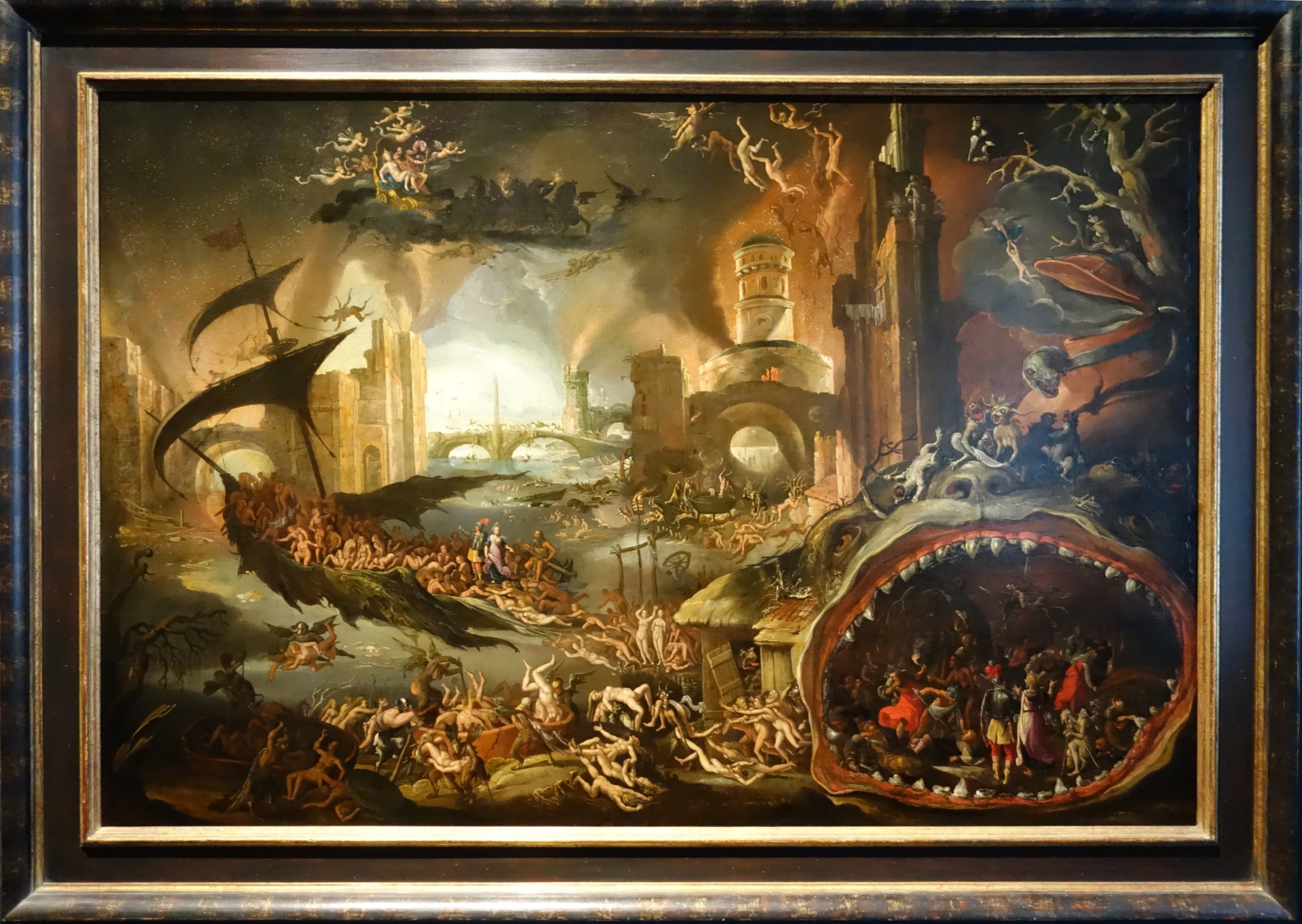
  42. Jan Jansz Orlers, Beschrijvinge der stadt Leyden, 2nd ed., Leiden 1641, p. 375; Walter L. Strauss et al., Rembrandt Documents, New York 1979, doc. 1641/8. For rare objections, see Roelof van Straten, Young Rembrandt. The Leiden Years, 1606-1632, Leiden 2005, p. 16; Benjamin Binstock, ‘The birth of Rembrandt’, in Michiel Roscam Abbing, ed., Rembrandt 2006. Essays, Leiden 2006, pp. 267-278 (arguing for 1607).
  43. Strauss, Rembrandt Documents, doc. 1669/6.
  44. E.B.F.F. Wittert van Hoogland, ‘Genealogie van den tak van het geslacht van Tetrode, welke zich Vinck genoemd heeft. Reconstructie van de genealogie voorkomende in het stam- en wapenboek van aanzienlijke Nederlandsche geslachten. Memoriael Gemaeck door N(icolaas) S(ebastiaensz.) V(inck)’, Genealogische en heraldische bladen 1 (1906), pp. 122-149.
  45. Dirk Rühl, ‘Het wapen van Rembrandt’s broeder Willem Harmensz. van Rijn een gelegenheids-wapen? Een heraldisch probleem’, Gens Nostra. Maandblad van de Nederlandsche Genealogische Vereniging 11 (1956), pp. 117-128, esp. p. 127.
  46. Strauss et al., Rembrandt Documents, doc. 1669/4 (misspelling the name as ‘Vlinck’). See also: http://remdoc.huygens.knaw.nl/#/document/remdoc/e13470 (accessed 22 December 2022).
  47. Warm thanks to Ingrid Pot for her kind assistance, and to P.J.M. De Baar for an impromptu consultation on the document, manuscript LB 6761 klein deel, Erfgoed Leiden en Omstreken, Leiden (hereafter ELO). The notebook is chronological but unpaginated; we therefore cite Wittert van Hoogland. See further Stephanie S. Dickey, ‘Ars longa vita brevis. Rembrandt’s death and the status of the artist in late seventeenth-century Amsterdam’, Nederlands Kunsthistorisch Jaarboek 72 (2022), pp. 234-271.
  48. R.E.O. Ekkart, ‘Familiekroniek Van Heemskerck en Van Swanenburg (I)’, Jaarboek van het Centraal Bureau voor Genealogie 32 (1978), pp. 41-70; idem., ‘Familiekroniek Van Heemskerck en Van Swanenburg (II)’, Jaarboek van het Centraal Bureau voor Genealogie 33 (1979), pp. 44-75 (deaths of Cornelis and Sylvester van Swanenburgh, pp. 54, 72, 75). See also Gary Schwartz, Rembrandt, his life, his paintings, New York 1985, p. 22; https://www.mijnstambomen.nl/leiden/swanenburg.htm (accessed 16 December 2022). The dates of Silvester van Swanenburgh’s death and burial are unrecorded; he prepared his will on 12 October 1669, being siechelick van lichaem leggende te bedde (sick in bed); ELO, 0506, notary Justus Gerstecoren, no. 1144, deed 124, 12-10-1669.
  49. Wittert van Hoogland, ‘Genealogie’, p. 135.
  50. Wittert van Hoogland, ‘Genealogie’, pp. 136, 137. Burial: https://archief.amsterdam/archief/5001/1056 (accessed 16 December 2022).
  51. Wittert van Hoogland, ‘Genealogie’, pp. 135.
  52. Ekkart, ‘Familiekroniek’, pp. 54, 72.
  53. Rudi van Maanen and Leendert van Maanen, ‘De grote epidemie van 1669-1670’, Leids Jaarboekje 2021, pp. 67-83, with further references.
  54. See Dickey, ‘Ars longa vita brevis‘, with further references.
  55. See esp. Christaan Vogelaar and Gerbrand Korevaar, eds., Rembrandt’s Mother. Myth and Reality, exh. cat. Leiden: Stedelijk Museum de Lakenhal 2005, pp. 88-91, 97-98, cat. 3-6, 9-10.
  56. We are grateful to Jos Beerens and Weixuan Li for advice on software to visualize this data.
  57. Reymptgen’s husband, Cornelis Bartholomeusz (Meesz.) van Tetrode (1505-1550), a grain dealer in Leiden, died before Neeltje and Bastiaen were born. See Strauss et al., Rembrandt Documents, doc. 1561/1, 1574/3, 1579/1, 1581/1,1582/2.
  58. Strauss et al., Rembrandt Documents, p. 24.
  59. Gerrit Cornelisz. Vinck is registered living in Leiden 1544-1583; Historisch Leiden in Kaart, https://historischleideninkaart.nl/persoonformulier/?Id=8986 (accessed 16 December 2022). He became poorter of Delft in 1584; Stadsarchief Delft, 1.733, fol. 054v, 5-5-1584. See also W.C. Tettero, Genealogie van Tetrode 1300-1600, Voorburg 2000, p. 61; J.P. Jacobs, ‘Rembrandt verwant met Philips van Leyden’, De Nederlandse Leeuw 102 (1985), column 457-465.
  60. See also ELO, Stadsarchief van Leiden, 0501A, 6597, Register Vetus 1582-1601, p. 8v. ‘t Gulden Warken belonged to Reymptgen In 1579; by 1581, she had transferred ownership to Dirck; Strauss et al., Rembrandt Documents, p. 31 and doc. 1579/1, 1581/1, 1585/1.
  61. Wittert van Hoogland, p. 123. Walsburch was buried several weeks later; SAA DTB 5001, 1054, p. 46vo, 8-5-1629. Prenuptual agreement, SAA 5075, 445, not. Palm Mathijsz, 17-2-1631.
  62. SAA DTB 5001, 671, p. 33 (marriage bans) 27-1-1628; DTB 1054, p. 46vo, 8-5-1629 (burial record).
  63. Wittert van Hoogland, p. 124. They married on 10 May at the Begijnhof and 13 May at the Amsterdam Town Hall.
  64. Wittert van Hoogland, p. 126. Clara became a begijn in 1643 and registered her will as a bejaaarde geestelijke dochter, wonende op het Begijnhof, in 1655, appointing her brothers her heirs; SAA 5075, 2454, not. R. Duee, akte nummer 57860, 8-10-1655.
  65. Wittert van Hoogland, p. 127; SAA, DTB 676, p. 145, 2-1-1642; 5033 Poorterboeken, no. 2, p. 199, 24-4-1642. In 1647 Albert purchased a home on the Haarlemmerstraat; SAA, 5073, Kwijtscheldingen, no. 928, 5-1-1647. He posted the banns for his second marriage, to Grietje Harmens van der Aa, on 2 December 1655; SAA, DTB 682, p. 356, 2-12-1655.
  66. Wittert van Hoogland, p. 127.
  67. SAA DTB, 1055, p. 94v (Clara); 1056, p. 252, 26-6-1683 (Albert).
  68. Cornelis was recorded on 24 April 1587 as a baker, age 21. In 1600, he purchased a house later owned by Karel van der Pluym. Strauss et al., Rembrandt Documents, doc. 1581/2, 1662/4; Schwartz, Rembrandt, p. 18 (diagram of Rembrandt’s family tree by P.J.M. de Baar).
  69. Strauss et al., Rembrandt Documents, doc. 1662/4; Marieke de Winkel, ‘ »Cousin » Karel van der Pluym and the benefit of family’, in Epco Runia and David de Witt, eds., Rembrandt’s Social Network. Family, friends, acquaintances, exh. cat., Amsterdam: Museum het Rembrandthuis 2019, pp. 61-65, citing a red and black chalk drawing on vellum, dated 1634 (private collection in New York).
  70. See Koos Levy-Halm, ‘Where did Vermeer buy his painting materials? Theory and practice’, in Ivan Gaskell and Michiel Jonker, eds., National Gallery Studies in the History of Art, Vol. 55, Vermeer Studies, 1988, pp. 137-143; Jo Kirby, ‘The painter’s trade in the seventeenth century: theory and practice’, National Gallery Technical Bulletin 20 (1999), pp. 5-49.
  71. See Stephanie S. Dickey, Rembrandt. Portraits in Print, Amsterdam/Philadelphia 2004, pp. 141-149; Runia and De Witt, eds., Rembrandt’s Social Network, p. 124.
  72. Orlers, Beschryvinge, p. 373; https://rkd.nl/explore/artists/51111 (accessed 2 January 2023)
  73. Rudolf E.O. Ekkart, Isaac Claesz. van Swanenburgh 1537-1614, Zwolle 1998, p. 14. For the prenuptial agreement, Jacobge was assisted by her father Claes Isaacsz and her brothers Isaac Claesz and Claes Claesz; ELO, 0508 Het oude rechterlijke archief van Leiden, no. 76B-2, fol. 375, 15-10-1570.
  74. ELO, 0501A, Stadsarchief van Leiden, 1574-1816, no. 1289, Register van de volkstelling 1581, fol. 9.
  75. See Marije Osnabrugge, The Neapolitan Lives and Careers of Netherlandish Immigrant Painters (1575-1655), Amsterdam 2019, esp. pp. 66-73, 115-123. The Antwerp-born portraitist Abraham Vinck (1574/75-1619) associated with Jacob van Swanenburgh in Hamburg 1589-1598 and later in Naples; in 1602, he witnessed Van Swanenburgh’s marriage to Margaretha Cardone. He lived in Amsterdam 1609-1619. Rembrandt’s bankruptcy inventory includes ‘een doode Contrefijtsel van Abraham Vinck‘; Strauss et al., Rembrandt Documents, doc. 1656/12, no. 86, but we have not yet found a link between Abraham and the Vinck family discussed here.
  76. Ekkart, Isaac Claesz. van Swanenburgh, esp. p. 71; Schwartz, Rembrandt, pp. 22-23.
  77. Strauss et al., Rembrandt Documents, doc. 1620/1; Jef Schaeps and Mart van Duijn, Rembrandt en de Universiteit Leiden, Leiden 2019, esp. p. 28.
  78. Orlers, Beschryvinge, p. 375.
  79. Ekkart, ‘Familiekroniek’, pp. 71-72. Schwartz, Rembrandt, p. 17; Van Straten, Young Rembrandt, p. 24.
  80. ELO, Register van poorterinschrijvingen F, 1267, fol. 279v, 16-4-1638; Buurquestieboeken, 48G, fol. 105v, no. 2355, 12-9-1661; 0506, Notary Justus Gerstecoren, 1144, deed no. 124, 12-10-1669.
  81. Ernst van de Wetering, ‘Rembrandt’s gift and the underrated importance of his apprenticeship with Jacob isaacsz. van Swanenburg’, in Ernst van de Wetering and Bernhard Schnackenburg, eds., The Mystery of the Young Rembrandt, exh. cat., Kassel: Gemäldegalerie Alte Meister and Amsterdam: Museum het Rembrandthuis 2001, pp. 32-38.
  82. Strauss, et al., Rembrandt Documents, p. 69, doc. 1630/5; Schwartz, Rembrandt, p. 23; English translation: Wheelock, ed., et al., Jan Lievens, p. 286.
  83. Bakker, ‘Rembrandt and the emergence’; Vogelaar, ‘Rembrandt in Leiden’; Orlers, Beschryvinge, p. 376.
  84. See Boudewijn Bakker, ‘Rembrandt and the humanist ideal of the universal painter’, in Stephanie S. Dickey, ed., Rembrandt and his Circle. Insights and Discoveries, Amsterdam 2017, pp. 67-98.
  85. Volker Manuth, Marieke de Winkel and Rudie van Leeuwen, Rembrandt. The Complete Paintings, Cologne 2019, cat. 121.
  86. Carel Vosmaer, Rembrandt. Sa vie et ses oeuvres, The Hague 1877, pp. 28-35, 469, 461, unaware of Vinck’s Memoriael, posited a relationship to the Van Swanenburghs on Rembrandt’s father’s side. Ekkart, Isaac Claesz van Swanenburgh, p. 11, dismissed this. However, Claes Cornelisz van Berckel, half-brother of Harmen Gerritsz van Rijn, was married to Brechtje Mourijnsdr. van Swanenburch. The half-brothers lived next door to each other on the Weddesteeg in 1605 and 1624 and owned a mill together; ELO, Buurquesties 48B, blad 2, aktenummer 520, 4-4-1605; 48D, blad 201, aktenumer 1339, 22-4-1624; Tiende Register, Bon Noord-Rijnevest (B), Stadsvrijdom en molens op de wallen, archiefnummer 501A, Stukken betreffende afzonderlijke onderwerpen; Registratie van onroerend goed 1585-1816 (1819), inventarisnummer 6634, blad 31, 1602-1724. It is not yet clear how Brechtje Mourijnsdr. connects to Jacob and Silvester van Swanenburgh. See also Schwartz, Rembrandt, pp. 21-25.
  87. For context, see S.A.C. Dudok van Heel, ‘Rembrandt van Rijn (1606-1669), een remonstrantsgezind schilder uit calvinistisch Leiden’, in idem., De jonge Rembrandt onder tijdgenoten. Godsdienst en schilderkunst in Leiden en Amsterdam, Nijmegen 2006, pp. 177-223.
  88. On art patronage in Leiden, see esp. Gerbrand Korevaar, ‘Leiden in Rembrandt’s time’, in Van de Wetering and Schnackenburg, Mystery, pp. 12-21; Piet Bakker, ‘Rembrandt and the emergence of the Leiden art market’, in Jacquelyn N. Coutré, ed., Leiden ca. 1630. Rembrandt Emerges, exh. cat., Kingston: Agnes Etherington Art Centre 2019, pp. 66-95. We are grateful to Piet Bakker for advice on the present essay.
  89. Dirk Traudenius, Tyd-zifter, Amsterdam 1662, p. 16; Arnold Houbraken, De groote schouburgh der Nederlandtsche konstschilders en schilderessen, Amsterdam 1718-21, III, p. 33; H. Schneider, ed. by R.E.O. Ekkart, Jan Lievens, Sein Leben und Seine Werke, Amsterdam 1973, p. 151, no. 262; https://houbraken-translated.rkdstudies.nl/3-1-59/page-30-39/ (accessed 16 December 2022,) with English translation. The painting has not been discovered.
  90. Wheelock, ed., Jan Lievens, pp. 3, 16-17, fig. 19. The painting was destroyed in 1929.
  91. On their extended connection, see Stephanie S. Dickey, ‘Jan Lievens in Rembrandt’s house’, Kroniek van het Rembrandthuis 2008, pp. 36-53.
  92. As noted above, Cornelis van Swanenburgh’s mother was Adriana van Leeuwen. Rembrandt’s oldest brother, Adriaen van Rijn, married Lystbertgen Symonsdr van Leeuwen in 1617, and Willem van Rijn married Willempje Pietersdr van Steylandt, widow of Jacob Symonsz van Leeuwen, in 1636; Rühl, ‘Het wapen’, pp. 117-119, 123.
  93. Bakker, ‘Rembrandt and the Emergence’, pp. 81-83; Wheelock, ed., Jan Lievens, p. 84, cat. 2.
  94. Orlers, Beschryvinge, pp. 367-377; Bakker, ‘Rembrandt and the emergence’, p. 82. One of these was a ‘Pylatus’, possibly Pilate Washing his Hands (Raleigh, North Carolina Museum of Art); Wheelock, ed., Jan Lievens, p. 289.
  95. Strauss et al., Rembrandt Documents, doc. 1663/7; Schwartz, Rembrandt, p. 37; Dudok van Heel, ‘Rembrandt van Rijn’, pp. 190-193; Christopher Brown, An van Camp and Christiaan Vogelaar, eds., Young Rembrandt, exh. cat., Leiden: Museum De Lakenhal and Oxford: Ashmolean Museum 2019, pp. 24, 158-160. Angela Jager is preparing a study of art patronage in Rembrandt’s family network.
  96. Bakker, ‘Rembrandt and the Emergence’, pp. 85-90.  See also C. Willemijn Fock, trans. by Anne Baudoin, ‘Art ownership in Leiden in the seventeenth century’, Journal of Historians of Netherlandish Art  13:1 (2021), DOI: 10.5092/jhna.2021.13.1.4.
  97. For an overview and analysis of the phenomenon of the atelier scene in Dutch art, see Katja Kleinert, Atelierdarstellungen in der niederländischen Genremalerei des 17. Jahrhunderts : realistisches Abbild oder glaubwürdiger Schein?, Petersburg 2006.
  98. Werner Sumowski, Drawings of the Rembrandt School, vol. 7, New York 1983, pp. 3648-3649, no. 1636bx (ill.). 
  99. Arthur K. Wheelock, ed., Jan Lievens. A Dutch Master Rediscovered, exh. cat. Washington: National Gallery of Art; Milwaukee: Milwaukee Art Museum; Amsterdam: The Rembrandt House Museum 2008/09, p. 246, no. 106.
  100. And not that between Apollo and Marsyas, as indicated by Sumowski.
  101. No painting of this theme is known by Lievens. There was a depiction of the contest between Apollo and Marsyas, showing Apollo playing the lyre, in the sale of the collection of the Count of Arundel, likely the same work later with the widow of Jürgen Ovens in 1691. See Hans Schneider and Rudi Ekkart, Jan Lievens: sein Leben und seine Werke. Amsterdam 1973, pp. 110-111, no. 78.
  102. Werner Sumowski, Gemälde der Rembrandtschüler, Landau 1983-1994, vol. 6 (1994), pp. 3691-3692, nos. 2185a-2194.
  103. Nos. 2857-2861 in: Sumowski, Drawings (see note 2), vol. 12, Addenda (in translation, forthcoming in 2023).
  104. Ibid., vol. 3, p. 1965, note 65. Currently assigned no. 2857 in vol. 12 (see note 2); sale, Paris (Christie’s), 21.3.2002, lot 114.
  105. Ibid., vol. 3, pp. 1961, 1965, 1977 (illus.). Sale, London (Bonhams), 29 October 2014, lot 147 (colour illus.).
  106. Amsterdam, Sotheby’s, 11 November 1997, lot 25, colour ill., as Lievens. Sumowski is far more hesitant here than with the Mettingen drawing: Drawings (see note 2), pp. 3904-3905, no. 1757xx, illus.: “…an unqualified attribution cannot be entertained  because there is no material for comparison.”
  107. Jan Lievens, Peasant Dwelllings under Trees with Milkmaid, pen in brown and brush in brown and grey, 108 x 193 mm, Dresden, Kupferstichkabinett, Staatliche Museen Dresden, inv. no. C 1453; see Sumowski, Drawings (see note 2), pp. 3724-3725, no. 1672 (illus.).
  108. See: Michiel Roscam Abbing, De schilder & schrijver Samuel van Hoogstraten, 1627-1678. Eigentijdse bronnen & oeuvre van gesigneerde schilderijen, Leiden 1993, pp. 40-41; Volker Manuth, “Dordrecht: bakermat voor Rembrandts leerlingen”, Bulletin Dordrechts Museum 3 (2006), pp. 3-7; and: David de Witt, Abraham van Dijck (1635-1680). Life and Work of a Late Rembrandt Pupil, Zwolle 2020, pp. 11-13.
  109. As also observed in Paarlberg, Bisschop (see note 12), p. 24.
  110. On their friendship see De Witt, Abraham van Dijck (see note 4), p. 108.
  111. David de Witt, The Bader Collection: Dutch and Flemish Paintings, Kingston 2008, pp. 63-64, no. 31), correcting Sumowski’s dating to the early 1660s, with the observation of hesitancy in handling that points to an earlier period.
  112. Arnold Houbraken, De groote schouburgh der Nederlantsche konstschilders en schilderessen, vol. 2, The Hague 1719, p. 220. They seem to have largely been lost. The only example linked to him is A Boy Asleep in an Enclosed Chair, c. 1655/60, oil on wood, 97.2 x 66.5 cm, London, with Johnny van Haeften in 2007; see Sumowski, Gemälde (see note 6), vol. 6 (1994), p. 3692, no. 2192, p. 3776 (illus., as Bisschop). It is unsigned, and clearly derived from a similar work signed and dated 1654 by the Haarlem painter Johannes Verspronck: oil on panel, 96 x 75.7 cm, Belgium, private collection. On this basis it has been attributed to that artist as well see: Rudi Ekkart in: Pride and Joy. Children’s Portraits in The Netherlands 1500-1700, exh. cat. Haarlem: Frans Halsmuseum; Antwerp: Koninklijk Museum voor Schone Kunsten Antwerpen, 2000-2001, pp. 227-229, no. 60. However, the thicker application of paint and harsher contrasts in the London version diverge from the one signed by Verspronck, and indeed more closely approximate Bisschop’s painting style of around 1660. If by him, this would suggest that Verspronck supplied an additional impulse for making such cutout paintings, besides Van Hoogstraten and his championing of illusionism.
  113. Houbraken, Schouburgh (see note 16), vol. 2 (1719), pp. 157-158.
  114. See the important analysis by Thijs Weststeijn: The Visible World. Samuel van Hoogstraten’s Art Theory and the Legitimation of Painting in the Dutch Golden Age, Amsterdam 2008.
  115. Sander Paarlberg, “Bisschop op zijn best. Dordrechts Museum krijgt zijn eigen Melkmeisje”, Bulletin van de Vereniging Rembrandt 25, no. 1, (2015), pp. 22-24, colour illus.
  116. Samuel van Hoogstraten, Inleyding tot de Hooghe Schoole der Schilderkonst, Dordrecht, 1678, p. 12.
  117. We do not include a painting attributed to Bisschop: The Young Artist in his Studio, c. 1653, oil on canvas, 90.8 × 76.8 cm, Detroit, Detroit Institute of Arts, inv. no. 38.29, as attributed to Cornelis Bisschop; George Keyes, in: Masters of Dutch Painting: The Detroit Institute of Arts, London 2004, pp. 28–29, no. 8 (ill.). The drawing shown in the lower left, a classic two-chalk drawing on blue-grey paper, underscores the stylistic evidence against his authorship, pointing instead to the circle around Govert Flinck (1615-1660) and Jacob Adriaensz. Backer (1608-1651); perhaps Adam Camerarius (?–1666).
  118. Constantijn Daniël à Renesse, Rembrandt and his Pupils Drawing from a Nude Model, black chalk, brush in brown, 180 x 266 mm, Hessisches Landesmuseum, Darmstadt, inv. no. AE 665; on the attribution see Peter Schatborn, Rembrandt and his circle: drawings in the Frits Lugt collection, Bussum 2010, p. 335.
  119. Rembrandt, Rembrandt’s Studio with a Half-Nude Model, c. 1654/58, pen and brush in brown, with white body colour, 205 x 190 mm, Oxford, Ashmolean Museum, inv. no. P.I.192 (WA1855.8): Peter Schatborn in Rembrandt : The Complete Etchings and Drawings, Cologne 2019, p. 269, no. T438 (colour illus., as c. 1654).
  120. Rembrandt, Bathsheba with King David’s Letter, 1654, oil on canvas, 142 x 142 cm, Paris, Musée du Louvre, inv. no. M.I. 975: Ernst van de Wetering, Rembrandt’s paintings revisited : a complete survey, Dordrecht, Boston and Lancaster 2014, pp. 623-624, no. 231; Volker Manuth, Marieke de Winkel and Rudie van Leeuwen, Rembrandt: the Complete Paintings, Cologne 2019, pp. 507-508, no. 23. As Van de Wetering explains, the pose of Bathsheba was originally conceived with an upward glance and turn of the head.
  121. Rembrandt, A Woman Sitting Half-Dressed beside a Stove, 1658, etching, buring and drypoint, 226 x 194 mm, in seven states: Erik Hinterding and Jaco Rutgers, The New Hollstein Dutch & Flemish Etchings, Engravings and Woodcuts 1450-1700, vol. 25-II: Rembrandt, Ouderkerk aan den IJssel 2013, pp. 292-294, no. 307.
  122. Houbraken, Schouburgh (see note 16), vol. 1 (1718), p. 271.
  123. As discussed by the author in: David de Witt and Franziska Gottwald, “Rembrandt & Light” in: Rembrandt’s Light, exh. cat. Dulwich, Dulwich Picture Gallery, 2019-2020, pp. 33-34 (the date of the drawing mistakenly altered in editing; should read c. 1654/58).
  124. See www.elephanthansken.com for a current collection of all the traces left by Hansken and her owner, brought together thanks to the research of Michiel Roscam Abbing. In 2016 M. Roscam Abbing, Rembrandts olifant. In het spoor van Hansken appeared, followed in 2021 by an updated edition in English translation entitled Rembrandt’s Elephant. Following in Hansken’s Footsteps, both with Leporello in Amsterdam.
  125. In Het Schilder-boeck of 1604 (Haarlem) Karel van Mander calls drawing the father of all of the arts. Constant practice, especially taking everything that nature offers as model, will make the artist successful; see fol. 8r+v, Van het teyckenen, oft Teycken-const. Tweede Capittel.
  126. W. Goeree, Inleydingh Tot de Praktijck Der Al-gemeene Schilder-Konst, Middelburg 1670, p. 121.
  127. For an overview see P. Schatborn, E. Hinterding, Rembrandt. Alle tekeningen en etsen, Cologne 2019, pp. 285-301.
  128. No. 249 in the inventory, see document/remdoc/e12724. For more background on Rembrandt’s collection, see B. Broos e.a., Rembrandt’s Treasures, Amsterdam 1999.
  129. Peter Schatborn accepts six lion drawings as autograph: Rembrandt, A Lioness or Young Lion with Prey (a Bird), Reclining, with Head to the Left, 1637-1641. Charcoal and wash, with white highlights, on prepared paper, 126 x 239 mm. London, British Museum, inv. no. Oo,9.71; Rembrandt, Reclining Lioness or Young Lion, with Head to the Right, 1637-1641. Charcoal and wash, with white highlights, on prepared paper, 125 x 180 mm. London, British Museum, inv. no. Oo,9.75; Rembrandt, Reclining Lioness or Young Lion, from the Front, 1637-1641. Charcoal and wash, with white highlights, on prepared paper, 115 x 150 mm. New York, The Leiden Collection, inv. no. RR-100; Rembrandt, Reclining Lion with Prey, c. 1650. Pen and brush in ink, brush in white paint, with traced contours, 140 x 203 mm. Rotterdam, Museum Boijmans Van Beuningen, Collection Franz Koenigs, inv. no. R 12; Rembrandt, Reclining Lion, c. 1650. Pen and brush in ink, 138 x 207 mm. Paris, Musée du Louvre, inv. no. RF4721; Rembrandt, Reclining Lion, c. 1660. Pen in brown on prepared paper, 122 x 212 mm. Amsterdam, Rijksmuseum, inv. no. RP-T-1901-A-4524.
  130. For lions, see M. Roscam Abbing, P. Tuynman, “Rembrandts drawings of the elephant Hansken”, in M. Roscam Abbing (ed.), Rembrandt 2006: Essays, Leiden 2006, pp. 173-189, p. 189.
  131. Rembrandt, Young Asian Elephant (Hansken), 1637. Black chalk, 233 x 354 mm. Vienna, Albertina, inv. no. 17558; Rembrandt, Asian Elephant (Hansken) in three different poses with steward. Black chalk, 239 x 354 mm. Vienna, Albertina, inv. no. 8900; Rembrandt, Asian Elephant (Hansken) with Spectators. Black chalk and charcoal, 179 x 256 mm. London, British Museum, inv. no. Gg,2.259.
  132. Rembrandt or pupil, Asian Elephant (Hansken), c. 1637. Black chalk and graphite, counterproof. 194 x 189 mm. New York, The Morgan Library & Museum, inv. no. I, 205.
  133. The drawing has in the meantime been published in M. Roscam Abbing, Rembrandt’s Elephant (see note 1), pp. 22-23. The interpretation of the drawing there is based on the research presented in this article.
  134. In the possession of Peter Schatborn, the owners of the drawing, and the author of this article.
  135. There is no available image of the watermark, so further identification is not possible at the moment.
  136. Female Asian elephants generally do not have tusks. But where present, they do not grow to longer than 10 cm, which does render them visible between the folds of the skin. Hansken had short visible tusks of this kind. Her skeleton, which was preserved after her death in 1655, and is kept on display at the natural history museum La Specola, shows evidence of this: the skull shows the stumps of tusks. The English traveller and writer wrote in 1641 in his diary: “his teeth were but short being a female, and not old, as they told us”. Zie E.S. de Beer (red.), The diary of John Evelyn, Vol. 2. In the same year Ernst Brinck observed: “zijn naar buiten uitstekende slagtanden waren nog maar weinig meer dan een vinger lang” (his protruding tusks were only a little more than a finger long). See also Roscam Abbing and Tuynman, “Rembrandt’s Drawings…” (see note 7), pp. 173-189. There it is explained how in 1633 Hansken’s tusks were not yet visible. In 1641 they were, according to the description of Evelyn and Brinck. They may have been broken off after then, not subsequently growing long enough to be visible.
  137. Roscam Abbing and Tuynman, “Rembrandt’s Drawings…” (see note 7), p. 184 and Roscam Abbing, Rembrandt’s Elephant (see note 1), pp. 24-25.
  138. Jan Mollijns, Commemorative Print of the Asian Elephant Emanuel, 1563. Hand coloured woodcut, 285 x 400 mm. London, The British Museum, inv. no. 1928,0310.97, https://www.britishmuseum.org/collection/object/P_1928-0310-97; Gerard van Groeningen, Commemorative Print of the Asian Elephant Emanuel, in Eight Different Poses, in or after 1563. Etching, 405 x 541 mm. Amsterdam, Rijksmuseum, inv. no. RP-P-OB-59.019; Wenceslaus Hollar (after Gerard van Groeningen), Commemorative Print of the Asian Elephant Don Diego, 1629. Etching, 245 x 283 mm. Amsterdam, Rijksmuseum, inv. no. RP-P-1976-16.
  139. See Chronycke van Antwerpe sedert het jaer 1500 tot 1575. Gevolgd van Eene beschryving van de historie en het landt van Brabant, sedert het jaer 51 vóór J.-C., tot 1565 na J.-C., volgens een onuitgegeven handschrift van de XVIe eeuw, edition of 1843, Antwerp, p. 59: “(…) anno 1563, int eynde van september, doen quam tot Antwerpen tschepe eenen olifant vuyt Portugael, off daer ontrent, oudt by de negen jaeren, hooge acht voeten; desen ginck sdaechs achter straeten dattet een yegelyck sien moechte: desen was seer tam ende wert geregeert van eenen moor doende alwat den moor hem gebiede: desen olifant hiet Emanuel.” (in the year 1563, at the end of September, there came by ship to Antwerp an elephant from Portugal, around nine years old, eight feet tall; it went by day through the streets so that all could see it: it was very tame and was led by a Moor, doing everything the Moor commanded: this elephant was called Emanuel). See e.g. also S. Dackerman, Prints and the Pursuit of Knowledge in Early Modern Europe, New Haven 2011, cat. no. 34.
  140. See note 15. For the impression in the collection of the Rijksmuseum see http://hdl.handle.net/10934/RM0001.COLLECT.119126.
  141. Hansken appeared in Amsterdam on four occasions: in the summer months of 1633 and at the fairs (kermissen) of 1637, 1641 and 1647. One of the drawings by Rembrandt can be connected to the fair of 1637, because Rembrandt dated the sheet. Peter Schatborn dates the other two drawings of Hansken by Rembrandt to the same year. However the drawing of Hansen in three poses (Albertina, inv. no. 8900) appears to have been made on a later occasion, in 1641. The animal in that drawing is noticeably older than in the sketch of 1637. See also Roscam Abbing and Tuynman, “Rembrandt’s Drawings…” (see note 7), pp. 173-189. Further research on the paper in the future may yield more information on the dating.
  142. Up to Rembrandt’s time, there was limited knowledge in Europe concerning elephants. What people thought to know was based on what Pliny the Elder had written in his Natural History (77-79 C.E.). Or on medieval legends such as could be read in the Physiologus, an ancient Greek moralizing text on plants and (mythical) animals. Over the course of time there appeared more and newer editions of these stories. Jacob van Maerlants Der naturen bloeme (c. 1350) is one example, in which the texts are no longer presented in Latin but in Dutch (“Dietsch”). In 1588 Christophel Plantijn in Antwerp published a collection of texts – including the Physiologus – under the title Sancti Patris Nostri Epiphanii, Episcopi Constantiae Cypri, ad Physiologum. Eiusdem in die festo Palmarum sermo. A century later, at the end of the 17th century, the skeleton Hansken, the elephant that died in 1655 in Florence, became accessible to scholars. This led to new insights into the existence of an ancestor species, the mammoth. A Latin description of Hansken’s skeleton by John Ray formed the basis in the 18th century for Carolus Linnaeus’ scientific description of the elephant in terms of its species.
  143. For the copy of the album in the collection of the Rijksmuseum, see: http://hdl.handle.net/10934/RM0001.COLLECT.353205. For the two prints in its, respectively of five and three elephants, see: http://hdl.handle.net/10934/RM0001.COLLECT.353210 and http://hdl.handle.net/10934/RM0001.COLLECT.353211.
  144. For the copy in the collection of the Rijksmuseum, see: http://hdl.handle.net/10934/RM0001.COLLECT.33090. Don Diego was in Europe from 1623 to 1635 in Europa. For more information on Don Diego see L. Rice, “Poussin’s Elephant”, Renaissance Quarterly 70 (2017), pp. 548-593; M. Roscam Abbing, “Poussin’s Elephant Revisited”, in Source: Notes in the History of Art 39 (2020), pp. 109-119.
  145. Op de kunstcaemer (….) [235] Een Oost-Indies benneken daarin verscheyde prenten van Rembrant, Hollaert, Cocq en andere meer”. See document/remdoc/e12723.
  146. [i] For his etching of Joseph and the Wife of Potiphar of 1634 (B39/ NHD128) Rembrandt looked to the etching of the same theme by Tempesta, of 1613. And Tempesta’s prints of lion hunts served as model for Rembrandt in his own depictions of the theme, the two small lion hunts of c. 1629 (B115/ NHD28, B116/ NHD29) and his large lion hunt of 1641 (B114/ NHD187). See e.g. B. van den Boogert, J. van der Veen, Dat kan beter! Rembrandt en de oude meesters, Amsterdam 2013, pp. 52-55.
  147. Nos. 210 – 212 in the inventory. See document/remdoc/e12721 and document/remdoc/e12722.
  148. See for example in the collection of the Rijksmuseum: God Creates the Animals http://hdl.handle.net/10934/RM0001.COLLECT.183114, Cain Murdering Abel http://hdl.handle.net/10934/RM0001.COLLECT.183148, Orpheus Enchanting the Animals with his Music http://hdl.handle.net/10934/RM0001.COLLECT.183809, Combat of the Centaurs and Various Animals http://hdl.handle.net/10934/RM0001.COLLECT.608702, God Commands Adam And Eve Not To Eat of The Tree of Knowledge http://hdl.handle.net/10934/RM0001.COLLECT.183140.
  149. See also Roscam Abbing, Rembrandts olifant (see note 1), pp. 22-23; Rembrandt’s Elephant (see note 1), pp. 24-25. Besides the iconography there described of the elephant as a chaste animal, and thereby symbol of humanity before the Fall into Sin, Rembrandt incorporated two myths about elephants. The myth of the mating ritual of elephants refers namely to the sin of the first people in the world. In order to stimulate arousal in the male, the female offers an aphrodisiac. Eve gives the forbidden fruit of the Tree of Knowledge of Good and Evil to Adam, and this fruit in fact serves as an aphrodisiac. Because after eating this fruit they become aware of their desires. And further it was said of elephants and dragons that they were symbols respectively of good and evil, and that they were each other’s greatest enemies. The draco (Latin, translatable as dragon or serpent) hides in a tree, in order to drop down onto an elephant walking by. What follows is a fight to the death, in which both animals perish. Rembrandt also refers to this coming event, as symbol of the struggle between good and evil that will result from Adam and Eve’s fall into sin.
  150. Respectively nos. 161, 178, 189, 298 and 307 in the inventory, see: document/remdoc/e12719, document/remdoc/e12719, document/remdoc/e12720, document/remdoc/e12727.
  151. The fact Rembrandt’s insolvency inventory contains such detailed information is one of the reasons to believe that Rembrandt himself dictated how the objects were to be described at the taking of the inventory, on 25 and 26 July 1656.
  152. For further information on this elephant see: M. Roscam Abbing, “‘So Een Wunder heeft men hier nooijt gesien’ De Indische vrouwtjesolifant (1678/80-1706) van Bartel Verhagen”, Jaarboek Amstelodamum 106 (2014), pp. 68-95.
  153. The tusks were probably added because they appear in the original print by Van Groeningen and were seen as a typical feature of an elephant. Hansken too was given prominent tusks in some illustrations. In one instance (a drawing from life, but embellished from imagination) it is clear that the artist tried to indicate how tusks would look on her. Stefano della Bella, Elephant (Hansken), with a Black Man. Pen and brush in ink, 128 x 159 mm. Present location unknown (sale,London, Christie’s, 18 March 1975, lot 17). For more on this drawing see: https://www.elephanthansken.com/wp-content/uploads/2013/07/fig.-17.jpg. Around 1647 a publicity or commemorative print of Hansken was also made. For the impression in the Rijksmuseum see http://hdl.handle.net/10934/RM0001.COLLECT.432625. Also in this print, she was mistakenly endowed with tusks, following the example of the print of Don Diego, which also served as model for the arrangement of the print with a central image surrounded by smaller images.
  154. See document/remdoc/e4447.
  155. Idem. RemDoc does not supply the detailed list of the works that Rembrandt purchased. The Rembrandt Documents (W. Strauss and M. van der Meulen, New York 1979) does summarize them (see doc. no. 1638/2). It is evident that over the auction days Rembrandt purchased various individual prints by Albrecht Dürer, a woodcut series of The Life of the Virgin, and a Passion series. The print Christ in Limbo was part of Dürer’s engraved Passion of 1511-1513.
  156. See also J. Schaeps e.a. Leiden viert feest! Hoogtepunten uit een academische collectie, 2014, cat. no. 17.
  157. See also Roscam Abbing, Rembrandts olifant (see note 1), pp. 22-23; Roscam Abbing, Rembrandt’s Elephant (see note 1), p. 24; Joost van den Vondel also incorporated Hansken’s presence into his work. She was on display in the city in September 1637 as Vondel was completing his play Gijsbrecht van Aemstel. This work premièred on 3 January 1638 in honour of, and in, the Amsterdam Schouwburgh on the Keizersgracht. In one of the scenes (line 1304) Vondel refers to one of the tricks Hansken performed during her appearances; see Roscam Abbing, Rembrandts olifant (see note 1), pp. 49-51.
  158. S.A.C. Dudok van Heel, Dossier Rembrandt. Documenten, tekeningen en prenten, Amsterdam 1987, pp. 4-5.
  159. See: https://archief.amsterdam/indexen/.
  160. In the process of this indexing several hitherto unknown references to (possible) Rembrandt paintings in inventories surfaced, such as for example Rembrandt’s portrait of Cornelis Claesz Anslo and Aaltje Gerrits Schouten, which according to the testament of their granddaughter Teuntje Hartens hung in the front hall on the Nieuwmarkt; Myrthe Bleeker, “Een Rembrandt in het voorhuis”, Alle Amsterdamse Akten, 8 February 2021, https://www.alleamsterdamseakten.nl/artikel/2648/een-rembrandt-in-het-voorhuis/. Source: Stadsarchief Amsterdam (Amsterdam City Archives) (SAA), access no. 5075, Archief van de Notarissen ter Standplaats Amsterdam (Archive of Notaries in Amsterdam), inv.no. 8511, akte 732, 19 December 1732. Jirsi Reinders en Mark Ponte,“Cardinaal van Rembrandt”, Ons Amsterdam 73 (2021), pp. 38-39; https://onsamsterdam.nl/cardinaal-van-rembrandt-van-rijn. See also the Rembrandt Dossier on the same website: https://www.alleamsterdamseakten.nl/tag/299/rembrandt/.
  161. SAA, “Google door honderdduizenden historische handschriften”, 9 March 2021, https://www.amsterdam.nl/stadsarchief/nieuws/transkribus/ (accessed 20 October 2021). The search platform can be used at https://transkribus.eu/r/amsterdam-city-archives/#/. More information on Transkribus can be found at: https://readcoop.eu/transkribus/?sc=Transkribus.
  162. SAA, access no. 5075, Notarissen (Notaries), inv. no. 1476 (unpaginated) (scans Archiefbank: KLAG03161000143 – KLAG03161000150) (minuutakte) and SAA, access no. 5075, Notarissen (Notaries), inv. no. 1492, f. 305r-312r Afschrift (archive copy), both of 7 August 1665. On 22 October 1666 there was a subsequent report on the management of the estate: SAA, access no. 5075, Notarissen (Notaries), inv. no. 1493, f. 156v-159r; idem concerning the pre-bequest to Jacob Wesselsz Wiltingh’s sister Willemtie Wessels: SAA, access no. 5075, Notarissen (Notaries), inv. no. 1493, f. 154v-156v.
  163. Jan Wagenaar, Amsterdam in zyne opkomst, aanwas, geschiedenissen, voorregten, koophandel, gebouwen, kerkenstaat, schoolen, schutteryen, gilden en regeeringe, vol. 3, Amsterdam 1768, pp. 499-502. The city messengers registers have not survived.
  164. SAA, access no. 5075, Notarissen (Notaries), inv. no. 1492, f. 310r-v.
  165. SAA, access no. 5075, Notarissen (Notaries), inv. no. 2196, p. 191; Remdoc no. 1654/4: http://remdoc.huygens.knaw.nl/#/document/remdoc/e1661.
  166. SAA, access no. 5075, Notarissen (Notaries), inv. no. 1476, z.f. (scan Archiefbank: KLAG03161000148) (minutes record); SAA, access no. 5075, Notarissen (Notaries), inv. no. 1492, f. 309v Afschrift (archive copy), both 7 August 1665. In the minutes there is a comma between “schilder” (painter) and “Isercramer” (ironmonger), which is missing in the archive copy.
  167. Estate inventory of Koert Kooper; Remdoc (see note 8) no. 1660/4: Maerten Daey (1660/8), Clara de Valaer (1660/15), Magdalena van Lemens (Remdoc 1661/4), Christoffel Hirschvogel (1661/10), Willem van Campen (1661/11), Willem Schrijver (1661/14), Matthijs Hals (1662/1), Johanna de Smit (1662/1a), Gerard van der Voorde (1663/8). Only in the inventory of Clara de Valaer is the painter named as “Rembrant van Rhyn”.
  168. SAA, access no. 5001, Archief van de Burgerlijke Stand: doop-, trouw- en begraafboeken van Amsterdam (baptism, marriage and burial books of Amsterdam) (retroacta of the citizen’s registry), inv. no. 473, p. 471; inv. no. 493, p. 120. On 12 November 1654, a child of Rembrandt Gerdes was baptized in the Noorderkerk, inv. no. 76, p. 18. On 19 July 1664, Rembrant van Ruijnen was buried together with his child in the St. Anthoniskerkhof, inv. no. 1193, p. 98.
  169. SAA, access no. 5033, Archief van de Burgemeesters (Burgomasters’ archive): poorterboeken (citizenship books), inv. no. 2, Register van gekochte poorters (Registry of citizens by purchase), p. 474. Wiltingh is not mentioned in the incomplete surviving registration of baptisms of Hasselt in the years 1591-1597, 1614-1618 and 1632-1651; Historisch Centrum Overijssel, access no. 124 Doop-, trouw- en begraafboeken (dtb, retroacta van de Burgerlijke Stand) in Overijssel (Baptism, marriage and burial books (dtb, retroacts of the civil registry) in Overijssel), inv.nr. 247, Doopboek Hasselt (baptism book Hasselt) 1591-1689.
  170. This is also evident from his listing in the registers of the collateral succession: SAA, access no. 5046, Archief van de Secretaris: stukken betreffende de ontvangst van de twintigste penning op de Collaterale Successie, inv. no. 2, f. 5v (scan 85). (Archive of the City Secretary; records concerning the collection of the twentieth penny on the indirect inheritance)
  171. Considering the (familial) relations, this provenance is likelier than from the city of Hasselt in todays Belgian province of Limburg.
  172. SAA, access no. 5039, Thesaurieren Ordinaris (Treasurers Extraordinary), inv. no. 554, f. 272v. The purchase price was 5600 guilders. In this registry of plots sold by the city during the period 1630-1658 this is the only reference to one Jacob Wessels. The purchases of the lot was Romeyn de Hooghe III (1605-1669), and his brother Daniel de Hooghe (1614-1657) was the second guarantor. On these members of the De Hooghe family: Henk van Nierop, The life of Romeyn de Hooghe 1645-1708. Prints, Pamphlets, and Politics in the Dutch Golden Age, Amsterdam Studies in the Dutch Golden Age, Amsterdam 2018, Genealogical Table 1-2, p. 42 and pp. 420-421.
  173. Nationaal Archief (National Archives), access no. 3.19.41, Collected papers, from the Van Reede van Oudtshoorn Family, 1321-1902, inv. no. 152, Stukken betreffende den bouw van een kerk, schoolhuis en pastorie te Oudshoorn. 1662-1672, Memoerie vande Oncosten vande kerck van Sgravenlant, with an itemized list of the wooden components of the roof, c. 1659. Meta Döbken, “De ontstaansgeschiedenis”, De kerk te Oudshoorn, Alphen aan den Rijn 1980, pp. 7-19: 16, refered to the existence of this document but did not specify any details.
  174. See note 16:, Memorie vande Oncoosten…”, c. 1659.
  175. Pieter Vlaardingerbroek, “De stadsarchitect Daniel Stalpaert (1648-1676): ontwerper of projectmanager?”, Maandblad Amstelodamum 97 (2010), p. 53-61; Gea van Essen, “Daniel Stalpaert (1615-1676) stadsarchitect van Amsterdam en de Amsterdamse stadsfabriek in de periode 1647 tot 1676”, Bulletin KNOB 99 (2000), pp. 101-120; Gea van Essen, Het stadsfabriekambt. De organisatie van de publieke werken in de noordelijke Nederlanden in de zeventiende eeuw, Utrecht 2011.
  176. Pieter Vlaaardingerbroek, Het paleis van de Republiek. Geschiedenis van het stadhuis van Amsterdam, Zwolle 2011, p. 99, 129-135.
  177. SAA, access no. 5075, Notarissen (Notaries), inv. no. 1492, f. 353r-v.
  178. Vlaardingerbroek, Paleis (see note 19), p. 99, 134. A fine of 600 guilders was payable for missing the delivery date.
  179. See: Jaap Evert Abrahamse, Heidi Deneweth, Menne Kosian en Erik Schmitz, “Gouden kansen? Vastgoedstrategiën van bouwondernemers in de stadsuitleg van Amsterdam in de Gouden Eeuw”, Bulletin KNOB 114 (2015), pp. 229-257.
  180. SAA, access no. 5061, Archieven van de Schout en Schepenen, van de Schepenen en van de Subalterne Rechtbanken (Archive of the Sherriff and Aldermen, of the Aldermen and of the Subaltern Courts), inv. no. 2169, f. 69r. The mutual purchase becomes evident from the settlement of the estate: SAA, access no. 5075, Notarissen (Notaries), inv. no. 1492, f. 305v. The Jonkerstraat largely disappeared in the renovation of the neighbourhood, by then decrepit, around 1930; Jonkerstraat 43 was demolished in 1930. Transfers of ownership (Eigendomsoverdrachten) for Jonkerstraat 43 (Verponding 1734: Wijk 10, nr. 2725): SAA, access no. 5061, Archieven van de Schout en Schepenen, inv. no. 2169, f. 69r (29-9-1656); SAA, access no. 5066, Archief van de Schepenen: register van willige decreten van het Hof van Holland (registry of all the decrees of the Court of Holland), inv. no. 227, f. 203r-204r (22-7-1669); SAA, access no. 5062, Archief van de schepenen: kwijtscheldingsregisters (real estate sales registers), inv. no. 84, f. 206v-207r (16-10-1710); SAA, access no. 5062, kwijtscheldingsregisters, inv. no. 158, f. 11v-12v (11-2-1784).(Treasurers Extraordinary)
  181. SAA, access no. 5044, Archief van de Thesaurieren Extraordinaris, inv. no. 282, f. 17r.
  182. SAA, access no. 5075, Notarissen (Notaries), inv. no. 1492, f. 305v.
  183. Lotte van de Pol, Het Amsterdamse hoerdom. Prostitutie in de zeventiende en achttiende eeuw, Amsterdam 1996, pp. 96-98.
  184. SAA, access no. 5061, Archieven van de Schout en Schepenen, inv. no. 2120, f. 155v (RemDoc 1658/3); SAA, access no. 5044, Thesaurieren Extraordinaris (Treasurers Extraordinary), inv. no. 281, f. 154r.
  185. Van Essen 2000 (see note 18), p. 115, Van Essen 2011 (see note 18) pp. 43-44.
  186. Auction: SAA, access no. 5039, Archief van de Thesaurieren Ordinaris (Treasurers Extraordinary), inv. no. 555, f. 6r-7v (lots A10-A13). Houses: SAA, access no. 5075, Notarissen (Notaries), inv. no. 1492, f. 305r. The Grote Kattenburgerstraat disappeared during the city renewal of the 1960s. The houses nos. 8-10 were demolished in November 1945, no. 14 in January 1950 and no. 6 in February 1966. Transfers of ownership Grote Kattenburgerstraat 6 (Verponding 1734: Wijk (District) 16, no. 350): SAA, access no. 5062, kwijtscheldingsregisters (real estate sales registers), inv. no. 51, f. 141r (16-6-1661); SAA, access no. 5062, kwijtscheldingsregisters, inv. no. 55, f. 67v-68v (11-10-1667); SAA, access no. 5062, kwijtscheldingsregisters, inv. no. 128, f. 123v-124r (18-7-1754); SAA, access no. 5062, kwijtscheldingsregisters, inv. no. 171, f. 263v (15-12-1797); SAA, access no. 5061, Archieven van de Schout en Schepenen, inv. no. 2181, f. 123v (24-1-1810). Transfers of ownership Grote Kattenburgerstraat 8 (Verponding 1734: Wijk 16, nr. 349): SAA, access no. 5062, kwijtscheldingsregisters, inv. no. 51, f. 141v (16-6-1661); SAA, access no. 5062, kwijtscheldingsregisters, inv. no. 53, f. 135v (2-11-1661); SAA, access no. 5062, kwijtscheldingsregisters, inv. no. 151, f. 144v-145v (28-10-1777); Eigendomsoverdrachten Grote Kattenburgerstraat 10 (Verponding 1734: Wijk 16, nr. 348): SAA, access no. 5061, Archieven van de Schout en Schepenen, inv. no. 2172, f. 244r (24-7-1685); SAA, access no. 5062, kwijtscheldingsregisters, inv. no. 65, f. 20v-21r (12-3-1687); SAA, access no. 5062, kwijtscheldingsregisters, inv. no. 84, f. 265r (16-5-1710); SAA, access no. 5062, kwijtscheldingsregisters, inv. no. 106, f. 1r-v (8-1-1732); SAA, access no. 5062, kwijtscheldingsregisters, inv. no. 147, f. 26r-27r (30-6-1773); SAA, access no. 5062, kwijtscheldingsregisters, inv. no. 170, f. 289v (25-10-1796). Transfers of ownership Grote Kattenburgerstraat 12 (Verponding 1734: Wijk 16, nr. 347): SAA, access no. 5067, Archief van de Schepenen: register van afschrijvingen bij de willige decreten, inv. no. 23, f. 170r (1-4-1678); SAA, access no. 5066, willige decreten Hof van Holland, inv. no. 34, f. 191r-192v (1-4-1678); SAA, access no. 5062, kwijtscheldingsregisters, inv. no. 74, f. 101v (27-8-1700); SAA, access no. 5062, kwijtscheldingsregisters, inv. no. 93, f. 141r-v (28-4-1719); SAA, access no. 5062, kwijtscheldingsregisters, inv. no. 98, f. 341v (9-11-1724); SAA, access no. 5062, kwijtscheldingsregisters, inv. no. 112, f. 3v (28-1-1738); SAA, 5062, kwijtscheldingsregisters, inv. no. 134, f. 254v-255r (27-8-1760); SAA, access no. 5062, kwijtscheldingsregisters, inv. no. 163, f. 372v-373 r (17-7-1798). Transfers of Ownership Grote Kattenburgerstraat 14 (Verponding 1734: Wijk 16, nr. 346): SAA, access no. 5062, kwijtscheldingsregisters, inv. no. 75, f. 135r-136r (11-5-1701); SAA, access no. 5062, kwijtscheldingsregisters, inv. no. 102, f. 381r-v (8-10-1728); SAA, access no. 5062, kwijtscheldingsregisters, inv. no. 198, f. 301r-304r (20-11-1810).
  187. Döbken, Ontstaansgeschiedenis (see note 16), pp. 7-19: 16; Van Reede van Oudtshoorn papers (see note 16).
  188. SAA, access no. 5039, Thesaurieren Ordinaris (Treasurers Ordinary), inv. no. 555, f. 14r (lot A 26).
  189. SAA, access no. 5044, Thesaurieren Extraordinaris (Treasurers Extraordinary), inv. no. 226, pp. 325-326. On 6-12-1660 one of the houses was rented out; SAA access no. 5075, Notarissen (Notaries), inv. no. 3069, f. 276v-277r.
  190. SAA, access no. 5075, Notarissen (Notaries), inv. no. 1492, f. 305r.
  191. SAA, access no. 5075, Notarissen (Notaries), inv. no. 1492, f. 309v, 310v en 311v.
  192. SAA, access no. 5001, doop-, trouw- en begraafboeken (baptism, marriage and burial books), inv. no. 1055, blad f. 125v.
  193. In the Verpondingsregister (tax on real estate) of 1659-1661 he is not mentioned as owner, SAA, access no. 5044, Thesaurieren Extraordinaris (Treasurers Extraordinary), inv. no. 282, f. 209v-210.
  194. Jaap Evert Abrahamse, De grote uitleg van Amsterdam. Stadsontwikkeling in de zeventiende eeuw, Bussum 2010, pp. 236-237.
  195. Marriage banns of Coop Roeloffss [Hoijer] of Dwingeloo, baker’s apprentice, living in the Dirk van Hasseltssteeg, 29 years old, and Trijntje Jans of Solingen, SAA, access no. 5001, doop-, trouw- en begraafboeken (baptism, marriage and burial books), inv. no. 464, p. 307 (23 March 1647); Hoijer was buried on 10 July 1664 together with his niece or close relative Annetje Roelofs, residing in the house “op de cuijp” by the Engelsesteeg; SAA, access no. 5001, doop-, trouw- en begraafboeken (baptism, marriage and burial books), inv. no. 1055, f. 151v. Marriage banns of Jan Roeloffs [Boldingh] of Dwingeloo, baker’s apprentice, 32 years old, living in the Dirk van Hasseltssteeg, and Marrittie Abrahams, SAA, access no. 5001, doop-, trouw- en begraafboeken, inv. no. 467, p. 464 (19 February 1650). Boldingh probably acquired citizenship on 28 April 1651 as a baker from Coevorden; SAA, access no. 5033, Archief van de Burgemeesters (Burgomasters’ archive): poorterboeken (citizenship books), inv. no. 2, Register van gekochte poorters (Registry of citizens by purchase), p. 482. He is still mentioned on 7 May 1675; SAA, access no. 5063, Archief van de Schepenen: register van schepenkennissen (Archive of the Alderman, register of debt documents), inv.no. 54, f. 32v.
  196. In October 1666 it was said of the portion of heir Willemtie Wessels: “But seeing as this estate is burdened with many and large debts, it is uncertainfor Willemtie Wessels, having already spent her advance inheritance, that anything will be left after covering all the debts. (Maer alsoo desen boedel noch met vele en groote schulden belast, en onsecker is, datter voor Willemtie Wessels, haer prelegaet alreede wech hebbende, iet boven de voldoeninge van alle schulden zal overschieten) een; SAA, access no. 5075, Notarissen (Notaries), inv. no. 1493, f. 158r. On 1-5-1663 it was said of heir Jan Hendricxen Wiltingh that he “possessed very little means” (“seer weijnich middelen heeft”); SAA, access no. 5075, Notarissen (Notaries), inv. no. 1491, p. 578. When he left for East India, he owed Boltingh and his wife the amount of 631 guilders, 3 stivers and 8 pennies; SAA access no. 5075, Notarissen (Notaries), inv.nr 1492, f. 353v-354r).
  197. Report: SAA, access no. 5075, Notarissen (Notaries), inv. no. 1493, f. 154v-156v.
  198. As “testamentaire vooghden over de nagelatene erfgenamen van Jacob Wesselsz Wiltingh”, this would imply that also Willemtie Wessels was still a minor in 1661; SAA, access no. 5062, Archief van de Schepenen: kwijtscheldingsregisters (Archive of the Aldermen, real estate sales registers), inv. no. 23, f. 135v.
  199. On 1 May 1663 both Boldingh and Hoeijer are mentioned as guardians and administrators of their nephew (“neve”) Jan Hendricxen Wiltingh; SAA, access no. 5075, Notarissen (Notaries), inv. no. 1491, p. 578. In his last will of 30 July 1665 Jan Hendricxen Wiltingh appointed his cousin (“neve”) Boldingh as his heir. SAA, access no. 5075, Notarissen (Notaries), inv.nr 1492, f. 352v. Most likely, Jan Hendricxen Wiltingh was a son of a brother of Jacob Wesselsz Wiltingh and a sister of Boldingh en Hoijer, though we should keep in mind that “neve” at the time also referred to other close relatives.
  200. SAA, access no. 5075, Notarissen (Notaries), inv.nr 1492, f. 352v; Dutch Asiatic Shipping (DAS), voyage 1035.1.
  201. Debora Bolding was the widow of Johannes Paschen. minister at Dwingeloo; SAA, access no. 5062, kwijtscheldingsregisters (real estate sales registers), inv. no. 75, f. 135r-136r. Her marriage banns in Amsterdam, with Boldingh as a witness: SAA, access no. 5001, doop-, trouw- en begraafboeken (baptism, marriage and burial books), inv. no. 501, p.32 (6 October 1674).
  202. Gary Schwartz, De grote Rembrandt, Zwolle 2006, pp. 197-213, esp. 207-213.
  203. H.F. Wijnman, “Rembrandt’s portret van Catrina Hoogsaet”, Uit de kring van Rembrandt en Vondel, Amsterdam 1959, pp. 19-38.
  204. Peter C. Sutton, Rembrandt Harmensz van Rijn (Leiden 1606 – 1669 Amsterdam). Portrait of a Man with Arms Akimbo, New York (undated) [2011], pp. 9, 11. For an alternative reading of the dress, as historicizing, see: Jacquelyn Coutré, Rembrandt van Rijn’s Portrait of a Man with Arms Akimbo. Kingston 2016 (pdf: downloadable at: https://agnes.queensu.ca/product/rembrandt-van-rijns-portrait-of-a-man-with-arms-akimbo/).
  205. Ernst van de Wetering, Rembrandt’s paintings revised. A complete survey, Dordrecht 2017, pp. 646-647, no. 261, Portrait of a Man with Arms Akimbo; Sutton [2011] (see note 46), pp. 4-5.
  206. Volker Manuth, Marieke de Winkel and Rudie van Leeuwen, Rembrandt: The complete paintings, Cologne 2019, pp. 610, 633.

Rembrandt’s Etchings for Menasseh ben Israel’s Piedra Gloriosa: A Mystery Solved?

Scholars have long puzzled over the etchings by Rembrandt that appear in some extant copies of Piedra Gloriosa, a messianic treatise by Menasseh ben Israel published in Amsterdam in 1655. Do the illustrations represent a true collaboration between the artist and the rabbi? Why do the illustrations appear in only some of the extant volumes? Perhaps the most perplexing question of all is why do a few of the extant copies contain illustrations that representationally (if not aesthetically) fairly duplicate those by Rembrandt but by a different artist and with at least one very significant modification?

In this article, though we briefly address the first question and review the current state of scholarly opinion, we are concerned primarily with second and third questions. How can we account for the fact that most extant volumes contain no illustrations at all; and what might explain the substitution of a new set of illustrations for those by Rembrandt? We show that a recently uncovered document in the record book of the Amsterdam Portuguese-Jewish community sheds some new light on these matters and may point toward a plausible explanation for the switch.


Menasseh and Rembrandt

Menasseh ben Israel (Lisbon 1604 – Middelburg 1657) was among the rabbis of the three Portuguese-Jewish congregations that existed in Amsterdam in the early decades of the seventeenth century. When these congregations merged to form the Talmud Torah congregation in 1639, Menasseh was appointed third in rank of the four rabbis. He was also a prolific author and printer of Judaica, and arguably the most famous Jew in Europe in the period. Gentile scholars from all over the Continent consulted him on Jewish theological and philosophical topics.

It is a commonplace in the literature to claim that Rembrandt and Menasseh were not just neighbors, but friends and collaborators.207 Menasseh was certainly not, as some have asserted, Rembrandt’s “neighbor on the Breestraat” or living “in a house across the street.”208  However, the two men did live in the same neighborhood and not very far from each other. While Rembrandt was living on the Breestraat from 1632 to 1635, and then again—after brief residencies on the Doelenstraat between 1635 to 1637 and in the “Suikerbakkerij” on the Binnen-Amstel between 1637 to 1639—from 1639 to around 1658, Menasseh resided in (and ran his printing business from) a house on the “Nieuwe Houtmarkt,” a vague designation for somewhere on the Vlooienburg island, which was just across the Houtgracht from the Breestraat. This was not a very large quarter of the city, and thus it easy to believe that such prominent individuals as Rembrandt and Menasseh knew each other (or at least knew of each other); no doubt they occasionally passed one another on the street. They also had some mutual acquaintances, including several members of the city’s Portuguese-Jewish community. There is, for example, the physician Ephraim Bueno, who sat for a small oil portrait by Rembrandt209 that served as the modello for the etched portrait of Bueno that he also made (dated 1647); the wealthy Dr. Bueno was also a financial backer of Menasseh’s printing business.

Rembrandt, Portrait of a Man, 1636. Etching, Museum het Rembrandthuis,
Rembrandt, Portrait of a Man, 1636. Etching, 149 x 103 mm, state iii (v). Museum het Rembrandthuis, inv. no. 185

One item typically offered as a reason for thinking there was more than just a passing familiarity between the artist and the rabbi is an etching that Rembrandt made in 1636, the one that appears in Edmé-François Gersaint’s 1751 catalogue raisonné with the label “Le portrait du Juif Manassé, Ben-Israel” (fig. 1).210  Scholars have been insisting for some time that this is not a portrait of Menasseh ben Israel. To be sure, there is nothing in the etching itself to indicate that it is a portrait of a rabbi or even a Jew, much less of Menasseh. The identification comes relatively late, first appearing in print with Gersaint himself, who was followed uncritically by later cataloguers.211 Nonetheless, at least one recent authoritative study is more inclined to accept the Menasseh identification, “not in the least because Gersaint has proven to be a reliable chroniquer”212 , although the same author elsewhere grants that “the basis for the identification is perhaps shaky and doubt may well be justified.”213 Thus, the jury is still out on this one.

More intriguing is an element in Rembrandt’s painting “Belshazzar’s Feast” (mid-1630s), for which Menasseh is, on highly plausible grounds, often said to have provided guidance (fig. 2).214


Schilderij van Rembrandt, Belshazzar’s Feast
Rembrandt, Belshazzar’s Feast, c. 1636–1639. Oil on canvas, 167.6 x 209.2 cm. National Gallery, London, obj. no. NG6350. Bought with contribution from The Art Fund, 1964

In the Biblical episode from the Book of Daniel (5:1–30), Belshazzar is giving a banquet using the vessels of gold and silver that his father, Nebuchadnezzar, had taken from the Temple sanctuary in Jerusalem when all of a sudden a very strange vision emerges: a hand writing something on the palace wall behind the king. Everyone is puzzled by the apparition, and the Israelite exile Daniel is the only member of the court who can read the message and provide an interpretation. The Aramaic text, he tells the king, says “Mene, mene, tekel, ufarsin”: a list of declining units of measure that means, essentially, “Your days are numbered.”

In Rembrandt’s painting, a surprised Belshazzar turns around as a hand emerges from a cloud and writes the message in Hebraic characters. The biblical text does not say why none of the king’s guests or ministers could read the words, nor does it give any indication as to the form in which the message was written. This gave rise to some debate among the ancient rabbis as to how the writing must have looked to the confused banqueters. Were the words encrypted in some way? Were they written backward, from left to right? Were letters transposed? Or were the words to be read right to left but vertically downward rather than horizontally across?215

This last, vertical format of the mysterious text is exactly how it is depicted in Rembrandt’s painting. It is also the only one of the rabbinic explanations that is presented by Menasseh in his discussion of the Belshazzar episode in his book De Termino Vitae (1639), where he includes a diagram of the words that resembles perfectly the image in Rembrandt’s painting (fig. 3).216 It thus seems very likely that Rembrandt, wondering just how he should depict the divine message in his painting of a scene from Hebrew Scripture, and perhaps at the recommendation of some acquaintance in the Portuguese-Jewish community, walked down the street and over the Houtgracht bridge to consult with the extroverted rabbi known for his ecumenical, and often very friendly, relationships with non-Jews.

From Menasseh ben Israel, De Termino Vitae, Amsterdam, 1639
From Menasseh ben Israel, De Termino Vitae, Amsterdam, 1639, p. 160

Menasseh’s book was published in 1639, and depending on the dating of the painting this could be several years after Rembrandt had finished the work.217 But the theory about the format of the divine writing would have been on Menasseh’s mind for a while, and he certainly could have helped Rembrandt with this in person, before writing his book. The idea that Menasseh did advise Rembrandt on “Belshazzar’s Feast” is thus fairly compelling, and represents at least one, albeit probably brief, instance of collaboration.218


Piedra Gloriosa / The Glorious Stone

The project that is most often cited as proof of a working partnership between artist and rabbi, and the one that concerns us here, is Menasseh’s book Piedra Gloriosa (full title: Even yekarah. Piedra Gloriosa o de la Estatua de Nebuchadnesar [The Glorious Stone, or On the Statue of Nebuchadnezzar]), a messianic treatise that Menasseh published in 1655, a few months before his departure for England to negotiate the readmission of the Jews to a kingdom from which they had been formally banned since 1290, and just two years before his death.

Much of Menasseh’s treatise is a commentary on the Book of Daniel, which, like the story of Esther, was of great importance in the early modern period to both Jews in the Sephardic diaspora and Judaizing conversos still living in Spain and Portugal. Among other things, Menasseh offers an interpretation of the episode from Daniel in which Nebuchadnezzar, the King of Babylon, dreams of a “huge and dazzling” statue—with a head of gold, breast and arms of silver, torso of bronze, legs of iron, and feet of clay and iron—that is then toppled and shattered by a boulder (Daniel 2:31–36). In the Biblical story, Daniel explains the king’s dream as forecasting the doom facing his and subsequent kingdoms. Daniel then foretells of “a kingdom established by the God of heaven that will never be destroyed … it shall shatter and make an end to all those kingdoms, it shall itself endure forever.”

It was not very difficult for Menasseh to find messianic import in Daniel’s dream interpretation. The stone that crushes the king’s statue, “hewn from a mountain without the intervention of human hands”, represents the Messiah sent by God. Having swept away all other empires of the world—the Babylonians, the Persians, the Greeks and the Romans, represented by the materially composite statue—God will replace them with the Kingdom of Israel. “This stone is the Messiah, a stone that, striking the feet of the statue, will put an end to all the kingdoms of the Fourth Monarchy, will become an immense mountain and will fill the world.”219

Not content to provide a reading of these passages from Daniel, Menasseh argues that the same messianic message is present throughout the Hebrew Bible. It is there in the Pentateuch’s narratives of the patriarchs, as well as in the writings of the prophets. It is certain, he says, that “God revealed to [Moses] the entire history of the Jews up to the end of time”220 , and so the Torah is full of indications about the fate of the Four Monarchies and the establishment of the Fifth. Indeed, Menasseh says, “there is no prophet to whom God has not revealed this mystery.”221

Remarkably, Menasseh goes on to claim that the stone that topples the statue in Nebuchadnezzar’s dream is in fact identical with stones that appear in two other well-known Biblical stories. It is the same exact rock as that on which Jacob’s head rests while he dreams about angels going up and down a ladder and which he then sets up as a sacred pillar onto which he pours oil (Genesis 28:10-19). “We have here the same stone,” Menasseh insists, “the stone of the Messiah.”222 Then there is the stone with which David, representing the Messiah, slays the Philistine giant Goliath, who stands for both the statue of Nebuchadnezzar and the four captivities of Israel (I Samuel 17). David, Menasseh notes, had five stones in his bag. Four of them are “useless,” and represent the Four Monarchies. “The fifth one stands for the one that shattered the Statue. It is the same stone on which Jacob poured oil, and the same one of which Daniel spoke.”223

The finale of the treatise is Menasseh’s extended discussion of Daniel’s vision of the beasts (7:1-27). Daniel relates that during the reign of Belshazzar, “I saw a great sea churned up by the four winds of heaven, and four huge beasts coming up out of the sea.” One was a lion with eagle’s wings; a second was a bear; and a third was a four-headed leopard with four bird wings on its back. Most terrifying of all was a fourth beast, “dreadful and grisly, exceedingly strong, with great iron teeth and bronze claws. It crunched and devoured, and then trampled underfoot all that was left. It differed from all the beasts that preceded it in having ten horns.” One of the horns had “eyes like the eyes of a man and a mouth that spoke proud words.” This last beast was killed and its carcass thrown into flames. Then, Daniel, continues,

« I saw one like a man coming with the clouds of heaven; he approached the Ancient in Years and was presented to him. Sovereignty and glory and kingly power were given to him so that all people and nations of every language should serve him; his sovereignty was to be an everlasting sovereignty which should not pass away, and his kingly power such as should never be impaired. »

On Menasseh’s reading, the four beasts are, once again, the four doomed kingdoms, while the man coming down from heaven is the Messiah. His fifth kingdom will be an everlasting worldly dominion.224 “The monarchy of Israel”, Menasseh insists, “will be temporal and terrestrial”, with the Davidic king sent by God ruling all nations under one law.


A Collaboration?

Menasseh was ready to publish his Spanish book in early 1655. However, he thought it should contain some illustrations. His interpretive analyses of the toppling of Nebuchadnezzar’s statue, Jacob dreaming of the ladder, David felling Goliath, and especially Daniel’s graphic vision of the beasts all needed visual aids. Menasseh relates that he was responsible for four images of just these episodes for the book. Here is what he says in the preface Al Lector / To the Reader:

Iuntamente par mayor claridad de lo que se dize, he hecho en laminas, con grande propriedad, 4. figuras (Additionally, for better clarity of what is said, I have done [made] 4 figures [images] on plates, with great propriety [accuracy?]).

He then describes the four illustrated scenes in detail, adding that “Todo esto ha costado, y aun algun trabajo y industria (All of this was costly, and [required] even some work and industry).”225

Schilderij van Rembrandt, Menasseh’s Piedra Gloriosa
Rembrandt, Four illustrations for Menasseh’s Piedra Gloriosa, 1655. Etching (uncut plate, state iii), 277 x 158 mm. Rijksmuseum, Amsterdam, inv. no. RP-P-OB-66

Now a number of extant copies of the Piedra Gloriosa do (or apparently at one time did) contain such illustrations, but—contrary to what one might expect from what Menasseh says in the preface—they are not by Menasseh himself.226 Rather, as we have mentioned, and is well known, they are by Rembrandt (figs. 4-7).227 Many commentators have taken this as evidence that there was a direct and personal collaboration between the rabbi and the artist on the book.228 Thus, in the mid-twentieth century, Franz Landsberger, in his book-length essay Rembrandt, the Jews and the Bible, says of the relationship between Menasseh and Rembrandt that “we know only that Rembrandt made a portrait and etching of the distinguished rabbi, and that he furnished illustrations for one of the latter’s books; these illustrations, however, seem never to have been published.”229  The first claim about what “we know” is, as we have seen, uncertain; the second claim is true, in a sense to be examined; and the truth value of the third claim depends on what is meant by “published.” More recently, Christian Tümpel says simply that “in the mid-1650s, Menasseh asked his neighbor in the Breestraat for four illustrations for his book Piedra Gloriosa.”230

Schilderij van Rembrandt, Statue of Nebuchadnezzar, 1655
Rembrandt, Statue of Nebuchadnezzar, 1655. Etching, state v (v), 96 x 76 mm. Museum het Rembrandthuis, no. 22.001D
Schilderij van Rembrandt, David and Goliath, 1655
Rembrandt, David and Goliath, 1655. Etching, state iii (v), 106 x 74 mm. Museum het Rembrandthuis, no. 22.003
Schilderij van Rembrandt, Daniel’s Vision of the Four Beasts
Rembrandt, Daniel’s Vision of the Four Beasts, 1655. Etching, state iv (iv), 99 x 76 mm. Museum het Rembrandthuis, no. 22.004

Other scholars have questioned whether, and even denied that, Rembrandt produced these images for Menasseh’s book at the author’s request. They cite, in addition to the lack of any documentation of a collaboration or mention of it by either party, the unsuitability of etchings to illustrate books that have more than a very limited print run.231 It is possible, though, that the etchings were meant to be printed in only a limited number—for example, to be included in just a few gift presentation copies of the book “for friends and people who, like Isaac Vossius [to whom the book is dedicated], had been involved in the book in a special way.”232

So one question is: Was there a collaboration between Rembrandt and Menasseh ben Israel on the book Piedra Gloriosa? More precisely, did Menasseh commission from Rembrandt the four etchings that appear in some copies of the book?

Despite skepticism by some scholars, it seems extremely likely that there was indeed a collaboration here.233 When Menasseh says, in his preface, that “I have done [made] 4 figures [images] on plates”, he might seem to be claiming that he himself made etched illustrations for the book. But no prints by his hand appear in any copy or, as far as we know, are extant in any other format. Nor could he, without serious technical training, have produced multiple states of etched plates of sufficiently high artistic quality.234 The more likely reading of the sentence, then, is not that Menasseh made etched plates of four images, but that he had some etched plates made according to his vision of what the illustrations should look like, “for better clarity of what is said.” That is, Menasseh was responsible for designing, and perhaps even sketching out, what the illustrations should be, just as he describes them in the preface. He then passed all this along to an illustrator, who then executed the designs in etchings, perhaps with Menasseh’s input through each state of the etchings.235 That the artist to whom Menasseh gave his designs was Rembrandt seems the perfectly natural conclusion to draw from the facts that (a) Menasseh says he designed and commissioned some illustrations, and (b) the illustrations that appear in some copies of the book (closely matching the description of the illustrations that Menasseh provides) are by Rembrandt.

One of the arguments that has been offered against Menasseh being the subject of that 1636 etched portrait is that he could not have afforded it given his weak financial condition.236 Perhaps similar considerations, then, might seem to tell against Menasseh commissioning book illustrations from Rembrandt. It is true that Menasseh suffered from debts and life-long money problems.237 Part of the problem was that, while he was third in rank among the Talmud Torah rabbis, he had by far the lowest salary—only 150 guilders per year (whereas the chief rabbi, Saul Levi Mortera, was earning 600 guilders per year, while the rabbi second in rank, Isaac Aboab da Fonseca, was earning 450 guilders).

However, in 1654, Menasseh was awarded a substantial annual stipend, 600 guilders, in order to dissuade him from going to England.238 This extra income could have allowed him to afford what Rembrandt might have demanded for the commission. Of course, we do not know what Rembrandt asked in order to do the job. The same year that Menasseh published Piedra Gloriosa, Rembrandt was commissioned to produce “a portrait of Otto van Kattenburch which the aforementioned van Rijn shall etch from life, equal in quality to his portrait of Mr. Jan Six, for the sum of 400:0:00.”239 Six was a wealthy member of the Amsterdam city council, and Rembrandt’s 1647 etching of him (240 x 193 mm) was about the same size as the uncut plate for the Piedra Gloriosa prints (280 x 160 mm). Thus, if the Kattenburch etching was to be similar in dimensions to the Six etching (and, by extension, to the Piedra Gloriosa plate) and its cost was 400 fl, one can surmise that, under ordinary circumstances, Rembrandt might have asked for something in that range from Menasseh. On the other hand, a flattering portrait of a wealthy individual would have been priced quite a bit higher than a creative history scene (or set of scenes), especially for a rabbi of limited means. Moreover, as one scholar notes, “the valuation of 400 guilders for a portrait plate was exceptional.” 240 Whatever Rembrandt asked, if anything, would still have been an extraordinary expense for someone who always struggled financially, even with the new stipend. But perhaps Menasseh saw it as an investment in his own book and expected to recoup the initial outlay through sales. Another likely possibility is that Rembrandt did the work out of vriendendienst, as a favor for a friend.241 Or maybe he produced the etchings on speculation, expecting to take his cut from sales of the book with the illustrations.242

How did the collaboration come about? The most plausible scenario, which we described above, is that Menasseh directly enlisted Rembrandt’s participation in this project, especially if there was a “history” between the two, namely, the previous collaboration on the “Belshazzar” painting. Even if, as some have suggested, there was no such earlier working relationship243 , then perhaps Menasseh, never shy about engaging gentiles in social and professional matters, simply approached one of the city’s most celebrated artists and gifted etchers who also happened to live nearby and asked him to lend his talents to a new book.

Another possibility is that Rembrandt and Menasseh were brought together by a third party, one of several people who knew both of them. After all, their respective circles of acquaintances did overlap. One candidate is Ephraim Bueno. Another candidate is Gerbrand Anslo, a Mennonite cloth merchant who had studied Hebrew and rabbinics with Menasseh. Anslo and Menasseh apparently enjoyed a warm, interfaith friendship. They passed the time together in each other’s home; Anslo wrote a laudatory poem about Menasseh (whom he calls “most learned of the rabbis”) for Menasseh’s treatise De Resurrectione mortuorum/On The Resurrection of the Dead (1636); and Menasseh dedicated the Latin edition of his book on free will and human sin, Dissertatio de fragilitate humana/Dissertation on Human Fragility (1642), to Anslo.244 Anslo’s father Cornelis Claesz Anslo had sat for two portraits by Rembrandt—a painted double-portrait with his wife (1641)245 , and a solo etched portrait246—and Gerbrand was a good friend of fellow Mennonite Hendrick Uylenburgh, Rembrandt’s erstwhile employer and cousin in-law.247

Yet another possible candidate, close to Menasseh but somewhat removed from Rembrandt, is the book’s dedicatee, Isaac Vossius. Menasseh’s dedication reads “To the very noble and most learned lord, Isaac Vossius, gentleman of the chamber of the Queen of Sweden.” Vossius, the son of Menasseh’s good friend, the humanist scholar Gerard Vossius, was still serving as librarian to Queen Christina, despite the fact that she had abdicated the throne in June 1654 after converting to Catholicism. From Christina’s new home base in exile in the southern Netherlands, Vossius, through correspondence and occasional trips to Amsterdam, was in regular contact with Menasseh over the purchase of books for her library. As far as we know, Vossius was not among  Rembrandt’s acquaintances. However, he was connected with some of Rembrandt’s patrons and sitters, including Six. Six was not only the subject of the etching mentioned above, but he also sat for his extraordinary portrait by Rembrandt in 1654, just before Menasseh completed the Piedra Gloriosa. Vossius and Six were, by Vossius’s own testimony, close friends. In one of his letters, Vossius good-naturedly complains about the way that Six’s bidding at book auctions drives the prices up, « so unprofitable was his friendship to me. Still », he says, « we are friends and will be forever. »248  So perhaps Vossius, on behalf of Menasseh, prompted Jan Six to ask Rembrandt if he would produce some illustrations for the new book by Vossius’s rabbi friend.249

The problem with this story, however, is that Vossius did not share his father’s high opinion either of Menasseh’s books or of the rabbi himself. He reportedly regarded Menasseh’s messianic views as “ludicrous speculations.”250 As a conversionist, he counseled the Jews to abandon their own false messianic hopes and embrace “the kingdom of God and Christ.”251  It seems unlikely, then, that he would have gone to the trouble to help Menasseh find someone to illustrate those vain hopes.

Of course, an alternative explanation for the presence of the Rembrandt etchings in Piedra Gloriosa—one that might account for the fact that they are in only a few of the extant copies—is that they were commissioned not by Menasseh himself for a complete or partial print run, but by someone else, who then inserted them into copies that he or she had purchased. This hypothesis, however, is very difficult to square with the fact that Menasseh himself tells us about the four illustrations in the book. Not only do we have his remarks in the preface, which describe precisely what appears in Rembrandt’s etchings, but in several places throughout the book he refers to the images or picture “we have made” (read: “we have had made”).252 It would be very odd to find Menasseh doing this in a book for which illustrations would be commissioned and inserted only by someone else subsequent to the book’s publication.


A Mystery and a Solution

Artist unknown (possibly Salom Italia), Statue of Nebuchadnezzar, 1655
Artist unknown (possibly Salom Italia), Statue of Nebuchadnezzar, 1655(?). Engraving for Menasseh ben Israel, Piedra Gloriosa. Rijksmuseum, Amsterdam, inv. no. RP-P-OB-12.298.

Even if we accept that Menasseh and Rembrandt collaborated on Menasseh’s messianic volume, many questions remain. The one we want to address is this: Why is it that Rembrandt’s etchings appear (or apparently once appeared) in only nine of the known twenty-three extant volumes, with ten of those books lacking any illustrations whatsoever? Adding to the mystery is the fact that at least four extant copies of the book have copperplate engravings by another artist (figs. 8 and 9). (The artist responsible for these has often been assumed to be a Jewish artist from Italy now living in Amsterdam, Salom Italia253 ; this is now a contested claim, with good reason, and so we will refer to the author of the second set of prints as “Salom Italia.”254 ) These “new” images—on the plausible assumption that Rembrandt’s etchings came first and that the engravings were indeed intended as a substitute for them—are very similar in depicted content to Rembrandt’s illustrations (aside from their inferior artistic quality), with one remarkable difference. In Rembrandt’s etched illustration of Daniel’s vision, there is a clearly anthropomorphic representation of God as an old, bearded man in robes sitting in the heavens; in the “Italia” engravings, by contrast, the bodily depiction of God is replaced by an illuminated empty space above the heavenly choir.

This, naturally, has given rise to new domains of speculation. Are the “Italia” engravings, which are mostly (but not entirely) consistent with Menasseh’s description of the illustrations in his preface, original to those volumes in which they appear? Or did these volumes initially include Rembrandt’s etchings, which were removed before binding? The really interesting question, of course, is this: Why the substitution in the first place? Was Menasseh unhappy with

Artist unknown (possibly Salom Italia), Daniel’s Vision of the Four Beasts, 1655
Artist unknown (possibly Salom Italia), Daniel’s Vision of the Four Beasts, 1655(?). Engraving for Menasseh ben Israel, Piedra Gloriosa. Rijksmuseum, Amsterdam, inv. no. RP-P-OB-12.301.

Rembrandt’s etchings, especially the anthropomorphic representation of God sitting on His throne, and thus did he commission a less offensive set of pictures, as some have argued?255

This explanation seems unlikely to us. If Menasseh did not approve of the representation of God, then why does this etching appear among the Rembrandt illustrations in those other copies of the book? On the assumption that it was Menasseh who commissioned the prints, and assuming as well that client and artist were working together throughout the process, then Menasseh would have had plenty of opportunity to protest the appearance of God through all four states of that etching.256 In fact, in his preface, Menasseh describes this illlustration right down to the bodily detail of God’s hand. He says that

Finalmente en la quarta, las 4 bestias, y entre ellas aquel javali con diez cuernos, y otro pequeño con boca y ojos: levantando las nuves a aquel que como hijo de hombre que es el Messiah, se presenta a la Soberana Magestad, para recebir de su mano poderosa el imperio universal del mondo.

Finally, in the fourth [illustration], the four beasts, and among them that boar with ten horns, and another one small with mouth and eyes: the clouds raising that [person] who, as son of man who is the Messiah, presents himself to the Sovereign Majesty [that is, to God] to receive from his powerful hand the universal empire of the world.257

Referring to this scene later in the book, Menasseh once again describes the details of the illustration:

… presentando delante la divina Magestad, y su Altissimo Trono, dará de su propria mano, el imperio universal del mundo.

… presenting [the Messiah] in front of the divine Majesty, and his Highest Throne, [God] will give from his own hand, the universal empire of the world.258

There is no hint of any scruples here. The idea that Menasseh did not approve of the corporeal depiction of an anthropomorphic God literally sitting on a throne is therefore rather implausible.259 Thus, the mystery persists, or so it would seem.

However, there is a document, hiding in plain sight in an archival volume that scholars have long known and consulted, that provides the foundation for a more plausible explanation than any other hypotheses for (a) the switch from Rembrandt’s etchings to another artist’s renderings, and/or (b) the absence of illustrations in most extant copies of a book whose text refers, in detail in several places, to illustrations. In the first volume of the Livro dos Acordos da Naçao (the general record book of the Portuguese-Jewish community of Amsterdam, now in the Amsterdam Municipal Archives), which covers the years 1638—just before the merger into Talmud Torah—through 1680 (5398-5440), there is a memo dated 29 Nisan 5415 (6 May 1655).260 The document reads as follows (in a rough English translation261 ):

« On Nisan 29, the members of the Ma’amad being gathered together, the rabbi haham Menasseh ben Israel presented himself in front of them, requesting a book that he composed about the interpretation of Nebuchadnezzar’s dream, which he [Menasseh] had given to be reviewed after printing. And the members of the Ma’amad, having disapproved of it for it was against the ascamot [regulations], the said rabbi responded to the members of the Ma’amad and swore by the Holy God to not print another one [copy? edition?] without first bringing its principal [i.e., its content?] [before?] the aforementioned members of the Ma’amad: and ratifying his oath, he [Menasseh] left the chamber of the Ma’amad. There were present all the seven that made this decree, so that it may be registered for all time.262« 

At the bottom of the document are the signatures of the seven men sitting on the community’s ma’amad (board of lay directors) that year.

This document raises many more questions than it answers. Among these, and relevant to our discussion, are the following: What did the ma’amad actually have in hand when they passed judgment on Piedra Gloriosa? Had Menasseh already printed a full run of the edition and was he only now asking for the congregation’s approval after the fact? Or did he present the leaders with only a set of pre-publication proofs? It was clearly not only a manuscript that they saw, since the censorship record mentions that Menasseh brought them « a book … after being printed », but this could refer either to a single exemplar of the work’s pages to be approved before printing a full run, or it could mean a copy from a full print run; either of these would likely have consisted solely in unbound sheets. More important for our purpose, did whatever Menasseh present to the ma’amad for approval contain Rembrandt’s illustrations?

That Menasseh’s messianist book was « disapproved of [Reprovado] » by the Amsterdam ma’amad has previously gone unrecognized (despite the fact that scholars of the history of the city’s Portuguese-Jewish community have long been examining the Livro dos Acordos). To be sure, Menasseh could be a difficult person, and his relationship with the communal leadership and the other rabbis was often rocky. He even earned a herem (a ban or ostracism) at one point for his insubordination.263  Nor was this the first time that the ma’amad disapproved of what was coming off Menasseh’s printing press; they let him know in no uncertain terms that they were not pleased when, in 1628, soon after establishing his business, he published Joseph Solomon Delmedigo’s Sefer Elim, and they initially refused him permission to publish it.264 However, the fact that they also initially forbade him to publish the Piedra Gloriosa—and perhaps, for all we know, never granted permission at all—is only now evident from this entry in the Livro dos Acordos.265

Because the book was deemed “against the regulations”, Menasseh was told not to print another copy. While the censure document does not specify what exactly the parnassim (directors) on the board found offensive about the book, it may very likely be that the problem for them at least, if not for Menasseh, was Rembrandt’s etchings—in particular, the representation of God in bodily, anthropomorphic form. As far as we can determine, there are no differences whatsoever in the text itself among the various extant copies—both those that contain Rembrandt’s etchings and those that contain the “Italia” engravings or no illustrations at all—and so no changes were made in that regard. (It should be noted, too, that, contrary to what some scholars have asserted, the “Salom Italia” illustrations were not prepared for a new edition of the book, since there was no second edition or even second printing.266 )

There are, on the other hand, clear differences between the “Italia” illustrations and Rembrandt’s. Most of these differences are merely aesthetic or relatively insignificant from a substantive perspective, and thus are unlikely to be changes related to anything in Rembrandt’s illustrations having raised alarm. For example, in the illustration of Nebuchadnezzar’s dream, Rembrandt’s statue stands before a rocky grotto, while the “Italia” statue is on a bare background of horizontal lines and there is a Latin motto (impleuit omnem terram, “he filled the whole earth”) along the boulder coming in from the right; in the David and Goliath scene, the orientation is reversed and there is a more mountainous background with a more clearly delineated mounted cavalry lurking there (fig. 10). None of these changes are as remarkable or as significant as the absence of God in the “Italia” representation of Daniel’s vision.

Schilderij van onbekende kunstenaar (mogelijk Salom Italia) met David en Goliath uit 1655.
Artist unknown (possibly Salom Italia), David and Goliath, 1655(?). Engraving for Menasseh ben Israel, Piedra Gloriosa. Rijksmuseum, Amsterdam, inv. no. RP-P-OB-12.300.

Thus, there seems to be good reason to think that the commission of the “Salom Italia” engravings and their substitution for the Rembrandt etchings in some copies and/or the preparation of copies without any illustrations at all was not due to Menasseh’s own displeasure over the depiction of God. Rather, it was Menasseh’s response to the ma’amad’s objections to that feature and the resulting censorship from within the Amsterdam Portuguese-Jewish community.267


About the authors

Steven Nadler is Vilas Research Professor and William H. Hay II Professor of Philosophy at the University of Wisconsin-Madison, where he is also affiliate faculty in the Department of Art History and the Mosse/Weinstein Center for Jewish Studies, and director of the Institute for Research in the Humanities. His most recent book is Think Least of Death: Spinoza on How to Live and How to Die (Princeton, 2020).

Victor Tiribás is a PhD candidate in History at the Scuola Normale Superiore di Pisa.

  1. Much of the previous literature cites the drawing as The Departure of Rebecca from Her Parents’ House. The Staatsgalerie, Stuttgart, which owns the drawing, adopted the shorter title (https://www.staatsgalerie.de/en/html).
  2. dit behoorde vervoucht te weesen me[t] veel gebueren die deese hoge bruijt sien vertrek[k]en”: Peter Schatborn, “The Core Group of Rembrandt Drawings, I: Overview,” Master Drawings 49 (2011), p. 320.
  3. According to the Woordenboek der Nederlandsche Taal,geburen” may mean “figures” or “bystanders,” as two scholars interpreted the word in Rembrandt’s inscription: (https://gtb.ivdnt.org/iWDB/search?actie=article&wdb=WNT&id=M017638.re.1&lemma=geburen&domein=0&conc=true). For “figures,” see: Volker Manuth, in: Rembrandt: A Genius and His Impact, exh. cat. Canberra, Australian National Gallery; Melbourne, National Gallery of Victoria, 1997, p. 270, cat. no. 53. For “bystanders,” see: Marieke de Winkel, Fashion and Fancy: Dress and Meaning in Rembrandt’s Paintings, Amsterdam 2006, pp. 214–215). However, in the full context of Rembrandt’s inscription and the drawing’s iconography, “geburen” most strongly refers to neighbours, as translated for example by Gary Schwartz and Peter Schatborn. See: Gary Schwartz, The Rembrandt Book, New York 2006, p. 107, fig. 195; Schatborn, “Core” (see note 2), p. 320.
  4. Schwartz, Rembrandt (see note 3), p. 107.
  5. Amy Golahny, “Rembrandt and ‘Everyday Life’: the Fusion of Genre and History,” in: Genre Imagery in Early Modern Northern Europe: New Perspectives, London 2016, pp. 174, 177.
  6. The Rembrandt drawing (130 x 185 mm) was sold at Christie’s (London) on 3 July 2012, lot. 50, sale 5688. Golahny, “Rembrandt” (see note 5), pp. 170–174, figs. 7.5–9.
  7. Herman Roodenburg, “Naar een etnografie van de vroegmoderne stad: de ‘gebuyrten’ in Leiden en Den Haag,” in: Cultuur en maatschappij in Nederland 15001850. Een historisch-antropologisch perspectief, Meppel 1992, p. 233.
  8. For a discussion of neighbourhoods’ goals, see: Herman Roodenburg, “’Freundschaft’, ‘Brüderlichkeit’ und ‘Einigkeit’: Städtische Nachbarschaften im Westen der Republik,” in: Ausbreitung bürgerlicher Kultur in den Niederlanden und Nordwestdeutschland, Münster 1991, pp. 11, 12, 21; Gabrielle Dorren, “Communities within the Community: Aspects of Neighbourhood in Seventeenth-Century Haarlem,” Urban History 25 (1998), pp. 180, 188.
  9. See, for example, Rembrandt’s drawings Benesch 491, 503, 566, 988 and his painting Portrait of a Couple as Isaac and Rebecca, c. 1665–1669 (oil on canvas, 121.5 x 166.5 cm, Amsterdam, Rijksmuseum).
  10. All Biblical translations from: The New English Bible with the Apocrypha, New York 1971.
  11. Schatborn, “Core” (see note 2), p. 320.
  12. The Staatsgalerie Stuttgart attributes the inscription to Rembrandt and the drawing to either Rembrandt or Gerbrand van den Eeckhout. Hans Martin Kaulbach, Curator of German and Netherlandish Prints and Drawings before 1800, Graphische Sammlung, Staatsgalerie Stuttgart, email message to the author, 25 April 2018.
  13. For Koninck see for example: Horst Gerson, Philips Koninck; ein beitrag zur Erforschung der holländischen Malerei des XVII. Jahrhunderts, Berlin 1936, p. 174, Z.LXV. For Flinck: Wilhelm Reinhold Valentiner, Rembrandt: des Meisters Handzeichnungen, Stuttgart 1933, part 2, p. 247. For Van den Eeckhout: Martin Royalton-Kisch, Drawings by Rembrandt and His Circle in the British Museum, exh. cat., London, British Museum 1992, p. 202, cat. no. 97; Holm Bevers, “Drawing in Rembrandt’s Workshop,” in: Drawings by Rembrandt and His Pupils: Telling the Difference, exh. cat., Los Angeles, J. Paul Getty Museum 2009, p. 27; Schatborn, “Core” (see note 2), pp. 320, 322, note 38. For an argument against the Van den Eeckhout attribution, see: Eric Jan Sluijter and Nicolette Sluijter-Seijffert, “Rembrandt’s Pupils? The Attribution of Early Drawings to Gerbrand van den Eeckhout and Jan Victors,” in: Connoisseurship Essays in Honour of Fred G. Meijer, Leiden 2020, pp. 289–296.
  14. Werner Sumowski, Drawings of the Rembrandt School, New York 1979–1992, vol. 3, p. 1734, 806xx; Bevers, “Drawing” (see note 13), pp. 27, notes 97–98.
  15. Seymour Slive, Rembrandt Drawings, Los Angeles 2009, p. 215; Schatborn, “Core” (see note 2), p. 320; Bevers, “Drawing” (see note 13), p. 2.
  16. Cornelis Hofstede de Groot and Bob Haak, Rembrandt Zeichnungen, Köln 1974, p. 13; Manuth, Rembrandt (see note 3), p. 270, cat. no. 53.
  17. Samuel van Hoogstraten, De Inleyding tot de hooge schoole der schilderkunst anders de zichtbaere werelt, Rotterdam 1678, p. 192. Bevers, “Drawing” (see note 13), p. 25, notes 86–87.
  18. Bevers, “Drawing” (see note 13), pp. 25–27, 187, 189­–90; Schatborn, “Core” (see note 2), p. 320.
  19. Bevers, “Drawing” (see note 13), p. 27.
  20. Roodenburg, “Naar” (see note 7), pp. 222–224; Dorren, “Communities” (see note 8), p. 177; Llewellyn Bogaers, “Geleund over de onderdeur: Doorkijkjes in het Utrechtse buurtleven van de vroege middeleeuwen tot in de zeventiende eeuw,” in: Bijdragen en mededelingen betreffende de geschiedenis der Nederlanden 112 (1997), pp. 349, 357, 359.
  21. Roodenburg, “Naar” (see note 7), pp. 224, 233–234; Bogaers, “Geleund” (see note 20), pp. 340–342, 348.
  22. Catherina Lis and Hugo Soly, “Neighborhood Social Change in Western European Cities,” International Review of Social History 38 (1993), p. 5.
  23. Kees Walle, Buurthouden. De geschiedenis van burengebruiken en buurtorganisaties in Leiden (14e–19e eeuw), Leiden 2005, pp. 75, 306.
  24. Regionaal Archief Leiden (RAL); Stadsarchief (SA) II inv.nr. 1216, f. 149 and RAL SA II inv.nr. 1217, f. 10 vso; cited in: Walle, Buurthouden (see note 23), p. 231, note 77.
  25. Jan le Francq van Berkheij, Natuurlyke historie van Holland, 12 parts in 9 vols., Amsterdam 1769–1811, vol. 3, part 2, pp. 1045–1046; Roodenburg, “Naar” (see note 7), p. 225.
  26. RAL; SA II inv.nr. 16; Aflezingboek F, f. 58 vso; cited in: Walle, Buurthouden (see note 23), pp. 43, 227, notes 141, 270.
  27. Algemene Verordening, n.p.; cited in: Walle, Buurthouden (see note 23), pp. 46, 275.
  28. Roodenburg, “’Freundschaft’” (see note 8), p. 15; Bogaers, “Geleund” (see note 20), p. 349.
  29. Ilja Veldman and Lynne Richards, “Familiar Customs and Exotic Rituals: Picart’s Illustrations for Cérémonies et coutumes religieuses de tous les peuples,” Simiolus: Netherlandish quarterly for the history of art, vol. 33 (2007/2008), p. 94.
  30. Picart’s widow explained that “the prints of the Reformed congregation were drawn from life and are very accurate.” Bernard Picart and Anne Vincent, Impostures innocentes ou recueil d’estampes d’après divers peintres illustres . . . etc. gravées par Bernard Picart avec son éloge historique et le catalogue de ses ouvrages, Amsterdam 1734, p. 9; Veldman and Richards, “Familiar” (see note 29), p. 99, note 20.
  31. Veldman and Richards, “Familiar” (see note 29), p. 97.
  32. Bernard Picart, Cérémonies et coutumes religieuses de tous les peuples du monde, Amsterdam 1723–1743, p. 345.
  33. As Petra van Boheemen noted, the “interest of the neighbourhood is visible” in Picart’s print. Petra van Boheemen et al., Kent, en versint, eer datje mint: vrijen en trouwen, 1500–1800, Apeldoorn, Historisch Museum Marialust; Zwolle 1989, p. 170.
  34. Van Boheemen, Kent (see note 33), pp. 170–172; H. Perry Chapman, Jan Steen, Painter and Storyteller, exh. cat., Washington, DC, National Gallery of Art; Amsterdam, Rijksmuseum 1996, pp. 116–118 note 1, cat. no. 6.
  35. Van Boheemen, Kent (see note 33), p. 170.
  36. Irma Thoen, Strategic Affection? Gift Exchange in Seventeenth-Century Holland, Amsterdam 2007, p. 106.
  37. Fynes Moryson and Charles Hughes, Shakespeare’s Europe. Unpublished Chapters of Fynes Moryson’s Itinerary Being a Survey of the Condition of Europe at the End of the 16th Century, London 1903, pp. 379–380.
  38. A. Lynn Martin, Alcohol, Sex, and Gender in Late Medieval and Early Modern Europe, New York 2001, pp. 52–53; Thoen, Strategic (see note 36), p. 105.
  39. See, for example, Jan Steen’s The Wedding of Tobias and Sarah, c. 1667–1668, oil on canvas, 131 x 172 cm, Braunschweig, Herzog Anton Ulrich-Museum; Chapman, Jan Steen (see note 34), pp. 203–205, cat. no. 32.
  40. Philips Angel, Lof der schilder-konst, Leyden 1642, p. 48. Translation from: Philips Angel, Michael Hoyle, and Hessel Miedema, “Philips Angel, Praise of Painting,” Simiolus, Netherlandish Quarterly for the History of Art 24 (1996), p. 246.
  41. A. M. van der Woude, “Variations in Size and Structure of the Household in the United Provinces of the Netherlands in the Seventeenth and Eighteenth Centuries,” in: Household and Family in Past Time: Comparative Studies in the Size and Structure of the Domestic Group over the Last Three Centuries in England, France, Serbia, Japan and Colonial North America, with Further Materials from Western Europe, Cambridge 1972, p. 315.
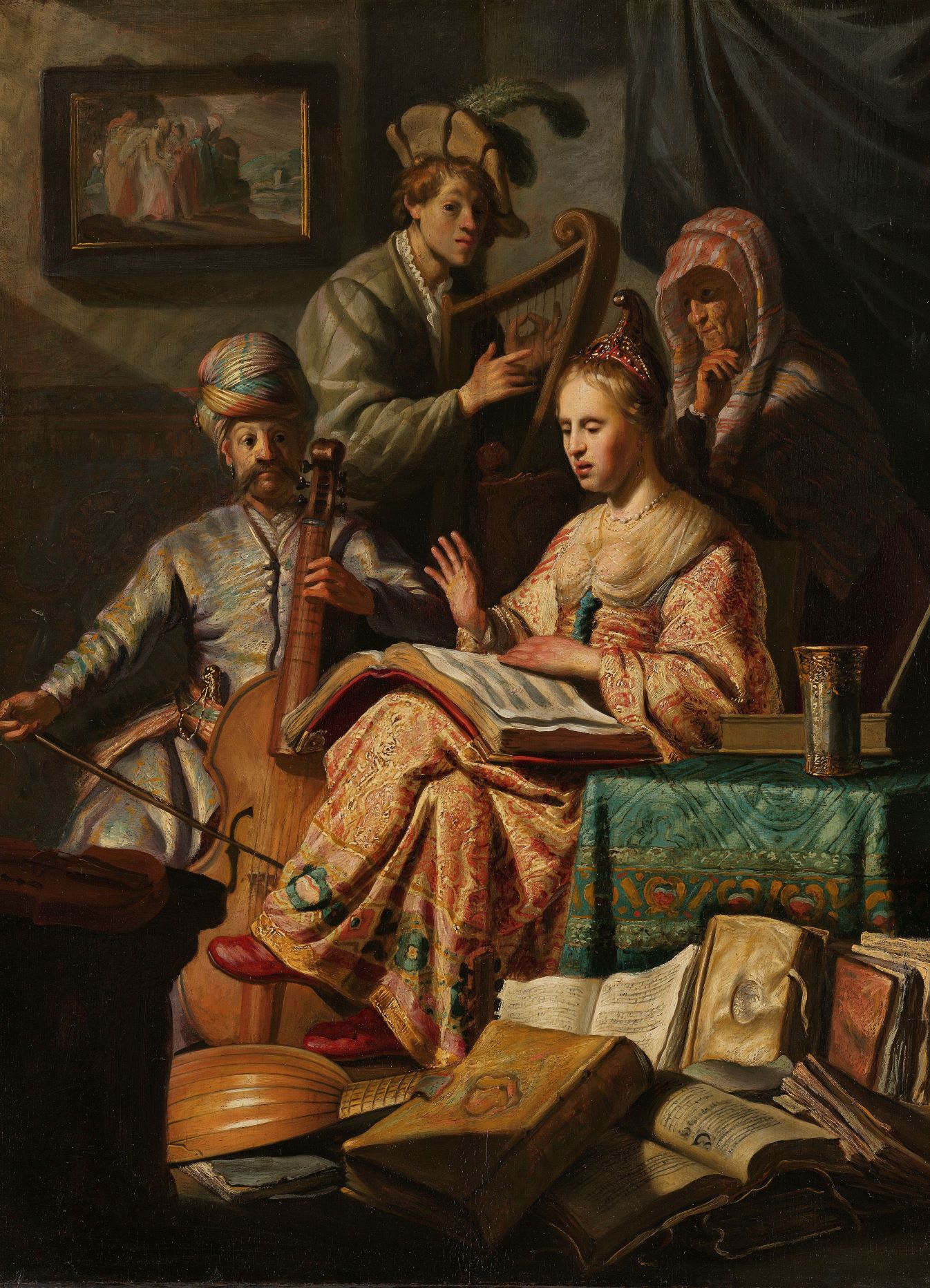
  42. Jan Jansz Orlers, Beschrijvinge der stadt Leyden, 2nd ed., Leiden 1641, p. 375; Walter L. Strauss et al., Rembrandt Documents, New York 1979, doc. 1641/8. For rare objections, see Roelof van Straten, Young Rembrandt. The Leiden Years, 1606-1632, Leiden 2005, p. 16; Benjamin Binstock, ‘The birth of Rembrandt’, in Michiel Roscam Abbing, ed., Rembrandt 2006. Essays, Leiden 2006, pp. 267-278 (arguing for 1607).
  43. Strauss, Rembrandt Documents, doc. 1669/6.
  44. E.B.F.F. Wittert van Hoogland, ‘Genealogie van den tak van het geslacht van Tetrode, welke zich Vinck genoemd heeft. Reconstructie van de genealogie voorkomende in het stam- en wapenboek van aanzienlijke Nederlandsche geslachten. Memoriael Gemaeck door N(icolaas) S(ebastiaensz.) V(inck)’, Genealogische en heraldische bladen 1 (1906), pp. 122-149.
  45. Dirk Rühl, ‘Het wapen van Rembrandt’s broeder Willem Harmensz. van Rijn een gelegenheids-wapen? Een heraldisch probleem’, Gens Nostra. Maandblad van de Nederlandsche Genealogische Vereniging 11 (1956), pp. 117-128, esp. p. 127.
  46. Strauss et al., Rembrandt Documents, doc. 1669/4 (misspelling the name as ‘Vlinck’). See also: http://remdoc.huygens.knaw.nl/#/document/remdoc/e13470 (accessed 22 December 2022).
  47. Warm thanks to Ingrid Pot for her kind assistance, and to P.J.M. De Baar for an impromptu consultation on the document, manuscript LB 6761 klein deel, Erfgoed Leiden en Omstreken, Leiden (hereafter ELO). The notebook is chronological but unpaginated; we therefore cite Wittert van Hoogland. See further Stephanie S. Dickey, ‘Ars longa vita brevis. Rembrandt’s death and the status of the artist in late seventeenth-century Amsterdam’, Nederlands Kunsthistorisch Jaarboek 72 (2022), pp. 234-271.
  48. R.E.O. Ekkart, ‘Familiekroniek Van Heemskerck en Van Swanenburg (I)’, Jaarboek van het Centraal Bureau voor Genealogie 32 (1978), pp. 41-70; idem., ‘Familiekroniek Van Heemskerck en Van Swanenburg (II)’, Jaarboek van het Centraal Bureau voor Genealogie 33 (1979), pp. 44-75 (deaths of Cornelis and Sylvester van Swanenburgh, pp. 54, 72, 75). See also Gary Schwartz, Rembrandt, his life, his paintings, New York 1985, p. 22; https://www.mijnstambomen.nl/leiden/swanenburg.htm (accessed 16 December 2022). The dates of Silvester van Swanenburgh’s death and burial are unrecorded; he prepared his will on 12 October 1669, being siechelick van lichaem leggende te bedde (sick in bed); ELO, 0506, notary Justus Gerstecoren, no. 1144, deed 124, 12-10-1669.
  49. Wittert van Hoogland, ‘Genealogie’, p. 135.
  50. Wittert van Hoogland, ‘Genealogie’, pp. 136, 137. Burial: https://archief.amsterdam/archief/5001/1056 (accessed 16 December 2022).
  51. Wittert van Hoogland, ‘Genealogie’, pp. 135.
  52. Ekkart, ‘Familiekroniek’, pp. 54, 72.
  53. Rudi van Maanen and Leendert van Maanen, ‘De grote epidemie van 1669-1670’, Leids Jaarboekje 2021, pp. 67-83, with further references.
  54. See Dickey, ‘Ars longa vita brevis‘, with further references.
  55. See esp. Christaan Vogelaar and Gerbrand Korevaar, eds., Rembrandt’s Mother. Myth and Reality, exh. cat. Leiden: Stedelijk Museum de Lakenhal 2005, pp. 88-91, 97-98, cat. 3-6, 9-10.
  56. We are grateful to Jos Beerens and Weixuan Li for advice on software to visualize this data.
  57. Reymptgen’s husband, Cornelis Bartholomeusz (Meesz.) van Tetrode (1505-1550), a grain dealer in Leiden, died before Neeltje and Bastiaen were born. See Strauss et al., Rembrandt Documents, doc. 1561/1, 1574/3, 1579/1, 1581/1,1582/2.
  58. Strauss et al., Rembrandt Documents, p. 24.
  59. Gerrit Cornelisz. Vinck is registered living in Leiden 1544-1583; Historisch Leiden in Kaart, https://historischleideninkaart.nl/persoonformulier/?Id=8986 (accessed 16 December 2022). He became poorter of Delft in 1584; Stadsarchief Delft, 1.733, fol. 054v, 5-5-1584. See also W.C. Tettero, Genealogie van Tetrode 1300-1600, Voorburg 2000, p. 61; J.P. Jacobs, ‘Rembrandt verwant met Philips van Leyden’, De Nederlandse Leeuw 102 (1985), column 457-465.
  60. See also ELO, Stadsarchief van Leiden, 0501A, 6597, Register Vetus 1582-1601, p. 8v. ‘t Gulden Warken belonged to Reymptgen In 1579; by 1581, she had transferred ownership to Dirck; Strauss et al., Rembrandt Documents, p. 31 and doc. 1579/1, 1581/1, 1585/1.
  61. Wittert van Hoogland, p. 123. Walsburch was buried several weeks later; SAA DTB 5001, 1054, p. 46vo, 8-5-1629. Prenuptual agreement, SAA 5075, 445, not. Palm Mathijsz, 17-2-1631.
  62. SAA DTB 5001, 671, p. 33 (marriage bans) 27-1-1628; DTB 1054, p. 46vo, 8-5-1629 (burial record).
  63. Wittert van Hoogland, p. 124. They married on 10 May at the Begijnhof and 13 May at the Amsterdam Town Hall.
  64. Wittert van Hoogland, p. 126. Clara became a begijn in 1643 and registered her will as a bejaaarde geestelijke dochter, wonende op het Begijnhof, in 1655, appointing her brothers her heirs; SAA 5075, 2454, not. R. Duee, akte nummer 57860, 8-10-1655.
  65. Wittert van Hoogland, p. 127; SAA, DTB 676, p. 145, 2-1-1642; 5033 Poorterboeken, no. 2, p. 199, 24-4-1642. In 1647 Albert purchased a home on the Haarlemmerstraat; SAA, 5073, Kwijtscheldingen, no. 928, 5-1-1647. He posted the banns for his second marriage, to Grietje Harmens van der Aa, on 2 December 1655; SAA, DTB 682, p. 356, 2-12-1655.
  66. Wittert van Hoogland, p. 127.
  67. SAA DTB, 1055, p. 94v (Clara); 1056, p. 252, 26-6-1683 (Albert).
  68. Cornelis was recorded on 24 April 1587 as a baker, age 21. In 1600, he purchased a house later owned by Karel van der Pluym. Strauss et al., Rembrandt Documents, doc. 1581/2, 1662/4; Schwartz, Rembrandt, p. 18 (diagram of Rembrandt’s family tree by P.J.M. de Baar).
  69. Strauss et al., Rembrandt Documents, doc. 1662/4; Marieke de Winkel, ‘ »Cousin » Karel van der Pluym and the benefit of family’, in Epco Runia and David de Witt, eds., Rembrandt’s Social Network. Family, friends, acquaintances, exh. cat., Amsterdam: Museum het Rembrandthuis 2019, pp. 61-65, citing a red and black chalk drawing on vellum, dated 1634 (private collection in New York).
  70. See Koos Levy-Halm, ‘Where did Vermeer buy his painting materials? Theory and practice’, in Ivan Gaskell and Michiel Jonker, eds., National Gallery Studies in the History of Art, Vol. 55, Vermeer Studies, 1988, pp. 137-143; Jo Kirby, ‘The painter’s trade in the seventeenth century: theory and practice’, National Gallery Technical Bulletin 20 (1999), pp. 5-49.
  71. See Stephanie S. Dickey, Rembrandt. Portraits in Print, Amsterdam/Philadelphia 2004, pp. 141-149; Runia and De Witt, eds., Rembrandt’s Social Network, p. 124.
  72. Orlers, Beschryvinge, p. 373; https://rkd.nl/explore/artists/51111 (accessed 2 January 2023)
  73. Rudolf E.O. Ekkart, Isaac Claesz. van Swanenburgh 1537-1614, Zwolle 1998, p. 14. For the prenuptial agreement, Jacobge was assisted by her father Claes Isaacsz and her brothers Isaac Claesz and Claes Claesz; ELO, 0508 Het oude rechterlijke archief van Leiden, no. 76B-2, fol. 375, 15-10-1570.
  74. ELO, 0501A, Stadsarchief van Leiden, 1574-1816, no. 1289, Register van de volkstelling 1581, fol. 9.
  75. See Marije Osnabrugge, The Neapolitan Lives and Careers of Netherlandish Immigrant Painters (1575-1655), Amsterdam 2019, esp. pp. 66-73, 115-123. The Antwerp-born portraitist Abraham Vinck (1574/75-1619) associated with Jacob van Swanenburgh in Hamburg 1589-1598 and later in Naples; in 1602, he witnessed Van Swanenburgh’s marriage to Margaretha Cardone. He lived in Amsterdam 1609-1619. Rembrandt’s bankruptcy inventory includes ‘een doode Contrefijtsel van Abraham Vinck‘; Strauss et al., Rembrandt Documents, doc. 1656/12, no. 86, but we have not yet found a link between Abraham and the Vinck family discussed here.
  76. Ekkart, Isaac Claesz. van Swanenburgh, esp. p. 71; Schwartz, Rembrandt, pp. 22-23.
  77. Strauss et al., Rembrandt Documents, doc. 1620/1; Jef Schaeps and Mart van Duijn, Rembrandt en de Universiteit Leiden, Leiden 2019, esp. p. 28.
  78. Orlers, Beschryvinge, p. 375.
  79. Ekkart, ‘Familiekroniek’, pp. 71-72. Schwartz, Rembrandt, p. 17; Van Straten, Young Rembrandt, p. 24.
  80. ELO, Register van poorterinschrijvingen F, 1267, fol. 279v, 16-4-1638; Buurquestieboeken, 48G, fol. 105v, no. 2355, 12-9-1661; 0506, Notary Justus Gerstecoren, 1144, deed no. 124, 12-10-1669.
  81. Ernst van de Wetering, ‘Rembrandt’s gift and the underrated importance of his apprenticeship with Jacob isaacsz. van Swanenburg’, in Ernst van de Wetering and Bernhard Schnackenburg, eds., The Mystery of the Young Rembrandt, exh. cat., Kassel: Gemäldegalerie Alte Meister and Amsterdam: Museum het Rembrandthuis 2001, pp. 32-38.
  82. Strauss, et al., Rembrandt Documents, p. 69, doc. 1630/5; Schwartz, Rembrandt, p. 23; English translation: Wheelock, ed., et al., Jan Lievens, p. 286.
  83. Bakker, ‘Rembrandt and the emergence’; Vogelaar, ‘Rembrandt in Leiden’; Orlers, Beschryvinge, p. 376.
  84. See Boudewijn Bakker, ‘Rembrandt and the humanist ideal of the universal painter’, in Stephanie S. Dickey, ed., Rembrandt and his Circle. Insights and Discoveries, Amsterdam 2017, pp. 67-98.
  85. Volker Manuth, Marieke de Winkel and Rudie van Leeuwen, Rembrandt. The Complete Paintings, Cologne 2019, cat. 121.
  86. Carel Vosmaer, Rembrandt. Sa vie et ses oeuvres, The Hague 1877, pp. 28-35, 469, 461, unaware of Vinck’s Memoriael, posited a relationship to the Van Swanenburghs on Rembrandt’s father’s side. Ekkart, Isaac Claesz van Swanenburgh, p. 11, dismissed this. However, Claes Cornelisz van Berckel, half-brother of Harmen Gerritsz van Rijn, was married to Brechtje Mourijnsdr. van Swanenburch. The half-brothers lived next door to each other on the Weddesteeg in 1605 and 1624 and owned a mill together; ELO, Buurquesties 48B, blad 2, aktenummer 520, 4-4-1605; 48D, blad 201, aktenumer 1339, 22-4-1624; Tiende Register, Bon Noord-Rijnevest (B), Stadsvrijdom en molens op de wallen, archiefnummer 501A, Stukken betreffende afzonderlijke onderwerpen; Registratie van onroerend goed 1585-1816 (1819), inventarisnummer 6634, blad 31, 1602-1724. It is not yet clear how Brechtje Mourijnsdr. connects to Jacob and Silvester van Swanenburgh. See also Schwartz, Rembrandt, pp. 21-25.
  87. For context, see S.A.C. Dudok van Heel, ‘Rembrandt van Rijn (1606-1669), een remonstrantsgezind schilder uit calvinistisch Leiden’, in idem., De jonge Rembrandt onder tijdgenoten. Godsdienst en schilderkunst in Leiden en Amsterdam, Nijmegen 2006, pp. 177-223.
  88. On art patronage in Leiden, see esp. Gerbrand Korevaar, ‘Leiden in Rembrandt’s time’, in Van de Wetering and Schnackenburg, Mystery, pp. 12-21; Piet Bakker, ‘Rembrandt and the emergence of the Leiden art market’, in Jacquelyn N. Coutré, ed., Leiden ca. 1630. Rembrandt Emerges, exh. cat., Kingston: Agnes Etherington Art Centre 2019, pp. 66-95. We are grateful to Piet Bakker for advice on the present essay.
  89. Dirk Traudenius, Tyd-zifter, Amsterdam 1662, p. 16; Arnold Houbraken, De groote schouburgh der Nederlandtsche konstschilders en schilderessen, Amsterdam 1718-21, III, p. 33; H. Schneider, ed. by R.E.O. Ekkart, Jan Lievens, Sein Leben und Seine Werke, Amsterdam 1973, p. 151, no. 262; https://houbraken-translated.rkdstudies.nl/3-1-59/page-30-39/ (accessed 16 December 2022,) with English translation. The painting has not been discovered.
  90. Wheelock, ed., Jan Lievens, pp. 3, 16-17, fig. 19. The painting was destroyed in 1929.
  91. On their extended connection, see Stephanie S. Dickey, ‘Jan Lievens in Rembrandt’s house’, Kroniek van het Rembrandthuis 2008, pp. 36-53.
  92. As noted above, Cornelis van Swanenburgh’s mother was Adriana van Leeuwen. Rembrandt’s oldest brother, Adriaen van Rijn, married Lystbertgen Symonsdr van Leeuwen in 1617, and Willem van Rijn married Willempje Pietersdr van Steylandt, widow of Jacob Symonsz van Leeuwen, in 1636; Rühl, ‘Het wapen’, pp. 117-119, 123.
  93. Bakker, ‘Rembrandt and the Emergence’, pp. 81-83; Wheelock, ed., Jan Lievens, p. 84, cat. 2.
  94. Orlers, Beschryvinge, pp. 367-377; Bakker, ‘Rembrandt and the emergence’, p. 82. One of these was a ‘Pylatus’, possibly Pilate Washing his Hands (Raleigh, North Carolina Museum of Art); Wheelock, ed., Jan Lievens, p. 289.
  95. Strauss et al., Rembrandt Documents, doc. 1663/7; Schwartz, Rembrandt, p. 37; Dudok van Heel, ‘Rembrandt van Rijn’, pp. 190-193; Christopher Brown, An van Camp and Christiaan Vogelaar, eds., Young Rembrandt, exh. cat., Leiden: Museum De Lakenhal and Oxford: Ashmolean Museum 2019, pp. 24, 158-160. Angela Jager is preparing a study of art patronage in Rembrandt’s family network.
  96. Bakker, ‘Rembrandt and the Emergence’, pp. 85-90.  See also C. Willemijn Fock, trans. by Anne Baudoin, ‘Art ownership in Leiden in the seventeenth century’, Journal of Historians of Netherlandish Art  13:1 (2021), DOI: 10.5092/jhna.2021.13.1.4.
  97. For an overview and analysis of the phenomenon of the atelier scene in Dutch art, see Katja Kleinert, Atelierdarstellungen in der niederländischen Genremalerei des 17. Jahrhunderts : realistisches Abbild oder glaubwürdiger Schein?, Petersburg 2006.
  98. Werner Sumowski, Drawings of the Rembrandt School, vol. 7, New York 1983, pp. 3648-3649, no. 1636bx (ill.). 
  99. Arthur K. Wheelock, ed., Jan Lievens. A Dutch Master Rediscovered, exh. cat. Washington: National Gallery of Art; Milwaukee: Milwaukee Art Museum; Amsterdam: The Rembrandt House Museum 2008/09, p. 246, no. 106.
  100. And not that between Apollo and Marsyas, as indicated by Sumowski.
  101. No painting of this theme is known by Lievens. There was a depiction of the contest between Apollo and Marsyas, showing Apollo playing the lyre, in the sale of the collection of the Count of Arundel, likely the same work later with the widow of Jürgen Ovens in 1691. See Hans Schneider and Rudi Ekkart, Jan Lievens: sein Leben und seine Werke. Amsterdam 1973, pp. 110-111, no. 78.
  102. Werner Sumowski, Gemälde der Rembrandtschüler, Landau 1983-1994, vol. 6 (1994), pp. 3691-3692, nos. 2185a-2194.
  103. Nos. 2857-2861 in: Sumowski, Drawings (see note 2), vol. 12, Addenda (in translation, forthcoming in 2023).
  104. Ibid., vol. 3, p. 1965, note 65. Currently assigned no. 2857 in vol. 12 (see note 2); sale, Paris (Christie’s), 21.3.2002, lot 114.
  105. Ibid., vol. 3, pp. 1961, 1965, 1977 (illus.). Sale, London (Bonhams), 29 October 2014, lot 147 (colour illus.).
  106. Amsterdam, Sotheby’s, 11 November 1997, lot 25, colour ill., as Lievens. Sumowski is far more hesitant here than with the Mettingen drawing: Drawings (see note 2), pp. 3904-3905, no. 1757xx, illus.: “…an unqualified attribution cannot be entertained  because there is no material for comparison.”
  107. Jan Lievens, Peasant Dwelllings under Trees with Milkmaid, pen in brown and brush in brown and grey, 108 x 193 mm, Dresden, Kupferstichkabinett, Staatliche Museen Dresden, inv. no. C 1453; see Sumowski, Drawings (see note 2), pp. 3724-3725, no. 1672 (illus.).
  108. See: Michiel Roscam Abbing, De schilder & schrijver Samuel van Hoogstraten, 1627-1678. Eigentijdse bronnen & oeuvre van gesigneerde schilderijen, Leiden 1993, pp. 40-41; Volker Manuth, “Dordrecht: bakermat voor Rembrandts leerlingen”, Bulletin Dordrechts Museum 3 (2006), pp. 3-7; and: David de Witt, Abraham van Dijck (1635-1680). Life and Work of a Late Rembrandt Pupil, Zwolle 2020, pp. 11-13.
  109. As also observed in Paarlberg, Bisschop (see note 12), p. 24.
  110. On their friendship see De Witt, Abraham van Dijck (see note 4), p. 108.
  111. David de Witt, The Bader Collection: Dutch and Flemish Paintings, Kingston 2008, pp. 63-64, no. 31), correcting Sumowski’s dating to the early 1660s, with the observation of hesitancy in handling that points to an earlier period.
  112. Arnold Houbraken, De groote schouburgh der Nederlantsche konstschilders en schilderessen, vol. 2, The Hague 1719, p. 220. They seem to have largely been lost. The only example linked to him is A Boy Asleep in an Enclosed Chair, c. 1655/60, oil on wood, 97.2 x 66.5 cm, London, with Johnny van Haeften in 2007; see Sumowski, Gemälde (see note 6), vol. 6 (1994), p. 3692, no. 2192, p. 3776 (illus., as Bisschop). It is unsigned, and clearly derived from a similar work signed and dated 1654 by the Haarlem painter Johannes Verspronck: oil on panel, 96 x 75.7 cm, Belgium, private collection. On this basis it has been attributed to that artist as well see: Rudi Ekkart in: Pride and Joy. Children’s Portraits in The Netherlands 1500-1700, exh. cat. Haarlem: Frans Halsmuseum; Antwerp: Koninklijk Museum voor Schone Kunsten Antwerpen, 2000-2001, pp. 227-229, no. 60. However, the thicker application of paint and harsher contrasts in the London version diverge from the one signed by Verspronck, and indeed more closely approximate Bisschop’s painting style of around 1660. If by him, this would suggest that Verspronck supplied an additional impulse for making such cutout paintings, besides Van Hoogstraten and his championing of illusionism.
  113. Houbraken, Schouburgh (see note 16), vol. 2 (1719), pp. 157-158.
  114. See the important analysis by Thijs Weststeijn: The Visible World. Samuel van Hoogstraten’s Art Theory and the Legitimation of Painting in the Dutch Golden Age, Amsterdam 2008.
  115. Sander Paarlberg, “Bisschop op zijn best. Dordrechts Museum krijgt zijn eigen Melkmeisje”, Bulletin van de Vereniging Rembrandt 25, no. 1, (2015), pp. 22-24, colour illus.
  116. Samuel van Hoogstraten, Inleyding tot de Hooghe Schoole der Schilderkonst, Dordrecht, 1678, p. 12.
  117. We do not include a painting attributed to Bisschop: The Young Artist in his Studio, c. 1653, oil on canvas, 90.8 × 76.8 cm, Detroit, Detroit Institute of Arts, inv. no. 38.29, as attributed to Cornelis Bisschop; George Keyes, in: Masters of Dutch Painting: The Detroit Institute of Arts, London 2004, pp. 28–29, no. 8 (ill.). The drawing shown in the lower left, a classic two-chalk drawing on blue-grey paper, underscores the stylistic evidence against his authorship, pointing instead to the circle around Govert Flinck (1615-1660) and Jacob Adriaensz. Backer (1608-1651); perhaps Adam Camerarius (?–1666).
  118. Constantijn Daniël à Renesse, Rembrandt and his Pupils Drawing from a Nude Model, black chalk, brush in brown, 180 x 266 mm, Hessisches Landesmuseum, Darmstadt, inv. no. AE 665; on the attribution see Peter Schatborn, Rembrandt and his circle: drawings in the Frits Lugt collection, Bussum 2010, p. 335.
  119. Rembrandt, Rembrandt’s Studio with a Half-Nude Model, c. 1654/58, pen and brush in brown, with white body colour, 205 x 190 mm, Oxford, Ashmolean Museum, inv. no. P.I.192 (WA1855.8): Peter Schatborn in Rembrandt : The Complete Etchings and Drawings, Cologne 2019, p. 269, no. T438 (colour illus., as c. 1654).
  120. Rembrandt, Bathsheba with King David’s Letter, 1654, oil on canvas, 142 x 142 cm, Paris, Musée du Louvre, inv. no. M.I. 975: Ernst van de Wetering, Rembrandt’s paintings revisited : a complete survey, Dordrecht, Boston and Lancaster 2014, pp. 623-624, no. 231; Volker Manuth, Marieke de Winkel and Rudie van Leeuwen, Rembrandt: the Complete Paintings, Cologne 2019, pp. 507-508, no. 23. As Van de Wetering explains, the pose of Bathsheba was originally conceived with an upward glance and turn of the head.
  121. Rembrandt, A Woman Sitting Half-Dressed beside a Stove, 1658, etching, buring and drypoint, 226 x 194 mm, in seven states: Erik Hinterding and Jaco Rutgers, The New Hollstein Dutch & Flemish Etchings, Engravings and Woodcuts 1450-1700, vol. 25-II: Rembrandt, Ouderkerk aan den IJssel 2013, pp. 292-294, no. 307.
  122. Houbraken, Schouburgh (see note 16), vol. 1 (1718), p. 271.
  123. As discussed by the author in: David de Witt and Franziska Gottwald, “Rembrandt & Light” in: Rembrandt’s Light, exh. cat. Dulwich, Dulwich Picture Gallery, 2019-2020, pp. 33-34 (the date of the drawing mistakenly altered in editing; should read c. 1654/58).
  124. See www.elephanthansken.com for a current collection of all the traces left by Hansken and her owner, brought together thanks to the research of Michiel Roscam Abbing. In 2016 M. Roscam Abbing, Rembrandts olifant. In het spoor van Hansken appeared, followed in 2021 by an updated edition in English translation entitled Rembrandt’s Elephant. Following in Hansken’s Footsteps, both with Leporello in Amsterdam.
  125. In Het Schilder-boeck of 1604 (Haarlem) Karel van Mander calls drawing the father of all of the arts. Constant practice, especially taking everything that nature offers as model, will make the artist successful; see fol. 8r+v, Van het teyckenen, oft Teycken-const. Tweede Capittel.
  126. W. Goeree, Inleydingh Tot de Praktijck Der Al-gemeene Schilder-Konst, Middelburg 1670, p. 121.
  127. For an overview see P. Schatborn, E. Hinterding, Rembrandt. Alle tekeningen en etsen, Cologne 2019, pp. 285-301.
  128. No. 249 in the inventory, see document/remdoc/e12724. For more background on Rembrandt’s collection, see B. Broos e.a., Rembrandt’s Treasures, Amsterdam 1999.
  129. Peter Schatborn accepts six lion drawings as autograph: Rembrandt, A Lioness or Young Lion with Prey (a Bird), Reclining, with Head to the Left, 1637-1641. Charcoal and wash, with white highlights, on prepared paper, 126 x 239 mm. London, British Museum, inv. no. Oo,9.71; Rembrandt, Reclining Lioness or Young Lion, with Head to the Right, 1637-1641. Charcoal and wash, with white highlights, on prepared paper, 125 x 180 mm. London, British Museum, inv. no. Oo,9.75; Rembrandt, Reclining Lioness or Young Lion, from the Front, 1637-1641. Charcoal and wash, with white highlights, on prepared paper, 115 x 150 mm. New York, The Leiden Collection, inv. no. RR-100; Rembrandt, Reclining Lion with Prey, c. 1650. Pen and brush in ink, brush in white paint, with traced contours, 140 x 203 mm. Rotterdam, Museum Boijmans Van Beuningen, Collection Franz Koenigs, inv. no. R 12; Rembrandt, Reclining Lion, c. 1650. Pen and brush in ink, 138 x 207 mm. Paris, Musée du Louvre, inv. no. RF4721; Rembrandt, Reclining Lion, c. 1660. Pen in brown on prepared paper, 122 x 212 mm. Amsterdam, Rijksmuseum, inv. no. RP-T-1901-A-4524.
  130. For lions, see M. Roscam Abbing, P. Tuynman, “Rembrandts drawings of the elephant Hansken”, in M. Roscam Abbing (ed.), Rembrandt 2006: Essays, Leiden 2006, pp. 173-189, p. 189.
  131. Rembrandt, Young Asian Elephant (Hansken), 1637. Black chalk, 233 x 354 mm. Vienna, Albertina, inv. no. 17558; Rembrandt, Asian Elephant (Hansken) in three different poses with steward. Black chalk, 239 x 354 mm. Vienna, Albertina, inv. no. 8900; Rembrandt, Asian Elephant (Hansken) with Spectators. Black chalk and charcoal, 179 x 256 mm. London, British Museum, inv. no. Gg,2.259.
  132. Rembrandt or pupil, Asian Elephant (Hansken), c. 1637. Black chalk and graphite, counterproof. 194 x 189 mm. New York, The Morgan Library & Museum, inv. no. I, 205.
  133. The drawing has in the meantime been published in M. Roscam Abbing, Rembrandt’s Elephant (see note 1), pp. 22-23. The interpretation of the drawing there is based on the research presented in this article.
  134. In the possession of Peter Schatborn, the owners of the drawing, and the author of this article.
  135. There is no available image of the watermark, so further identification is not possible at the moment.
  136. Female Asian elephants generally do not have tusks. But where present, they do not grow to longer than 10 cm, which does render them visible between the folds of the skin. Hansken had short visible tusks of this kind. Her skeleton, which was preserved after her death in 1655, and is kept on display at the natural history museum La Specola, shows evidence of this: the skull shows the stumps of tusks. The English traveller and writer wrote in 1641 in his diary: “his teeth were but short being a female, and not old, as they told us”. Zie E.S. de Beer (red.), The diary of John Evelyn, Vol. 2. In the same year Ernst Brinck observed: “zijn naar buiten uitstekende slagtanden waren nog maar weinig meer dan een vinger lang” (his protruding tusks were only a little more than a finger long). See also Roscam Abbing and Tuynman, “Rembrandt’s Drawings…” (see note 7), pp. 173-189. There it is explained how in 1633 Hansken’s tusks were not yet visible. In 1641 they were, according to the description of Evelyn and Brinck. They may have been broken off after then, not subsequently growing long enough to be visible.
  137. Roscam Abbing and Tuynman, “Rembrandt’s Drawings…” (see note 7), p. 184 and Roscam Abbing, Rembrandt’s Elephant (see note 1), pp. 24-25.
  138. Jan Mollijns, Commemorative Print of the Asian Elephant Emanuel, 1563. Hand coloured woodcut, 285 x 400 mm. London, The British Museum, inv. no. 1928,0310.97, https://www.britishmuseum.org/collection/object/P_1928-0310-97; Gerard van Groeningen, Commemorative Print of the Asian Elephant Emanuel, in Eight Different Poses, in or after 1563. Etching, 405 x 541 mm. Amsterdam, Rijksmuseum, inv. no. RP-P-OB-59.019; Wenceslaus Hollar (after Gerard van Groeningen), Commemorative Print of the Asian Elephant Don Diego, 1629. Etching, 245 x 283 mm. Amsterdam, Rijksmuseum, inv. no. RP-P-1976-16.
  139. See Chronycke van Antwerpe sedert het jaer 1500 tot 1575. Gevolgd van Eene beschryving van de historie en het landt van Brabant, sedert het jaer 51 vóór J.-C., tot 1565 na J.-C., volgens een onuitgegeven handschrift van de XVIe eeuw, edition of 1843, Antwerp, p. 59: “(…) anno 1563, int eynde van september, doen quam tot Antwerpen tschepe eenen olifant vuyt Portugael, off daer ontrent, oudt by de negen jaeren, hooge acht voeten; desen ginck sdaechs achter straeten dattet een yegelyck sien moechte: desen was seer tam ende wert geregeert van eenen moor doende alwat den moor hem gebiede: desen olifant hiet Emanuel.” (in the year 1563, at the end of September, there came by ship to Antwerp an elephant from Portugal, around nine years old, eight feet tall; it went by day through the streets so that all could see it: it was very tame and was led by a Moor, doing everything the Moor commanded: this elephant was called Emanuel). See e.g. also S. Dackerman, Prints and the Pursuit of Knowledge in Early Modern Europe, New Haven 2011, cat. no. 34.
  140. See note 15. For the impression in the collection of the Rijksmuseum see http://hdl.handle.net/10934/RM0001.COLLECT.119126.
  141. Hansken appeared in Amsterdam on four occasions: in the summer months of 1633 and at the fairs (kermissen) of 1637, 1641 and 1647. One of the drawings by Rembrandt can be connected to the fair of 1637, because Rembrandt dated the sheet. Peter Schatborn dates the other two drawings of Hansken by Rembrandt to the same year. However the drawing of Hansen in three poses (Albertina, inv. no. 8900) appears to have been made on a later occasion, in 1641. The animal in that drawing is noticeably older than in the sketch of 1637. See also Roscam Abbing and Tuynman, “Rembrandt’s Drawings…” (see note 7), pp. 173-189. Further research on the paper in the future may yield more information on the dating.
  142. Up to Rembrandt’s time, there was limited knowledge in Europe concerning elephants. What people thought to know was based on what Pliny the Elder had written in his Natural History (77-79 C.E.). Or on medieval legends such as could be read in the Physiologus, an ancient Greek moralizing text on plants and (mythical) animals. Over the course of time there appeared more and newer editions of these stories. Jacob van Maerlants Der naturen bloeme (c. 1350) is one example, in which the texts are no longer presented in Latin but in Dutch (“Dietsch”). In 1588 Christophel Plantijn in Antwerp published a collection of texts – including the Physiologus – under the title Sancti Patris Nostri Epiphanii, Episcopi Constantiae Cypri, ad Physiologum. Eiusdem in die festo Palmarum sermo. A century later, at the end of the 17th century, the skeleton Hansken, the elephant that died in 1655 in Florence, became accessible to scholars. This led to new insights into the existence of an ancestor species, the mammoth. A Latin description of Hansken’s skeleton by John Ray formed the basis in the 18th century for Carolus Linnaeus’ scientific description of the elephant in terms of its species.
  143. For the copy of the album in the collection of the Rijksmuseum, see: http://hdl.handle.net/10934/RM0001.COLLECT.353205. For the two prints in its, respectively of five and three elephants, see: http://hdl.handle.net/10934/RM0001.COLLECT.353210 and http://hdl.handle.net/10934/RM0001.COLLECT.353211.
  144. For the copy in the collection of the Rijksmuseum, see: http://hdl.handle.net/10934/RM0001.COLLECT.33090. Don Diego was in Europe from 1623 to 1635 in Europa. For more information on Don Diego see L. Rice, “Poussin’s Elephant”, Renaissance Quarterly 70 (2017), pp. 548-593; M. Roscam Abbing, “Poussin’s Elephant Revisited”, in Source: Notes in the History of Art 39 (2020), pp. 109-119.
  145. Op de kunstcaemer (….) [235] Een Oost-Indies benneken daarin verscheyde prenten van Rembrant, Hollaert, Cocq en andere meer”. See document/remdoc/e12723.
  146. [i] For his etching of Joseph and the Wife of Potiphar of 1634 (B39/ NHD128) Rembrandt looked to the etching of the same theme by Tempesta, of 1613. And Tempesta’s prints of lion hunts served as model for Rembrandt in his own depictions of the theme, the two small lion hunts of c. 1629 (B115/ NHD28, B116/ NHD29) and his large lion hunt of 1641 (B114/ NHD187). See e.g. B. van den Boogert, J. van der Veen, Dat kan beter! Rembrandt en de oude meesters, Amsterdam 2013, pp. 52-55.
  147. Nos. 210 – 212 in the inventory. See document/remdoc/e12721 and document/remdoc/e12722.
  148. See for example in the collection of the Rijksmuseum: God Creates the Animals http://hdl.handle.net/10934/RM0001.COLLECT.183114, Cain Murdering Abel http://hdl.handle.net/10934/RM0001.COLLECT.183148, Orpheus Enchanting the Animals with his Music http://hdl.handle.net/10934/RM0001.COLLECT.183809, Combat of the Centaurs and Various Animals http://hdl.handle.net/10934/RM0001.COLLECT.608702, God Commands Adam And Eve Not To Eat of The Tree of Knowledge http://hdl.handle.net/10934/RM0001.COLLECT.183140.
  149. See also Roscam Abbing, Rembrandts olifant (see note 1), pp. 22-23; Rembrandt’s Elephant (see note 1), pp. 24-25. Besides the iconography there described of the elephant as a chaste animal, and thereby symbol of humanity before the Fall into Sin, Rembrandt incorporated two myths about elephants. The myth of the mating ritual of elephants refers namely to the sin of the first people in the world. In order to stimulate arousal in the male, the female offers an aphrodisiac. Eve gives the forbidden fruit of the Tree of Knowledge of Good and Evil to Adam, and this fruit in fact serves as an aphrodisiac. Because after eating this fruit they become aware of their desires. And further it was said of elephants and dragons that they were symbols respectively of good and evil, and that they were each other’s greatest enemies. The draco (Latin, translatable as dragon or serpent) hides in a tree, in order to drop down onto an elephant walking by. What follows is a fight to the death, in which both animals perish. Rembrandt also refers to this coming event, as symbol of the struggle between good and evil that will result from Adam and Eve’s fall into sin.
  150. Respectively nos. 161, 178, 189, 298 and 307 in the inventory, see: document/remdoc/e12719, document/remdoc/e12719, document/remdoc/e12720, document/remdoc/e12727.
  151. The fact Rembrandt’s insolvency inventory contains such detailed information is one of the reasons to believe that Rembrandt himself dictated how the objects were to be described at the taking of the inventory, on 25 and 26 July 1656.
  152. For further information on this elephant see: M. Roscam Abbing, “‘So Een Wunder heeft men hier nooijt gesien’ De Indische vrouwtjesolifant (1678/80-1706) van Bartel Verhagen”, Jaarboek Amstelodamum 106 (2014), pp. 68-95.
  153. The tusks were probably added because they appear in the original print by Van Groeningen and were seen as a typical feature of an elephant. Hansken too was given prominent tusks in some illustrations. In one instance (a drawing from life, but embellished from imagination) it is clear that the artist tried to indicate how tusks would look on her. Stefano della Bella, Elephant (Hansken), with a Black Man. Pen and brush in ink, 128 x 159 mm. Present location unknown (sale,London, Christie’s, 18 March 1975, lot 17). For more on this drawing see: https://www.elephanthansken.com/wp-content/uploads/2013/07/fig.-17.jpg. Around 1647 a publicity or commemorative print of Hansken was also made. For the impression in the Rijksmuseum see http://hdl.handle.net/10934/RM0001.COLLECT.432625. Also in this print, she was mistakenly endowed with tusks, following the example of the print of Don Diego, which also served as model for the arrangement of the print with a central image surrounded by smaller images.
  154. See document/remdoc/e4447.
  155. Idem. RemDoc does not supply the detailed list of the works that Rembrandt purchased. The Rembrandt Documents (W. Strauss and M. van der Meulen, New York 1979) does summarize them (see doc. no. 1638/2). It is evident that over the auction days Rembrandt purchased various individual prints by Albrecht Dürer, a woodcut series of The Life of the Virgin, and a Passion series. The print Christ in Limbo was part of Dürer’s engraved Passion of 1511-1513.
  156. See also J. Schaeps e.a. Leiden viert feest! Hoogtepunten uit een academische collectie, 2014, cat. no. 17.
  157. See also Roscam Abbing, Rembrandts olifant (see note 1), pp. 22-23; Roscam Abbing, Rembrandt’s Elephant (see note 1), p. 24; Joost van den Vondel also incorporated Hansken’s presence into his work. She was on display in the city in September 1637 as Vondel was completing his play Gijsbrecht van Aemstel. This work premièred on 3 January 1638 in honour of, and in, the Amsterdam Schouwburgh on the Keizersgracht. In one of the scenes (line 1304) Vondel refers to one of the tricks Hansken performed during her appearances; see Roscam Abbing, Rembrandts olifant (see note 1), pp. 49-51.
  158. S.A.C. Dudok van Heel, Dossier Rembrandt. Documenten, tekeningen en prenten, Amsterdam 1987, pp. 4-5.
  159. See: https://archief.amsterdam/indexen/.
  160. In the process of this indexing several hitherto unknown references to (possible) Rembrandt paintings in inventories surfaced, such as for example Rembrandt’s portrait of Cornelis Claesz Anslo and Aaltje Gerrits Schouten, which according to the testament of their granddaughter Teuntje Hartens hung in the front hall on the Nieuwmarkt; Myrthe Bleeker, “Een Rembrandt in het voorhuis”, Alle Amsterdamse Akten, 8 February 2021, https://www.alleamsterdamseakten.nl/artikel/2648/een-rembrandt-in-het-voorhuis/. Source: Stadsarchief Amsterdam (Amsterdam City Archives) (SAA), access no. 5075, Archief van de Notarissen ter Standplaats Amsterdam (Archive of Notaries in Amsterdam), inv.no. 8511, akte 732, 19 December 1732. Jirsi Reinders en Mark Ponte,“Cardinaal van Rembrandt”, Ons Amsterdam 73 (2021), pp. 38-39; https://onsamsterdam.nl/cardinaal-van-rembrandt-van-rijn. See also the Rembrandt Dossier on the same website: https://www.alleamsterdamseakten.nl/tag/299/rembrandt/.
  161. SAA, “Google door honderdduizenden historische handschriften”, 9 March 2021, https://www.amsterdam.nl/stadsarchief/nieuws/transkribus/ (accessed 20 October 2021). The search platform can be used at https://transkribus.eu/r/amsterdam-city-archives/#/. More information on Transkribus can be found at: https://readcoop.eu/transkribus/?sc=Transkribus.
  162. SAA, access no. 5075, Notarissen (Notaries), inv. no. 1476 (unpaginated) (scans Archiefbank: KLAG03161000143 – KLAG03161000150) (minuutakte) and SAA, access no. 5075, Notarissen (Notaries), inv. no. 1492, f. 305r-312r Afschrift (archive copy), both of 7 August 1665. On 22 October 1666 there was a subsequent report on the management of the estate: SAA, access no. 5075, Notarissen (Notaries), inv. no. 1493, f. 156v-159r; idem concerning the pre-bequest to Jacob Wesselsz Wiltingh’s sister Willemtie Wessels: SAA, access no. 5075, Notarissen (Notaries), inv. no. 1493, f. 154v-156v.
  163. Jan Wagenaar, Amsterdam in zyne opkomst, aanwas, geschiedenissen, voorregten, koophandel, gebouwen, kerkenstaat, schoolen, schutteryen, gilden en regeeringe, vol. 3, Amsterdam 1768, pp. 499-502. The city messengers registers have not survived.
  164. SAA, access no. 5075, Notarissen (Notaries), inv. no. 1492, f. 310r-v.
  165. SAA, access no. 5075, Notarissen (Notaries), inv. no. 2196, p. 191; Remdoc no. 1654/4: http://remdoc.huygens.knaw.nl/#/document/remdoc/e1661.
  166. SAA, access no. 5075, Notarissen (Notaries), inv. no. 1476, z.f. (scan Archiefbank: KLAG03161000148) (minutes record); SAA, access no. 5075, Notarissen (Notaries), inv. no. 1492, f. 309v Afschrift (archive copy), both 7 August 1665. In the minutes there is a comma between “schilder” (painter) and “Isercramer” (ironmonger), which is missing in the archive copy.
  167. Estate inventory of Koert Kooper; Remdoc (see note 8) no. 1660/4: Maerten Daey (1660/8), Clara de Valaer (1660/15), Magdalena van Lemens (Remdoc 1661/4), Christoffel Hirschvogel (1661/10), Willem van Campen (1661/11), Willem Schrijver (1661/14), Matthijs Hals (1662/1), Johanna de Smit (1662/1a), Gerard van der Voorde (1663/8). Only in the inventory of Clara de Valaer is the painter named as “Rembrant van Rhyn”.
  168. SAA, access no. 5001, Archief van de Burgerlijke Stand: doop-, trouw- en begraafboeken van Amsterdam (baptism, marriage and burial books of Amsterdam) (retroacta of the citizen’s registry), inv. no. 473, p. 471; inv. no. 493, p. 120. On 12 November 1654, a child of Rembrandt Gerdes was baptized in the Noorderkerk, inv. no. 76, p. 18. On 19 July 1664, Rembrant van Ruijnen was buried together with his child in the St. Anthoniskerkhof, inv. no. 1193, p. 98.
  169. SAA, access no. 5033, Archief van de Burgemeesters (Burgomasters’ archive): poorterboeken (citizenship books), inv. no. 2, Register van gekochte poorters (Registry of citizens by purchase), p. 474. Wiltingh is not mentioned in the incomplete surviving registration of baptisms of Hasselt in the years 1591-1597, 1614-1618 and 1632-1651; Historisch Centrum Overijssel, access no. 124 Doop-, trouw- en begraafboeken (dtb, retroacta van de Burgerlijke Stand) in Overijssel (Baptism, marriage and burial books (dtb, retroacts of the civil registry) in Overijssel), inv.nr. 247, Doopboek Hasselt (baptism book Hasselt) 1591-1689.
  170. This is also evident from his listing in the registers of the collateral succession: SAA, access no. 5046, Archief van de Secretaris: stukken betreffende de ontvangst van de twintigste penning op de Collaterale Successie, inv. no. 2, f. 5v (scan 85). (Archive of the City Secretary; records concerning the collection of the twentieth penny on the indirect inheritance)
  171. Considering the (familial) relations, this provenance is likelier than from the city of Hasselt in todays Belgian province of Limburg.
  172. SAA, access no. 5039, Thesaurieren Ordinaris (Treasurers Extraordinary), inv. no. 554, f. 272v. The purchase price was 5600 guilders. In this registry of plots sold by the city during the period 1630-1658 this is the only reference to one Jacob Wessels. The purchases of the lot was Romeyn de Hooghe III (1605-1669), and his brother Daniel de Hooghe (1614-1657) was the second guarantor. On these members of the De Hooghe family: Henk van Nierop, The life of Romeyn de Hooghe 1645-1708. Prints, Pamphlets, and Politics in the Dutch Golden Age, Amsterdam Studies in the Dutch Golden Age, Amsterdam 2018, Genealogical Table 1-2, p. 42 and pp. 420-421.
  173. Nationaal Archief (National Archives), access no. 3.19.41, Collected papers, from the Van Reede van Oudtshoorn Family, 1321-1902, inv. no. 152, Stukken betreffende den bouw van een kerk, schoolhuis en pastorie te Oudshoorn. 1662-1672, Memoerie vande Oncosten vande kerck van Sgravenlant, with an itemized list of the wooden components of the roof, c. 1659. Meta Döbken, “De ontstaansgeschiedenis”, De kerk te Oudshoorn, Alphen aan den Rijn 1980, pp. 7-19: 16, refered to the existence of this document but did not specify any details.
  174. See note 16:, Memorie vande Oncoosten…”, c. 1659.
  175. Pieter Vlaardingerbroek, “De stadsarchitect Daniel Stalpaert (1648-1676): ontwerper of projectmanager?”, Maandblad Amstelodamum 97 (2010), p. 53-61; Gea van Essen, “Daniel Stalpaert (1615-1676) stadsarchitect van Amsterdam en de Amsterdamse stadsfabriek in de periode 1647 tot 1676”, Bulletin KNOB 99 (2000), pp. 101-120; Gea van Essen, Het stadsfabriekambt. De organisatie van de publieke werken in de noordelijke Nederlanden in de zeventiende eeuw, Utrecht 2011.
  176. Pieter Vlaaardingerbroek, Het paleis van de Republiek. Geschiedenis van het stadhuis van Amsterdam, Zwolle 2011, p. 99, 129-135.
  177. SAA, access no. 5075, Notarissen (Notaries), inv. no. 1492, f. 353r-v.
  178. Vlaardingerbroek, Paleis (see note 19), p. 99, 134. A fine of 600 guilders was payable for missing the delivery date.
  179. See: Jaap Evert Abrahamse, Heidi Deneweth, Menne Kosian en Erik Schmitz, “Gouden kansen? Vastgoedstrategiën van bouwondernemers in de stadsuitleg van Amsterdam in de Gouden Eeuw”, Bulletin KNOB 114 (2015), pp. 229-257.
  180. SAA, access no. 5061, Archieven van de Schout en Schepenen, van de Schepenen en van de Subalterne Rechtbanken (Archive of the Sherriff and Aldermen, of the Aldermen and of the Subaltern Courts), inv. no. 2169, f. 69r. The mutual purchase becomes evident from the settlement of the estate: SAA, access no. 5075, Notarissen (Notaries), inv. no. 1492, f. 305v. The Jonkerstraat largely disappeared in the renovation of the neighbourhood, by then decrepit, around 1930; Jonkerstraat 43 was demolished in 1930. Transfers of ownership (Eigendomsoverdrachten) for Jonkerstraat 43 (Verponding 1734: Wijk 10, nr. 2725): SAA, access no. 5061, Archieven van de Schout en Schepenen, inv. no. 2169, f. 69r (29-9-1656); SAA, access no. 5066, Archief van de Schepenen: register van willige decreten van het Hof van Holland (registry of all the decrees of the Court of Holland), inv. no. 227, f. 203r-204r (22-7-1669); SAA, access no. 5062, Archief van de schepenen: kwijtscheldingsregisters (real estate sales registers), inv. no. 84, f. 206v-207r (16-10-1710); SAA, access no. 5062, kwijtscheldingsregisters, inv. no. 158, f. 11v-12v (11-2-1784).(Treasurers Extraordinary)
  181. SAA, access no. 5044, Archief van de Thesaurieren Extraordinaris, inv. no. 282, f. 17r.
  182. SAA, access no. 5075, Notarissen (Notaries), inv. no. 1492, f. 305v.
  183. Lotte van de Pol, Het Amsterdamse hoerdom. Prostitutie in de zeventiende en achttiende eeuw, Amsterdam 1996, pp. 96-98.
  184. SAA, access no. 5061, Archieven van de Schout en Schepenen, inv. no. 2120, f. 155v (RemDoc 1658/3); SAA, access no. 5044, Thesaurieren Extraordinaris (Treasurers Extraordinary), inv. no. 281, f. 154r.
  185. Van Essen 2000 (see note 18), p. 115, Van Essen 2011 (see note 18) pp. 43-44.
  186. Auction: SAA, access no. 5039, Archief van de Thesaurieren Ordinaris (Treasurers Extraordinary), inv. no. 555, f. 6r-7v (lots A10-A13). Houses: SAA, access no. 5075, Notarissen (Notaries), inv. no. 1492, f. 305r. The Grote Kattenburgerstraat disappeared during the city renewal of the 1960s. The houses nos. 8-10 were demolished in November 1945, no. 14 in January 1950 and no. 6 in February 1966. Transfers of ownership Grote Kattenburgerstraat 6 (Verponding 1734: Wijk (District) 16, no. 350): SAA, access no. 5062, kwijtscheldingsregisters (real estate sales registers), inv. no. 51, f. 141r (16-6-1661); SAA, access no. 5062, kwijtscheldingsregisters, inv. no. 55, f. 67v-68v (11-10-1667); SAA, access no. 5062, kwijtscheldingsregisters, inv. no. 128, f. 123v-124r (18-7-1754); SAA, access no. 5062, kwijtscheldingsregisters, inv. no. 171, f. 263v (15-12-1797); SAA, access no. 5061, Archieven van de Schout en Schepenen, inv. no. 2181, f. 123v (24-1-1810). Transfers of ownership Grote Kattenburgerstraat 8 (Verponding 1734: Wijk 16, nr. 349): SAA, access no. 5062, kwijtscheldingsregisters, inv. no. 51, f. 141v (16-6-1661); SAA, access no. 5062, kwijtscheldingsregisters, inv. no. 53, f. 135v (2-11-1661); SAA, access no. 5062, kwijtscheldingsregisters, inv. no. 151, f. 144v-145v (28-10-1777); Eigendomsoverdrachten Grote Kattenburgerstraat 10 (Verponding 1734: Wijk 16, nr. 348): SAA, access no. 5061, Archieven van de Schout en Schepenen, inv. no. 2172, f. 244r (24-7-1685); SAA, access no. 5062, kwijtscheldingsregisters, inv. no. 65, f. 20v-21r (12-3-1687); SAA, access no. 5062, kwijtscheldingsregisters, inv. no. 84, f. 265r (16-5-1710); SAA, access no. 5062, kwijtscheldingsregisters, inv. no. 106, f. 1r-v (8-1-1732); SAA, access no. 5062, kwijtscheldingsregisters, inv. no. 147, f. 26r-27r (30-6-1773); SAA, access no. 5062, kwijtscheldingsregisters, inv. no. 170, f. 289v (25-10-1796). Transfers of ownership Grote Kattenburgerstraat 12 (Verponding 1734: Wijk 16, nr. 347): SAA, access no. 5067, Archief van de Schepenen: register van afschrijvingen bij de willige decreten, inv. no. 23, f. 170r (1-4-1678); SAA, access no. 5066, willige decreten Hof van Holland, inv. no. 34, f. 191r-192v (1-4-1678); SAA, access no. 5062, kwijtscheldingsregisters, inv. no. 74, f. 101v (27-8-1700); SAA, access no. 5062, kwijtscheldingsregisters, inv. no. 93, f. 141r-v (28-4-1719); SAA, access no. 5062, kwijtscheldingsregisters, inv. no. 98, f. 341v (9-11-1724); SAA, access no. 5062, kwijtscheldingsregisters, inv. no. 112, f. 3v (28-1-1738); SAA, 5062, kwijtscheldingsregisters, inv. no. 134, f. 254v-255r (27-8-1760); SAA, access no. 5062, kwijtscheldingsregisters, inv. no. 163, f. 372v-373 r (17-7-1798). Transfers of Ownership Grote Kattenburgerstraat 14 (Verponding 1734: Wijk 16, nr. 346): SAA, access no. 5062, kwijtscheldingsregisters, inv. no. 75, f. 135r-136r (11-5-1701); SAA, access no. 5062, kwijtscheldingsregisters, inv. no. 102, f. 381r-v (8-10-1728); SAA, access no. 5062, kwijtscheldingsregisters, inv. no. 198, f. 301r-304r (20-11-1810).
  187. Döbken, Ontstaansgeschiedenis (see note 16), pp. 7-19: 16; Van Reede van Oudtshoorn papers (see note 16).
  188. SAA, access no. 5039, Thesaurieren Ordinaris (Treasurers Ordinary), inv. no. 555, f. 14r (lot A 26).
  189. SAA, access no. 5044, Thesaurieren Extraordinaris (Treasurers Extraordinary), inv. no. 226, pp. 325-326. On 6-12-1660 one of the houses was rented out; SAA access no. 5075, Notarissen (Notaries), inv. no. 3069, f. 276v-277r.
  190. SAA, access no. 5075, Notarissen (Notaries), inv. no. 1492, f. 305r.
  191. SAA, access no. 5075, Notarissen (Notaries), inv. no. 1492, f. 309v, 310v en 311v.
  192. SAA, access no. 5001, doop-, trouw- en begraafboeken (baptism, marriage and burial books), inv. no. 1055, blad f. 125v.
  193. In the Verpondingsregister (tax on real estate) of 1659-1661 he is not mentioned as owner, SAA, access no. 5044, Thesaurieren Extraordinaris (Treasurers Extraordinary), inv. no. 282, f. 209v-210.
  194. Jaap Evert Abrahamse, De grote uitleg van Amsterdam. Stadsontwikkeling in de zeventiende eeuw, Bussum 2010, pp. 236-237.
  195. Marriage banns of Coop Roeloffss [Hoijer] of Dwingeloo, baker’s apprentice, living in the Dirk van Hasseltssteeg, 29 years old, and Trijntje Jans of Solingen, SAA, access no. 5001, doop-, trouw- en begraafboeken (baptism, marriage and burial books), inv. no. 464, p. 307 (23 March 1647); Hoijer was buried on 10 July 1664 together with his niece or close relative Annetje Roelofs, residing in the house “op de cuijp” by the Engelsesteeg; SAA, access no. 5001, doop-, trouw- en begraafboeken (baptism, marriage and burial books), inv. no. 1055, f. 151v. Marriage banns of Jan Roeloffs [Boldingh] of Dwingeloo, baker’s apprentice, 32 years old, living in the Dirk van Hasseltssteeg, and Marrittie Abrahams, SAA, access no. 5001, doop-, trouw- en begraafboeken, inv. no. 467, p. 464 (19 February 1650). Boldingh probably acquired citizenship on 28 April 1651 as a baker from Coevorden; SAA, access no. 5033, Archief van de Burgemeesters (Burgomasters’ archive): poorterboeken (citizenship books), inv. no. 2, Register van gekochte poorters (Registry of citizens by purchase), p. 482. He is still mentioned on 7 May 1675; SAA, access no. 5063, Archief van de Schepenen: register van schepenkennissen (Archive of the Alderman, register of debt documents), inv.no. 54, f. 32v.
  196. In October 1666 it was said of the portion of heir Willemtie Wessels: “But seeing as this estate is burdened with many and large debts, it is uncertainfor Willemtie Wessels, having already spent her advance inheritance, that anything will be left after covering all the debts. (Maer alsoo desen boedel noch met vele en groote schulden belast, en onsecker is, datter voor Willemtie Wessels, haer prelegaet alreede wech hebbende, iet boven de voldoeninge van alle schulden zal overschieten) een; SAA, access no. 5075, Notarissen (Notaries), inv. no. 1493, f. 158r. On 1-5-1663 it was said of heir Jan Hendricxen Wiltingh that he “possessed very little means” (“seer weijnich middelen heeft”); SAA, access no. 5075, Notarissen (Notaries), inv. no. 1491, p. 578. When he left for East India, he owed Boltingh and his wife the amount of 631 guilders, 3 stivers and 8 pennies; SAA access no. 5075, Notarissen (Notaries), inv.nr 1492, f. 353v-354r).
  197. Report: SAA, access no. 5075, Notarissen (Notaries), inv. no. 1493, f. 154v-156v.
  198. As “testamentaire vooghden over de nagelatene erfgenamen van Jacob Wesselsz Wiltingh”, this would imply that also Willemtie Wessels was still a minor in 1661; SAA, access no. 5062, Archief van de Schepenen: kwijtscheldingsregisters (Archive of the Aldermen, real estate sales registers), inv. no. 23, f. 135v.
  199. On 1 May 1663 both Boldingh and Hoeijer are mentioned as guardians and administrators of their nephew (“neve”) Jan Hendricxen Wiltingh; SAA, access no. 5075, Notarissen (Notaries), inv. no. 1491, p. 578. In his last will of 30 July 1665 Jan Hendricxen Wiltingh appointed his cousin (“neve”) Boldingh as his heir. SAA, access no. 5075, Notarissen (Notaries), inv.nr 1492, f. 352v. Most likely, Jan Hendricxen Wiltingh was a son of a brother of Jacob Wesselsz Wiltingh and a sister of Boldingh en Hoijer, though we should keep in mind that “neve” at the time also referred to other close relatives.
  200. SAA, access no. 5075, Notarissen (Notaries), inv.nr 1492, f. 352v; Dutch Asiatic Shipping (DAS), voyage 1035.1.
  201. Debora Bolding was the widow of Johannes Paschen. minister at Dwingeloo; SAA, access no. 5062, kwijtscheldingsregisters (real estate sales registers), inv. no. 75, f. 135r-136r. Her marriage banns in Amsterdam, with Boldingh as a witness: SAA, access no. 5001, doop-, trouw- en begraafboeken (baptism, marriage and burial books), inv. no. 501, p.32 (6 October 1674).
  202. Gary Schwartz, De grote Rembrandt, Zwolle 2006, pp. 197-213, esp. 207-213.
  203. H.F. Wijnman, “Rembrandt’s portret van Catrina Hoogsaet”, Uit de kring van Rembrandt en Vondel, Amsterdam 1959, pp. 19-38.
  204. Peter C. Sutton, Rembrandt Harmensz van Rijn (Leiden 1606 – 1669 Amsterdam). Portrait of a Man with Arms Akimbo, New York (undated) [2011], pp. 9, 11. For an alternative reading of the dress, as historicizing, see: Jacquelyn Coutré, Rembrandt van Rijn’s Portrait of a Man with Arms Akimbo. Kingston 2016 (pdf: downloadable at: https://agnes.queensu.ca/product/rembrandt-van-rijns-portrait-of-a-man-with-arms-akimbo/).
  205. Ernst van de Wetering, Rembrandt’s paintings revised. A complete survey, Dordrecht 2017, pp. 646-647, no. 261, Portrait of a Man with Arms Akimbo; Sutton [2011] (see note 46), pp. 4-5.
  206. Volker Manuth, Marieke de Winkel and Rudie van Leeuwen, Rembrandt: The complete paintings, Cologne 2019, pp. 610, 633.
  207. Writing in 1915, Frits Lugt refers to Menasseh as Rembrandt’s “intimate and highly esteemed friend [intieme en hooggeschatte vriend]” (Wandelingen met Rembrandt in en om Amsterdam, Amsterdam 1915, p. 87). More recently, Christian Tümpel claims that Rembrandt and Menasseh “formed a friendship that lasted more than two decades” (Rembrandt: Images and Metaphors, London 2006, p. 109), while Simon Schama says that “the relationship with Menasseh was real and it was serious” (Rembrandt’s Eyes, New York 1999, p. 607). This is, in fact, a very common view. Henri van de Waal, for example, describes “a firm and lasting relationship between the artist who showed such an interest in the Jews and the ‘apostle to the Gentiles’ [i.e., Menasseh]” (“Rembrandt’s Radierungen zur Piedra Gloriosa des Menasseh ben Israel », Imprimatur: Jahrbuch für Bücherfreunde 12 (1954–1955), pp. 52-61). For biographies of Menasseh, see Cecil Roth, A Life of Menasseh ben Israel: Rabbi, Printer, and Diplomat, 2nd ed., Philadelphia 1945; Lionel Ifrah, L’Aigle d’Amsterdam: Menasseh ben Israel (1604-1657), Paris 2001; Adri Offenberg, « Menasseh ben Israel (1604-1657): A Biographical Sketch », Menasseh ben Israel Instituut Studies 6 (2011); and Steven Nadler, Menasseh ben Israel: Rabbi of Amsterdam, New Haven 2018.
  208. See Roth, A Life (see note 1), p. 169; Gary Schwartz, Rembrandt. His Life, His Paintings, New York 1985, p. 175; Reiner Hausherr, « Zur Menetekel-Inschrift auf Rembrandts Belsazarbild », Oud Holland 78 (1963), pp. 142–49; and Schama, Rembrandt’s Eyes (see note 1), p. 418.
  209. Oil on panel, 19 x 15 cm, Rijksmuseum, Amsterdam (SK-A-3982).
  210. Edmé-François Gersaint, Catalogue raisonné de toutes les pièces qui forment l’oeuvre de Rembrandt, Paris 1751, p. 195.
  211. Jasper Hillegers says that “Gersaint, it emerges, based his conclusion specifically on existing information about Rembrandt’s oeuvre”; see « A Painter Goes to the Rabbi: Rembrandt and Menasseh ben Israel”, in Epco Runia and David DeWitt, eds., Rembrandt’s Social Network: Family, Friends and Acquaintances, exhibition catalog from the Museum Het Rembrandthuis, Amsterdam 2018, pp. 113–117 (p. 115). And Stephanie Dickey notes that Gersaint visited Amsterdam in 1702, which could have been the occasion for him to pick up anecdotal information about Rembrandt and his sitters; see “A Network in Line: Rembrandt’s Portrait Etchings”, in Runia and De Witt, Rembrandt’s Social Network, Amsterdam, 2019, pp. 53–59 (p. 55n5). For an assessment of Gersaint’s reasoning, see S.A.C. Dudok van Heel, “Rembrandt en Menasseh ben Israel”, Kroniek van het Rembrandthuis 93 (1994), pp. 22–29; Dudok van Heel rejects the Menasseh identification. Adri Offenberg argues that it is “highly unlikely” that Menasseh would have commissioned a portrait etching from Rembrandt in 1636, given his “dire financial straits” (“Nogmaals Rembrandt en de rabbijn—rabbijn?”, Vrij Nederland, 15 August 1992, p. 6). Gary Schwartz finds it inconceivable that Rembrandt would not have given a book to a sitter who was not only a scholar and a rabbi but a publisher/printer (The Rembrandt Book, New York 2006, p. 302). For the literature on the debate, see Erik Hinterding, Rembrandt Etchings from the Frits Lugt Collection, 2 vols., Bussum and Paris 2008, vol. 1, pp. 473–475.
  212. Erik Hinterding and Jaco Rutgers, Rembrandt, 7 vols., The New Hollstein Dutch and Flemish Etchings, Engravings and Woodcuts, 1450-1700, Ouderkerk aan den Ijssel and Amsterdam 2013, vol. 2, p. 3. Hinterding and Rutgers say that “the traditional identification seems not less speculative than the more recently proposed ones”; but we believe that what they mean is that the traditional identification as Menasseh is not more speculative than alternative ones. Of course, if all the identifications are equally speculative, then there is no warrant for claiming that one is more probable than another.
  213. Hinterding, Rembrandt Etchings (see note 5), vol. 1, p. 474.
  214. Oil on canvas, 167.6 x 209.2 cm., National Gallery, London. The suggestion of a Rembrandt–Menasseh collaboration on this painting was first made by Johannes Dyserinck, « Eene Hebreeuwsche inscriptie op eene schilderij van Rembrandt », De Nederlandsche Spectator 49 (1904), pp. 160–61. The argument was expanded by Reiner Hausherr, « Zur Menetekel-Inschrift” (see note 2); and the thesis has since become a commonplace in the literature.
  215. See Babylonian Talmud, Tractate Sanhedrin, 22a; Midrash Rabbah, Song of Songs, III.4.ii.
  216. Menasseh ben Israel, De Termino Vitae, Amsterdam 1639, p. 160.
  217. The dating by art historians ranges from 1635 to 1639.
  218. Michael Zell notes that Protestant and Catholic exegetes generally avoided the issue of the unreadability of the message « by assuming that God had blinded them to the prophecy », and concludes that « Rembrandt therefore most likely learned the sequence from Menasseh » (Reframing Rembrandt: Jews and the Christian Image in Seventeenth-Century Amsterdam, Berkeley 2002, p. 62); on the dating issue, Zell suggests that « Menasseh might well have written out the inscription in this [vertical] arrangement for Rembrandt before the book appeared » (p. 62). Shelley Perlove and Larry Silver regard a collaboration here as « most likely » (Rembrandt’s Faith: Church and Temple in the Dutch Golden Age, University Park, PA 2009, p. 134), while Schama says that Menasseh « almost certainly supplied the painter with the additionally esoteric effect of having the Hebrew/Aramaic letters read in vertical columns rather than horizontally from right to left » (Rembrandt’s Eyes [see note 1], p. 418). Schwartz initially says that, with respect to this painting, « we must assume that Rembrandt derived his information directly from Menasseh » (Rembrandt [see note 2], p. 175). In subsequent work, however, he is more skeptical that Rembrandt received any Jewish help here (Gary Schwartz, The Rembrandt Book, New York 2006, pp. 301–2); and eventually he outright rejects the idea that Menasseh had any involvement in Rembrandt’s painting, arguing that the Hebrew error in the inscription (a zayin instead of a final nun) would never have passed muster if Menasseh had been his advisor (Gary Schwartz, “Rembrandt’s Hebrews”, Jahrbuch der Berliner Museen 51 (2009), pp. 33–38 [pp. 35–36]). The authors of the exhibition catalogue The “Jewish” Rembrandt, in keeping with the general tenor of their study, are equally suspicious, saying that « it is not certain that Rembrandt had personal contact with Menasseh in relation to the Hebrew inscription on ‘Belshazzar’s Feast’”; see Miriam Alexander-Knotter, Jasper Hillegers, Edward van Voolen and Gary Schwartz, The “Jewish” Rembrandt: The Myth Unravelled, Zwolle and Amsterdam 2006, p. 20. See, likewise, Jasper Hillegers, « A Painter Goes to the Rabbi” (see note 5).
  219. Menasseh ben Israel, Even Yekarah. Piedra Gloriosa o de la Estatua de Nebuchadnesar, Amsterdam 1655, p. 25. Accessible online: https://cf.uba.uva.nl/en/collections/rosenthaliana/menasseh/20c14/index.html
  220. Menasseh ben Israel, Piedra Gloriosa (see note 13), p. 139.
  221. Menasseh ben Israel, Piedra Gloriosa (see note 13), p. 176.
  222. Menasseh ben Israel, Piedra Gloriosa (see note 13), p. 102.
  223. Menasseh ben Israel, Piedra Gloriosa (see note 13), pp. 164–165.
  224. Menasseh’s interpretation of these verses from Daniel take up the final ten sections of Piedra Gloriosa (pp. 186–259).
  225. Menasseh ben Israel, Piedra Gloriosa (see note 13), pp. v–vi.
  226. Hillegers, for one, reads Menasseh here as saying that he made the etchings himself; « A Painter Goes to the Rabbi” (see note 5), p. 116.
  227. As far as we can determine, there are at least twenty-three extant copies of Piedra Gloriosa. Fourteen of these copies do not have any of Rembrandt’s illustrations; of those fourteen, ten do not have any illustrations at all. But we can confirm that there are seven copies of the book that have all four Rembrandt illustrations bound within their covers, and another two copies that almost certainly had them. On this, see Steven Nadler, “Rembrandt and the Illustrations for Menasseh ben Israel’s Piedra Gloriosa (1655): A Reckoning”, Studia Rosenthaliana 47 (2021), pp. 27–47.
  228. It seems to have been Gersaint who first suggested that Rembrandt and Menasseh collaborated on « un Livre Espagnol« ; Catalogue raisonné (see note 4), p. 22. There is substantial literature on Rembrandt’s four etchings themselves. For discussion of them with regard to their aesthetic dimensions, their composition, and their development over the various states, as well as what they might (or might not) say about Rembrandt’s “faith” and his approach to the Book of Daniel, see Zell, Reframing Rembrandt (see note 12), pp. 72-84; Perlove and Silver, Rembrandt’s Faith (see note 12), pp. 134–137; and Laurence Sigal-Klagsbald, ed., Rembrandt et la Nouvelle Jérusalem: Juifs et Chrétiens à Amsterdam au Siècle d’Or, exhibition catalogue, Paris 2007, pp. 318–323.
  229. Franz Landsberger, Rembrandt, the Jews and the Bible, Philadelphia 1946, p. 35. Later in his essay, Landsberger says “that these etchings ever appeared in the Manasseh book, as is generally assumed, is subject to doubt” (p. 98).
  230. Tümpel, Rembrandt (see note 1), p. 109. For the claim that there was a true collaboration on Piedra Gloriosa, see also Van de Waal, “Rembrandt’s Radierungen” (see note 1); Perlove and Silver, Rembrandt’s Faith (see note 12), p. 134; Sigal-Klagsbald, Rembrandt et la Nouvelle Jérusalem (see note 22), p. 319; and Steven Nadler, Rembrandt’s Jews, Chicago 2003, p. 137, among many other sources. Henri Méchoulan says that “le rabbin s’est adressé tout naturellement à Rembrandt, non seulement parce qu’il est le plus grand artiste de son temps, mais parce qu’il sait que le peintre lit la Bible sans commentaire étranger”; see “Introduction » in Menasseh ben Israel, De la fragilité humaine et de l’inclination de l’homme au péché, Paris 1996, pp. 7–71 (p. 24). Méchoulan also suggests that Menasseh commissioned the illustrations from Rembrandt for his book “pour lui donner plus de poids, pour montrer au monde la catholicité de son message”; see « Esquisse d’un portrait présumé de Menasseh Ben Israël à travers quelques dédicaces”, in Sigal-Klagsbald, Rembrandt et la Nouvelle Jérusalem (see note 22), pp. 73–81 (p. 79). Even those who tend to be skeptical or highly conservative about a Rembrandt–Menasseh relationship tend to make an exception for this project for example, Schwartz, The Rembrandt Book (see note 12), p. 301.
  231. Thus F. J. Dubiez says “dat Menasseh hier aandeel in zou hebben gehad kan beter zo snel mogelijk worden vergeten”; see: « Drie beeldende kunstenaars en drie rabbijnen te Amsterdam in de zeventiende eeuw », Kroniek van het Rembrandthuis 91 (1992), pp. 23–29 (p. 28). Likewise, Offenberg, « Nogmaals Rembrandt en de rabbijn—rabbijn? » (see note 5), p. 23; and Alexander-Knotter et al., The “Jewish” Rembrandt (see note 12), pp. 24–26.
  232. This, at least, is the explanation provided by F. F. Blok, Isaac Vossius and His Circle, Leiden 2000, p. 419. Hinterding reviews the differences in the ways in which the prints are cut and bound into the different volumes; see Rembrandt Etchings (see note 5), vol. 1, p. 84.
  233. Nadler was formerly skeptical of a direct collaboration, and offered an alternative account involving Isaac Vossius and Jan Six, in Menasseh ben Israel (see note 1), Appendix. However, persuaded by arguments by Victor Tiribás and Gary Schwartz, he no longer believes that complicated hypothesis to be plausible.
  234. Some of the etchings exist in three to five states. For a detailed study, see Eugène Dutuit, L’Oeuvre complet de Rembrandt, 2 vols., Paris 1883, vol. 1, pp. 83–87; and Hinterding and Rutgers, Rembrandt (see note 6), vol. 3, pp. 116–123, vol. 2, pp. 248–251.
  235. Hinterding notes that “there was no doubt that the artist was given instructions during the execution”, although he also says that “we do not know for certain who the client was”; Rembrandt Etchings (see note 5), vol. 1, p. 83.
  236. Offenberg, « Nogmaals Rembrandt en de rabbijn—rabbijn? » (see note 5).
  237. These are detailed throughout Nadler, Menasseh ben Israel (see note 1).
  238. Stadsarchief Amsterdam 334: Archief van de Portugees-Israëlitische Gemeente, no. 19 (« Ascamot A »), fol. 356; accessible online at: https://archief.amsterdam/inventarissen/scans/334/5.1.1.1.1/start/220/limit/10/highlight/2
  239. 25 December 1655; Walter L. Strauss and Marjon van der Meulen, The Rembrandt Documents, New York 1979, p. 334. Accessible online at: http://remdoc.huygens.knaw.nl/#/document/remdoc/e14171
  240. Dickey, “A Network in Line” (see note 5), p. 53.
  241. See Erik Hinterding, Ger Luijten and Martin Royalton-Kisch, Rembrandt the Printmaker, Chicago and London 2000, p. 324, for the suggestion that possibly Rembrandt “made the plate out of friendship for the author, as his services would otherwise have been beyond the rabbi’s financial reach.”
  242. Our thanks to David DeWitt and the other editors of the Kroniek for these latter two suggestions.
  243. Schwartz, “Rembrandt’s Hebrews” (see note 12); Alexander-Knotter et al., The “Jewish” Rembrandt (see note 12).
  244. Nadler, Menasseh ben Israel (see note 1), pp. 87–88.
  245. Oil on canvas, 176 x 201 cm., Gemäldegalerie, Berlin (828L; Bredius 409).
  246. Bartsch 272.
  247. Rembrandt had married Uylenburgh’s cousin Saskia in 1634. On the connection between the Anslo family and Uylenburg, see Friso Lammertse and Jaap van der Veen, Uylenburgh & Son. Art and Commerce from Rembrandt to De Lairesse, Zwolle and Amsterdam 2006, p. 22.
  248. Isaac Vossius to Nicolas Heinsius, 8 July 1651, in Pieter Burmann, ed., Sylloge Epistolarum a viris illustribus scriptarum, 5 vols., Leiden 1727, vol. 3, pp. 617–18. Thanks to Geert Mak for bringing this letter to our attention.
  249. This was the theory suggested in Nadler, Menasseh ben Israel (see note 1), Appendix, but no longer seems very plausible.
  250. Blok, Isaac Vossius (see note 26), p. 417.
  251. See Blok, Isaac Vossius (see note 26), p. 418. Blok suggests, in fact, that Vossius did not even read the book in its entirety.
  252. See, for example, Menasseh ben Israel, Piedra Gloriosa (see note 13), p. 87.
  253. Salom Italia is the author of an engraving that may be our only authentic portrait of Menasseh.
  254. The catalog of Italia’s work by M. Narkiss does include four engravings for Menasseh’s book; see “The Oeuvre of the Jewish Engraver Salom Italia” [Hebrew], Tarbiz 25 (1956), pp. 441-451; 26 (1957), pp. 87-101. However, the most recent literature on Italia does not mention them at all; see, for example, Sharon Assaf and Emily D. Bilski, Salom Italia’s Esther Scrolls and the Dutch Golden Age, Amsterdam 2011.
  255. This was first suggested by Israel Solomons, « The Second Series of Illustrations for the Piedra Gloriosa of Menasseh ben Israel », The Jewish Chronicle, 27 July 1906, pp. 31–40. See also Landsberger, Rembrandt, the Jews and the Bible (see note 23), and Van de Waal, “Rembrandt’s Radierungen” (see note 1).
  256. On the four states of this etching, see Hinterding and Rutgers, Rembrandt (see note 6), vol. 2, pp. 250–251.
  257. Menasseh ben Israel, Piedra Gloriosa (see note 13), p. vi.
  258. Menasseh ben Israel, Piedra Gloriosa (see note 13), p. 254.
  259. Yet another hypothesis that has been floated is that the substitution was all just a practical matter, with “Italia’s” copperplate engravings ultimately better suited for reproducible book illustration. See Ludwig Münz, Rembrandt’s Etchings, 2 vols., N. Maclaren, trans., London 1952, vol. 2, p. 89; and Offenberg, “Menasseh ben Israel” (see note 1), p. 23.
  260. Stadsarchief Amsterdam 334: Archief van de Portugees-Israëlitische Gemeente, no. 19 (« Ascamot A »), fol. 386; accessible online at https://archief.amsterdam/inventarissen/inventaris/334.nl.html#A01504000002, scan #237. We first published the document, with an account of its background, in Steven Nadler and Victor Tiribás, “Jewish Censorship of Menasseh ben Israel’s Piedra Gloriosa”, Jewish Quarterly Review 111 (2021), pp. 323–334.
  261. The translation is by Tiribás. For the original Portuguese text, see Nadler and Tiribás, “Jewish Censorship” (see note 54). The “discovery” of the document was made by Tiribás.
  262. After Tiribás transcribed this document for the Jewish Quarterly Review article, we learned that a full transcription of volume 1 of the Libro dos Acordos, by Maxim P. A. M. Kerkhof, had just been published by the Cátedra de Estudos Sefarditas « Alberto Benveniste », Universidade de Lisboa 2018-2019. The transcription, however, is missing a number of documents, and is not always reliable.
  263. See Nadler, Menasseh ben Israel (see note 1), pp. 102–5.
  264. Nadler, Menasseh ben Israel (see note 1), pp. 54–57.
  265. We examine the circumstances of the censorship in greater detail in Nadler and Tiribás, “Jewish Censorship” (see note 54).
  266. There seems to be a scholarly tradition that the extant copies of Menasseh’s book that contain the “Salom Italia” illustrations represent a second edition. See, for example, Van de Waal, “Rembrandt’s Radierungen” (see note 1), p. 111. Tümpel claims that this second edition came out after Menasseh’s death in 1657; Rembrandt (see note 1), p. 114. Dutuit, on the other hand, recognized early on that there was only one edition; L’Oeuvre complet de Rembrandt (see note 28), vol. 1, p. 87. On this, see Nadler, “Rembrandt and the Illustrations for Menasseh ben Israel’s Piedra Gloriosa” (see note 21).
  267. Our thanks to Gary Schwartz for his suggestions on matters related to this article.

In memoriam Ben Broos (1944-2019)

Foto van Ben Broos (1944-2019)Op 22 december 2019 overleed op 75­jarige leeftijd dr. Ben Broos. Als kunsthistoricus staat hij vooral bekend als een groot Rembrandtkenner. In 1977 promoveerde hij in Utrecht op Rembrandt Studies. In zijn in hetzelfde jaar gepubliceerde Index to the Formal Sources of Rembrandt’s Art presenteerde  Ben op zeer overzichtelijke wijze de uiteenlopende inspiratiebronnen van Rembrandt; dit onderwerp werkte hij uit tot een tentoonstelling in het Rembrandthuis (1985). Na verschillende projecten, zoals het catalogiseren van de oude tekeningen in het Amsterdam Museum, kwam Ben in 1986 in dienst van het Haagse Mauritshuis, eerst als wetenschappelijk medewerker, vervolgens als hoofdconservator en later als conservator onderzoek. Hij heeft tot 2002 veel betekend voor het Mauritshuis, onder meer door de talrijke collectie­ en tentoonstellingscatalogi waaraan hij belangrijke bijdragen leverde. De lijst van Bens overige publicaties is ontzagwekkend. Wie zijn geschriften tot zich neemt, maakt kennis met de uiterst vlotte pen van een belezen auteur.

Ben had twee grote liefdes: zijn echtgenote, Ine, die hem altijd vergezelde bij openingen, en, last but not least, Rembrandt. In het Rembrandtjaar 2006 verscheen Het Rembrandt Boek, een mooie introductie op leven en werk van de kunstenaar. Ben was niet alleen geïnteresseerd in de schilderijen, tekeningen en prenten van de meester zelf, maar ook in het werk van diens vele leerlingen en navolgers. De doorwrochte recensies van Gemälde der Rembrandt-Schüler, een monumentale reeks van Werner Sumowski, laten de kritische blik van Ben zien. Ook de familie van Rembrandt had zijn warme belangstelling. Vanaf 2001 verschenen in de Kroniek van het Rembrandthuis en Oud Holland een reeks artikelen over Saskia van Uylenburgh, de eerste vrouw van Rembrandt. Dit onderzoek culmineerde in 2012 in een monografie die verscheen bij de tentoonstelling over Saskia in het Historisch Centrum van Leeuwarden, haar geboorteplaats. Ben had uiteindelijk twee vrouwen in zijn leven, Saskia, en zijn muze Ine, die in 2018 tot zijn grote verdriet was komen te overlijden.

Quentin Buvelot, hoofdconservator Mauritshuis, Den Haag.

Vijf dozen met boeken en naslagwerken uit de bibliotheek van Ben Broos zijn als schenking in dank aanvaard door het Rembrandthuis.


Over de auteur:

Quentin Buvelot werkte na zijn studie in Utrecht als onderzoeker voor de Fondation Custodia, Collectie Frits Lugt, Parijs. Sinds zijn aanstelling in het Mauritshuis, in 1998 als conservator en vanaf 2008 als hoofdconservator, publiceerde hij frequent over de collectie van het Mauritshuis en de geschiedenis van het museum. Daarnaast organiseerde hij uiteenlopende tentoonstellingen.

  1. Much of the previous literature cites the drawing as The Departure of Rebecca from Her Parents’ House. The Staatsgalerie, Stuttgart, which owns the drawing, adopted the shorter title (https://www.staatsgalerie.de/en/html).
  2. dit behoorde vervoucht te weesen me[t] veel gebueren die deese hoge bruijt sien vertrek[k]en”: Peter Schatborn, “The Core Group of Rembrandt Drawings, I: Overview,” Master Drawings 49 (2011), p. 320.
  3. According to the Woordenboek der Nederlandsche Taal,geburen” may mean “figures” or “bystanders,” as two scholars interpreted the word in Rembrandt’s inscription: (https://gtb.ivdnt.org/iWDB/search?actie=article&wdb=WNT&id=M017638.re.1&lemma=geburen&domein=0&conc=true). For “figures,” see: Volker Manuth, in: Rembrandt: A Genius and His Impact, exh. cat. Canberra, Australian National Gallery; Melbourne, National Gallery of Victoria, 1997, p. 270, cat. no. 53. For “bystanders,” see: Marieke de Winkel, Fashion and Fancy: Dress and Meaning in Rembrandt’s Paintings, Amsterdam 2006, pp. 214–215). However, in the full context of Rembrandt’s inscription and the drawing’s iconography, “geburen” most strongly refers to neighbours, as translated for example by Gary Schwartz and Peter Schatborn. See: Gary Schwartz, The Rembrandt Book, New York 2006, p. 107, fig. 195; Schatborn, “Core” (see note 2), p. 320.
  4. Schwartz, Rembrandt (see note 3), p. 107.
  5. Amy Golahny, “Rembrandt and ‘Everyday Life’: the Fusion of Genre and History,” in: Genre Imagery in Early Modern Northern Europe: New Perspectives, London 2016, pp. 174, 177.
  6. The Rembrandt drawing (130 x 185 mm) was sold at Christie’s (London) on 3 July 2012, lot. 50, sale 5688. Golahny, “Rembrandt” (see note 5), pp. 170–174, figs. 7.5–9.
  7. Herman Roodenburg, “Naar een etnografie van de vroegmoderne stad: de ‘gebuyrten’ in Leiden en Den Haag,” in: Cultuur en maatschappij in Nederland 15001850. Een historisch-antropologisch perspectief, Meppel 1992, p. 233.
  8. For a discussion of neighbourhoods’ goals, see: Herman Roodenburg, “’Freundschaft’, ‘Brüderlichkeit’ und ‘Einigkeit’: Städtische Nachbarschaften im Westen der Republik,” in: Ausbreitung bürgerlicher Kultur in den Niederlanden und Nordwestdeutschland, Münster 1991, pp. 11, 12, 21; Gabrielle Dorren, “Communities within the Community: Aspects of Neighbourhood in Seventeenth-Century Haarlem,” Urban History 25 (1998), pp. 180, 188.
  9. See, for example, Rembrandt’s drawings Benesch 491, 503, 566, 988 and his painting Portrait of a Couple as Isaac and Rebecca, c. 1665–1669 (oil on canvas, 121.5 x 166.5 cm, Amsterdam, Rijksmuseum).
  10. All Biblical translations from: The New English Bible with the Apocrypha, New York 1971.
  11. Schatborn, “Core” (see note 2), p. 320.
  12. The Staatsgalerie Stuttgart attributes the inscription to Rembrandt and the drawing to either Rembrandt or Gerbrand van den Eeckhout. Hans Martin Kaulbach, Curator of German and Netherlandish Prints and Drawings before 1800, Graphische Sammlung, Staatsgalerie Stuttgart, email message to the author, 25 April 2018.
  13. For Koninck see for example: Horst Gerson, Philips Koninck; ein beitrag zur Erforschung der holländischen Malerei des XVII. Jahrhunderts, Berlin 1936, p. 174, Z.LXV. For Flinck: Wilhelm Reinhold Valentiner, Rembrandt: des Meisters Handzeichnungen, Stuttgart 1933, part 2, p. 247. For Van den Eeckhout: Martin Royalton-Kisch, Drawings by Rembrandt and His Circle in the British Museum, exh. cat., London, British Museum 1992, p. 202, cat. no. 97; Holm Bevers, “Drawing in Rembrandt’s Workshop,” in: Drawings by Rembrandt and His Pupils: Telling the Difference, exh. cat., Los Angeles, J. Paul Getty Museum 2009, p. 27; Schatborn, “Core” (see note 2), pp. 320, 322, note 38. For an argument against the Van den Eeckhout attribution, see: Eric Jan Sluijter and Nicolette Sluijter-Seijffert, “Rembrandt’s Pupils? The Attribution of Early Drawings to Gerbrand van den Eeckhout and Jan Victors,” in: Connoisseurship Essays in Honour of Fred G. Meijer, Leiden 2020, pp. 289–296.
  14. Werner Sumowski, Drawings of the Rembrandt School, New York 1979–1992, vol. 3, p. 1734, 806xx; Bevers, “Drawing” (see note 13), pp. 27, notes 97–98.
  15. Seymour Slive, Rembrandt Drawings, Los Angeles 2009, p. 215; Schatborn, “Core” (see note 2), p. 320; Bevers, “Drawing” (see note 13), p. 2.
  16. Cornelis Hofstede de Groot and Bob Haak, Rembrandt Zeichnungen, Köln 1974, p. 13; Manuth, Rembrandt (see note 3), p. 270, cat. no. 53.
  17. Samuel van Hoogstraten, De Inleyding tot de hooge schoole der schilderkunst anders de zichtbaere werelt, Rotterdam 1678, p. 192. Bevers, “Drawing” (see note 13), p. 25, notes 86–87.
  18. Bevers, “Drawing” (see note 13), pp. 25–27, 187, 189­–90; Schatborn, “Core” (see note 2), p. 320.
  19. Bevers, “Drawing” (see note 13), p. 27.
  20. Roodenburg, “Naar” (see note 7), pp. 222–224; Dorren, “Communities” (see note 8), p. 177; Llewellyn Bogaers, “Geleund over de onderdeur: Doorkijkjes in het Utrechtse buurtleven van de vroege middeleeuwen tot in de zeventiende eeuw,” in: Bijdragen en mededelingen betreffende de geschiedenis der Nederlanden 112 (1997), pp. 349, 357, 359.
  21. Roodenburg, “Naar” (see note 7), pp. 224, 233–234; Bogaers, “Geleund” (see note 20), pp. 340–342, 348.
  22. Catherina Lis and Hugo Soly, “Neighborhood Social Change in Western European Cities,” International Review of Social History 38 (1993), p. 5.
  23. Kees Walle, Buurthouden. De geschiedenis van burengebruiken en buurtorganisaties in Leiden (14e–19e eeuw), Leiden 2005, pp. 75, 306.
  24. Regionaal Archief Leiden (RAL); Stadsarchief (SA) II inv.nr. 1216, f. 149 and RAL SA II inv.nr. 1217, f. 10 vso; cited in: Walle, Buurthouden (see note 23), p. 231, note 77.
  25. Jan le Francq van Berkheij, Natuurlyke historie van Holland, 12 parts in 9 vols., Amsterdam 1769–1811, vol. 3, part 2, pp. 1045–1046; Roodenburg, “Naar” (see note 7), p. 225.
  26. RAL; SA II inv.nr. 16; Aflezingboek F, f. 58 vso; cited in: Walle, Buurthouden (see note 23), pp. 43, 227, notes 141, 270.
  27. Algemene Verordening, n.p.; cited in: Walle, Buurthouden (see note 23), pp. 46, 275.
  28. Roodenburg, “’Freundschaft’” (see note 8), p. 15; Bogaers, “Geleund” (see note 20), p. 349.
  29. Ilja Veldman and Lynne Richards, “Familiar Customs and Exotic Rituals: Picart’s Illustrations for Cérémonies et coutumes religieuses de tous les peuples,” Simiolus: Netherlandish quarterly for the history of art, vol. 33 (2007/2008), p. 94.
  30. Picart’s widow explained that “the prints of the Reformed congregation were drawn from life and are very accurate.” Bernard Picart and Anne Vincent, Impostures innocentes ou recueil d’estampes d’après divers peintres illustres . . . etc. gravées par Bernard Picart avec son éloge historique et le catalogue de ses ouvrages, Amsterdam 1734, p. 9; Veldman and Richards, “Familiar” (see note 29), p. 99, note 20.
  31. Veldman and Richards, “Familiar” (see note 29), p. 97.
  32. Bernard Picart, Cérémonies et coutumes religieuses de tous les peuples du monde, Amsterdam 1723–1743, p. 345.
  33. As Petra van Boheemen noted, the “interest of the neighbourhood is visible” in Picart’s print. Petra van Boheemen et al., Kent, en versint, eer datje mint: vrijen en trouwen, 1500–1800, Apeldoorn, Historisch Museum Marialust; Zwolle 1989, p. 170.
  34. Van Boheemen, Kent (see note 33), pp. 170–172; H. Perry Chapman, Jan Steen, Painter and Storyteller, exh. cat., Washington, DC, National Gallery of Art; Amsterdam, Rijksmuseum 1996, pp. 116–118 note 1, cat. no. 6.
  35. Van Boheemen, Kent (see note 33), p. 170.
  36. Irma Thoen, Strategic Affection? Gift Exchange in Seventeenth-Century Holland, Amsterdam 2007, p. 106.
  37. Fynes Moryson and Charles Hughes, Shakespeare’s Europe. Unpublished Chapters of Fynes Moryson’s Itinerary Being a Survey of the Condition of Europe at the End of the 16th Century, London 1903, pp. 379–380.
  38. A. Lynn Martin, Alcohol, Sex, and Gender in Late Medieval and Early Modern Europe, New York 2001, pp. 52–53; Thoen, Strategic (see note 36), p. 105.
  39. See, for example, Jan Steen’s The Wedding of Tobias and Sarah, c. 1667–1668, oil on canvas, 131 x 172 cm, Braunschweig, Herzog Anton Ulrich-Museum; Chapman, Jan Steen (see note 34), pp. 203–205, cat. no. 32.
  40. Philips Angel, Lof der schilder-konst, Leyden 1642, p. 48. Translation from: Philips Angel, Michael Hoyle, and Hessel Miedema, “Philips Angel, Praise of Painting,” Simiolus, Netherlandish Quarterly for the History of Art 24 (1996), p. 246.
  41. A. M. van der Woude, “Variations in Size and Structure of the Household in the United Provinces of the Netherlands in the Seventeenth and Eighteenth Centuries,” in: Household and Family in Past Time: Comparative Studies in the Size and Structure of the Domestic Group over the Last Three Centuries in England, France, Serbia, Japan and Colonial North America, with Further Materials from Western Europe, Cambridge 1972, p. 315.
  42. Jan Jansz Orlers, Beschrijvinge der stadt Leyden, 2nd ed., Leiden 1641, p. 375; Walter L. Strauss et al., Rembrandt Documents, New York 1979, doc. 1641/8. For rare objections, see Roelof van Straten, Young Rembrandt. The Leiden Years, 1606-1632, Leiden 2005, p. 16; Benjamin Binstock, ‘The birth of Rembrandt’, in Michiel Roscam Abbing, ed., Rembrandt 2006. Essays, Leiden 2006, pp. 267-278 (arguing for 1607).
  43. Strauss, Rembrandt Documents, doc. 1669/6.
  44. E.B.F.F. Wittert van Hoogland, ‘Genealogie van den tak van het geslacht van Tetrode, welke zich Vinck genoemd heeft. Reconstructie van de genealogie voorkomende in het stam- en wapenboek van aanzienlijke Nederlandsche geslachten. Memoriael Gemaeck door N(icolaas) S(ebastiaensz.) V(inck)’, Genealogische en heraldische bladen 1 (1906), pp. 122-149.
  45. Dirk Rühl, ‘Het wapen van Rembrandt’s broeder Willem Harmensz. van Rijn een gelegenheids-wapen? Een heraldisch probleem’, Gens Nostra. Maandblad van de Nederlandsche Genealogische Vereniging 11 (1956), pp. 117-128, esp. p. 127.
  46. Strauss et al., Rembrandt Documents, doc. 1669/4 (misspelling the name as ‘Vlinck’). See also: http://remdoc.huygens.knaw.nl/#/document/remdoc/e13470 (accessed 22 December 2022).
  47. Warm thanks to Ingrid Pot for her kind assistance, and to P.J.M. De Baar for an impromptu consultation on the document, manuscript LB 6761 klein deel, Erfgoed Leiden en Omstreken, Leiden (hereafter ELO). The notebook is chronological but unpaginated; we therefore cite Wittert van Hoogland. See further Stephanie S. Dickey, ‘Ars longa vita brevis. Rembrandt’s death and the status of the artist in late seventeenth-century Amsterdam’, Nederlands Kunsthistorisch Jaarboek 72 (2022), pp. 234-271.
  48. R.E.O. Ekkart, ‘Familiekroniek Van Heemskerck en Van Swanenburg (I)’, Jaarboek van het Centraal Bureau voor Genealogie 32 (1978), pp. 41-70; idem., ‘Familiekroniek Van Heemskerck en Van Swanenburg (II)’, Jaarboek van het Centraal Bureau voor Genealogie 33 (1979), pp. 44-75 (deaths of Cornelis and Sylvester van Swanenburgh, pp. 54, 72, 75). See also Gary Schwartz, Rembrandt, his life, his paintings, New York 1985, p. 22; https://www.mijnstambomen.nl/leiden/swanenburg.htm (accessed 16 December 2022). The dates of Silvester van Swanenburgh’s death and burial are unrecorded; he prepared his will on 12 October 1669, being siechelick van lichaem leggende te bedde (sick in bed); ELO, 0506, notary Justus Gerstecoren, no. 1144, deed 124, 12-10-1669.
  49. Wittert van Hoogland, ‘Genealogie’, p. 135.
  50. Wittert van Hoogland, ‘Genealogie’, pp. 136, 137. Burial: https://archief.amsterdam/archief/5001/1056 (accessed 16 December 2022).
  51. Wittert van Hoogland, ‘Genealogie’, pp. 135.
  52. Ekkart, ‘Familiekroniek’, pp. 54, 72.
  53. Rudi van Maanen and Leendert van Maanen, ‘De grote epidemie van 1669-1670’, Leids Jaarboekje 2021, pp. 67-83, with further references.
  54. See Dickey, ‘Ars longa vita brevis‘, with further references.
  55. See esp. Christaan Vogelaar and Gerbrand Korevaar, eds., Rembrandt’s Mother. Myth and Reality, exh. cat. Leiden: Stedelijk Museum de Lakenhal 2005, pp. 88-91, 97-98, cat. 3-6, 9-10.
  56. We are grateful to Jos Beerens and Weixuan Li for advice on software to visualize this data.
  57. Reymptgen’s husband, Cornelis Bartholomeusz (Meesz.) van Tetrode (1505-1550), a grain dealer in Leiden, died before Neeltje and Bastiaen were born. See Strauss et al., Rembrandt Documents, doc. 1561/1, 1574/3, 1579/1, 1581/1,1582/2.
  58. Strauss et al., Rembrandt Documents, p. 24.
  59. Gerrit Cornelisz. Vinck is registered living in Leiden 1544-1583; Historisch Leiden in Kaart, https://historischleideninkaart.nl/persoonformulier/?Id=8986 (accessed 16 December 2022). He became poorter of Delft in 1584; Stadsarchief Delft, 1.733, fol. 054v, 5-5-1584. See also W.C. Tettero, Genealogie van Tetrode 1300-1600, Voorburg 2000, p. 61; J.P. Jacobs, ‘Rembrandt verwant met Philips van Leyden’, De Nederlandse Leeuw 102 (1985), column 457-465.
  60. See also ELO, Stadsarchief van Leiden, 0501A, 6597, Register Vetus 1582-1601, p. 8v. ‘t Gulden Warken belonged to Reymptgen In 1579; by 1581, she had transferred ownership to Dirck; Strauss et al., Rembrandt Documents, p. 31 and doc. 1579/1, 1581/1, 1585/1.
  61. Wittert van Hoogland, p. 123. Walsburch was buried several weeks later; SAA DTB 5001, 1054, p. 46vo, 8-5-1629. Prenuptual agreement, SAA 5075, 445, not. Palm Mathijsz, 17-2-1631.
  62. SAA DTB 5001, 671, p. 33 (marriage bans) 27-1-1628; DTB 1054, p. 46vo, 8-5-1629 (burial record).
  63. Wittert van Hoogland, p. 124. They married on 10 May at the Begijnhof and 13 May at the Amsterdam Town Hall.
  64. Wittert van Hoogland, p. 126. Clara became a begijn in 1643 and registered her will as a bejaaarde geestelijke dochter, wonende op het Begijnhof, in 1655, appointing her brothers her heirs; SAA 5075, 2454, not. R. Duee, akte nummer 57860, 8-10-1655.
  65. Wittert van Hoogland, p. 127; SAA, DTB 676, p. 145, 2-1-1642; 5033 Poorterboeken, no. 2, p. 199, 24-4-1642. In 1647 Albert purchased a home on the Haarlemmerstraat; SAA, 5073, Kwijtscheldingen, no. 928, 5-1-1647. He posted the banns for his second marriage, to Grietje Harmens van der Aa, on 2 December 1655; SAA, DTB 682, p. 356, 2-12-1655.
  66. Wittert van Hoogland, p. 127.
  67. SAA DTB, 1055, p. 94v (Clara); 1056, p. 252, 26-6-1683 (Albert).
  68. Cornelis was recorded on 24 April 1587 as a baker, age 21. In 1600, he purchased a house later owned by Karel van der Pluym. Strauss et al., Rembrandt Documents, doc. 1581/2, 1662/4; Schwartz, Rembrandt, p. 18 (diagram of Rembrandt’s family tree by P.J.M. de Baar).
  69. Strauss et al., Rembrandt Documents, doc. 1662/4; Marieke de Winkel, ‘ »Cousin » Karel van der Pluym and the benefit of family’, in Epco Runia and David de Witt, eds., Rembrandt’s Social Network. Family, friends, acquaintances, exh. cat., Amsterdam: Museum het Rembrandthuis 2019, pp. 61-65, citing a red and black chalk drawing on vellum, dated 1634 (private collection in New York).
  70. See Koos Levy-Halm, ‘Where did Vermeer buy his painting materials? Theory and practice’, in Ivan Gaskell and Michiel Jonker, eds., National Gallery Studies in the History of Art, Vol. 55, Vermeer Studies, 1988, pp. 137-143; Jo Kirby, ‘The painter’s trade in the seventeenth century: theory and practice’, National Gallery Technical Bulletin 20 (1999), pp. 5-49.
  71. See Stephanie S. Dickey, Rembrandt. Portraits in Print, Amsterdam/Philadelphia 2004, pp. 141-149; Runia and De Witt, eds., Rembrandt’s Social Network, p. 124.
  72. Orlers, Beschryvinge, p. 373; https://rkd.nl/explore/artists/51111 (accessed 2 January 2023)
  73. Rudolf E.O. Ekkart, Isaac Claesz. van Swanenburgh 1537-1614, Zwolle 1998, p. 14. For the prenuptial agreement, Jacobge was assisted by her father Claes Isaacsz and her brothers Isaac Claesz and Claes Claesz; ELO, 0508 Het oude rechterlijke archief van Leiden, no. 76B-2, fol. 375, 15-10-1570.
  74. ELO, 0501A, Stadsarchief van Leiden, 1574-1816, no. 1289, Register van de volkstelling 1581, fol. 9.
  75. See Marije Osnabrugge, The Neapolitan Lives and Careers of Netherlandish Immigrant Painters (1575-1655), Amsterdam 2019, esp. pp. 66-73, 115-123. The Antwerp-born portraitist Abraham Vinck (1574/75-1619) associated with Jacob van Swanenburgh in Hamburg 1589-1598 and later in Naples; in 1602, he witnessed Van Swanenburgh’s marriage to Margaretha Cardone. He lived in Amsterdam 1609-1619. Rembrandt’s bankruptcy inventory includes ‘een doode Contrefijtsel van Abraham Vinck‘; Strauss et al., Rembrandt Documents, doc. 1656/12, no. 86, but we have not yet found a link between Abraham and the Vinck family discussed here.
  76. Ekkart, Isaac Claesz. van Swanenburgh, esp. p. 71; Schwartz, Rembrandt, pp. 22-23.
  77. Strauss et al., Rembrandt Documents, doc. 1620/1; Jef Schaeps and Mart van Duijn, Rembrandt en de Universiteit Leiden, Leiden 2019, esp. p. 28.
  78. Orlers, Beschryvinge, p. 375.
  79. Ekkart, ‘Familiekroniek’, pp. 71-72. Schwartz, Rembrandt, p. 17; Van Straten, Young Rembrandt, p. 24.
  80. ELO, Register van poorterinschrijvingen F, 1267, fol. 279v, 16-4-1638; Buurquestieboeken, 48G, fol. 105v, no. 2355, 12-9-1661; 0506, Notary Justus Gerstecoren, 1144, deed no. 124, 12-10-1669.
  81. Ernst van de Wetering, ‘Rembrandt’s gift and the underrated importance of his apprenticeship with Jacob isaacsz. van Swanenburg’, in Ernst van de Wetering and Bernhard Schnackenburg, eds., The Mystery of the Young Rembrandt, exh. cat., Kassel: Gemäldegalerie Alte Meister and Amsterdam: Museum het Rembrandthuis 2001, pp. 32-38.
  82. Strauss, et al., Rembrandt Documents, p. 69, doc. 1630/5; Schwartz, Rembrandt, p. 23; English translation: Wheelock, ed., et al., Jan Lievens, p. 286.
  83. Bakker, ‘Rembrandt and the emergence’; Vogelaar, ‘Rembrandt in Leiden’; Orlers, Beschryvinge, p. 376.
  84. See Boudewijn Bakker, ‘Rembrandt and the humanist ideal of the universal painter’, in Stephanie S. Dickey, ed., Rembrandt and his Circle. Insights and Discoveries, Amsterdam 2017, pp. 67-98.
  85. Volker Manuth, Marieke de Winkel and Rudie van Leeuwen, Rembrandt. The Complete Paintings, Cologne 2019, cat. 121.
  86. Carel Vosmaer, Rembrandt. Sa vie et ses oeuvres, The Hague 1877, pp. 28-35, 469, 461, unaware of Vinck’s Memoriael, posited a relationship to the Van Swanenburghs on Rembrandt’s father’s side. Ekkart, Isaac Claesz van Swanenburgh, p. 11, dismissed this. However, Claes Cornelisz van Berckel, half-brother of Harmen Gerritsz van Rijn, was married to Brechtje Mourijnsdr. van Swanenburch. The half-brothers lived next door to each other on the Weddesteeg in 1605 and 1624 and owned a mill together; ELO, Buurquesties 48B, blad 2, aktenummer 520, 4-4-1605; 48D, blad 201, aktenumer 1339, 22-4-1624; Tiende Register, Bon Noord-Rijnevest (B), Stadsvrijdom en molens op de wallen, archiefnummer 501A, Stukken betreffende afzonderlijke onderwerpen; Registratie van onroerend goed 1585-1816 (1819), inventarisnummer 6634, blad 31, 1602-1724. It is not yet clear how Brechtje Mourijnsdr. connects to Jacob and Silvester van Swanenburgh. See also Schwartz, Rembrandt, pp. 21-25.
  87. For context, see S.A.C. Dudok van Heel, ‘Rembrandt van Rijn (1606-1669), een remonstrantsgezind schilder uit calvinistisch Leiden’, in idem., De jonge Rembrandt onder tijdgenoten. Godsdienst en schilderkunst in Leiden en Amsterdam, Nijmegen 2006, pp. 177-223.
  88. On art patronage in Leiden, see esp. Gerbrand Korevaar, ‘Leiden in Rembrandt’s time’, in Van de Wetering and Schnackenburg, Mystery, pp. 12-21; Piet Bakker, ‘Rembrandt and the emergence of the Leiden art market’, in Jacquelyn N. Coutré, ed., Leiden ca. 1630. Rembrandt Emerges, exh. cat., Kingston: Agnes Etherington Art Centre 2019, pp. 66-95. We are grateful to Piet Bakker for advice on the present essay.
  89. Dirk Traudenius, Tyd-zifter, Amsterdam 1662, p. 16; Arnold Houbraken, De groote schouburgh der Nederlandtsche konstschilders en schilderessen, Amsterdam 1718-21, III, p. 33; H. Schneider, ed. by R.E.O. Ekkart, Jan Lievens, Sein Leben und Seine Werke, Amsterdam 1973, p. 151, no. 262; https://houbraken-translated.rkdstudies.nl/3-1-59/page-30-39/ (accessed 16 December 2022,) with English translation. The painting has not been discovered.
  90. Wheelock, ed., Jan Lievens, pp. 3, 16-17, fig. 19. The painting was destroyed in 1929.
  91. On their extended connection, see Stephanie S. Dickey, ‘Jan Lievens in Rembrandt’s house’, Kroniek van het Rembrandthuis 2008, pp. 36-53.
  92. As noted above, Cornelis van Swanenburgh’s mother was Adriana van Leeuwen. Rembrandt’s oldest brother, Adriaen van Rijn, married Lystbertgen Symonsdr van Leeuwen in 1617, and Willem van Rijn married Willempje Pietersdr van Steylandt, widow of Jacob Symonsz van Leeuwen, in 1636; Rühl, ‘Het wapen’, pp. 117-119, 123.
  93. Bakker, ‘Rembrandt and the Emergence’, pp. 81-83; Wheelock, ed., Jan Lievens, p. 84, cat. 2.
  94. Orlers, Beschryvinge, pp. 367-377; Bakker, ‘Rembrandt and the emergence’, p. 82. One of these was a ‘Pylatus’, possibly Pilate Washing his Hands (Raleigh, North Carolina Museum of Art); Wheelock, ed., Jan Lievens, p. 289.
  95. Strauss et al., Rembrandt Documents, doc. 1663/7; Schwartz, Rembrandt, p. 37; Dudok van Heel, ‘Rembrandt van Rijn’, pp. 190-193; Christopher Brown, An van Camp and Christiaan Vogelaar, eds., Young Rembrandt, exh. cat., Leiden: Museum De Lakenhal and Oxford: Ashmolean Museum 2019, pp. 24, 158-160. Angela Jager is preparing a study of art patronage in Rembrandt’s family network.
  96. Bakker, ‘Rembrandt and the Emergence’, pp. 85-90.  See also C. Willemijn Fock, trans. by Anne Baudoin, ‘Art ownership in Leiden in the seventeenth century’, Journal of Historians of Netherlandish Art  13:1 (2021), DOI: 10.5092/jhna.2021.13.1.4.
  97. For an overview and analysis of the phenomenon of the atelier scene in Dutch art, see Katja Kleinert, Atelierdarstellungen in der niederländischen Genremalerei des 17. Jahrhunderts : realistisches Abbild oder glaubwürdiger Schein?, Petersburg 2006.
  98. Werner Sumowski, Drawings of the Rembrandt School, vol. 7, New York 1983, pp. 3648-3649, no. 1636bx (ill.). 
  99. Arthur K. Wheelock, ed., Jan Lievens. A Dutch Master Rediscovered, exh. cat. Washington: National Gallery of Art; Milwaukee: Milwaukee Art Museum; Amsterdam: The Rembrandt House Museum 2008/09, p. 246, no. 106.
  100. And not that between Apollo and Marsyas, as indicated by Sumowski.
  101. No painting of this theme is known by Lievens. There was a depiction of the contest between Apollo and Marsyas, showing Apollo playing the lyre, in the sale of the collection of the Count of Arundel, likely the same work later with the widow of Jürgen Ovens in 1691. See Hans Schneider and Rudi Ekkart, Jan Lievens: sein Leben und seine Werke. Amsterdam 1973, pp. 110-111, no. 78.
  102. Werner Sumowski, Gemälde der Rembrandtschüler, Landau 1983-1994, vol. 6 (1994), pp. 3691-3692, nos. 2185a-2194.
  103. Nos. 2857-2861 in: Sumowski, Drawings (see note 2), vol. 12, Addenda (in translation, forthcoming in 2023).
  104. Ibid., vol. 3, p. 1965, note 65. Currently assigned no. 2857 in vol. 12 (see note 2); sale, Paris (Christie’s), 21.3.2002, lot 114.
  105. Ibid., vol. 3, pp. 1961, 1965, 1977 (illus.). Sale, London (Bonhams), 29 October 2014, lot 147 (colour illus.).
  106. Amsterdam, Sotheby’s, 11 November 1997, lot 25, colour ill., as Lievens. Sumowski is far more hesitant here than with the Mettingen drawing: Drawings (see note 2), pp. 3904-3905, no. 1757xx, illus.: “…an unqualified attribution cannot be entertained  because there is no material for comparison.”
  107. Jan Lievens, Peasant Dwelllings under Trees with Milkmaid, pen in brown and brush in brown and grey, 108 x 193 mm, Dresden, Kupferstichkabinett, Staatliche Museen Dresden, inv. no. C 1453; see Sumowski, Drawings (see note 2), pp. 3724-3725, no. 1672 (illus.).
  108. See: Michiel Roscam Abbing, De schilder & schrijver Samuel van Hoogstraten, 1627-1678. Eigentijdse bronnen & oeuvre van gesigneerde schilderijen, Leiden 1993, pp. 40-41; Volker Manuth, “Dordrecht: bakermat voor Rembrandts leerlingen”, Bulletin Dordrechts Museum 3 (2006), pp. 3-7; and: David de Witt, Abraham van Dijck (1635-1680). Life and Work of a Late Rembrandt Pupil, Zwolle 2020, pp. 11-13.
  109. As also observed in Paarlberg, Bisschop (see note 12), p. 24.
  110. On their friendship see De Witt, Abraham van Dijck (see note 4), p. 108.
  111. David de Witt, The Bader Collection: Dutch and Flemish Paintings, Kingston 2008, pp. 63-64, no. 31), correcting Sumowski’s dating to the early 1660s, with the observation of hesitancy in handling that points to an earlier period.
  112. Arnold Houbraken, De groote schouburgh der Nederlantsche konstschilders en schilderessen, vol. 2, The Hague 1719, p. 220. They seem to have largely been lost. The only example linked to him is A Boy Asleep in an Enclosed Chair, c. 1655/60, oil on wood, 97.2 x 66.5 cm, London, with Johnny van Haeften in 2007; see Sumowski, Gemälde (see note 6), vol. 6 (1994), p. 3692, no. 2192, p. 3776 (illus., as Bisschop). It is unsigned, and clearly derived from a similar work signed and dated 1654 by the Haarlem painter Johannes Verspronck: oil on panel, 96 x 75.7 cm, Belgium, private collection. On this basis it has been attributed to that artist as well see: Rudi Ekkart in: Pride and Joy. Children’s Portraits in The Netherlands 1500-1700, exh. cat. Haarlem: Frans Halsmuseum; Antwerp: Koninklijk Museum voor Schone Kunsten Antwerpen, 2000-2001, pp. 227-229, no. 60. However, the thicker application of paint and harsher contrasts in the London version diverge from the one signed by Verspronck, and indeed more closely approximate Bisschop’s painting style of around 1660. If by him, this would suggest that Verspronck supplied an additional impulse for making such cutout paintings, besides Van Hoogstraten and his championing of illusionism.
  113. Houbraken, Schouburgh (see note 16), vol. 2 (1719), pp. 157-158.
  114. See the important analysis by Thijs Weststeijn: The Visible World. Samuel van Hoogstraten’s Art Theory and the Legitimation of Painting in the Dutch Golden Age, Amsterdam 2008.
  115. Sander Paarlberg, “Bisschop op zijn best. Dordrechts Museum krijgt zijn eigen Melkmeisje”, Bulletin van de Vereniging Rembrandt 25, no. 1, (2015), pp. 22-24, colour illus.
  116. Samuel van Hoogstraten, Inleyding tot de Hooghe Schoole der Schilderkonst, Dordrecht, 1678, p. 12.
  117. We do not include a painting attributed to Bisschop: The Young Artist in his Studio, c. 1653, oil on canvas, 90.8 × 76.8 cm, Detroit, Detroit Institute of Arts, inv. no. 38.29, as attributed to Cornelis Bisschop; George Keyes, in: Masters of Dutch Painting: The Detroit Institute of Arts, London 2004, pp. 28–29, no. 8 (ill.). The drawing shown in the lower left, a classic two-chalk drawing on blue-grey paper, underscores the stylistic evidence against his authorship, pointing instead to the circle around Govert Flinck (1615-1660) and Jacob Adriaensz. Backer (1608-1651); perhaps Adam Camerarius (?–1666).
  118. Constantijn Daniël à Renesse, Rembrandt and his Pupils Drawing from a Nude Model, black chalk, brush in brown, 180 x 266 mm, Hessisches Landesmuseum, Darmstadt, inv. no. AE 665; on the attribution see Peter Schatborn, Rembrandt and his circle: drawings in the Frits Lugt collection, Bussum 2010, p. 335.
  119. Rembrandt, Rembrandt’s Studio with a Half-Nude Model, c. 1654/58, pen and brush in brown, with white body colour, 205 x 190 mm, Oxford, Ashmolean Museum, inv. no. P.I.192 (WA1855.8): Peter Schatborn in Rembrandt : The Complete Etchings and Drawings, Cologne 2019, p. 269, no. T438 (colour illus., as c. 1654).
  120. Rembrandt, Bathsheba with King David’s Letter, 1654, oil on canvas, 142 x 142 cm, Paris, Musée du Louvre, inv. no. M.I. 975: Ernst van de Wetering, Rembrandt’s paintings revisited : a complete survey, Dordrecht, Boston and Lancaster 2014, pp. 623-624, no. 231; Volker Manuth, Marieke de Winkel and Rudie van Leeuwen, Rembrandt: the Complete Paintings, Cologne 2019, pp. 507-508, no. 23. As Van de Wetering explains, the pose of Bathsheba was originally conceived with an upward glance and turn of the head.
  121. Rembrandt, A Woman Sitting Half-Dressed beside a Stove, 1658, etching, buring and drypoint, 226 x 194 mm, in seven states: Erik Hinterding and Jaco Rutgers, The New Hollstein Dutch & Flemish Etchings, Engravings and Woodcuts 1450-1700, vol. 25-II: Rembrandt, Ouderkerk aan den IJssel 2013, pp. 292-294, no. 307.
  122. Houbraken, Schouburgh (see note 16), vol. 1 (1718), p. 271.
  123. As discussed by the author in: David de Witt and Franziska Gottwald, “Rembrandt & Light” in: Rembrandt’s Light, exh. cat. Dulwich, Dulwich Picture Gallery, 2019-2020, pp. 33-34 (the date of the drawing mistakenly altered in editing; should read c. 1654/58).
  124. See www.elephanthansken.com for a current collection of all the traces left by Hansken and her owner, brought together thanks to the research of Michiel Roscam Abbing. In 2016 M. Roscam Abbing, Rembrandts olifant. In het spoor van Hansken appeared, followed in 2021 by an updated edition in English translation entitled Rembrandt’s Elephant. Following in Hansken’s Footsteps, both with Leporello in Amsterdam.
  125. In Het Schilder-boeck of 1604 (Haarlem) Karel van Mander calls drawing the father of all of the arts. Constant practice, especially taking everything that nature offers as model, will make the artist successful; see fol. 8r+v, Van het teyckenen, oft Teycken-const. Tweede Capittel.
  126. W. Goeree, Inleydingh Tot de Praktijck Der Al-gemeene Schilder-Konst, Middelburg 1670, p. 121.
  127. For an overview see P. Schatborn, E. Hinterding, Rembrandt. Alle tekeningen en etsen, Cologne 2019, pp. 285-301.
  128. No. 249 in the inventory, see document/remdoc/e12724. For more background on Rembrandt’s collection, see B. Broos e.a., Rembrandt’s Treasures, Amsterdam 1999.
  129. Peter Schatborn accepts six lion drawings as autograph: Rembrandt, A Lioness or Young Lion with Prey (a Bird), Reclining, with Head to the Left, 1637-1641. Charcoal and wash, with white highlights, on prepared paper, 126 x 239 mm. London, British Museum, inv. no. Oo,9.71; Rembrandt, Reclining Lioness or Young Lion, with Head to the Right, 1637-1641. Charcoal and wash, with white highlights, on prepared paper, 125 x 180 mm. London, British Museum, inv. no. Oo,9.75; Rembrandt, Reclining Lioness or Young Lion, from the Front, 1637-1641. Charcoal and wash, with white highlights, on prepared paper, 115 x 150 mm. New York, The Leiden Collection, inv. no. RR-100; Rembrandt, Reclining Lion with Prey, c. 1650. Pen and brush in ink, brush in white paint, with traced contours, 140 x 203 mm. Rotterdam, Museum Boijmans Van Beuningen, Collection Franz Koenigs, inv. no. R 12; Rembrandt, Reclining Lion, c. 1650. Pen and brush in ink, 138 x 207 mm. Paris, Musée du Louvre, inv. no. RF4721; Rembrandt, Reclining Lion, c. 1660. Pen in brown on prepared paper, 122 x 212 mm. Amsterdam, Rijksmuseum, inv. no. RP-T-1901-A-4524.
  130. For lions, see M. Roscam Abbing, P. Tuynman, “Rembrandts drawings of the elephant Hansken”, in M. Roscam Abbing (ed.), Rembrandt 2006: Essays, Leiden 2006, pp. 173-189, p. 189.
  131. Rembrandt, Young Asian Elephant (Hansken), 1637. Black chalk, 233 x 354 mm. Vienna, Albertina, inv. no. 17558; Rembrandt, Asian Elephant (Hansken) in three different poses with steward. Black chalk, 239 x 354 mm. Vienna, Albertina, inv. no. 8900; Rembrandt, Asian Elephant (Hansken) with Spectators. Black chalk and charcoal, 179 x 256 mm. London, British Museum, inv. no. Gg,2.259.
  132. Rembrandt or pupil, Asian Elephant (Hansken), c. 1637. Black chalk and graphite, counterproof. 194 x 189 mm. New York, The Morgan Library & Museum, inv. no. I, 205.
  133. The drawing has in the meantime been published in M. Roscam Abbing, Rembrandt’s Elephant (see note 1), pp. 22-23. The interpretation of the drawing there is based on the research presented in this article.
  134. In the possession of Peter Schatborn, the owners of the drawing, and the author of this article.
  135. There is no available image of the watermark, so further identification is not possible at the moment.
  136. Female Asian elephants generally do not have tusks. But where present, they do not grow to longer than 10 cm, which does render them visible between the folds of the skin. Hansken had short visible tusks of this kind. Her skeleton, which was preserved after her death in 1655, and is kept on display at the natural history museum La Specola, shows evidence of this: the skull shows the stumps of tusks. The English traveller and writer wrote in 1641 in his diary: “his teeth were but short being a female, and not old, as they told us”. Zie E.S. de Beer (red.), The diary of John Evelyn, Vol. 2. In the same year Ernst Brinck observed: “zijn naar buiten uitstekende slagtanden waren nog maar weinig meer dan een vinger lang” (his protruding tusks were only a little more than a finger long). See also Roscam Abbing and Tuynman, “Rembrandt’s Drawings…” (see note 7), pp. 173-189. There it is explained how in 1633 Hansken’s tusks were not yet visible. In 1641 they were, according to the description of Evelyn and Brinck. They may have been broken off after then, not subsequently growing long enough to be visible.
  137. Roscam Abbing and Tuynman, “Rembrandt’s Drawings…” (see note 7), p. 184 and Roscam Abbing, Rembrandt’s Elephant (see note 1), pp. 24-25.
  138. Jan Mollijns, Commemorative Print of the Asian Elephant Emanuel, 1563. Hand coloured woodcut, 285 x 400 mm. London, The British Museum, inv. no. 1928,0310.97, https://www.britishmuseum.org/collection/object/P_1928-0310-97; Gerard van Groeningen, Commemorative Print of the Asian Elephant Emanuel, in Eight Different Poses, in or after 1563. Etching, 405 x 541 mm. Amsterdam, Rijksmuseum, inv. no. RP-P-OB-59.019; Wenceslaus Hollar (after Gerard van Groeningen), Commemorative Print of the Asian Elephant Don Diego, 1629. Etching, 245 x 283 mm. Amsterdam, Rijksmuseum, inv. no. RP-P-1976-16.
  139. See Chronycke van Antwerpe sedert het jaer 1500 tot 1575. Gevolgd van Eene beschryving van de historie en het landt van Brabant, sedert het jaer 51 vóór J.-C., tot 1565 na J.-C., volgens een onuitgegeven handschrift van de XVIe eeuw, edition of 1843, Antwerp, p. 59: “(…) anno 1563, int eynde van september, doen quam tot Antwerpen tschepe eenen olifant vuyt Portugael, off daer ontrent, oudt by de negen jaeren, hooge acht voeten; desen ginck sdaechs achter straeten dattet een yegelyck sien moechte: desen was seer tam ende wert geregeert van eenen moor doende alwat den moor hem gebiede: desen olifant hiet Emanuel.” (in the year 1563, at the end of September, there came by ship to Antwerp an elephant from Portugal, around nine years old, eight feet tall; it went by day through the streets so that all could see it: it was very tame and was led by a Moor, doing everything the Moor commanded: this elephant was called Emanuel). See e.g. also S. Dackerman, Prints and the Pursuit of Knowledge in Early Modern Europe, New Haven 2011, cat. no. 34.
  140. See note 15. For the impression in the collection of the Rijksmuseum see http://hdl.handle.net/10934/RM0001.COLLECT.119126.
  141. Hansken appeared in Amsterdam on four occasions: in the summer months of 1633 and at the fairs (kermissen) of 1637, 1641 and 1647. One of the drawings by Rembrandt can be connected to the fair of 1637, because Rembrandt dated the sheet. Peter Schatborn dates the other two drawings of Hansken by Rembrandt to the same year. However the drawing of Hansen in three poses (Albertina, inv. no. 8900) appears to have been made on a later occasion, in 1641. The animal in that drawing is noticeably older than in the sketch of 1637. See also Roscam Abbing and Tuynman, “Rembrandt’s Drawings…” (see note 7), pp. 173-189. Further research on the paper in the future may yield more information on the dating.
  142. Up to Rembrandt’s time, there was limited knowledge in Europe concerning elephants. What people thought to know was based on what Pliny the Elder had written in his Natural History (77-79 C.E.). Or on medieval legends such as could be read in the Physiologus, an ancient Greek moralizing text on plants and (mythical) animals. Over the course of time there appeared more and newer editions of these stories. Jacob van Maerlants Der naturen bloeme (c. 1350) is one example, in which the texts are no longer presented in Latin but in Dutch (“Dietsch”). In 1588 Christophel Plantijn in Antwerp published a collection of texts – including the Physiologus – under the title Sancti Patris Nostri Epiphanii, Episcopi Constantiae Cypri, ad Physiologum. Eiusdem in die festo Palmarum sermo. A century later, at the end of the 17th century, the skeleton Hansken, the elephant that died in 1655 in Florence, became accessible to scholars. This led to new insights into the existence of an ancestor species, the mammoth. A Latin description of Hansken’s skeleton by John Ray formed the basis in the 18th century for Carolus Linnaeus’ scientific description of the elephant in terms of its species.
  143. For the copy of the album in the collection of the Rijksmuseum, see: http://hdl.handle.net/10934/RM0001.COLLECT.353205. For the two prints in its, respectively of five and three elephants, see: http://hdl.handle.net/10934/RM0001.COLLECT.353210 and http://hdl.handle.net/10934/RM0001.COLLECT.353211.
  144. For the copy in the collection of the Rijksmuseum, see: http://hdl.handle.net/10934/RM0001.COLLECT.33090. Don Diego was in Europe from 1623 to 1635 in Europa. For more information on Don Diego see L. Rice, “Poussin’s Elephant”, Renaissance Quarterly 70 (2017), pp. 548-593; M. Roscam Abbing, “Poussin’s Elephant Revisited”, in Source: Notes in the History of Art 39 (2020), pp. 109-119.
  145. Op de kunstcaemer (….) [235] Een Oost-Indies benneken daarin verscheyde prenten van Rembrant, Hollaert, Cocq en andere meer”. See document/remdoc/e12723.
  146. [i] For his etching of Joseph and the Wife of Potiphar of 1634 (B39/ NHD128) Rembrandt looked to the etching of the same theme by Tempesta, of 1613. And Tempesta’s prints of lion hunts served as model for Rembrandt in his own depictions of the theme, the two small lion hunts of c. 1629 (B115/ NHD28, B116/ NHD29) and his large lion hunt of 1641 (B114/ NHD187). See e.g. B. van den Boogert, J. van der Veen, Dat kan beter! Rembrandt en de oude meesters, Amsterdam 2013, pp. 52-55.
  147. Nos. 210 – 212 in the inventory. See document/remdoc/e12721 and document/remdoc/e12722.
  148. See for example in the collection of the Rijksmuseum: God Creates the Animals http://hdl.handle.net/10934/RM0001.COLLECT.183114, Cain Murdering Abel http://hdl.handle.net/10934/RM0001.COLLECT.183148, Orpheus Enchanting the Animals with his Music http://hdl.handle.net/10934/RM0001.COLLECT.183809, Combat of the Centaurs and Various Animals http://hdl.handle.net/10934/RM0001.COLLECT.608702, God Commands Adam And Eve Not To Eat of The Tree of Knowledge http://hdl.handle.net/10934/RM0001.COLLECT.183140.
  149. See also Roscam Abbing, Rembrandts olifant (see note 1), pp. 22-23; Rembrandt’s Elephant (see note 1), pp. 24-25. Besides the iconography there described of the elephant as a chaste animal, and thereby symbol of humanity before the Fall into Sin, Rembrandt incorporated two myths about elephants. The myth of the mating ritual of elephants refers namely to the sin of the first people in the world. In order to stimulate arousal in the male, the female offers an aphrodisiac. Eve gives the forbidden fruit of the Tree of Knowledge of Good and Evil to Adam, and this fruit in fact serves as an aphrodisiac. Because after eating this fruit they become aware of their desires. And further it was said of elephants and dragons that they were symbols respectively of good and evil, and that they were each other’s greatest enemies. The draco (Latin, translatable as dragon or serpent) hides in a tree, in order to drop down onto an elephant walking by. What follows is a fight to the death, in which both animals perish. Rembrandt also refers to this coming event, as symbol of the struggle between good and evil that will result from Adam and Eve’s fall into sin.
  150. Respectively nos. 161, 178, 189, 298 and 307 in the inventory, see: document/remdoc/e12719, document/remdoc/e12719, document/remdoc/e12720, document/remdoc/e12727.
  151. The fact Rembrandt’s insolvency inventory contains such detailed information is one of the reasons to believe that Rembrandt himself dictated how the objects were to be described at the taking of the inventory, on 25 and 26 July 1656.
  152. For further information on this elephant see: M. Roscam Abbing, “‘So Een Wunder heeft men hier nooijt gesien’ De Indische vrouwtjesolifant (1678/80-1706) van Bartel Verhagen”, Jaarboek Amstelodamum 106 (2014), pp. 68-95.
  153. The tusks were probably added because they appear in the original print by Van Groeningen and were seen as a typical feature of an elephant. Hansken too was given prominent tusks in some illustrations. In one instance (a drawing from life, but embellished from imagination) it is clear that the artist tried to indicate how tusks would look on her. Stefano della Bella, Elephant (Hansken), with a Black Man. Pen and brush in ink, 128 x 159 mm. Present location unknown (sale,London, Christie’s, 18 March 1975, lot 17). For more on this drawing see: https://www.elephanthansken.com/wp-content/uploads/2013/07/fig.-17.jpg. Around 1647 a publicity or commemorative print of Hansken was also made. For the impression in the Rijksmuseum see http://hdl.handle.net/10934/RM0001.COLLECT.432625. Also in this print, she was mistakenly endowed with tusks, following the example of the print of Don Diego, which also served as model for the arrangement of the print with a central image surrounded by smaller images.
  154. See document/remdoc/e4447.
  155. Idem. RemDoc does not supply the detailed list of the works that Rembrandt purchased. The Rembrandt Documents (W. Strauss and M. van der Meulen, New York 1979) does summarize them (see doc. no. 1638/2). It is evident that over the auction days Rembrandt purchased various individual prints by Albrecht Dürer, a woodcut series of The Life of the Virgin, and a Passion series. The print Christ in Limbo was part of Dürer’s engraved Passion of 1511-1513.
  156. See also J. Schaeps e.a. Leiden viert feest! Hoogtepunten uit een academische collectie, 2014, cat. no. 17.
  157. See also Roscam Abbing, Rembrandts olifant (see note 1), pp. 22-23; Roscam Abbing, Rembrandt’s Elephant (see note 1), p. 24; Joost van den Vondel also incorporated Hansken’s presence into his work. She was on display in the city in September 1637 as Vondel was completing his play Gijsbrecht van Aemstel. This work premièred on 3 January 1638 in honour of, and in, the Amsterdam Schouwburgh on the Keizersgracht. In one of the scenes (line 1304) Vondel refers to one of the tricks Hansken performed during her appearances; see Roscam Abbing, Rembrandts olifant (see note 1), pp. 49-51.
  158. S.A.C. Dudok van Heel, Dossier Rembrandt. Documenten, tekeningen en prenten, Amsterdam 1987, pp. 4-5.
  159. See: https://archief.amsterdam/indexen/.
  160. In the process of this indexing several hitherto unknown references to (possible) Rembrandt paintings in inventories surfaced, such as for example Rembrandt’s portrait of Cornelis Claesz Anslo and Aaltje Gerrits Schouten, which according to the testament of their granddaughter Teuntje Hartens hung in the front hall on the Nieuwmarkt; Myrthe Bleeker, “Een Rembrandt in het voorhuis”, Alle Amsterdamse Akten, 8 February 2021, https://www.alleamsterdamseakten.nl/artikel/2648/een-rembrandt-in-het-voorhuis/. Source: Stadsarchief Amsterdam (Amsterdam City Archives) (SAA), access no. 5075, Archief van de Notarissen ter Standplaats Amsterdam (Archive of Notaries in Amsterdam), inv.no. 8511, akte 732, 19 December 1732. Jirsi Reinders en Mark Ponte,“Cardinaal van Rembrandt”, Ons Amsterdam 73 (2021), pp. 38-39; https://onsamsterdam.nl/cardinaal-van-rembrandt-van-rijn. See also the Rembrandt Dossier on the same website: https://www.alleamsterdamseakten.nl/tag/299/rembrandt/.
  161. SAA, “Google door honderdduizenden historische handschriften”, 9 March 2021, https://www.amsterdam.nl/stadsarchief/nieuws/transkribus/ (accessed 20 October 2021). The search platform can be used at https://transkribus.eu/r/amsterdam-city-archives/#/. More information on Transkribus can be found at: https://readcoop.eu/transkribus/?sc=Transkribus.
  162. SAA, access no. 5075, Notarissen (Notaries), inv. no. 1476 (unpaginated) (scans Archiefbank: KLAG03161000143 – KLAG03161000150) (minuutakte) and SAA, access no. 5075, Notarissen (Notaries), inv. no. 1492, f. 305r-312r Afschrift (archive copy), both of 7 August 1665. On 22 October 1666 there was a subsequent report on the management of the estate: SAA, access no. 5075, Notarissen (Notaries), inv. no. 1493, f. 156v-159r; idem concerning the pre-bequest to Jacob Wesselsz Wiltingh’s sister Willemtie Wessels: SAA, access no. 5075, Notarissen (Notaries), inv. no. 1493, f. 154v-156v.
  163. Jan Wagenaar, Amsterdam in zyne opkomst, aanwas, geschiedenissen, voorregten, koophandel, gebouwen, kerkenstaat, schoolen, schutteryen, gilden en regeeringe, vol. 3, Amsterdam 1768, pp. 499-502. The city messengers registers have not survived.
  164. SAA, access no. 5075, Notarissen (Notaries), inv. no. 1492, f. 310r-v.
  165. SAA, access no. 5075, Notarissen (Notaries), inv. no. 2196, p. 191; Remdoc no. 1654/4: http://remdoc.huygens.knaw.nl/#/document/remdoc/e1661.
  166. SAA, access no. 5075, Notarissen (Notaries), inv. no. 1476, z.f. (scan Archiefbank: KLAG03161000148) (minutes record); SAA, access no. 5075, Notarissen (Notaries), inv. no. 1492, f. 309v Afschrift (archive copy), both 7 August 1665. In the minutes there is a comma between “schilder” (painter) and “Isercramer” (ironmonger), which is missing in the archive copy.
  167. Estate inventory of Koert Kooper; Remdoc (see note 8) no. 1660/4: Maerten Daey (1660/8), Clara de Valaer (1660/15), Magdalena van Lemens (Remdoc 1661/4), Christoffel Hirschvogel (1661/10), Willem van Campen (1661/11), Willem Schrijver (1661/14), Matthijs Hals (1662/1), Johanna de Smit (1662/1a), Gerard van der Voorde (1663/8). Only in the inventory of Clara de Valaer is the painter named as “Rembrant van Rhyn”.
  168. SAA, access no. 5001, Archief van de Burgerlijke Stand: doop-, trouw- en begraafboeken van Amsterdam (baptism, marriage and burial books of Amsterdam) (retroacta of the citizen’s registry), inv. no. 473, p. 471; inv. no. 493, p. 120. On 12 November 1654, a child of Rembrandt Gerdes was baptized in the Noorderkerk, inv. no. 76, p. 18. On 19 July 1664, Rembrant van Ruijnen was buried together with his child in the St. Anthoniskerkhof, inv. no. 1193, p. 98.
  169. SAA, access no. 5033, Archief van de Burgemeesters (Burgomasters’ archive): poorterboeken (citizenship books), inv. no. 2, Register van gekochte poorters (Registry of citizens by purchase), p. 474. Wiltingh is not mentioned in the incomplete surviving registration of baptisms of Hasselt in the years 1591-1597, 1614-1618 and 1632-1651; Historisch Centrum Overijssel, access no. 124 Doop-, trouw- en begraafboeken (dtb, retroacta van de Burgerlijke Stand) in Overijssel (Baptism, marriage and burial books (dtb, retroacts of the civil registry) in Overijssel), inv.nr. 247, Doopboek Hasselt (baptism book Hasselt) 1591-1689.
  170. This is also evident from his listing in the registers of the collateral succession: SAA, access no. 5046, Archief van de Secretaris: stukken betreffende de ontvangst van de twintigste penning op de Collaterale Successie, inv. no. 2, f. 5v (scan 85). (Archive of the City Secretary; records concerning the collection of the twentieth penny on the indirect inheritance)
  171. Considering the (familial) relations, this provenance is likelier than from the city of Hasselt in todays Belgian province of Limburg.
  172. SAA, access no. 5039, Thesaurieren Ordinaris (Treasurers Extraordinary), inv. no. 554, f. 272v. The purchase price was 5600 guilders. In this registry of plots sold by the city during the period 1630-1658 this is the only reference to one Jacob Wessels. The purchases of the lot was Romeyn de Hooghe III (1605-1669), and his brother Daniel de Hooghe (1614-1657) was the second guarantor. On these members of the De Hooghe family: Henk van Nierop, The life of Romeyn de Hooghe 1645-1708. Prints, Pamphlets, and Politics in the Dutch Golden Age, Amsterdam Studies in the Dutch Golden Age, Amsterdam 2018, Genealogical Table 1-2, p. 42 and pp. 420-421.
  173. Nationaal Archief (National Archives), access no. 3.19.41, Collected papers, from the Van Reede van Oudtshoorn Family, 1321-1902, inv. no. 152, Stukken betreffende den bouw van een kerk, schoolhuis en pastorie te Oudshoorn. 1662-1672, Memoerie vande Oncosten vande kerck van Sgravenlant, with an itemized list of the wooden components of the roof, c. 1659. Meta Döbken, “De ontstaansgeschiedenis”, De kerk te Oudshoorn, Alphen aan den Rijn 1980, pp. 7-19: 16, refered to the existence of this document but did not specify any details.
  174. See note 16:, Memorie vande Oncoosten…”, c. 1659.
  175. Pieter Vlaardingerbroek, “De stadsarchitect Daniel Stalpaert (1648-1676): ontwerper of projectmanager?”, Maandblad Amstelodamum 97 (2010), p. 53-61; Gea van Essen, “Daniel Stalpaert (1615-1676) stadsarchitect van Amsterdam en de Amsterdamse stadsfabriek in de periode 1647 tot 1676”, Bulletin KNOB 99 (2000), pp. 101-120; Gea van Essen, Het stadsfabriekambt. De organisatie van de publieke werken in de noordelijke Nederlanden in de zeventiende eeuw, Utrecht 2011.
  176. Pieter Vlaaardingerbroek, Het paleis van de Republiek. Geschiedenis van het stadhuis van Amsterdam, Zwolle 2011, p. 99, 129-135.
  177. SAA, access no. 5075, Notarissen (Notaries), inv. no. 1492, f. 353r-v.
  178. Vlaardingerbroek, Paleis (see note 19), p. 99, 134. A fine of 600 guilders was payable for missing the delivery date.
  179. See: Jaap Evert Abrahamse, Heidi Deneweth, Menne Kosian en Erik Schmitz, “Gouden kansen? Vastgoedstrategiën van bouwondernemers in de stadsuitleg van Amsterdam in de Gouden Eeuw”, Bulletin KNOB 114 (2015), pp. 229-257.
  180. SAA, access no. 5061, Archieven van de Schout en Schepenen, van de Schepenen en van de Subalterne Rechtbanken (Archive of the Sherriff and Aldermen, of the Aldermen and of the Subaltern Courts), inv. no. 2169, f. 69r. The mutual purchase becomes evident from the settlement of the estate: SAA, access no. 5075, Notarissen (Notaries), inv. no. 1492, f. 305v. The Jonkerstraat largely disappeared in the renovation of the neighbourhood, by then decrepit, around 1930; Jonkerstraat 43 was demolished in 1930. Transfers of ownership (Eigendomsoverdrachten) for Jonkerstraat 43 (Verponding 1734: Wijk 10, nr. 2725): SAA, access no. 5061, Archieven van de Schout en Schepenen, inv. no. 2169, f. 69r (29-9-1656); SAA, access no. 5066, Archief van de Schepenen: register van willige decreten van het Hof van Holland (registry of all the decrees of the Court of Holland), inv. no. 227, f. 203r-204r (22-7-1669); SAA, access no. 5062, Archief van de schepenen: kwijtscheldingsregisters (real estate sales registers), inv. no. 84, f. 206v-207r (16-10-1710); SAA, access no. 5062, kwijtscheldingsregisters, inv. no. 158, f. 11v-12v (11-2-1784).(Treasurers Extraordinary)
  181. SAA, access no. 5044, Archief van de Thesaurieren Extraordinaris, inv. no. 282, f. 17r.
  182. SAA, access no. 5075, Notarissen (Notaries), inv. no. 1492, f. 305v.
  183. Lotte van de Pol, Het Amsterdamse hoerdom. Prostitutie in de zeventiende en achttiende eeuw, Amsterdam 1996, pp. 96-98.
  184. SAA, access no. 5061, Archieven van de Schout en Schepenen, inv. no. 2120, f. 155v (RemDoc 1658/3); SAA, access no. 5044, Thesaurieren Extraordinaris (Treasurers Extraordinary), inv. no. 281, f. 154r.
  185. Van Essen 2000 (see note 18), p. 115, Van Essen 2011 (see note 18) pp. 43-44.
  186. Auction: SAA, access no. 5039, Archief van de Thesaurieren Ordinaris (Treasurers Extraordinary), inv. no. 555, f. 6r-7v (lots A10-A13). Houses: SAA, access no. 5075, Notarissen (Notaries), inv. no. 1492, f. 305r. The Grote Kattenburgerstraat disappeared during the city renewal of the 1960s. The houses nos. 8-10 were demolished in November 1945, no. 14 in January 1950 and no. 6 in February 1966. Transfers of ownership Grote Kattenburgerstraat 6 (Verponding 1734: Wijk (District) 16, no. 350): SAA, access no. 5062, kwijtscheldingsregisters (real estate sales registers), inv. no. 51, f. 141r (16-6-1661); SAA, access no. 5062, kwijtscheldingsregisters, inv. no. 55, f. 67v-68v (11-10-1667); SAA, access no. 5062, kwijtscheldingsregisters, inv. no. 128, f. 123v-124r (18-7-1754); SAA, access no. 5062, kwijtscheldingsregisters, inv. no. 171, f. 263v (15-12-1797); SAA, access no. 5061, Archieven van de Schout en Schepenen, inv. no. 2181, f. 123v (24-1-1810). Transfers of ownership Grote Kattenburgerstraat 8 (Verponding 1734: Wijk 16, nr. 349): SAA, access no. 5062, kwijtscheldingsregisters, inv. no. 51, f. 141v (16-6-1661); SAA, access no. 5062, kwijtscheldingsregisters, inv. no. 53, f. 135v (2-11-1661); SAA, access no. 5062, kwijtscheldingsregisters, inv. no. 151, f. 144v-145v (28-10-1777); Eigendomsoverdrachten Grote Kattenburgerstraat 10 (Verponding 1734: Wijk 16, nr. 348): SAA, access no. 5061, Archieven van de Schout en Schepenen, inv. no. 2172, f. 244r (24-7-1685); SAA, access no. 5062, kwijtscheldingsregisters, inv. no. 65, f. 20v-21r (12-3-1687); SAA, access no. 5062, kwijtscheldingsregisters, inv. no. 84, f. 265r (16-5-1710); SAA, access no. 5062, kwijtscheldingsregisters, inv. no. 106, f. 1r-v (8-1-1732); SAA, access no. 5062, kwijtscheldingsregisters, inv. no. 147, f. 26r-27r (30-6-1773); SAA, access no. 5062, kwijtscheldingsregisters, inv. no. 170, f. 289v (25-10-1796). Transfers of ownership Grote Kattenburgerstraat 12 (Verponding 1734: Wijk 16, nr. 347): SAA, access no. 5067, Archief van de Schepenen: register van afschrijvingen bij de willige decreten, inv. no. 23, f. 170r (1-4-1678); SAA, access no. 5066, willige decreten Hof van Holland, inv. no. 34, f. 191r-192v (1-4-1678); SAA, access no. 5062, kwijtscheldingsregisters, inv. no. 74, f. 101v (27-8-1700); SAA, access no. 5062, kwijtscheldingsregisters, inv. no. 93, f. 141r-v (28-4-1719); SAA, access no. 5062, kwijtscheldingsregisters, inv. no. 98, f. 341v (9-11-1724); SAA, access no. 5062, kwijtscheldingsregisters, inv. no. 112, f. 3v (28-1-1738); SAA, 5062, kwijtscheldingsregisters, inv. no. 134, f. 254v-255r (27-8-1760); SAA, access no. 5062, kwijtscheldingsregisters, inv. no. 163, f. 372v-373 r (17-7-1798). Transfers of Ownership Grote Kattenburgerstraat 14 (Verponding 1734: Wijk 16, nr. 346): SAA, access no. 5062, kwijtscheldingsregisters, inv. no. 75, f. 135r-136r (11-5-1701); SAA, access no. 5062, kwijtscheldingsregisters, inv. no. 102, f. 381r-v (8-10-1728); SAA, access no. 5062, kwijtscheldingsregisters, inv. no. 198, f. 301r-304r (20-11-1810).
  187. Döbken, Ontstaansgeschiedenis (see note 16), pp. 7-19: 16; Van Reede van Oudtshoorn papers (see note 16).
  188. SAA, access no. 5039, Thesaurieren Ordinaris (Treasurers Ordinary), inv. no. 555, f. 14r (lot A 26).
  189. SAA, access no. 5044, Thesaurieren Extraordinaris (Treasurers Extraordinary), inv. no. 226, pp. 325-326. On 6-12-1660 one of the houses was rented out; SAA access no. 5075, Notarissen (Notaries), inv. no. 3069, f. 276v-277r.
  190. SAA, access no. 5075, Notarissen (Notaries), inv. no. 1492, f. 305r.
  191. SAA, access no. 5075, Notarissen (Notaries), inv. no. 1492, f. 309v, 310v en 311v.
  192. SAA, access no. 5001, doop-, trouw- en begraafboeken (baptism, marriage and burial books), inv. no. 1055, blad f. 125v.
  193. In the Verpondingsregister (tax on real estate) of 1659-1661 he is not mentioned as owner, SAA, access no. 5044, Thesaurieren Extraordinaris (Treasurers Extraordinary), inv. no. 282, f. 209v-210.
  194. Jaap Evert Abrahamse, De grote uitleg van Amsterdam. Stadsontwikkeling in de zeventiende eeuw, Bussum 2010, pp. 236-237.
  195. Marriage banns of Coop Roeloffss [Hoijer] of Dwingeloo, baker’s apprentice, living in the Dirk van Hasseltssteeg, 29 years old, and Trijntje Jans of Solingen, SAA, access no. 5001, doop-, trouw- en begraafboeken (baptism, marriage and burial books), inv. no. 464, p. 307 (23 March 1647); Hoijer was buried on 10 July 1664 together with his niece or close relative Annetje Roelofs, residing in the house “op de cuijp” by the Engelsesteeg; SAA, access no. 5001, doop-, trouw- en begraafboeken (baptism, marriage and burial books), inv. no. 1055, f. 151v. Marriage banns of Jan Roeloffs [Boldingh] of Dwingeloo, baker’s apprentice, 32 years old, living in the Dirk van Hasseltssteeg, and Marrittie Abrahams, SAA, access no. 5001, doop-, trouw- en begraafboeken, inv. no. 467, p. 464 (19 February 1650). Boldingh probably acquired citizenship on 28 April 1651 as a baker from Coevorden; SAA, access no. 5033, Archief van de Burgemeesters (Burgomasters’ archive): poorterboeken (citizenship books), inv. no. 2, Register van gekochte poorters (Registry of citizens by purchase), p. 482. He is still mentioned on 7 May 1675; SAA, access no. 5063, Archief van de Schepenen: register van schepenkennissen (Archive of the Alderman, register of debt documents), inv.no. 54, f. 32v.
  196. In October 1666 it was said of the portion of heir Willemtie Wessels: “But seeing as this estate is burdened with many and large debts, it is uncertainfor Willemtie Wessels, having already spent her advance inheritance, that anything will be left after covering all the debts. (Maer alsoo desen boedel noch met vele en groote schulden belast, en onsecker is, datter voor Willemtie Wessels, haer prelegaet alreede wech hebbende, iet boven de voldoeninge van alle schulden zal overschieten) een; SAA, access no. 5075, Notarissen (Notaries), inv. no. 1493, f. 158r. On 1-5-1663 it was said of heir Jan Hendricxen Wiltingh that he “possessed very little means” (“seer weijnich middelen heeft”); SAA, access no. 5075, Notarissen (Notaries), inv. no. 1491, p. 578. When he left for East India, he owed Boltingh and his wife the amount of 631 guilders, 3 stivers and 8 pennies; SAA access no. 5075, Notarissen (Notaries), inv.nr 1492, f. 353v-354r).
  197. Report: SAA, access no. 5075, Notarissen (Notaries), inv. no. 1493, f. 154v-156v.
  198. As “testamentaire vooghden over de nagelatene erfgenamen van Jacob Wesselsz Wiltingh”, this would imply that also Willemtie Wessels was still a minor in 1661; SAA, access no. 5062, Archief van de Schepenen: kwijtscheldingsregisters (Archive of the Aldermen, real estate sales registers), inv. no. 23, f. 135v.
  199. On 1 May 1663 both Boldingh and Hoeijer are mentioned as guardians and administrators of their nephew (“neve”) Jan Hendricxen Wiltingh; SAA, access no. 5075, Notarissen (Notaries), inv. no. 1491, p. 578. In his last will of 30 July 1665 Jan Hendricxen Wiltingh appointed his cousin (“neve”) Boldingh as his heir. SAA, access no. 5075, Notarissen (Notaries), inv.nr 1492, f. 352v. Most likely, Jan Hendricxen Wiltingh was a son of a brother of Jacob Wesselsz Wiltingh and a sister of Boldingh en Hoijer, though we should keep in mind that “neve” at the time also referred to other close relatives.
  200. SAA, access no. 5075, Notarissen (Notaries), inv.nr 1492, f. 352v; Dutch Asiatic Shipping (DAS), voyage 1035.1.
  201. Debora Bolding was the widow of Johannes Paschen. minister at Dwingeloo; SAA, access no. 5062, kwijtscheldingsregisters (real estate sales registers), inv. no. 75, f. 135r-136r. Her marriage banns in Amsterdam, with Boldingh as a witness: SAA, access no. 5001, doop-, trouw- en begraafboeken (baptism, marriage and burial books), inv. no. 501, p.32 (6 October 1674).
  202. Gary Schwartz, De grote Rembrandt, Zwolle 2006, pp. 197-213, esp. 207-213.
  203. H.F. Wijnman, “Rembrandt’s portret van Catrina Hoogsaet”, Uit de kring van Rembrandt en Vondel, Amsterdam 1959, pp. 19-38.
  204. Peter C. Sutton, Rembrandt Harmensz van Rijn (Leiden 1606 – 1669 Amsterdam). Portrait of a Man with Arms Akimbo, New York (undated) [2011], pp. 9, 11. For an alternative reading of the dress, as historicizing, see: Jacquelyn Coutré, Rembrandt van Rijn’s Portrait of a Man with Arms Akimbo. Kingston 2016 (pdf: downloadable at: https://agnes.queensu.ca/product/rembrandt-van-rijns-portrait-of-a-man-with-arms-akimbo/).
  205. Ernst van de Wetering, Rembrandt’s paintings revised. A complete survey, Dordrecht 2017, pp. 646-647, no. 261, Portrait of a Man with Arms Akimbo; Sutton [2011] (see note 46), pp. 4-5.
  206. Volker Manuth, Marieke de Winkel and Rudie van Leeuwen, Rembrandt: The complete paintings, Cologne 2019, pp. 610, 633.
  207. Writing in 1915, Frits Lugt refers to Menasseh as Rembrandt’s “intimate and highly esteemed friend [intieme en hooggeschatte vriend]” (Wandelingen met Rembrandt in en om Amsterdam, Amsterdam 1915, p. 87). More recently, Christian Tümpel claims that Rembrandt and Menasseh “formed a friendship that lasted more than two decades” (Rembrandt: Images and Metaphors, London 2006, p. 109), while Simon Schama says that “the relationship with Menasseh was real and it was serious” (Rembrandt’s Eyes, New York 1999, p. 607). This is, in fact, a very common view. Henri van de Waal, for example, describes “a firm and lasting relationship between the artist who showed such an interest in the Jews and the ‘apostle to the Gentiles’ [i.e., Menasseh]” (“Rembrandt’s Radierungen zur Piedra Gloriosa des Menasseh ben Israel », Imprimatur: Jahrbuch für Bücherfreunde 12 (1954–1955), pp. 52-61). For biographies of Menasseh, see Cecil Roth, A Life of Menasseh ben Israel: Rabbi, Printer, and Diplomat, 2nd ed., Philadelphia 1945; Lionel Ifrah, L’Aigle d’Amsterdam: Menasseh ben Israel (1604-1657), Paris 2001; Adri Offenberg, « Menasseh ben Israel (1604-1657): A Biographical Sketch », Menasseh ben Israel Instituut Studies 6 (2011); and Steven Nadler, Menasseh ben Israel: Rabbi of Amsterdam, New Haven 2018.
  208. See Roth, A Life (see note 1), p. 169; Gary Schwartz, Rembrandt. His Life, His Paintings, New York 1985, p. 175; Reiner Hausherr, « Zur Menetekel-Inschrift auf Rembrandts Belsazarbild », Oud Holland 78 (1963), pp. 142–49; and Schama, Rembrandt’s Eyes (see note 1), p. 418.
  209. Oil on panel, 19 x 15 cm, Rijksmuseum, Amsterdam (SK-A-3982).
  210. Edmé-François Gersaint, Catalogue raisonné de toutes les pièces qui forment l’oeuvre de Rembrandt, Paris 1751, p. 195.
  211. Jasper Hillegers says that “Gersaint, it emerges, based his conclusion specifically on existing information about Rembrandt’s oeuvre”; see « A Painter Goes to the Rabbi: Rembrandt and Menasseh ben Israel”, in Epco Runia and David DeWitt, eds., Rembrandt’s Social Network: Family, Friends and Acquaintances, exhibition catalog from the Museum Het Rembrandthuis, Amsterdam 2018, pp. 113–117 (p. 115). And Stephanie Dickey notes that Gersaint visited Amsterdam in 1702, which could have been the occasion for him to pick up anecdotal information about Rembrandt and his sitters; see “A Network in Line: Rembrandt’s Portrait Etchings”, in Runia and De Witt, Rembrandt’s Social Network, Amsterdam, 2019, pp. 53–59 (p. 55n5). For an assessment of Gersaint’s reasoning, see S.A.C. Dudok van Heel, “Rembrandt en Menasseh ben Israel”, Kroniek van het Rembrandthuis 93 (1994), pp. 22–29; Dudok van Heel rejects the Menasseh identification. Adri Offenberg argues that it is “highly unlikely” that Menasseh would have commissioned a portrait etching from Rembrandt in 1636, given his “dire financial straits” (“Nogmaals Rembrandt en de rabbijn—rabbijn?”, Vrij Nederland, 15 August 1992, p. 6). Gary Schwartz finds it inconceivable that Rembrandt would not have given a book to a sitter who was not only a scholar and a rabbi but a publisher/printer (The Rembrandt Book, New York 2006, p. 302). For the literature on the debate, see Erik Hinterding, Rembrandt Etchings from the Frits Lugt Collection, 2 vols., Bussum and Paris 2008, vol. 1, pp. 473–475.
  212. Erik Hinterding and Jaco Rutgers, Rembrandt, 7 vols., The New Hollstein Dutch and Flemish Etchings, Engravings and Woodcuts, 1450-1700, Ouderkerk aan den Ijssel and Amsterdam 2013, vol. 2, p. 3. Hinterding and Rutgers say that “the traditional identification seems not less speculative than the more recently proposed ones”; but we believe that what they mean is that the traditional identification as Menasseh is not more speculative than alternative ones. Of course, if all the identifications are equally speculative, then there is no warrant for claiming that one is more probable than another.
  213. Hinterding, Rembrandt Etchings (see note 5), vol. 1, p. 474.
  214. Oil on canvas, 167.6 x 209.2 cm., National Gallery, London. The suggestion of a Rembrandt–Menasseh collaboration on this painting was first made by Johannes Dyserinck, « Eene Hebreeuwsche inscriptie op eene schilderij van Rembrandt », De Nederlandsche Spectator 49 (1904), pp. 160–61. The argument was expanded by Reiner Hausherr, « Zur Menetekel-Inschrift” (see note 2); and the thesis has since become a commonplace in the literature.
  215. See Babylonian Talmud, Tractate Sanhedrin, 22a; Midrash Rabbah, Song of Songs, III.4.ii.
  216. Menasseh ben Israel, De Termino Vitae, Amsterdam 1639, p. 160.
  217. The dating by art historians ranges from 1635 to 1639.
  218. Michael Zell notes that Protestant and Catholic exegetes generally avoided the issue of the unreadability of the message « by assuming that God had blinded them to the prophecy », and concludes that « Rembrandt therefore most likely learned the sequence from Menasseh » (Reframing Rembrandt: Jews and the Christian Image in Seventeenth-Century Amsterdam, Berkeley 2002, p. 62); on the dating issue, Zell suggests that « Menasseh might well have written out the inscription in this [vertical] arrangement for Rembrandt before the book appeared » (p. 62). Shelley Perlove and Larry Silver regard a collaboration here as « most likely » (Rembrandt’s Faith: Church and Temple in the Dutch Golden Age, University Park, PA 2009, p. 134), while Schama says that Menasseh « almost certainly supplied the painter with the additionally esoteric effect of having the Hebrew/Aramaic letters read in vertical columns rather than horizontally from right to left » (Rembrandt’s Eyes [see note 1], p. 418). Schwartz initially says that, with respect to this painting, « we must assume that Rembrandt derived his information directly from Menasseh » (Rembrandt [see note 2], p. 175). In subsequent work, however, he is more skeptical that Rembrandt received any Jewish help here (Gary Schwartz, The Rembrandt Book, New York 2006, pp. 301–2); and eventually he outright rejects the idea that Menasseh had any involvement in Rembrandt’s painting, arguing that the Hebrew error in the inscription (a zayin instead of a final nun) would never have passed muster if Menasseh had been his advisor (Gary Schwartz, “Rembrandt’s Hebrews”, Jahrbuch der Berliner Museen 51 (2009), pp. 33–38 [pp. 35–36]). The authors of the exhibition catalogue The “Jewish” Rembrandt, in keeping with the general tenor of their study, are equally suspicious, saying that « it is not certain that Rembrandt had personal contact with Menasseh in relation to the Hebrew inscription on ‘Belshazzar’s Feast’”; see Miriam Alexander-Knotter, Jasper Hillegers, Edward van Voolen and Gary Schwartz, The “Jewish” Rembrandt: The Myth Unravelled, Zwolle and Amsterdam 2006, p. 20. See, likewise, Jasper Hillegers, « A Painter Goes to the Rabbi” (see note 5).
  219. Menasseh ben Israel, Even Yekarah. Piedra Gloriosa o de la Estatua de Nebuchadnesar, Amsterdam 1655, p. 25. Accessible online: https://cf.uba.uva.nl/en/collections/rosenthaliana/menasseh/20c14/index.html
  220. Menasseh ben Israel, Piedra Gloriosa (see note 13), p. 139.
  221. Menasseh ben Israel, Piedra Gloriosa (see note 13), p. 176.
  222. Menasseh ben Israel, Piedra Gloriosa (see note 13), p. 102.
  223. Menasseh ben Israel, Piedra Gloriosa (see note 13), pp. 164–165.
  224. Menasseh’s interpretation of these verses from Daniel take up the final ten sections of Piedra Gloriosa (pp. 186–259).
  225. Menasseh ben Israel, Piedra Gloriosa (see note 13), pp. v–vi.
  226. Hillegers, for one, reads Menasseh here as saying that he made the etchings himself; « A Painter Goes to the Rabbi” (see note 5), p. 116.
  227. As far as we can determine, there are at least twenty-three extant copies of Piedra Gloriosa. Fourteen of these copies do not have any of Rembrandt’s illustrations; of those fourteen, ten do not have any illustrations at all. But we can confirm that there are seven copies of the book that have all four Rembrandt illustrations bound within their covers, and another two copies that almost certainly had them. On this, see Steven Nadler, “Rembrandt and the Illustrations for Menasseh ben Israel’s Piedra Gloriosa (1655): A Reckoning”, Studia Rosenthaliana 47 (2021), pp. 27–47.
  228. It seems to have been Gersaint who first suggested that Rembrandt and Menasseh collaborated on « un Livre Espagnol« ; Catalogue raisonné (see note 4), p. 22. There is substantial literature on Rembrandt’s four etchings themselves. For discussion of them with regard to their aesthetic dimensions, their composition, and their development over the various states, as well as what they might (or might not) say about Rembrandt’s “faith” and his approach to the Book of Daniel, see Zell, Reframing Rembrandt (see note 12), pp. 72-84; Perlove and Silver, Rembrandt’s Faith (see note 12), pp. 134–137; and Laurence Sigal-Klagsbald, ed., Rembrandt et la Nouvelle Jérusalem: Juifs et Chrétiens à Amsterdam au Siècle d’Or, exhibition catalogue, Paris 2007, pp. 318–323.
  229. Franz Landsberger, Rembrandt, the Jews and the Bible, Philadelphia 1946, p. 35. Later in his essay, Landsberger says “that these etchings ever appeared in the Manasseh book, as is generally assumed, is subject to doubt” (p. 98).
  230. Tümpel, Rembrandt (see note 1), p. 109. For the claim that there was a true collaboration on Piedra Gloriosa, see also Van de Waal, “Rembrandt’s Radierungen” (see note 1); Perlove and Silver, Rembrandt’s Faith (see note 12), p. 134; Sigal-Klagsbald, Rembrandt et la Nouvelle Jérusalem (see note 22), p. 319; and Steven Nadler, Rembrandt’s Jews, Chicago 2003, p. 137, among many other sources. Henri Méchoulan says that “le rabbin s’est adressé tout naturellement à Rembrandt, non seulement parce qu’il est le plus grand artiste de son temps, mais parce qu’il sait que le peintre lit la Bible sans commentaire étranger”; see “Introduction » in Menasseh ben Israel, De la fragilité humaine et de l’inclination de l’homme au péché, Paris 1996, pp. 7–71 (p. 24). Méchoulan also suggests that Menasseh commissioned the illustrations from Rembrandt for his book “pour lui donner plus de poids, pour montrer au monde la catholicité de son message”; see « Esquisse d’un portrait présumé de Menasseh Ben Israël à travers quelques dédicaces”, in Sigal-Klagsbald, Rembrandt et la Nouvelle Jérusalem (see note 22), pp. 73–81 (p. 79). Even those who tend to be skeptical or highly conservative about a Rembrandt–Menasseh relationship tend to make an exception for this project for example, Schwartz, The Rembrandt Book (see note 12), p. 301.
  231. Thus F. J. Dubiez says “dat Menasseh hier aandeel in zou hebben gehad kan beter zo snel mogelijk worden vergeten”; see: « Drie beeldende kunstenaars en drie rabbijnen te Amsterdam in de zeventiende eeuw », Kroniek van het Rembrandthuis 91 (1992), pp. 23–29 (p. 28). Likewise, Offenberg, « Nogmaals Rembrandt en de rabbijn—rabbijn? » (see note 5), p. 23; and Alexander-Knotter et al., The “Jewish” Rembrandt (see note 12), pp. 24–26.
  232. This, at least, is the explanation provided by F. F. Blok, Isaac Vossius and His Circle, Leiden 2000, p. 419. Hinterding reviews the differences in the ways in which the prints are cut and bound into the different volumes; see Rembrandt Etchings (see note 5), vol. 1, p. 84.
  233. Nadler was formerly skeptical of a direct collaboration, and offered an alternative account involving Isaac Vossius and Jan Six, in Menasseh ben Israel (see note 1), Appendix. However, persuaded by arguments by Victor Tiribás and Gary Schwartz, he no longer believes that complicated hypothesis to be plausible.
  234. Some of the etchings exist in three to five states. For a detailed study, see Eugène Dutuit, L’Oeuvre complet de Rembrandt, 2 vols., Paris 1883, vol. 1, pp. 83–87; and Hinterding and Rutgers, Rembrandt (see note 6), vol. 3, pp. 116–123, vol. 2, pp. 248–251.
  235. Hinterding notes that “there was no doubt that the artist was given instructions during the execution”, although he also says that “we do not know for certain who the client was”; Rembrandt Etchings (see note 5), vol. 1, p. 83.
  236. Offenberg, « Nogmaals Rembrandt en de rabbijn—rabbijn? » (see note 5).
  237. These are detailed throughout Nadler, Menasseh ben Israel (see note 1).
  238. Stadsarchief Amsterdam 334: Archief van de Portugees-Israëlitische Gemeente, no. 19 (« Ascamot A »), fol. 356; accessible online at: https://archief.amsterdam/inventarissen/scans/334/5.1.1.1.1/start/220/limit/10/highlight/2
  239. 25 December 1655; Walter L. Strauss and Marjon van der Meulen, The Rembrandt Documents, New York 1979, p. 334. Accessible online at: http://remdoc.huygens.knaw.nl/#/document/remdoc/e14171
  240. Dickey, “A Network in Line” (see note 5), p. 53.
  241. See Erik Hinterding, Ger Luijten and Martin Royalton-Kisch, Rembrandt the Printmaker, Chicago and London 2000, p. 324, for the suggestion that possibly Rembrandt “made the plate out of friendship for the author, as his services would otherwise have been beyond the rabbi’s financial reach.”
  242. Our thanks to David DeWitt and the other editors of the Kroniek for these latter two suggestions.
  243. Schwartz, “Rembrandt’s Hebrews” (see note 12); Alexander-Knotter et al., The “Jewish” Rembrandt (see note 12).
  244. Nadler, Menasseh ben Israel (see note 1), pp. 87–88.
  245. Oil on canvas, 176 x 201 cm., Gemäldegalerie, Berlin (828L; Bredius 409).
  246. Bartsch 272.
  247. Rembrandt had married Uylenburgh’s cousin Saskia in 1634. On the connection between the Anslo family and Uylenburg, see Friso Lammertse and Jaap van der Veen, Uylenburgh & Son. Art and Commerce from Rembrandt to De Lairesse, Zwolle and Amsterdam 2006, p. 22.
  248. Isaac Vossius to Nicolas Heinsius, 8 July 1651, in Pieter Burmann, ed., Sylloge Epistolarum a viris illustribus scriptarum, 5 vols., Leiden 1727, vol. 3, pp. 617–18. Thanks to Geert Mak for bringing this letter to our attention.
  249. This was the theory suggested in Nadler, Menasseh ben Israel (see note 1), Appendix, but no longer seems very plausible.
  250. Blok, Isaac Vossius (see note 26), p. 417.
  251. See Blok, Isaac Vossius (see note 26), p. 418. Blok suggests, in fact, that Vossius did not even read the book in its entirety.
  252. See, for example, Menasseh ben Israel, Piedra Gloriosa (see note 13), p. 87.
  253. Salom Italia is the author of an engraving that may be our only authentic portrait of Menasseh.
  254. The catalog of Italia’s work by M. Narkiss does include four engravings for Menasseh’s book; see “The Oeuvre of the Jewish Engraver Salom Italia” [Hebrew], Tarbiz 25 (1956), pp. 441-451; 26 (1957), pp. 87-101. However, the most recent literature on Italia does not mention them at all; see, for example, Sharon Assaf and Emily D. Bilski, Salom Italia’s Esther Scrolls and the Dutch Golden Age, Amsterdam 2011.
  255. This was first suggested by Israel Solomons, « The Second Series of Illustrations for the Piedra Gloriosa of Menasseh ben Israel », The Jewish Chronicle, 27 July 1906, pp. 31–40. See also Landsberger, Rembrandt, the Jews and the Bible (see note 23), and Van de Waal, “Rembrandt’s Radierungen” (see note 1).
  256. On the four states of this etching, see Hinterding and Rutgers, Rembrandt (see note 6), vol. 2, pp. 250–251.
  257. Menasseh ben Israel, Piedra Gloriosa (see note 13), p. vi.
  258. Menasseh ben Israel, Piedra Gloriosa (see note 13), p. 254.
  259. Yet another hypothesis that has been floated is that the substitution was all just a practical matter, with “Italia’s” copperplate engravings ultimately better suited for reproducible book illustration. See Ludwig Münz, Rembrandt’s Etchings, 2 vols., N. Maclaren, trans., London 1952, vol. 2, p. 89; and Offenberg, “Menasseh ben Israel” (see note 1), p. 23.
  260. Stadsarchief Amsterdam 334: Archief van de Portugees-Israëlitische Gemeente, no. 19 (« Ascamot A »), fol. 386; accessible online at https://archief.amsterdam/inventarissen/inventaris/334.nl.html#A01504000002, scan #237. We first published the document, with an account of its background, in Steven Nadler and Victor Tiribás, “Jewish Censorship of Menasseh ben Israel’s Piedra Gloriosa”, Jewish Quarterly Review 111 (2021), pp. 323–334.
  261. The translation is by Tiribás. For the original Portuguese text, see Nadler and Tiribás, “Jewish Censorship” (see note 54). The “discovery” of the document was made by Tiribás.
  262. After Tiribás transcribed this document for the Jewish Quarterly Review article, we learned that a full transcription of volume 1 of the Libro dos Acordos, by Maxim P. A. M. Kerkhof, had just been published by the Cátedra de Estudos Sefarditas « Alberto Benveniste », Universidade de Lisboa 2018-2019. The transcription, however, is missing a number of documents, and is not always reliable.
  263. See Nadler, Menasseh ben Israel (see note 1), pp. 102–5.
  264. Nadler, Menasseh ben Israel (see note 1), pp. 54–57.
  265. We examine the circumstances of the censorship in greater detail in Nadler and Tiribás, “Jewish Censorship” (see note 54).
  266. There seems to be a scholarly tradition that the extant copies of Menasseh’s book that contain the “Salom Italia” illustrations represent a second edition. See, for example, Van de Waal, “Rembrandt’s Radierungen” (see note 1), p. 111. Tümpel claims that this second edition came out after Menasseh’s death in 1657; Rembrandt (see note 1), p. 114. Dutuit, on the other hand, recognized early on that there was only one edition; L’Oeuvre complet de Rembrandt (see note 28), vol. 1, p. 87. On this, see Nadler, “Rembrandt and the Illustrations for Menasseh ben Israel’s Piedra Gloriosa” (see note 21).
  267. Our thanks to Gary Schwartz for his suggestions on matters related to this article.

The Centurion Cornelius and the Oeuvre of Heyman Dullaert

To reconstruct Rembrandt’s teaching activity we must also rely on works of art, in addition to written documents and sources, since the records of pupil registration in the St. Luke’s Guild in Amsterdam were destroyed long ago. His pupils were advanced,  known as disciples (“discipelen”). They carried out exercises and contributed to finished paintings that Rembrandt could sell as products of his studio. Rembrandt even identifies several such sold works by his disciple Ferdinand Bol in a short note on the back of a drawing.268 And pupils occasionally may have been allowed to sign their own works, although this remains unclear. But the authorship of many other such works may well have been hidden behind a general label of his studio. Over the years it has been possible to ascribe various unsigned studio works with confidence to specific disciples. Of the works that remain anonymous, one of the most tantalizing is surely a large canvas in The Wallace Collection depicting The Centurion Cornelius, last unconvincingly attributed to Willem Drost (fig. 1).269 Its style indicates that it took shape on an easel in the pupil’s atelier around 1653.270 It shows similarities to several other early, Rembrandtesque works that likewise show boldness, bordering on recklessness, in handling. These can be linked to one of the pupils in the studio at the time, Heyman Dullaert, by way of signed works by him in Groningen and Jerusalem. Thus placed, The Centurion Cornelius gives us a sense of the atmosphere of Rembrandt’s pupil’s atelier in this remarkable period, charged with verve, ambition, and new pictorial ideas.


The Centurion Cornelius

Schilderij van Heyman Dullaert, London
Heyman Dullaert, The Centurion Cornelius, c. 1653. Canvas, 176.5 x 216.2 cm, London, The Wallace Collection, inv. no. P86.

The painting hanging in The Wallace Collection shows four figures in an interior, arranged frieze-like across the foreground. Although it has also been interpreted as The Parable of the Unmerciful Servant, it clearly depicts the story told in the book of Acts, of the Roman Centurion of the Italian Legion stationed in Caesarea.271 A devout man, he receives a vision instructing him to call for Simon Peter, the lead disciple of Jesus. According to the text he sends three men: two servants and a soldier, as we see here. His subsequent meeting with Peter will result in him becoming the first Gentile convert to Christianity. Here he takes a commanding pose to the left of centre, wearing not the armour of a Roman commander, but instead Oriental dress consisting of rich robes and a fantastic turban. This choice was perhaps even directed by Rembrandt: it also appears in a painting of the same theme by fellow Rembrandt pupil Barent Fabritius (fig. 2).272 The artist’s reasoning likely saw the Centurion in his domestic sphere, free to wear local dress. His costume refers to the region in the Centurion’s charge, but perhaps also, even more significantly, to the Eastern religion to which he adheres, which at this point is still limited to Jews. His outstretched arm clearly communicates a dispatch, to the three men standing across from him in an obliquely receding row. The rightmost is a soldier wearing a heavy helmet and a gorget over a simple grey smock. A sword with curved handle hangs from the red embroidered sash around his waist. Off to the left stands an older man with grey beard and hair and ruddy features, and like the soldier he looks earnestly across to the man in the turban. The Centurion in turn directs his gaze to the middle man of the three, who wears a loose white shirt and a yellow coat with red leather strips. Holding his fur-trimmed cap between his hands, he leans forward, listening attentively. He will be the one to deliver the message that will open Christianity to the Gentile world.

Schilderij van Barent Fabritius, The Centurion Cornelius
Barent Fabritius, The Centurion Cornelius, c. 1650. Canvas, 60.9 x 81.9 cm, York, York Art Gallery, acc. no. YORAG : 824.

This impressive work long passed as a Rembrandt. This attribution was only first questioned in 1923, not surprisingly by the contrarian John C. van Dyke.273 In 1929 he was seconded by Abraham Bredius, who proposed Willem Drost instead.274 In 1979 it became one of many shaky attributions by Henry Adams to Karel van der Pluym, Rembrandt’s second cousin who studied with him in the late 1640s. Van der Pluym mainly imitated the small-figured mode Rembrandt applied in these years. Although he did try out a larger figure scale in later works, he adhered to the layered application of translucent paint already evident in his early works. His compositions are marked by a rhythmic pattern of accents yielding a pleasant patchy clutter, giving his works a disarming charm, quite removed from the boldness and monumentality of The Centurion Cornelius.

That painting nonetheless did originate in Rembrandt’s workshop, as established by technical evidence. In her survey of the grounds of paintings by Rembrandt and his circle, Karin Groen indicated the presence of quartz in the preparatory layers of this painting.275 Wider research has further confirmed her hypothesis that this ingredient uniquely characterizes the products of Rembrandt’s workshop, by his hand and also by his pupils.276

Schilderij van Karel van der Pluym, An Old Scholar with Books and a Globe
Karel van der Pluym, An Old Scholar with Books and a Globe, c. 1650/52. Panel, 71.3 x 54.8 cm, Chicago, Art Institute of Chicago, Bequest of Chester D. Tripp, inv. no. 1988.265.

The Centurion Cornelius relates to a period in Rembrandt’s stylistic development that falls decidedly after Van der Pluym’s stay. It follows the new artistic path that Rembrandt set around 1651. With restrained dynamism in poses and painterly open brush work, he began exploring the quiet evocation of inner emotion and experience. Through isolation of the main figures, often using a larger, monumental figure scale, and accentuating with striking side lighting, he achieved greater concentration on the evocation of  inner state of the figure. It was a decisive transition from the virtuoso display of artistic principles and effects in small-figured compositions of the 1640s. The opening volley appears to have been the Kitchen Maid of 1651 in Stockholm,277 and an early, grand masterpiece is his Aristotle Contemplating the Bust of Homer in the Metropolitan Museum of Art, of 1653, which may have been the source for the Centurion’s pose and appearance (fig. 4). Rembrandt evidently dragged his pupils along with his new “research”.  Drost was one of the first pupils to take the new mode with him as he launched his independent practice in 1653; he may well have seen the Aristotle, as well as The Centurion Cornelius, started before leaving.278


Schilderij van Rembrandt, Aristotle Contemplating the Bust of Homer, 1653
Rembrandt, Aristotle Contemplating the Bust of Homer, 1653. Canvas, 143.5 x 146.5 cm, New York, The Metropolitan Museum of Art, Purchase, special contributions and funds given or bequeathed by friends of the Museum, 1961, inv. no. 61.198.

It was another pupil who painted it. In rejecting the attribution to Drost in his dissertation and subsequent monograph on him, Jonathan Bikker observes that it does not achieve the strong sense of form that was one of Drost’s great strengths developed under Rembrandt’s tutelage. The theoretical term houding was used to describe this effect, of which Rembrandt was recognized in his time as the undisputed master.279 But The Centurion Cornelius follows Rembrandt into the new and uncharted territory of the 1650s. Most striking is the bold application of paint in various places. A singularly accomplished and daring passage of brush work appears in the white shirt of the younger servant. Also deserving mention are the red straps hanging from the fringe of his coat, more thinly brushed. Direct strokes of thick and opaque paint surface in other areas as well, as do strong colour combinations. For judging the individual artistic hand at work, the Centurion’s face is especially significant, owing to its striking juxtapositions of reddish and yellowish hues that achieve a kind of flat surface pattern. This daring painterly experiment goes beyond anything seen in Rembrandt’s work or that of other pupils, and the young artist responsible clearly wanted to give an imposing presence to a mature visage, complete with wrinkles and folds. The old servant shows similar handling, whereas the young soldier and servant are more smoothly and conventionally modelled.

Schilderij van rembrandt, Heyman Dullaert
Heyman Dullaert, Mars, c. 1653/4. Canvas, 101.9 x 90.5 cm, New York, Metropolitan Museum of Art, inv. no. 71.84.

Clearly, we are witnessing the work of a particularly enthusiastic pupil, applying but not yet mastering all of the elements in play in Rembrandt’s tutelage at this moment in his development. He did not sign his name, but did leave an extremely telling trace of his hand behind, an undisguised weakness, in the right sleeve of the Centurion. The drapery there ceases to make sense, the folds conjuring abstract shapes instead of a logical fall of fabric. It is very notable that a similar “nonsense” drapery passage appears in the left sleeve of a single-figure depiction of Mars in the Metropolitan Museum of Art, a work that has already been linked to this painting (fig. 5).280 Jonathan Bikker points out that the same helmet appears in both, with a plain clamshell top and a row of golden rosettes around the base.281 Additional evidence surfaces in its ground layer of the Mars, whose composition, including quartz, is nearly the same as the Centurion.282 The Mars has been attributed to various Rembrandt pupils, including Heyman Dullaert, whose study period does align with the time period in question, around 1652-1653. In 2015, the author first proposed an attribution of The Centurion Cornelius to Dullaert as well, in a footnote in the catalogue to the Rembrandt House exhibition on Rembrandt’s late pupils.283 He pointed to the abovementioned drapery quirk as a tell-tale trait, but there is more. Research yields further links, and a new attribution to this overlooked pupil, who occupied a distinctive place in the atelier.


Heyman Dullaert, a pupil from Rotterdam

Schilderij van Philips Koninck, Portrait of Heyman Dullaert, c. 1655
Philips Koninck, Portrait of Heyman Dullaert, c. 1655. Canvas, 63.5 x 55.9 cm, St. Louis, St. Louis Art Museum, 402:1923.

Arnold Houbraken wrote with special enthusiasm about Dullaert in his Great Theatre. He perceived in him a kindred spirit, devoted not only to painting, but also to poetry.284 Dullaert is indeed known for a body of competent verse that, as Houbraken claims, places him among the higher ranks of contemporary Dutch poets. But Houbraken also asserts his achievements with the brush, in particular as a pupil in Rembrandt’s workshop. Well known at the time was a depiction of Mars in which Dullaert successfully rendered the god’s shining armour.285 Art historians have long danced around the tantalizing prospect that the Mars in the Metropolitan could be this very work.286 Houbraken tells that, according to the husband of the artist’s niece, this painting was sold “as a genuine work by Rembrandt, in Amsterdam”. This seems hard to believe of the Metropolitan Museum painting, according to our standards, but the mix of family legend and shop terminology could well be in play here, however, pertaining to a finished pupil’s work that was allowed to do out the door as a Rembrandt Workshop piece, not necessarily as a “principael” or original work by the master. Such a workshop piece would  have marked the pupil’s complete competence as a “discipel”, an advanced pupil who had successfully adopted the master’s style, even if it was not at the master’s level of art.

Dullaert was born in Rotterdam, the eldest son of the grain dealer Kornelis Dullaert, from a prominent regent family in the city.287 The family attended the Walloon Reformed Church, and Heyman received a solid education, probably finishing with the city’s French schoolmaster Philip de Rieu, while developing his talents as singer and musician at the same time.288 Probably around 1652, he entered Rembrandt’s pupils atelier as a disciple.289 Besides the accounts of Houbraken and David van Hoogstraten, his presence there is attested to by his signature as a witness to a notarial document of 1653 in which Rembrandt empowered Françoys de Coster to collect debts on his behalf.290 He probably stayed on for two years, returning to Rotterdam in 1656, where his translation of a bundle of sermons was published the following year by François van Hoogstraten, a literary brother of Samuel van Hoogstraten who had just moved to the city. In 1658 he contributed a poem to a pietistic volume on the Lord’s Prayer published in Amsterdam, joining Rembrandt’s good friend Jeremias de Decker, and Hendrik Frederik Waterloos, whom he likely also got to know from his time in the studio.291 Although he likely continued to paint, writing came to dominate his output, and certainly his circle of contacts. Nonetheless, he also developed a bond with Philips Koninck, who painted a remarkably moving and original portrait of him, likely around the time he left the studio (fig. 6). Koninck can be counted with Roeland Roghman and Gerbrand van den Eeckhout, as one of Rembrandt’s friends. Houbraken plausibly claims that Dullaert also developed close ties with his teacher.292 Jacob Campo Weyerman even referred to written correspondence with Rembrandt and Koninck,293 but this is likely one of his frequent embellishments of Houbraken. While Dullaert and Van den Eeckhout did publish poems,294 no traces of any written exchange with Rembrandt or Koninck survive, and furthermore we do not know Rembrandt to have written any more letters than necessary.

Schilderij van Heyman Dullaert, The Uroscopist, c. 1660
Heyman Dullaert, The Uroscopist, c. 1660. Canvas, 42 x 45 cm, Groningen, Groninger Museum, inv. no. 1931.0102.

Dullaert also looked across the pupil’s atelier to the work of his companions at the time. In his painting of a Uroscopist, now in the museum in Groningen (fig. 7), he adapted the concept and composition of Willem Drost’s painting of A Young Man in his Study, now in Copenhagen, as Sumowski already observed.295 Drost in turn had derived his composition from Rembrandt’s printed Portrait of Jan Six of 1647,296 and from a preparatory drawing for it.297 The distinctive feature of an alcove with a bedstead to the right was Drost’s own addition, and Dullaert took this over in his composition. Dullaert recognized the significance of this feature for Drost’s demonstration of houding, the convincing and engaging evocation of spatial relationships, and he likewise attended to this element in his own painting. This was part of instruction of course, and Drost may have even served as a head pupil in the studio, with teaching duties. Dullaert evidently cherished the memory of Drost, who had gone on to Venice and died there suddenly in 1659.298

It was already a distant memory by then. Dullaert did not make his painting during his period in the studio, at Drost’s side. Instead, the smooth handling of surfaces and colourful palette reflect later trends in genre painting, for example the paintings of fellow Rotterdam artist Ludolf de Jongh (1616-1697). This was likely sometime around 1660, a time when other Rembrandt pupils in nearby Dordrecht (Nicolaes Maes, Jacobus Leveck and Abraham van Dijck) also adopted newer fashions in art and moved away from their teacher’s model.299

Schilderij van Heyman Dullaert, Young Scholar in his Study, ca. 1655
Heyman Dullaert, Young Scholar in his Study, ca. 1655. Canvas, 68.8 x 53.3 cm, Milwaukee, The Bader Collection.

In 1983, Werner Sumowski noted the link between the Groningen Uroscopist and a painting of A Young Scholar in his Study in the Bader Collection (fig. 8).300 He pointed to the similarity between the coat the young man wears and the one the doctor has lying on the floor behind the chair. The chair is of course also very close, while the setting and motif are more loosely related. However, the style of The Young Scholar is closer to Rembrandt than The Uroscopist: the palette is dominated by warm brownish hues and the handling features open brush work and layering of translucent layers to suggest various surfaces and textures. The effect of light and shade is also much stronger. The Kingston painting must date to only a few years after the period of study.

The Kingston Scholar also relates in turn to The Centurion Cornelius. Emerging from the student’s rich oriental striped robe are lavish silk sleeves, dyed in a highly conspicuous salmon pink colour, with pinking and slashes in bands. Nearly exactly the same textile (reflecting fashion around 1600) adorns the arm of the Centurion in London. The artist must have had access to a piece of this such fabric, likely part of the generous collection kept in Rembrandt’s pupil’s atelier,301 and gave it the same role in both works, as a decorative highlight underscoring a telling gesture: the Centurion firmly planting his hand as he issues a command, and the weary student fighting sleep by rubbing his eyes.

On its own this element might not show more than a piece of fabric rendered in two different works, and does not exclude the possibility it was shared between artists. However, another equally conspicuous element links these works, and the Mars in New York as well. The curving folds in the sleeve of the student’s coat form a “nonsense” pattern, defying gravity, fully consonant with the Centurion’s sleeve. The same applies to the student’s other sleeve, with stiff and artificial lateral arcs in the fabric. There is a strangely unnatural fold in the brown drapery in front of the bed behind him as well, above the arm and a bit to the right. In the painting of Mars in New York, the rich red fabric on the god’s raised arm blasts beyond nonsense and on through to crazy. Dullaert was clearly used to rendering the fall of fabric folds from imagination, and not from life. Specific weaknesses like this are rarely feigned or transferred in copying, and can thus function like an unintended signature.

Attributed to Heyman Dullaert, Jacob Receiving Joseph’s Bloody Coat
Attributed to Heyman Dullaert, Jacob Receiving Joseph’s Bloody Coat, c. 1653. Canvas, 129 x 118 cm (original size, as shown; later expanded to 153 x 167 cm), St. Petersburg, State Hermitage Museum, inv. no. 747 (detail: original section)

We have one further painting that appears to originate in Dullaert’s period in Rembrandt’s pupil’s studio: a large depiction of Jacob Receiving Joseph’s Bloody Coat in the Hermitage.302 We should only consider the central portion, from before this work was greatly enlarged on all four sides around 1781. The stylistic link to The Centurion Cornelius is already evident in the striking light, the monumental presentation of the figures in a frieze-like arrangement, and more specifically in the bold, almost erratic handling of paint, including similarly jarring direct strokes of yellow in Jacob’s coat. One key element is less obvious, however: peeking out from the sleeve of Joseph’s mantle is a short length of the sleeve of his jacket, of pink silk, with the same slashes and pinking as in the Centurion’s prominent sleeve. We can also find various traces of Dullaert’s “nonsense” drapery folds, unobserved and unconvincing, especially in the bloody coat, and in the cloth of Jacob’s coat that rests on his lap (fig. 9). These many similarities allow us to consider an attribution of the Hermitage painting to Dullaert as well.


Draperie kledingdetails, jasje rood met vacht Draperie kledingdetails, rood


Draperie kledingdetails
Drapery details of figs. 1, 5, 8, 9
Draperie kledingdetails


Schilderij gemaakt door Heyman Dullaert, Still Life with Tropical Fruit, Bread, and Drinking Vessels
Heyman Dullaert, Still Life with Tropical Fruit, Bread, and Drinking Vessels, c. 1655. Canvas, 58.5 x 48 cm, Jerusalem, The Israel Museum, inv. no. B01.0150.

One of Dullaert’s signed works supplies a significant parallel to his curious recklessness with drapery: the Still Life with Tropical Fruits, Bread, and Drinking Vessels in Jerusalem (fig. 11). Here he concentrates on bold presentation of the objects with strong contrasts and direct strokes of paint, as in the Centurion. Detail is not a priority, but neither also is accuracy in rendering of forms. The distinctive diamond grid pattern of the glass decanter in the right foreground is curiously skewed, especially the bright yellow highlight just to the lower right of centre, laid in with a thick impasto strokes of opaque colour. It looks like the young “discipel”, now independent and signing his own name, is still caught up in the excitement of the bold painterly handling that Rembrandt is developing, and teaching in the first half of the 1650s, and applies it to very different subject matter rarely treated there.

A parallel also emerges with the Mars in the Metropolitan Museum. His armour is rendered brilliantly in bold strokes of paint and strong contrasts. In the same way, the still life arrangement of books, paper and ink well in The Centurion Cornelius is rendered in brilliant light, with solid strokes of thick colour. This can be no coincidence. The combination of masterful still life detail, with less assured treatment of facial features and drapery folds forms a conspicuous match with the student in Kingston as well. Dullaert’s talent in still life is already known from depiction of a letter rack now in Otterlo, complete with calligraphically inscribed signature on a letter, and a 1632 book of regulations pertaining to grain dealing, his father’s trade (fig. 12). The bright metallic reflections in the keys to the upper right reveal its links to the Jerusalem still life, as well as to the Centurion Cornelius and Mars. There are various direct strokes of colour, characteristic for his youthful, Rembrandtesque phase. At the same time, the softer modulations of tone suggest a later date. Dullaert most likely took his cue from the literary trompe l’œil letterboard still lifes that Samuel van Hoogstraten started to produce in Dordrecht around 1656.303

Schilderij van Heyman Dullaert, Trompe l’œil Wall Still Life, c. 1656/60
Heyman Dullaert, Trompe l’œil Wall Still Life, c. 1656/60. Panel, 55 x 44.7 cm, Otterloo, Kröller-Müller Museum, inv. no. KM 102.698.
Schilderij van Heyman Dullaert, An Old Woman with Books, c. 1660
Heyman Dullaert, An Old Woman with Books, c. 1660. Canvas, 78 x 65 cm, present location unknown.

Still life became a forté of this Rembrandt pupil. An arrangement of books and a large seal appears prominently in a painting of An Old Woman with Books last in a private collection in Brussels (fig. 13).304 She is shown pausing in serious reflection from her study, following a pious type based on Rembrandt models seen in the workshop and cultivated further in Dordrecht by fellow pupil Abraham van Dijck (1635-1680). A reproductive drawing by Jan Stolker after a copy of this painting includes an inscription in the stone window frame embellishment, attributing the painting to Dullaert and identifying the woman as his mother, “Sophia”(sic)  Melisdijk, aged 80.305 The attribution looks to be correct, and the same seal with the Lion of Holland reappears in the signed still life in Otterlo (fig. 12). However, the identification of the figure was clearly fudged: Dullaert’s mother never reached an old age, but instead died young, in childbirth.306  The costume is everyday dress, not formal, confirming that this is not a portrait but a genre scene.307 Remarkable is the inclusion of the parchment document with the seal, most likely a charter relating to ownership of land. In a scene of an old person piously contemplating the Bible and its promise for the hereafter, Dullaert appears to have incorporated a creative reference to Jesus’ admonition in Matthew 6:19-21:  « Do not store up for yourselves treasures on earth, where moth and rust destroy, and where thieves break in and steal. But store up for yourselves treasures in heaven, where neither moth nor rust destroys, and where thieves do not break in or steal; for where your treasure is, there your heart will be also.” The woman appears to hold the document under her left hand, which suggests a rejection of its importance. She instead favours the book she is reading: it appears to be a Bible.

This painting also reflects Dullaert’s later style. Judging by the available black-and-white photographs, it shows a smoother overall paint handing with no open brush work. This contrasts with Rembrandt’s manner of building up layers with open brush work, which was highly suited to evoking the translucency and wrinkles of aging skin. The stylistic shift undertaken around 1660 by fellow pupils of the 1650s such as Nicolaes Maes favored smoother surfaces, less visible brush strokes, and more opaque colours yielding a flat surface effect. Dullaert evidently followed suit. The hands and face of the woman show smooth patches of opaque colour over a darker underground, with a dark underlayer showing in the spaces between indicated creases and wrinkles, to harsh effect. A date of around 1664 seems likely: the distinctive cap with flaps at the ears and a peak over the forehead surfaces in a few genre depictions by Quiringh van Brekelenkam between 1661 and 1664, in combination with the collar with the long tips hung with tassels.308

Dullaert’s signed Uroscopist shows a similarly smooth handling and use of opaque colour, suggesting a similar date. Direct and open brush strokes do not factor here anymore, and the evocation of space depends entirely on light, contrasts, and colour. Nonetheless, Dullaert here still professes his link with the Rembrandt studio and his presence there in the company of Drost, as discussed above. The function of the Uroscopist as a reminiscence lies not just in the composition however, but also in a reference that has hitherto escaped notice, in the open page of the book on the table (fig 14). The illustration shows a simple composition, with one man on the left and two on the right. A single pen stroke beside the rightmost figure is enough to indicate that he is armed with a sword, just like his counterpart in The Centurion Cornelius. The composition is more tightly cropped, and aligns more closely with a drawing in the Rijksmuseum that has always been seen as preparatory to the Wallace Collection painting (fig. 15). Peter Schatborn sees the drawing as a copy of a lost sheet by Drost, and although Jonathan Bikker questions this complex scenario, it nonetheless appears likely, or the sheet could even be original.309 Dullaert likely recalled Drost’s drawing, much as he did Drost’s painting now in Copenhagen. His Uroscopist evidently incorporates multiple references back to his glory days in Rembrandt’s studio, around ten years after he painted his single most striking work there, The Centurion Cornelius.

detail from fig. 1: the illustration in the book on the table.
Atrributed to Willem Drost, The Centurion Cornelius. c. 1653.
Atrributed to Willem Drost, The Centurion Cornelius. c. 1653. Pen in brown, grey and dark grey, over traces of black chalk, brush in brown, 16.2 x 21.8 cm, Amsterdam, Rijksmuseum, inv. no. RP-T-1891-A-2423.

We are left with a moving image of an enthusiastic, agreeable, but frail Heyman Dullaert, boldly and daringly painting a large canvas in Rembrandt’s pupils’ atelier around 1653. The Centurion Cornelius shows this discipel caught up in the excitement of the master’s new turn towards psychological concentration and direct brush work. He was evidently stoked further by his older fellow pupil Willem Drost, the most gifted interpreter of the new mode, likely filling the influential role of head pupil. Dullaert’s deeply Rembrandtesque work went unrecognized for centuries, because he did not continue in this vein, but shifted to other subject matter, and left his signature mainly on genre and trompe l’œil paintings.310 Now identified, The Centurion Cornelius exits the company of works that long languished in anonymity.


About the author:

From 2001 to 2014 David de Witt was Bader Curator of European Art at the Agnes Etherington Art Centre, where he published two catalogues of the Bader Collection (2008 and 2014), before moving to The Rembrandt House Museum, where he is Senior Curator, contributing regularly to exhibitions and catalogues, most recently Rembrandt’s Social Network (2019) and HERE. Black in Rembrandt’s Time (2020). Besides monographs on Jan van Noordt (2007) and Abraham van Dijck (2020), he has published articles on Jan Lievens, Abraham van den Tempel, Jacobus Leveck, and of course Rembrandt. See also: https://www.codart.nl/guide/curators/dr-david-de-witt/


  1. Much of the previous literature cites the drawing as The Departure of Rebecca from Her Parents’ House. The Staatsgalerie, Stuttgart, which owns the drawing, adopted the shorter title (https://www.staatsgalerie.de/en/html).
  2. dit behoorde vervoucht te weesen me[t] veel gebueren die deese hoge bruijt sien vertrek[k]en”: Peter Schatborn, “The Core Group of Rembrandt Drawings, I: Overview,” Master Drawings 49 (2011), p. 320.
  3. According to the Woordenboek der Nederlandsche Taal,geburen” may mean “figures” or “bystanders,” as two scholars interpreted the word in Rembrandt’s inscription: (https://gtb.ivdnt.org/iWDB/search?actie=article&wdb=WNT&id=M017638.re.1&lemma=geburen&domein=0&conc=true). For “figures,” see: Volker Manuth, in: Rembrandt: A Genius and His Impact, exh. cat. Canberra, Australian National Gallery; Melbourne, National Gallery of Victoria, 1997, p. 270, cat. no. 53. For “bystanders,” see: Marieke de Winkel, Fashion and Fancy: Dress and Meaning in Rembrandt’s Paintings, Amsterdam 2006, pp. 214–215). However, in the full context of Rembrandt’s inscription and the drawing’s iconography, “geburen” most strongly refers to neighbours, as translated for example by Gary Schwartz and Peter Schatborn. See: Gary Schwartz, The Rembrandt Book, New York 2006, p. 107, fig. 195; Schatborn, “Core” (see note 2), p. 320.
  4. Schwartz, Rembrandt (see note 3), p. 107.
  5. Amy Golahny, “Rembrandt and ‘Everyday Life’: the Fusion of Genre and History,” in: Genre Imagery in Early Modern Northern Europe: New Perspectives, London 2016, pp. 174, 177.
  6. The Rembrandt drawing (130 x 185 mm) was sold at Christie’s (London) on 3 July 2012, lot. 50, sale 5688. Golahny, “Rembrandt” (see note 5), pp. 170–174, figs. 7.5–9.
  7. Herman Roodenburg, “Naar een etnografie van de vroegmoderne stad: de ‘gebuyrten’ in Leiden en Den Haag,” in: Cultuur en maatschappij in Nederland 15001850. Een historisch-antropologisch perspectief, Meppel 1992, p. 233.
  8. For a discussion of neighbourhoods’ goals, see: Herman Roodenburg, “’Freundschaft’, ‘Brüderlichkeit’ und ‘Einigkeit’: Städtische Nachbarschaften im Westen der Republik,” in: Ausbreitung bürgerlicher Kultur in den Niederlanden und Nordwestdeutschland, Münster 1991, pp. 11, 12, 21; Gabrielle Dorren, “Communities within the Community: Aspects of Neighbourhood in Seventeenth-Century Haarlem,” Urban History 25 (1998), pp. 180, 188.
  9. See, for example, Rembrandt’s drawings Benesch 491, 503, 566, 988 and his painting Portrait of a Couple as Isaac and Rebecca, c. 1665–1669 (oil on canvas, 121.5 x 166.5 cm, Amsterdam, Rijksmuseum).
  10. All Biblical translations from: The New English Bible with the Apocrypha, New York 1971.
  11. Schatborn, “Core” (see note 2), p. 320.
  12. The Staatsgalerie Stuttgart attributes the inscription to Rembrandt and the drawing to either Rembrandt or Gerbrand van den Eeckhout. Hans Martin Kaulbach, Curator of German and Netherlandish Prints and Drawings before 1800, Graphische Sammlung, Staatsgalerie Stuttgart, email message to the author, 25 April 2018.
  13. For Koninck see for example: Horst Gerson, Philips Koninck; ein beitrag zur Erforschung der holländischen Malerei des XVII. Jahrhunderts, Berlin 1936, p. 174, Z.LXV. For Flinck: Wilhelm Reinhold Valentiner, Rembrandt: des Meisters Handzeichnungen, Stuttgart 1933, part 2, p. 247. For Van den Eeckhout: Martin Royalton-Kisch, Drawings by Rembrandt and His Circle in the British Museum, exh. cat., London, British Museum 1992, p. 202, cat. no. 97; Holm Bevers, “Drawing in Rembrandt’s Workshop,” in: Drawings by Rembrandt and His Pupils: Telling the Difference, exh. cat., Los Angeles, J. Paul Getty Museum 2009, p. 27; Schatborn, “Core” (see note 2), pp. 320, 322, note 38. For an argument against the Van den Eeckhout attribution, see: Eric Jan Sluijter and Nicolette Sluijter-Seijffert, “Rembrandt’s Pupils? The Attribution of Early Drawings to Gerbrand van den Eeckhout and Jan Victors,” in: Connoisseurship Essays in Honour of Fred G. Meijer, Leiden 2020, pp. 289–296.
  14. Werner Sumowski, Drawings of the Rembrandt School, New York 1979–1992, vol. 3, p. 1734, 806xx; Bevers, “Drawing” (see note 13), pp. 27, notes 97–98.
  15. Seymour Slive, Rembrandt Drawings, Los Angeles 2009, p. 215; Schatborn, “Core” (see note 2), p. 320; Bevers, “Drawing” (see note 13), p. 2.
  16. Cornelis Hofstede de Groot and Bob Haak, Rembrandt Zeichnungen, Köln 1974, p. 13; Manuth, Rembrandt (see note 3), p. 270, cat. no. 53.
  17. Samuel van Hoogstraten, De Inleyding tot de hooge schoole der schilderkunst anders de zichtbaere werelt, Rotterdam 1678, p. 192. Bevers, “Drawing” (see note 13), p. 25, notes 86–87.
  18. Bevers, “Drawing” (see note 13), pp. 25–27, 187, 189­–90; Schatborn, “Core” (see note 2), p. 320.
  19. Bevers, “Drawing” (see note 13), p. 27.
  20. Roodenburg, “Naar” (see note 7), pp. 222–224; Dorren, “Communities” (see note 8), p. 177; Llewellyn Bogaers, “Geleund over de onderdeur: Doorkijkjes in het Utrechtse buurtleven van de vroege middeleeuwen tot in de zeventiende eeuw,” in: Bijdragen en mededelingen betreffende de geschiedenis der Nederlanden 112 (1997), pp. 349, 357, 359.
  21. Roodenburg, “Naar” (see note 7), pp. 224, 233–234; Bogaers, “Geleund” (see note 20), pp. 340–342, 348.
  22. Catherina Lis and Hugo Soly, “Neighborhood Social Change in Western European Cities,” International Review of Social History 38 (1993), p. 5.
  23. Kees Walle, Buurthouden. De geschiedenis van burengebruiken en buurtorganisaties in Leiden (14e–19e eeuw), Leiden 2005, pp. 75, 306.
  24. Regionaal Archief Leiden (RAL); Stadsarchief (SA) II inv.nr. 1216, f. 149 and RAL SA II inv.nr. 1217, f. 10 vso; cited in: Walle, Buurthouden (see note 23), p. 231, note 77.
  25. Jan le Francq van Berkheij, Natuurlyke historie van Holland, 12 parts in 9 vols., Amsterdam 1769–1811, vol. 3, part 2, pp. 1045–1046; Roodenburg, “Naar” (see note 7), p. 225.
  26. RAL; SA II inv.nr. 16; Aflezingboek F, f. 58 vso; cited in: Walle, Buurthouden (see note 23), pp. 43, 227, notes 141, 270.
  27. Algemene Verordening, n.p.; cited in: Walle, Buurthouden (see note 23), pp. 46, 275.
  28. Roodenburg, “’Freundschaft’” (see note 8), p. 15; Bogaers, “Geleund” (see note 20), p. 349.
  29. Ilja Veldman and Lynne Richards, “Familiar Customs and Exotic Rituals: Picart’s Illustrations for Cérémonies et coutumes religieuses de tous les peuples,” Simiolus: Netherlandish quarterly for the history of art, vol. 33 (2007/2008), p. 94.
  30. Picart’s widow explained that “the prints of the Reformed congregation were drawn from life and are very accurate.” Bernard Picart and Anne Vincent, Impostures innocentes ou recueil d’estampes d’après divers peintres illustres . . . etc. gravées par Bernard Picart avec son éloge historique et le catalogue de ses ouvrages, Amsterdam 1734, p. 9; Veldman and Richards, “Familiar” (see note 29), p. 99, note 20.
  31. Veldman and Richards, “Familiar” (see note 29), p. 97.
  32. Bernard Picart, Cérémonies et coutumes religieuses de tous les peuples du monde, Amsterdam 1723–1743, p. 345.
  33. As Petra van Boheemen noted, the “interest of the neighbourhood is visible” in Picart’s print. Petra van Boheemen et al., Kent, en versint, eer datje mint: vrijen en trouwen, 1500–1800, Apeldoorn, Historisch Museum Marialust; Zwolle 1989, p. 170.
  34. Van Boheemen, Kent (see note 33), pp. 170–172; H. Perry Chapman, Jan Steen, Painter and Storyteller, exh. cat., Washington, DC, National Gallery of Art; Amsterdam, Rijksmuseum 1996, pp. 116–118 note 1, cat. no. 6.
  35. Van Boheemen, Kent (see note 33), p. 170.
  36. Irma Thoen, Strategic Affection? Gift Exchange in Seventeenth-Century Holland, Amsterdam 2007, p. 106.
  37. Fynes Moryson and Charles Hughes, Shakespeare’s Europe. Unpublished Chapters of Fynes Moryson’s Itinerary Being a Survey of the Condition of Europe at the End of the 16th Century, London 1903, pp. 379–380.
  38. A. Lynn Martin, Alcohol, Sex, and Gender in Late Medieval and Early Modern Europe, New York 2001, pp. 52–53; Thoen, Strategic (see note 36), p. 105.
  39. See, for example, Jan Steen’s The Wedding of Tobias and Sarah, c. 1667–1668, oil on canvas, 131 x 172 cm, Braunschweig, Herzog Anton Ulrich-Museum; Chapman, Jan Steen (see note 34), pp. 203–205, cat. no. 32.
  40. Philips Angel, Lof der schilder-konst, Leyden 1642, p. 48. Translation from: Philips Angel, Michael Hoyle, and Hessel Miedema, “Philips Angel, Praise of Painting,” Simiolus, Netherlandish Quarterly for the History of Art 24 (1996), p. 246.
  41. A. M. van der Woude, “Variations in Size and Structure of the Household in the United Provinces of the Netherlands in the Seventeenth and Eighteenth Centuries,” in: Household and Family in Past Time: Comparative Studies in the Size and Structure of the Domestic Group over the Last Three Centuries in England, France, Serbia, Japan and Colonial North America, with Further Materials from Western Europe, Cambridge 1972, p. 315.
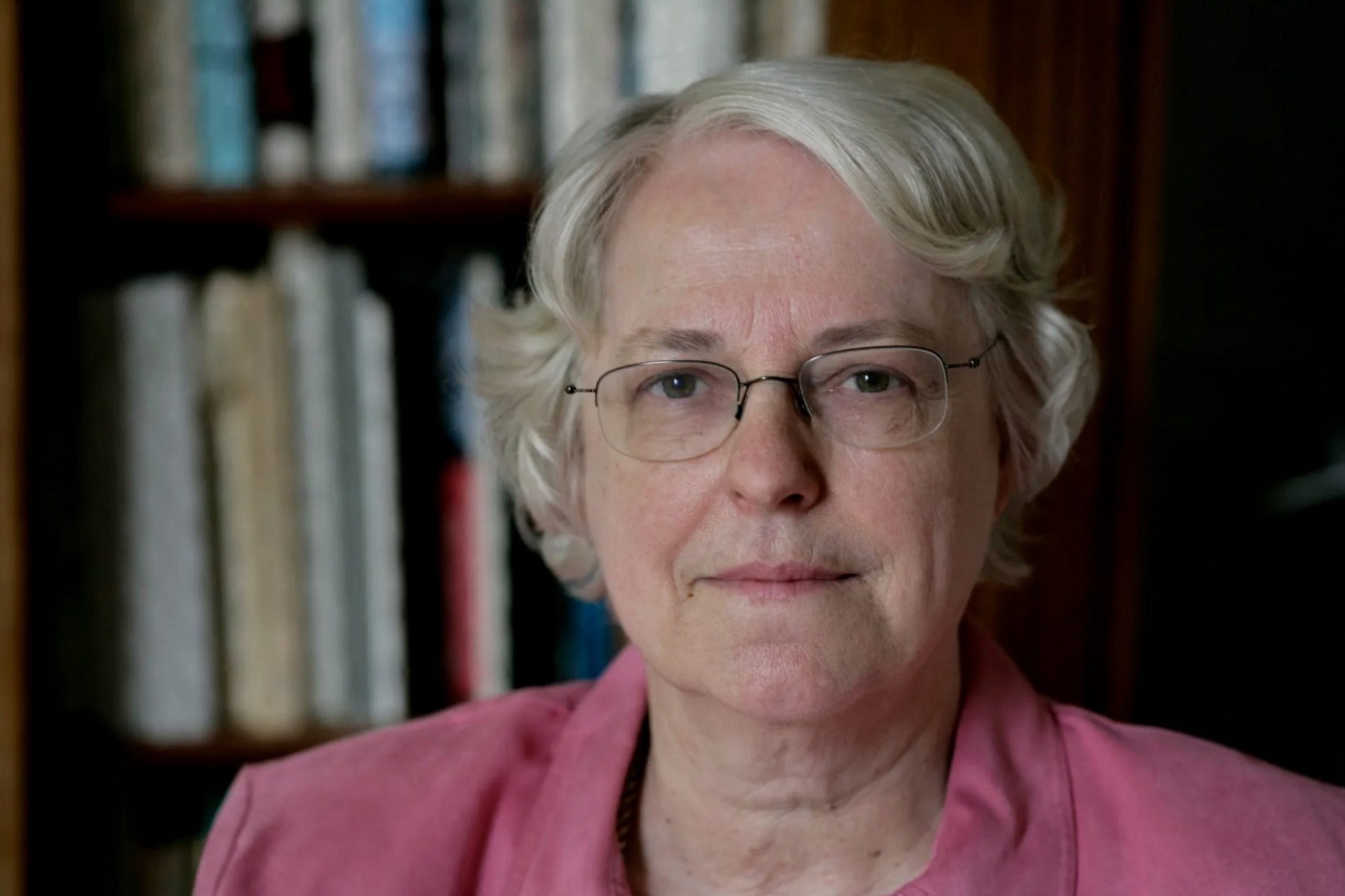
  42. Jan Jansz Orlers, Beschrijvinge der stadt Leyden, 2nd ed., Leiden 1641, p. 375; Walter L. Strauss et al., Rembrandt Documents, New York 1979, doc. 1641/8. For rare objections, see Roelof van Straten, Young Rembrandt. The Leiden Years, 1606-1632, Leiden 2005, p. 16; Benjamin Binstock, ‘The birth of Rembrandt’, in Michiel Roscam Abbing, ed., Rembrandt 2006. Essays, Leiden 2006, pp. 267-278 (arguing for 1607).
  43. Strauss, Rembrandt Documents, doc. 1669/6.
  44. E.B.F.F. Wittert van Hoogland, ‘Genealogie van den tak van het geslacht van Tetrode, welke zich Vinck genoemd heeft. Reconstructie van de genealogie voorkomende in het stam- en wapenboek van aanzienlijke Nederlandsche geslachten. Memoriael Gemaeck door N(icolaas) S(ebastiaensz.) V(inck)’, Genealogische en heraldische bladen 1 (1906), pp. 122-149.
  45. Dirk Rühl, ‘Het wapen van Rembrandt’s broeder Willem Harmensz. van Rijn een gelegenheids-wapen? Een heraldisch probleem’, Gens Nostra. Maandblad van de Nederlandsche Genealogische Vereniging 11 (1956), pp. 117-128, esp. p. 127.
  46. Strauss et al., Rembrandt Documents, doc. 1669/4 (misspelling the name as ‘Vlinck’). See also: http://remdoc.huygens.knaw.nl/#/document/remdoc/e13470 (accessed 22 December 2022).
  47. Warm thanks to Ingrid Pot for her kind assistance, and to P.J.M. De Baar for an impromptu consultation on the document, manuscript LB 6761 klein deel, Erfgoed Leiden en Omstreken, Leiden (hereafter ELO). The notebook is chronological but unpaginated; we therefore cite Wittert van Hoogland. See further Stephanie S. Dickey, ‘Ars longa vita brevis. Rembrandt’s death and the status of the artist in late seventeenth-century Amsterdam’, Nederlands Kunsthistorisch Jaarboek 72 (2022), pp. 234-271.
  48. R.E.O. Ekkart, ‘Familiekroniek Van Heemskerck en Van Swanenburg (I)’, Jaarboek van het Centraal Bureau voor Genealogie 32 (1978), pp. 41-70; idem., ‘Familiekroniek Van Heemskerck en Van Swanenburg (II)’, Jaarboek van het Centraal Bureau voor Genealogie 33 (1979), pp. 44-75 (deaths of Cornelis and Sylvester van Swanenburgh, pp. 54, 72, 75). See also Gary Schwartz, Rembrandt, his life, his paintings, New York 1985, p. 22; https://www.mijnstambomen.nl/leiden/swanenburg.htm (accessed 16 December 2022). The dates of Silvester van Swanenburgh’s death and burial are unrecorded; he prepared his will on 12 October 1669, being siechelick van lichaem leggende te bedde (sick in bed); ELO, 0506, notary Justus Gerstecoren, no. 1144, deed 124, 12-10-1669.
  49. Wittert van Hoogland, ‘Genealogie’, p. 135.
  50. Wittert van Hoogland, ‘Genealogie’, pp. 136, 137. Burial: https://archief.amsterdam/archief/5001/1056 (accessed 16 December 2022).
  51. Wittert van Hoogland, ‘Genealogie’, pp. 135.
  52. Ekkart, ‘Familiekroniek’, pp. 54, 72.
  53. Rudi van Maanen and Leendert van Maanen, ‘De grote epidemie van 1669-1670’, Leids Jaarboekje 2021, pp. 67-83, with further references.
  54. See Dickey, ‘Ars longa vita brevis‘, with further references.
  55. See esp. Christaan Vogelaar and Gerbrand Korevaar, eds., Rembrandt’s Mother. Myth and Reality, exh. cat. Leiden: Stedelijk Museum de Lakenhal 2005, pp. 88-91, 97-98, cat. 3-6, 9-10.
  56. We are grateful to Jos Beerens and Weixuan Li for advice on software to visualize this data.
  57. Reymptgen’s husband, Cornelis Bartholomeusz (Meesz.) van Tetrode (1505-1550), a grain dealer in Leiden, died before Neeltje and Bastiaen were born. See Strauss et al., Rembrandt Documents, doc. 1561/1, 1574/3, 1579/1, 1581/1,1582/2.
  58. Strauss et al., Rembrandt Documents, p. 24.
  59. Gerrit Cornelisz. Vinck is registered living in Leiden 1544-1583; Historisch Leiden in Kaart, https://historischleideninkaart.nl/persoonformulier/?Id=8986 (accessed 16 December 2022). He became poorter of Delft in 1584; Stadsarchief Delft, 1.733, fol. 054v, 5-5-1584. See also W.C. Tettero, Genealogie van Tetrode 1300-1600, Voorburg 2000, p. 61; J.P. Jacobs, ‘Rembrandt verwant met Philips van Leyden’, De Nederlandse Leeuw 102 (1985), column 457-465.
  60. See also ELO, Stadsarchief van Leiden, 0501A, 6597, Register Vetus 1582-1601, p. 8v. ‘t Gulden Warken belonged to Reymptgen In 1579; by 1581, she had transferred ownership to Dirck; Strauss et al., Rembrandt Documents, p. 31 and doc. 1579/1, 1581/1, 1585/1.
  61. Wittert van Hoogland, p. 123. Walsburch was buried several weeks later; SAA DTB 5001, 1054, p. 46vo, 8-5-1629. Prenuptual agreement, SAA 5075, 445, not. Palm Mathijsz, 17-2-1631.
  62. SAA DTB 5001, 671, p. 33 (marriage bans) 27-1-1628; DTB 1054, p. 46vo, 8-5-1629 (burial record).
  63. Wittert van Hoogland, p. 124. They married on 10 May at the Begijnhof and 13 May at the Amsterdam Town Hall.
  64. Wittert van Hoogland, p. 126. Clara became a begijn in 1643 and registered her will as a bejaaarde geestelijke dochter, wonende op het Begijnhof, in 1655, appointing her brothers her heirs; SAA 5075, 2454, not. R. Duee, akte nummer 57860, 8-10-1655.
  65. Wittert van Hoogland, p. 127; SAA, DTB 676, p. 145, 2-1-1642; 5033 Poorterboeken, no. 2, p. 199, 24-4-1642. In 1647 Albert purchased a home on the Haarlemmerstraat; SAA, 5073, Kwijtscheldingen, no. 928, 5-1-1647. He posted the banns for his second marriage, to Grietje Harmens van der Aa, on 2 December 1655; SAA, DTB 682, p. 356, 2-12-1655.
  66. Wittert van Hoogland, p. 127.
  67. SAA DTB, 1055, p. 94v (Clara); 1056, p. 252, 26-6-1683 (Albert).
  68. Cornelis was recorded on 24 April 1587 as a baker, age 21. In 1600, he purchased a house later owned by Karel van der Pluym. Strauss et al., Rembrandt Documents, doc. 1581/2, 1662/4; Schwartz, Rembrandt, p. 18 (diagram of Rembrandt’s family tree by P.J.M. de Baar).
  69. Strauss et al., Rembrandt Documents, doc. 1662/4; Marieke de Winkel, ‘ »Cousin » Karel van der Pluym and the benefit of family’, in Epco Runia and David de Witt, eds., Rembrandt’s Social Network. Family, friends, acquaintances, exh. cat., Amsterdam: Museum het Rembrandthuis 2019, pp. 61-65, citing a red and black chalk drawing on vellum, dated 1634 (private collection in New York).
  70. See Koos Levy-Halm, ‘Where did Vermeer buy his painting materials? Theory and practice’, in Ivan Gaskell and Michiel Jonker, eds., National Gallery Studies in the History of Art, Vol. 55, Vermeer Studies, 1988, pp. 137-143; Jo Kirby, ‘The painter’s trade in the seventeenth century: theory and practice’, National Gallery Technical Bulletin 20 (1999), pp. 5-49.
  71. See Stephanie S. Dickey, Rembrandt. Portraits in Print, Amsterdam/Philadelphia 2004, pp. 141-149; Runia and De Witt, eds., Rembrandt’s Social Network, p. 124.
  72. Orlers, Beschryvinge, p. 373; https://rkd.nl/explore/artists/51111 (accessed 2 January 2023)
  73. Rudolf E.O. Ekkart, Isaac Claesz. van Swanenburgh 1537-1614, Zwolle 1998, p. 14. For the prenuptial agreement, Jacobge was assisted by her father Claes Isaacsz and her brothers Isaac Claesz and Claes Claesz; ELO, 0508 Het oude rechterlijke archief van Leiden, no. 76B-2, fol. 375, 15-10-1570.
  74. ELO, 0501A, Stadsarchief van Leiden, 1574-1816, no. 1289, Register van de volkstelling 1581, fol. 9.
  75. See Marije Osnabrugge, The Neapolitan Lives and Careers of Netherlandish Immigrant Painters (1575-1655), Amsterdam 2019, esp. pp. 66-73, 115-123. The Antwerp-born portraitist Abraham Vinck (1574/75-1619) associated with Jacob van Swanenburgh in Hamburg 1589-1598 and later in Naples; in 1602, he witnessed Van Swanenburgh’s marriage to Margaretha Cardone. He lived in Amsterdam 1609-1619. Rembrandt’s bankruptcy inventory includes ‘een doode Contrefijtsel van Abraham Vinck‘; Strauss et al., Rembrandt Documents, doc. 1656/12, no. 86, but we have not yet found a link between Abraham and the Vinck family discussed here.
  76. Ekkart, Isaac Claesz. van Swanenburgh, esp. p. 71; Schwartz, Rembrandt, pp. 22-23.
  77. Strauss et al., Rembrandt Documents, doc. 1620/1; Jef Schaeps and Mart van Duijn, Rembrandt en de Universiteit Leiden, Leiden 2019, esp. p. 28.
  78. Orlers, Beschryvinge, p. 375.
  79. Ekkart, ‘Familiekroniek’, pp. 71-72. Schwartz, Rembrandt, p. 17; Van Straten, Young Rembrandt, p. 24.
  80. ELO, Register van poorterinschrijvingen F, 1267, fol. 279v, 16-4-1638; Buurquestieboeken, 48G, fol. 105v, no. 2355, 12-9-1661; 0506, Notary Justus Gerstecoren, 1144, deed no. 124, 12-10-1669.
  81. Ernst van de Wetering, ‘Rembrandt’s gift and the underrated importance of his apprenticeship with Jacob isaacsz. van Swanenburg’, in Ernst van de Wetering and Bernhard Schnackenburg, eds., The Mystery of the Young Rembrandt, exh. cat., Kassel: Gemäldegalerie Alte Meister and Amsterdam: Museum het Rembrandthuis 2001, pp. 32-38.
  82. Strauss, et al., Rembrandt Documents, p. 69, doc. 1630/5; Schwartz, Rembrandt, p. 23; English translation: Wheelock, ed., et al., Jan Lievens, p. 286.
  83. Bakker, ‘Rembrandt and the emergence’; Vogelaar, ‘Rembrandt in Leiden’; Orlers, Beschryvinge, p. 376.
  84. See Boudewijn Bakker, ‘Rembrandt and the humanist ideal of the universal painter’, in Stephanie S. Dickey, ed., Rembrandt and his Circle. Insights and Discoveries, Amsterdam 2017, pp. 67-98.
  85. Volker Manuth, Marieke de Winkel and Rudie van Leeuwen, Rembrandt. The Complete Paintings, Cologne 2019, cat. 121.
  86. Carel Vosmaer, Rembrandt. Sa vie et ses oeuvres, The Hague 1877, pp. 28-35, 469, 461, unaware of Vinck’s Memoriael, posited a relationship to the Van Swanenburghs on Rembrandt’s father’s side. Ekkart, Isaac Claesz van Swanenburgh, p. 11, dismissed this. However, Claes Cornelisz van Berckel, half-brother of Harmen Gerritsz van Rijn, was married to Brechtje Mourijnsdr. van Swanenburch. The half-brothers lived next door to each other on the Weddesteeg in 1605 and 1624 and owned a mill together; ELO, Buurquesties 48B, blad 2, aktenummer 520, 4-4-1605; 48D, blad 201, aktenumer 1339, 22-4-1624; Tiende Register, Bon Noord-Rijnevest (B), Stadsvrijdom en molens op de wallen, archiefnummer 501A, Stukken betreffende afzonderlijke onderwerpen; Registratie van onroerend goed 1585-1816 (1819), inventarisnummer 6634, blad 31, 1602-1724. It is not yet clear how Brechtje Mourijnsdr. connects to Jacob and Silvester van Swanenburgh. See also Schwartz, Rembrandt, pp. 21-25.
  87. For context, see S.A.C. Dudok van Heel, ‘Rembrandt van Rijn (1606-1669), een remonstrantsgezind schilder uit calvinistisch Leiden’, in idem., De jonge Rembrandt onder tijdgenoten. Godsdienst en schilderkunst in Leiden en Amsterdam, Nijmegen 2006, pp. 177-223.
  88. On art patronage in Leiden, see esp. Gerbrand Korevaar, ‘Leiden in Rembrandt’s time’, in Van de Wetering and Schnackenburg, Mystery, pp. 12-21; Piet Bakker, ‘Rembrandt and the emergence of the Leiden art market’, in Jacquelyn N. Coutré, ed., Leiden ca. 1630. Rembrandt Emerges, exh. cat., Kingston: Agnes Etherington Art Centre 2019, pp. 66-95. We are grateful to Piet Bakker for advice on the present essay.
  89. Dirk Traudenius, Tyd-zifter, Amsterdam 1662, p. 16; Arnold Houbraken, De groote schouburgh der Nederlandtsche konstschilders en schilderessen, Amsterdam 1718-21, III, p. 33; H. Schneider, ed. by R.E.O. Ekkart, Jan Lievens, Sein Leben und Seine Werke, Amsterdam 1973, p. 151, no. 262; https://houbraken-translated.rkdstudies.nl/3-1-59/page-30-39/ (accessed 16 December 2022,) with English translation. The painting has not been discovered.
  90. Wheelock, ed., Jan Lievens, pp. 3, 16-17, fig. 19. The painting was destroyed in 1929.
  91. On their extended connection, see Stephanie S. Dickey, ‘Jan Lievens in Rembrandt’s house’, Kroniek van het Rembrandthuis 2008, pp. 36-53.
  92. As noted above, Cornelis van Swanenburgh’s mother was Adriana van Leeuwen. Rembrandt’s oldest brother, Adriaen van Rijn, married Lystbertgen Symonsdr van Leeuwen in 1617, and Willem van Rijn married Willempje Pietersdr van Steylandt, widow of Jacob Symonsz van Leeuwen, in 1636; Rühl, ‘Het wapen’, pp. 117-119, 123.
  93. Bakker, ‘Rembrandt and the Emergence’, pp. 81-83; Wheelock, ed., Jan Lievens, p. 84, cat. 2.
  94. Orlers, Beschryvinge, pp. 367-377; Bakker, ‘Rembrandt and the emergence’, p. 82. One of these was a ‘Pylatus’, possibly Pilate Washing his Hands (Raleigh, North Carolina Museum of Art); Wheelock, ed., Jan Lievens, p. 289.
  95. Strauss et al., Rembrandt Documents, doc. 1663/7; Schwartz, Rembrandt, p. 37; Dudok van Heel, ‘Rembrandt van Rijn’, pp. 190-193; Christopher Brown, An van Camp and Christiaan Vogelaar, eds., Young Rembrandt, exh. cat., Leiden: Museum De Lakenhal and Oxford: Ashmolean Museum 2019, pp. 24, 158-160. Angela Jager is preparing a study of art patronage in Rembrandt’s family network.
  96. Bakker, ‘Rembrandt and the Emergence’, pp. 85-90.  See also C. Willemijn Fock, trans. by Anne Baudoin, ‘Art ownership in Leiden in the seventeenth century’, Journal of Historians of Netherlandish Art  13:1 (2021), DOI: 10.5092/jhna.2021.13.1.4.
  97. For an overview and analysis of the phenomenon of the atelier scene in Dutch art, see Katja Kleinert, Atelierdarstellungen in der niederländischen Genremalerei des 17. Jahrhunderts : realistisches Abbild oder glaubwürdiger Schein?, Petersburg 2006.
  98. Werner Sumowski, Drawings of the Rembrandt School, vol. 7, New York 1983, pp. 3648-3649, no. 1636bx (ill.). 
  99. Arthur K. Wheelock, ed., Jan Lievens. A Dutch Master Rediscovered, exh. cat. Washington: National Gallery of Art; Milwaukee: Milwaukee Art Museum; Amsterdam: The Rembrandt House Museum 2008/09, p. 246, no. 106.
  100. And not that between Apollo and Marsyas, as indicated by Sumowski.
  101. No painting of this theme is known by Lievens. There was a depiction of the contest between Apollo and Marsyas, showing Apollo playing the lyre, in the sale of the collection of the Count of Arundel, likely the same work later with the widow of Jürgen Ovens in 1691. See Hans Schneider and Rudi Ekkart, Jan Lievens: sein Leben und seine Werke. Amsterdam 1973, pp. 110-111, no. 78.
  102. Werner Sumowski, Gemälde der Rembrandtschüler, Landau 1983-1994, vol. 6 (1994), pp. 3691-3692, nos. 2185a-2194.
  103. Nos. 2857-2861 in: Sumowski, Drawings (see note 2), vol. 12, Addenda (in translation, forthcoming in 2023).
  104. Ibid., vol. 3, p. 1965, note 65. Currently assigned no. 2857 in vol. 12 (see note 2); sale, Paris (Christie’s), 21.3.2002, lot 114.
  105. Ibid., vol. 3, pp. 1961, 1965, 1977 (illus.). Sale, London (Bonhams), 29 October 2014, lot 147 (colour illus.).
  106. Amsterdam, Sotheby’s, 11 November 1997, lot 25, colour ill., as Lievens. Sumowski is far more hesitant here than with the Mettingen drawing: Drawings (see note 2), pp. 3904-3905, no. 1757xx, illus.: “…an unqualified attribution cannot be entertained  because there is no material for comparison.”
  107. Jan Lievens, Peasant Dwelllings under Trees with Milkmaid, pen in brown and brush in brown and grey, 108 x 193 mm, Dresden, Kupferstichkabinett, Staatliche Museen Dresden, inv. no. C 1453; see Sumowski, Drawings (see note 2), pp. 3724-3725, no. 1672 (illus.).
  108. See: Michiel Roscam Abbing, De schilder & schrijver Samuel van Hoogstraten, 1627-1678. Eigentijdse bronnen & oeuvre van gesigneerde schilderijen, Leiden 1993, pp. 40-41; Volker Manuth, “Dordrecht: bakermat voor Rembrandts leerlingen”, Bulletin Dordrechts Museum 3 (2006), pp. 3-7; and: David de Witt, Abraham van Dijck (1635-1680). Life and Work of a Late Rembrandt Pupil, Zwolle 2020, pp. 11-13.
  109. As also observed in Paarlberg, Bisschop (see note 12), p. 24.
  110. On their friendship see De Witt, Abraham van Dijck (see note 4), p. 108.
  111. David de Witt, The Bader Collection: Dutch and Flemish Paintings, Kingston 2008, pp. 63-64, no. 31), correcting Sumowski’s dating to the early 1660s, with the observation of hesitancy in handling that points to an earlier period.
  112. Arnold Houbraken, De groote schouburgh der Nederlantsche konstschilders en schilderessen, vol. 2, The Hague 1719, p. 220. They seem to have largely been lost. The only example linked to him is A Boy Asleep in an Enclosed Chair, c. 1655/60, oil on wood, 97.2 x 66.5 cm, London, with Johnny van Haeften in 2007; see Sumowski, Gemälde (see note 6), vol. 6 (1994), p. 3692, no. 2192, p. 3776 (illus., as Bisschop). It is unsigned, and clearly derived from a similar work signed and dated 1654 by the Haarlem painter Johannes Verspronck: oil on panel, 96 x 75.7 cm, Belgium, private collection. On this basis it has been attributed to that artist as well see: Rudi Ekkart in: Pride and Joy. Children’s Portraits in The Netherlands 1500-1700, exh. cat. Haarlem: Frans Halsmuseum; Antwerp: Koninklijk Museum voor Schone Kunsten Antwerpen, 2000-2001, pp. 227-229, no. 60. However, the thicker application of paint and harsher contrasts in the London version diverge from the one signed by Verspronck, and indeed more closely approximate Bisschop’s painting style of around 1660. If by him, this would suggest that Verspronck supplied an additional impulse for making such cutout paintings, besides Van Hoogstraten and his championing of illusionism.
  113. Houbraken, Schouburgh (see note 16), vol. 2 (1719), pp. 157-158.
  114. See the important analysis by Thijs Weststeijn: The Visible World. Samuel van Hoogstraten’s Art Theory and the Legitimation of Painting in the Dutch Golden Age, Amsterdam 2008.
  115. Sander Paarlberg, “Bisschop op zijn best. Dordrechts Museum krijgt zijn eigen Melkmeisje”, Bulletin van de Vereniging Rembrandt 25, no. 1, (2015), pp. 22-24, colour illus.
  116. Samuel van Hoogstraten, Inleyding tot de Hooghe Schoole der Schilderkonst, Dordrecht, 1678, p. 12.
  117. We do not include a painting attributed to Bisschop: The Young Artist in his Studio, c. 1653, oil on canvas, 90.8 × 76.8 cm, Detroit, Detroit Institute of Arts, inv. no. 38.29, as attributed to Cornelis Bisschop; George Keyes, in: Masters of Dutch Painting: The Detroit Institute of Arts, London 2004, pp. 28–29, no. 8 (ill.). The drawing shown in the lower left, a classic two-chalk drawing on blue-grey paper, underscores the stylistic evidence against his authorship, pointing instead to the circle around Govert Flinck (1615-1660) and Jacob Adriaensz. Backer (1608-1651); perhaps Adam Camerarius (?–1666).
  118. Constantijn Daniël à Renesse, Rembrandt and his Pupils Drawing from a Nude Model, black chalk, brush in brown, 180 x 266 mm, Hessisches Landesmuseum, Darmstadt, inv. no. AE 665; on the attribution see Peter Schatborn, Rembrandt and his circle: drawings in the Frits Lugt collection, Bussum 2010, p. 335.
  119. Rembrandt, Rembrandt’s Studio with a Half-Nude Model, c. 1654/58, pen and brush in brown, with white body colour, 205 x 190 mm, Oxford, Ashmolean Museum, inv. no. P.I.192 (WA1855.8): Peter Schatborn in Rembrandt : The Complete Etchings and Drawings, Cologne 2019, p. 269, no. T438 (colour illus., as c. 1654).
  120. Rembrandt, Bathsheba with King David’s Letter, 1654, oil on canvas, 142 x 142 cm, Paris, Musée du Louvre, inv. no. M.I. 975: Ernst van de Wetering, Rembrandt’s paintings revisited : a complete survey, Dordrecht, Boston and Lancaster 2014, pp. 623-624, no. 231; Volker Manuth, Marieke de Winkel and Rudie van Leeuwen, Rembrandt: the Complete Paintings, Cologne 2019, pp. 507-508, no. 23. As Van de Wetering explains, the pose of Bathsheba was originally conceived with an upward glance and turn of the head.
  121. Rembrandt, A Woman Sitting Half-Dressed beside a Stove, 1658, etching, buring and drypoint, 226 x 194 mm, in seven states: Erik Hinterding and Jaco Rutgers, The New Hollstein Dutch & Flemish Etchings, Engravings and Woodcuts 1450-1700, vol. 25-II: Rembrandt, Ouderkerk aan den IJssel 2013, pp. 292-294, no. 307.
  122. Houbraken, Schouburgh (see note 16), vol. 1 (1718), p. 271.
  123. As discussed by the author in: David de Witt and Franziska Gottwald, “Rembrandt & Light” in: Rembrandt’s Light, exh. cat. Dulwich, Dulwich Picture Gallery, 2019-2020, pp. 33-34 (the date of the drawing mistakenly altered in editing; should read c. 1654/58).
  124. See www.elephanthansken.com for a current collection of all the traces left by Hansken and her owner, brought together thanks to the research of Michiel Roscam Abbing. In 2016 M. Roscam Abbing, Rembrandts olifant. In het spoor van Hansken appeared, followed in 2021 by an updated edition in English translation entitled Rembrandt’s Elephant. Following in Hansken’s Footsteps, both with Leporello in Amsterdam.
  125. In Het Schilder-boeck of 1604 (Haarlem) Karel van Mander calls drawing the father of all of the arts. Constant practice, especially taking everything that nature offers as model, will make the artist successful; see fol. 8r+v, Van het teyckenen, oft Teycken-const. Tweede Capittel.
  126. W. Goeree, Inleydingh Tot de Praktijck Der Al-gemeene Schilder-Konst, Middelburg 1670, p. 121.
  127. For an overview see P. Schatborn, E. Hinterding, Rembrandt. Alle tekeningen en etsen, Cologne 2019, pp. 285-301.
  128. No. 249 in the inventory, see document/remdoc/e12724. For more background on Rembrandt’s collection, see B. Broos e.a., Rembrandt’s Treasures, Amsterdam 1999.
  129. Peter Schatborn accepts six lion drawings as autograph: Rembrandt, A Lioness or Young Lion with Prey (a Bird), Reclining, with Head to the Left, 1637-1641. Charcoal and wash, with white highlights, on prepared paper, 126 x 239 mm. London, British Museum, inv. no. Oo,9.71; Rembrandt, Reclining Lioness or Young Lion, with Head to the Right, 1637-1641. Charcoal and wash, with white highlights, on prepared paper, 125 x 180 mm. London, British Museum, inv. no. Oo,9.75; Rembrandt, Reclining Lioness or Young Lion, from the Front, 1637-1641. Charcoal and wash, with white highlights, on prepared paper, 115 x 150 mm. New York, The Leiden Collection, inv. no. RR-100; Rembrandt, Reclining Lion with Prey, c. 1650. Pen and brush in ink, brush in white paint, with traced contours, 140 x 203 mm. Rotterdam, Museum Boijmans Van Beuningen, Collection Franz Koenigs, inv. no. R 12; Rembrandt, Reclining Lion, c. 1650. Pen and brush in ink, 138 x 207 mm. Paris, Musée du Louvre, inv. no. RF4721; Rembrandt, Reclining Lion, c. 1660. Pen in brown on prepared paper, 122 x 212 mm. Amsterdam, Rijksmuseum, inv. no. RP-T-1901-A-4524.
  130. For lions, see M. Roscam Abbing, P. Tuynman, “Rembrandts drawings of the elephant Hansken”, in M. Roscam Abbing (ed.), Rembrandt 2006: Essays, Leiden 2006, pp. 173-189, p. 189.
  131. Rembrandt, Young Asian Elephant (Hansken), 1637. Black chalk, 233 x 354 mm. Vienna, Albertina, inv. no. 17558; Rembrandt, Asian Elephant (Hansken) in three different poses with steward. Black chalk, 239 x 354 mm. Vienna, Albertina, inv. no. 8900; Rembrandt, Asian Elephant (Hansken) with Spectators. Black chalk and charcoal, 179 x 256 mm. London, British Museum, inv. no. Gg,2.259.
  132. Rembrandt or pupil, Asian Elephant (Hansken), c. 1637. Black chalk and graphite, counterproof. 194 x 189 mm. New York, The Morgan Library & Museum, inv. no. I, 205.
  133. The drawing has in the meantime been published in M. Roscam Abbing, Rembrandt’s Elephant (see note 1), pp. 22-23. The interpretation of the drawing there is based on the research presented in this article.
  134. In the possession of Peter Schatborn, the owners of the drawing, and the author of this article.
  135. There is no available image of the watermark, so further identification is not possible at the moment.
  136. Female Asian elephants generally do not have tusks. But where present, they do not grow to longer than 10 cm, which does render them visible between the folds of the skin. Hansken had short visible tusks of this kind. Her skeleton, which was preserved after her death in 1655, and is kept on display at the natural history museum La Specola, shows evidence of this: the skull shows the stumps of tusks. The English traveller and writer wrote in 1641 in his diary: “his teeth were but short being a female, and not old, as they told us”. Zie E.S. de Beer (red.), The diary of John Evelyn, Vol. 2. In the same year Ernst Brinck observed: “zijn naar buiten uitstekende slagtanden waren nog maar weinig meer dan een vinger lang” (his protruding tusks were only a little more than a finger long). See also Roscam Abbing and Tuynman, “Rembrandt’s Drawings…” (see note 7), pp. 173-189. There it is explained how in 1633 Hansken’s tusks were not yet visible. In 1641 they were, according to the description of Evelyn and Brinck. They may have been broken off after then, not subsequently growing long enough to be visible.
  137. Roscam Abbing and Tuynman, “Rembrandt’s Drawings…” (see note 7), p. 184 and Roscam Abbing, Rembrandt’s Elephant (see note 1), pp. 24-25.
  138. Jan Mollijns, Commemorative Print of the Asian Elephant Emanuel, 1563. Hand coloured woodcut, 285 x 400 mm. London, The British Museum, inv. no. 1928,0310.97, https://www.britishmuseum.org/collection/object/P_1928-0310-97; Gerard van Groeningen, Commemorative Print of the Asian Elephant Emanuel, in Eight Different Poses, in or after 1563. Etching, 405 x 541 mm. Amsterdam, Rijksmuseum, inv. no. RP-P-OB-59.019; Wenceslaus Hollar (after Gerard van Groeningen), Commemorative Print of the Asian Elephant Don Diego, 1629. Etching, 245 x 283 mm. Amsterdam, Rijksmuseum, inv. no. RP-P-1976-16.
  139. See Chronycke van Antwerpe sedert het jaer 1500 tot 1575. Gevolgd van Eene beschryving van de historie en het landt van Brabant, sedert het jaer 51 vóór J.-C., tot 1565 na J.-C., volgens een onuitgegeven handschrift van de XVIe eeuw, edition of 1843, Antwerp, p. 59: “(…) anno 1563, int eynde van september, doen quam tot Antwerpen tschepe eenen olifant vuyt Portugael, off daer ontrent, oudt by de negen jaeren, hooge acht voeten; desen ginck sdaechs achter straeten dattet een yegelyck sien moechte: desen was seer tam ende wert geregeert van eenen moor doende alwat den moor hem gebiede: desen olifant hiet Emanuel.” (in the year 1563, at the end of September, there came by ship to Antwerp an elephant from Portugal, around nine years old, eight feet tall; it went by day through the streets so that all could see it: it was very tame and was led by a Moor, doing everything the Moor commanded: this elephant was called Emanuel). See e.g. also S. Dackerman, Prints and the Pursuit of Knowledge in Early Modern Europe, New Haven 2011, cat. no. 34.
  140. See note 15. For the impression in the collection of the Rijksmuseum see http://hdl.handle.net/10934/RM0001.COLLECT.119126.
  141. Hansken appeared in Amsterdam on four occasions: in the summer months of 1633 and at the fairs (kermissen) of 1637, 1641 and 1647. One of the drawings by Rembrandt can be connected to the fair of 1637, because Rembrandt dated the sheet. Peter Schatborn dates the other two drawings of Hansken by Rembrandt to the same year. However the drawing of Hansen in three poses (Albertina, inv. no. 8900) appears to have been made on a later occasion, in 1641. The animal in that drawing is noticeably older than in the sketch of 1637. See also Roscam Abbing and Tuynman, “Rembrandt’s Drawings…” (see note 7), pp. 173-189. Further research on the paper in the future may yield more information on the dating.
  142. Up to Rembrandt’s time, there was limited knowledge in Europe concerning elephants. What people thought to know was based on what Pliny the Elder had written in his Natural History (77-79 C.E.). Or on medieval legends such as could be read in the Physiologus, an ancient Greek moralizing text on plants and (mythical) animals. Over the course of time there appeared more and newer editions of these stories. Jacob van Maerlants Der naturen bloeme (c. 1350) is one example, in which the texts are no longer presented in Latin but in Dutch (“Dietsch”). In 1588 Christophel Plantijn in Antwerp published a collection of texts – including the Physiologus – under the title Sancti Patris Nostri Epiphanii, Episcopi Constantiae Cypri, ad Physiologum. Eiusdem in die festo Palmarum sermo. A century later, at the end of the 17th century, the skeleton Hansken, the elephant that died in 1655 in Florence, became accessible to scholars. This led to new insights into the existence of an ancestor species, the mammoth. A Latin description of Hansken’s skeleton by John Ray formed the basis in the 18th century for Carolus Linnaeus’ scientific description of the elephant in terms of its species.
  143. For the copy of the album in the collection of the Rijksmuseum, see: http://hdl.handle.net/10934/RM0001.COLLECT.353205. For the two prints in its, respectively of five and three elephants, see: http://hdl.handle.net/10934/RM0001.COLLECT.353210 and http://hdl.handle.net/10934/RM0001.COLLECT.353211.
  144. For the copy in the collection of the Rijksmuseum, see: http://hdl.handle.net/10934/RM0001.COLLECT.33090. Don Diego was in Europe from 1623 to 1635 in Europa. For more information on Don Diego see L. Rice, “Poussin’s Elephant”, Renaissance Quarterly 70 (2017), pp. 548-593; M. Roscam Abbing, “Poussin’s Elephant Revisited”, in Source: Notes in the History of Art 39 (2020), pp. 109-119.
  145. Op de kunstcaemer (….) [235] Een Oost-Indies benneken daarin verscheyde prenten van Rembrant, Hollaert, Cocq en andere meer”. See document/remdoc/e12723.
  146. [i] For his etching of Joseph and the Wife of Potiphar of 1634 (B39/ NHD128) Rembrandt looked to the etching of the same theme by Tempesta, of 1613. And Tempesta’s prints of lion hunts served as model for Rembrandt in his own depictions of the theme, the two small lion hunts of c. 1629 (B115/ NHD28, B116/ NHD29) and his large lion hunt of 1641 (B114/ NHD187). See e.g. B. van den Boogert, J. van der Veen, Dat kan beter! Rembrandt en de oude meesters, Amsterdam 2013, pp. 52-55.
  147. Nos. 210 – 212 in the inventory. See document/remdoc/e12721 and document/remdoc/e12722.
  148. See for example in the collection of the Rijksmuseum: God Creates the Animals http://hdl.handle.net/10934/RM0001.COLLECT.183114, Cain Murdering Abel http://hdl.handle.net/10934/RM0001.COLLECT.183148, Orpheus Enchanting the Animals with his Music http://hdl.handle.net/10934/RM0001.COLLECT.183809, Combat of the Centaurs and Various Animals http://hdl.handle.net/10934/RM0001.COLLECT.608702, God Commands Adam And Eve Not To Eat of The Tree of Knowledge http://hdl.handle.net/10934/RM0001.COLLECT.183140.
  149. See also Roscam Abbing, Rembrandts olifant (see note 1), pp. 22-23; Rembrandt’s Elephant (see note 1), pp. 24-25. Besides the iconography there described of the elephant as a chaste animal, and thereby symbol of humanity before the Fall into Sin, Rembrandt incorporated two myths about elephants. The myth of the mating ritual of elephants refers namely to the sin of the first people in the world. In order to stimulate arousal in the male, the female offers an aphrodisiac. Eve gives the forbidden fruit of the Tree of Knowledge of Good and Evil to Adam, and this fruit in fact serves as an aphrodisiac. Because after eating this fruit they become aware of their desires. And further it was said of elephants and dragons that they were symbols respectively of good and evil, and that they were each other’s greatest enemies. The draco (Latin, translatable as dragon or serpent) hides in a tree, in order to drop down onto an elephant walking by. What follows is a fight to the death, in which both animals perish. Rembrandt also refers to this coming event, as symbol of the struggle between good and evil that will result from Adam and Eve’s fall into sin.
  150. Respectively nos. 161, 178, 189, 298 and 307 in the inventory, see: document/remdoc/e12719, document/remdoc/e12719, document/remdoc/e12720, document/remdoc/e12727.
  151. The fact Rembrandt’s insolvency inventory contains such detailed information is one of the reasons to believe that Rembrandt himself dictated how the objects were to be described at the taking of the inventory, on 25 and 26 July 1656.
  152. For further information on this elephant see: M. Roscam Abbing, “‘So Een Wunder heeft men hier nooijt gesien’ De Indische vrouwtjesolifant (1678/80-1706) van Bartel Verhagen”, Jaarboek Amstelodamum 106 (2014), pp. 68-95.
  153. The tusks were probably added because they appear in the original print by Van Groeningen and were seen as a typical feature of an elephant. Hansken too was given prominent tusks in some illustrations. In one instance (a drawing from life, but embellished from imagination) it is clear that the artist tried to indicate how tusks would look on her. Stefano della Bella, Elephant (Hansken), with a Black Man. Pen and brush in ink, 128 x 159 mm. Present location unknown (sale,London, Christie’s, 18 March 1975, lot 17). For more on this drawing see: https://www.elephanthansken.com/wp-content/uploads/2013/07/fig.-17.jpg. Around 1647 a publicity or commemorative print of Hansken was also made. For the impression in the Rijksmuseum see http://hdl.handle.net/10934/RM0001.COLLECT.432625. Also in this print, she was mistakenly endowed with tusks, following the example of the print of Don Diego, which also served as model for the arrangement of the print with a central image surrounded by smaller images.
  154. See document/remdoc/e4447.
  155. Idem. RemDoc does not supply the detailed list of the works that Rembrandt purchased. The Rembrandt Documents (W. Strauss and M. van der Meulen, New York 1979) does summarize them (see doc. no. 1638/2). It is evident that over the auction days Rembrandt purchased various individual prints by Albrecht Dürer, a woodcut series of The Life of the Virgin, and a Passion series. The print Christ in Limbo was part of Dürer’s engraved Passion of 1511-1513.
  156. See also J. Schaeps e.a. Leiden viert feest! Hoogtepunten uit een academische collectie, 2014, cat. no. 17.
  157. See also Roscam Abbing, Rembrandts olifant (see note 1), pp. 22-23; Roscam Abbing, Rembrandt’s Elephant (see note 1), p. 24; Joost van den Vondel also incorporated Hansken’s presence into his work. She was on display in the city in September 1637 as Vondel was completing his play Gijsbrecht van Aemstel. This work premièred on 3 January 1638 in honour of, and in, the Amsterdam Schouwburgh on the Keizersgracht. In one of the scenes (line 1304) Vondel refers to one of the tricks Hansken performed during her appearances; see Roscam Abbing, Rembrandts olifant (see note 1), pp. 49-51.
  158. S.A.C. Dudok van Heel, Dossier Rembrandt. Documenten, tekeningen en prenten, Amsterdam 1987, pp. 4-5.
  159. See: https://archief.amsterdam/indexen/.
  160. In the process of this indexing several hitherto unknown references to (possible) Rembrandt paintings in inventories surfaced, such as for example Rembrandt’s portrait of Cornelis Claesz Anslo and Aaltje Gerrits Schouten, which according to the testament of their granddaughter Teuntje Hartens hung in the front hall on the Nieuwmarkt; Myrthe Bleeker, “Een Rembrandt in het voorhuis”, Alle Amsterdamse Akten, 8 February 2021, https://www.alleamsterdamseakten.nl/artikel/2648/een-rembrandt-in-het-voorhuis/. Source: Stadsarchief Amsterdam (Amsterdam City Archives) (SAA), access no. 5075, Archief van de Notarissen ter Standplaats Amsterdam (Archive of Notaries in Amsterdam), inv.no. 8511, akte 732, 19 December 1732. Jirsi Reinders en Mark Ponte,“Cardinaal van Rembrandt”, Ons Amsterdam 73 (2021), pp. 38-39; https://onsamsterdam.nl/cardinaal-van-rembrandt-van-rijn. See also the Rembrandt Dossier on the same website: https://www.alleamsterdamseakten.nl/tag/299/rembrandt/.
  161. SAA, “Google door honderdduizenden historische handschriften”, 9 March 2021, https://www.amsterdam.nl/stadsarchief/nieuws/transkribus/ (accessed 20 October 2021). The search platform can be used at https://transkribus.eu/r/amsterdam-city-archives/#/. More information on Transkribus can be found at: https://readcoop.eu/transkribus/?sc=Transkribus.
  162. SAA, access no. 5075, Notarissen (Notaries), inv. no. 1476 (unpaginated) (scans Archiefbank: KLAG03161000143 – KLAG03161000150) (minuutakte) and SAA, access no. 5075, Notarissen (Notaries), inv. no. 1492, f. 305r-312r Afschrift (archive copy), both of 7 August 1665. On 22 October 1666 there was a subsequent report on the management of the estate: SAA, access no. 5075, Notarissen (Notaries), inv. no. 1493, f. 156v-159r; idem concerning the pre-bequest to Jacob Wesselsz Wiltingh’s sister Willemtie Wessels: SAA, access no. 5075, Notarissen (Notaries), inv. no. 1493, f. 154v-156v.
  163. Jan Wagenaar, Amsterdam in zyne opkomst, aanwas, geschiedenissen, voorregten, koophandel, gebouwen, kerkenstaat, schoolen, schutteryen, gilden en regeeringe, vol. 3, Amsterdam 1768, pp. 499-502. The city messengers registers have not survived.
  164. SAA, access no. 5075, Notarissen (Notaries), inv. no. 1492, f. 310r-v.
  165. SAA, access no. 5075, Notarissen (Notaries), inv. no. 2196, p. 191; Remdoc no. 1654/4: http://remdoc.huygens.knaw.nl/#/document/remdoc/e1661.
  166. SAA, access no. 5075, Notarissen (Notaries), inv. no. 1476, z.f. (scan Archiefbank: KLAG03161000148) (minutes record); SAA, access no. 5075, Notarissen (Notaries), inv. no. 1492, f. 309v Afschrift (archive copy), both 7 August 1665. In the minutes there is a comma between “schilder” (painter) and “Isercramer” (ironmonger), which is missing in the archive copy.
  167. Estate inventory of Koert Kooper; Remdoc (see note 8) no. 1660/4: Maerten Daey (1660/8), Clara de Valaer (1660/15), Magdalena van Lemens (Remdoc 1661/4), Christoffel Hirschvogel (1661/10), Willem van Campen (1661/11), Willem Schrijver (1661/14), Matthijs Hals (1662/1), Johanna de Smit (1662/1a), Gerard van der Voorde (1663/8). Only in the inventory of Clara de Valaer is the painter named as “Rembrant van Rhyn”.
  168. SAA, access no. 5001, Archief van de Burgerlijke Stand: doop-, trouw- en begraafboeken van Amsterdam (baptism, marriage and burial books of Amsterdam) (retroacta of the citizen’s registry), inv. no. 473, p. 471; inv. no. 493, p. 120. On 12 November 1654, a child of Rembrandt Gerdes was baptized in the Noorderkerk, inv. no. 76, p. 18. On 19 July 1664, Rembrant van Ruijnen was buried together with his child in the St. Anthoniskerkhof, inv. no. 1193, p. 98.
  169. SAA, access no. 5033, Archief van de Burgemeesters (Burgomasters’ archive): poorterboeken (citizenship books), inv. no. 2, Register van gekochte poorters (Registry of citizens by purchase), p. 474. Wiltingh is not mentioned in the incomplete surviving registration of baptisms of Hasselt in the years 1591-1597, 1614-1618 and 1632-1651; Historisch Centrum Overijssel, access no. 124 Doop-, trouw- en begraafboeken (dtb, retroacta van de Burgerlijke Stand) in Overijssel (Baptism, marriage and burial books (dtb, retroacts of the civil registry) in Overijssel), inv.nr. 247, Doopboek Hasselt (baptism book Hasselt) 1591-1689.
  170. This is also evident from his listing in the registers of the collateral succession: SAA, access no. 5046, Archief van de Secretaris: stukken betreffende de ontvangst van de twintigste penning op de Collaterale Successie, inv. no. 2, f. 5v (scan 85). (Archive of the City Secretary; records concerning the collection of the twentieth penny on the indirect inheritance)
  171. Considering the (familial) relations, this provenance is likelier than from the city of Hasselt in todays Belgian province of Limburg.
  172. SAA, access no. 5039, Thesaurieren Ordinaris (Treasurers Extraordinary), inv. no. 554, f. 272v. The purchase price was 5600 guilders. In this registry of plots sold by the city during the period 1630-1658 this is the only reference to one Jacob Wessels. The purchases of the lot was Romeyn de Hooghe III (1605-1669), and his brother Daniel de Hooghe (1614-1657) was the second guarantor. On these members of the De Hooghe family: Henk van Nierop, The life of Romeyn de Hooghe 1645-1708. Prints, Pamphlets, and Politics in the Dutch Golden Age, Amsterdam Studies in the Dutch Golden Age, Amsterdam 2018, Genealogical Table 1-2, p. 42 and pp. 420-421.
  173. Nationaal Archief (National Archives), access no. 3.19.41, Collected papers, from the Van Reede van Oudtshoorn Family, 1321-1902, inv. no. 152, Stukken betreffende den bouw van een kerk, schoolhuis en pastorie te Oudshoorn. 1662-1672, Memoerie vande Oncosten vande kerck van Sgravenlant, with an itemized list of the wooden components of the roof, c. 1659. Meta Döbken, “De ontstaansgeschiedenis”, De kerk te Oudshoorn, Alphen aan den Rijn 1980, pp. 7-19: 16, refered to the existence of this document but did not specify any details.
  174. See note 16:, Memorie vande Oncoosten…”, c. 1659.
  175. Pieter Vlaardingerbroek, “De stadsarchitect Daniel Stalpaert (1648-1676): ontwerper of projectmanager?”, Maandblad Amstelodamum 97 (2010), p. 53-61; Gea van Essen, “Daniel Stalpaert (1615-1676) stadsarchitect van Amsterdam en de Amsterdamse stadsfabriek in de periode 1647 tot 1676”, Bulletin KNOB 99 (2000), pp. 101-120; Gea van Essen, Het stadsfabriekambt. De organisatie van de publieke werken in de noordelijke Nederlanden in de zeventiende eeuw, Utrecht 2011.
  176. Pieter Vlaaardingerbroek, Het paleis van de Republiek. Geschiedenis van het stadhuis van Amsterdam, Zwolle 2011, p. 99, 129-135.
  177. SAA, access no. 5075, Notarissen (Notaries), inv. no. 1492, f. 353r-v.
  178. Vlaardingerbroek, Paleis (see note 19), p. 99, 134. A fine of 600 guilders was payable for missing the delivery date.
  179. See: Jaap Evert Abrahamse, Heidi Deneweth, Menne Kosian en Erik Schmitz, “Gouden kansen? Vastgoedstrategiën van bouwondernemers in de stadsuitleg van Amsterdam in de Gouden Eeuw”, Bulletin KNOB 114 (2015), pp. 229-257.
  180. SAA, access no. 5061, Archieven van de Schout en Schepenen, van de Schepenen en van de Subalterne Rechtbanken (Archive of the Sherriff and Aldermen, of the Aldermen and of the Subaltern Courts), inv. no. 2169, f. 69r. The mutual purchase becomes evident from the settlement of the estate: SAA, access no. 5075, Notarissen (Notaries), inv. no. 1492, f. 305v. The Jonkerstraat largely disappeared in the renovation of the neighbourhood, by then decrepit, around 1930; Jonkerstraat 43 was demolished in 1930. Transfers of ownership (Eigendomsoverdrachten) for Jonkerstraat 43 (Verponding 1734: Wijk 10, nr. 2725): SAA, access no. 5061, Archieven van de Schout en Schepenen, inv. no. 2169, f. 69r (29-9-1656); SAA, access no. 5066, Archief van de Schepenen: register van willige decreten van het Hof van Holland (registry of all the decrees of the Court of Holland), inv. no. 227, f. 203r-204r (22-7-1669); SAA, access no. 5062, Archief van de schepenen: kwijtscheldingsregisters (real estate sales registers), inv. no. 84, f. 206v-207r (16-10-1710); SAA, access no. 5062, kwijtscheldingsregisters, inv. no. 158, f. 11v-12v (11-2-1784).(Treasurers Extraordinary)
  181. SAA, access no. 5044, Archief van de Thesaurieren Extraordinaris, inv. no. 282, f. 17r.
  182. SAA, access no. 5075, Notarissen (Notaries), inv. no. 1492, f. 305v.
  183. Lotte van de Pol, Het Amsterdamse hoerdom. Prostitutie in de zeventiende en achttiende eeuw, Amsterdam 1996, pp. 96-98.
  184. SAA, access no. 5061, Archieven van de Schout en Schepenen, inv. no. 2120, f. 155v (RemDoc 1658/3); SAA, access no. 5044, Thesaurieren Extraordinaris (Treasurers Extraordinary), inv. no. 281, f. 154r.
  185. Van Essen 2000 (see note 18), p. 115, Van Essen 2011 (see note 18) pp. 43-44.
  186. Auction: SAA, access no. 5039, Archief van de Thesaurieren Ordinaris (Treasurers Extraordinary), inv. no. 555, f. 6r-7v (lots A10-A13). Houses: SAA, access no. 5075, Notarissen (Notaries), inv. no. 1492, f. 305r. The Grote Kattenburgerstraat disappeared during the city renewal of the 1960s. The houses nos. 8-10 were demolished in November 1945, no. 14 in January 1950 and no. 6 in February 1966. Transfers of ownership Grote Kattenburgerstraat 6 (Verponding 1734: Wijk (District) 16, no. 350): SAA, access no. 5062, kwijtscheldingsregisters (real estate sales registers), inv. no. 51, f. 141r (16-6-1661); SAA, access no. 5062, kwijtscheldingsregisters, inv. no. 55, f. 67v-68v (11-10-1667); SAA, access no. 5062, kwijtscheldingsregisters, inv. no. 128, f. 123v-124r (18-7-1754); SAA, access no. 5062, kwijtscheldingsregisters, inv. no. 171, f. 263v (15-12-1797); SAA, access no. 5061, Archieven van de Schout en Schepenen, inv. no. 2181, f. 123v (24-1-1810). Transfers of ownership Grote Kattenburgerstraat 8 (Verponding 1734: Wijk 16, nr. 349): SAA, access no. 5062, kwijtscheldingsregisters, inv. no. 51, f. 141v (16-6-1661); SAA, access no. 5062, kwijtscheldingsregisters, inv. no. 53, f. 135v (2-11-1661); SAA, access no. 5062, kwijtscheldingsregisters, inv. no. 151, f. 144v-145v (28-10-1777); Eigendomsoverdrachten Grote Kattenburgerstraat 10 (Verponding 1734: Wijk 16, nr. 348): SAA, access no. 5061, Archieven van de Schout en Schepenen, inv. no. 2172, f. 244r (24-7-1685); SAA, access no. 5062, kwijtscheldingsregisters, inv. no. 65, f. 20v-21r (12-3-1687); SAA, access no. 5062, kwijtscheldingsregisters, inv. no. 84, f. 265r (16-5-1710); SAA, access no. 5062, kwijtscheldingsregisters, inv. no. 106, f. 1r-v (8-1-1732); SAA, access no. 5062, kwijtscheldingsregisters, inv. no. 147, f. 26r-27r (30-6-1773); SAA, access no. 5062, kwijtscheldingsregisters, inv. no. 170, f. 289v (25-10-1796). Transfers of ownership Grote Kattenburgerstraat 12 (Verponding 1734: Wijk 16, nr. 347): SAA, access no. 5067, Archief van de Schepenen: register van afschrijvingen bij de willige decreten, inv. no. 23, f. 170r (1-4-1678); SAA, access no. 5066, willige decreten Hof van Holland, inv. no. 34, f. 191r-192v (1-4-1678); SAA, access no. 5062, kwijtscheldingsregisters, inv. no. 74, f. 101v (27-8-1700); SAA, access no. 5062, kwijtscheldingsregisters, inv. no. 93, f. 141r-v (28-4-1719); SAA, access no. 5062, kwijtscheldingsregisters, inv. no. 98, f. 341v (9-11-1724); SAA, access no. 5062, kwijtscheldingsregisters, inv. no. 112, f. 3v (28-1-1738); SAA, 5062, kwijtscheldingsregisters, inv. no. 134, f. 254v-255r (27-8-1760); SAA, access no. 5062, kwijtscheldingsregisters, inv. no. 163, f. 372v-373 r (17-7-1798). Transfers of Ownership Grote Kattenburgerstraat 14 (Verponding 1734: Wijk 16, nr. 346): SAA, access no. 5062, kwijtscheldingsregisters, inv. no. 75, f. 135r-136r (11-5-1701); SAA, access no. 5062, kwijtscheldingsregisters, inv. no. 102, f. 381r-v (8-10-1728); SAA, access no. 5062, kwijtscheldingsregisters, inv. no. 198, f. 301r-304r (20-11-1810).
  187. Döbken, Ontstaansgeschiedenis (see note 16), pp. 7-19: 16; Van Reede van Oudtshoorn papers (see note 16).
  188. SAA, access no. 5039, Thesaurieren Ordinaris (Treasurers Ordinary), inv. no. 555, f. 14r (lot A 26).
  189. SAA, access no. 5044, Thesaurieren Extraordinaris (Treasurers Extraordinary), inv. no. 226, pp. 325-326. On 6-12-1660 one of the houses was rented out; SAA access no. 5075, Notarissen (Notaries), inv. no. 3069, f. 276v-277r.
  190. SAA, access no. 5075, Notarissen (Notaries), inv. no. 1492, f. 305r.
  191. SAA, access no. 5075, Notarissen (Notaries), inv. no. 1492, f. 309v, 310v en 311v.
  192. SAA, access no. 5001, doop-, trouw- en begraafboeken (baptism, marriage and burial books), inv. no. 1055, blad f. 125v.
  193. In the Verpondingsregister (tax on real estate) of 1659-1661 he is not mentioned as owner, SAA, access no. 5044, Thesaurieren Extraordinaris (Treasurers Extraordinary), inv. no. 282, f. 209v-210.
  194. Jaap Evert Abrahamse, De grote uitleg van Amsterdam. Stadsontwikkeling in de zeventiende eeuw, Bussum 2010, pp. 236-237.
  195. Marriage banns of Coop Roeloffss [Hoijer] of Dwingeloo, baker’s apprentice, living in the Dirk van Hasseltssteeg, 29 years old, and Trijntje Jans of Solingen, SAA, access no. 5001, doop-, trouw- en begraafboeken (baptism, marriage and burial books), inv. no. 464, p. 307 (23 March 1647); Hoijer was buried on 10 July 1664 together with his niece or close relative Annetje Roelofs, residing in the house “op de cuijp” by the Engelsesteeg; SAA, access no. 5001, doop-, trouw- en begraafboeken (baptism, marriage and burial books), inv. no. 1055, f. 151v. Marriage banns of Jan Roeloffs [Boldingh] of Dwingeloo, baker’s apprentice, 32 years old, living in the Dirk van Hasseltssteeg, and Marrittie Abrahams, SAA, access no. 5001, doop-, trouw- en begraafboeken, inv. no. 467, p. 464 (19 February 1650). Boldingh probably acquired citizenship on 28 April 1651 as a baker from Coevorden; SAA, access no. 5033, Archief van de Burgemeesters (Burgomasters’ archive): poorterboeken (citizenship books), inv. no. 2, Register van gekochte poorters (Registry of citizens by purchase), p. 482. He is still mentioned on 7 May 1675; SAA, access no. 5063, Archief van de Schepenen: register van schepenkennissen (Archive of the Alderman, register of debt documents), inv.no. 54, f. 32v.
  196. In October 1666 it was said of the portion of heir Willemtie Wessels: “But seeing as this estate is burdened with many and large debts, it is uncertainfor Willemtie Wessels, having already spent her advance inheritance, that anything will be left after covering all the debts. (Maer alsoo desen boedel noch met vele en groote schulden belast, en onsecker is, datter voor Willemtie Wessels, haer prelegaet alreede wech hebbende, iet boven de voldoeninge van alle schulden zal overschieten) een; SAA, access no. 5075, Notarissen (Notaries), inv. no. 1493, f. 158r. On 1-5-1663 it was said of heir Jan Hendricxen Wiltingh that he “possessed very little means” (“seer weijnich middelen heeft”); SAA, access no. 5075, Notarissen (Notaries), inv. no. 1491, p. 578. When he left for East India, he owed Boltingh and his wife the amount of 631 guilders, 3 stivers and 8 pennies; SAA access no. 5075, Notarissen (Notaries), inv.nr 1492, f. 353v-354r).
  197. Report: SAA, access no. 5075, Notarissen (Notaries), inv. no. 1493, f. 154v-156v.
  198. As “testamentaire vooghden over de nagelatene erfgenamen van Jacob Wesselsz Wiltingh”, this would imply that also Willemtie Wessels was still a minor in 1661; SAA, access no. 5062, Archief van de Schepenen: kwijtscheldingsregisters (Archive of the Aldermen, real estate sales registers), inv. no. 23, f. 135v.
  199. On 1 May 1663 both Boldingh and Hoeijer are mentioned as guardians and administrators of their nephew (“neve”) Jan Hendricxen Wiltingh; SAA, access no. 5075, Notarissen (Notaries), inv. no. 1491, p. 578. In his last will of 30 July 1665 Jan Hendricxen Wiltingh appointed his cousin (“neve”) Boldingh as his heir. SAA, access no. 5075, Notarissen (Notaries), inv.nr 1492, f. 352v. Most likely, Jan Hendricxen Wiltingh was a son of a brother of Jacob Wesselsz Wiltingh and a sister of Boldingh en Hoijer, though we should keep in mind that “neve” at the time also referred to other close relatives.
  200. SAA, access no. 5075, Notarissen (Notaries), inv.nr 1492, f. 352v; Dutch Asiatic Shipping (DAS), voyage 1035.1.
  201. Debora Bolding was the widow of Johannes Paschen. minister at Dwingeloo; SAA, access no. 5062, kwijtscheldingsregisters (real estate sales registers), inv. no. 75, f. 135r-136r. Her marriage banns in Amsterdam, with Boldingh as a witness: SAA, access no. 5001, doop-, trouw- en begraafboeken (baptism, marriage and burial books), inv. no. 501, p.32 (6 October 1674).
  202. Gary Schwartz, De grote Rembrandt, Zwolle 2006, pp. 197-213, esp. 207-213.
  203. H.F. Wijnman, “Rembrandt’s portret van Catrina Hoogsaet”, Uit de kring van Rembrandt en Vondel, Amsterdam 1959, pp. 19-38.
  204. Peter C. Sutton, Rembrandt Harmensz van Rijn (Leiden 1606 – 1669 Amsterdam). Portrait of a Man with Arms Akimbo, New York (undated) [2011], pp. 9, 11. For an alternative reading of the dress, as historicizing, see: Jacquelyn Coutré, Rembrandt van Rijn’s Portrait of a Man with Arms Akimbo. Kingston 2016 (pdf: downloadable at: https://agnes.queensu.ca/product/rembrandt-van-rijns-portrait-of-a-man-with-arms-akimbo/).
  205. Ernst van de Wetering, Rembrandt’s paintings revised. A complete survey, Dordrecht 2017, pp. 646-647, no. 261, Portrait of a Man with Arms Akimbo; Sutton [2011] (see note 46), pp. 4-5.
  206. Volker Manuth, Marieke de Winkel and Rudie van Leeuwen, Rembrandt: The complete paintings, Cologne 2019, pp. 610, 633.
  207. Writing in 1915, Frits Lugt refers to Menasseh as Rembrandt’s “intimate and highly esteemed friend [intieme en hooggeschatte vriend]” (Wandelingen met Rembrandt in en om Amsterdam, Amsterdam 1915, p. 87). More recently, Christian Tümpel claims that Rembrandt and Menasseh “formed a friendship that lasted more than two decades” (Rembrandt: Images and Metaphors, London 2006, p. 109), while Simon Schama says that “the relationship with Menasseh was real and it was serious” (Rembrandt’s Eyes, New York 1999, p. 607). This is, in fact, a very common view. Henri van de Waal, for example, describes “a firm and lasting relationship between the artist who showed such an interest in the Jews and the ‘apostle to the Gentiles’ [i.e., Menasseh]” (“Rembrandt’s Radierungen zur Piedra Gloriosa des Menasseh ben Israel », Imprimatur: Jahrbuch für Bücherfreunde 12 (1954–1955), pp. 52-61). For biographies of Menasseh, see Cecil Roth, A Life of Menasseh ben Israel: Rabbi, Printer, and Diplomat, 2nd ed., Philadelphia 1945; Lionel Ifrah, L’Aigle d’Amsterdam: Menasseh ben Israel (1604-1657), Paris 2001; Adri Offenberg, « Menasseh ben Israel (1604-1657): A Biographical Sketch », Menasseh ben Israel Instituut Studies 6 (2011); and Steven Nadler, Menasseh ben Israel: Rabbi of Amsterdam, New Haven 2018.
  208. See Roth, A Life (see note 1), p. 169; Gary Schwartz, Rembrandt. His Life, His Paintings, New York 1985, p. 175; Reiner Hausherr, « Zur Menetekel-Inschrift auf Rembrandts Belsazarbild », Oud Holland 78 (1963), pp. 142–49; and Schama, Rembrandt’s Eyes (see note 1), p. 418.
  209. Oil on panel, 19 x 15 cm, Rijksmuseum, Amsterdam (SK-A-3982).
  210. Edmé-François Gersaint, Catalogue raisonné de toutes les pièces qui forment l’oeuvre de Rembrandt, Paris 1751, p. 195.
  211. Jasper Hillegers says that “Gersaint, it emerges, based his conclusion specifically on existing information about Rembrandt’s oeuvre”; see « A Painter Goes to the Rabbi: Rembrandt and Menasseh ben Israel”, in Epco Runia and David DeWitt, eds., Rembrandt’s Social Network: Family, Friends and Acquaintances, exhibition catalog from the Museum Het Rembrandthuis, Amsterdam 2018, pp. 113–117 (p. 115). And Stephanie Dickey notes that Gersaint visited Amsterdam in 1702, which could have been the occasion for him to pick up anecdotal information about Rembrandt and his sitters; see “A Network in Line: Rembrandt’s Portrait Etchings”, in Runia and De Witt, Rembrandt’s Social Network, Amsterdam, 2019, pp. 53–59 (p. 55n5). For an assessment of Gersaint’s reasoning, see S.A.C. Dudok van Heel, “Rembrandt en Menasseh ben Israel”, Kroniek van het Rembrandthuis 93 (1994), pp. 22–29; Dudok van Heel rejects the Menasseh identification. Adri Offenberg argues that it is “highly unlikely” that Menasseh would have commissioned a portrait etching from Rembrandt in 1636, given his “dire financial straits” (“Nogmaals Rembrandt en de rabbijn—rabbijn?”, Vrij Nederland, 15 August 1992, p. 6). Gary Schwartz finds it inconceivable that Rembrandt would not have given a book to a sitter who was not only a scholar and a rabbi but a publisher/printer (The Rembrandt Book, New York 2006, p. 302). For the literature on the debate, see Erik Hinterding, Rembrandt Etchings from the Frits Lugt Collection, 2 vols., Bussum and Paris 2008, vol. 1, pp. 473–475.
  212. Erik Hinterding and Jaco Rutgers, Rembrandt, 7 vols., The New Hollstein Dutch and Flemish Etchings, Engravings and Woodcuts, 1450-1700, Ouderkerk aan den Ijssel and Amsterdam 2013, vol. 2, p. 3. Hinterding and Rutgers say that “the traditional identification seems not less speculative than the more recently proposed ones”; but we believe that what they mean is that the traditional identification as Menasseh is not more speculative than alternative ones. Of course, if all the identifications are equally speculative, then there is no warrant for claiming that one is more probable than another.
  213. Hinterding, Rembrandt Etchings (see note 5), vol. 1, p. 474.
  214. Oil on canvas, 167.6 x 209.2 cm., National Gallery, London. The suggestion of a Rembrandt–Menasseh collaboration on this painting was first made by Johannes Dyserinck, « Eene Hebreeuwsche inscriptie op eene schilderij van Rembrandt », De Nederlandsche Spectator 49 (1904), pp. 160–61. The argument was expanded by Reiner Hausherr, « Zur Menetekel-Inschrift” (see note 2); and the thesis has since become a commonplace in the literature.
  215. See Babylonian Talmud, Tractate Sanhedrin, 22a; Midrash Rabbah, Song of Songs, III.4.ii.
  216. Menasseh ben Israel, De Termino Vitae, Amsterdam 1639, p. 160.
  217. The dating by art historians ranges from 1635 to 1639.
  218. Michael Zell notes that Protestant and Catholic exegetes generally avoided the issue of the unreadability of the message « by assuming that God had blinded them to the prophecy », and concludes that « Rembrandt therefore most likely learned the sequence from Menasseh » (Reframing Rembrandt: Jews and the Christian Image in Seventeenth-Century Amsterdam, Berkeley 2002, p. 62); on the dating issue, Zell suggests that « Menasseh might well have written out the inscription in this [vertical] arrangement for Rembrandt before the book appeared » (p. 62). Shelley Perlove and Larry Silver regard a collaboration here as « most likely » (Rembrandt’s Faith: Church and Temple in the Dutch Golden Age, University Park, PA 2009, p. 134), while Schama says that Menasseh « almost certainly supplied the painter with the additionally esoteric effect of having the Hebrew/Aramaic letters read in vertical columns rather than horizontally from right to left » (Rembrandt’s Eyes [see note 1], p. 418). Schwartz initially says that, with respect to this painting, « we must assume that Rembrandt derived his information directly from Menasseh » (Rembrandt [see note 2], p. 175). In subsequent work, however, he is more skeptical that Rembrandt received any Jewish help here (Gary Schwartz, The Rembrandt Book, New York 2006, pp. 301–2); and eventually he outright rejects the idea that Menasseh had any involvement in Rembrandt’s painting, arguing that the Hebrew error in the inscription (a zayin instead of a final nun) would never have passed muster if Menasseh had been his advisor (Gary Schwartz, “Rembrandt’s Hebrews”, Jahrbuch der Berliner Museen 51 (2009), pp. 33–38 [pp. 35–36]). The authors of the exhibition catalogue The “Jewish” Rembrandt, in keeping with the general tenor of their study, are equally suspicious, saying that « it is not certain that Rembrandt had personal contact with Menasseh in relation to the Hebrew inscription on ‘Belshazzar’s Feast’”; see Miriam Alexander-Knotter, Jasper Hillegers, Edward van Voolen and Gary Schwartz, The “Jewish” Rembrandt: The Myth Unravelled, Zwolle and Amsterdam 2006, p. 20. See, likewise, Jasper Hillegers, « A Painter Goes to the Rabbi” (see note 5).
  219. Menasseh ben Israel, Even Yekarah. Piedra Gloriosa o de la Estatua de Nebuchadnesar, Amsterdam 1655, p. 25. Accessible online: https://cf.uba.uva.nl/en/collections/rosenthaliana/menasseh/20c14/index.html
  220. Menasseh ben Israel, Piedra Gloriosa (see note 13), p. 139.
  221. Menasseh ben Israel, Piedra Gloriosa (see note 13), p. 176.
  222. Menasseh ben Israel, Piedra Gloriosa (see note 13), p. 102.
  223. Menasseh ben Israel, Piedra Gloriosa (see note 13), pp. 164–165.
  224. Menasseh’s interpretation of these verses from Daniel take up the final ten sections of Piedra Gloriosa (pp. 186–259).
  225. Menasseh ben Israel, Piedra Gloriosa (see note 13), pp. v–vi.
  226. Hillegers, for one, reads Menasseh here as saying that he made the etchings himself; « A Painter Goes to the Rabbi” (see note 5), p. 116.
  227. As far as we can determine, there are at least twenty-three extant copies of Piedra Gloriosa. Fourteen of these copies do not have any of Rembrandt’s illustrations; of those fourteen, ten do not have any illustrations at all. But we can confirm that there are seven copies of the book that have all four Rembrandt illustrations bound within their covers, and another two copies that almost certainly had them. On this, see Steven Nadler, “Rembrandt and the Illustrations for Menasseh ben Israel’s Piedra Gloriosa (1655): A Reckoning”, Studia Rosenthaliana 47 (2021), pp. 27–47.
  228. It seems to have been Gersaint who first suggested that Rembrandt and Menasseh collaborated on « un Livre Espagnol« ; Catalogue raisonné (see note 4), p. 22. There is substantial literature on Rembrandt’s four etchings themselves. For discussion of them with regard to their aesthetic dimensions, their composition, and their development over the various states, as well as what they might (or might not) say about Rembrandt’s “faith” and his approach to the Book of Daniel, see Zell, Reframing Rembrandt (see note 12), pp. 72-84; Perlove and Silver, Rembrandt’s Faith (see note 12), pp. 134–137; and Laurence Sigal-Klagsbald, ed., Rembrandt et la Nouvelle Jérusalem: Juifs et Chrétiens à Amsterdam au Siècle d’Or, exhibition catalogue, Paris 2007, pp. 318–323.
  229. Franz Landsberger, Rembrandt, the Jews and the Bible, Philadelphia 1946, p. 35. Later in his essay, Landsberger says “that these etchings ever appeared in the Manasseh book, as is generally assumed, is subject to doubt” (p. 98).
  230. Tümpel, Rembrandt (see note 1), p. 109. For the claim that there was a true collaboration on Piedra Gloriosa, see also Van de Waal, “Rembrandt’s Radierungen” (see note 1); Perlove and Silver, Rembrandt’s Faith (see note 12), p. 134; Sigal-Klagsbald, Rembrandt et la Nouvelle Jérusalem (see note 22), p. 319; and Steven Nadler, Rembrandt’s Jews, Chicago 2003, p. 137, among many other sources. Henri Méchoulan says that “le rabbin s’est adressé tout naturellement à Rembrandt, non seulement parce qu’il est le plus grand artiste de son temps, mais parce qu’il sait que le peintre lit la Bible sans commentaire étranger”; see “Introduction » in Menasseh ben Israel, De la fragilité humaine et de l’inclination de l’homme au péché, Paris 1996, pp. 7–71 (p. 24). Méchoulan also suggests that Menasseh commissioned the illustrations from Rembrandt for his book “pour lui donner plus de poids, pour montrer au monde la catholicité de son message”; see « Esquisse d’un portrait présumé de Menasseh Ben Israël à travers quelques dédicaces”, in Sigal-Klagsbald, Rembrandt et la Nouvelle Jérusalem (see note 22), pp. 73–81 (p. 79). Even those who tend to be skeptical or highly conservative about a Rembrandt–Menasseh relationship tend to make an exception for this project for example, Schwartz, The Rembrandt Book (see note 12), p. 301.
  231. Thus F. J. Dubiez says “dat Menasseh hier aandeel in zou hebben gehad kan beter zo snel mogelijk worden vergeten”; see: « Drie beeldende kunstenaars en drie rabbijnen te Amsterdam in de zeventiende eeuw », Kroniek van het Rembrandthuis 91 (1992), pp. 23–29 (p. 28). Likewise, Offenberg, « Nogmaals Rembrandt en de rabbijn—rabbijn? » (see note 5), p. 23; and Alexander-Knotter et al., The “Jewish” Rembrandt (see note 12), pp. 24–26.
  232. This, at least, is the explanation provided by F. F. Blok, Isaac Vossius and His Circle, Leiden 2000, p. 419. Hinterding reviews the differences in the ways in which the prints are cut and bound into the different volumes; see Rembrandt Etchings (see note 5), vol. 1, p. 84.
  233. Nadler was formerly skeptical of a direct collaboration, and offered an alternative account involving Isaac Vossius and Jan Six, in Menasseh ben Israel (see note 1), Appendix. However, persuaded by arguments by Victor Tiribás and Gary Schwartz, he no longer believes that complicated hypothesis to be plausible.
  234. Some of the etchings exist in three to five states. For a detailed study, see Eugène Dutuit, L’Oeuvre complet de Rembrandt, 2 vols., Paris 1883, vol. 1, pp. 83–87; and Hinterding and Rutgers, Rembrandt (see note 6), vol. 3, pp. 116–123, vol. 2, pp. 248–251.
  235. Hinterding notes that “there was no doubt that the artist was given instructions during the execution”, although he also says that “we do not know for certain who the client was”; Rembrandt Etchings (see note 5), vol. 1, p. 83.
  236. Offenberg, « Nogmaals Rembrandt en de rabbijn—rabbijn? » (see note 5).
  237. These are detailed throughout Nadler, Menasseh ben Israel (see note 1).
  238. Stadsarchief Amsterdam 334: Archief van de Portugees-Israëlitische Gemeente, no. 19 (« Ascamot A »), fol. 356; accessible online at: https://archief.amsterdam/inventarissen/scans/334/5.1.1.1.1/start/220/limit/10/highlight/2
  239. 25 December 1655; Walter L. Strauss and Marjon van der Meulen, The Rembrandt Documents, New York 1979, p. 334. Accessible online at: http://remdoc.huygens.knaw.nl/#/document/remdoc/e14171
  240. Dickey, “A Network in Line” (see note 5), p. 53.
  241. See Erik Hinterding, Ger Luijten and Martin Royalton-Kisch, Rembrandt the Printmaker, Chicago and London 2000, p. 324, for the suggestion that possibly Rembrandt “made the plate out of friendship for the author, as his services would otherwise have been beyond the rabbi’s financial reach.”
  242. Our thanks to David DeWitt and the other editors of the Kroniek for these latter two suggestions.
  243. Schwartz, “Rembrandt’s Hebrews” (see note 12); Alexander-Knotter et al., The “Jewish” Rembrandt (see note 12).
  244. Nadler, Menasseh ben Israel (see note 1), pp. 87–88.
  245. Oil on canvas, 176 x 201 cm., Gemäldegalerie, Berlin (828L; Bredius 409).
  246. Bartsch 272.
  247. Rembrandt had married Uylenburgh’s cousin Saskia in 1634. On the connection between the Anslo family and Uylenburg, see Friso Lammertse and Jaap van der Veen, Uylenburgh & Son. Art and Commerce from Rembrandt to De Lairesse, Zwolle and Amsterdam 2006, p. 22.
  248. Isaac Vossius to Nicolas Heinsius, 8 July 1651, in Pieter Burmann, ed., Sylloge Epistolarum a viris illustribus scriptarum, 5 vols., Leiden 1727, vol. 3, pp. 617–18. Thanks to Geert Mak for bringing this letter to our attention.
  249. This was the theory suggested in Nadler, Menasseh ben Israel (see note 1), Appendix, but no longer seems very plausible.
  250. Blok, Isaac Vossius (see note 26), p. 417.
  251. See Blok, Isaac Vossius (see note 26), p. 418. Blok suggests, in fact, that Vossius did not even read the book in its entirety.
  252. See, for example, Menasseh ben Israel, Piedra Gloriosa (see note 13), p. 87.
  253. Salom Italia is the author of an engraving that may be our only authentic portrait of Menasseh.
  254. The catalog of Italia’s work by M. Narkiss does include four engravings for Menasseh’s book; see “The Oeuvre of the Jewish Engraver Salom Italia” [Hebrew], Tarbiz 25 (1956), pp. 441-451; 26 (1957), pp. 87-101. However, the most recent literature on Italia does not mention them at all; see, for example, Sharon Assaf and Emily D. Bilski, Salom Italia’s Esther Scrolls and the Dutch Golden Age, Amsterdam 2011.
  255. This was first suggested by Israel Solomons, « The Second Series of Illustrations for the Piedra Gloriosa of Menasseh ben Israel », The Jewish Chronicle, 27 July 1906, pp. 31–40. See also Landsberger, Rembrandt, the Jews and the Bible (see note 23), and Van de Waal, “Rembrandt’s Radierungen” (see note 1).
  256. On the four states of this etching, see Hinterding and Rutgers, Rembrandt (see note 6), vol. 2, pp. 250–251.
  257. Menasseh ben Israel, Piedra Gloriosa (see note 13), p. vi.
  258. Menasseh ben Israel, Piedra Gloriosa (see note 13), p. 254.
  259. Yet another hypothesis that has been floated is that the substitution was all just a practical matter, with “Italia’s” copperplate engravings ultimately better suited for reproducible book illustration. See Ludwig Münz, Rembrandt’s Etchings, 2 vols., N. Maclaren, trans., London 1952, vol. 2, p. 89; and Offenberg, “Menasseh ben Israel” (see note 1), p. 23.
  260. Stadsarchief Amsterdam 334: Archief van de Portugees-Israëlitische Gemeente, no. 19 (« Ascamot A »), fol. 386; accessible online at https://archief.amsterdam/inventarissen/inventaris/334.nl.html#A01504000002, scan #237. We first published the document, with an account of its background, in Steven Nadler and Victor Tiribás, “Jewish Censorship of Menasseh ben Israel’s Piedra Gloriosa”, Jewish Quarterly Review 111 (2021), pp. 323–334.
  261. The translation is by Tiribás. For the original Portuguese text, see Nadler and Tiribás, “Jewish Censorship” (see note 54). The “discovery” of the document was made by Tiribás.
  262. After Tiribás transcribed this document for the Jewish Quarterly Review article, we learned that a full transcription of volume 1 of the Libro dos Acordos, by Maxim P. A. M. Kerkhof, had just been published by the Cátedra de Estudos Sefarditas « Alberto Benveniste », Universidade de Lisboa 2018-2019. The transcription, however, is missing a number of documents, and is not always reliable.
  263. See Nadler, Menasseh ben Israel (see note 1), pp. 102–5.
  264. Nadler, Menasseh ben Israel (see note 1), pp. 54–57.
  265. We examine the circumstances of the censorship in greater detail in Nadler and Tiribás, “Jewish Censorship” (see note 54).
  266. There seems to be a scholarly tradition that the extant copies of Menasseh’s book that contain the “Salom Italia” illustrations represent a second edition. See, for example, Van de Waal, “Rembrandt’s Radierungen” (see note 1), p. 111. Tümpel claims that this second edition came out after Menasseh’s death in 1657; Rembrandt (see note 1), p. 114. Dutuit, on the other hand, recognized early on that there was only one edition; L’Oeuvre complet de Rembrandt (see note 28), vol. 1, p. 87. On this, see Nadler, “Rembrandt and the Illustrations for Menasseh ben Israel’s Piedra Gloriosa” (see note 21).
  267. Our thanks to Gary Schwartz for his suggestions on matters related to this article.
  268. After Pieter Lastman, Susanna and the Elders c. 1636, red chalk, brush in grey by another hand, 235 x 363 cm, Berlin, Kupferstichkabinett Staatliche Museen zu Berlin, inv. no. KdZ 5296; Peter Schatborn, in: Peter Schatborn and Erik Hinterding, Rembrandt. The Complete Drawings and Etchings, Cologne 2019, p. 440, no. D661.
  269. See Jonathan Bikker, Willem Drost: A Rembrandt Pupil in Amsterdam and Venice, New Haven and London 2005, p. 135, no. R5.
  270. This painting has often been connected with one cited in the inventory of Hillebrand van der Walle in Delft drawn up on 1 February 1672. See: John Ingamells, The Wallace Collection. Catalogue of Pictures, London, IV, Dutch and Flemish, London 1992, pp. 89-95, and most recently Jaap van der Veen in: Rembrandt’s Late Pupils: studying under a genius, Amsterdam: The Rembrandt House Museum, 2015, p. 28. However the Centurion there is explicitly described as seated, which is very clearly not the case here.
  271. It first appeared as such in a sale of 1848, although already identified previously as The Centurion Cornelius. See Bikker 2005 (see note 2), p. 135, sub. no. R5.
  272. Werner Sumowski, Gemälde der Rembrandtschüler, 6 vols., Landau 1983-1994, II (1984), p. 918, no. 559 (ill.).
  273. John C. van Dyke, Rembrandt and his school, New York 1923, p. 175.
  274. Abraham Bredius, “Rembrandt of Drost?”, Oud Holland 46 (1929), p. 41.
  275. Karin Groen, “Tables of Grounds in Rembrandt’s Workshop and in Paintings by his Contemporaries”, in: Ernst van de Wetering et al., A Corpus of Rembrandt Paintings, vol. 4, The Hague 2004, p. 664: “quartz, clay minerals, ilmenite, a little umber, red ochre, a little chalk”.
  276. Michiel Franken, “`Dat alles op die leest moest geschoeid wezen’. Over navolging in de schilderijenproductie in Rembrandts werkplaats”, in: J. Rutgers and M. Rijders, eds., Rembrandt in perspectief. De veranderende visie op de meester, Zwolle 2014, pp. 83-84.
  277. See also Ernst van de Wetering, Rembrandt’s Paintings Revisited. A Complete Survey. A Corpus of Rembrandt Paintings, Dordrecht 2014, p. 340.
  278. See Bikker 2005 (note 3), p. 11.
  279. Paul Taylor, “The Concept of Houding in Dutch Art Theory”, Journal of Warburg and Courtauld Institutes 55 (1992). p. 227.
  280. Walter Liedtke, Dutch Paintings in the Metropolitan Museum of Art, New York 2007, I, p. 730.
  281. Bikker 2005 (see note 2), pp. 137-138.
  282. Groen 2004 (see note 6), p. 664: “quartz, clay minerals, ilmenite, brown ochre, a little red ochre, chalk”.
  283. David de Witt, in exh. cat. Amsterdam 2015 (see note 2), p. 116, note 9.
  284. Arnold Houbraken, De groote schouburgh der Nederlantsche konstschilders en schilderessen, Amsterdam, vol. 3 (1721), pp. 79-80.
  285. Ibidem.
  286. Liedtke 2007 (see note 13), p. 727.
  287. P.C.A. van Putte, Heijmen Dullaert, Groningen 1978, I, pp. 5-6.
  288. Ibidem, p. 17.
  289. Ibidem, p. 17.
  290. http://remdoc.huygens.knaw.nl/#/document/remdoc/e4637
  291. ’t Gebedt onzes Heerens, Amsterdam: 1658.
  292. Arnold Houbraken, De groote schouburgh der Nederlantsche konstschilders en schilderessen. Dordrecht 1719-1721, III (1721), p. 79.
  293. Jacob Campo Weyerman, De levens-beschryvingen der Nederlandsche konst-schilders en konst-schilderessen. II, The Hague 1729, p. 390. My thanks to Michiel Roscam Abbing for this reference.
  294. Van den Eeckhout mainly wrote poems on fellow artists and their works, including one on a drawing of an ice scene that Jan van de Cappelle (also a friend of Rembrandt) had contributed to the Album Amicorum of Jacobus Heyblocq; see: Kees Thomassen and J. A. Gruys, eds., The Album Amicorum of Jacob Heyblocq: Introduction, Transcriptions, Paraphrases, and Notes to the Facsimile, Zwolle 1998, pp. 173–174.
  295. Sumowski 1983-1994 (see note 4),  I  (1983), p. 653, no. 343.
  296. Ibidem, p. 613, no. 318.
  297. Amsterdam 2015 (see note 3), p. 89.
  298. Bikker 2005 (see note 2), p. 40.
  299. On Van Dijck see David de Witt, Abraham van Dijck c. 1635-1680: Life and Work of a Late Rembrandt Pupil. Zwolle 2020.
  300. David de Witt, The Bader Collection: Dutch and Flemish Paintings. Kingston 2008, pp. 114-115, no. 65 (ill.).
  301. http://remdoc.huygens.knaw.nl/#/document/remdoc/e12729
  302. Sumowski 1983-1994 (see note 5, IV (1989),p. 2950, no. 1938 (ill., as Unknown Artist).
  303. For example: Letterboard Still life with the manuscript of Eerlyken iongeling, c. 1656-1657, canvas, 53.5 x 69.5 cm, France, private collection; see Michiel Roscam Abbing, De schilder & schrijver Samuel van Hoogstraten 1627-1678: Eigentijdse bronnen & œuvre van gesigneerde schilderijen, Leiden 1993,  p. 117, no. 18 (ill.).
  304. Sumowski 1983-1994 (see note 5), vol. 1 (1983), p. 654, no. 348, p. 660 (ill.).
  305. Sturlla Gudlaugsson, “Een teruggevonden werk van Heiman Dullaert”, Kunsthistorische Mededelingen 4 (1949), pp. 41-44, where the drawing is given as in the Rijksmuseum, which later turned out not to be the case: the sheet is untraced. See Robert Jan te Rijdt, “Een ‘nieuw’ portret van een ‘nieuwe’ verzamelaar van kunst en naturaliën: Jan Snellen geportretteerd door Aert Schouman in 1746”, Oud Holland 111 (1997), p. 33 (fig. 10, as Portrait of Fijtgen Heymansdr. van Melisdyck).
  306. Van Putte 1978 (see note 20), p. 13.
  307. My thanks to Marieke de Winkel for her kind and valuable assistance with the identification and interpretation of the costume for this and other paintings in this article.
  308. For example, A Mother Feeding a Child, monogrammed and dated 1661, oil on panel, 30.5 x 25.5 cm (oval), Amsterdam, Rijksmuseum, inv. no. SK-C-113;and: A Tailor’s Workshop, signed and dated 1664, panel, 49 x 38 cm, present location unknown (London, Bennett Gallery, in 1958); see Angelika Lasius, Quiringh van Brekelenkam, Doornspijk 1992, p. 97, no. 57 (ill.), p. 120, no. 142 (ill.).
  309. Schatborn cited in: Werner Sumowski, Drawings of the Rembrandt School, III, New York 1980 (1980), p. 1236, no. 567xx. Bikker 2005 (see note 2), p. 138.
  310. Dullaert’s signature appears on one history painting, a depiction of Cimon and Iphigenia in the museum in Épinal, in a very smooth and colourful manner, influenced by Caspar Netscher, indicating a date after 1670; see Sumowski 1994 (see note 5), p. 651, no. 344.

Schrijf je in voor de nieuwsbrief

paint

Sign Up for the Newsletter

Paint
Aller au contenu principal