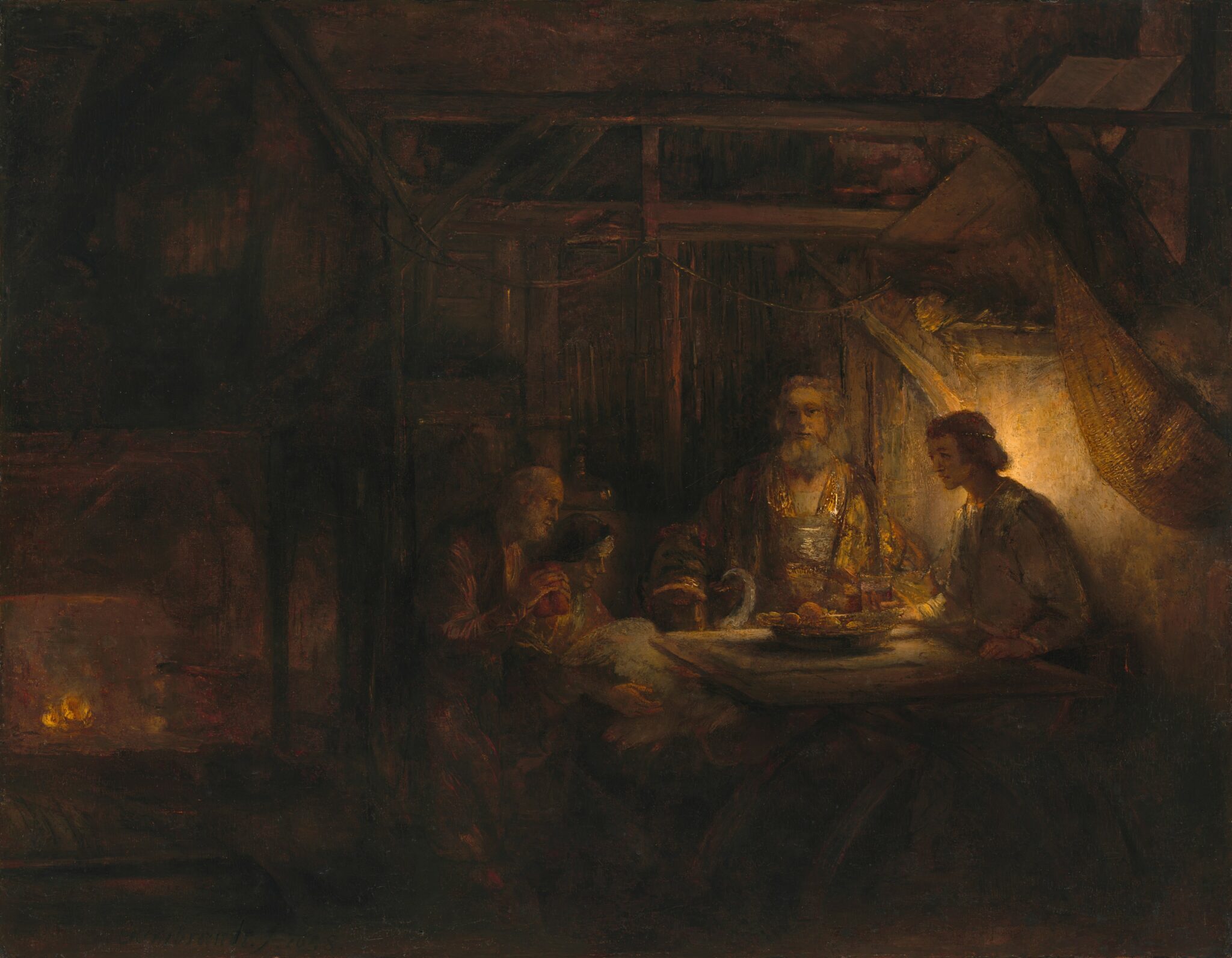
Arnold Houbraken’s remark, that in his later years Rembrandt limited his social contacts to ‘common types, and those having to do with art’, has many implications.1 This process appears to have started already in the 1640s, after the Night Watch (1642),2 but perhaps more significantly also in the wake of the death in the same year of his wife Saskia Uylenburgh, who as the daughter of a burgomaster likely drove his social ambitions during their years together.3 Some of the people Rembrandt did welcome at his house on the Sint Antoniesbreestraat in Amsterdam were former pupils of his, who had maintained contact with him, or even become his friends. Houbraken specifically said of Gerbrand van den Eeckhout that he had been a pupil of Rembrandt, but also that he was a ‘great friend’ of his.4 In the 2019 exhibition Rembrandt’s Social Network, the Rembrandt House Museum devoted special attention to his artistic contacts, including the artists Van den Eeckhout and Roeland Roghman, and connoisseurs such as Jan Six and Constantijn Huygens.5 In Huygens’s case it continued into the following generation: his sons evidently had contact with the artist as well, as collectors of drawings.6 More recently, research by the author on the late pupil Abraham van Dijck unearthed clues that pointed to a return visit to Rembrandt, years after his period of study with him.7 Further research on this artist, and on Samuel van Hoogstraten and Nicolaes Maes, suggests this was part of a more substantial interaction with Rembrandt, taking place in or around 1656.
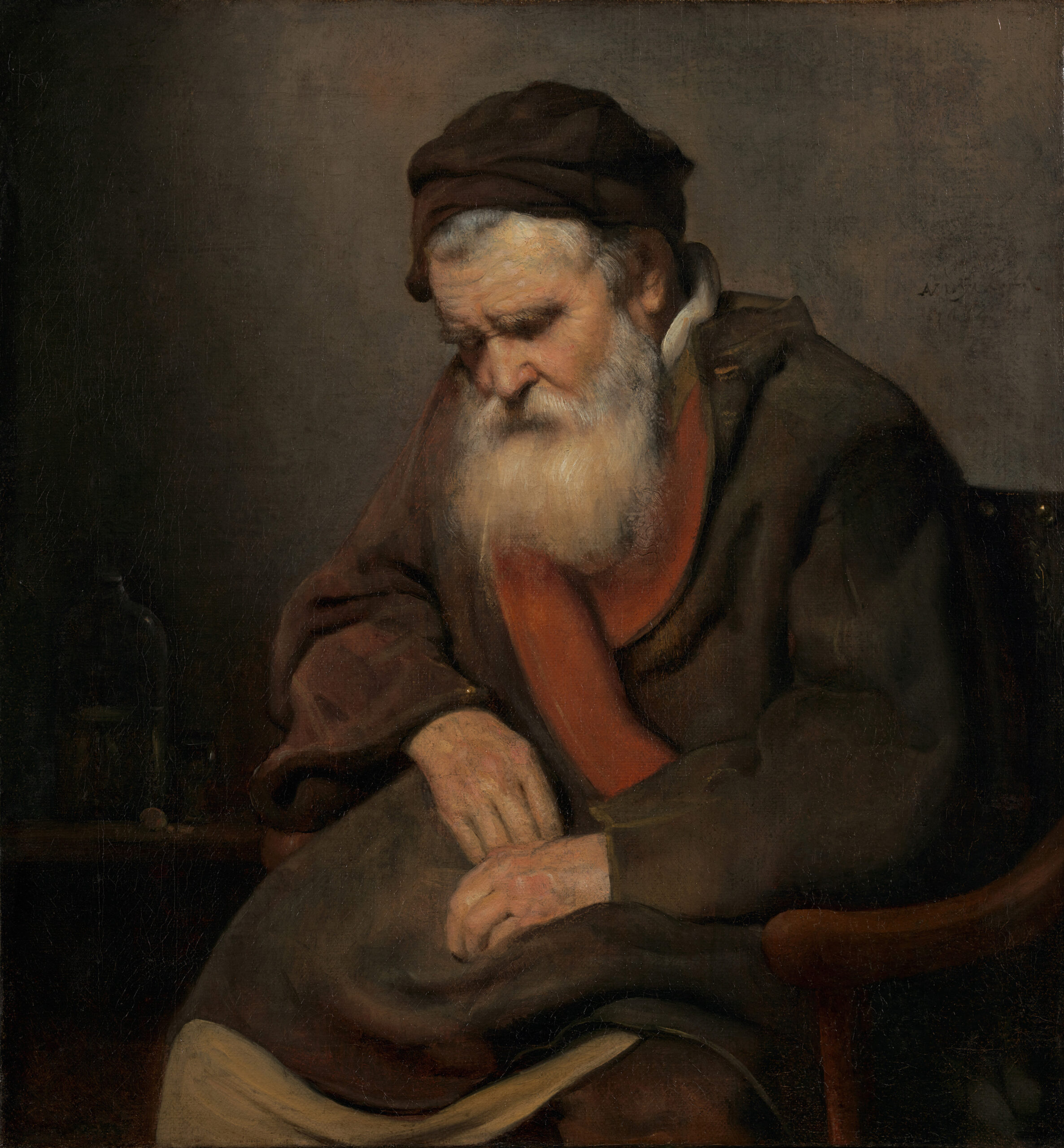
By May of that year, Abraham van Dijck, Nicolaes Maes, and Samuel van Hoogstraten, were together again in Dordrecht. Maes had already returned to his native city in 1653, from study under Rembrandt in Amsterdam,8 and Van Hoogstraten in 1656, from his extensive travels to Germany, Austria, and Italy.9 Abraham van Dijck returned in 1654, after studying around three years under Rembrandt. He had been there as a discipel, or advanced pupil, after initial study under Van Hoogstraten. In a 2020 monographic study on this pupil, the author traced a logical turn in his work toward moralizing genre themes, after settling in Dordrecht, directly influenced by Maes, his former fellow Rembrandt pupil, friend, and neighbour on the Steegoversloot.10 Accordingly, he also adopted a smoother manner, already seen in his Widow of Zarephath and her Son and his Portrait of a Woman, both in the Bader Collection, of or around 1655.11 This is especially evident in the smooth, rounded forms of his Old Man Asleep in The Mauritshuis, which bears a date of 1656, and includes a half-empty bottle to the left, so warning against the vice of drunkenness (fig. 1).12
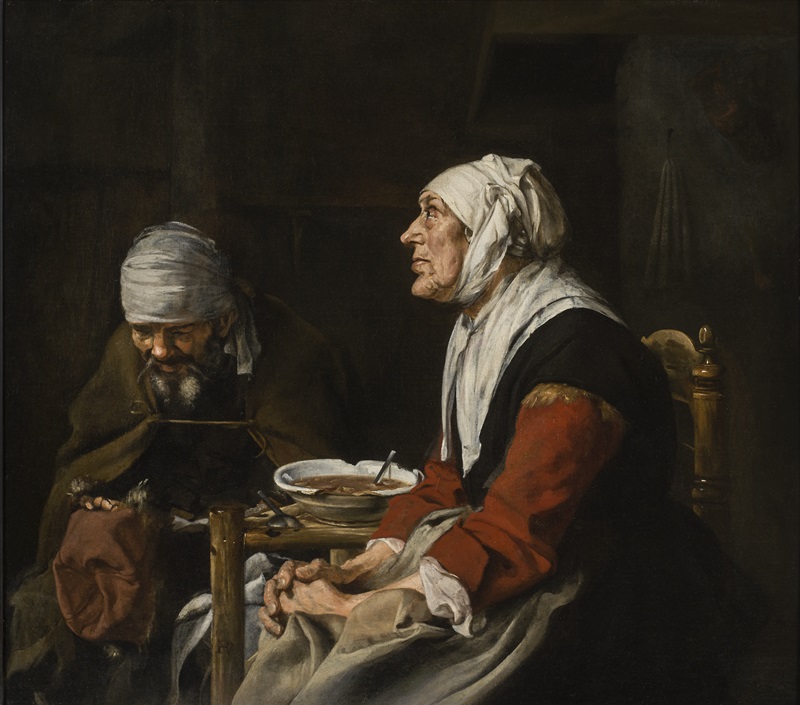
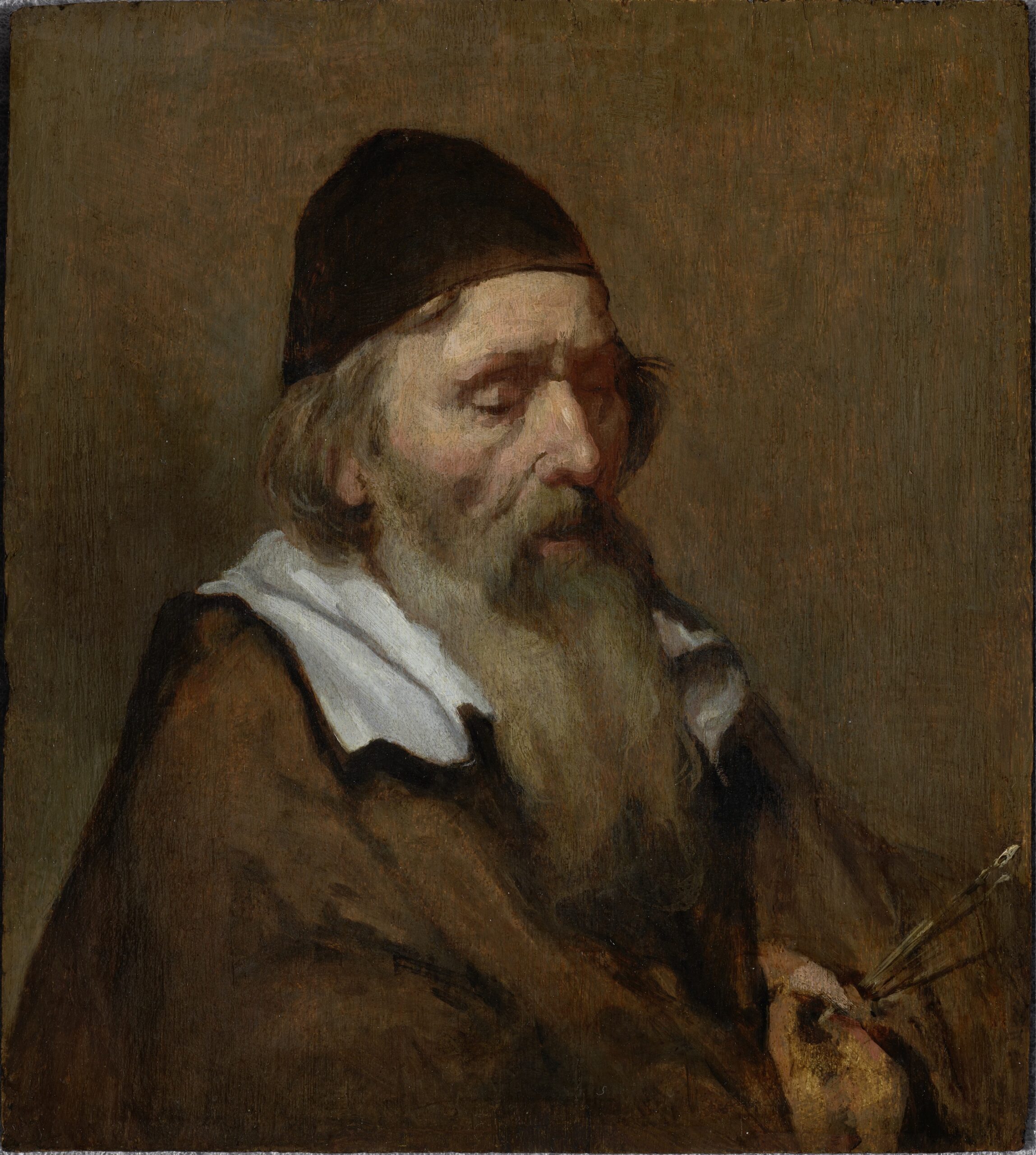
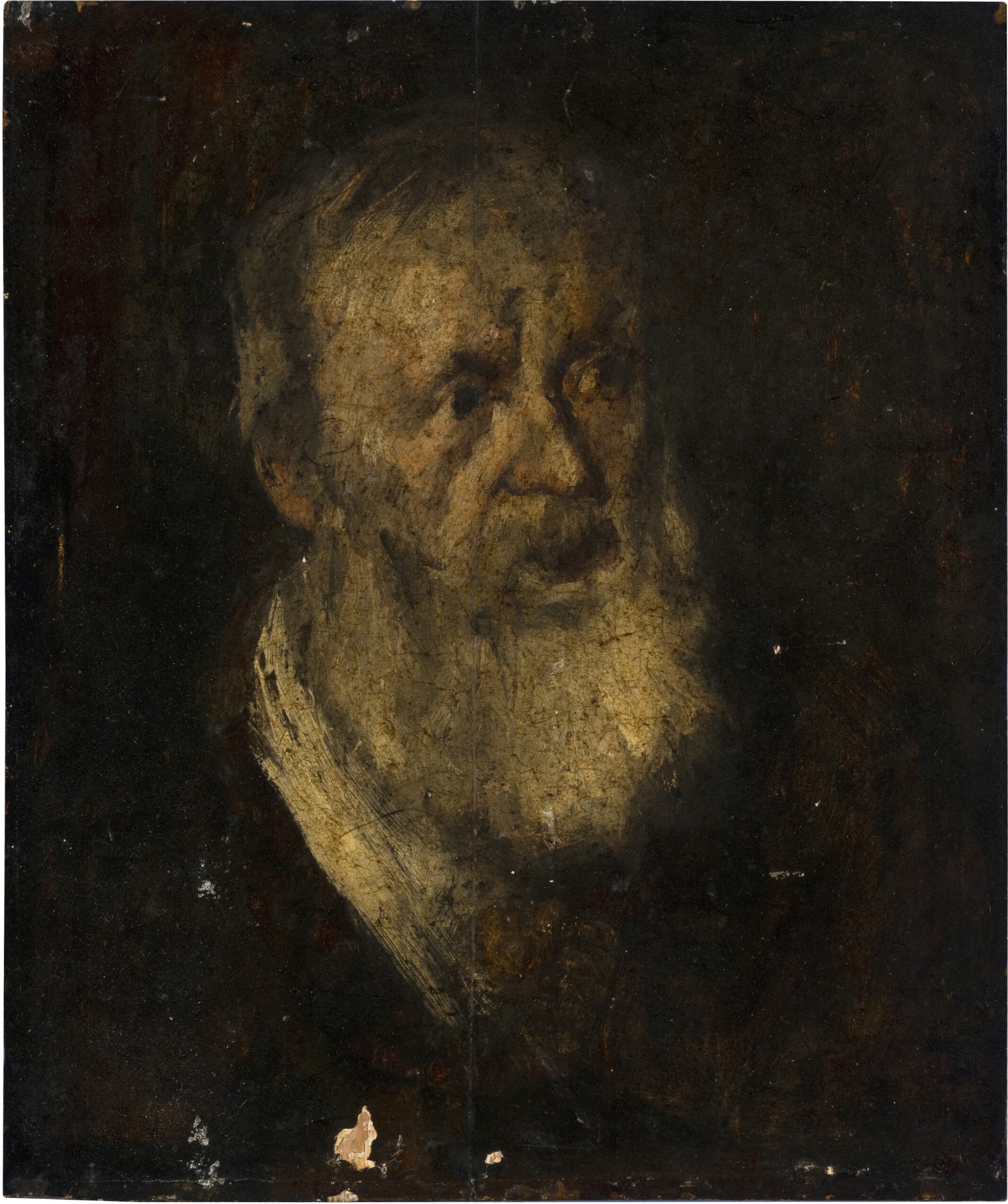
The author additionally posited that a few years after his departure from Rembrandt, Van Dijck returned for a visit. This hypothesis was based purely on stylistic evidence, in particular the broad, flamboyant brushwork in his remarkable canvas of An Old Couple Saying Grace from c. 1656 in a private collection in New York (fig. 2). It appears that soon after the Mauritshuis Old Man, Van Dijck received an impulse to experiment again with the bold, open brushwork, that he had already seen Rembrandt developing in the early 1650s. But now he went much further than when he initially studied under the master, there and in a number of other paintings, including his striking depiction of The Old Painter, recently acquired by The Rembrandt House Museum (fig. 3).13 An evocative head study that recently resurfaced in Milan (fig. 4) belongs to the same moment in Van Dijck’s oeuvre, with a freer, sketchier technique.14 By contrast, another depiction of a humble and pious old couple, dated 1657, shows Van Dijck retreating again from Rembrandt and toward the smoother handling and smaller figure scale of his later work.15 This gives us a brief window of 1656, or perhaps 1657 for the creation of these and other similar paintings.
 |
 |
 |
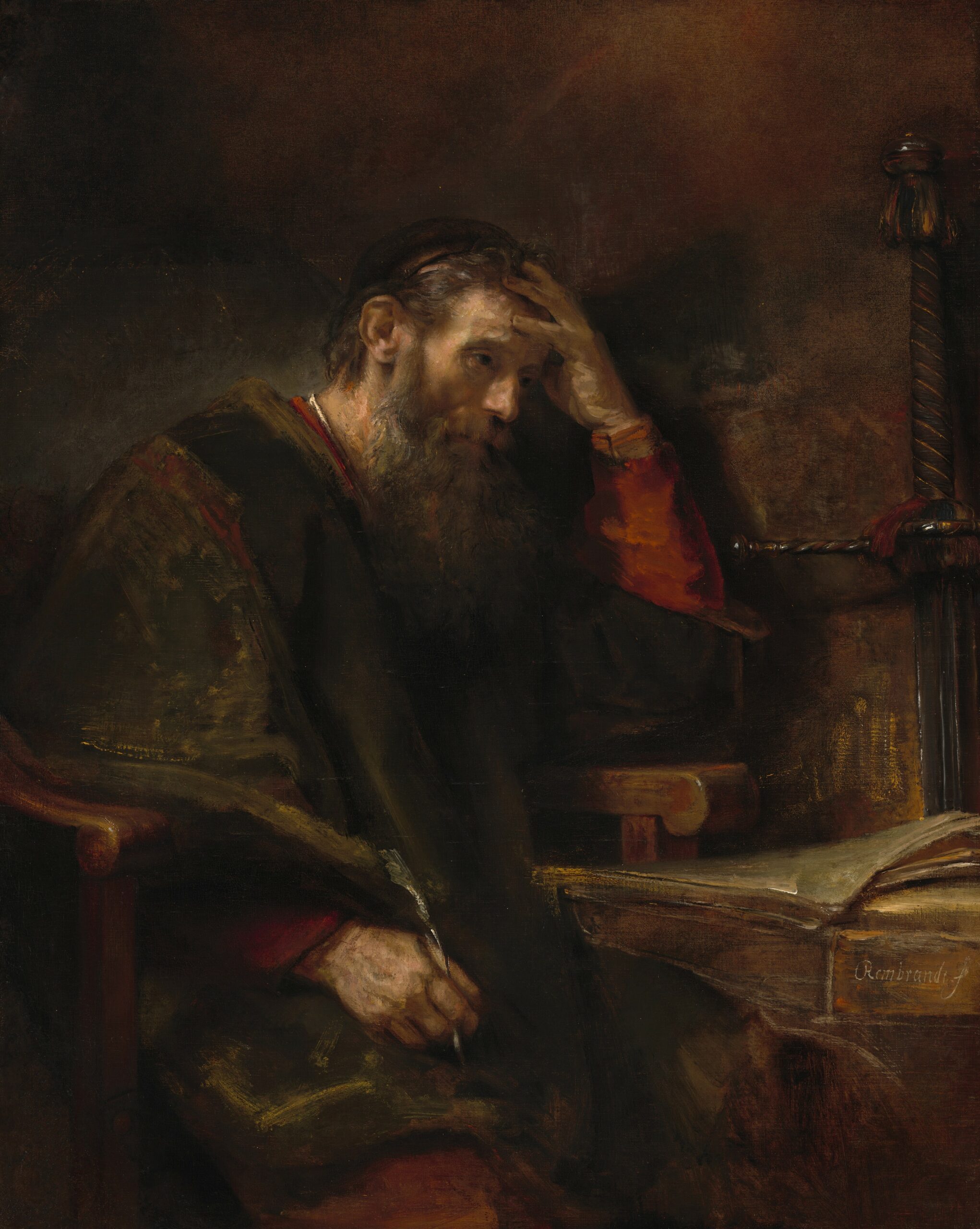
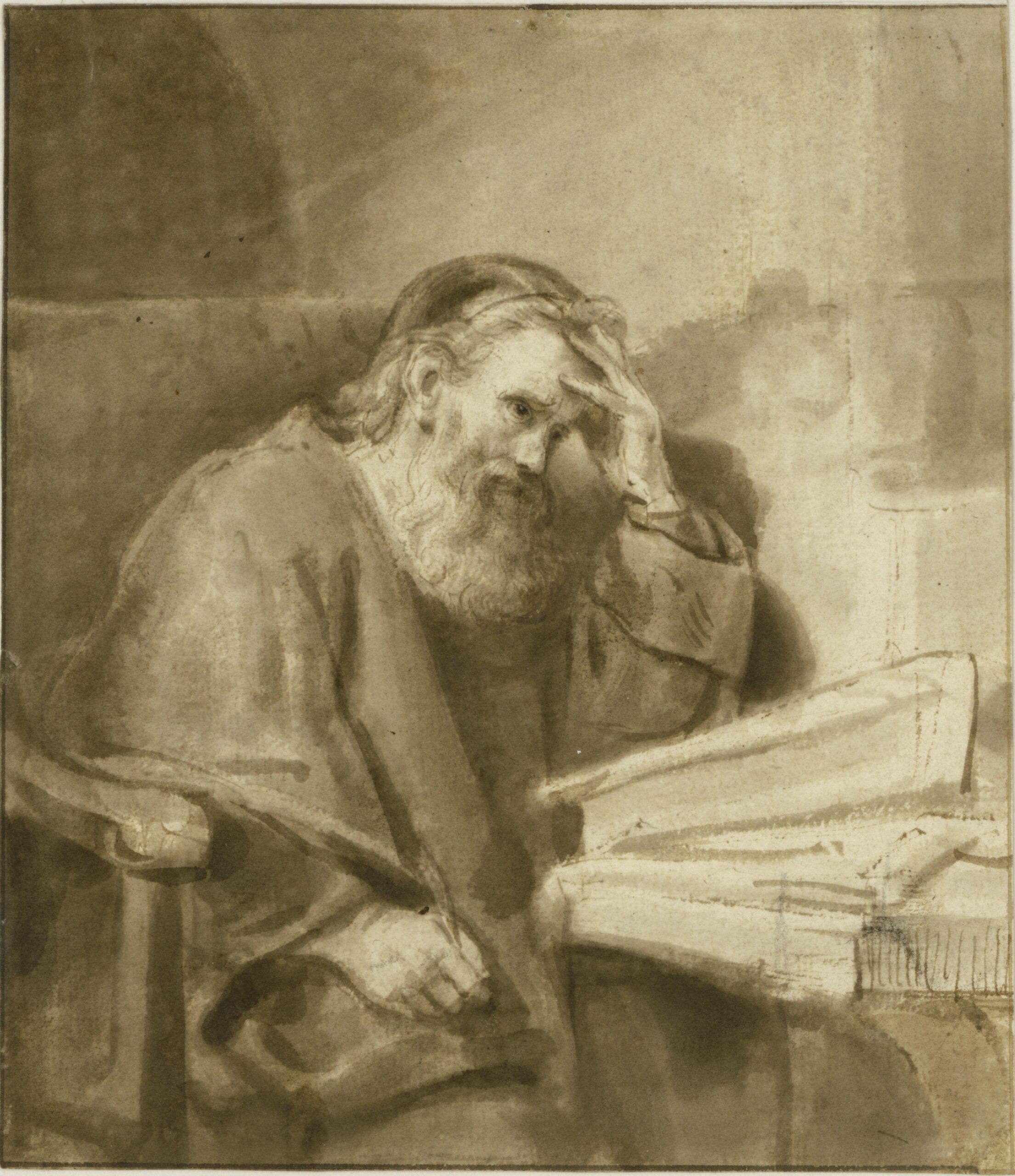
More recently, the proposed scenario of such a return visit to Rembrandt received support from striking new evidence. A research team consisting of John K. Delaney, Kathryn A. Dooley, and Marjorie Wieseman carried out a program of technical research on the painting of St. Paul in the National Gallery of Art in Washington, long attributed to Rembrandt (fig. 5), convincingly clarifying an interim state of the painting using X-ray fluorescence imaging spectroscopy (macro-XRF or XRF-IS) and visible and infrared (400 to 2500 nm) reflectance imaging spectroscopy (RIS).16 In consultation, this author drew attention to the significance of a drawing in Berlin (fig. 6).17 The sheet had been taken up by Werner Sumowski in the manuscript volume of anonymous drawings left behind on his death in 2015, as a presumed record of this interim state: it corresponds extensively to the findings of the Washington team. On stylistic grounds, in particular the tonal washes, fine hatching, and dry dragged lines, the author could attribute it to Abraham van Dijck. It can comfortably be dated to around 1656, as the rendering of the hand, as well as the bent-over pose of the figure, do still align closely with that seen in the Mauritshuis painting.
 |
 |
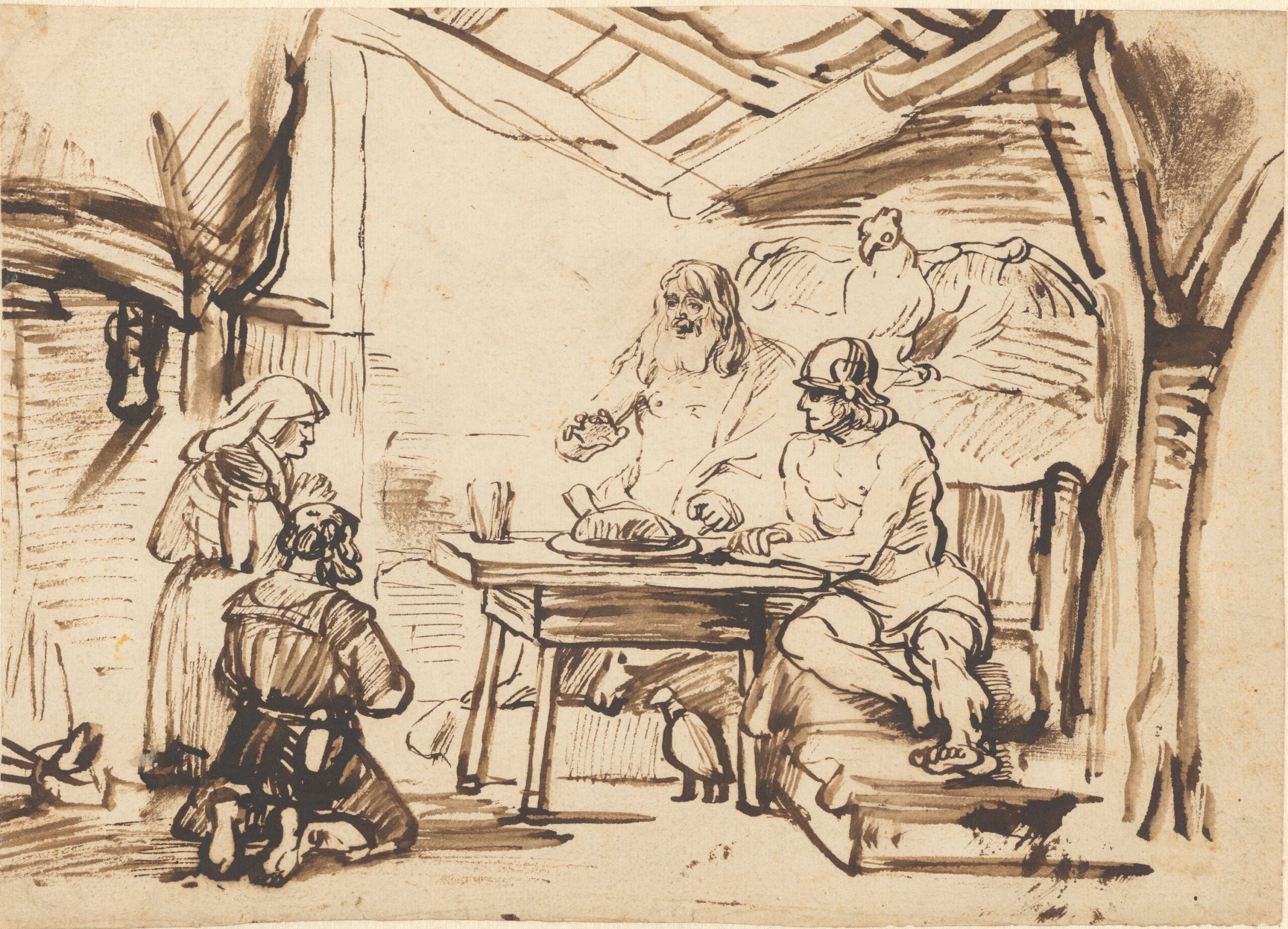
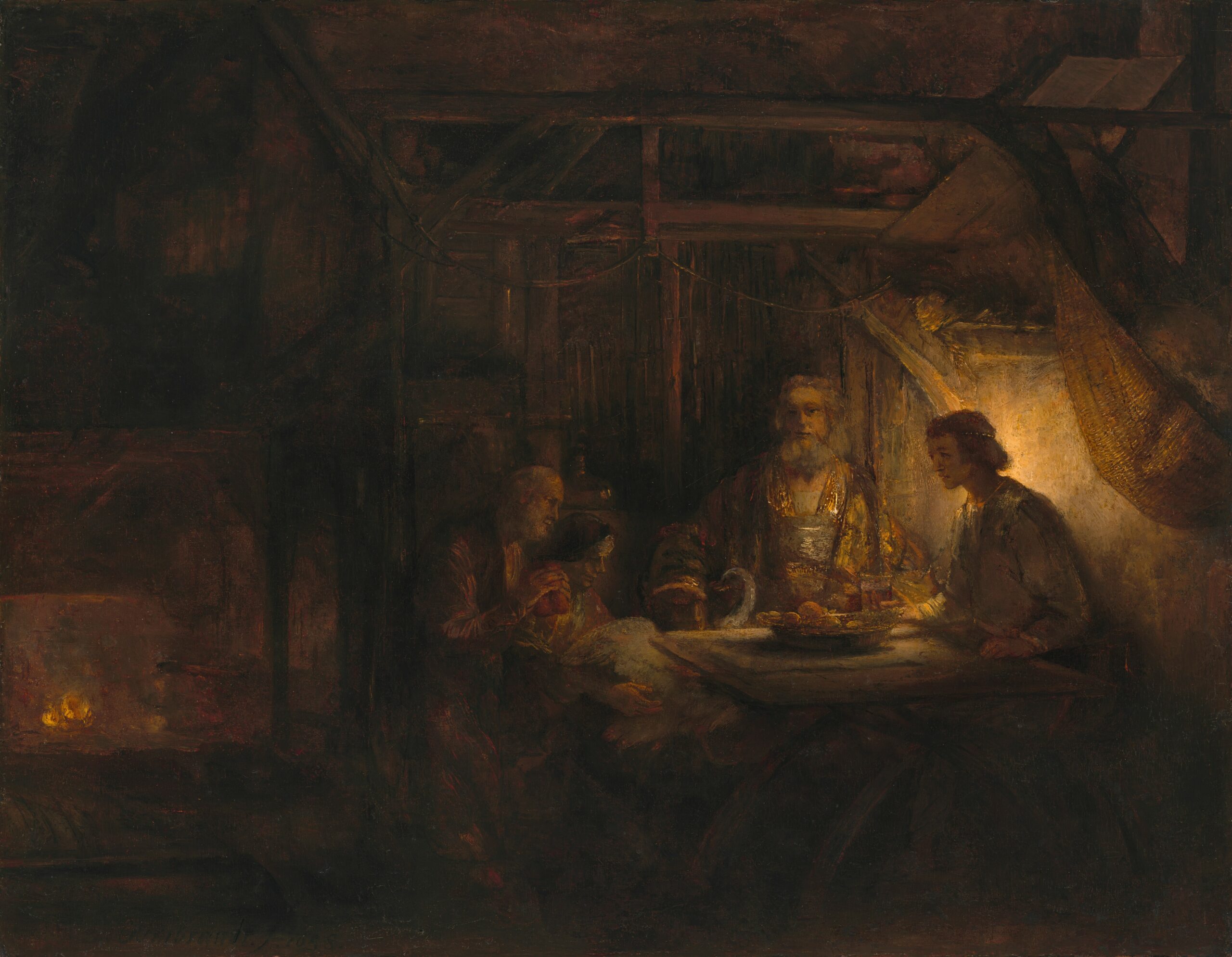
It was in the same year that Van Dijck’s first teacher Samuel van Hoogstraten returned to Dordrecht, from his trip to Germany, Austria, and Italy, begun five years earlier. Already in his 1981 volume of Drawings of the Rembrandt School, in the section on Van Hoogstraten, Sumowski had posited a subsequent visit by Van Hoogstraten to Rembrandt, based solely on the evidence of a single drawing, of Jupiter and Mercury in the House of Philemon and Baucis in the Rijksmuseum (fig. 7).18 It is an adaptation of the painting of the same theme, again in the National Gallery of Art in Washington, D.C., produced in Rembrandt’s workshop, in part by Rembrandt himself, according to Ernst van de Wetering (fig. 8).19 Van Hoogstraten will have seen it taking shape on the easel sometime between 1656 and 1658, the date it bears. This serves as a chronological anchor for a whole group of related drawings given by Sumowski to Van Hoogstraten. These show the introduction of broad, open brush strokes in ink for contour lines, which at the same time evoke mass and solidity of form.20 This very striking element furthermore had no source in the draughtsmanship of another artist Van Hoogstraten could have studied. He was most likely inspired by the open brushwork of Rembrandt’s late paintings (including his direct model, the Jupiter and Mercury in Washington) in the free medium of drawings made for exercise and sharing with friends, connoisseurs and pupils. In his drawings, Van Hoogstraten sought to study, explore, and perhaps even compete with this remarkable development in Rembrandt’s art, which could not have escaped his notice, as it had not that of Abraham van Dijck.
 |
 |
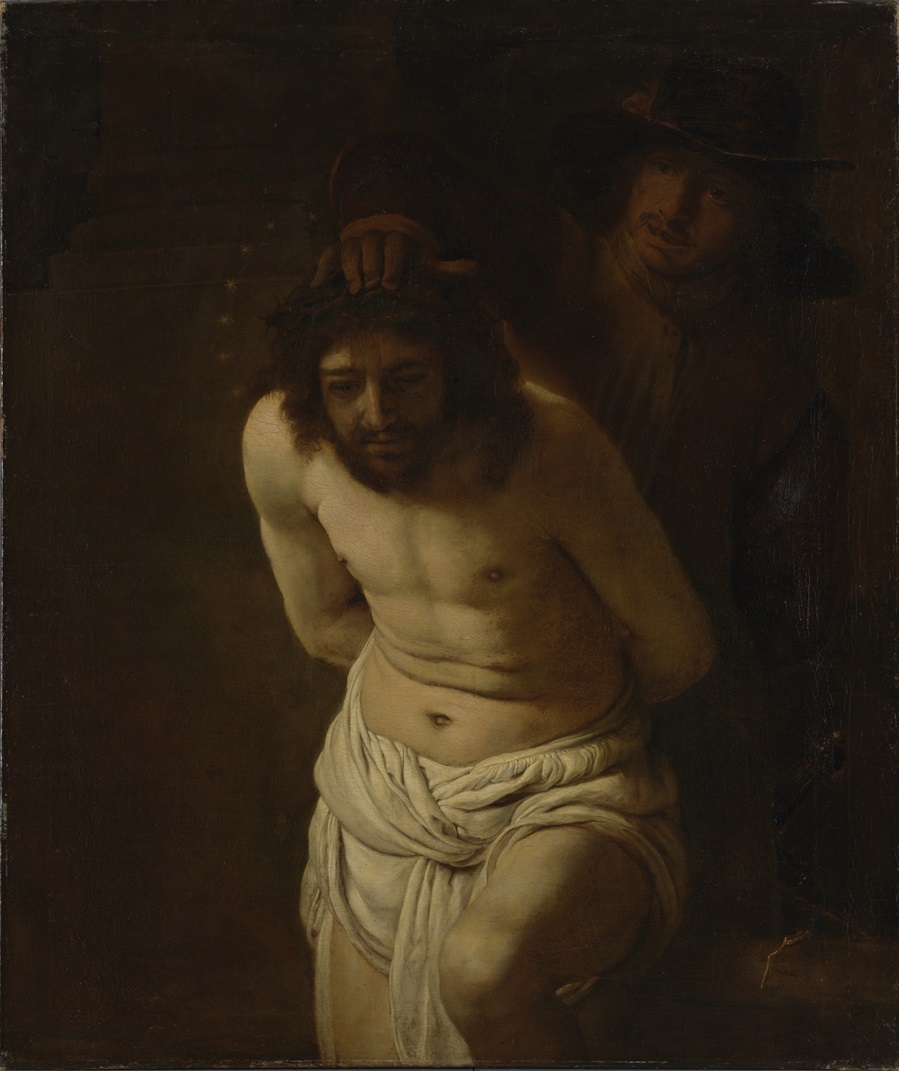
In his paintings, Van Hoogstraten generally adhered to the very controlled and measured facture he had established, also for textural effects. It is however possible that some aspects of Rembrandt’s late manner also rubbed off there as well, in particular the use of a larger figure scale for concentration and monumental effect. In 1657, Van Hoogstraten painted an Ecce Homo now in Munich, largely in muted brownish hues (fig. 9).21 Although the surfaces are rendered smoothly, the figure is presented with an imposing monumentality, the bulky figure filling the frame, isolated against the background, the single hatted tormenter pushed off into the shadows. This could be dismissed as a one-off experiment, except that Van Hoogstraten applied this effect in an undated Madonna and Child, again with looming figures, and a limited palette of muted hues, punctuated by accents of red in the flowers, which can be placed in the same period.22
 |
 |
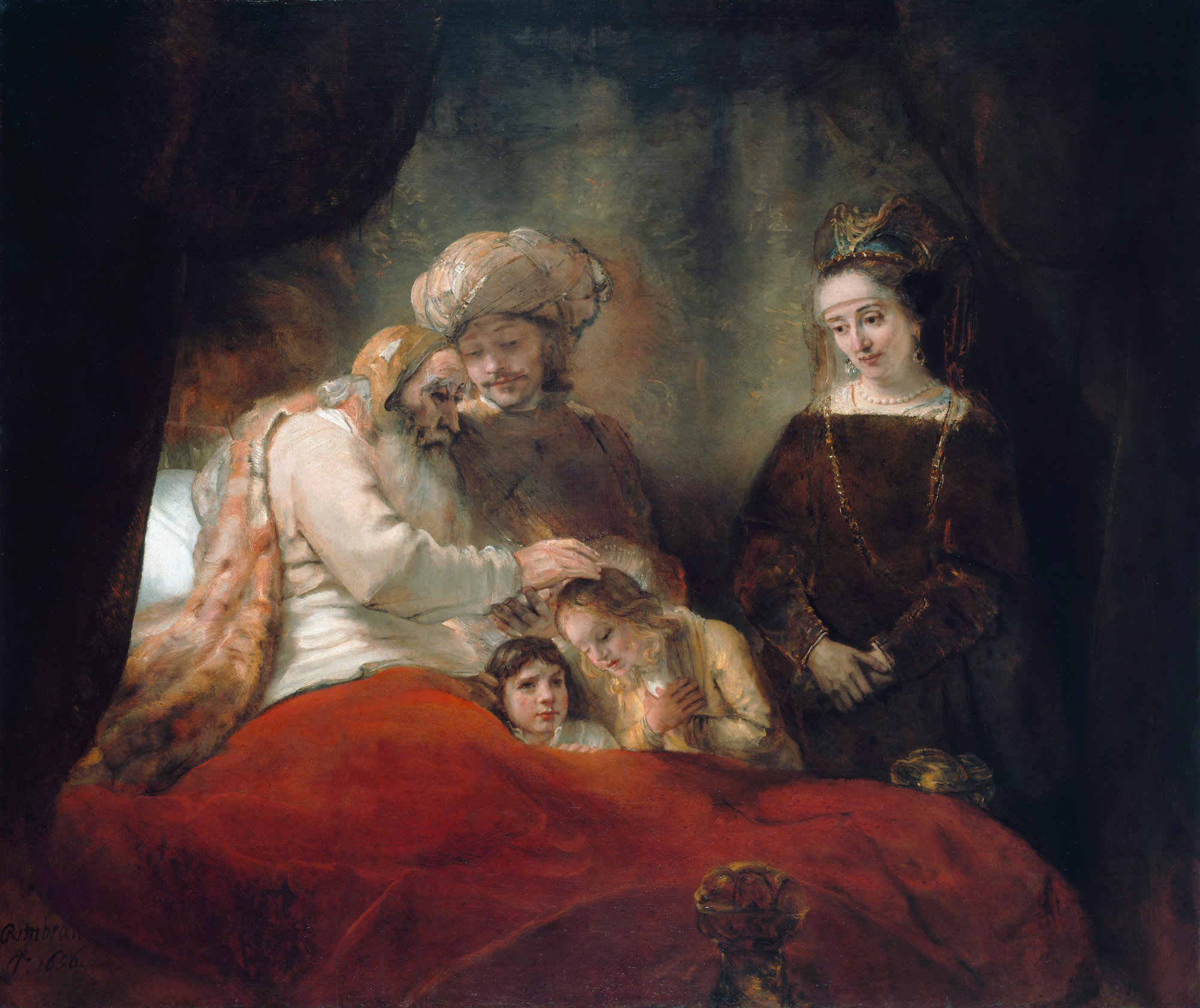 |
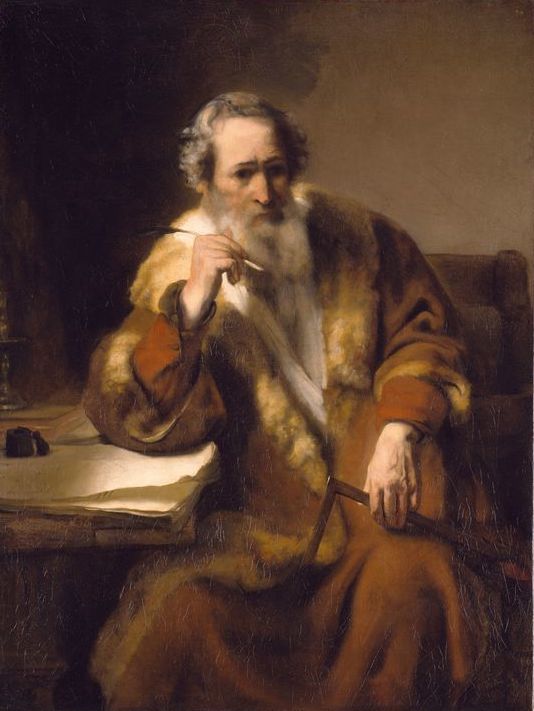
There are also echoes of Rembrandt c. 1656 in the work of Nicolaes Maes.23 When this pupil at first established himself as an independent artist in Dordrecht, he applied himself to history painting, one of his best-known examples being the Dismissal of Hagar in the Metropolitan Museum, signed and dated 1653.24 Its concentration and powerful effect of grazing light already demonstrate Rembrandt’s late style, but less so its brushwork. Maes quickly turned however towards moralizing genre scenes featuring pious old women and young women in various roles, both negative and positive. While firmly entrenched in Dordrecht, he nonetheless appears to have visited Rembrandt in Amsterdam, in 1656. This is the date of a painting of St. Thomas as an Architect in Kassel, accompanied by a Rembrandt signature, and related to the Apostle paintings Rembrandt had recently started painting around that time (fig. 10). The inscription was taken as proof of authorship, until in 1987 Sumowski astutely reattributed the painting to Nicolaes Maes.25 The modelling of the head and hands indeed aligns with Maes’s genre depictions of old women, with the stark lighting yielding flattened surfaces, and casting harsh shadows (in particular at the vein in Thomas’s lowered hand), and also in the use of relatively smooth brush work built up in layers to conjure aged flesh. However, the compositional alternation of light and dark patches, and also the prominent display of the texture of fur in fantasy antique costume, echo a painting of the same year by Rembrandt, notably in the same museum, his Jacob Blessing Ephraim and Menasseh (fig. 11).26 Even more specifically, Thomas’s distinctive sharply pointed nose resembles that of the aged Jacob. In some passages, such as a highlighted ridge in Thomas’s sleeve to the left, and in his white chemise, Maes incorporates some bolder, thicker strokes of paint, possibly prompted by Rembrandt’s painterly performance in the white coat of Jacob, much like Van Hoogstraten and Van Dijck experimented with bolder brushwork around the same time, likely on the same occasion. It appears Maes, like Abraham van Dijck, was caught up by Rembrandt’s Apostle paintings.
 |
 |
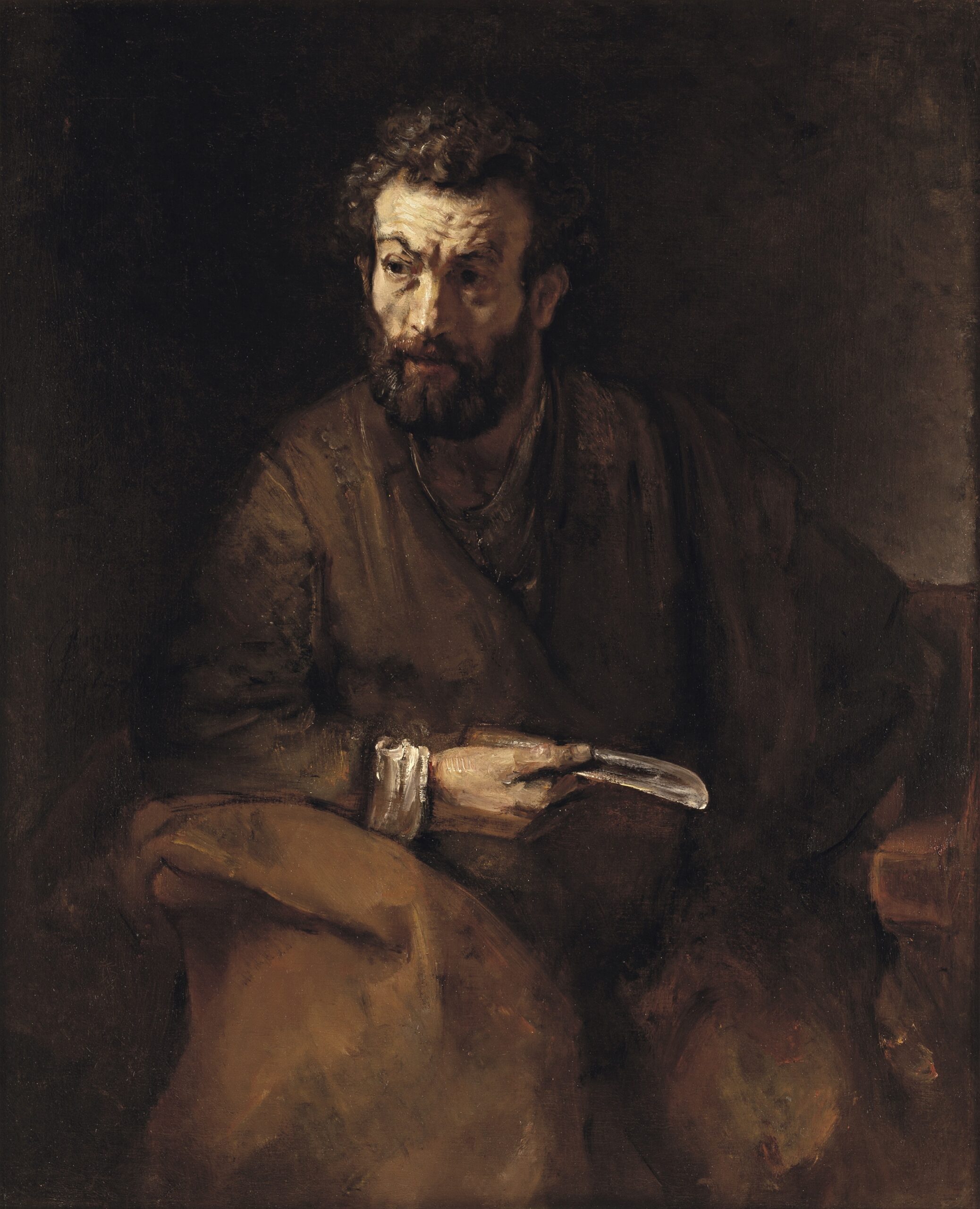 |
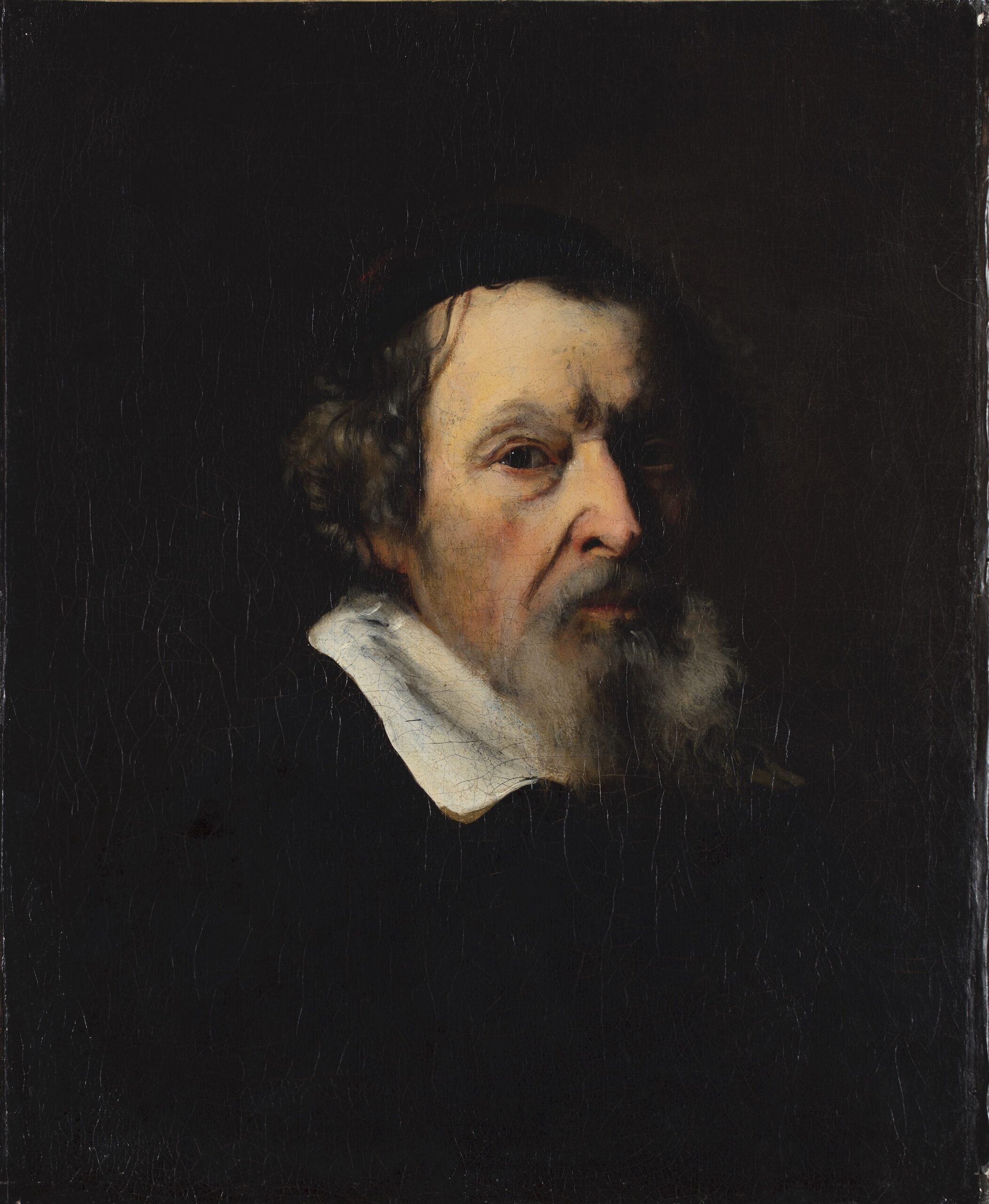
It is in this illustrious company that at least one other work now takes its place: a Portrait of a Bearded Man, currently in a Belgian private collection (fig. 12). The presentation of the face, with strong lighting from the side, is so close to the Thomas that it was first thought to be by Maes. Further analysis of the manner, in particular the use of open brush strokes, especially the long, thin whitish strokes in the collar, beard, and hair, made it clear that the artist was Maes’s friend and neighbour, Abraham van Dijck. It even appears possible that the sitter was his father Leendert van Dijck, whom we know from an early portrait historié of the family, of 1651 (fig. 13).27 Van Dijck adopted Maes’s framework of pose and lighting of Thomas’s head, to create one of the more severe presentations of a sitter in seventeenth century Dutch art. In this respect he may have been prompted by another Apostle Rembrandt was painting at the time, in his studio, the St. Bartholomew in San Diego (fig. 14).
Samuel van Hoogstraten, Nicolaes Maes, and Abraham van Dijck each made works of art that indicate that they visited their former teacher in his workshop in or around 1656 or 1657. This appears to have been the product of heightened interactions between these artists and Rembrandt, and it is tempting to speculate that they may even have gone to Amsterdam together. At any rate, such meetings would have taken place in Rembrandt’s house on the Sint Antoniesbreestraat, which he occupied until 1658. The visitors will undoubtedly have noticed that the process of Rembrandt’s insolvency was underway, triggered by his application for cessio bonorum on 14 July 1656, but it did not leave evident traces in their art.28 The impulse for such interactions most likely came from Van Hoogstraten, looking to catch up on new developments that had taken place in his absence. He likewise quickly caught up with the perspective experiments that Carel Fabritius had made in the years before his untimely death, and also the rapid development of the elegant interior scene in the work of Gerard Ter Borch, and responded with works of his own.29 As a major exhibition in Paris and Dublin demonstrated, Dutch genre painters were by then already accustomed to travelling around regularly to study each other’s works, making use of an efficient transportation system, especially passenger barges on special waterways.30 Van Hoogstraten, the intrepid world traveller, was famously eager to keep up with innovations in the work of other artists.31 Undoubtedly having heard about new developments, Rembrandt was evidently high on his list.
- Arnold Houbraken, De groote schouburgh der Nederlantsche konstschilders en schilderessen vol. 2, Amsterdam 1719, p. 272: “Hy verkeerde in den herfst van zyn leven wel meest met gemeene luiden, en zulke die de Konst hanteerden.”
- Ernst van de Wetering, A Corpus of Rembrandt Paintings V: The Small-Scale History Paintings, Dordrecht 2011, pp. 3-6; vol. 6, pp. 296-297; and: Eric Jan Sluijter, in Govert Flinck: Reflecting History, Cleves 2015, pp. 68-69.
- Ben Broos, “Saskia, Rembrandt’s Frisian Bride”, in: Marlies Stoter (ed.), Rembrandt & Saskia: love and marriage in the Dutch Golden Age, Zwolle, 2018, pp. 23-24.
- Houbraken, Schouburgh (see note 1), pp. 100, 174.
- Epco Runia, David de Witt, Rembrandt’s Social Network: family, friends, and acquaintances, Amsterdam: The Rembrandt House Museum, 2019.
- http://remdoc.huygens.knaw.nl/#/document/remdoc/e12959, with reference to a letter from Constantijn Huygens Jr. to his brother Christiaen, of 6 December 1663, in the Leiden University Library; see Hendrick E. van Gelder, “De jonge Huygensen en Rembrandt”, Oud Holland 73 (1958), pp. 238-241, identifying the drawings, currently: River Scene with Boats and Figures Bathing, c. 1590/1595. Pen in brown, 111 x 205 mm. Formerly Chatsworth, Duke of Devonshire Collection; most recently, Alfred Taubman sale, New York, (Sotheby’s), 27 January 2016, lot 33 (as the original, but without noting the Rembrandt provenance); and the copy with Everhard Jabach in Paris: pen in brown, 112 x 186 mm. Washington, National Gallery of Art, inv. no. NGA 72075 (as also as the original).
- David de Witt, Abraham van Dijck (1635-1680): Life and Work of a Late Rembrandt Pupil, Zwolle 2020, p. 32.
- Werner Sumowski, Gemälde der Rembrandtschüler vol. 2, Landau 1987, p. 1951.
- Michiel Roscam Abbing, Eigentijdse bronnen & oeuvre van gesigneerde schilderijen, Leiden 1993, pp. 42-49.
- De Witt, Van Dijck (see note 7), pp. 12-13.
- Abraham van Dijck, The Widow of Zarephath and her Son, signed, c. 1655, oil on canvas, 115.6 x 95.9 cm.; Portrait of a Fifty-Year-Old Woman, signed and dated 1655, oil on panel, 75 x 62 cm, both Kingston ON, Agnes Etherington Art Centre, acc. nos. 60-001 and 56-003.10; see: De Witt, Van Dijck (see note 7), pp. 98-101, nos. P22, P23.
- First spotted by Sabrina Meloni, after cleaning in 2014.
- De Witt, Van Dijck (see note 7), p. 126, no. P35.
- Sale, Milan (Lucas Casa d’Arte), 21 May 2025, lot 220.
- Monogrammed and dated 1657, oil on panel, 35 x 29.5 cm, The Hague, with S. Nijstad, in 1983; De Witt, Van Dijck (see note 7), p. 118, no. P31.
- The idea that the Washington painting had been altered from a generic scholar into a St. Paul was already proposed by Arthur K. Wheelock, in: Arthur K. Wheelock, Rembrandt’s Late Religious Portraits, Washington: National Gallery of Art; Los Angeles: Getty Museum, 2005, pp. 141-157; followed by Van de Wetering: Ernst van de Wetering, Rembrandt’s Paintings Revisited: a complete survey II, Dordrecht 2017, 2017, cat. 254, p. 640 (as c. 1655). The new study brings conclusive evidence in support of this scenario, based on an extensive technical research: Marjorie Wieseman, John K. Delaney and Kathryn A. Dooley, “Compositional Changes in Rembrandt’s The Apostle Paul: New Technical Findings”, Rembrandt as a Painter: New Technical Research. ArtMatters. International Journal for Technical Art History. Special Issue #2, 2025, pp. 80-92. https://doi.org/10.64655/AM.si25r.b1963 (accessed 16 December 2025).
- The connection with an interim state of the painting was already surmised by Werner Sumowski, in: Drawings of the Rembrandt School, vol. 11: Anonymous Drawings (manuscript left unpublished on his death in 2015; forthcoming in an edition translated and edited by the author, with Brill).
- Werner Sumowski, Drawings of the Rembrandt School vol. 5, New York, 1981, p. 2712, no. 1224x: https://rkd.nl/images/311330.
- Van de Wetering, Rembrandt’s (see note 16), p. 650-651, no. 265: https://rkd.nl/images/54379.
- David de Witt, “A New and Individual Approach to Contour: 1653, 1658 and Beyond”, in: Samuel van Hoogstraten (1627-1678): Catalogue Raisonné: https://vanhoogstraten.rkdstudies.nl/samuel-van-hoogstratens-drawings-history-life-universality/a-new-and-individual-approach-to-contour-1653-1658-and-beyond/ (accessed 25 May 2025).
- https://rkd.nl/images/289005.
- Samuel van Hoogstraten, Madonna and Child, c. 1660, oil on canvas, 92 x 71.2 cm, Amsterdam (Christie’s), 25 May 2016, lot 74: https://rkd.nl/images/314055.
- David de Witt, “Rembrandt’s Late Pupils: Studying under a Genius”, Rembrandt’s Late Pupils: Studying Under a Genius, exh. cat. Amsterdam: The Rembrandt House Museum, 2015, p. 85, with reference to: Sumowski, Gemälde (see note 8), vol. 3 (1987), p. 1951; also posited in Roscam Abbing, Schilder (see note 9), p. 40. It is true that Maes consulted drawings by Van Hoogstraten for his early painting of Christ Blessing the Children in London, but this is very likely because he had access to Van Hoogstraten’s drawings left behind in his studio when he left for Vienna and Italy in 1651: they were moreover older drawings, from c. 1646-1648; see: David de Witt, “Samuel van Hoogstraten’s Drawings: History, Life, Universality” in: Samuel van Hoogstraten (1627-1678): Catalogue Raisonné: https://vanhoogstraten.rkdstudies.nl/samuel-van-hoogstratens-drawings-history-life-universality/the-core-group-from-pictorial-technique-to-innovative-contour/ (accessed 25 May 2025).
- https://rkd.nl/images/285887.
- Sumowski, Gemälde (see note 8), vol. 3 (1987), p. 2009, no. 1324: https://rkd.nl/images/251100.
- My thanks to curator Justus de Lang for sharing his thoughts on the connection, reflected in part in the hanging of both works near each other in the gallery.
- De Witt, Van Dijck (see note 7), pp. 52-53, no. P1.
- http://remdoc.huygens.knaw.nl/#/document/remdoc/e4704.
- David de Witt, “From Rembrandt’s Nae ‘t leven to Van Hoogstraten’s Zichtbaere Werelt”, in: David de Witt and Leonore van Sloten, Samuel van Hoogstraten. The Illusionist, Amsterdam: The Rembrandt House Museum, 2025, pp. 74-79.
- Adriaen Waiboer, Vermeer and the Masters of Genre Painting: Inspiration and Rivalry, Dublin: National Gallery of Ireland; Washington: National Gallery of Art; Paris: Musée du Louvre, 2017-2018, and specifically on travel: Blaise Ducos, “The “Tour of Holland”: Visitors from Abroad in the United Provinces”, pp. 101-111.
- Houbraken, Schouburgh (see note 1), p. 157.