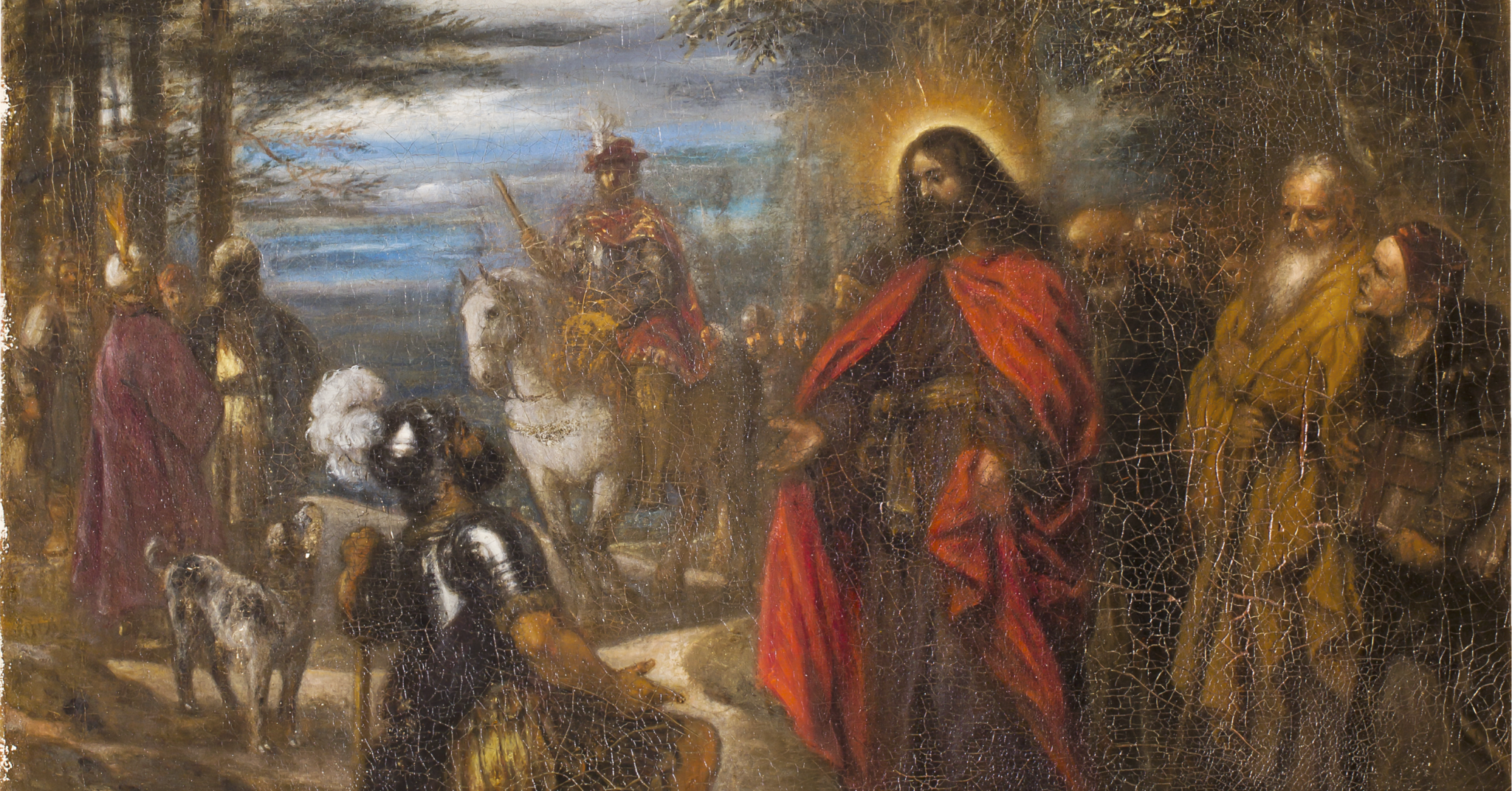
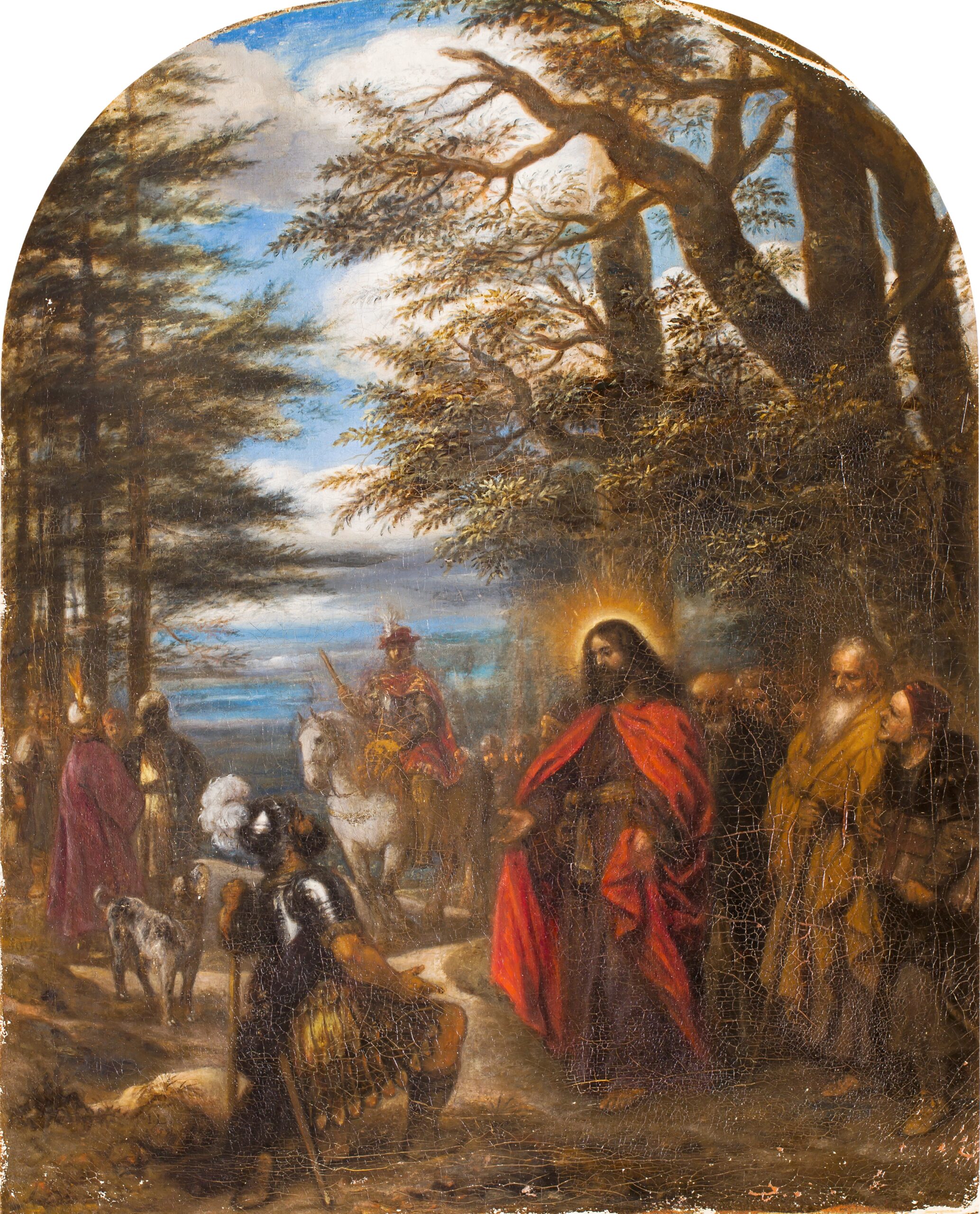
In 1992 a newly-discovered painting was presented in the exhibition Rembrandt’s Academy at Hoogsteder & Hoogsteder in The Hague. Werner Sumowski and Paul Huys Janssen wrote extensively in the accompanying exhibition catalogue about the new addition to Jan Lievens’s oeuvre: Christ and the Centurion, monogrammed and dated I.L. 1657 (fig. 1).1 The painting has remained in a private collection since then. After Rembrandt’s Academy it has been exhibited four times, and has been written about on various occasions.2 In the Spring of 2025 the painting was displayed in the Rembrandt House Museum. It was the second time that it could be seen in this museum. In contrast with the first time, in 2009, the painting was freed of retouchings and overpaintings. Without these accretions, it became evident that this painting was an oil sketch, as Lloyd DeWitt had already suggested in his dissertation of 2006.3 This gave occasion to study the place of this work in the oeuvre of Lievens, and to reexamine the interpretation of the theme. This paper presents the resulting new insights.
Unnoticed until 1991
The early provenance of Christ and the Centurion remains unknown. It could be one of those history paintings by Lievens that appear in various estate inventories and auction catalogue without mention of dimensions or further description.4 Around the middle of the nineteenth century it was acquired by Gaston Gaudinot, out of whose estate it was auctioned in 1869. This French docteur appears to have been the personal physician of the Duc d’Orleans.5 His paintings collection, which was known in French art circles by around 1840, consisted mainly of French, Dutch, Flemish and Spanish works, of which 125 were auctioned after his death.6 In the Rembrandt’s Academy catalogue it was already noted that the lots in this auction were published in Hippolyte Mireur’s Dictionaire des ventes d’art faites en France et à l’étranger, but that the Lievens painting was not named in it.7 For this reason it did not enter the art historical literature. Because this painting – according to verbal account – remained in family possession after the Gaudinot sale (or shortly thereafter), the work remained out of sight for art historians until an auction in 1991.8
Miraculous Healing
In the middle of the painting stand Christ and the Roman army commander, the centurion. On Christ’s left-hand side there is a figure who can easily be identified. It is the Apostle Matthew, recognizable from the book he carries. The depiction of the miraculous healing of the servant of the centurion in this painting follows his Gospel account (Matthew 8).9 The story takes place after the Sermon on the Mount, when Christ, followed by a crowd as seen in the painting, heads on to Capernaum. When he entered the town, a centurion approached him. The commander asked Jesus to heal his ailing servant. Christ replied that he would go with him in order to do this, whereupon the centurion protested that he was unworthy of a visit from him, “but just say the word, and my servant will be healed.” (Matt. 8:8) Jesus was astonished by such great faith, and replied: “‘Go! Let it be done just as you believed it would.’ And his servant was healed at that moment.” (Matthew 8:13).
Astonished Spectators
Besides the figures that can be identified from the Bible text, the painting shows two further groups. One stands in the background to the left. It consists of three white and one black man. They wear different dress than Christ and his followers and all four of them wear a turban. They are not literally mentioned in the Bible text, and cannot be straightforwardly related to other passages from the life of Christ.10 It is tempting to see them simply as staffage, filling out the scene. Between the men in turbans and the followers of Christ stands another group, centred around a mounted rider. He is the only figure in the painting to look straight out to the viewer. His baton indicates a position as a military commander, confirmed by the men behind him carrying partisans. Together with his soldiers, he rides into the main scene. The only ones who notice him are the men in turbans in the background to the left, and the dog in the middle ground.
The initial composition
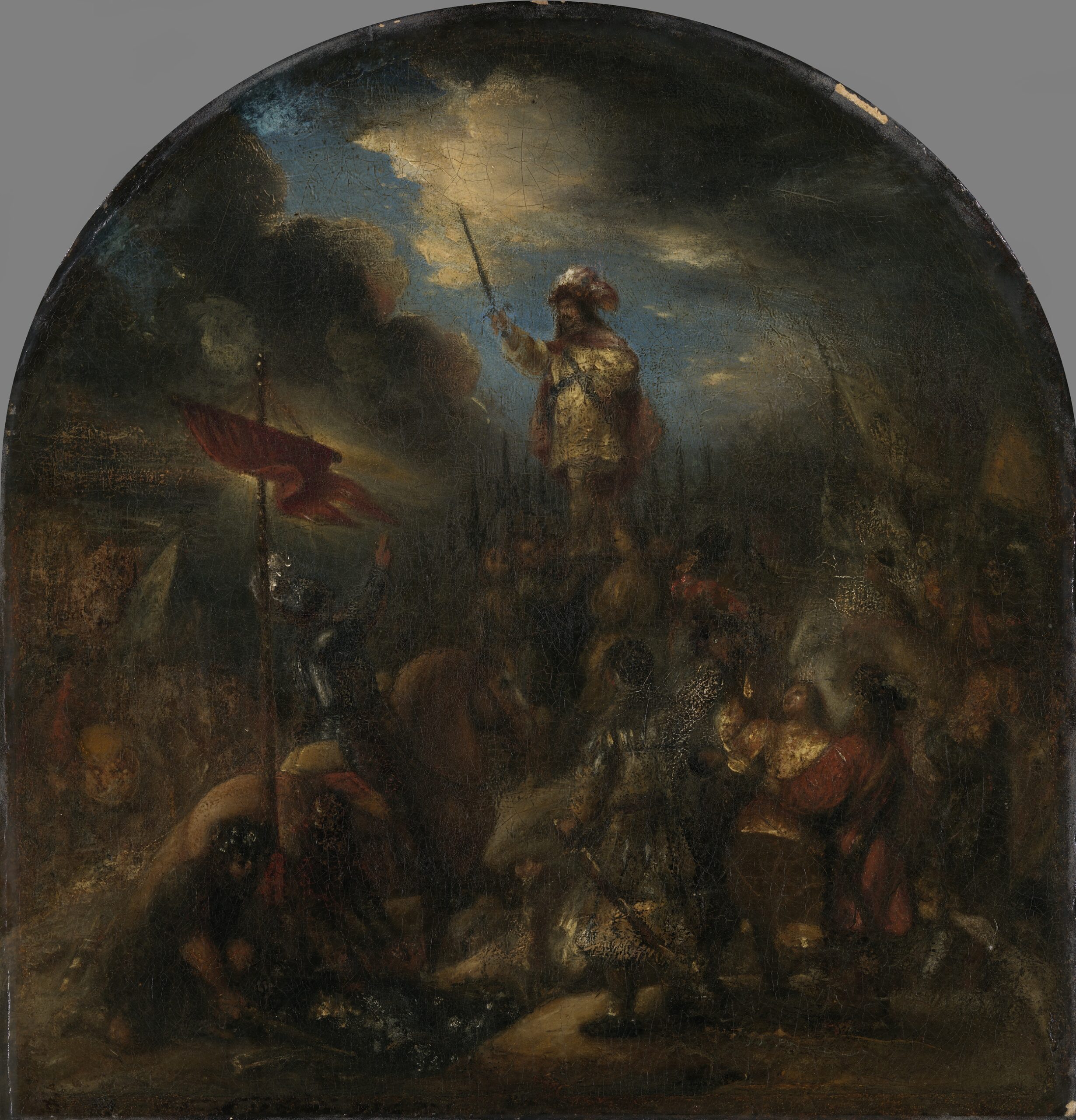
Because the rider does not appear in the Bible text, he and his army could be seen as staffage. Technical research in the preparations for the exhibition of 1992 and the accompanying catalogue demonstrated however that Lievens fundamentally changed the composition of the scene, precisely in order to add this group of figures. In addition, visual analysis of the painting shows that Lievens moreover gave them a central place in the composition.
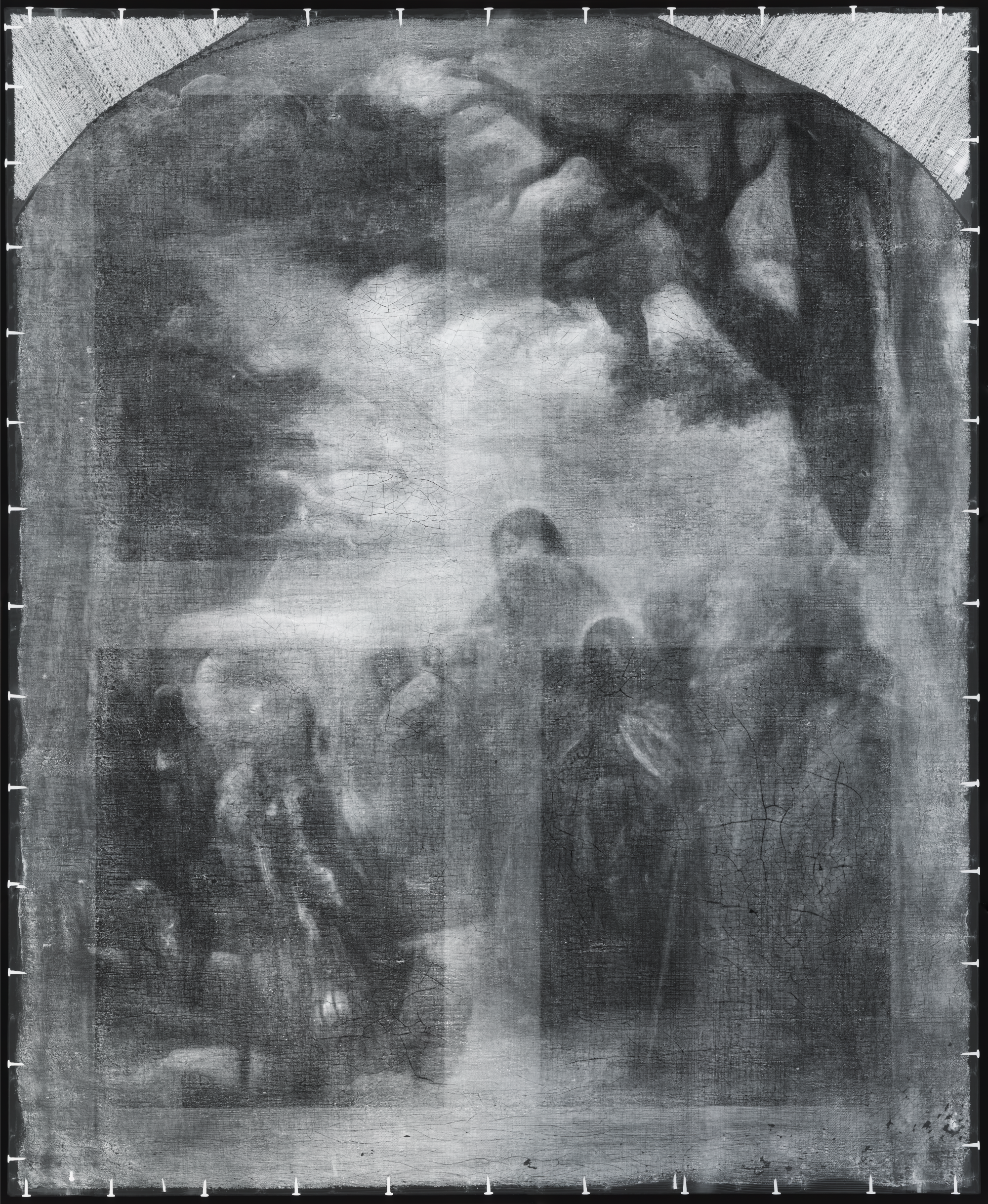
The impulse for the technical research at the time was the observation with the naked eye of pentimenti that indicate that the composition was radically changed. For this reason infrared reflectograms and x-ray images were made. The infrared images revealed that no underdrawing is present, meaning that Lievens went directly to work in oil paint.11 The x-ray photograph shows that the two central figures were initially considerably larger, establishing a pyramidal composition (fig. 2). The standing figure’s head reached to two-thirds of the height of the canvas, the kneeling man came to approximately the middle of the painting with the plume of his helmet. The scene was originally enclosed with two deciduous forests left and right. A lighter area in the foliage left, visible in the x-ray, suggests that there was diagonal opening – or a light beam – starting at the top left, accentuating the initial large figure in the middle.
Space for the rider
Presumably Lievens introduced the changes shortly after laying out the initial conception. Rough craquelure in certain spots in the painting indicate that underlying paint layers were not entirely dry when Lievens made his changes. He replaced the deciduous forest on the left with an evergreen one, thereby establishing a phytological contrast between the two sides of the composition. The forest on the right contains a striking pentimento: whereas the tree behind Christ originally rose to the upper edge of the painting, the artist ultimately chose to break it off, further accentuating the dichotomy: fractured, winding deciduous trees against rigid, upright coniferous trees.
But more prominently, Lievens changed the composition to a more horizontal arrangement by reducing the two principal figures, giving room to fill the background.12 Lievens used the space to add the mounted rider. Pentimenti around the horse’s head and the rider’s baton show Lievens searching for the optimal location for this figure. Lievens integrated the rider in the principal group of the composition by distributing colour and lines. The white colours of the centurion are echoed in the rider and his horse, the red colours in Christ’s cloak in the rider’s dress. Together these points form two diagonal lines: one from the centurion to the rider, the other from Christ to the rider. The resulting asymmetrical triangle is strengthened by parallel diagonals elsewhere in the compositions. Another prominent line in the composition is the zigzagging contours of the trees left and right, (probably again) making use of the foliage as a leading line. Via the rider, this is continued in the meandering path leading to the foreground.
Hidden in plain sight
These observations make clear that Lievens adjusted his painting in order to add the rider. He placed him at the convergence of the diagonals, and at the midpoint of the vertical axis. He also used colour to link him to the two main figures. In this way he made him part of the main compositional group. He is evidently not a secondary figure, but a principle figure. This raises the question of who the rider is and what inspired the artist to include him.
An important indication of the answer to this question surfaced with the removal of overpaint in 2013. It became evident that the pupil of the rider’s right eye was originally absent, and was painted in during a subsequent restoration.13 The man for whom Lievens created space in the main compositional group thus had one eye. In the context of a Roman military figure, this detail instantly evokes the identification of the figure as a character from the ancient history of the Netherlands, celebrated in Lievens’s time. This can only be Julius Civilis: the famous, one-eyed Batavian commander, who was in the seventeenth century known as Claudius Civilis.
The Inspiration for the Scene
In creating this painting Lievens undoubtedly looked at the main examples in previous art in which Jesus appears together with a Roman. On these he modelled the heavy cloaks and full beards of Jesus and his followers and the cuirass and the white-plumed helmet of the centurion.14 Lievens will also have consulted existing representations of Christ’s meeting with the centurion. He will not have had much other guidance, owing to the rarity of the theme.15
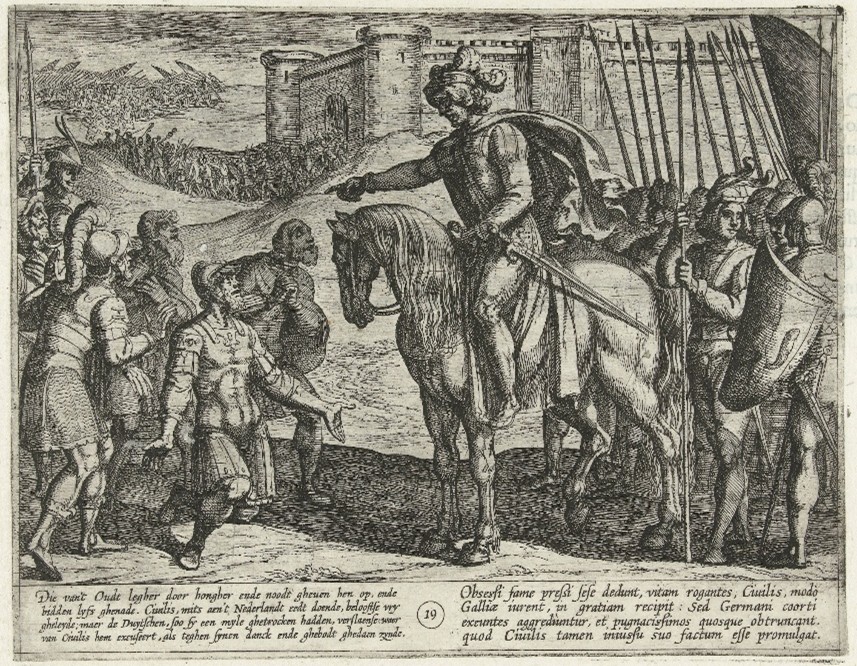
For the addition of the famous Batavian there is however a specific print series which could have inspired Lievens: the print series by Antonio Tempesta (1555-1630) of the Batavian Revolt after Otto van Veen (1556-1629), from 1612. That Lievens knew the print series, and that it inspired other artists occupied with the history of the Batavians, was demonstrated by Henri van de Waal and further addressed by Elmer Kolfin in his publication on the Amsterdam Town Hall.16 Print nineteen from the series shows how the leader of the exhausted Roman army begs Julius Civilis for their lives (fig. 3). The inscription explains that Civilis grants mercy to them, on condition that they swear allegiance to the (anachronistic) “Netherlands”. The Roman leader kneels before the mounted Civilis, who wears a cuirass and a short cloak, and a plumed hat, and is surrounded by his army carrying spears.
There is no direct correspondence between the print and Lievens’s oil sketch, but as occurs more often with Lievens, there are various elements of the print that are echoed in the painting. The kneeling man was adapted by Lievens with some adjustment to the pose. The same applies to Civilis on his horse with the spear-bearing soldiers behind him. The two centurions have a similarly solicitous role in both the print and the painting, only in the painting Lievens elevated Christ to principal figure and relegated Civilis more to the background. The baton that he holds in his hand in the painting is admittedly absent in this particular print, but can be found in print eight in the series.17
Lievens in Amsterdam Circles
Christ and the Centurion has since its rediscovery always been seen as intended for an architectural setting, due to the rounded upper corners. However, the painting could not be linked to any particular building. Now that it has been determined that the painting casts a reference to Julius Civilis, it appears worthwhile to make a new attempt.
Christ and the Centurion originates in the period in which Lievens lived in The Hague. He was involved in various commissions in the city and participated in the establishment of the painter’s association Confrerie Pictura in 1656.18 In the same period he also worked in Amsterdam. In 1656 Lievens painted Quintus Fabius Maximus Dismounts on Orders from his Son for the Small Burgomasters Chamber in the Amsterdam Town Hall (fig. 4). In the following year – the same year that he made Christ and the Centurion – Lievens drew the portrait of one of the burgomasters Andries de Graeff (fig. 5).19
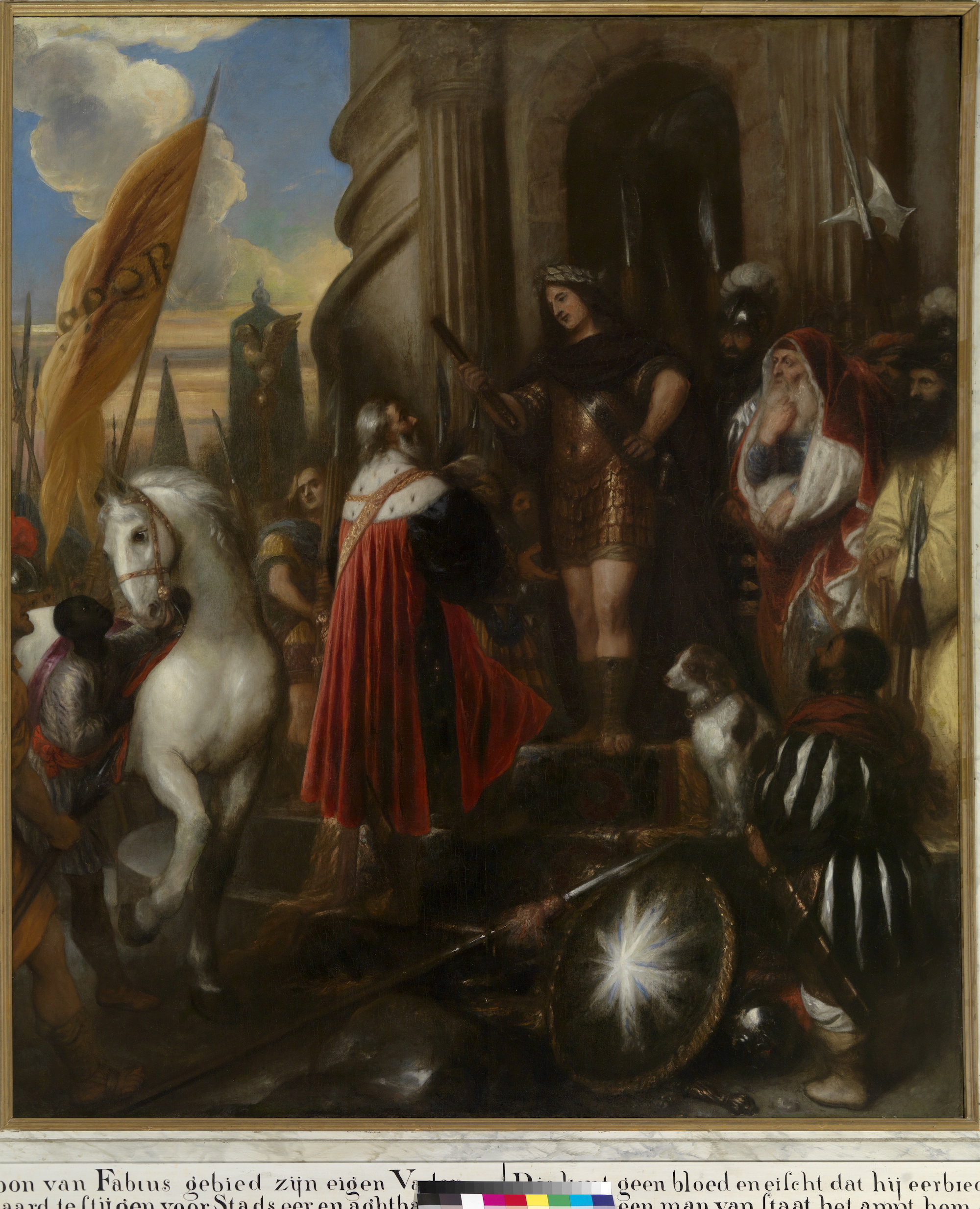 |
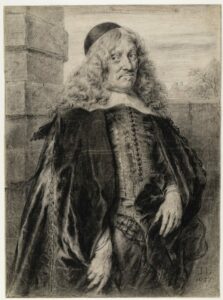 |
Van de Waal and Kolfin relate how this Andries and his brother Cornelis de Graeff played a decisive role in the commission for the decoration program in the new Town Hall. This included the eight large paintings with rounded upper corners in the grand gallery surrounding the Burgerzaal (Citizens’ Hall), the Batavian Series.20 Lievens’ drawn De Graeff portrait proves that he had attracted the interest of one of these prominent figures, in the period in which their ideas for the decoration program came into fruition. In this context, now that Civilis evidently plays a role in this painting with rounded upper corners, it is tempting to study this work in connection with the Amsterdam Town Hall.
The New Testament Linked to Dutch National History
Lievens added Civilis to a Biblical scene, and combined a story from the New Testament with one from the ancient history of the Netherlands. In doing so he linked the theme of steadfastness in faith (Christ and the Centurion) with that of loyalty towards the Dutch nation (Julius Civilis and the Centurion), the core of contemporary songs (like the Wilhelmus), texts and other cultural expressions. In this manner Lievens imbued divine legitimacy to Dutch national history. In painting, such a direct combination of a Batavian scene with one from the New Testament is a rarity, perhaps even unique. It does however fit well in the broader history of seventeenth-century culture, as Van de Waal wrote: “This divine link [between the Old and New Testament] could if desired also be drawn between other periods than that of the Old and New Testament; it became one of the ways, in which one sought to reconcile the culture of classical antiquity with the Christian faith.”21
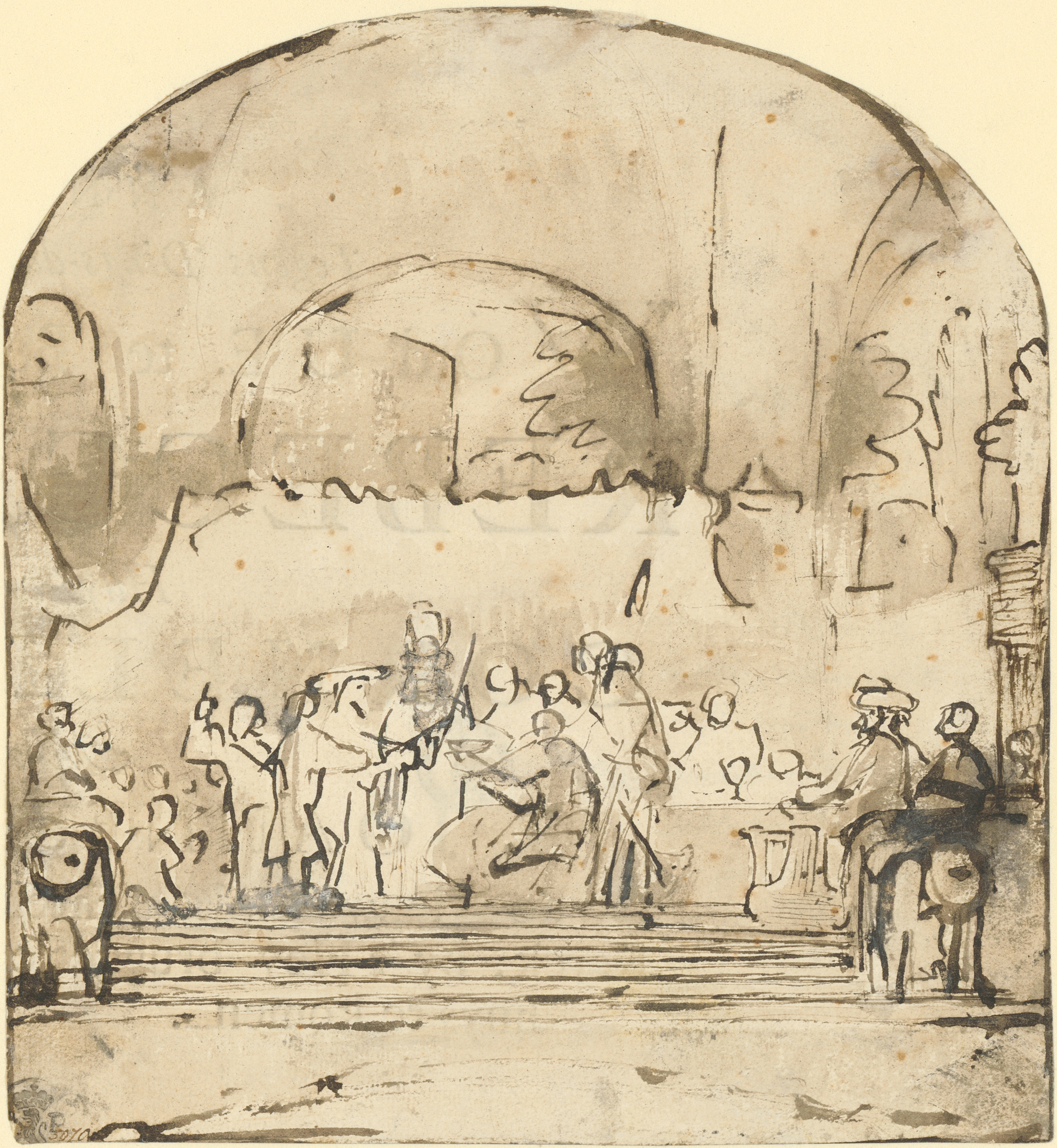
Perhaps Jan Lievens submitted this complex painting as a proposal to the De Graeff brothers, in an effort to secure the commission for the Batavian Series in the grand gallery of the Amsterdam Town Hall, even before it went to Govert Flinck in 1659. Be that as it may, he did not receive the assignment for the whole series. After Flinck’s death in 1660 though, Lievens completed one of the lunettes in his stead: Brinio Raised on the Shield (fig. 4), depicting the Batavian victory over the Romans led by the chieftain today referred to as Brinno. Since Lievens was contracted for one of these gallery paintings, it is also possible that Lievens used the painting in its current, reworked form years later as presentation piece for a one of the lunettes in the gallery that had not been filled (and still aren’t) for which the themes are not known.22 It is noteworthy that Lievens’ Christ and the Centurion even roughly matches the original aspect ratio of Rembrandt’s sketch for The Conspiracy of Claudius Civilis (c. 1661–1662) (fig. 6), and Jurgen Ovens’s of Claudius Civilis leaving the Women and Children to fight at Xanten (1662), both for the Batavian Series.23
“Civilis inde ovalen opde Galderije”
The Amsterdam accounts clerk noted on 13 January 1661: “The officials of accounts announced to me, that the esteemed burgomasters have agreed with Jan Lievens and Jacques Jordaens that they each will make a piece with Claudius Civilis in the ovals in the gallery, for the sum of twelve hundred guilders each, without seeking any increase or honorarium or any other premise they may come up with.” 24 The payment to Lievens subsequently took place on 23 March, only two months and one week after the note about the commission “for the piece of Brinio in the oval [the lunette] in the gallery”.25 As explanation for the short period between the two archival documents De Waal suggested that the clerk’s note in January was only made when the payment to Lievens was approaching, while the decision had already been made earlier, in order to avoid criticism of the public expenditure.26
Notably, the first source refers to “Claudius Civilis”, while Lievens was paid for “Brinio”. However tempting it is to see a connection between the words of the accounts clerk and the currently proposed Civilis in Christ and the Centurion, the explanation offered by Van de Waal is sufficiently plausible to relate the decision of the treasurers to link the payment to Brinio Raised on the Shield. Moreover, Jordaens did deliver a scene with Civilis. Perhaps the clerk used “Claudius Civilis” as a general reference to a Batavian scene, much like later descriptions also confuse names.
For Brinio Raised on the Shield there are two known oil sketches that have been preserved (figs. 7 and 8). The version in the Amsterdam Museum, painted on paper, is generally seen as the presentation piece. Gregor Weber argues that the other piece, on canvas, served this function.27 Similarities in paint handling, colour, and buildup, with Quintus Fabius Maximus, Christ and the Centurion, and Brinio Raised on the Shield, were already described in Rembrandt’s Academy and De Witt’s dissertation.28 Kolfin also addresses the correspondences in motifs with the Quintus Fabius Maximus and Brinio paintings.29 These are partially applicable also to Christ and the Centurion, which falls between them in terms of date. The paint handling in the various oil sketches is similar, although the somewhat larger Christ and the Centurion does show greater detail.
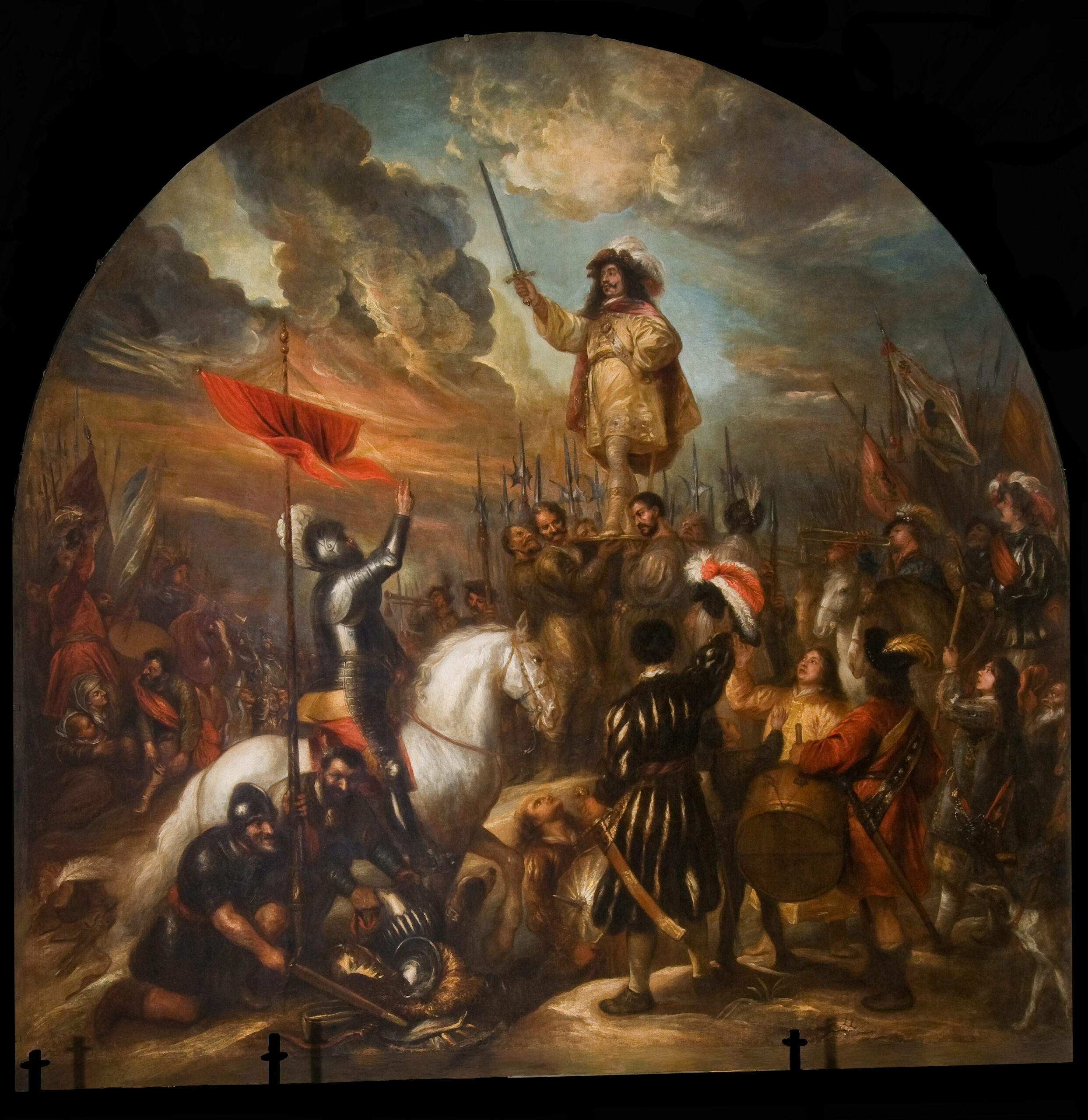 |
 |
The Stadholders of Orange as Batavians
An interesting question is whether the references to the stadholders of the House of Orange, as Kolfin points out in the Brinio, can also be observed in Christ and the Centurion.30 As Van de Waal explains, the Dutch were freed from the Spanish yoke by the State army under the supreme command of the stadholder, just as their ancestors were freed from the Romans by the Batavian army under the leadership of Julius Civilis and Brinno.31 In addition to this, the Batavian chiefs were elected leaders of the army, just like the stadholders.32 For this reason the most important commission from the Oranges in the same period, the decorations of the Oranjezaal, is bursting with references to the Batavians.33 Lievens, who also painted for this commission, was of course familiar with these. On the relationship between the stadholders and the decoration of the new Amsterdam Town Hall Kolfin states: “[…] that the stadholders were in fact servants of the States General and the appointed supreme commanders of the duration of the conflict. It appears that this was precisely the message of the Batavian Series.” 34
Faith in Christ and Loyalty to Nation
In Jan Lievens’s Christ and the Centurion from 1657, the central rider mounted on the horse was added at a later stage to the scene by the artist. For this, the painting had to undergo a substantial change. The relevance of the rider in the painting was additionally emphasized by the artist through its composition integration and colour referencing. Moreover, the rider addresses the viewer with his gaze, underscoring his primary role. A recent restoration made clear that the figure initially only had one eye, leading to the identification of him as the Batavian chieftain Julius (or Claudius) Civilis, one of the “Dutch” protagonists in the Batavian Revolt against the Romans.35
It can be concluded that Lievens here shows how he arrived at an intriguing iconography through a masterful composition. In it he combined the symbolism of the Biblical story with the symbolism of the story from the Dutch national history of Julius Civilis sparing the lives of the Romans, on condition that they pledge allegiance to the Netherlands. The painting can now be titled Christ and the Centurion, with Julius Civilis, a combination of loyalty to the Christian faith and loyalty to the Netherlands, a familiar trope in Dutch seventeenth century culture.
In 1657, a painting with such a subject would not have been out of place in the newly completed Amsterdam Town Hall. The decorative program in the grand gallery enclosing the Citizens’ Hall eventually would depict scenes from the Batavian Revolt. Lievens’s work appears to be an oil sketch from the period when he was working for the Town Hall and for Andries de Graeff, a burgomaster who presided over the decoration program. The fact that the decision regarding which painter would receive the commission for the Batavian Series had not yet been made evokes the idea that Lievens’s painting has a place in the early genesis of this famous decorative program.
- Werner Sumowski, Paul Huys Janssen, The Hoogsteder Exhibition of Rembrandt’s Academy, exh. cat. The Hague: Hoogsteder & Hoogsteder, 1992, cat. no. 28.
- Exhibition catalogues: Albert Blanckert, Jezus in de Gouden Eeuw, exh. cat. Rotterdam: Kunsthal, 2000–2001; Akira Kofuku, Rembrandt and the Rembrandt School. The Bible, mythology and ancient history, exh. cat. Tokyo: Museum of Western Art, 2003; Arthur K. Wheelock et al., Jan Lievens. A Dutch Master Rediscovered, exh. cat. Washington: National Gallery of Art; Milwaukee: Milwaukee Art Museum; Amsterdam: Rembrandt House Museum, 2008-2009, cat.no. 52; Louis van Tilborgh, Constantijn Huygens. Kunstkenner en verzamelaar, exh. cat. The Hague: Museum Bredius, 2013, cat. no. 14. Other literature: Werner Sumowski, Gemälde der Rembrandtschüler, vol. 4, Landau, 1983, p. 3726, no. 2356, fig. 3964; Helga Gutbrod, Lievens und Rembrandt : Studien zum Verhältnis ihrer Kunst, Frankfurt am Main, 1996, p. 299; Edwin Buijssen (ed.), Haagse schilders in de Gouden Eeuw, Het Hoogsteder lexicon van alle schilders werkzaam in Den Haag 1600-1700, The Hague, 1998, p. 191; Lloyd DeWitt, Evolution and Ambition in the career of Jan Lievens, 1607-1674, Phd. Diss. University of Maryland, College Park, 2006, p. 228.
- DeWitt, Evolution (see note 2), p. 228.
- For example those mentioned in the Montias Database of 17th Century Dutch Art Inventories and the Getty Provenance Research Index.
- Sumowski, Huys Janssen, Academy (see note 1), p. 220.
- Dr Gaston Gaudinot sale, Paris (Drouot), 13-14 February 1869.
- Sumowski, Huys Janssen, Academy (see note 1), p. 220.
- Ibid.
- Sumowski, Huys Janssen, Academy (see note 1), p. 226. Huys Janssen explains that the miracle as described in Luke and John differs from the version told by Matthew.
- After listening to the centurion, and before addressing him directly, Jesus speaks to his followers: “I tell you, many will come from east and west and sit at table with Abraham, Isaac, and Jacob in the kingdom of heaven.” (Matthew 8:11) Perhaps Lievens incorporated this part of the text and explicitly included people coming from the east (from the standpoint of his Dutch audience). A second possibility is that they are Pharisees. This group plays the role elsewhere in Matthew of disbelieving critics, and here they may serve to accentuate the belief of the centurion in the Christian faith. In early prints (Sebald Beham, Israhel van Meckenem, Hans Schaüfelein and Cornelis Massijs) and several Italian prints from Lievens’s time (seventeenth century prints after Paolo Veronese), Pharisees wear such headdresses. A parallel between blacks and overseas regions, such as in Lievens’s Brinio, is convincingly outlined by Elmer Kolfin (in: Elmer Kolfin, De kunst van de macht, Jordaens, Lievens en Rembrandt in het Paleis op de Dam, Zwolle, 2023, p. 67), does not seem to apply here.
- Sumowski, Huys Janssen, Academy (see note 1), p. 223.
- Sumowski, Huys Janssen, Academy (see note 1), pp. 223, 226.
- The right eye from the perspective of the viewer. There, a pupil was painted in, in a later restoration. Because of the sketchy manner it is difficult to ascertain whether or not both eyes are present, but in the left the lower eyelid is visible, while it is undefined in the right eye.
- For example: Jacobus Neeffs (after Jacob Jordaens), Judgement of Christ, etching, c. 1630-1645; Marinus van der Goes (after Jacques Jordaens), Judgement of Christ, engraving, c. 1614-1639; Willem Panneels (after Peter Paul Rubens), Adoration of the kings, etching, 1630; Nicolaes Lauwers (after Peter Paul Rubens), Ecce Homo, engraving, c. 1619-1652; and many more. Generally, for examples of inspiration drawn from prints by Lievens, see De
Witt, Evolution (see note 2). - Sumowski, Huys Janssen, Academy (see note 1), p. 226. Huys Janssen refers to examples by Nicolaes Moeyaert (Herentals, St. Waltrudis church) and Adam Camerarius (Amsterdam, Rijksmuseum, inv. no. SK-A-733). DeWitt refers to a painting by Bartholomeus Breenbergh (Karlsruhe, Staatliche Kunsthalle Karlsruhe, inv. no. 228) and the Moeyaert in Herentals (DeWitt, Evolution (see note 2), p. 227). But also see a woodcut with this subject by Cornelis van Sichem II in Der zielen lusthof (1629). Also of interest: Claes Moeyeart, Christ and the Centurion, 1632 (Minneapolis, Minneapolis Institute of Art, inv. no. 2012.84.5). Although the painting is known under this subject, it may in fact depict Cornelius kneeling before Peter, since more than one figure is shown kneeling and the composition closely resembles prints of this subject.
- Henri van de Waal, “’s Lands oudste verleden in de voorstelling van Vondel en zijn tijdgenooten”, Elsevier’s Maandschrift 47 (1937); Henri van de Waal, “Tempesta en de historieschilderingen op het Amsterdamse stadhuis”, Oud Holland 56 (1939); Henri van de Waal, Drie eeuwen vaderlandsche geschied-uitbeelding 1500-1800, een iconologische studie, The Hague, 1952; Kolfin, Kunst (see note 10).
- Antonio Tempesta (after Otto van Veen), Print 8 in (…)De Batavische oft oude Hollandtsche oorloghe teghen de Romeynen, 1612. Etching, 167 x 210 mm. Rijksmuseum, Amsterdam, inv. no. RP-P-OB-37.614. Jürgen Ovens based his drawing for the Batavian Series depicting Claudius Civilis leaving the Women and Children to fight at Xanten (Hamburg, Hamburger Kunsthalle, inv. no. 22342) on this print.
- On the period in The Hague: Buijssen Haagse (see note 2), pp.191-193.
- Haarlem, Teylers Museum, inv. no. P 006. For the identification and context, see: Gregor Weber, “Dus leeft de dappre Graaf: Zu einem Bildnis Andries de Graeffs von Jan Lievens (1607-1674)”, Oud Holland 99 (1985), pp. 44-56.
- Van de Waal, Eeuwen (see note 16), p. 230; Kolfin, De kunst van de macht (see note 10), pp. 19-20.
- Van de Waal, “’s Lands” (see note 16), p. 301-302.
- Kolfin, Kunst (see note 10), p. 41. Four Batavian scenes were never completed. For two the themes are known, for the other two are not known.
- Munich, Staatliche Graphische Sammlung München, inv. no. 1451; Hamburg, Hamburger Kunsthalle, Kupferstichkabinett, inv. no. 22342. A lesser-known drawing of Rembrandt’s Conspiracy of Claudius Civilis (Edinburgh, National Galleries of Scotland, inv. no. D 23862) shows – when compared to the drawing in Munich – that the lower section of the painting is covered by a frieze and that portions of the left and right sides are obscured. This may indicate that an alternative conception of the framing of the lunettes was considered before the one ultimately implemented. It is possible that this earlier framing was already envisioned when Lievens produced his oil sketch Christ and the Centurion.
- Van de Waal, Eeuwen (see note 16), p. 225, referring to SAA, 5039, 2 resolutieboek, f. 66r.
- Ibid., referring to SAA, 5039, 153 rapiamus 1661, f.195v.
- Van de Waal, Eeuwen (see note 16), p. 225.
- Gregor Weber, “Jan Lievens’s ‘The Shield-raising of Brinio’ a Second Oil Sketch”, Hoogsteder-Naumann Mercury 12/13 (1992), nt. 8.
- Dewitt, Evolution (see note 2), p. 221.
- Kolfin, Kunst (see note 10), p.67.
- Kolfin, Kunst (see note 10), p. 44.
- For, among other things, contemporary poetry in which Civilis and others are compared to the members of the House of Orange: Van de Waal, Eeuwen (see note 16), pp. 220-221, 223.
- Kolfin, Kunst (see note 10), p. 47.
- Margriet van Eikema Hommes, Elmer Kolfin, De Oranjezaal in Huis ten Bosch, Een zaal uit loutere liefde, Zwolle, 2013, p. 77.
- Kolfin, Kunst (see note 10), pp. 41-47, 77.
- One may ask, in light of points discussed in this article, whether the “Christ” figure in the first version was in fact Christ at all. If so, the oil sketch would initially have represented solely a Christian scene without any reference to the Batavian Revolt, thereby less relatable to the (eventual) decoration program of the Town Hall’s gallery. Given that in the initial design the groups left and right with Biblical and/or eastern figures do not seem to have been included (aside from a bearded man on the right, judging from the x-ray), the large central figure may originally have been Julius Civilis. In compositional terms, this would align the painting more closely with the print by Tempesta after Van Veen. The apparent similarity in hairstyle between the final Christ figure and the initial figure, together with the possible initial presence of a (holy) beam of light directed toward the figure, may argue against this hypothesis; nevertheless, Brinno in Lievens’s Brinio Raised on the Shield likewise features long hair and even incorporates a diagonal compositional line through the clouds, comparable to the line through the foliage in the initial version of the present subject. The later insertion of Christ could then be understood as a deliberate twist, imparting a more prominent Christian meaning to the historical scene. These suggestions and observations were kindly shared by Jochem van Eijsden.